| Catalog No | Package | Original Price | Price | Inventory | Quantity | Operating |
|---|---|---|---|---|---|---|
| BP3636-5mg | 5mg | $296.00 | Sign in |
|


Storage conditions:Short-term storage at 2~8℃, long-term storage at -20 ~ -80℃
136.4400
3.6505
3.6499
.0081
.4653
1.1140
Low
77.0325
7.0639
No
No
No
No
No
No
0.3
Yes
No
Yes
Yes
With the intensification of global population aging, the prevention and treatment of menopausal related diseases have become an important direction of medical research. Menopausal syndrome not only affects women's quality of life, but is also closely related to osteoporosis, cardiovascular disease, and neurological and psychiatric disorders. Although traditional drug therapy is effective, it has certain side effects and safety hazards, which has prompted researchers to continuously explore safe and efficient candidate molecules in natural products. 26 Deoxycimicifugoside, as a triterpenoid xylose compound isolated from Cimicifuga racemosa, has received widespread attention in recent years due to its unique structure and potential pharmacological activity. This article aims to systematically review the chemical structure, plant origin, pharmacological activity, mechanism of action, and pharmacological evaluation of 26 deoxy coumarin, and explore its application prospects in menopausal related diseases.
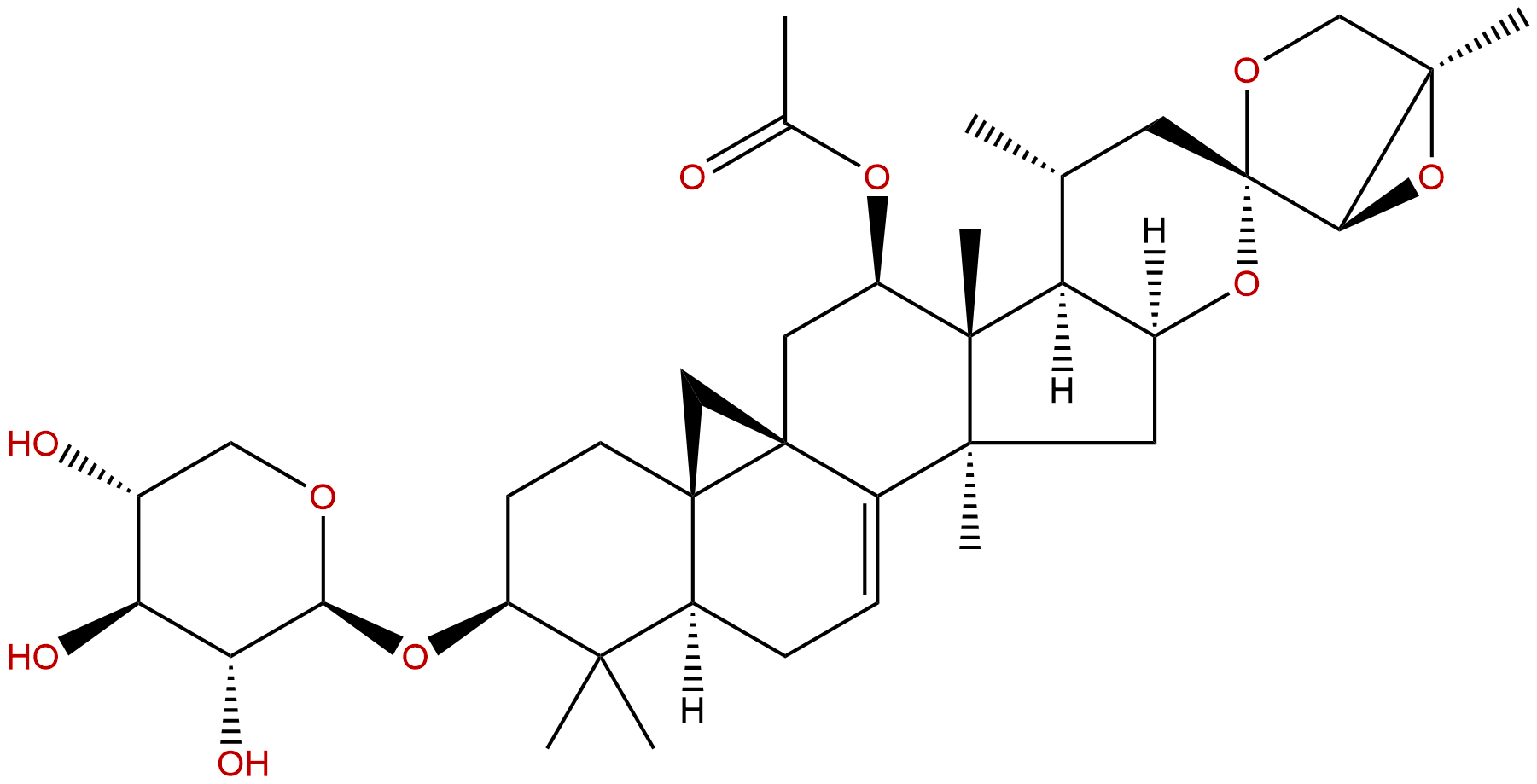
26 Deoxydiglycoside is a triterpenoid xyloside with a complex molecular formula and a molecular weight of 658.8290. Its structural core is a triterpenoid skeleton, connected by a sugar moiety, giving it high polarity and specific pharmacological activity. The LogP value is 3.6505, indicating that it has moderate lipid solubility, facilitating cell membrane penetration but low water solubility (0.0081), which poses certain challenges to its bioavailability and formulation development. Its topological polar surface area (TPSA) is 136.44 Å ², indicating that the molecule has a large number of polar groups, which may affect its transmembrane transport and targeting ability. The low permeability of the blood-brain barrier indicates that it mainly acts on peripheral tissues, reducing the risk of central nervous system side effects. The hERG channel inhibition experiment showed a negative result, indicating a low risk of cardiac toxicity. The Ames test result is 0.3, indicating a low risk of genotoxicity and good safety.
The main source of 26 deoxy coumarin is Cimicifuga racemosa, a traditional herb widely distributed in North America and some parts of Asia. The root and stem of Chinese wolfberry contain abundant triterpenoids, especially xylose glycosides, which are its main source of active ingredients. The common methods for extracting 26 deoxy coumarin include:
In recent years, supercritical CO ₂ extraction and molecular imprinting techniques have also been attempted to be applied to the efficient extraction and purification of triterpenoid wood glycosides in ramie, improving extraction efficiency and environmental friendliness.
The pharmacological activity of 26 deoxy coumarin mainly focuses on regulating hormone levels related to menopause and alleviating menopausal symptoms. Its main pharmacological effects include:
In addition, 26 deoxy coumarin exhibits antioxidant, anti-inflammatory, and neuroprotective effects, which help alleviate common cardiovascular and neurological problems in menopausal women. Both in vitro cell models and animal experiments have confirmed its potential in improving bone density, regulating lipid metabolism, and neurobehavior.
The mechanism of action of 26 deoxy coumarin is mainly achieved through multi-target synergistic regulation:
The synergistic effect of these targets results in multiple pharmacological effects of 26 deoxy coumarin in regulating endocrine, anti-inflammatory, and bone protection.
The pharmacological parameters of 26 deoxy coumarin indicate that it has certain potential for drug development:
In terms of pharmacokinetics, existing studies have shown that 26 deoxy coumarin is slowly absorbed after oral administration, with a moderate plasma half-life, and is mainly metabolized and excreted through the liver. Its low water solubility and large molecular weight limit its bioavailability, requiring the use of advanced formulation technologies such as nanocarriers and liposomes to enhance in vivo stability and targeting.
Based on its unique pharmacological activity and good safety, 26 deoxy coumarin has broad application prospects in the prevention and treatment of menopausal syndrome. Its estrogen like effect can replace traditional hormone replacement therapy and reduce the risk of hormone related side effects. Future research should focus on:
In addition, as a representative of natural products, the green and sustainable development and utilization of 26 deoxy coumarin also conforms to the trend of modern drug research and development.
As an important triterpenoid xyloside in sesame, 26 deoxy coumarin exhibits multiple pharmacological activities, including regulating hormone levels related to menopause, alleviating menopausal symptoms, and protecting the bone and cardiovascular system. Its unique molecular structure and good safety provide a theoretical basis and practical basis for it to become a new type of menopausal treatment drug. In the future, through in-depth mechanism research and clinical validation, combined with advanced formulation technology, 26 deoxy cytarabine is expected to become a star molecule in the field of natural product pharmacology, providing safe and effective treatment options for menopausal women.
