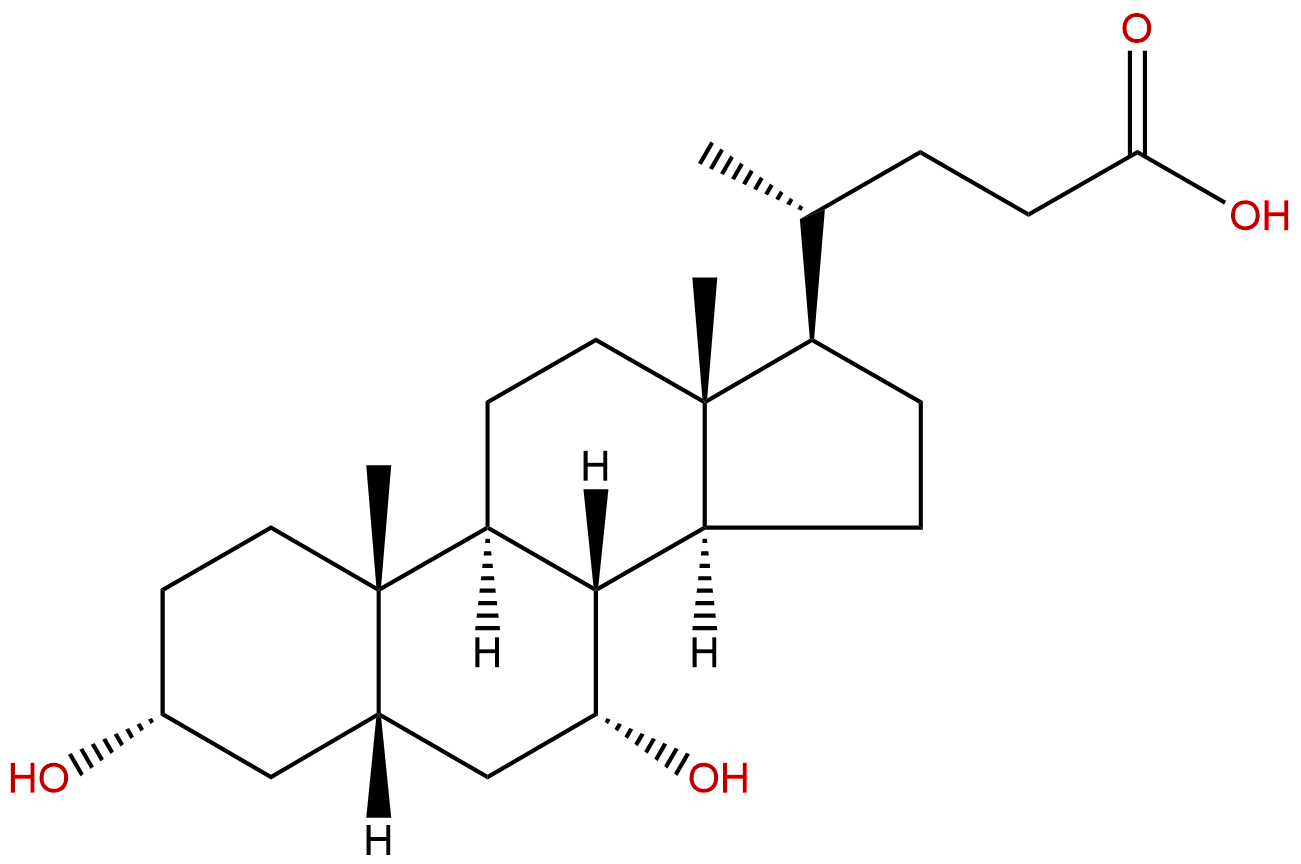


Product name: Chenodeoxycholic acid
Synonym name:
Catalogue No.: SBP03907
Cas No.: 474-25-9
Formula: C24H40O4
Mol Weight: 392.58
Botanical Source:
Physical Description: Cryst.
Type of Compound: Steroids
Purity: 95%~99%
Analysis Method: HPLC-DAD or/and HPLC-ELSD
Identification Method: Mass, NMR
Packing: Brown vial or HDPE plastic bottle
The product could be supplied from milligrams to grams. Inquire for bulk scale.
We provide solution to improve the water-solubility of compounds, thereby facilitating the variety of activity tests and clinic uses.
For Reference Standard and R&D, Not for Human Use Directly.
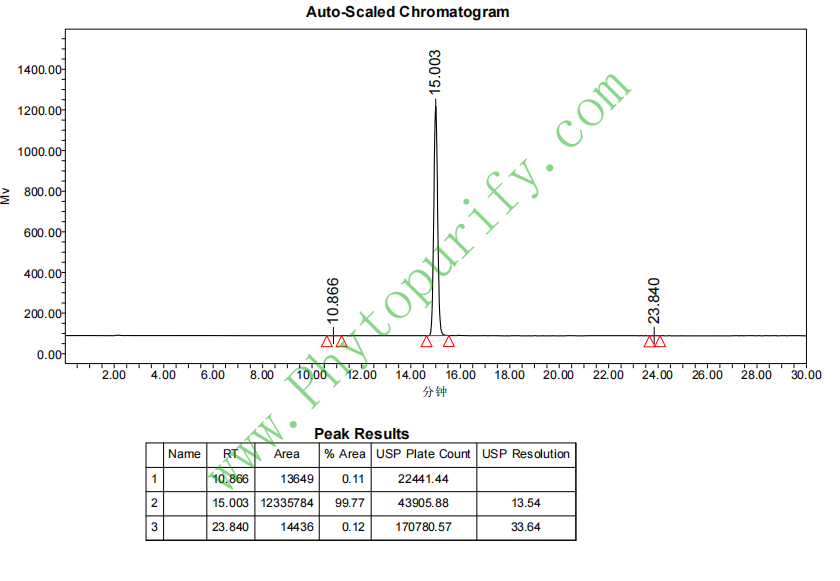
HPLC of Chenodeoxycholic acid
Storage conditions:Short-term storage at 2~8℃, long-term storage at -20 ~ -80℃
77.7600
4.0553
1.8583
.0544
4.3093
4.6573
Low
90.5180
4.3422
Yes
No
No
No
No
No
0.0
Yes
No
Yes
No
Bile acids are the main end products of cholesterol metabolism in the liver, and have long been regarded as simple digestive fluid components responsible for emulsifying dietary fats and fat soluble vitamins. However, research in the past thirty years has completely overturned this traditional understanding, revealing that bile acids, as an important signaling molecule, are widely involved in regulating physiological and pathological processes such as energy metabolism, glucose homeostasis, immune response, and gut microbiota balance by activating specific nuclear and membrane receptors. Among numerous bile acids, chenodeoxycholic acid, as a hydrophobic primary bile acid, has become an important bridge molecule connecting cholesterol metabolism, cholestatic diseases, and metabolic syndrome research due to its unique chemical structure and critical biological functions. As an endogenous ligand of farnesol X receptor, it plays a "master switch" role in maintaining bile acid synthesis and intestinal hepatic circulation homeostasis. Since its identification in the mid-20th century, research on chenodeoxycholic acid has gradually expanded from its initial choleretic effect to its regulation of various nuclear receptors and transporters. Its pharmacological value has been clinically validated in the treatment of cholesterol gallstones by dissolution. With the rapid development of molecular pharmacology and structural biology, the understanding of the network of action of chenodeoxycholic acid is becoming increasingly profound, bringing new hope for its application in a wider range of diseases such as non-alcoholic fatty liver disease and primary biliary cholangitis. This article aims to systematically review the chemical properties, pharmacological activities, molecular mechanisms of action, pharmacological characteristics, and clinical application prospects of chenodeoxycholic acid, in order to provide a comprehensive academic perspective for the in-depth research and transformation of this important endogenous substance.
Goosedeoxycholic acid, also known as 3 α, 7 α - dihydroxy-5 β - cholane-24-acid, has a CAS number of 474-25-9, a molecular formula of C ₂₄₄ H ₄₀₄, and a molecular weight of 392.5800. Its structure belongs to the 5 β - bile acid skeleton and is a typical C24 steroid derivative. The structural feature is that the A/B ring of the steroid parent nucleus is cis coupled (5 β - H configuration), and there is an α - configuration hydroxyl group at each C-3 and C-7 position, forming a dihydroxy substitution mode. Connect a five carbon side chain at position C-17, with a carboxyl group at the end. This 3 α, 7 α - dihydroxy structure is the key that distinguishes it from other bile acids (such as cholic acid with 3 α, 7 α, 12 α - trihydroxy, deoxycholic acid with 3 α, 12 α - dihydroxy), and also determines its relative hydrophobicity.
Its physicochemical properties are closely related to its biological activity. The calculated lipid water partition coefficient (LogP) is 4.0553, indicating that chenodeoxycholic acid has high lipophilicity, which facilitates its penetration of cell membranes and interaction with hydrophobic ligand binding pockets (such as the ligand binding domain of FXR). The topological polar surface area (TPSA) is 77.7600 Å ², reflecting the polarity brought by its two hydroxyl groups and one carboxyl group. The water solubility is relatively low, about 0.0544 mg/mL. Therefore, in physiological environments, chenodeoxycholic acid mainly binds to albumin for transportation in the blood and forms conjugates (chenodeoxycholic acid salts) with glycine or taurine in bile, thereby increasing its water solubility and ability to be secreted into bile. The compound is difficult to penetrate the blood-brain barrier (predicted as low permeability), which limits its direct effects on the central nervous system. Importantly, the preliminary evaluation of its drug efficacy showed no significant hERG potassium channel inhibitory activity (low risk of arrhythmia), and the Ames test result was negative (no mutagenicity), laying the foundation for its good safety.
Strictly speaking, chenodeoxycholic acid is an animal derived product and one of the main primary bile acids synthesized from cholesterol in the liver of mammals (especially humans, geese, pigs, etc.) through classical pathways. In the liver, cholesterol is catalyzed by the rate limiting enzyme CYP7A1, which initiates the classical pathway of bile acid synthesis. Through a series of hydroxylation, side chain oxidation, and cleavage steps, it ultimately generates chenodeoxycholic acid and cholic acid. Therefore, its natural source is not from plants, but from animal bile. Traditionally, chenodeoxycholic acid is mainly extracted from the bile of poultry (especially geese), which is also the origin of its Chinese name.
The main method for obtaining chenodeoxycholic acid in industry is a combination of biological extraction and chemical semi synthesis.1. Biological extraction method Using animal bile (such as goose bile and pig bile) as raw materials, crude products are separated through multi-step purification processes such as saponification, acidification, decolorization, and crystallization, and further refined. When extracting from pig bile, due to its main component being pig deoxycholic acid (3 α, 6 α - dihydroxy), specific chemical conversion steps (such as selective oxidation and reduction) are required to convert it into goose deoxycholic acid.2. Microbial transformation method This is a more promising and sustainable approach. By utilizing the enzyme system of certain microorganisms (such as bacteria and fungi), low-cost bile acid or deoxycholic acid is used as a substrate for stereoselective 7 α - hydroxylation or 12 α - dehydroxylation reactions, efficiently and specifically producing chenodeoxycholic acid. For example, using engineered strains expressing 7 β - hydroxysteroid dehydrogenase and 7 α - hydroxysteroid dehydrogenase, reversible conversion of deoxycholic acid to chenodeoxycholic acid can be achieved. With the development of synthetic biology technology, the construction of whole cell factories capable of de novo synthesis of chenodeoxycholic acid from simple carbon sources has become a research hotspot, with the potential to achieve green and large-scale production.
Goosedeoxycholic acid exhibits various pharmacological activities, with its core function centered around regulating bile acid metabolism homeostasis and extending to related metabolic and liver protection fields.
1. Gallbladder and bile secretion promoting effects This is the earliest recognized basic pharmacological activity of chenodeoxycholic acid. It can directly stimulate liver cells to secrete bile rich in bicarbonate, increasing bile flow, known as the "choleretic" effect. This effect helps to flush the bile duct, reduce bile stasis, and alter the composition of bile. More importantly, it can promote the secretion of phospholipids and cholesterol, but ultimately reduce the saturation of cholesterol in bile through a complex regulatory network, which is the physical and chemical basis of its litholytic effect.
2. Stone dissolution and anti stone effects Goosedeoxycholic acid is the first drug approved by the FDA for oral dissolution of cholesterol gallstones. The mechanism is that, on the one hand, supplementing exogenous chenodeoxycholic acid can negatively feedback inhibit the synthesis of endogenous cholesterol and HMG CoA reductase activity in the liver, reducing cholesterol secretion; On the other hand, as the main component of the bile acid pool, it can promote the secretion of phospholipids in bile, thereby changing the ratio of cholesterol, bile acids, and phospholipids in bile, transforming supersaturated cholesterol bile into an unsaturated state, promoting the gradual dissolution of formed cholesterol stones, and preventing the formation of new stones.
3. Hepatoprotective and anti apoptotic effects In cholestatic liver disease (such as primary biliary cholangitis, PBC), the accumulation of hydrophobic bile acids (such as lithocholic acid) can lead to liver cell damage and apoptosis. Deoxycholic acid treatment can replace some hydrophobic bile acids and reduce the overall toxicity of the bile acid pool. In addition, it can exert a direct cell protective effect by activating signaling pathways such as PI3K/Akt and MAPK and regulating mitochondrial function, inhibiting apoptosis of liver cells.
4. Anti inflammatory and immune regulatory effects Goosedeoxycholic acid can inhibit the infiltration of inflammatory cells in the portal vein area and surrounding bile ducts of the liver, and reduce the expression of various pro-inflammatory factors (such as TNF - α, IL-1 β, IL-6). In PBC, it may exert immune regulatory functions by affecting the antigen presentation process, regulating the reactions of T lymphocytes and B lymphocytes.
5. Metabolic regulation effect As an endogenous ligand of FXR, chenodeoxycholic acid is involved in regulating glucose and lipid metabolism. It can inhibit the expression of key genes involved in hepatic gluconeogenesis and improve insulin sensitivity; Simultaneously regulating genes related to fatty acid synthesis and oxidation, reducing liver lipid accumulation, demonstrates potential in the treatment of non-alcoholic fatty liver disease.
The pharmacological effects of chenodeoxycholic acid are achieved through interactions with multiple specific molecular targets, forming a sophisticated regulatory network.
1. Nuclear receptor farnesol X receptor (FXR, NR1H4)This is the most critical molecular target of chenodeoxycholic acid. FXR is a bile acid receptor, mainly highly expressed in the liver, intestine, and kidneys. As an endogenous agonist of FXR, chenodeoxycholic acid binds to it, causing a conformational change in the receptor. It forms a heterodimer with the retinol X receptor and then binds to the bile acid response element in the promoter region of the target gene, regulating gene transcription.Activate liver FXR Upregulation of the expression of small heterodimeric chaperone protein, which inhibits cholesterol 7 α - hydroxylase, thereby negatively feedback inhibiting de novo synthesis of bile acids; Simultaneously upregulate the expression of bile acid efflux pumps and multidrug resistance related proteins, promoting the secretion of bile acids into the bile duct.Activate intestinal FXR Inducing the synthesis and secretion of fibroblast growth factor 15/19, this hormone reaches the liver through the portal vein and also inhibits CYP7A1, forming a negative feedback regulation of the gut liver axis. In addition, intestinal FXR activation can enhance the expression of tight junction proteins and maintain intestinal barrier function.
2. G protein coupled bile acid receptor 1 (TGR5, GPBAR1)This is a bile acid receptor located on the cell membrane. The excitatory activity of chenodeoxycholic acid on TGR5 is relatively weak, but its metabolites or structural analogues may have stronger activity. Activation of TGR5 can promote the secretion of glucagon like peptide-1 by intestinal L cells, thereby stimulating insulin secretion and improving glucose tolerance; In macrophages, TGR5 activation has anti-inflammatory effects.
3. Bile acid transporter system Goosedeoxycholic acid is not only a substrate for these transporters, but also regulates their expression.Top membrane side Upregulation of ABCB11 (bile salt efflux pump, BSEP), Promote its own and other bile acid secretion; Upregulation of ABCC2 (multidrug resistance associated protein 2, MRP2), Promote the secretion of organic anions and conjugated bile acids.basolateral: Affects the uptake of bile acids by SLC10A1 (sodium taurocholic acid cotransporter polypeptide, NTCP). In intestinal epithelial cells, its binding form (glycodeoxycholic acid or taurodeoxycholic acid) is mainly actively reabsorbed through the apical SLC10A2 (ileal bile acid transporter, ASBT) to complete enterohepatic circulation.
4. Sterol transporters ABCG5/G8 These heterodimer transporters are located on the bile duct membrane of liver cells and the apical membrane of intestinal epithelial cells, responsible for pumping cholesterol and plant sterols out of cells. Goosedeoxycholic acid may affect its function through indirect mechanisms such as altering membrane fluidity or signal transduction, promoting the excretion of cholesterol into bile and intestinal lumen, which is crucial for reducing plasma cholesterol levels and bile stone dissolution.
In summary, chenodeoxycholic acid precisely regulates bile acid synthesis, secretion, reabsorption, and cholesterol metabolism through a multi-target synergistic network centered on FXR, maintaining the body's homeostasis.
Based on its endogenous properties, chenodeoxycholic acid exhibits good medicinal properties. Its molecular weight is moderate, and the LogP value shows that it has sufficient lipophilicity to penetrate biological membranes, while polar groups (hydroxyl, carboxyl) ensure its necessary interaction with target proteins. No hERG inhibition and genotoxicity warning, with a high safety threshold.
Pharmacokinetic aspects After oral administration, chenodeoxycholic acid is mainly absorbed through passive diffusion in the jejunum and ileum, while its bound product is actively absorbed through ASBT, with an overall absorption rate of about 90%. After absorption, it enters the portal vein and undergoes efficient first pass effects in the liver (extraction rate can reach 60-80%). In liver cells, chenodeoxycholic acid binds with glycine or taurine to form conjugated bile acids, which are then secreted into bile through BSEP. Most of the conjugated chenodeoxycholic acid entering the intestine is reabsorbed by ASBT in the ileum and returned to the liver through the portal vein, forming an efficient enterohepatic circulation (about 6-12 cycles per day), with only a small amount (about 3-5%) entering the systemic circulation or reaching the colon. In the colon, some chenodeoxycholic acid can be deconjugated by gut microbiota and converted into secondary bile acids, such as lithocholic acid. The terminal half-life of chenodeoxycholic acid is approximately 3-5 days, mainly attributed to its extensive enterohepatic circulation. It is mainly excreted through feces (in the form of bile acids), with very little excretion by the kidneys.
During clinical medication, it should be noted that chenodeoxycholic acid may interact with certain drugs, such as bile acid chelators like colexamide, which can interfere with its enterohepatic circulation and reduce efficacy; Drugs such as cyclosporine that can affect bile secretion may alter their pharmacokinetics. Under conventional treatment doses (such as 13-15 mg/kg daily), patients have good tolerance, and the common adverse reaction is dose related diarrhea, which is caused by unabsorbed bile acids entering the colon and stimulating water and salt secretion. It can usually be relieved with dose adjustment.
The current clinical application of chenodeoxycholic acid mainly focuses on Dissolution therapy for cholesterol gallstones(Suitable for patients with normal gallbladder function, small stone diameter, and X-ray transmission) and Primary biliary cholangitis As a first-line treatment drug, it can improve biochemical indicators, delay histological progression, and increase transplant free survival rate. However, its application prospects are constantly expanding with the deepening of basic research.
1. Metabolic related fatty liver disease/non-alcoholic fatty liver disease Given the core role of FXR in regulating lipid metabolism, insulin sensitivity, and inflammation, chenodeoxycholic acid and its derivatives (such as obeticolic acid, a stronger FXR agonist) have become a research hotspot in this field. Early clinical trials have shown that it can reduce liver enzymes and liver fat content, but its effect on fibrosis improvement is limited, and it may cause side effects such as dyslipidemia and itching. Future research needs to explore the optimal dosage, combination therapy (such as in combination with PPAR alpha/delta agonists, FGF21 analogs), and patient stratification strategies.
2. Other cholestatic liver diseases For primary sclerosing cholangitis, intrahepatic cholestasis of pregnancy, progressive familial intrahepatic cholestasis, etc., chenodeoxycholic acid has also shown certain therapeutic potential or is currently being evaluated in clinical trials, but its efficacy varies among different diseases and patients.
3. Intestinal and metabolic diseases: By regulating intestinal FXR, TGR5 and affecting the composition of intestinal flora, chenodeoxycholic acid may play a role in inflammatory bowel disease, intestinal barrier dysfunction, type 2 diabetes and obesity. For example, FXR modulators that act locally on the intestine may become a new strategy to avoid systemic side effects.
4. Development of new derivatives and formulations The FXR agonist activity of natural chenodeoxycholic acid is not the strongest. The development of novel FXR/TGR5 dual or selective modulators with higher selectivity, stronger efficacy, or better tissue targeting through structural modification is an important direction in current pharmaceutical chemistry. At the same time, the development of new delivery systems, such as liver targeted nano formulations and colon targeted formulations, can improve efficacy and reduce side effects.
Challenges and Prospects The main challenges facing future research include: clarifying the precise physiological and pathological consequences of FXR activation in different tissues; Elucidate the genetic and microbiological basis for the differences in therapeutic efficacy of chenodeoxycholic acid among individuals; Balancing the metabolic benefits and potential side effects of FXR activation, such as hyperlipidemia and itching. With the development of technologies such as systems biology, single-cell sequencing, and artificial intelligence assisted drug design, the interpretation of the biological functions of chenodeoxycholic acid will become more refined, which is expected to promote its transformation from a traditional choleretic and litholytic drug to a cornerstone drug for treating various metabolic and liver diseases, and give birth to a new generation of therapeutic drugs targeting bile acid signaling pathways.
Goosedeoxycholic acid, a traditional bile component, has risen to become a model for endogenous signaling molecules and important clinical drugs after decades of research. Its research process perfectly interprets the translational medicine path from basic biochemistry to molecular pharmacology, and then to clinical treatment. As a key endogenous ligand of FXR, it occupies the central node of the bile acid metabolism regulatory network, maintaining the steady state of cholesterol and bile acids through multi-target and multi-level synergistic effects, and widely affecting glucose and lipid metabolism and inflammatory immunity. Although established in the treatment of gallstones and PBC, its potential in global health issues such as NAFLD/NASH and metabolic syndrome remains to be fully explored. In the face of challenges, future research needs to focus on deepening the understanding of the spatiotemporal specificity of its complex action network, developing better derivatives and delivery strategies, and achieving precision medicine based on biomarkers. The story of chenodeoxycholic acid is far from over, and it will continue to serve as a key 'molecular key', opening up more unknown doors in the bile acid signaling kingdom and leading new directions in the treatment of metabolic diseases.
