Introduction/Overview
Hypercholesterolemia, as the core risk factor of atherosclerotic cardiovascular disease (ASCVD), has always been a major challenge in the field of global public health. Although statins (HMG CoA reductase inhibitors) have achieved remarkable results in reducing low-density lipoprotein cholesterol (LDL-C), a considerable proportion of patients still have residual cardiovascular risk, or seek alternative or complementary therapy due to drug intolerance, muscle toxicity, new diabetes and other side effects. Therefore, the discovery of cholesterol lowering active molecules with novel mechanisms of action, high selectivity, and low toxicity from natural products remains a hot topic in medicinal chemistry and pharmacology research.
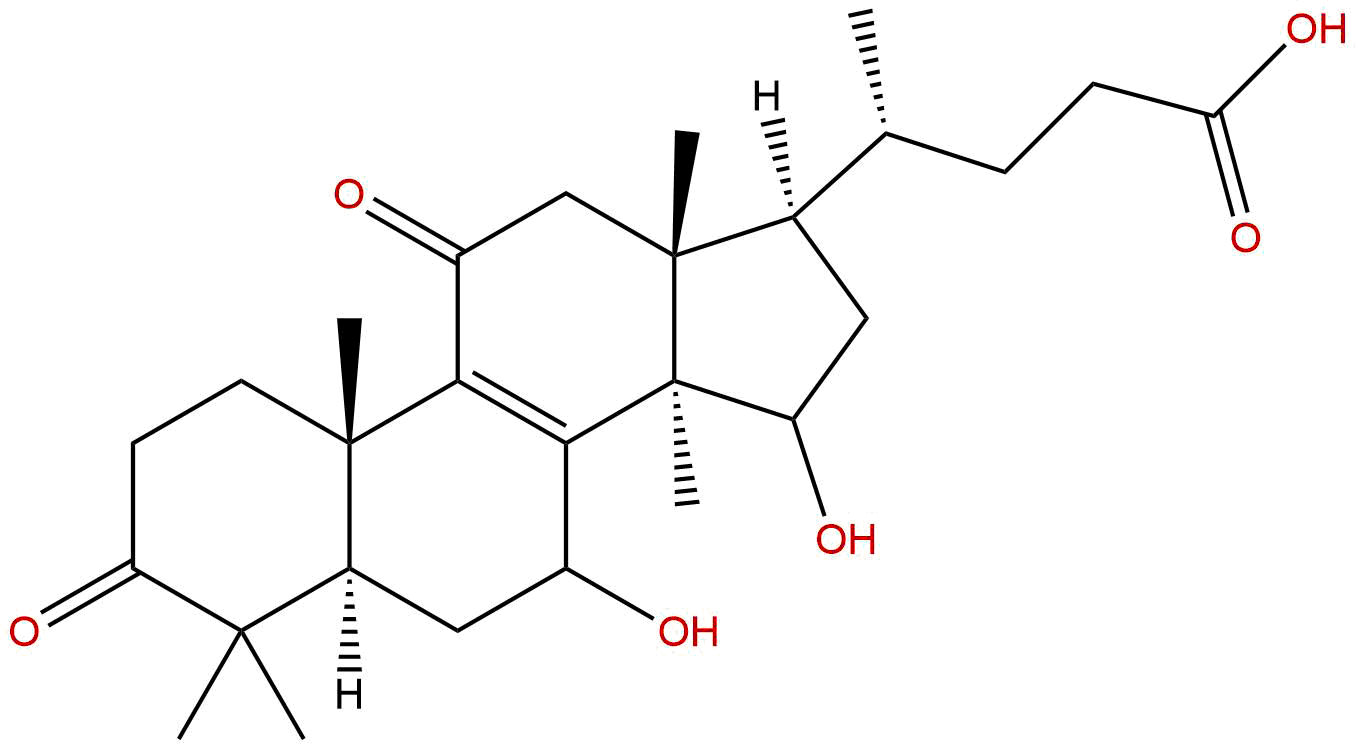
Among numerous natural products, triterpenoids have attracted much attention due to their structural diversity and wide range of biological activities. This article focuses on a structurally unique lanolin alkane triterpenoid acid, Chol-8-en-24-oic acid, 7,15-dihydroxy-4,4,14-trimethyl-3,11-dioxo -, (5a) - (hereinafter referred to as "Compound X"). This compound has a highly oxidized skeleton, containing a 7,15-dihydroxy group, a 3,11-diketone, and a C-24 carboxylic acid side chain, with a CAS number of 942936-54-1. Preliminary pharmacological evaluation shows that the compound has moderate lipid solubility (LogP ≈ 3.0), low blood-brain barrier penetration, and good genetic toxicity safety (Ames test negative), making it a potential precursor compound for the development of new anti hypercholesterolemia drugs. This review aims to systematically sort out the chemical properties, sources, pharmacological activities, mechanisms of action, and pharmacological prospects of this compound, in order to provide comprehensive scientific basis for further in-depth research.
Chemical structure and physicochemical properties
The chemical name of compound X is Chol-8-en-24-oic acid, 7,15-dihydroxy-4,4,14-trimethyl-3,11-dioxo -, (5a) -, which belongs to the lanolane type triterpenoid acid derivative. Its core skeleton is a cholestan-8-ene with a 5 α - configuration, and four methyl groups (4,4,14-trimethyl) are connected at C-4 and C-14 positions, which is a typical feature of lanolin alkane compounds. The significant structural feature of this molecule lies in its highly oxidized functional group distribution: the C-3 and C-11 positions are ketone carbonyl (3,11-dioxo), the C-7 and C-15 positions are hydroxyl (7,15-dihydroxy), and the C-24 position is a free carboxylic acid group (24-oic acid). This multifunctional combination endows the molecule with unique chemical properties and potential biological activity.
From the perspective of physicochemical properties, the molecular weight of this compound is 460.6110 g/mol, which is within the ideal range for small molecule drugs. Its lipid water partition coefficient (LogP) is 2.9957, indicating that it has moderate lipophilicity, which is conducive to its penetration of cell membranes through passive diffusion, but does not result in extremely poor solubility in aqueous environments due to high lipid solubility. The topological polar surface area (TPSA) is 111.9000 Å ², which is a relatively high value mainly attributed to two hydroxyl groups, two carbonyl groups, and one carboxyl group in the molecule. Higher TPSA is usually associated with lower oral bioavailability (it is generally believed that oral absorption is poor when TPSA>140 Å ²), but 111.9 Å ² is still within an acceptable range, suggesting that it may have some potential for oral absorption. The water solubility data is 0.0627 mg/mL, belonging to the category of slight solubility, which is consistent with its LogP value. It is worth noting that the blood-brain barrier penetration of the compound has been evaluated as' low ', which is a favorable feature for the development of cholesterol lowering drugs targeting peripheral targets such as HMGCR or PCSK9 in the liver, and can avoid central nervous system related side effects. In addition, the risk assessment of hERG inhibition was' no ', and the Ames test result was 0.0, preliminarily ruling out the risks of cardiac toxicity and genetic toxicity, providing a safety basis for its further development.
Plant sources and extraction methods
Compound X, as a highly oxidized lanolin alkane type triterpenoid acid, currently mainly originates naturally from certain higher plants, especially those families and genera rich in secondary metabolites of triterpenoids. According to existing literature reports, compounds with such structural features are mostly derived from Ganoderma(Ganoderma It has been found in the fruiting bodies or mycelium of fungi that ganoderic acids are a typical class of lanolin type triterpenoids in Ganoderma lucidum, with significant pharmacological activity. In addition, some Euphorbiaceae Euphorbiaceae or Wujia Science Araliaceae plants may also produce triterpenoid acids with similar structures. Given the specific oxidation mode of compound X (7,15-dihydroxy, 3,11-dione), its biosynthetic pathway may involve multi-step oxidation reactions catalyzed by cytochrome P450 enzymes, and therefore its content may be lower in specific plant tissues or growth stages.
For triterpenoid acids with moderate polarity and multiple polar functional groups, the following strategies are usually used for extraction, separation, and purification:
-
Extraction solvent selection Given that its LogP is approximately 3.0 and contains carboxyl groups, polar organic solvents are usually used for extraction. The most commonly used solvents are ethanol or methanol Obtain crude extract through cold soaking, percolation or reflux extraction methods. To improve extraction efficiency, sometimes ethyl acetate or chloroform Perform liquid-liquid extraction to enrich the concentration of equipolar triterpenoid components.
-
Preliminary separation After concentration, the crude extract is often used Silica gel column chromatography Perform preliminary separation. Use gradient elution systems such as chloroform methanol or petroleum ether ethyl acetate to combine similar components based on the color development of thin layer chromatography (TLC), such as vanillin sulfuric acid color development.
-
Refining and Purification For the target compound, due to the presence of multiple hydroxyl and carbonyl groups in its structure and high polarity, it may tail on the silica gel column. Therefore, it is often adopted in the future Reverse phase column chromatography(such as ODS-C18) is refined using a methanol water or acetonitrile water system for gradient elution.High performance liquid chromatography (HPLC)Especially preparative HPLC is a key step in obtaining high-purity monomeric compounds. The detector usually uses ultraviolet detector (UV, with absorption at 210-254 nm) or evaporative light scattering detector (ELSD).
-
Structural Identification The purified compound was structurally confirmed by spectroscopic methods, mainly including nuclear magnetic resonance spectroscopy (1H-NMR, 13C-NMR, DEPT, HSQC, HMBC, NOESY) and high-resolution mass spectrometry (HR-ESI-MS). By analyzing the NMR spectrum, the precise positions of hydroxyl, carbonyl, and carboxyl groups can be determined, and the relative configuration (such as the configuration of 5 α - H) can be determined through NOESY spectrum.
Pharmacological activity research
The core pharmacological activity field of compound X is labeled as "anti hypercholesterolemia", which is highly consistent with its structural characteristics and preliminary biological evaluation results. At present, there are not many direct pharmacological research reports on this specific compound. However, based on the known activity of its lanolin triterpenoid acid family (such as ganoderic acid, hyoderic acid, etc.), it can be inferred that it has the following potential pharmacological effects:
-
Cholesterol lowering activity This is the primary research target of the compound. Multiple studies have shown that lanolin alkyl triterpenoids can lower cholesterol levels through various pathways. For example, ganoderic acid can directly reduce de novo synthesis of cholesterol in the liver by inhibiting the activity of HMG CoA reductase (HMGCR). In addition, they can upregulate the expression of low-density lipoprotein receptor (LDLR) and enhance the liver's uptake and clearance of LDL-C in the blood. The 3,11-diketone and 7,15-dihydroxy structures of compound X may cause specific interactions with the active site of HMGCR, thereby exerting inhibitory effects.
-
Regulating lipoprotein metabolism In addition to directly affecting cholesterol synthesis, this compound may also act on cholesterol ester transfer protein (CETP). CETP is responsible for transferring cholesterol esters from high-density lipoprotein (HDL) to low-density lipoprotein (LDL) and very low-density lipoprotein (VLDL). Inhibiting CETP activity can increase HDL-C levels and decrease LDL-C levels, making it a promising lipid-lowering strategy. The carboxylic acid group of compound X may mimic the acidic pharmacophore characteristics of certain CETP inhibitors.
-
Antioxidant and anti-inflammatory activities Hypercholesterolemia is often accompanied by oxidative stress and chronic inflammation of the vascular wall. Many triterpenoid acids have been proven to have strong antioxidant properties, capable of clearing free radicals and inhibiting lipid peroxidation. At the same time, they can also reduce the expression of inflammatory factors (such as TNF - α, IL-6) by inhibiting the NF - κ B signaling pathway, thus reducing the inflammatory response of atherosclerosis. The multiple hydroxyl and carbonyl groups in compound X are potential antioxidant active sites.
-
The regulatory effect on PCSK9 Pre protein convertase subtilisin 9 (PCSK9) has become a popular target for lipid-lowering therapy in recent years. PCSK9 promotes the degradation of LDLR by binding to it, thereby reducing the liver's ability to clear LDL-C. Some natural triterpenoid acids have been reported to inhibit the expression or activity of PCSK9, indirectly upregulating LDLR levels. Whether compound X has a similar effect remains to be experimentally verified.
Mechanism of action and molecular targets
Based on its activity description of "anti hypercholesterolemia", the mechanism of action of compound X may involve multiple key targets related to cholesterol metabolism, forming a multi-target, multi pathway network regulatory pattern.
-
Inhibition of HMG CoA reductase (HMGCR)HMGCR is the rate limiting enzyme in the cholesterol biosynthesis pathway. Statins exert their lipid-lowering effects by competitively inhibiting HMGCR. The lanolane skeleton of compound X has some structural similarity with the natural substrate HMG CoA of HMGCR. Its C-24 carboxylic acid group may mimic the acidic part of HMG CoA, while the hydrophobic tetracyclic skeleton may occupy the hydrophobic pocket of the enzyme. Molecular docking studies may reveal that it forms hydrogen bonds and hydrophobic interactions with key amino acid residues such as Ser684, Asp690, Lys691 of HMGCR, thereby inhibiting the catalytic activity of the enzyme.
-
Upregulation of low-density lipoprotein receptor (LDLR) expression LDLR is the main receptor for clearing plasma LDL-C. Compound X may upregulate LDLR through the following mechanisms: firstly, by inhibiting HMGCR, it leads to a decrease in intracellular cholesterol levels, which in turn activates steroid regulatory element binding protein 2 (SREBP-2). SREBP-2 enters the nucleus and binds to the steroid regulatory element (SRE) in the LDLR gene promoter region, promoting LDLR transcription; The second possibility is to reduce the degradation of LDLR by inhibiting the activity or expression of PCSK9, thereby increasing the number of LDLR on the surface of liver cells.
-
Inhibition of cholesterol ester transfer protein (CETP)CETP transfers cholesterol esters between HDL and LDL/VLDL. Inhibition of CETP can increase HDL-C and decrease LDL-C. The hydrophobic skeleton and polar carboxylic acid groups of compound X may enable it to embed into the hydrophobic channels of CETP, interfering with its binding with lipoproteins. Its 7,15-dihydroxy group may form hydrogen bonds with polar residues of CETP (such as Gln, Ser) to enhance binding affinity, thereby inhibiting the transfer of cholesterol esters.
-
Regulating apolipoprotein B/APOE metabolism APOB is the main structural protein of LDL and VLDL, while APOE is involved in the clearance of lipoproteins. Compound X may regulate lipoprotein metabolism by affecting the secretion of APOB or the receptor binding ability of APOE. For example, by inhibiting the activity of microsomal triglyceride transfer protein (MTP), the assembly and secretion of APOB rich VLDL in the liver can be reduced.
-
Affects scavenger receptor B class I (SCARB1)SCARB1 (also known as SR-BI) is the main form of HDL receptor, mediating the selective uptake of cholesterol esters in HDL by the liver. The regulatory effect of compound X on SCARB1 is not yet clear, but theoretically, it may promote reverse cholesterol transport (RCT) by upregulating SCARB1 expression, that is, transporting cholesterol from peripheral tissues (such as arterial walls) to the liver for metabolism and excretion.
Evaluation of drug properties and pharmacokinetics
Based on the provided pharmacological parameters, compound X has shown certain potential for development, but also faces some challenges.
Advantage aspects:
- Security Window The Ames test result is 0.0, indicating no significant genetic toxicity. The risk of hERG inhibition is' no ', reducing the risk of causing QT interval prolongation and fatal arrhythmias. These two points are key safety indicators in the early stages of drug development.
- Central nervous system safety Low blood-brain barrier penetration means that the compound is mainly distributed in the periphery and is not easily able to enter the brain, thereby avoiding possible central nervous system side effects (such as occasional sleep disorders or cognitive effects caused by statins).
- Balance of physical and chemical properties The molecular weight (460.6 Da) falls within the Lipinski's Rule of Five range (<500 Da). LogP (2.99) also conforms to the rule (<5), indicating that it has good membrane permeability potential.
Challenge and improvement direction:
- Water solubility The water solubility of 0.0627 mg/mL is classified as slightly soluble, which may limit its oral bioavailability. Low water solubility is a common issue among many triterpenoid compounds. Future formulation development needs to consider the use of solubilization techniques, such as preparing salts (such as sodium or potassium salts, utilizing their C-24 carboxyl groups), solid dispersions, lipid nanoparticles, or cyclodextrin inclusion complexes.
- Oral bioavailability The TPSA is 111.9 Å ², which is lower than the threshold of 140 Å ² but still high, indicating the possibility of P-glycoprotein (P-gp) efflux or first pass effects. In addition, its C-24 carboxylic acid group may undergo ionization in the gastrointestinal tract, affecting absorption. In vivo pharmacokinetic studies (such as oral administration in rats) are required to determine its absolute bioavailability, half-life, distribution volume, and metabolic pathways.
- Metabolic stability Multiple hydroxyl groups (C-7, C-15) and ketone groups (C-3, C-11) in the molecule are potential sites for phase I metabolism (oxidation, reduction) and phase II metabolism (glucuronidation, sulfation). Especially C-24 carboxylic acids are highly prone to glucuronic acid binding. Metabolic stability studies, such as liver microsomal incubation experiments, are key to evaluating its potential as an oral drug. If metabolism is too fast, structural modifications such as introducing fluorine atoms or methylating hydroxyl groups are needed to block metabolic sites.
Clinical application prospects and prospects
Compound X, as a novel natural triterpenoid acid, has shown unique application prospects in the field of anti hypercholesterolemia. Its multi-target mechanism of action (HMGCR inhibition, LDLR upregulation, CETP inhibition, etc.) makes it a potential "pleiotropic" lipid-lowering drug, which may bring more comprehensive lipid profile improvement than statins with a single mechanism, including reducing LDL-C, increasing HDL-C, and reducing triglycerides.
Potential application scenarios:
1. Alternative or complementary therapy for statin intolerant patients For patients who cannot tolerate statins due to muscle pain, elevated liver enzymes, and other reasons, compound X may provide a new option. Its non statin mechanism of action (such as CETP inhibition) may avoid the same side effects as statins.
2. combination therapy Combined with statins, it may produce a synergistic lipid-lowering effect, allowing for the use of lower doses of statins and reducing side effects. Combined with PCSK9 inhibitors, LDL-C may be maximally reduced through different pathways (inhibition of synthesis vs. promotion of clearance).
3. Treatment of metabolic syndrome Given its potential anti-inflammatory and antioxidant activity, compound X may have additional benefits for metabolic syndrome patients with hypercholesterolemia (often accompanied by obesity and insulin resistance).
Future research directions:
1. In depth pharmacological research Systematic in vitro and in vivo experiments are needed to clarify the specific regulatory modes of various targets (HMGCR, CETP, LDLR, PCSK9, etc.), including IC50 values, binding kinetics, and signaling pathway effects.
2. Structure Activity Relationship (SAR) Study By synthesizing a series of structurally similar compounds, the contributions of C-7, C-15 hydroxyl, C-3, C-11 ketone, and C-24 carboxyl groups to activity were systematically studied. For example, acetylating or methylating hydroxyl groups, or reducing ketone groups to hydroxyl groups, observing changes in activity to determine key pharmacophores.
3. Pharmacokinetic optimization Design prodrugs to address its poor water solubility and potential first pass effects. For example, esterifying C-24 carboxylic acid into prodrugs (such as the prodrug strategy of pitavastatin) to enhance oral absorption. Alternatively, its solubility and bioavailability can be improved through nanoformulation technology.
4. toxicological evaluation Although the Ames test and hERG evaluation results are good, more comprehensive toxicological studies are still needed, including acute toxicity, subchronic toxicity, reproductive toxicity, and carcinogenicity tests, to ensure the safety of its long-term use.
Conclusion
Chol-8-en-24-oic acid, 7,15-dihydroxy-4,4,14-trimethyl-3,11-dioxo-, (5a)-, As a highly oxidized lanolin alkyl triterpenoid acid, with its unique chemical structure, multi-target anti hypercholesterolemia activity, preliminarily validated good safety (no genetic toxicity, no hERG risk, low brain penetration), and moderate physicochemical properties, it has demonstrated great potential as a lead compound for novel lipid-lowering drugs. Although its poor water solubility and potential metabolic instability are the main challenges currently faced, these issues are expected to be resolved through modern medicinal chemistry methods such as prodrug design and formulation optimization, as well as in-depth structure-activity relationship research. Future research should focus on elucidating its precise molecular mechanism of action, optimizing its pharmacokinetic properties, and conducting systematic preclinical efficacy and toxicological evaluations. The in-depth study of this compound not only helps to enrich the application of natural products in the treatment of cardiovascular diseases, but also may provide new, safer and more effective treatment strategies for tackling the stubborn disease of hypercholesterolemia.