Introduction/Overview
Malaria, as a type of malaria caused by malaria parasites(Plasmodium Parasitic diseases caused by spp. and transmitted through female mosquitoes have long been a major challenge in the global public health field. Although artemisinin based combination therapies (ACTs) have significantly reduced the incidence rate and mortality of malaria in the past two decades, the emergence of drug-resistant strains of malaria parasites, especially falciparum, which is partially resistant to artemisinin drugs(Plasmodium falciparum)The spread in Southeast Asia has made it particularly urgent to develop antimalarial drugs with novel mechanisms of action. In this context, the search for novel antimalarial lead compounds from natural products has become an important direction for drug development.
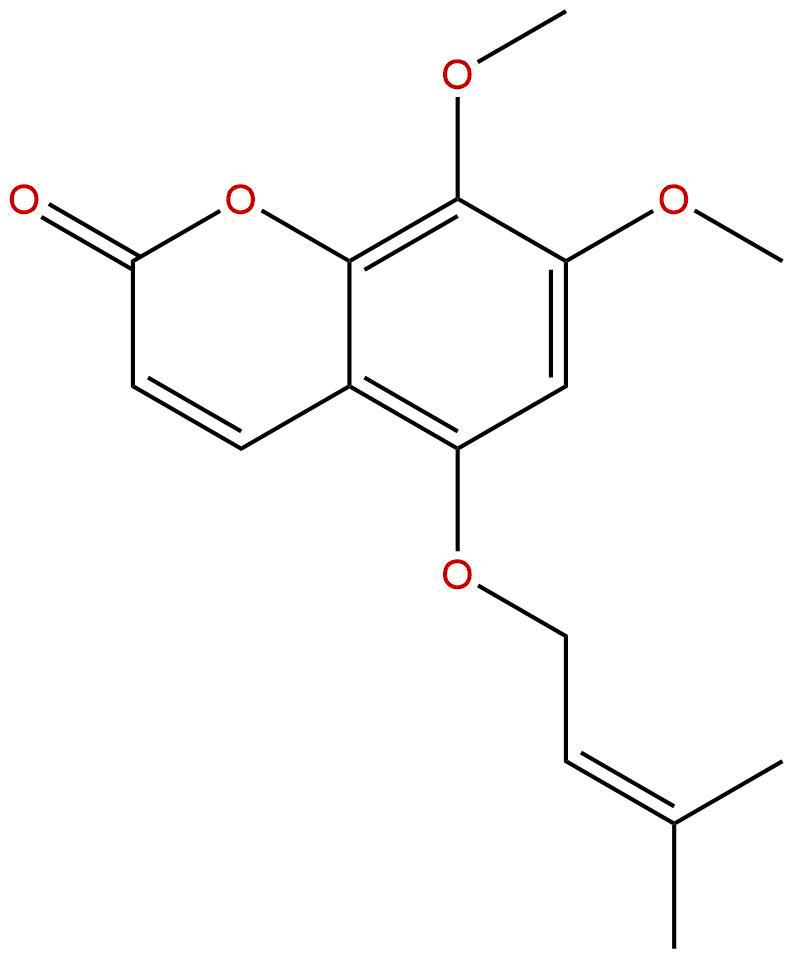
Coumarin compounds are a class of benzopyranone derivatives widely present in nature, which have attracted much attention due to their structural diversity and extensive biological activities such as anti-inflammatory, anticoagulant, antioxidant, anti-tumor, etc. Among them, some coumarins with isopentenyl groups showed significant anti parasitic activity. Neoartanin (CAS number: 104196-69-2) is a 5-dimethylallyloxy-7,8-dimethoxycoumarin derivative isolated from plants. Its unique chemical structure endows it with potential biological activity, especially in the field of anti malaria. Preliminary studies have shown that it may exert its effects by acting on multiple key targets of malaria parasites, such as PfCRT, PfMDR1, PfK13, etc. This article aims to provide a systematic review of the chemical structure, plant origin, pharmacological activity, mechanism of action, medicinal properties, and clinical application prospects of Neoartanin, in order to provide theoretical basis for the further development of this natural product.
Chemical structure and physicochemical properties
The chemical name of Neoartanin is 5-dimethylallyloxy-7,8-dimethoxycoumarin, which is a derivative of linear furan coumarin. Its core skeleton is coumarin (benzo - α - pyranone), which is connected to a dimethylallyl (3,3-dimethylallyl) side chain at the C-5 position through an ether bond, while at the C-7 and C-8 positions, it is respectively connected to a methoxy group (- OCH ∝). This structural feature combines the planarity of coumarin parent nuclei with the hydrophobicity of isopentenyl side chains.
From the perspective of physicochemical properties, the molecular weight of Neoartanin is 290.3150 g/mol, belonging to the category of small molecule compounds, which provides favorable conditions for its transmembrane transport and binding with biomolecules. Its lipophilic water partition coefficient (LogP) is 3.1885, indicating that the compound has strong lipophilicity, which is consistent with its hydrophobic isopentenyl side chain and aromatic ring structure. A higher LogP value typically indicates that the compound is easily permeable through biofilms, but may also lead to poor water solubility. In fact, its water solubility parameter is only 0.0214 mg/mL, which belongs to low water solubility compounds, which may limit its absorption and bioavailability in vivo. The topological polar surface area (TPSA) is 57.9000 Å ², which is lower than the commonly recognized threshold for good oral absorption (approximately 140 Å ²), indicating its potential for good oral absorption. In addition, the blood-brain barrier (BBB) penetration prediction is "high", indicating that Neoartanin may be able to enter the central nervous system, which requires attention to its potential central nervous system related activity or toxicity. Preliminary toxicological predictions indicate that the compound has a low risk of inhibiting hERG potassium channels ("no"), and the Ames test result is 0.6, suggesting that it may have a low genetic toxicity risk, but still needs to be validated through experiments.
Plant sources and extraction methods
Neoartanin, as a natural product, is mainly isolated from plants in the Rutaceae family. Specifically, it initially originated from clausena(Clausena)Found in plants, for example wampee(Clausena lansium)Leaves or root bark, and Fake yellow skin(Clausena excavata)Wait. These plants are often used in traditional Asian medicine to treat malaria, fever, and gastrointestinal diseases. In addition, there are also reports from Jiulixiang genus(Murraya)Plants (such as Murraya paniculata)The compound was isolated from the middle.
The extraction and separation of Neoartanin typically follow the classic process of natural product chemistry. Firstly, crush the dried plant materials (such as leaves, stem bark, or roots) and extract them using organic solvents. Common solvents include methanol, ethanol, or their mixed solvents, and sometimes non-polar solvents such as petroleum ether or dichloromethane are used for preliminary extraction to enrich lipophilic components. The crude extract was obtained by vacuum concentration of the extraction solution.
Subsequently, various chromatographic techniques were used to separate and purify the crude extract. The most commonly used method is silica gel column chromatography, which typically uses gradient elution systems such as n-hexane ethyl acetate or petroleum ether acetone. Due to its moderate polarity, Neoartanin is typically eluted in a medium polarity solvent ratio. In addition, in order to obtain higher purity compounds, Sephadex LH-20 gel column chromatography (for molecular sieve separation), preparative thin layer chromatography (PTLC) or high-performance liquid chromatography (HPLC) may also be used in combination. During the separation process, the target compound is often tracked by combining thin-layer chromatography (TLC) with ultraviolet light (254 nm or 365 nm) for color development or using color reagents such as vanillin sulfuric acid. Finally, the purified compound was structurally identified by spectroscopic methods such as nuclear magnetic resonance spectroscopy (NMR) and mass spectrometry (MS), confirming its identity as Neoartanin.
Pharmacological activity research
At present, research on the pharmacological activity of Neoartanin mainly focuses on the field of anti malaria, which is also its most concerned biological activity. Previous in vitro experiments have shown that Neoartanin has an effect on Plasmodium falciparum(P. falciparum)Multiple drug-resistant strains, such as those resistant to chloroquine, pyrimethamine, etc., exhibit significant inhibitory activity. Its half maximal inhibitory concentration (IC ₅₀) value is usually in the micromolar range, demonstrating potential comparable to some known antimalarial drugs.
In addition to its antimalarial activity, Neoartanin may also demonstrate potential in these areas, given the widespread antioxidant, anti-inflammatory, and anti-tumor activities of coumarin compounds. However, there are relatively few direct reports on its anti-inflammatory, antioxidant, or anti-tumor activities in the currently available literature, which may be a direction for future research to expand. It is worth noting that its high BBB penetration suggests that if the compound has neuroprotective or central nervous system related activity, it will have important research value. However, on the contrary, this may also pose a risk of central neurotoxicity and requires careful evaluation.
Mechanism of action and molecular targets
The anti malarial mechanism of Neoartanin has not been fully elucidated, but existing research suggests that it may exert its effects by acting on multiple key targets throughout the life cycle of malaria parasites. According to the provided target information, its potential mechanism of action involves the following aspects:
-
Acting on drug transporters PfCRT (Plasmodium falciparum chloroquine resistance transporter) and PfMDR1 (Plasmodium falciparum multidrug resistance protein 1) are key proteins that enable malaria parasites to develop resistance to traditional antimalarial drugs such as chloroquine. Neoartanin may reverse the efflux of drugs by malaria parasites by inhibiting the function of these transporters, thereby enhancing the accumulation of drugs in the parasite and restoring its sensitivity to existing drugs. This suggests that Neoartanin may have the potential to resist drug resistance.
-
Interference with folate metabolism PFDHFR (malignant malaria parasite dihydrofolate reductase) is a key enzyme in the folate synthesis pathway of malaria parasites and a target of the classic antimalarial drug ethambutol. Neoartanin may inhibit the activity of PFDHFR, block the nucleic acid synthesis of malaria parasites, and thus suppress their proliferation.
-
Acting on signal transduction and cell cycle The PFPK (malignant malaria parasite protein kinase) family is involved in regulating various physiological processes of malaria parasites, including cell cycle, differentiation, stress response, etc. Neoartanin may interfere with the signal transduction network of malaria parasites by inhibiting specific PFPKs, leading to growth arrest or death.
-
Affects the steady-state of calcium ions PfATP6 (malignant malaria parasite sarcoplasmic reticulum/endoplasmic reticulum calcium ATPase) is a key protein that maintains calcium homeostasis in malaria parasite cells. Artemisinin drugs are believed to exert antimalarial effects by activating PfATP6. Further research is needed to determine whether Neoartanin can also act on this target, but this is a potential mechanism worth exploring.
-
Interference with autophagy process PfATG8 (malignant malaria parasite autophagy related protein 8) is a key protein in the process of malaria parasite autophagy. Autophagy plays an important role in the response of malaria parasites to nutrient deficiency and drug stress. Neoartanin may disrupt the autophagy balance of malaria parasites and induce their death by interfering with the function of PfATG8.
-
Acting on other targets PfK13 (Kelch protein 13 of Plasmodium falciparum) is currently recognized as a molecular marker for artemisinin resistance. Although Neoartanin may not directly act on PfK13, it may exert its effects by affecting protein ubiquitination or oxidative stress pathways downstream of K13. In addition, targets such as PFCYTBC, PFCYT, and PFCYTb may be associated with cytochrome b or mitochondrial function, suggesting that Neoartanin may also act on the mitochondrial electron transport chain of malaria parasites.
In summary, Neoartanin may be a multi-target antimalarial compound, and its mechanism of action involves multiple aspects such as drug transport, folate metabolism, signal transduction, calcium homeostasis, autophagy, and mitochondrial function. This multi-target mode of action is its potential advantage in combating drug-resistant malaria parasites.
Evaluation of drug properties and pharmacokinetics
The evaluation of drug properties is a crucial step in determining whether natural products can transition from "seed compounds" to "lead compounds" and even "candidate drugs". Based on the provided parameters, we conducted a preliminary analysis of the pharmacological properties of Neoartanin.
Advantages:
* Low molecular weight:290.3 Da, Complies with the Lipinski's Rule of Five requirement of molecular weight<500, which is beneficial for oral absorption and in vivo distribution.
* Moderate to strong lipophilicity:LogP 3.19, Being within the ideal range (2-4) can help it penetrate biofilms, but it is also important to note that excessive lipid solubility may lead to metabolic instability or toxicity.
* Low hERG inhibition risk HERG channel inhibition is the main cause of cardiac toxicity (QT interval prolongation), and Neoartanin predicts no inhibition risk, which is an important safety advantage.
* Low genetic toxicity risk The Ames test result is 0.6, which is generally considered negative if it is less than 0.5. 0.6 is at a critical value, indicating that it may not have significant mutagenicity, but still needs to be validated through standard Ames tests.
Disadvantages and challenges:
* Very poor water solubility The water solubility of 0.0214 mg/mL is the biggest challenge facing its drug development. Low water solubility can seriously affect the dissolution and bioavailability of oral drugs, resulting in insufficient exposure in the body and difficulty in achieving effective therapeutic concentrations. This needs to be improved through formulation techniques (such as solid dispersions, nanocrystals, liposomes, etc.) or prodrug design.
* High BBB penetration Although it is advantageous for treating central nervous system diseases, high BBB penetration may pose unnecessary neurotoxic risks for antimalarial drugs. In addition, non targeted accumulation of drugs in brain tissue may lead to side effects. Therefore, it is necessary to systematically evaluate its neurotoxicity.
* Metabolic stability unknown Coumarin compounds are often easily hydrolyzed by esterases due to the presence of lactone rings, or undergo oxidative metabolism through the cytochrome P450 enzyme system. The isopentenyl side chain of Neoartanin is also a potential metabolic site. At present, there is a lack of data on its metabolic stability and metabolites, which are key factors determining its half-life and clearance rate in vivo.
Prospects of pharmacokinetics (PK)Based on its physicochemical properties, the oral absorption of Neoartanin may be limited by its low water solubility. Once absorbed, due to its high lipid solubility and small molecular weight, it may have a large distribution volume and can be widely distributed in tissues, including brain tissue. Its metabolism may mainly occur in the liver, through oxidative and hydrolytic pathways. The main excretion pathways may be bile and urine. In order to comprehensively evaluate its PK characteristics, in vivo pharmacokinetic experiments are required, including blood concentration time curves, tissue distribution, metabolite identification, and excretion studies after oral and intravenous administration.
Clinical application prospects and prospects
Neoartanin, as a natural coumarin derivative with multi-target antimalarial activity, has the following clinical application prospects:
-
Drug-resistant malaria Given its potential role in resistance related proteins such as PfCRT and PfMDR1, Neoartanin is expected to be developed as a novel antimalarial drug that can overcome existing drug resistance. Especially, if it can be used in combination with artemisinin based drugs, it may enhance the efficacy of artemisinin and delay the development of drug resistance through different mechanisms of action, such as inhibiting drug efflux, interfering with autophagy, etc.
-
As a lead compound for structural optimization The chemical structure of Neoartanin has clear modification sites. For example, the water solubility, metabolic stability, and selectivity can be improved by modifying the isopentenyl side chain at position C-5 (such as shortening, extending, or introducing polar groups), or replacing the methoxy groups at positions C-7 and C-8. The structure-activity relationship (SAR) study will guide the synthesis of a series of analogues in order to obtain candidate compounds with better drug properties.
-
Expand into other therapeutic areas Although anti malaria is currently its main research direction, its high BBB penetration suggests that if subsequent studies discover its activity in anti neuroinflammation, neuroprotection, or anti Alzheimer's disease, it will open up new application areas. In addition, its potential anti-tumor activity also deserves further exploration.
Future research directions:
* In depth mechanism research Through methods such as gene knockout, proteomics, and metabolomics, the exact molecular targets and network of action of Neoartanin in malaria parasites were identified.
* Pharmacodynamic evaluation in vivo Establish a mouse malaria model (such as P. berghei or P. chabaudi Evaluate the in vivo antimalarial efficacy, dose-response relationship, and safety of Neoartanin and its analogues using a model.
* Pharmacokinetics and toxicology The system conducts ADME (absorption, distribution, metabolism, excretion) research and conducts toxicological evaluations on acute toxicity, subchronic toxicity, and reproductive toxicity, with particular attention to the neurotoxicity that may be caused by its high BBB penetration.
* Formulation development Develop suitable drug delivery systems, such as liposomes, nanoparticles, phospholipid complexes, etc., to address the issue of poor water solubility and improve their oral bioavailability.
* Synthetic Biology and Total Synthesis Establish an efficient total synthesis route for Neoartanin or utilize synthetic biology techniques such as engineering yeast or Escherichia coli for biosynthesis, in order to solve the problem of limited natural sources and provide a material basis for subsequent large-scale production and structural modification.
Conclusion
Neoartanin, as a structurally unique 5-dimethylallyloxy-7,8-dimethoxycoumarin derived from traditional medicinal plants, has shown significant anti malaria potential, especially against drug-resistant malaria strains. Its multi-target mode of action involves multiple key pathways such as drug transport, folate metabolism, signal transduction, and autophagy, providing unique advantages in combating drug resistance. However, its extremely poor water solubility and potential high BBB penetration are the two major obstacles that must be overcome in its drug development. Future research should focus on further elucidating its mechanism of action, optimizing its pharmacokinetic properties, and verifying its value as an antimalarial lead compound through systematic in vitro and in vivo pharmacological and toxicological evaluations. Despite the numerous challenges, Neoartanin and its analogues undoubtedly provide valuable natural molecular templates for the development of a new generation of antimalarial drugs, and deserve continued attention and investment from both academia and industry.