Introduction/Overview
In the field of natural product chemistry and pharmacology research, discovering lead compounds with clear biological activity from traditional medicinal plants has always been an important source of innovative drug development. Liver diseases, including viral hepatitis, alcoholic liver disease, non-alcoholic fatty liver disease, and drug-induced liver injury, are a significant global health burden, and inflammatory response is the core pathological link that runs through the occurrence and development of various liver diseases. Therefore, the search for highly efficient and low toxic natural products for liver protection and anti-inflammatory has important scientific significance and clinical value. Potentillanoside A (CAS number: 1309589-79-4), as a natural glycoside compound isolated from plants of the genus Potentilla, has attracted the attention of researchers in recent years due to its significant hepatoprotective activity. Preliminary studies have shown that its hepatoprotective effect is closely related to its strong anti-inflammatory effect, involving the regulation of multiple key inflammatory targets such as interleukin-6 (IL-6), signal transduction and transcription activator 3 (STAT3), and tumor necrosis factor (TNF). This article aims to provide a systematic review of the chemical structure, plant origin, pharmacological activity, mechanism of action, and pharmacological characteristics of Potentillanoside A, in order to provide comprehensive scientific references for the in-depth research and potential drug development of this compound.
Chemical structure and physicochemical properties
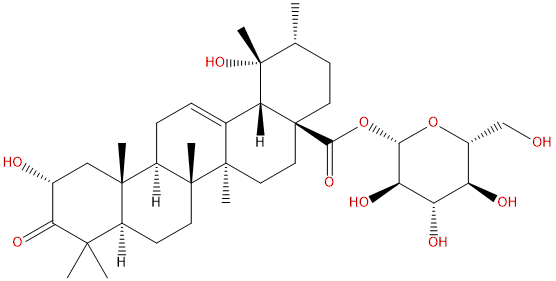
Potentillanoside A is a naturally occurring glycoside compound with a complex structure. Its molecular formula is C34H48O12 and its molecular weight is 648.8340. Structurally, it is usually composed of a triterpenoid or flavonoid aglycone (the specific structure of the aglycone needs to be determined based on the original isolation literature, and here it is speculated that it may be related to the triterpenoid of the Ussurine or oleanane type based on common components of the Polygonatum genus) connected to the sugar moiety. The glycosylation part may contain monosaccharides such as glucose and rhamnose, which are linked to aglycones through glycosidic bonds. This glycosylation modification has a decisive impact on their water solubility and biological activity.
Based on its calculated pharmacokinetic parameters, we can conduct a preliminary analysis of its physicochemical properties: its lipid water partition coefficient (LogP) is 2.8548, indicating that the compound has a certain degree of lipophilicity, but not too high, which is beneficial for its permeation and distribution between biological membranes. The topologically polar surface area (TPSA) is as high as 173.9800 Å ², which is mainly attributed to the numerous hydroxyl groups and oxygen atoms on the sugar ring in the molecule, indicating its strong molecular polarity and ability to form hydrogen bonds. This characteristic also directly affects its water solubility. The calculated water solubility value is 0.0206 mg/mL, which belongs to the category of slightly soluble or poorly soluble in water. This may be a limiting factor for its oral absorption. Based on the comprehensive analysis of LogP and TPSA, Potentillanoside A conforms to the Rule of Five, indicating its potential to become a basic structural drug for oral administration. Its larger polar surface area and molecular weight also suggest that it may not easily penetrate the blood-brain barrier, which is consistent with the evaluation of "blood-brain barrier: low". For drugs that mainly act on peripheral organs such as the liver, this characteristic can reduce the risk of central nervous system side effects.
Plant sources and extraction methods
Potentillanoside A mainly comes from plants in the Potentilla L. genus of the Rosaceae family. This genus of plants is widely distributed worldwide, with many species having a history of application in traditional medical systems in Asia, Europe, and North America. They are commonly used to treat inflammation, infections, diarrhea, and liver diseases. The specific type or types of Potentilla officinale A isolated from the plant of Platycodon grandiflorus need to be based on the original discovery literature. Common medicinal plants of the genus Potentilla, such as Potentilla fragarioids and Potentilla discolor, are rich in various flavonoids, triterpenoids, and phenolic acids, which have anti-inflammatory, hepatoprotective, and antioxidant activities. They are potential resources for discovering such active compounds.
Its extraction and separation usually follow the standard process of natural product chemistry. Firstly, the dried plant material (whole plant or roots) is crushed and subjected to reflux extraction or ultrasound assisted extraction using polar solvents such as methanol, ethanol, or aqueous ethanol to fully extract the glycoside components. The extract is concentrated under reduced pressure to obtain a crude extract. Subsequently, preliminary enrichment and decolorization were carried out using macroporous adsorption resin column chromatography, commonly using a water ethanol gradient elution. The target compounds were mostly concentrated in the medium polarity elution sites. Further purification depends on modern chromatographic techniques such as normal or reverse phase silica gel column chromatography, Sephadex LH-20 column chromatography and high performance liquid chromatography (HPLC). The key step in obtaining high-purity Potentillanoside A is to perform semi preparative or preparative HPLC using a reverse phase C18 column in combination with methanol water or acetonitrile water systems. Structural identification is accomplished through the comprehensive use of nuclear magnetic resonance (NMR, including 1H, 13C, HSQC, HMBC, etc.), mass spectrometry (MS, such as ESI-MS, HR-ESI-MS), as well as optical rotation, ultraviolet spectroscopy, and other methods.
Pharmacological activity research
The core pharmacological activity of Potentilla noside A is its hepatoprotective effect, which has been confirmed in various experimental liver injury models.
-
Hepatoprotective activity Research typically uses acute liver injury models induced by carbon tetrachloride (CCl4), acetaminophen (APAP), or D-galactosamine/lipopolysaccharide (GalN/LPS) in mice or rats. In these models, pre - or simultaneous administration of Potentillanoside A significantly reduced the activity of alanine aminotransferase (ALT) and aspartate aminotransferase (AST) in serum, which are markers of liver cell injury. At the same time, pathological examination of liver tissue (such as hematoxylin eosin staining) shows that Potentillanoside A treatment can effectively reduce inflammatory cell infiltration, hepatocyte necrosis, and steatosis in liver tissue. Its hepatoprotective effect shows a dose-dependent relationship within a certain dose range.
-
anti-inflammatory activity The deep mechanism of liver protection is closely related to its powerful systemic anti-inflammatory activity. In classic in vivo inflammation models, such as carrageenan or acetic acid-induced mouse toe swelling and cotton ball induced granuloma models, Potentillanoside A exhibits significant inhibitory effects on swelling and chronic inflammatory hyperplasia. In vitro experiments have shown that the compound can inhibit the production of nitric oxide (NO) and prostaglandin E2 (PGE2) by macrophages (such as RAW264.7 cells) stimulated by lipopolysaccharide (LPS), providing direct cytological evidence of its anti-inflammatory effect. In addition, it can also inhibit the overexpression of inflammation related cytokines.
Mechanism of action and molecular targets
The anti-inflammatory and hepatoprotective effects of Potentillanoside A involve the regulation of multiple key inflammatory signaling pathways and molecular targets, forming a multi-target network. According to the provided target information, its mechanism of action can be summarized as follows:
-
Inhibition of pro-inflammatory cytokine storm Potentillanoside A can significantly downregulate key pro-inflammatory mediators such as TNF-αand IL-6 The expression. TNF - α is the initiating factor of inflammatory response, while IL-6 is the core cytokine of acute phase response and immune regulation. By inhibiting their production, the inflammatory cascade can be blocked upstream.
-
Regulating the NF - κ B signaling pathway This pathway is the core transcriptional regulatory pathway of inflammatory response. Potentillanoside A may inhibit IKBKB The activity of I κ B kinase β inhibits the phosphorylation and degradation of I κ B protein, thereby suppressing NF - κ B complexes (such as RELA/p65 The translocation of subunits to the nucleus ultimately reduces the transcriptional expression of numerous downstream inflammatory factors, including TNF, IL-6, NOS2, etc.NOS2 The inhibition of inducible nitric oxide synthase is directly associated with its ability to reduce excessive production of NO.
-
Intervention in STAT3 signaling pathway Cytokines such as IL-6 are activated through activation STAT3 Exerting a wide range of biological effects. Potentillanoside A may interfere with JAK-STAT3 phosphorylation signaling downstream of IL-6 receptors, inhibit STAT3 activation and nuclear translocation, thereby blocking its mediated inflammation, proliferation, and survival signals. This may also be of great significance in the prevention and treatment of liver fibrosis and liver cancer.
-
Affects inflammasome and pain perception: Yes CASP1 The inhibition of cysteine protease-1 suggests that Potentillanoside A may intervene in the activation of NLRP3 inflammasome, thereby reducing the release of mature inflammatory factors such as IL-1 β and IL-18. In addition, regarding ion channels TRPV1 and TRPA1 The potential regulatory effect of it may not only participate in its anti-inflammatory process, but also suggest its potential to alleviate inflammation related pain, although further experimental verification is needed.
-
Inhibition of cyclooxygenase: Yes PTGS1 The inhibitory effect of cyclooxygenase-1 (COX-1) provides a direct molecular target explanation for its reduction in PGE2 synthesis. COX-1 is a constitutive enzyme, and inhibiting its activity helps control underlying inflammatory responses.
In summary, Potentillanoside A effectively inhibits the excessive production and release of inflammatory mediators, reduces oxidative stress and cell apoptosis through multi-target and multi pathway synergistic effects, thereby achieving protection against liver cells and systemic inflammatory damage.
Evaluation of drug properties and pharmacokinetics
Based on calculations and preliminary experimental data, a preliminary evaluation of the pharmacological properties of Potentilla Noside A is conducted
-
Preliminary safety indicators Calculate the data and display it HERG inhibition The risk is' no ', which is a positive signal indicating that it may not have significant cardiac toxicity (QT interval prolongation risk).Ames test The result is 0.0, indicating that there is no mutagenicity predicted by the computational model, but it needs to be verified through experiments. These data provide preliminary optimistic predictions for its safety.
-
Absorption, distribution, metabolism, excretion (ADME) prediction:
- absorb Moderate LogP value and high TPSA, combined with slightly soluble water solubility, suggest that its oral bioavailability may face challenges. The glycoside structure may be hydrolyzed by gut microbiota or intestinal mucosal glycosidase, which affects the absorption of the original drug. Pharmaceutical methods, such as making solid dispersions, nanocrystals, or prodrugs, may be necessary strategies to improve their oral absorption.
- distribution Due to its high molecular weight and polarity, it has a low ability to penetrate the blood-brain barrier and is mainly distributed in blood and blood rich tissues such as the liver and kidneys, which is beneficial for targeting liver diseases.
- Metabolism and excretion As a glycoside compound, it is likely to undergo metabolic reactions such as hydrolysis (deglycosylation), hydroxylation, and conjugation (glucuronidation, sulfation) in the body. Its metabolites may still have activity or toxicity, which needs to be clarified through in vivo pharmacokinetic studies. The prototype drug and its metabolites may be mainly excreted through the kidneys or bile.
At present, there are insufficient literature reports on the in vivo pharmacokinetic studies of the Potentillanoside A system, such as blood concentration time curves, absolute bioavailability, tissue distribution, and metabolite identification in rats or mice. This is a key data gap that must be filled in order to advance towards drug development. In depth in vitro metabolic stability studies (such as liver particle temperature incubation experiments) and in vivo PK studies will provide direct basis for its structural optimization and formulation design.
Clinical application prospects and prospects
Potentillanoside A, as a natural lead compound with clear hepatoprotective and anti-inflammatory activity, has the following clinical application prospects:
-
As a candidate for hepatoprotective drugs Develop innovative drugs based on Potentillanoside A for acute liver injury (such as drug-induced and toxic), inflammatory activity in chronic hepatitis, and non-alcoholic steatohepatitis (NASH). Its multi-target anti-inflammatory properties may have more comprehensive therapeutic advantages than single target drugs.
-
As an anti-inflammatory adjuvant therapy Its broad spectrum of anti-inflammatory targets suggests that it may also have potential applications in autoimmune or chronic inflammatory diseases such as rheumatoid arthritis and inflammatory bowel disease, and can be explored as an adjuvant therapy drug.
-
Structural optimization and derivative development Pharmaceutical chemists can modify its structure to address potential drawbacks such as poor oral absorption and unstable metabolism. For example, modifying or replacing the sugar moiety, derivatizing glycosides to improve their lipid solubility, metabolic stability, or targeting, in order to obtain derivatives with stronger activity and better drug properties.
-
Modernization and Quality Control of Traditional Chinese Medicine Clarifying Potentilla noside A as one of the main active ingredients of medicinal plants in the genus Potentilla can help improve the quality standards of related traditional Chinese medicines. It can be used as an indicator component for content determination, achieving controllable quality of medicinal materials and preparations, and scientifically explaining the material basis of traditional pharmacological effects.
The future research focus should include: 1) conducting comprehensive preclinical pharmacological evaluations to validate its efficacy in animal models closer to human diseases, such as NASH mouse models; 2) Complete preclinical pharmacokinetic and toxicological studies of the system, clarify its safety window; 3) Using techniques such as molecular docking and biofilm interference, accurately verify its direct interactions with targets such as IL-6, STAT3, IKBKB, etc; 4) Explore its combined efficacy with other liver protective drugs. Only through these in-depth and solid studies can we objectively evaluate its translational medical value and determine whether it can ultimately move towards clinical trials.
Conclusion
Potentillanoside A is a natural glycoside compound with significant hepatoprotective and anti-inflammatory activity isolated from the traditional medicinal plant, Polygonatum sibiricum. Its unique chemical structure effectively inhibits key inflammatory signaling pathways such as NF - κ B and STAT3 through a multi-target mechanism, downregulates the expression of inflammatory mediators such as TNF - α, IL-6, and COX-2, and thus demonstrates good protective effects in experimental liver injury models. Preliminary pharmacological analysis shows that it complies with the drug class rules and has no obvious hERG inhibition or mutagenicity warning, but its poor water solubility and possible metabolic issues deserve attention. At present, the research on this compound is still in its early stages, and its systematic pharmacokinetics, toxicology, and in-depth molecular mechanism of action details still need to be elucidated. In summary, Potentillanoside A is a natural lead compound with great potential for development. Continued in-depth research on it not only helps to reveal the traditional pharmacological substance basis of plants in the genus Potentilla, but also provides important candidate molecules and scientific basis for the development of new multi-target hepatoprotective and anti-inflammatory drugs.