Introduction/Overview
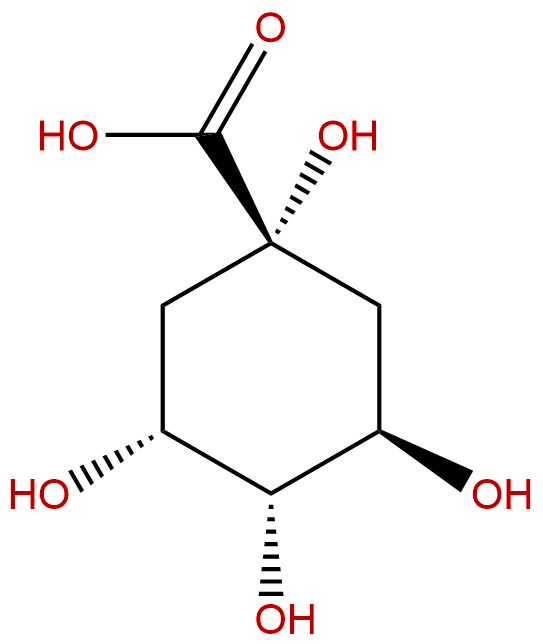
Quinic acid, also known as 1,3,4,5-tetrahydroxycyclohexanecarboxylic acid, is a natural cyclic organic acid widely found in higher plants, ferns, and some microorganisms. Its CAS number is 77-95-2, and it usually exists in the form of (-) - enantiomer. It is a key intermediate in plant secondary metabolism, especially in the shikimic acid pathway. For a long time, quinic acid has attracted much attention due to its role as a precursor for the synthesis of many important bioactive compounds such as chlorogenic acid and quinine. In recent years, with the deepening of research on natural products, the diverse pharmacological activities exhibited by quinic acid itself, especially its potential in the field of antiviral therapy, have gradually become a new hotspot in pharmacological research. This article aims to systematically review the chemical properties, plant sources, and pharmacological activities of quinic acid, with a focus on analyzing its antiviral mechanism and molecular targets. It also provides a scientific evaluation and outlook on its pharmacological properties and clinical application prospects.
Chemical structure and physicochemical properties
The molecular formula of quinic acid is C7H12O6, with a molecular weight of 192.1670. Its basic structure is a hexagonal cyclohexane skeleton, with a carboxyl group connected at position 1 (chiral center) and a hydroxyl group at positions 3, 4, and 5, forming a substitution mode of 1,3,4,5-tetrahydroxyl. The structure of this polyhydroxycyclohexanecarboxylic acid endows it with unique physicochemical properties.
From the analysis of pharmacological parameters, quinic acid exhibits typical strong hydrophilicity characteristics. The calculated lipid water partition coefficient (LogP) is -2.0979, indicating extremely low lipid solubility. The topologically polar surface area (TPSA) is as high as 118.2200 Å ², mainly attributed to the abundant hydroxyl and carboxyl groups in the molecule, which are the main sources of hydrogen bond donors and acceptors. The combination of high TPSA and low LogP determines its excellent water solubility, with a calculated value of approximately 163.6 mg/mL, making it easy to dissolve and diffuse in aqueous systems. However, this strong polarity also results in a weaker ability to cross the lipid bilayer membrane, with a predicted "low" blood-brain barrier (BBB) permeability, meaning it is difficult to enter the central nervous system. In the preliminary safety screening, quinic acid did not show hERG potassium channel inhibitory activity (predicted as "no"), indicating a low potential risk of cardiac toxicity; The Ames test predicted a value of 0.0, indicating that it may not be mutagenic and providing a good safety basis for subsequent development.
Plant sources and extraction methods
Quinic acid is widely distributed in the plant kingdom and is an important component of many medicinal and edible plants. Its main sources include:
1. Coffee plants Coffee beans are one of the most famous sources of quinic acid, especially in unbaked coffee beans where the content is high. During the baking process, some quinic acid is converted into other flavor compounds such as chlorogenic acid lactone.
2. Rosaceae plants Fruits such as hawthorn and cherry blossom are rich in quinic acid and its derivatives.
3. Asteraceae plants Such as sunflowers, chicory, etc.
4. Other sources Tea, apples, peaches, pears, tobacco, and various Chinese medicinal herbs such as honeysuckle and Artemisia scoparia also contain a certain amount of quinic acid.
The extraction method of quinic acid mainly relies on its good water solubility and acidity. The conventional extraction process includes:
* Solvent extraction method The most commonly used method. Water or low concentration alcohols (such as 30-70% ethanol) are commonly used as solvents, and extraction is assisted by heating reflux or ultrasound. The water extraction method has low cost and high safety, but there are many impurities; The alcohol extraction method has good selectivity and can simultaneously extract multiple phenolic acids.
* Ion exchange resin method By utilizing the carboxyl properties of quinic acid, selective adsorption can be achieved using anion exchange resin, followed by elution with dilute acid or base to obtain products with high purity.
* Macroporous adsorption resin method Purification can be achieved by combining solvent extraction solutions and utilizing the adsorption and desorption effects of resins (such as AB-8, D101, etc.) to effectively remove impurities such as sugars and proteins.
* Modern Separation Technology Technologies such as preparative high-performance liquid chromatography (Prep HPLC) and high-speed counter current chromatography (HSCCC) are used for the preparation of high-purity quinic acid monomers, but the cost is high and they are mostly used for laboratory research.
The extracted crude product usually needs to be further purified through steps such as concentration, precipitation, crystallization, or chromatography.
Pharmacological activity research
Quinic acid is not only a metabolic intermediate, but also has a wide range of biological activities, among which antiviral activity is currently the core focus of research.
-
Antiviral activity This is the most promising pharmacological effect of quinic acid. Research has shown that quinic acid and its derivatives exhibit inhibitory effects on various viruses.
- Antiherpesvirus Research has shown that quinic acid can inhibit the replication of herpes simplex virus types 1 (HSV-1) and 2 (HSV-2). Its function may be related to interfering with early protein expression and genome replication of the virus.
- Anti human immunodeficiency virus (HIV)Quinic acid has been reported to inhibit the replication of HIV-1 in cell culture. Its mechanism may involve multiple links, including acting as a weak inhibitor of HIV-1 integrase (INT) and potentially interfering with virus entry by affecting host cytokines such as CCR5 and CXCR4 co receptors.
- Anti influenza virus Some studies suggest that quinic acid may exert anti influenza effects by regulating host immune responses or inhibiting viral neuraminidase activity.
- Anti other viruses There have also been reports of inhibitory activity against hepatitis B virus (HBV), hepatitis C virus (HCV), and other viruses.
-
Antioxidant and anti-inflammatory activities Quinic acid can effectively scavenge free radicals such as DPPH and ABTS, demonstrating significant antioxidant capacity. Its anti-inflammatory effect has been confirmed in various cell models (such as LPS induced macrophages), which can inhibit the production of pro-inflammatory factors (such as TNF - α, IL-6, IL-1 β), and its mechanism may be related to the inhibition of inflammatory signaling pathways such as NF - κ B.
-
Neuroprotective activity Although its BBB permeability is low, some studies have found that quinic acid can counteract glutamate induced neuronal toxicity and reduce oxidative stress in vitro models, suggesting its potential benefits for neurodegenerative diseases, but its ability to enter the brain needs to be improved through structural modifications.
-
Other activities It also includes mild antibacterial, hepatoprotective and choleretic effects, and regulation of glucose and lipid metabolism.
Mechanism of action and molecular targets
The pharmacological effects of quinic acid, especially its antiviral activity, are achieved through interactions with multiple molecular targets, reflecting the characteristics of multi-target action.
-
Direct inhibition of viral enzymes:
- HIV-1 protease (HIV1-PR) and integrase (INT)Molecular docking studies have shown that the polyhydroxy structure of quinic acid can interact with the active sites of HIV-1 PR and INT through hydrogen bonding, potentially competitively inhibiting the function of these key viral enzymes, hindering the processing of viral multiprotein precursors, and the integration of viral DNA into the host genome.
- Herpesvirus related enzymes Quinic acid may inhibit the activity of thymidine kinase (TK), DNA polymerase helper protein (UL42), and major DNA polymerase (UL54) in HSV, thereby interfering with the synthesis of viral DNA. In addition, interference with the immediate early protein ICP27 may affect the transcription and regulation of viral genes.
-
Interference with the interaction between viruses and host cells:
- The virus enters the stage Quinic acid may interfere with the binding or membrane fusion process between the virus and the receptor by acting on the HIV co receptors CCR5 and CXCR4 on the surface of host cells, or interacting with the envelope glycoprotein D (gD) of HSV, preventing the virus from entering the cell.
- Virus release and transmission The mechanism is not fully understood and may involve regulation of the host cell environment.
-
Regulating host immunity and oxidative stress response:
- Myeloperoxidase (MPO)MPO is a key enzyme in the production of strong oxidants such as hypochlorous acid by neutrophils, and plays an important role in inflammation and virus related tissue damage. Quinic acid may directly eliminate reactive oxygen species (ROS) produced by MPO or slightly regulate MPO activity through its antioxidant properties, thereby reducing excessive inflammation and oxidative damage caused by viral infection.
- Inflammatory signaling pathway By inhibiting the overactivation of signaling pathways such as NF - κ B and MAPK, downregulating the expression of pro-inflammatory cytokines, creating an unfavorable intracellular environment for virus replication, and alleviating pathological damage caused by viral infection.
In summary, the antiviral mechanism of quinic acid does not rely on a single efficient target inhibition, but rather on mild regulation through multiple targets and links, including direct inhibition of key viral enzymes, blocking virus entry, and regulating host immune inflammatory status, forming a synergistic networked mode of action.
Evaluation of drug properties and pharmacokinetics
Based on its physical and chemical properties and existing research, a preliminary evaluation of the pharmacological potential of quinic acid as a candidate drug is conducted
-
Advantage:
- High security Natural source, the human body consumes low doses through long-term diet. Preliminary prediction shows no hERG inhibition or mutagenic risk, and good biocompatibility.
- Strong water solubility Easy to make into injectable or oral liquid preparations, with rapid absorption.
- Multi-target effect May have an advantage over viruses that are prone to developing drug resistance, such as HIV and influenza viruses, and are less likely to completely fail due to a single target mutation.
- Readily available materials It can be extracted on a large scale from inexpensive plant resources such as coffee processing by-products at a lower cost.
-
Challenges and Shortcomings:
- Poor membrane permeability The extremely high polarity and low LogP may result in low oral bioavailability, weak cell membrane penetration ability, and limited efficiency in reaching intracellular targets.
- Low blood-brain barrier permeability Not conducive to the treatment of central nervous system viral infections (such as HSV encephalitis).
- Metabolism and elimination in the body As a small molecule organic acid, it is expected to undergo rapid metabolism in the body and may be rapidly excreted through the kidneys in its prototype or bound form, resulting in a short half-life and requiring frequent administration.
- Activity intensity Compared to some synthetic antiviral drugs, their inhibitory activity against a single target (such as IC50 value) may be weaker and require higher concentrations to achieve therapeutic effects.
-
Prospects of pharmacokinetics Currently, there is limited research on the pharmacokinetics of quinic acid system. After oral administration, it is expected to be mainly absorbed in the upper small intestine through passive diffusion or carrier mediated methods, but due to its high polarity, the absorption rate may be limited. Widely distributed in body fluids after absorption, but with poor tissue permeability. Metabolic pathways may involve oxidation and binding reactions of hydroxyl groups, such as glucuronidation and sulfation. Mainly excreted through the kidneys. Future research needs to clarify its absolute bioavailability, distribution volume, half-life, and major metabolites through animal experiments.
Clinical application prospects and prospects
Quinic acid, as a safe and multi-target natural antiviral lead compound, has unique value and clear direction in clinical application development.
-
Direct drug development:
- Indication positioning: It is more suitable to be developed as a local drug preparation, such as cream, gel or mouthwash used to treat HSV infection of skin and mucosa (such as herpes labialis and genital herpes). It can also be used as an adjuvant therapy drug, combined with existing antiviral drugs, to enhance efficacy or reduce the occurrence of drug resistance through multi mechanism synergy.
- Structural modification and optimization This is a key strategy to enhance its medicinal properties. By esterifying, amidating, or connecting lipophilic groups to carboxyl or hydroxyl groups for prodrug design, their lipophilicity and membrane permeability can be significantly improved, enhancing oral bioavailability and tissue distribution. For example, synthesizing quinate ester derivatives may enhance their cellular uptake and target binding abilities without losing their activity.
-
Functional foods and health products By utilizing its antioxidant, anti-inflammatory, and mild antiviral properties, quinic acid and its rich plant extracts (such as green coffee bean extract) can be used as health food ingredients to enhance immunity and assist in preventing upper respiratory tract infections.
-
As a drug synthesis intermediate or pharmacophore Quinic acid structure is a classic template for polyhydroxycyclohexane, which can be used as a chiral block or core pharmacophore for synthesizing more complex and more active antiviral drugs, such as certain neuraminidase inhibitors or integrase inhibitors.
-
Future research directions:
- In depth mechanism research Using surface plasmon resonance (SPR), isothermal titration calorimetry (ITC), co crystallization and other techniques, accurately elucidate its binding mode and affinity with targets such as MPO, CCR5/CXCR4, viral protease, etc.
- Systematic pharmacodynamic evaluation Validate its in vivo antiviral and immune regulatory effects in more animal infection models, such as HSV mouse models and influenza mouse models.
- Development of a new delivery system Research on delivery systems such as nanoparticles, liposomes, and microemulsions that encapsulate quinic acid to improve its stability, targeting, and bioavailability.
- Construction and screening of derivative libraries Systematically synthesize a series of quinic acid derivatives and conduct structure-activity relationship (SAR) studies to search for candidate molecules with stronger activity and better drug properties.
Conclusion
Quinic acid, a common plant acid derived from the shikimic acid pathway, has transformed from a simple metabolic intermediate to a natural lead compound with significant development value due to its extensive and unique pharmacological activities, especially its multi-target antiviral mechanism. Although its strong hydrophilicity leads to drug defects such as poor membrane permeability and low bioavailability, which are currently the main challenges, this provides a clear direction for the structural optimization of medicinal chemists. It is entirely possible to overcome these obstacles and translate their potential into clinical value through rational prodrug design, structural modification, and the application of novel delivery systems. In the future, with more detailed analysis of its molecular mechanism of action and in-depth research on its derivatives, quinic acid is expected to open up a new path from nature and based on multi target synergy in the field of antiviral drugs, especially in dealing with complex viral infection and drug resistance, providing new strategies and options for the prevention and treatment of infectious diseases.