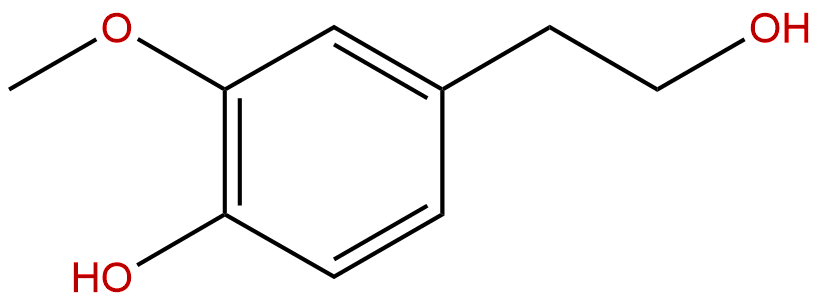


Product name: Homovanillyl alcohol
Synonym name:
Catalogue No.: SBP03661
Cas No.: 2380-78-1
Formula: C9H12O3
Mol Weight: 168.192
Botanical Source:
Physical Description:
Type of Compound: Phenols
Purity: 95%~99%
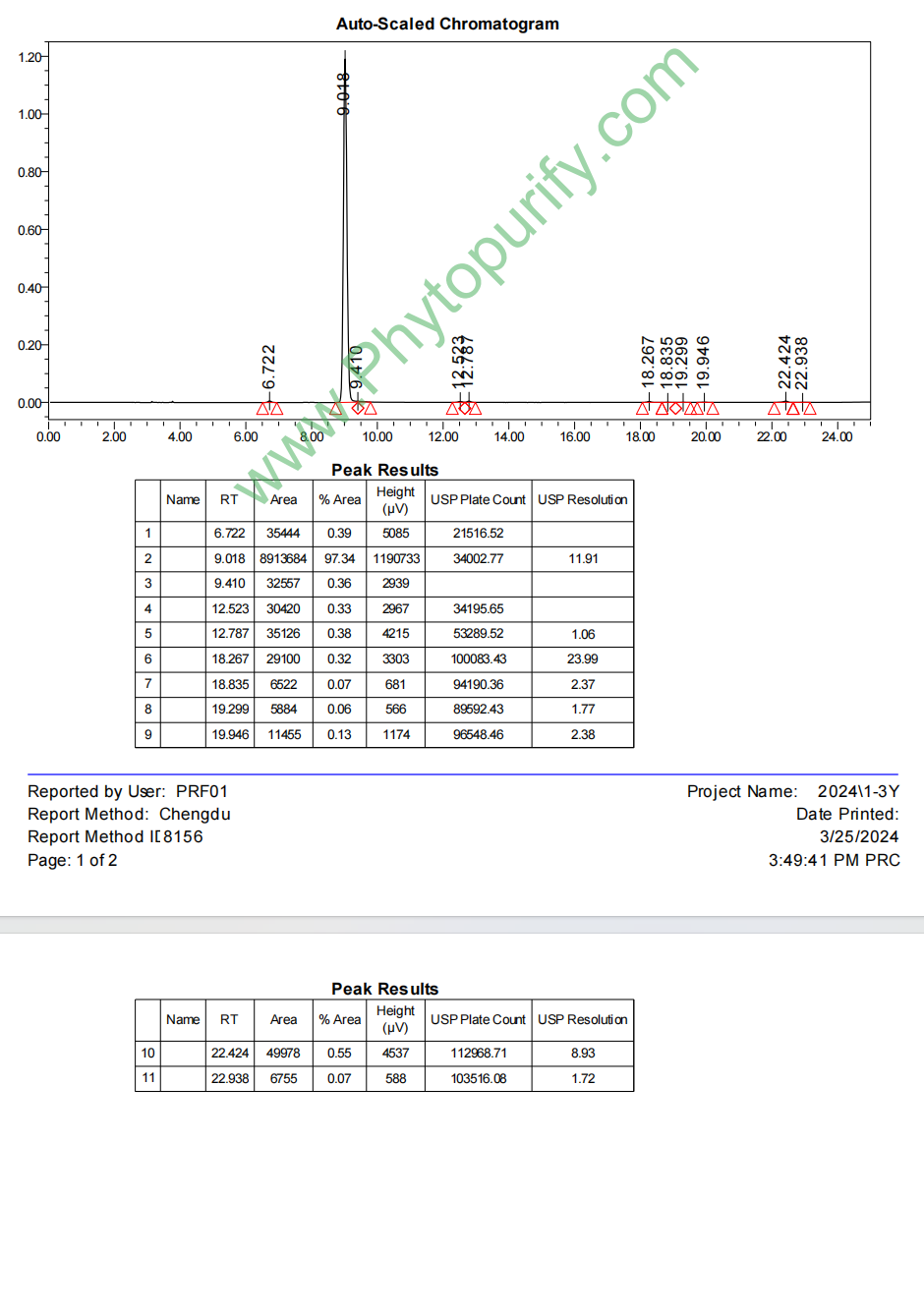
Analysis Method: HPLC-DAD or/and HPLC-ELSD
Identification Method: Mass, NMR
Packing: Brown vial or HDPE plastic bottle
The product could be supplied from milligrams to grams. Inquire for bulk scale.
We provide solution to improve the water-solubility of compounds, thereby facilitating the variety of activity tests and clinic uses.
For Reference Standard and R&D, Not for Human Use Directly.
HPLC of Homovanillyl alcohol
Storage conditions:Short-term storage at 2~8℃, long-term storage at -20 ~ -80℃
49.6900
1.1842
1.1827
10.9061
6.7486
19.9566
High
45.5864
1.7522
Yes
Yes
No
No
Yes
No
0.0
No
No
Yes
Yes
In the field of natural product chemistry and pharmacology research, metabolic products derived from dietary components are increasingly receiving attention due to their potential biological activity. Homovanillyl alcohol (HVA), chemical name 4-hydroxy-3-methoxyphenylethanol, CAS number 2380-78-1, is one of the compounds with significant research value. It is not only one of the main biological metabolites of hydroxytyrosol (HT), a star phenolic compound in olive oil and wine, in the human body, but also exhibits significant biological effects that cannot be ignored. Hydroxytyrosol, as the core health component of virgin olive oil (VOO), has been widely proven to have antioxidant and cardiovascular protective effects. As a molecule that remains active even after metabolism, high vanillol forms a crucial part of the complete puzzle for understanding the health benefits of Mediterranean diets such as olive oil.
Early research focused on hydroxytyrosol, but with a deeper understanding of the metabolic processes within natural products, the role of high vanillol as a "epigenetic element" or "metabolically active product" has gradually become prominent. Research has shown that high vanillin can effectively protect red blood cells (RBCs) from oxidative stress damage and demonstrate potential protective effects against cardiovascular disease. These findings suggest that high vanillin is not a simple metabolic endpoint, but rather a solid molecule with independent pharmacological activity. Therefore, a systematic review of the chemistry, sources, pharmacological activities, mechanisms of action, and medicinal potential of high vanillol is of great scientific significance for a deeper understanding of the overall biological effects of phenolic compounds related to olive oil, as well as for the development of new antioxidant and cardiovascular protective agents based on its structure. This article aims to integrate existing research and comprehensively elaborate on the current research status and future prospects of high vanillyl alcohol.
The molecular formula of high vanilla alcohol is C9H12O3, with a molecular weight of 168.1920 g/mol. Its chemical structure can be regarded as a derivative of phenylethanol, with methoxy (- OCH3) and hydroxyl (- OH) groups attached to the 3rd and 4th positions of the benzene ring, respectively, and a side chain of hydroxyethyl (- CH2CH2OH). This structure makes it structurally similar and distinct from the parent compound hydroxytyrosol (3,4-dihydroxybenzene ring) and the neurotransmitter metabolite homovanillic acid (carboxylic acid on the side chain).
From the analysis of physical and chemical properties, the calculated value of the lipid water partition coefficient (LogP) of high vanilla alcohol is about 1.18, indicating that it has a certain lipophilicity, but overall it still tends to be hydrophilic. Its topological polar surface area (TPSA) is 49.69 Å ², which is relatively small and conducive to transmembrane transport. The water solubility data shows that its solubility is about 10.9 mg/mL, which belongs to the solubility range. These parameters collectively determine that high vanilla alcohol has good membrane permeability. Of particular note is that, based on its physicochemical properties, high vanillyl alcohol is predicted to have a high blood-brain barrier (BBB) permeability, providing a structural basis for its potential central nervous system related activities (such as neuroprotection), distinguishing it from many polar phenolic substances that are difficult to enter the brain.
In terms of stability, as a phenolic compound, high vanillyl alcohol may be unstable in alkaline or strongly oxidizing environments, but relatively stable within the physiological pH range. The phenolic hydroxyl group in its structure is the key functional group for its antioxidant activity, which can neutralize free radicals by providing hydrogen atoms or electrons.
Gaoxiangcao alcohol is not a widely distributed native phenolic compound in nature, and its main source is closely related to hydroxytyrosol. The most direct plant source is olives(Olea europaea L. ) and its products, especially virgin olive oil (VOO) and olive leaves. In olive fruit and leaves, high vanillyl alcohol can coexist in trace form with hydroxytyrosol and its various glycosides (such as oleuropein). In addition, wine, especially red wine, is also one of its dietary sources, as wine grapes also contain relevant phenolic precursors.
However, the high vanillin in the human circulation mainly comes from the metabolism of hydroxytyrosol in the body. After consuming olive oil or olive products rich in hydroxytyrosol, hydroxytyrosol undergoes extensive phase I and phase II metabolism during intestinal absorption and after entering the body. Among them, the methylation reaction catalyzed by catechol-O-methyltransferase (COMT) is one of the key steps, which can methylate the hydroxyl group at the 4-position of the hydroxytyrosol benzene ring, thereby generating high vanillol. Therefore, high vanillol is one of the main metabolites of hydroxytyrosol that can be detected in blood and urine, and its plasma concentration is sometimes even higher than that of the original hydroxytyrosol, highlighting its importance as an active metabolite.
In terms of laboratory preparation and extraction, there are two main ways to obtain high vanillin: one is to separate it from natural raw materials, but due to its extremely low content, this method is not efficient; The second is chemistry or biosynthesis. Chemical synthesis usually starts with vanillin or isoeugenol as raw materials and is prepared through steps such as reduction. Biosynthesis may utilize microorganisms or enzymes to catalyze the conversion of hydroxytyrosol or other inexpensive precursors for production, which is a more promising method for green chemistry. For high-purity and high vanilla alcohol for research purposes, it is mainly obtained commercially through chemical synthesis and purified through techniques such as column chromatography and recrystallization.
A large number of in vitro and in vivo studies have revealed various pharmacological activities of high vanillin, with its core revolving around antioxidant and cardiovascular protection, and extending to other related fields.
1. Antioxidant activity
This is the most fundamental and widely studied activity of high vanilla alcohol. In chemical systems, it can effectively scavenge free radicals such as DPPH and ABTS ⁺, and exhibits iron ion reducing ability (FRAP). In cell models, its antioxidant protective effect is particularly significant. Research has confirmed that high vanillin can significantly protect red blood cells from oxidative hemolysis and membrane lipid peroxidation induced by hydrogen peroxide (H ₂ O ₂) or AAPH (free radical initiator). Its protective efficacy is comparable to or even superior to hydroxytyrosol in some models. In addition to red blood cells, it also shows a protective effect on other cell types that are susceptible to oxidative damage, such as endothelial cells and neurons, by reducing intracellular reactive oxygen species (ROS) levels and maintaining cell vitality.
2. Cardiovascular protective effect
Based on its strong antioxidant capacity, the protective effect of high vanilla alcohol on the cardiovascular system has been supported by multiple pieces of evidence.
* Protection of endothelial function Oxidative stress is the initiating factor of endothelial dysfunction. High vanilla alcohol can alleviate oxidative stress damage to endothelial cells, inhibit the expression of inflammatory factors, and may help maintain the bioavailability of nitric oxide (NO), thereby protecting vasodilation function.
* Anti atherosclerosis potential The oxidation of low density lipoprotein (LDL) is the key event of atherosclerotic plaque formation. High vanilla alcohol can inhibit Cu ² ⁺ or cell-mediated LDL oxidation, reducing the formation of oxidized LDL (ox LDL). In addition, it can also inhibit ox LDL induced monocyte adhesion to endothelial cells, which is an important step in the early stage of atherosclerosis.
* Antiplatelet aggregation Preliminary studies suggest that high vanillol may have an inhibitory effect on platelet overgrowth, which can help prevent thrombosis.
3. Other potential activities
* Neuroprotective effect Its high blood-brain barrier permeability indicates the potential for central activity. Some studies suggest that high vanillin may have a protective effect against beta amyloid induced neurotoxicity or oxidative stress-induced neuronal damage, but its detailed neuropharmacology needs further exploration.
* anti-inflammatory activity By downregulating the expression of pro-inflammatory mediators such as COX-2 and iNOS, high vanillyl alcohol exhibits a certain anti-inflammatory effect, which is closely related to its antioxidant effect, as the redox signaling pathway extensively intersects with the inflammatory pathway.
The pharmacological effects of high vanilla alcohol are not achieved through a single target, but through the synergistic action of multiple targets and pathways. Its core mechanism lies in regulating the redox balance of cells and related signal transduction pathways.
1. Direct antioxidant and enzyme regulation
The phenolic hydroxyl group in high vanillol molecules can directly act as a hydrogen donor, quenching free radicals (such as · OH, ROO ·) and interrupting free radical chain reactions, belonging to the classical direct antioxidant mechanism. In addition, it can enhance the antioxidant capacity of cells by upregulating or activating key enzymes in the endogenous antioxidant defense system. The key target proteins involved in the research include:
* Superoxide dismutase (SOD1, SOD2)Catalytic conversion of superoxide anion (O ₂⁻·) to H ₂ O ₂.
* Catalase (CAT) and Glutathione Peroxidase (GPX1)Responsible for removing H ₂ O ₂ and preventing its transformation into more toxic · OH.
* Heme oxygenase-1 (HMOX1)An important cellular stress protein, its products have antioxidant, anti-inflammatory, and anti apoptotic effects.
2. Activate the Nrf2/ARE signaling pathway
This is one of the core molecular mechanisms by which high vanilloids exert cell protective effects. In the resting state, the transcription factor NFE2L2 (NRF2) binds to its inhibitory protein Keap1 in the cytoplasm and is degraded by ubiquitination. When high vanillyl alcohol (or its quinone metabolite) reacts with the thiol group of Keap1, or when cells are in an oxidative stress state, NRF2 dissociates from Keap1 and translocates into the nucleus. In the nucleus, NRF2 binds to antioxidant response elements (ARE), initiating the transcription of a series of phase II detoxifying enzymes and antioxidant proteins, including HMOX1, NQO1, GCLC (key enzyme for synthesizing glutathione), etc. Through this pathway, high vanillyl alcohol effectively enhances the antioxidant stress resistance of cells at the gene expression level.
3. Inhibit matrix metalloproteinases (MMPs)
MMPs are a family of enzymes that degrade extracellular matrix (such as collagen), and their overexpression is associated with pathological processes such as atherosclerotic plaque instability, rupture, and myocardial remodeling. Research has shown that high levels of vanillin can inhibit MMP1 (Collagenase-1)and MMP3 (matrix metalloproteinase-1)Activity or expression. The mechanism may be related to its antioxidant properties, as oxidative stress is an important signal for activating MMPs. By inhibiting MMPs, high vanillin can help stabilize atherosclerotic plaque and delay the progress of cardiovascular disease.
4. Interaction with Tyrosinase (TYR)
Tyrosinase is a key enzyme in melanin synthesis and one of the common non-specific targets of antioxidants. High vanillyl alcohol can act as a substrate analogue for tyrosinase, competitively inhibiting its activity. Although this effect is far from its main cardiovascular protective effect, it suggests its potential application value in skin pigmentation related diseases or food preservation (anti browning).
From the perspective of medicinal chemistry, high vanillyl alcohol exhibits good potential for drug like properties and safety.
Analysis of drug properties parameters:
* Molecular weight (168.19)Far less than 500, in line with Lipinski's five rules, beneficial for oral absorption.
* LogP(~1.18)Ideal lipid water balance indicates good membrane permeability and oral bioavailability.
* TPSA(49.69 Ų)A small value is beneficial for passive diffusion across cell membranes.
* Water solubility (>10 mg/mL)Good, beneficial for formulation and internal distribution.
* Blood-brain barrier permeability The prediction of "high" is its significant advantage over many polyphenolic compounds, providing the possibility for the development of central nervous system drugs.
* Preliminary Safety Prediction:HERG inhibition Predicting as' no 'reduces the risk of inducing QT interval prolongation in the heart;Ames test The predicted value is 0.0, indicating that it may not be mutagenic and has good preliminary safety.
Pharmacokinetic characteristics:
The pharmacokinetic (PK) studies on high vanillol itself are relatively less than those on its precursor hydroxytyrosol, but existing data can outline its general outline.
* Absorption and distribution Due to its good lipid solubility and small molecular size, it is speculated that it is well absorbed through passive diffusion in the small intestine after oral administration. After absorption, it is widely distributed throughout the body, and its high BBB permeability means it can enter the central nervous system.
* Metabolism High vanilla alcohol can be further metabolized in the body. Its main metabolic pathway may be binding with glucuronic acid or sulfuric acid to form corresponding aglycone complexes (phase II metabolism), which are excreted through urine. In addition, the hydroxyl groups of the side chains may be oxidized to aldehydes, which in turn can be converted to homovanillic acid (HVA), which is one of its main excretion forms in urine.
* excretion Mainly in the form of sulfate ester and glucuronide complex, it is rapidly excreted from urine through the kidneys. This is consistent with the excretion pattern of most dietary phenolic substances.
It should be pointed out that when used as a metabolite of hydroxytyrosol, its PK behavior is influenced by factors such as hydroxytyrosol intake dose, individual metabolic enzyme (such as COMT) activity, and gut microbiota. As a prototype drug for direct administration, its detailed PK parameters (such as absolute bioavailability, half-life, tissue distribution specificity, etc.) still need to be clarified through standardized preclinical and clinical studies.
As a natural source of active metabolite, high vanillol has unique advantages and clear directions for clinical application development, but also faces challenges.
Potential application directions:
1. Cardiovascular disease prevention and adjuvant therapy This is the most promising direction. It can be developed as a dietary supplement or functional food ingredient to prevent cardiovascular diseases such as atherosclerosis and hypertension, especially for people concerned about heart and brain health. The multiple mechanisms of stabilizing plaques (inhibiting MMPs), protecting endothelium, and antioxidation provide a solid scientific foundation.
2. Intervention for neurological disorders With its high BBB permeability and neuroprotective potential, high vanillol has the potential to explore its application value in neurodegenerative diseases such as Alzheimer's disease and Parkinson's disease, where oxidative stress is involved. It can be used as a lead compound for structural optimization.
3. Blood preservative Its powerful antioxidant protective effect on red blood cells suggests its potential for application in vitro blood preservation solutions, which may prolong the storage time of red blood cells and reduce transfusion related adverse reactions.
4. Skin Health and Cosmetics Its antioxidant and tyrosinase inhibiting activities can be used to develop cosmetics or skincare products with anti-aging and whitening effects.
Challenges faced and future research directions:
1. Deep analysis of the mechanism of action At present, the understanding of the network of action of high vanillin is still not comprehensive and precise enough. It is necessary to use proteomics, metabolomics and other technologies to systematically elucidate its specific targets and signaling networks in different cells and tissues.
2. Confirmation of in vivo pharmacological effects: Most of the activity data come from in vitro, so it is urgent to carry out long-term and systematic pharmacodynamic evaluation in vivo in animal models closer to human diseases (such as ApoE ⁻/⁻ mouse atherosclerosis model) to determine the optimal effective dose and administration scheme.
3. Pharmacokinetic and Formulation Research A complete preclinical PK study is required to clarify the detailed characteristics of absorption, distribution, metabolism, and excretion. To improve its bioavailability or achieve targeted delivery, it may be necessary to develop new formulation technologies, such as nanocarriers, phospholipid complexes, etc.
4. Clinical translational research Ultimately, it is necessary to design rigorous human clinical trials to evaluate its safety, tolerability, and effectiveness as a supplement or drug, which is the necessary path for it to enter the market.
5. Structural modification and optimization Using it as the parent nucleus and conducting reasonable chemical modifications may result in derivatives with stronger activity, higher selectivity, and better pharmacokinetic properties, which is an important approach for new drug development.
Gaoxiangcao alcohol, from entering the field of researchers as a metabolite of hydroxytyrosol to being confirmed as a natural small molecule with independent and multiple pharmacological activities, reflects the paradigm shift of modern natural product pharmacology from focusing on "prototypes" to emphasizing "metabolites" and "effective forms in vivo". It inherits the antioxidant and cardiovascular protection essence of hydroxytyrosol, a core component of the Mediterranean diet, while expanding its potential application boundaries with its superior membrane permeability and blood-brain barrier permeability.
Current research indicates that high vanillol exhibits clear antioxidant, cardiovascular, and even neuroprotective potential in cellular and animal models through multi-target mechanisms such as direct clearance of free radicals, activation of Nrf2/ARE endogenous defense pathways, and inhibition of matrix metalloproteinases. Its good drug like parameters and preliminary predicted safety have laid a solid foundation for its further development. Although there are still challenges in terms of the depth of the mechanism of action, in vivo efficacy confirmation, and clinical translation, high vanillyl alcohol is undoubtedly a highly valuable candidate molecule.
Looking ahead to the future, high vanillol not only serves as an ideal probe for elucidating the molecular mechanisms of healthy dietary effects such as olive oil, but also has the potential to be developed as a natural medicine or functional ingredient for preventing or assisting in the treatment of oxidative stress-related chronic diseases such as cardiovascular disease and neurodegenerative diseases. With the continuous deepening of interdisciplinary research, this "metabolic pearl" originating from olives is expected to shine even brighter in promoting human health.
