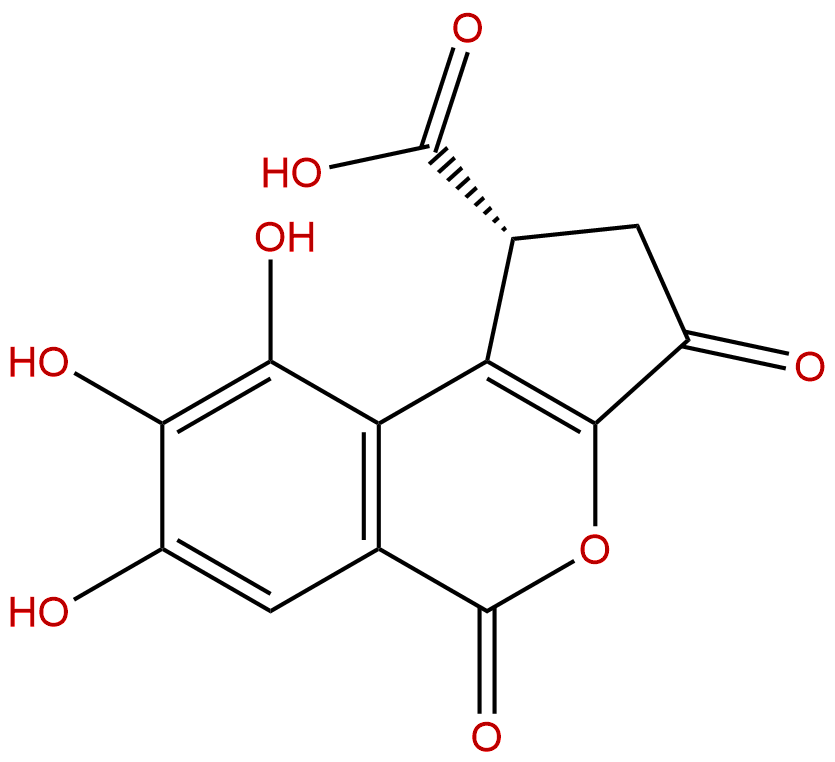


Product name: Brevifolincarboxylic acid
Synonym name:
Catalogue No.: BP1710
Cas No.: 18490-95-4
Formula: C13H8O8
Mol Weight: 292.199
Botanical Source: "Isol from Caesalpinia brevifolia, Mallotus repandus"
Physical Description:
Type of Compound:
Purity: 95%~99%
Analysis Method: HPLC-DAD or/and HPLC-ELSD
Identification Method: Mass, NMR
Packing: Brown vial or HDPE plastic bottle
The product could be supplied from milligrams to grams. Inquire for bulk scale.
We provide solution to improve the water-solubility of compounds, thereby facilitating the variety of activity tests and clinic uses.
For Reference Standard and R&D, Not for Human Use Directly.
Description:
Brevifolincarboxylic acid shows moderate antibacterial activity against Salmonella enteritidis , Salmonella typhimurium , and Salmonella abony, it (IC50 = 18.0 uM) also shows good antioxidant activity. Brevifolincarboxylic acid shows marked inhibitory effects on aryl hydrocarbon receptor -based bioassay activation by TCDD, and its effect is dose dependent.
References:
African Journal of Biotechnology, 2007 , 6 (14) :1685-1689.
In vitro assays for bioactivity-guided isolation of antisalmonella and antioxidant compounds in Thonningia sanginea flowers
Bioguided fractionation of the aqueous extract of Thonningia sanguinea flowers, used traditionally in the treatment of microbial diseases, led to the isolation of two phenolic compounds.
METHODS AND RESULTS:
The structure of these compounds was elucidated by 1H, 13C 1D NMR and mass spectrometry experiments. The antibacterial activity against Salmonella strains and antioxidant activity of the crude extract, fractions and isolated compounds was evaluated using the DPPH method. The isolated compounds identified as Brevifolincarboxylic acid and gallic acid demonstrates moderate antibacterial activity against Salmonella enteritidis , Salmonella typhimurium , and Salmonella abony .
CONCLUSIONS:
The results indicated that the two isolated compounds, gallic acid (IC50 = 13.5 μM) and Brevifolincarboxylic acid (IC50 = 18.0 μM) were mainly responsible for the good scavenging activity of the aqueous extract.
Biol Pharm Bull. 2003 Dec;26(12):1754-60.
Screening of the inhibitory effect of vegetable constituents on the aryl hydrocarbon receptor-mediated activity induced by 2,3,7,8-tetrachlorodibenzo-p-dioxin.
The aryl hydrocarbon receptor (AhR) is a ligand-activated nuclear transcription factor that mediates responses to environmental contaminants such as dioxins, which have many adverse health effects.
METHODS AND RESULTS:
We performed a preliminary screening of the inhibitory effects of vegetable constituents on 2,3,7,8-tetrachlorodibenzo-p-dioxin (TCDD)-induced activation of AhR using the AhR-based bioassay for dioxins, the Ah-Immunoassay. Ninety vegetable constituents including flavonoids, tannins, saponins, terpenes, etc., were assayed in vitro. Among them, flavones, flavonols, anthraquinones, piperine, coumestrol, Brevifolincarboxylic acid, and resveratrol showed marked inhibitory effects on AhR-based bioassay activation by TCDD, and their effects were dose dependent. Curcumin, carnosol, and capsaicin also inhibited the activation of AhR in this assay, although to a lesser degree.
CONCLUSIONS:
These results suggest that several vegetable constituents might play a role in protection against dioxin toxicity.
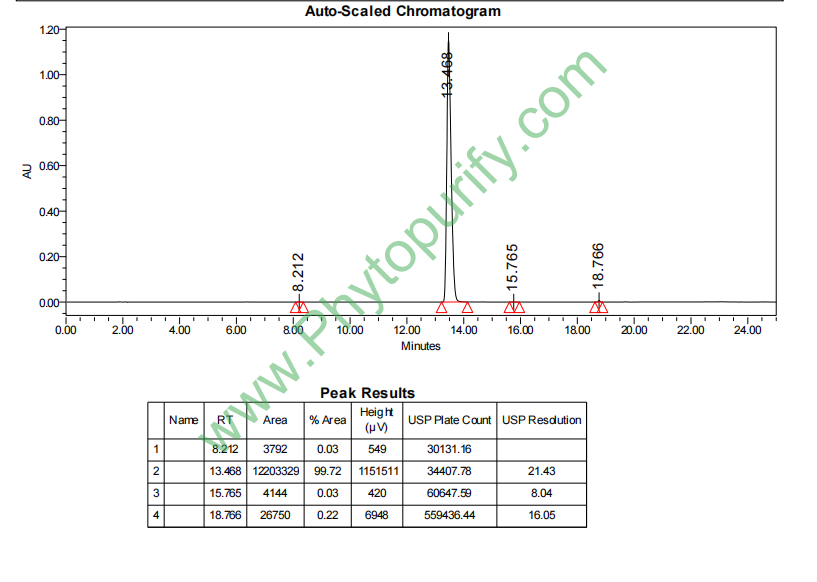
HPLC of Brevifolincarboxylic acid
Storage conditions:Short-term storage at 2~8℃, long-term storage at -20 ~ -80℃
145.2700
.6208
-1.1849
.5394
1.3989
3.3499
Low
72.6244
3.5456
Yes
No
No
No
Yes
Yes
0.6
Yes
No
Yes
No
Natural products have long been an important source of innovative drug discovery, among which phenolic compounds have attracted much attention due to their wide range of biological activities. Brevifolincarbolic acid (CAS number: 18490-95-4), as a natural phenolic acid with a unique chemical structure, has gradually entered the field of pharmacological researchers in recent years. Early studies mainly focused on its plant origin and basic chemical properties, while studies in the past decade have gradually revealed its pharmacological potential in anti diabetes, anti-inflammatory, anti-tumor, antioxidant and other aspects. This compound was originally derived from plants in the Rosaceae family Huangmao Mausoleum Vegetable It was isolated from Duchesnea chrysantha and its structural characteristics indicate its potential as an active oxygen scavenger and various enzyme inhibitors. Preliminary pharmacological data shows that short leaf saphenolic acid has inhibitory effects on key targets such as alpha glucosidase and aromatic hydrocarbon receptor (AhR), and can effectively clear reactive oxygen species (ROS), restore myotonic glucose uptake activity, and exhibit anti-tumor effects on lung and gastric cancer cells. These findings have shown their unique value in the intervention research of diabetes and its complications, inflammatory diseases (such as arthritis) and tumors. This article aims to provide a systematic review of the chemical properties, plant sources, pharmacological activities, mechanisms of action, and medicinal properties of short leaf saphenolic acid, in order to provide comprehensive scientific references for the in-depth research and potential applications of this compound.
The chemical name of short leaf saphenolic acid is 3,4,8,10-pentahydroxy-6-oxo-6H-dibenzo [b, d] pyran-1-carboxylic acid, with a molecular formula of C14H8O9 and a molecular weight of 292.1990 g/mol. Its core structure is a condensed dibenzopyranone (a subclass of flavonoids) skeleton, connected to a carboxyl group at position 1 and replaced by hydroxyl groups at multiple positions (3, 4, 8, 9, 10). This highly hydroxylated phenolic acid structure is the material basis for its strong antioxidant activity and interaction with various biomolecules.
According to the pharmacological parameters calculated based on its chemical structure, its lipid water partition coefficient (LogP) is 0.6208, indicating that the compound has moderate lipophilicity. The topologically polar surface area (TPSA) is as high as 145.2700 Å ², mainly attributed to the numerous hydroxyl and carboxyl groups in the molecule, which are hydrogen bond donors and acceptors, resulting in a higher TPSA value. Its water solubility value is 0.5394 (usually referring to logS or related indicators), indicating that it has a certain degree of water solubility, but may be significantly affected by pH value, as its carboxyl group may dissociate at physiological pH. These physicochemical properties (high TPSA, moderate LogP) collectively determine its limited ability to cross biofilms, predicting lower blood-brain barrier permeability, which is consistent with pharmacological reports that it mainly acts on the peripheral system, such as anti-inflammatory and hypoglycemic effects. Preliminary safety predictions indicate that it has no inhibitory risk on hERG potassium channels (hERG inhibition: No), and the Ames test result is 0.6 (usually a value<1 indicates a low risk of mutagenicity), suggesting that it has relatively good early safety characteristics.
The main natural source of phenolic acid in Short Leaf Sumu is from plants in the Rosaceae family, including the genus Violaceae Huangmao Mausoleum Vegetable(Duchesnea chrysantha)。 This plant may have a history of application in traditional medicine, but modern research on short leaf abscisic acid began with tracking and isolating active ingredients from its entire plant or specific parts.
The extraction method usually follows the conventional process of natural product chemistry. Firstly, the dried plant material is crushed and subjected to cold soaking or heating reflux extraction using medium polarity solvents such as methanol, ethanol, or acetone to fully extract phenolic acid components. The crude extract obtained was subsequently subjected to preliminary enrichment using solvent partitioning method (such as ethyl acetate water partitioning), and short leaf hematoxylic acid was mainly concentrated in the ethyl acetate fraction. Further purification relies on various chromatographic techniques. Silica gel column chromatography is commonly used for preliminary separation using gradient elution systems of chloroform methanol or dichloromethane methanol. Subsequently, by combining reverse phase chromatography (such as C18 packing, using methanol water or acetonitrile water as mobile phase) and preparative high-performance liquid chromatography (HPLC) for fine purification, high-purity short leaf salicylic acid monomer was finally obtained. Attention should be paid to avoiding light and operating at lower temperatures during the extraction and separation process to prevent the oxidation of its phenolic hydroxyl groups. In addition to Scutellaria baicalensis, subsequent studies have also found the presence of this compound or its derivatives in other plants of the same genus or closely related families. However, Scutellaria baicalensis is still its main and characteristic plant source.
A large number of in vitro and partial in vivo studies have revealed various pharmacological activities of short leaf haematoxylic acid, mainly focusing on anti diabetes, anti-inflammatory, anti-tumor, antioxidant and other fields.
1. Anti diabetes activity: Short leaf saphenolic acid is an effective inhibitor of alpha glucosidase, with an IC50 value of 323.46 μ M. This enzyme is located at the brush edge of the small intestine, which is responsible for decomposing oligosaccharides into monosaccharides for absorption. Inhibiting its activity can delay carbohydrate digestion and reduce the peak postprandial blood glucose. It is one of the important strategies for the treatment of type II diabetes. In addition, studies have confirmed that this compound can restore the glucose uptake activity of myotubes (skeletal muscle cell model) inhibited by inflammatory factors or high glucose environment, suggesting that it may play a role by improving the insulin sensitivity of peripheral tissues, which is of great significance for improving the nuclear and cardiac pathophysiological link of type II diabetes - insulin resistance.
2. Anti inflammatory activity: Short leaf abscisic acid has shown significant effects in various inflammatory models. Its anti-inflammatory effect is closely related to the inhibition of the production of key pro-inflammatory mediators. In the context of research on inflammatory diseases such as arthritis, this compound has been shown to downregulate the expression of cytokines such as tumor necrosis factor - α (TNF - α), interleukin-6 (IL-6), and interleukin-1 β (IL-1 β). These cytokines are the core signaling molecules that drive chronic inflammation and tissue destruction. In addition, it also has an inhibitory effect on cyclooxygenase-2 (COX-2/PTGS2), which is the rate limiting enzyme for the synthesis of prostaglandin inflammatory mediators and the main target of nonsteroidal anti-inflammatory drugs.
3. Antitumor activity: Preliminary studies have shown that short leaf saphenolic acid has anti-tumor activity in inhibiting proliferation and inducing apoptosis in non-small cell lung cancer and gastric cancer cell lines. Its function may be related to inducing cell cycle arrest, activating apoptotic pathways, and inhibiting tumor cell migration and invasion. Although the specific mechanism is still under further exploration, its multi-target properties (such as antioxidant, anti-inflammatory, and affecting signaling pathways) may jointly contribute to its anti-tumor effect.
4. Antioxidant and AhR inhibitory activity: The multiple phenolic hydroxyl groups in the chemical structure of phenolic acids in short leaf sappan make it an effective scavenger of reactive oxygen species (ROS), which can directly neutralize free radicals and reduce oxidative stress damage. Oxidative stress is a key promoter of complications of diabetes, neurodegenerative diseases and inflammatory processes. In addition, the compound has been identified as an inhibitor of the aryl hydrocarbon receptor (AhR). AhR is a ligand activated transcription factor that, when abnormally activated by environmental toxins such as dioxins, mediates immunotoxicity, promotes inflammation, and tumorigenesis. Inhibiting the abnormal activation of AhR has become a new strategy for treating immune inflammatory diseases and certain cancers.
The multiple pharmacological activities of short leaf saphenolic acid stem from its interactions with multiple molecular targets and signaling pathways, and its mechanism of action exhibits multi-target and networked characteristics.
1. Enzyme inhibition:
* Alpha glucosidase: As a competitive or non competitive inhibitor, it directly binds to the active site or conformational site of the enzyme, hindering its binding to substrates such as maltose and sucrose, thereby exerting a hypoglycemic effect.
* Cyclooxygenase-2 (COX-2/PTGS2): By inhibiting the activity of COX-2 and reducing the synthesis of pro-inflammatory mediators such as prostaglandin E2 (PGE2), this is an important molecular basis for its anti-inflammatory effect.
2. Regulation of receptors and signaling pathways:
* Aromatics receptor (AhR) inhibition: Short leaf abscisic acid can act as an antagonist or inverse agonist of AhR, preventing the activation of AhR by exogenous or endogenous ligands, thereby inhibiting AhR nuclear translocation and the expression of downstream genes (such as CYP1A1), regulating immune and inflammatory responses.
* Inhibition of nuclear factor kappa B (NF - κ B) signaling pathway: NF - κ B is a central transcription factor that regulates inflammation, immunity, and cell survival. Short leaf abscisic acid can inhibit the activity of I κ B kinase (IKK) or affect the degradation of I κ B α, prevent NF - κ B (such as p65/p50 dimer) from transferring into the nucleus, and thus inhibit the expression of many pro-inflammatory genes such as TNF - α, IL-6, IL-1 β, COX-2 at the transcriptional level. This is one of its core mechanisms in combating chronic inflammatory diseases such as arthritis.
* Regulation of mitogen activated protein kinase (MAPK) pathway: There are studies suggesting that this compound may regulate the phosphorylation levels of MAPK family members such as p38 MAPK, JNK, and ERK, which are closely related to inflammatory response, cellular stress, and apoptosis.
3. Cytokine network regulation:
Through the regulation of the above signaling pathways, short leaf abscisic acid can systematically reduce the levels of key pro-inflammatory cytokines, such as TNF - α, IL-6, and IL-1 β. In the pathology of arthritis, it can also inhibit the expression of matrix metalloproteinases (MMP-3 and MMP-13), which are the main mediators for degrading the extracellular matrix (such as collagen) of articular cartilage cells. Overexpression of these enzymes directly leads to the destruction of articular cartilage.
4. Oxidative stress regulation:
By virtue of its reducing ability in chemical structure, short leaf saphenolic acid can directly scavenge ROS such as superoxide anions and hydroxyl radicals, and may upregulate the endogenous antioxidant system of cells (such as the Nrf2/ARE pathway), thereby protecting cells from oxidative damage. In the model of diabetes, reducing oxidative stress is helpful to improve the function of pancreatic beta cells and insulin signal transduction.
To sum up, short leaf haematoxylic acid forms a synergistic network by directly inhibiting specific enzymes, antagonizing receptors, intervening in key inflammatory and oxidative stress signal pathways, and jointly exerting its anti diabetes, anti-inflammatory and cytoprotective effects.
Although short leaf saphenolic acid has shown good biological activity in vitro, its development into a drug still requires systematic pharmacological evaluation.
1. Preliminary analysis of drug properties: According to empirical rules such as the "Five Rules", its molecular weight (292) is less than 500, with a large number of hydrogen bond donors (5 OH+1 COOH) and hydrogen bond acceptors (9 O atoms), and a moderate LogP value. Its high TPSA and multiple dissociable functional groups are the main challenges affecting its membrane permeability and oral bioavailability. It is predicted that its blood brain barrier permeability is low, which limits its use in central nervous system diseases, but may have little impact on its peripheral effects (such as arthritis, diabetes).
2. Pharmacokinetic (ADME) prediction and challenges:
* Absorption: After oral administration, its carboxyl group may be in a non dissociated state in the gastric acid environment, with some lipid solubility, but dissociates in the neutral environment of the intestine, and the ionic form is not conducive to passive transmembrane absorption. Its absorption may depend on carrier mediated transport or be limited to local intestinal effects (such as inhibition of alpha glucosidase).
* Distribution: It is predicted that the plasma protein binding rate may be high (due to the phenolic acid structure), and the distribution volume may be small, mainly distributed in the blood and extracellular fluid, making it difficult to enter areas with abundant intracellular targets.
* Metabolism: As a phenolic acid compound, it may be a substrate for liver phase II metabolic enzymes such as glucuronosyltransferase and sulfotransferase, which are prone to glucuronidation and sulfation binding reactions, leading to rapid metabolic inactivation and excretion.
* Excretion: The prototype drug and its metabolites may be mainly excreted through the kidneys and urine.
3. Preliminary safety data: The existing computational predictions indicate that there is no risk of hERG channel inhibition (good cardiac safety), and the Ames test results also suggest a low risk of genetic toxicity, providing a preliminary safety window for its further development. However, there have been no reports on comprehensive evaluations of acute toxicity, long-term toxicity, and reproductive toxicity.
4. Prospects for formulation strategies: To improve its bioavailability, advanced formulation techniques may be required, such as making prodrugs (such as esterified carboxyl groups to increase lipid solubility and absorption, hydrolyzed into active ingredients in vivo), nanocrystals, liposomes, or solid dispersions. Local drug formulations can also be developed for their local effects, such as intra-articular injection therapy for arthritis.
The multi-target pharmacological properties of short leaf saphenolic acid provide possibilities for its application in various disease fields, but its clinical application still faces opportunities and challenges.
Potential clinical application directions:
1. Type II diabetes and its complications: As an α - glucosidase inhibitor and insulin sensitizer (to improve glucose uptake), it may be used for first-line or auxiliary treatment of diabetes, especially for patients with postprandial hyperglycemia. Its antioxidant and anti-inflammatory properties have potential value for the prevention and treatment of chronic complications such as diabetes nephropathy and retinopathy.
2. Inflammatory diseases:
* Osteoarthritis and rheumatoid arthritis: By inhibiting NF - κ B, COX-2, pro-inflammatory cytokines (TNF - α, IL-1 β, IL-6), and cartilage degrading enzymes (MMP-3, MMP-13), it may become a novel disease modifying anti arthritis drug (DMARD) that not only alleviates symptoms but also may delay joint structural damage. Consider developing oral formulations or intra-articular injections.
* Other chronic inflammations: For example, inflammatory bowel disease, atherosclerosis, etc., its anti-inflammatory and antioxidant mechanisms also have certain application potential.
3. Tumor adjuvant therapy: Although its anti-tumor activity is still in the early stages of research, as an AhR inhibitor and antioxidant, it may be used to prevent tumors induced by chemical carcinogens, or in combination with conventional chemotherapy/radiotherapy to reduce side effects and enhance efficacy.
4. Metabolic associated fatty liver disease (MAFLD): This disease is closely related to insulin resistance, oxidative stress, and inflammation, and the multiple effects of short leaf abscisic acid may provide new ideas for its treatment.
Challenges and future research directions:
1. Pharmacokinetic optimization: This is the biggest bottleneck in its development. It is necessary to significantly improve its oral bioavailability and metabolic stability through structural modifications (such as synthetic derivatives, prodrugs) or innovative formulation strategies.
2. In depth study of the mechanism of action: It is necessary to clarify the primary secondary relationships and collaborative networks among multiple targets in more complex animal models of diseases and at a more systematic molecular biology level, and identify the key pathways through which they take effect.
3. Preclinical and clinical studies: Conduct standardized pharmacological, toxicological, and pharmacokinetic animal experiments to obtain a complete data package that supports clinical trials. Ultimately, its effectiveness and safety in humans need to be validated through randomized controlled clinical trials.
4. Source and synthesis: Relying on plant extraction is difficult to meet the needs of large-scale drug development, therefore it is necessary to develop efficient and economical fully synthetic or semi synthetic processes, or to produce through biosynthetic technologies such as microbial fermentation.
As a natural phenolic acid compound found in traditional medicinal plants, short leaf haematoxylic acid, with its unique chemical structure and multi-target mechanism of action, has shown remarkable pharmacological potential in anti diabetes, anti-inflammatory, antioxidant and anti-tumor fields. It inhibits alpha glucosidase AhR、COX-2, Regulating key signaling pathways such as NF - κ B, downregulating pro-inflammatory factors such as TNF - α and IL-6, and exerting direct antioxidant effects constitute a synergistic and interactive biological activity network. Although it faces challenges in drug formulation, especially in oral absorption and metabolic stability, modern medicinal chemistry and pharmaceutical techniques provide possibilities for optimizing its properties. Future research should focus on improving its pharmacokinetic characteristics through structural modification and formulation innovation, and explore its practical application value in the treatment of major chronic diseases such as diabetes and arthritis on the basis of more in-depth mechanism research and rigorous preclinical evaluation. The research process of short leaf saphenolic acid once again confirms the enduring vitality of natural products as a treasure trove of lead compounds in innovative drug development.
