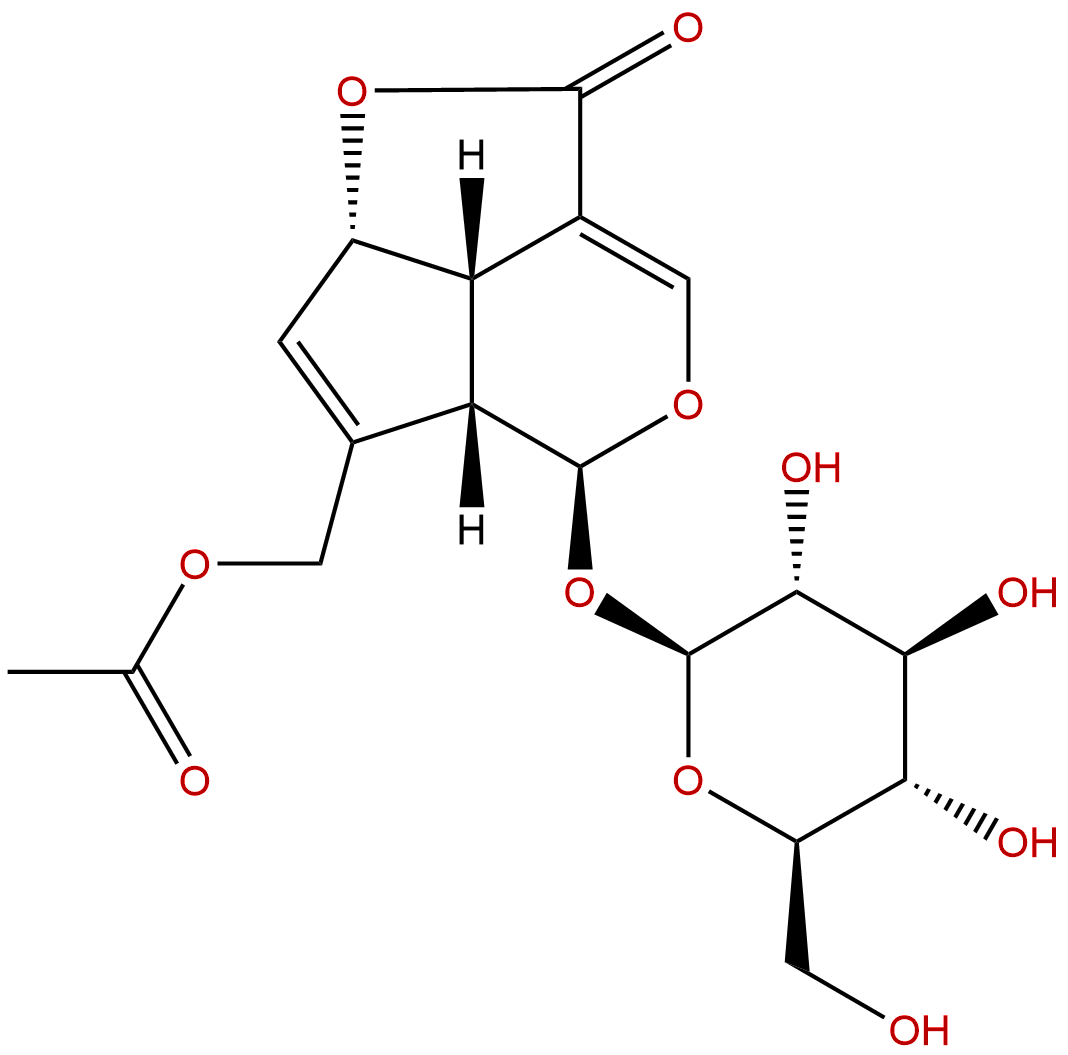


Product name: Asperuloside
Synonym name: Rubichloric acid
Catalogue No.: BP1773
Cas No.: 14259-45-1
Formula: C18H22O11
Mol Weight: 414.363
Botanical Source: Asperula spp.; Daphniphyllum macropodum
Physical Description: Powder
Type of Compound: Iridoids
Purity: 95%~99%
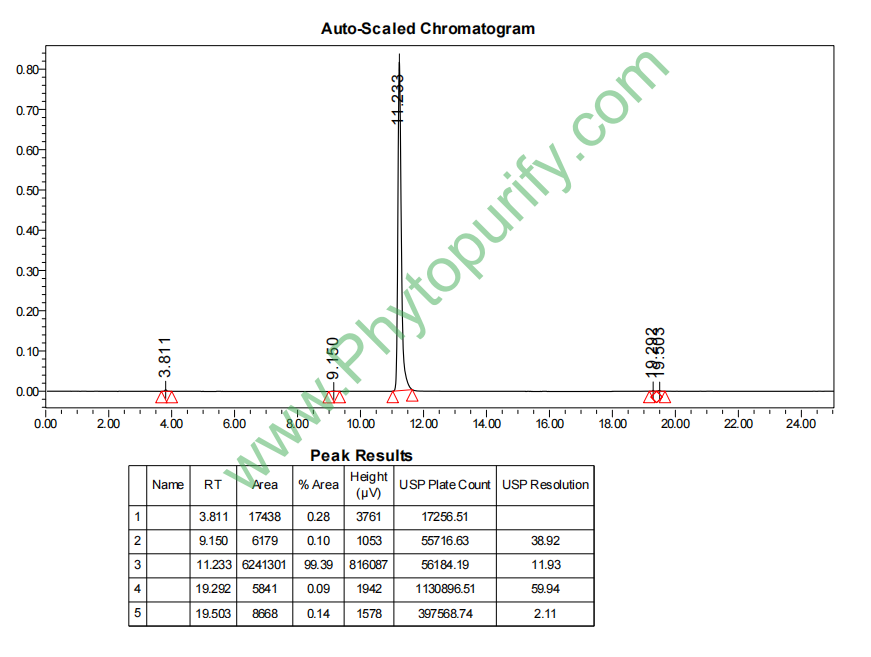
Analysis Method: HPLC-DAD or/and HPLC-ELSD
Identification Method: Mass, NMR
Packing: Brown vial or HDPE plastic bottle
The product could be supplied from milligrams to grams. Inquire for bulk scale.
We provide solution to improve the water-solubility of compounds, thereby facilitating the variety of activity tests and clinic uses.
For Reference Standard and R&D, Not for Human Use Directly.
Description:
Asperuloside exerts its anti-inflammatory effect in correlation with inhibition of a pro-inflammatory mediator through suppressing nuclear factor kappa-B (NF-κB) nuclear translocation and MAPK phosphorylation in a dose-dependent manner. Chronic administration of Asperuloside stimulates anti-obesity and anti-metabolic syndrome activity in HFD-fed rats across several organs, similar to Eucommia leaf extract (ELE) administration.
References:
Int. Immunopharmacol., 2016 Feb;31:109-15.
Pretreatment with the compound asperuloside decreases acute lung injury via inhibiting MAPK and NF-κB signaling in a murine model.
Asperuloside, an iridoid glycoside found in Herba Paederiae, is a component from traditional Chinese herbal medicine.
METHODS AND RESULTS:
In this study, we aimed to investigate the protective effects and potential mechanisms of Asperuloside action on inflammatory responses in lipopolysaccharide (LPS)-stimulated Raw 264.7 cells and an LPS-induced lung injury model. The pro-inflammatory cytokines and signaling pathways were measured by enzyme-linked immunosorbent assays (ELISA) and Western blotting to determine the effects of Asperuloside. We found that Asperuloside can significantly downregulate tumor necrosis factor alpha (TNF-α), interleukin (IL)-1β, and IL-6 levels in vitro and in vivo, and treatment with Asperuloside significantly reduced the lung wet-to-dry weight, histological alterations and myeloperoxidase activity in a murine model of LPS-induced acute lung injury (ALI). In addition, Western blot analysis that pretreatment with Asperuloside remarkably blunted the phosphorylation of inhibitor of nuclear factor kappa-B (IκBα), extracellular signal-related kinases 1 and 2 (ERK1/2), c-Jun. N-terminal kinase (JNK) and p38 mitogen-activated protein kinase (p38MAPK) in LPS-stimulated inflammation.
CONCLUSIONS:
These results indicate that Asperuloside exerts its anti-inflammatory effect in correlation with inhibition of a pro-inflammatory mediator through suppressing nuclear factor kappa-B (NF-κB) nuclear translocation and MAPK phosphorylation in a dose-dependent manner.
J Nutr Sci. 2012 Sep 5;1:e10.
Asperuloside stimulates metabolic function in rats across several organs under high-fat diet conditions, acting like the major ingredient of Eucommia leaves with anti-obesity activity.
Eucommia leaves (Eucommia ulmoides Oliver) contain chlorogenic acid (a caffeic acid derivative) and geniposidic acid and Asperuloside (ASP), iridoid glucosides used in beverages.
METHODS AND RESULTS:
We used a metabolic syndrome rat model, produced by feeding a 35 % high-fat diet (HFD), to examine potential anti-obesity and anti-metabolic syndrome effects and mechanisms of chronic administration of ASP. These effects were compared with Eucommia leaf extract (ELE), the positive control, which exhibits anti-obesity effects. A total of six rats were studied for 3 months in five groups. ASP suppressed body weight, visceral fat weight, food intake and circulating levels of glucose, insulin and lipids, and increased the plasma adiponectin level in rats on a HFD. These effects are similar to those of ELE, except for the influence on the plasma glucose level. RT-PCR studies showed that ASP (like ELE with known anti-obesity effects) diminished isocitrate dehydrogenase 3α, NADH dehydrogenase flavoprotein 1 (Comp I) mRNA and fatty acid synthase levels (white adipose tissue), increased carnitine palmitoyltransferase 1α and acyl-CoA dehydrogenase, very-long-chain mRNA levels (liver), and increased Glut4, citrate synthase, isocitrate dehydrogenase 3α, succinyl CoA synthase, peroxisomal 3-ketoacyl-CoA thiolase, dihydrolipoamide succinyl transferase and succinate dehydrogenase mRNA levels (skeletal muscle) under HFD conditions. Interestingly, ASP administration resulted in significantly increased mRNA levels of uncoupling protein 1 (UCP1) in the brown adipose tissue of HFD-fed rats; ELE did not affect the expression of UCP1. The increased expression of UCP1 may be negated by many ingredients other than ASP in the ELE.
CONCLUSIONS:
These findings suggest that chronic administration of ASP stimulates anti-obesity and anti-metabolic syndrome activity in HFD-fed rats across several organs, similar to ELE administration; thus, ASP may be an important ingredient of ELE.
HPLC of Asperuloside
Storage conditions:Short-term storage at 2~8℃, long-term storage at -20 ~ -80℃
161.2100
-1.1015
-1.1015
27.8297
.5680
.6304
Low
31.1112
4.9094
Yes
No
No
No
Yes
No
0.3
Yes
Yes
Yes
Yes
Natural products, as an important treasure trove for drug discovery, play an irreplaceable role in the history of human disease prevention and treatment. Cycloterpenoids are a class of monoterpene secondary metabolites widely present in the plant kingdom, which have attracted much attention due to their diverse chemical structures and significant biological activities. Asperoside, also known as (1S, 4aS, 7S, 7aS) -1- (β - D-glucopyranosoxy) -7-hydroxy-7-methyl-14a, 5,6,7,7a - hexahydrocyclopentano [c] pyran-4-carboxylic acid methyl ester, with a CAS number of 14259-45-1, is a representative iridoid glycoside. This compound is mainly derived from plants in the Rubiaceae family, such as the traditional Chinese medicine Hedyotis diffusa Willd. This herb is commonly used in clinical Chinese medicine to clear heat and detoxify, promote blood circulation and diuresis, and treat conditions such as abscesses, sores, toxins, damp heat, and jaundice. Modern pharmacological studies have shown that caryophyllin exhibits a wide range of anti-inflammatory, antioxidant, and anti-tumor activities, particularly in inflammation related disease models. In recent years, with the deepening understanding of the core role of inflammation in the occurrence and development of diseases such as hepatitis, arthritis, and colitis, caryophyllin has become a hot topic in the research of natural anti-inflammatory drugs due to its regulatory effect on key inflammatory signaling pathways such as nuclear factor kappa B (NF - κ B) and mitogen activated protein kinase (MAPK). This article aims to systematically review the chemical properties, plant sources, pharmacological activities, molecular mechanisms of action, pharmacological evaluation, and clinical application potential of Caryophyllin, in order to provide comprehensive scientific references for the in-depth research and development of this compound.
The molecular formula of Caryophyllin is C18H22O11, with a molecular weight of 414.3630. Its structural core is a cyclopentano [c] pyran skeleton, belonging to the class of iridoid glycosides. The structure contains a glucose group connected to the aglycone through a glycosidic bond, which is the main contributing group to its water solubility. There are multiple hydroxyl and ester groups in the molecule, making it highly polar.
Based on calculations and experimental data, the logarithm of the lipid water partition coefficient (LogP) of Caryophyllin is approximately -1.1015, indicating that it is a hydrophilic compound. Its topological polar surface area (TPSA) is as high as 161.2100 Å ², which further confirms its strong polarity characteristics, mainly derived from multiple oxygen atoms (hydroxyl, glycosyl oxygen, ester oxygen) in the molecule. The water solubility data shows that its solubility is about 27.8297 mg/mL, which belongs to the category of easily soluble in water. These physicochemical properties determine the distribution characteristics of caryophyllin in organisms: high water solubility and low fat solubility limit its transmembrane diffusion ability, oral bioavailability may face challenges, and its ability to cross the blood-brain barrier (BBB) is predicted to be "low", which means its direct effect on central nervous system diseases may be limited. In the preliminary safety screening, caryophyllin showed no significant inhibitory effect on hERG potassium channels (hERG inhibition: No), indicating a low risk of causing QT interval prolongation in the heart. The Ames test result is 0.3, indicating that under this testing condition, its mutagenicity risk is low, providing preliminary support for its safety.
Caryophyllin is mainly distributed in Rubiaceae plants in nature. Its most famous and main plant source is Hedyotis diffusa Willd., also known as Hedyotis diffusa Willd., which is a widely used traditional Chinese medicinal herb. In addition, this ingredient is also present in some species of plants in the same family, such as Gardenia jasminoides Ellis, Asperula odorata L., and Galium.
The extraction of aucubin from plant materials is usually carried out using solvent extraction method. Due to its good water solubility and polarity, water, methanol, ethanol, or ethanol water mixed solutions in different proportions are commonly used as extraction solvents. Traditional hot reflux extraction and Soxhlet extraction are commonly used methods. Modern extraction techniques increasingly utilize ultrasound assisted extraction (UAE) and microwave-assisted extraction (MAE), which can significantly shorten extraction time, improve extraction efficiency, and reduce solvent consumption. For example, using a 50% -70% ethanol solution, under optimized conditions of ultrasound power, temperature, and time, caryophyllin can be efficiently extracted from snake tongue grass.
The crude extract after extraction needs further separation and purification to obtain high-purity caryophyllin. The conventional purification process includes: first, using macroporous adsorption resins (such as D101, AB-8) for preliminary enrichment, and washing out according to the polarity characteristics of caryophyllin; Subsequently, silica gel column chromatography and reverse phase silica gel (such as ODS) column chromatography were used for subdivision; The final high-purity preparation often relies on high-performance liquid chromatography (HPLC) or preparative liquid chromatography, using C18 chromatography columns and gradient elution with methanol water or acetonitrile water as mobile phases. In recent years, high-speed countercurrent chromatography (HSCCC) has been applied as a solid-liquid distribution chromatography technique without solid carriers for the preparation and separation of caryophyllin due to its high recovery rate and advantages in maintaining compound activity.
A large number of pharmacological studies both in vitro and in vivo have confirmed that coumarin has multiple biological activities, among which anti-inflammatory activity is the most prominent and core.
1. Anti inflammatory activity
The anti-inflammatory effect of Caryophyllin is its most widely studied pharmacological characteristic. In various animal models of acute and chronic inflammation, caryophyllin has shown significant therapeutic effects. For example, in mouse ear xylene induced inflammation models and carrageenan induced rat paw swelling models, caryophyllin can dose dependently reduce tissue edema and inflammatory cell infiltration. In the RAW 264.7 macrophage inflammation model induced by lipopolysaccharide (LPS), caryophyllin can effectively inhibit the excessive production of inflammatory mediators such as nitric oxide (NO) and prostaglandin E2 (PGE2).
2. Protective effect on hepatitis
Based on its strong anti-inflammatory properties, caryophyllin has shown good liver protective effects in chemical (such as acetaminophen, carbon tetrachloride, D-galactosamine) and immunological liver injury models. It can significantly reduce the levels of alanine aminotransferase (ALT) and aspartate aminotransferase (AST) in serum, alleviate liver tissue pathological damage such as hepatocyte necrosis, ballooning, and inflammatory cell infiltration. This protective effect is closely related to its inhibition of local excessive inflammatory response in the liver.
3. Antioxidant activity
Caryophyllin has certain direct and indirect antioxidant abilities. It can eliminate free radicals such as DPPH and ABTS, and enhance the activity of endogenous antioxidant enzymes such as superoxide dismutase (SOD) and glutathione peroxidase (GSH Px) in cell models, while reducing the content of malondialdehyde (MDA), thereby alleviating oxidative stress damage to cells. Oxidative stress and inflammatory processes mutually promote each other, and the antioxidant effect of Caryophyllin complements its anti-inflammatory effect.
4. Antitumor activity
Some studies have preliminarily revealed the anti-tumor potential of Caryophyllin. In colon cancer, breast cancer and other cancer cell lines, folioside can inhibit cell proliferation and induce cell apoptosis. Its anti-tumor mechanism may involve inducing cell cycle arrest, activating apoptotic pathways, and inhibiting the tumor associated inflammatory microenvironment. However, the specific mechanisms and in vivo effects of its anti-tumor activity still require further research.
5. Other activities
In addition, there are reports that verbascoside has diuretic, antibacterial, and mild analgesic effects, which are consistent with some of the effects of traditional Chinese medicine Hedyotis diffusa, suggesting that verbascoside may be one of the important material bases for the efficacy of Hedyotis diffusa.
The pharmacological effects of Caryophyllin, especially its anti-inflammatory and hepatoprotective effects, are achieved through multi-target and multi pathway synergistic regulation. Its core mechanism of action revolves around inhibiting the overactivated inflammatory signaling network.
1. Inhibit the NF - κ B signaling pathway
Nuclear factor kappa B (NF - κ B) is a core transcription factor that regulates inflammatory responses. Under stimulation such as LPS, the inhibitory protein I κ B is phosphorylated and degraded, leading to nuclear translocation of NF - κ B (usually p65/p50 dimer) and initiating downstream inflammatory gene transcription. Research has shown that caryophyllin can effectively inhibit the phosphorylation and degradation of I κ B α, thereby preventing the transfer of NF - κ B p65 subunit into the nucleus. This directly leads to downregulation of the expression of a series of pro-inflammatory factors and enzymes regulated by NF - κ B, including tumor necrosis factor - α (TNF - α), interleukin-6 (IL-6), interleukin-1 β (IL-1B), inducible nitric oxide synthase (iNOS/NOS2), and cyclooxygenase-2 (COX-2/PTGS2). Among them, inhibiting iNOS to reduce the explosive production of NO and inhibiting COX-2 to reduce the synthesis of PGE2 are the key steps in its anti-inflammatory effect.
2. Regulating the MAPK signaling pathway
The mitogen activated protein kinase (MAPK) pathway, including p38, JNK, and ERK, plays an important role in inflammatory signal transduction. Caryophyllin has been shown to inhibit LPS induced phosphorylation activation of p38, JNK, and ERK in macrophages. Inhibition of the MAPK pathway not only helps to control the production of inflammatory mediators, but may also affect cell proliferation and apoptosis.
3. Regulating apoptosis related proteins
Excessive cell apoptosis is an important cause of tissue damage in pathological processes such as liver injury. Caryophyllin can upregulate the expression of anti apoptotic protein Bcl-2 (BCL2), while downregulating pro apoptotic protein and inhibiting the activation of caspase-3 (CASP3), thereby reducing liver cell apoptosis, which constitutes another mechanism of its liver protective effect.
4. Affects the JAK/STAT signaling pathway
Signal transducer and activator of transcription factor 3 (STAT3) is an important molecule that connects cytokine signaling and gene expression, and its sustained activation is associated with inflammation and tumorigenesis. Research suggests that coumarin may interfere with the activation of the JAK/STAT3 pathway, thereby inhibiting inflammation and proliferation responses driven by cytokines such as IL-6.
5. Potential effects on estrogen receptor beta (ESR2)
Bioinformatics analysis or preliminary research suggests that coumarin may interact with estrogen receptor beta (ESR2). ESR2 is believed to play a role in anti-inflammatory and cell protective effects, which may be another potential target for the tissue protective effect of Caryophyllin, but experimental verification is needed.
In summary, caryophyllin acts on multiple targets closely related to hepatitis and inflammation, such as NFKB1, NOS2, PTGS2, TNF, IL6, IL1B, BCL2, CASP3, STAT3, etc., forming a synergistic networked mechanism of action, ultimately achieving its anti-inflammatory and organ protective effects.
Although Caryophyllin has shown good pharmacological activity in preclinical studies, its pharmacological properties still need to be comprehensively evaluated.
Pharmacokinetic characteristics:
Current pharmacokinetic studies are relatively limited. Due to its high water solubility and high polarity (high TPSA, low LogP), the oral absorption of Caryophyllin may belong to Class III (high solubility, low permeability) in the Biopharmaceutical Classification System (BCS). Preliminary animal experiments suggest that its oral bioavailability may not be high, mainly due to poor intestinal permeability and possible first pass effects (including intestinal and liver metabolism). The distribution in the body may be more concentrated in the blood and hydrophilic tissue chambers, and difficult to accumulate in adipose tissue or freely cross the blood-brain barrier. Caryophyllin is a glycoside compound that may undergo hydrolysis to produce aglycones under the action of gut microbiota and esterases in the body. The lipid solubility of aglycones is enhanced, but their activity and metabolic fate may be altered. The metabolic pathways and main excretion pathways (renal excretion or bile excretion) still require systematic mass balance studies to clarify.
Challenges and optimization strategies for drug development:
1. Low oral bioavailability This is the main challenge facing the development of Caryophyllin. Pharmaceutical strategies can be used for improvement, such as preparing phospholipid complexes and cyclodextrin inclusion complexes to increase their lipid solubility and membrane permeability; Develop nanocarrier systems such as nanocrystals, liposomes, or polymer micelles to enhance their solubility and intestinal absorption; Use absorption enhancers.
2. chemical stability Cycloiridoid compounds may be unstable under specific conditions and need to be controlled in the formulation process and storage conditions.
3. safety Although the preliminary screening results for genetic toxicity (Ames test) and cardiac toxicity (hERG) are good, a complete preclinical safety evaluation is still needed, including acute toxicity, long-term toxicity, reproductive toxicity, etc., to comprehensively evaluate its safety window.
The in-depth study of Caryophyllin provides scientific basis for its application in various disease fields, especially in inflammation related diseases with broad prospects.
1. Adjuvant treatment for inflammatory liver disease
Given its clear protective effect on multiple liver injury models and multiple regulation of hepatitis related targets, caryophyllin is expected to be developed as an adjuvant therapy or hepatoprotective preparation for the treatment of acute hepatitis, drug-induced liver injury, non-alcoholic steatohepatitis (NASH) and other diseases. Its multi-target anti-inflammatory properties may have more comprehensive regulatory advantages than single target drugs.
2. Chronic inflammatory diseases
In addition to liver disease, caryophyllin also has potential value in the treatment of diseases such as rheumatoid arthritis, inflammatory bowel disease (such as ulcerative colitis), and chronic dermatitis. Its ability to inhibit the overactivation of NF - κ B and MAPK pathways in joint synovium or intestinal mucosa may help control the pathological progression of these diseases.
3. Structural optimization as a lead compound
Structural modification using coumarin as the parent nucleus is an important direction to enhance its medicinal properties. Chemists can modify the sugar moiety, hydroxyl or ester groups on the aglycone to improve its lipid solubility, metabolic stability and target selectivity, thereby obtaining derivatives with higher bioavailability, stronger activity or lower toxicity.
4. Modernization and Quality Control of Traditional Chinese Medicine
As one of the key active ingredients of Hedyotis diffusa, the in-depth study of Cheyecao glycoside can help clarify the pharmacological substance basis and mechanism of action of this traditional Chinese medicine. At the same time, the content of Caryophyllin can be used as a quality control marker for the medicinal herb and its related preparations (such as injections and granules), improving the uniformity and controllability of product quality.
Future research should focus on: 1) conducting systematic and standardized preclinical pharmacokinetic and toxicological studies; 2) Using modern molecular biology techniques such as gene knockout and proteomics to more accurately elucidate its target genes and signaling networks; 3) Explore its potential for combination therapy with other drugs (such as existing anti-inflammatory drugs); 4) Promote the structural optimization and development of new dosage forms based on Caryophyllin, ultimately driving its translation into clinical applications.
As a natural iridoid glycoside derived from the traditional Chinese medicine Hedyotis diffusa, Caryophyllin has become a highlight molecule in natural product pharmacology research due to its significant anti-inflammatory, antioxidant, and liver protective activities. The study of its mechanism of action has been deepened to inhibit key signaling pathways such as NF - κ B and MAPK, down regulate the expression of core inflammatory mediators such as TNF - α, IL-6, IL-1 β, iNOS, COX-2, and regulate apoptosis related proteins, thereby exerting comprehensive anti-inflammatory and tissue protective effects. Although there are challenges in drug formulation, especially in terms of oral bioavailability, this also provides direction for pharmaceutical and new dosage form research. With the continuous deepening of understanding of the pharmacological mechanism of Caryophyllin, as well as the optimization of its physicochemical properties and pharmacokinetic behavior through structural modification and novel drug delivery systems, Caryophyllin is expected to develop from a promising lead compound into an innovative drug candidate for the treatment of inflammatory liver disease and other chronic inflammatory diseases, and also provide important scientific support for the modernization and internationalization of traditional Chinese medicine, Hedyotis diffusa.
