Introduction/Overview
Natural products have long been an important source of innovative drug discovery, and their structural diversity and wide range of biological activities provide valuable lead compounds for the treatment of various diseases. Cycloene ether terpenes are an important class of secondary metabolites in natural products, widely present in plants such as Rubiaceae and Lonicera japonica, with various pharmacological activities including anti-inflammatory, antioxidant, anti-tumor, and neuroprotective effects. 6-alpha-Hydroxygeniposide (CAS number: 52613-28-2), as a cyclic terpenoid glycoside, has attracted much attention in recent years due to its significant therapeutic potential in inflammatory bowel disease, especially colitis models. This compound regulates a complex signaling network of inflammation, oxidative stress, and cell apoptosis by acting on multiple key targets such as CES1, TLR4, NFE2L2, NR1H4, etc., exhibiting multi-target and multi pathway characteristics. This article aims to provide a systematic review of the chemical structure, plant origin, pharmacological activity, molecular mechanism of action, pharmacological characteristics, and clinical application prospects of deacetylated quercetin methyl ester, in order to provide comprehensive scientific references for the in-depth research and future development of this compound.
Chemical structure and physicochemical properties
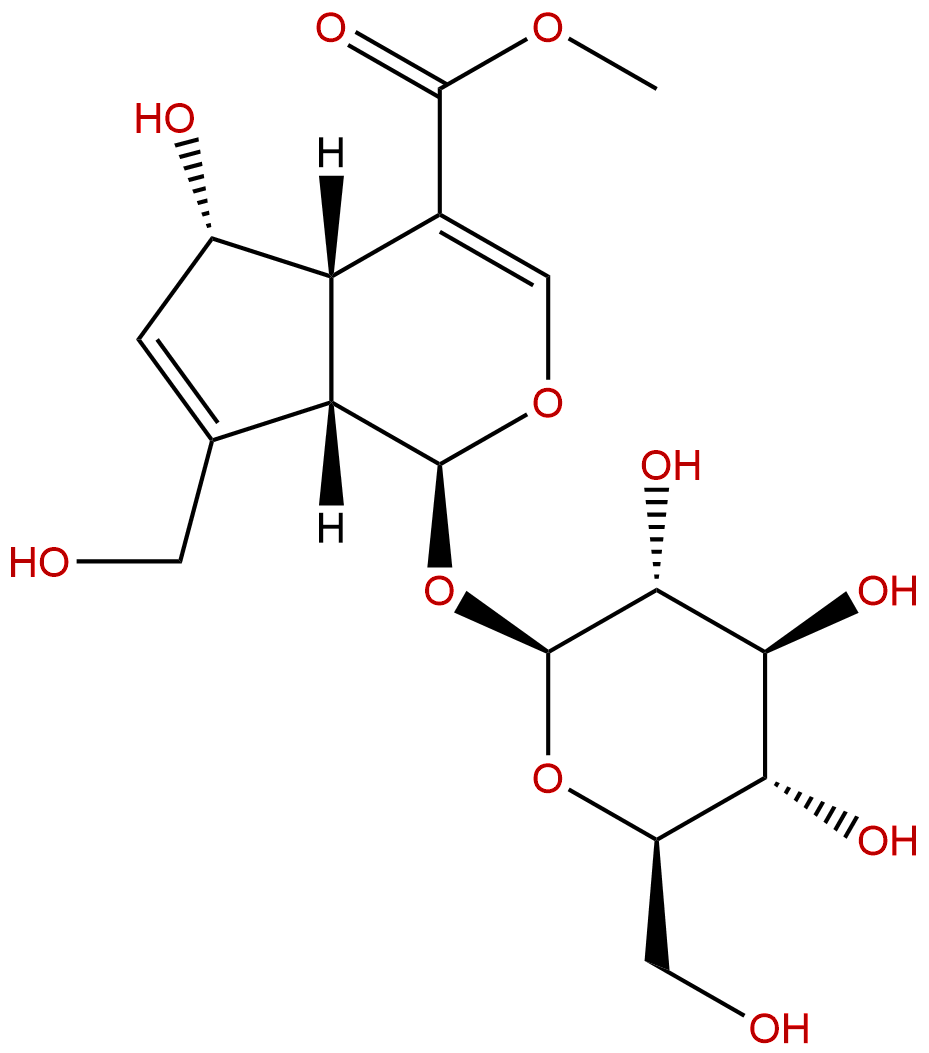
Methyl deacetylate, commonly known as 6 α - hydroxygeniposide, is a cyclic iridoid glucoside. Its molecular formula is C17H24O11 and its molecular weight is 404.3680. Structurally, its parent nucleus is cyclopentane pyranose ring (a characteristic structure of cyclohexene ether terpenes), which is connected to a glucose group through a glycosidic bond at position C-1, substituted with a hydroxyl group at position C-6, and a methyl ester group at position C-11. This specific substitution pattern of hydroxyl and methyl ester groups has a decisive impact on their biological activity and physicochemical properties.
In terms of physicochemical properties, this compound exhibits typical hydrophilic glycoside characteristics. The calculated lipid water partition coefficient (LogP) is -1.5961, indicating its high hydrophilicity. The topologically polar surface area (TPSA) is as high as 175.37 Å ², mainly attributed to the numerous hydroxyl, ester, and ether oxygen atoms in the molecule. The high TPSA and negative LogP values together determine its excellent water solubility, with a calculated value of approximately 63.329 mg/L, which is beneficial for its formulation development in aqueous media. However, these properties also limit its transmembrane passive diffusion ability, especially predicting a "low" penetration through the blood-brain barrier, suggesting that it may not be suitable for the treatment of central nervous system diseases. In early safety screening, the compound did not show hERG potassium channel inhibitory activity (hERG inhibition: No), and the Ames test result was 0.0, indicating that it has no mutagenic risk and a relatively good safety starting point.
Plant sources and extraction methods
Methyl deacetylated coumarinate is mainly found in plants of the Rubiaceae family, especially in plants of the Gardenia and Caryophyllum genera. Common sources include the fruit of Gardenia jasminoides Ellis, Asperula odorata L., and some plants in the honeysuckle family. In these plants, this compound usually coexists with other structurally similar cyclic terpenoid glycosides such as geniposide and geniposide.
The extraction and separation method follows the conventional process of natural product chemistry. Firstly, methanol, ethanol, or aqueous ethanol is usually used for reflux extraction or ultrasound assisted extraction of dried plant materials (such as gardenia fruit powder) to fully obtain polar components. After vacuum concentration, the crude extract obtained was subjected to liquid-liquid distribution using organic solvents such as petroleum ether and ethyl acetate to remove lipophilic impurities. The compound was mainly enriched in the aqueous layer or n-butanol extraction site. Further purification mostly depends on column chromatography technology. Silica gel, reverse phase silica gel (such as ODS-C18), macroporous adsorption resin (such as D101, AB-8) or dextran gel (Sephadex LH-20) are often used as stationary phases. The elution solvent system is usually a gradient of chloroform methanol water or methanol water in different ratios. High performance liquid chromatography (HPLC), especially preparative HPLC, is the final key step in obtaining high-purity monomers, often using C18 chromatography columns and acetonitrile water or methanol water as mobile phases. During the extraction process, attention should be paid to controlling temperature and pH to prevent hydrolysis or structural rearrangement of iridoid glycosides.
Pharmacological activity research
A large number of preclinical studies, especially experiments based on cell and animal models, have revealed the extensive pharmacological activities of deacetylated coumarin methyl ester, with its core being its powerful anti-inflammatory, antioxidant, and intestinal protective effects.
-
Anti colitis activity This is the pharmacological effect of the compound that has received the most attention. In colitis models induced by dextran sulfate sodium (DSS) or 2,4,6-trinitrobenzenesulfonic acid (TNBS) in mice or rats, oral or intraperitoneal administration of methyl deacetylate can significantly improve disease activity index, alleviate macroscopic pathological changes such as colon shortening and splenomegaly. Histopathological analysis shows that it can effectively inhibit inflammatory cell infiltration, crypt structure damage, and goblet cell loss in colon mucosa. Its therapeutic effect is comparable or even better than classical drugs such as mesalazine or sulfasalazine.
-
Anti inflammatory and immune regulatory activity In lipopolysaccharide (LPS) - stimulated macrophages (such as RAW264.7 cells) or intestinal epithelial cell models, this compound can dose dependently inhibit the production of key pro-inflammatory factors such as tumor necrosis factor - α (TNF - α), interleukin-6 (IL-6), interleukin-1 β (IL-1 β), and nitric oxide (NO). It can also regulate the differentiation and function of immune cells, for example, it may affect the balance of Th1/Th2/Th17/Treg cells and tilt towards an anti-inflammatory state.
-
Antioxidant and Cellular Protective Activities This compound can directly scavenge free radicals (such as DPPH, ABTS free radicals) and enhance the endogenous antioxidant defense system of cells. In oxidative stress cell models induced by hydrogen peroxide or tert butyl hydroperoxide, it can enhance cell viability, reduce reactive oxygen species (ROS) levels, decrease the production of lipid peroxidation product malondialdehyde (MDA), and upregulate the activity of antioxidant enzymes such as superoxide dismutase (SOD) and glutathione peroxidase (GSH Px).
-
Other potential activities Preliminary studies also suggest that it may have activities such as liver protection and anti fibrosis, which are closely related to its anti-inflammatory and antioxidant effects, but further systematic research is needed.
Mechanism of action and molecular targets
The therapeutic effect of deacetylated coumarin methyl ester on colitis is not achieved through a single target, but through a multi-target, multi-level networked mechanism. Existing research has preliminarily revealed its interactions with multiple key targets:
-
Regulating the TLR4/NF - κ B inflammatory core pathway Toll like receptor 4 (TLR4) is a key receptor that recognizes endogenous injury associated molecular patterns (DAMPs) and exogenous pathogen associated molecular patterns (PAMPs), and its overactivation is an important driving force for the occurrence of colitis. It has been confirmed that deacetylated quercetin methyl ester can inhibit the expression or activation of TLR4, thereby blocking its downstream myeloid differentiation factor 88 (MyD88) dependent signaling pathway. This leads to a decrease in the phosphorylation degradation of nuclear factor kappa B (NF - κ B) inhibitory protein (I κ B), preventing the translocation of transcription factor subunit RELA (p65) to the nucleus, ultimately significantly inhibiting the transcription of numerous pro-inflammatory genes regulated by NF - κ B (such as TNF - α, IL-6, IL-1 β, COX-2, iNOS).
-
Activate Nrf2/ARE antioxidant defense pathway Nuclear factor E2 related factor 2 (NFE2L2/Nrf2) is the central regulator of cellular antioxidant response. This compound can promote the dissociation and translocation of Nrf2 from the cytoplasm to the nucleus, binding to antioxidant response elements (ARE), thereby initiating the expression of a series of phase II detoxifying enzymes and antioxidant proteins (such as HO-1, NQO1, GCLC). This effect not only directly counteracts oxidative stress, but also indirectly inhibits the activation of NF - κ B, forming a synergistic effect of anti-inflammatory and antioxidant.
-
Regulating cell death and pyroptosis The abnormal death of intestinal epithelial cells in colitis is the key to the disruption of barrier function. This compound can downregulate the activity of caspase-1 (CASP1). CASP1 is the executor of pyroptosis, and its activation leads to the cleavage of Gasdermin D protein and the mature release of large amounts of IL-1 β and IL-18. Inhibiting CASP1 helps reduce pyroptosis of intestinal epithelial cells and maintain intestinal barrier integrity.
-
Affects metabolism and nuclear receptor signaling:
- Carboxyesterase 1 (CES1)CES1 is involved in the metabolism of various endogenous and exogenous ester substances. This compound may affect the metabolic balance of local inflammatory mediators by regulating CES1 activity.
- Farnesol X receptor (NR1H4/FXR)FXR is an important nuclear receptor for bile acid homeostasis and intestinal immunity. Desacetyl caryophyllate methyl ester may act as a regulator of FXR, inhibiting bile acid synthesis, enhancing intestinal barrier, and exerting anti-inflammatory effects by activating FXR signaling.
- Lysophosphatidic acid receptor 2 (LPAR2) and sphingosine kinase 1 (SPHK1)Both are involved in lipid signaling, affecting cell proliferation, migration, and inflammatory response. This compound may regulate the repair of intestinal mucosa and inflammatory microenvironment by intervening in these targets.
- Fatty acid amide hydrolase (FAAH)FAAH is responsible for degrading endogenous cannabinoids (such as anandamide). Inhibition of FAAH can increase endogenous cannabinoid levels, thereby exerting anti-inflammatory and analgesic effects by activating cannabinoid receptors, which may be another mechanism for its alleviation of colitis symptoms.
- Protein kinase C alpha (PRKCA)PKC α is involved in the cross-talk of multiple signaling pathways. This compound may indirectly affect signaling pathways such as NF - κ B and MAPK by regulating the activity of PKC α.
Evaluation of drug properties and pharmacokinetics
Based on its physicochemical properties and preliminary biological data, a preliminary evaluation was conducted on the pharmacological properties of deacetylated coumarin methyl ester.
Advantage aspects This compound has good water solubility and is beneficial for making oral liquids, injections, or solid preparations. No hERG inhibition and Ames mutagenicity alert, with good early safety characteristics. Its multi-target mechanism of action is consistent with the treatment strategy of complex diseases such as colitis, which may produce synergistic efficacy and reduce the risk of drug resistance.
Challenge aspect:
1. Oral bioavailability As a highly polar and high molecular weight glycoside, its oral absorption may face challenges. β - glucosidase in the intestine may hydrolyze it into aglycones (6 α - hydroxygenipin), which have different physicochemical properties and may exhibit enhanced or weakened activity, increasing the complexity of pharmacokinetic studies. Predict that its intestinal permeability may be moderately low.
2. Pharmacokinetic characteristics Currently, there is limited publicly available pharmacokinetic research data for the system. It is expected to have a small distribution volume, mainly distributed in the blood and extracellular fluid, making it difficult to penetrate the blood-brain barrier. Metabolic pathways may involve hydrolysis, hydroxylation, glucuronic acid binding, and sulfation. The prototype drug and its metabolites may be mainly excreted through the kidneys.
3. Formulation strategy To improve its oral bioavailability, advanced formulation technologies such as phospholipid complexes, cyclodextrin inclusion complexes, nanoemulsions, or solid dispersions may be required to enhance its membrane permeability and stability. It is also possible to consider developing colon targeted delivery systems (such as pH dependent or enzyme dependent coated tablets) to enable specific drug release in the colon, increase local drug concentration, and reduce systemic exposure.
Clinical application prospects and prospects
The development prospects of deacetylated tretinoin methyl ester in the treatment of inflammatory bowel disease (IBD), especially ulcerative colitis, are clear. The current clinical treatment drugs for IBD, such as 5-aminosalicylic acid, glucocorticoids, immunosuppressants, and biologics, have problems such as inconsistent efficacy, significant side effects, high prices, or susceptibility to drug resistance. This compound, as a naturally occurring multi-target drug candidate, may provide a new therapeutic option or be used as an adjuvant therapy in combination with existing drugs to enhance efficacy and reduce side effects.
Future research directions should focus on the following aspects:
1. Deepening the mechanism of action Using chemical biology methods such as affinity fishing, molecular docking and kinetic simulations, and gene edited cells to more accurately verify its direct interactions and functional consequences with targets such as CES1, LPAR2, and FAAH, and to draw a more complete pharmacological action network diagram.
2. Pharmacokinetic and Metabolic Studies Conduct systematic animal in vivo ADME research to clarify its absolute bioavailability, major metabolites, tissue distribution, and excretion pathways. Clarify whether it plays a major role in the prodrug form (glycoside) or the active metabolite form (aglycone).
3. Preclinical development and safety evaluation Complete standardized GLP toxicology studies, including acute toxicity, chronic toxicity, reproductive toxicity, etc., and comprehensively evaluate their safety. Optimize synthesis or semi synthesis processes to ensure stable and economical supply of raw materials.
4. Formulation innovation and combination therapy Vigorously develop oral colon targeted preparations for colitis. Explore its combination therapy with existing standard treatment drugs and evaluate synergistic effects.
5. Indications expansion Given its anti-inflammatory and antioxidant core mechanisms, its potential applications in other chronic inflammatory diseases (such as non-alcoholic fatty liver disease, arthritis, dermatitis) and oxidative stress-related diseases can be explored.
Conclusion
As a natural cyclohexene ether terpenoid glycoside with clear anti colitis activity, deacetylated quercetin methyl ester exerts multidimensional regulatory effects on pathological processes such as inflammation, oxidative stress, and cell death by acting on multiple key targets such as TLR4/NF - κ B, Nrf2/ARE, CASP1, etc., demonstrating the unique advantages of natural product multi-target therapy. Although there are challenges in drug development, especially in oral absorption and systemic pharmacokinetics, its good water solubility and preliminary safety data lay the foundation for further development. With a deeper understanding of its molecular mechanism, clearer pharmacokinetic properties, and the application of novel delivery systems, deacetylated coumarinate methyl ester is expected to gradually move from a promising lead compound to clinical research, bringing new hope to patients with inflammatory bowel disease. The research process once again confirms the enormous value of extracting modern therapeutic drugs from traditional medicinal plants.