Introduction/Overview
Natural products have always been an important source of innovative drug discovery, among which iridoid compounds have attracted much attention due to their structural diversity and wide range of biological activities. Daphyloside methyl ester (CAS number: 14260-99-2) is derived from the plant Platycodon grandiflorus in the family Rubiaceae(Galium verum L. A cyclohexene ether terpenoid glycoside isolated from the aboveground part of the compound. Early studies have revealed its antibacterial activity, but in recent years, with a deeper understanding of pathological processes such as inflammation, oxidative stress, and cell apoptosis, the potential of this compound in more complex disease models has gradually emerged, especially in the field of liver diseases such as hepatitis. Hepatitis, as a major global health burden, involves multiple mechanisms such as inflammatory cytokine storm, hepatocyte apoptosis and necrosis, oxidative damage, etc. Its pathological process urgently requires the development of multi-target, highly efficient and low toxicity new therapeutic drugs. Due to its unique chemical structure, methyl caryophyllate has shown regulatory potential in targeting multiple hepatitis related targets such as BCL2, STAT3, TNF, NF - κ B, etc., transforming it from a natural ingredient with basic antibacterial activity to an important research value as an anti hepatitis lead compound. The purpose of this article is to systematically review the chemical properties, plant sources, pharmacological activities, mechanisms of action, and medicinal properties of methyl caryophyllate, and to look forward to its clinical application prospects, in order to provide comprehensive scientific references for the in-depth research and development of this compound.
Chemical structure and physicochemical properties
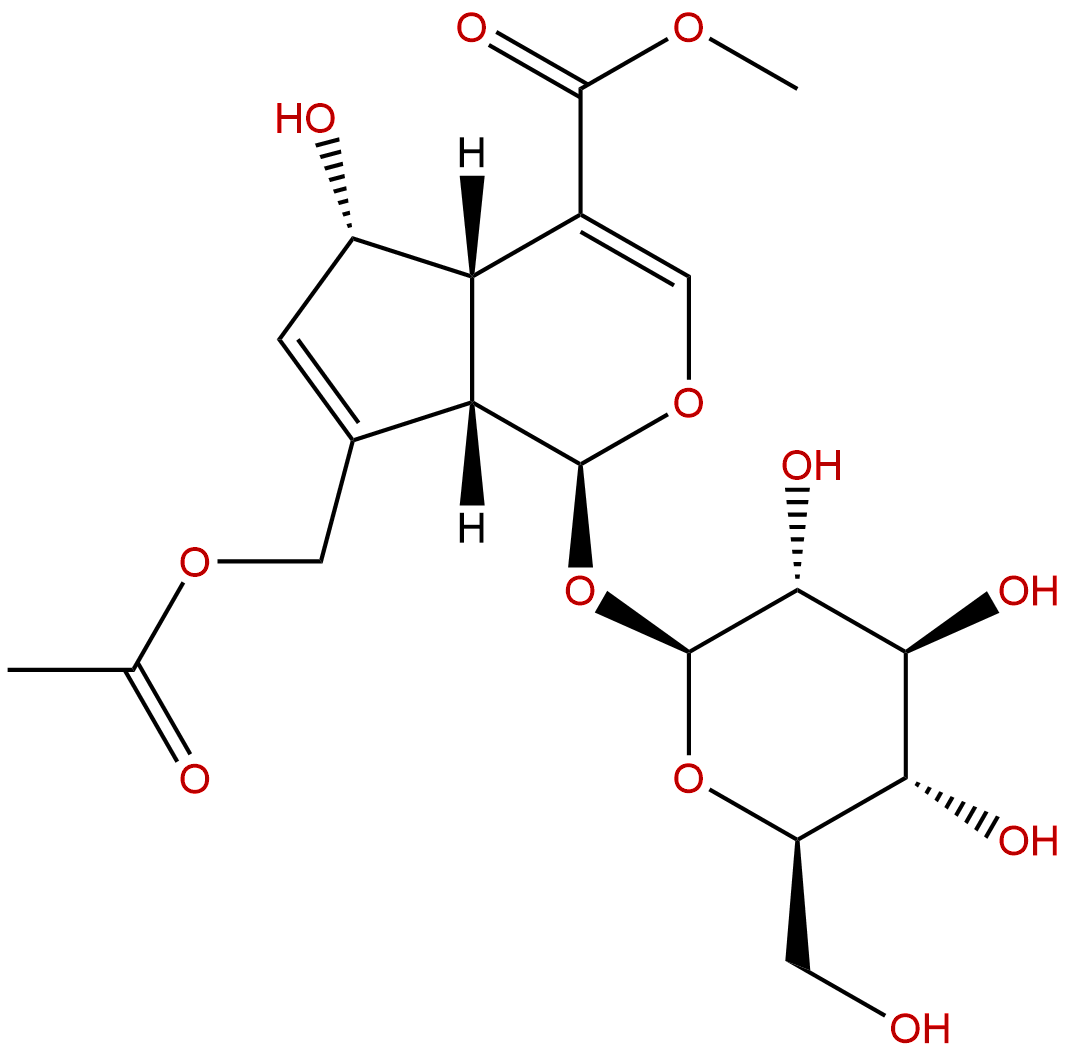
Caryophyllate methyl ester is a typical cyclic terpenoid glycoside compound. Its basic skeleton is cyclopentane pyran ring (a characteristic structure of cyclohexene ether terpenes), which is connected to glucose units through glycosidic bonds and undergoes methylation modification at specific positions. Its molecular formula is C20H30O11 and its molecular weight is 446.4050. This structure endows it with specific physicochemical properties.
From the perspective of computational chemistry and experimental data, the lipid water partition coefficient (LogP) of methyl ferulate is -1.1971, indicating that the compound has a high degree of hydrophilicity. Its topological polar surface area (TPSA) is as high as 181.44 Å ², mainly attributed to the presence of multiple hydroxyl and ester groups in the molecule, as well as a large number of oxygen atoms on sugar units, which are potential hydrogen bond donors and acceptors. The high TPSA and negative LogP values together explain its good water solubility (calculated value of approximately 34.85 mg/L). These properties suggest that the distribution of methyl coumarinate in the body may be more inclined towards a hydrophilic environment and less likely to penetrate the lipid bilayer. Consistent with this, its blood-brain barrier permeability is predicted to be "low", indicating difficulty in entering the central nervous system. This may help reduce the risk of central nervous system side effects for drugs primarily targeting peripheral organ diseases such as the liver.
In terms of early warning indicators for drug safety, existing computational models predict that it has no significant hERG potassium channel inhibitory activity (prediction result is "no"), which preliminarily suggests a low potential risk of cardiac toxicity. In addition, the Ames test predicted a value of 0.0, indicating that it may not have a direct risk of genetic toxicity mutagenesis. These preliminary pharmacological parameters provide a favorable starting point for the subsequent development of methyl ferulate.
Plant sources and extraction methods
The methyl ester of coumarin acid is mainly derived from the Rubiaceae family, specifically from the Lariaceae genus(Galium)Plant Peng Zi Cai(Galium verum L.), Commonly known as "Huanghuapeng Zicai" or "Songyecao". This plant is widely distributed in Eurasia and traditionally used in some folk medicine to treat skin diseases, epilepsy, and as a diuretic. The active ingredients mainly exist in its aboveground parts (stems, leaves, flowers).
The extraction and separation of methyl coumarinate from plant materials usually follow the conventional process of natural product chemistry. Firstly, the aboveground parts of the collected plants are dried and crushed in the shade, and then extracted using appropriate solvents. Due to the hydrophilicity of the compound, methanol, ethanol, or ethanol water mixed solvents are commonly used for reflux extraction or room temperature leaching to fully extract the iridoid glycosides. After filtering and concentrating the crude extract, a paste is obtained.
The subsequent separation and purification steps are crucial. The liquid-liquid extraction method is commonly used to segment the extract using solvents of different polarities (such as petroleum ether, ethyl acetate, n-butanol). Due to its high polarity, methyl ferulate is mainly enriched in n-butanol or water-soluble parts. Further purification relies on various chromatographic techniques. Silica gel column chromatography is a commonly used preliminary separation method, often using gradient elution systems such as chloroform methanol water for separation. Then, fine purification was carried out in combination with reversed-phase silica gel column chromatography (such as C18 packing, methanol water or acetonitrile water as mobile phase), dextran gel column chromatography (such as Sephadex LH-20, methanol as eluent) and high performance liquid chromatography (HPLC) to finally obtain high-purity methyl ester of plantain. Structural identification involves the comprehensive use of spectroscopic methods such as nuclear magnetic resonance (NMR, including 1H-NMR, 13C-NMR, 2D-NMR), mass spectrometry (MS), and infrared spectroscopy (IR) to compare and confirm with known literature data or standards.
Pharmacological activity research
Early research reported on the methyl ester of coumarin acid Antibacterial activity This may be the basis for its source plants being used in folk medicine for anti infection purposes. However, what is even more remarkable is its application in more complex pathological models, especially Hepatitis and related liver injury The multidimensional pharmacological activity demonstrated in it.
-
anti-inflammatory activity One of the core pathological features of hepatitis is a strong inflammatory response. Research has shown that methyl caryophyllate can significantly inhibit the production of pro-inflammatory mediators in liver and immune cell models. In cell models induced by lipopolysaccharide (LPS) or inflammatory factors, it can effectively downregulate the expression and release of key pro-inflammatory factors such as tumor necrosis factor - α (TNF - α), interleukin-6 (IL-6), and interleukin-1 β (IL-1 β). These factors are key signaling molecules that drive the hepatic inflammatory cascade response, recruit immune cell infiltration, and lead to liver cell damage.
-
Antioxidant and anti apoptotic activity Oxidative stress and excessive apoptosis of liver cells are important links in the progression of hepatitis to liver fibrosis and cirrhosis. Methyl caryophyllate exhibits the ability to scavenge free radicals and enhance the activity of intracellular antioxidant enzymes such as superoxide dismutase (SOD) and glutathione peroxidase (GSH Px), thereby reducing the damage of reactive oxygen species (ROS) to liver cells. At the same time, it can regulate the expression of apoptosis related proteins, inhibit programmed cell death of liver cells, and have a protective effect on chemical (such as acetaminophen, carbon tetrachloride) or immune liver injury models.
-
Potential for anti liver fibrosis Continuous development of chronic hepatitis can lead to activation of hepatic stellate cells and excessive deposition of extracellular matrix, resulting in liver fibrosis. Preliminary research suggests that methyl caryophyllate may have potential value in anti liver fibrosis by inhibiting the activation and proliferation of hepatic stellate cells, reducing collagen synthesis.
These broad pharmacological activities indicate that methyl caryophyllate does not act on a single link, but synergistically exerts liver protective effects through multiple pathways, providing advantages for its response to the complex pathological network of hepatitis.
Mechanism of action and molecular targets
The multiple pharmacological activities of methyl caryophyllate stem from its networked regulation of hepatitis related signaling pathways. Existing research (including computational simulations and partial experimental validation) suggests that it interacts with multiple key targets to intervene in disease progression
-
Regulating inflammatory signaling pathways:
- NF - κ B pathway Nuclear factor kappa B (NF - κ B, composed of subunits such as NFKB1) is the "master switch" of inflammatory response. Methyl caryophyllate can inhibit the phosphorylation degradation of I κ B protein, prevent NF - κ B nuclear translocation, and downregulate the expression of downstream target genes, including TNF, IL6, IL1B, NOS2 (inducible nitric oxide synthase), and PTGS2 (cyclooxygenase-2). This comprehensively inhibits the production of inflammatory mediators and inflammation related enzymes at the transcriptional level.
- JAK/STAT pathway Signal transduction and transcription activator 3 (STAT3) plays an important role in inflammation and cell survival. This compound may block its pro-inflammatory and pro survival signals by inhibiting JAK kinase phosphorylation or directly interfering with STAT3 dimerization and nuclear translocation.
- TNF signal Directly or indirectly regulate the expression of TNF - α and downstream signals of its receptors, alleviate TNF - α induced hepatocyte apoptosis and necrotic apoptosis.
-
Regulating the balance of cell apoptosis:
- BCL2 family BCL2 is an important anti apoptotic protein. Methyl caryophyllate may upregulate the expression or function of BCL2, maintain mitochondrial membrane stability, prevent cytochrome C release, and inhibit the initiation of apoptotic cascade reactions.
- Caspase cascade As the executor of apoptosis, the activation of caspase-3 (CASP3) is a marker of late stage apoptosis. This compound can inhibit the activation of CASP3 and directly block the process of apoptosis.
-
Affects other related targets:
- Estrogen receptor beta (ESR2)ESR2 is believed to have a protective effect in liver inflammation and fibrosis. Methyl caryophyllate may act as a regulator to affect ESR2 signaling and participate in the steady-state regulation of liver metabolism and inflammation.
- NOS2 and PTGS2 By inhibiting inducible nitric oxide synthase (NOS2) and cyclooxygenase-2 (PTGS2), excessive production of inflammatory mediators such as nitric oxide and prostaglandin E2 is reduced, alleviating oxidative and inflammatory damage.
In summary, the mechanism of action of methyl caryophyllate exhibits multi-target characteristics, with its core being the simultaneous inhibition of key pro-inflammatory pathways such as NF - κ B and JAK/STAT, and the synergistic regulation of the BCL2/CASP3 apoptosis axis, forming a synergistic intervention network against the vicious cycle of "inflammation oxidative stress apoptosis" in hepatitis.
Evaluation of drug properties and pharmacokinetics
Based on calculations and preliminary experimental data, the pharmacological characteristics of methyl ester of coumarin acid in Chinese herbal medicine are both superior and inferior.
Advantage aspects:
1. Good security warning The absence of hERG inhibition and Ames mutagenicity warning reduces the risk of cardiac toxicity and genetic toxicity in early development.
2. Good water solubility Good water solubility is beneficial for the development of formulations, especially injectable forms, which may have significance for the treatment of acute liver injury.
3. Moderate molecular weight The molecular weight is approximately 446, which is within the acceptable range for drug like molecules.
Challenges and unknown aspects:
1. Membrane permeability and oral bioavailability High polarity (low LogP, high TPSA) leads to poor lipid solubility, indicating lower cell membrane permeability. This is likely to result in poor oral absorption, significant first pass effects, and possibly low oral bioavailability. This is the main obstacle to its development as an oral formulation.
2. Metabolism and stability As a iridoid glycoside, the ester and glycosidic bonds in its structure may be enzymatically hydrolyzed in the gastrointestinal tract or liver, affecting the blood concentration and stability of its prototype drug. The metabolic pathways, main metabolites, and activities of it in the body are not yet clear.
3. Lack of pharmacokinetic parameters Currently, there is a severe lack of detailed pharmacokinetic studies on the in vivo pharmacokinetics of methyl ferulate, including absorption, distribution, metabolism, and excretion parameters. Key information such as plasma protein binding rate, tissue distribution characteristics (although difficult to predict in the brain, the enrichment in the liver is unknown), and elimination half-life need to be elucidated through animal experiments.
4. Low blood-brain barrier permeability For the treatment of liver disease, this may be an advantage, but if its pharmacological effects involve central targets, it becomes a limitation.
Future strategies for optimizing drug properties may include:Prodrug modification(such as esterification of hydroxyl or carboxyl groups, preparation of more lipophilic prodrugs to enhance oral absorption, and hydrolysis into active prototypes in vivo);New drug delivery system(such as liposomes, nanoparticles, microemulsions and other carriers to improve their solubility, enhance their ability to target the liver and delay metabolism); And carry out the system's Preclinical pharmacokinetic and toxicological studies Comprehensively evaluate its internal processes and safety window.
Clinical application prospects and prospects
As a natural lead compound with multi-target anti hepatitis activity, methyl ester of coumarin acid has broad clinical application prospects, but the road ahead is long.
Potential application directions:
1. Adjuvant therapy for acute/chronic hepatitis Can be used as a potential drug for the treatment of acute liver injury caused by viral hepatitis, drug-induced liver injury, alcoholic liver disease, etc. Through its comprehensive anti-inflammatory, antioxidant, and anti apoptotic effects, it can alleviate symptoms, protect liver function, and prevent the disease from developing into chronicity and fibrosis.
2. Combination therapy for anti liver fibrosis Combined with existing antiviral or anti-inflammatory drugs, it may enhance efficacy, delay or reverse the progression of liver fibrosis.
3. Other inflammation related diseases Given that its anti-inflammatory mechanism involves universal pathways such as NF - κ B, it may also have exploratory value in inflammatory diseases of other organ systems such as the intestine and joints.
Challenges faced and future research directions:
1. In depth mechanism verification Currently, most target predictions are based on calculations and preliminary experiments, requiring more sophisticated models and techniques such as gene knockout/knockdown, co crystallization, and surface plasmon resonance to verify their direct interactions and functional consequences with targets such as BCL2 and STAT3.
2. Systematic pharmacodynamic evaluation It is necessary to evaluate the long-term efficacy and dose-response relationship of animal models that are closer to clinical settings, such as chronic hepatitis and liver fibrosis mouse models.
3. Optimization of drug properties and formulation research As mentioned earlier, solving the problem of low oral bioavailability is the key to transformation. Resources must be invested in the design of prodrugs or the development of new delivery systems.
4. Comprehensive preclinical development Complete systematic studies on pharmacokinetics, safety pharmacology, acute and chronic toxicology that meet the requirements for new drug application.
5. Structural modification and screening of analogues Using it as the parent nucleus, structural modifications are carried out to synthesize a series of derivatives, and candidate compounds with better activity and drug properties are screened.
Conclusion
Methyl ester of coumarin acid is a cyclic terpenoid glycoside active ingredient found in the traditional medicinal plant, Platycodon grandiflorus. It goes beyond the initial scope of antibacterial activity and demonstrates unique advantages in the field of anti hepatitis by regulating multiple targets such as NF - κ B, STAT3, BCL2, CASP3, etc., synergistically exerting anti-inflammatory, antioxidant, and anti apoptotic effects. Its good water solubility and preliminary calculated safety have laid the foundation for its development. However, the potential for poor oral absorption, metabolic instability, and incomplete pharmacokinetic and in vivo pharmacodynamic data caused by its high polarity are obstacles that must be overcome for clinical application. Future research should focus on further elucidating its molecular mechanism of action and optimizing its drug properties through medicinal chemistry and pharmacology methods. As a promising multi-target lead compound, the methyl ester of coumarin acid not only provides new candidate molecules for hepatitis treatment, but also demonstrates the enormous potential of exploring modern drug value from traditional medicinal plants. Continued in-depth research on it is expected to open up new paths for drug development in liver diseases.