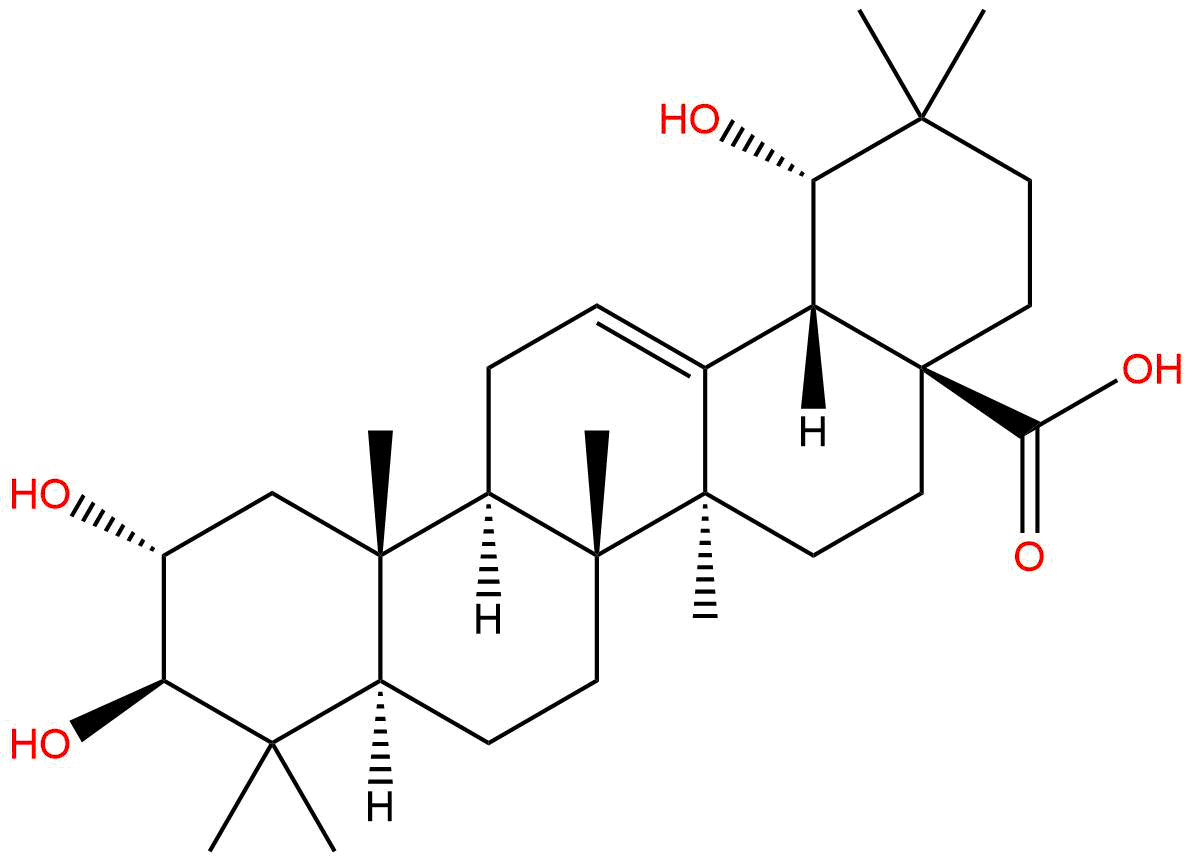


Product name: Arjunic acid
Synonym name:
Catalogue No.: SBP01912
Cas No.: 31298-06-3
Formula: C30H48O5
Mol Weight: 488.709
Botanical Source:
Physical Description: Powder
Type of Compound: Triterpenoids
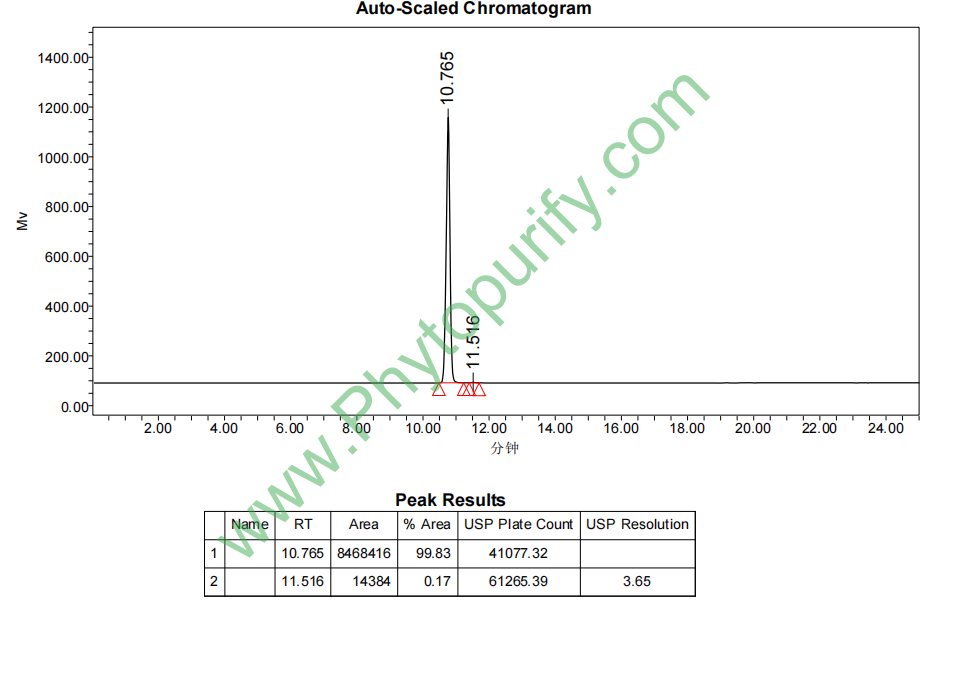
Purity: 95%~99%
Analysis Method: HPLC-DAD or/and HPLC-ELSD
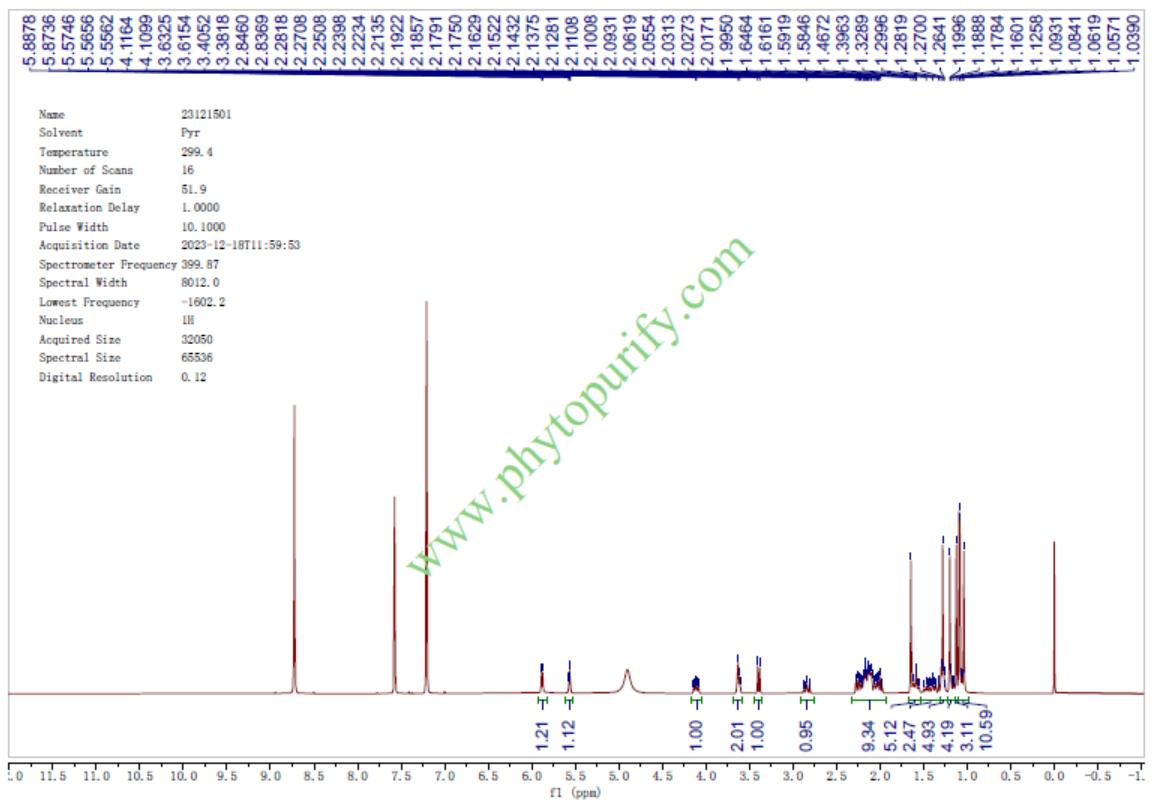
Identification Method: Mass, NMR
Packing: Brown vial or HDPE plastic bottle
The product could be supplied from milligrams to grams. Inquire for bulk scale.
We provide solution to improve the water-solubility of compounds, thereby facilitating the variety of activity tests and clinic uses.
For Reference Standard and R&D, Not for Human Use Directly.
HPLC of Arjunic acid
HNMR of Arjunic acid
Storage conditions:Short-term storage at 2~8℃, long-term storage at -20 ~ -80℃
97.9900
4.6957
2.9772
.0105
1.8020
3.7663
Low
89.9315
4.9638
No
No
No
No
No
No
0.0
Yes
No
Yes
No
Natural products are an important source of drug discovery and development, and their diverse chemical structures and unique biological activities provide abundant lead compounds for modern pharmacological research. Among numerous natural products with biological activity, triterpenoids have attracted much attention due to their wide range of pharmacological effects, such as anti-inflammatory, anti-tumor, hepatoprotective, antiviral, etc. Arjundic acid, also known as Arjuntierpenic acid, is a pentacyclic triterpenoid compound with a chemical structure belonging to the Ursane type triterpenoid. This compound was originally derived from the Combretaceae plant, Ele.me(Terminalia arjuna)It was isolated and identified from the bark of the tree, hence its name. However, subsequent studies have found that it also exists in various other medicinal plants, such as the Rosaceae plant Ulmus officinalis(Sanguisorba officinalis L.)。 As a traditional Chinese medicinal herb, Diyu has the effects of cooling blood, stopping bleeding, detoxifying and healing sores. The research on its active ingredients has always been a hot topic in the field of natural medicinal chemistry. As one of the important triterpenoid components in Eucommia ulmoides, the pharmacological activity, especially anti-inflammatory effect, of isoquercetin has been extensively explored in recent years.
Inflammation is a complex defensive response of the body to infections, tissue damage, or harmful stimuli. However, uncontrolled or excessive inflammatory reactions are the pathological basis of various chronic diseases, such as rheumatoid arthritis, inflammatory bowel disease, cardiovascular disease, neurodegenerative diseases, and even cancer. At present, commonly used anti-inflammatory drugs in clinical practice, such as nonsteroidal anti-inflammatory drugs (NSAIDs) and glucocorticoids, have significant therapeutic effects, but long-term use often accompanies serious side effects such as gastrointestinal injury, cardiovascular risk, and immune suppression. Therefore, searching for efficient and low toxicity novel anti-inflammatory lead compounds from natural products has important scientific significance and clinical value. Due to its clear anti-inflammatory activity and regulatory effects on multiple key inflammatory targets, isoquercetin has shown the potential to become a candidate molecule for novel anti-inflammatory drugs.
This review aims to comprehensively review the research status of isoquercetin, including its chemical structure and physicochemical properties, plant sources and extraction methods, pharmacological activity, mechanism of action and molecular targets, pharmacological evaluation and pharmacokinetic characteristics, as well as clinical application prospects. The aim is to provide a reference for the in-depth research and development of this natural product.
Isoquercetin belongs to the Ursuline type of pentacyclic triterpenoids. Its chemical structure skeleton is composed of six isoprene units, forming five fused rings (A, B, C, D, E rings), where the E ring is a characteristic five membered ring of the Ussurine type. Specifically, the parent nucleus of isoquercetin is Urs-12-ene, which has a β - hydroxyl group (- OH) at C-3, a carboxyl group (- COOH) at C-17, and an α - hydroxyl group at C-19. Its system is named: 2,3,19-trihydroxy-urs-12-en-28-oic acid (2 α, 3 β, 19 α - trihydroxyurs-12-en-28-oic acid). This structure makes it structurally similar to Ursolic acid and Oleanolic acid, both of which belong to the Ursolic acid type. However, the different hydroxyl substitution modes result in its unique biological activity.
From the perspective of physical and chemical properties, isoquercetin is a white or off white crystalline powder. Its molecular formula is C ∝₀ H ₄₈ O ₅, and its molecular weight is 488.7090 g/mol. This compound exhibits typical properties of triterpenoid acids, namely strong lipid solubility and poor water solubility. According to calculations, its lipid water partition coefficient (LogP) is 4.6957, indicating its high solubility in non-polar solvents. The polar surface area (TPSA) is 97.99 Å ², which is consistent with the presence of three hydroxyl groups and one carboxyl group in its molecule. Its water solubility (LogS) is only 0.0105, indicating extremely low solubility in water, which may pose challenges to its bioavailability and formulation development. In addition, its blood-brain barrier (BBB) permeability is predicted to be "low", indicating that the compound is not easily able to enter the central nervous system, which may to some extent reduce central related side effects. In terms of early safety prediction, hERG inhibition was predicted as' no ', and the Ames test result was 0.0, indicating a low risk of cardiac and genetic toxicity, which is a positive signal for its candidate drug.
Yiajiang Elenic Acid was first discovered and reported in the Elephantiasis tree of the family Euonymaceae(Terminalia arjuna)In the middle. Elephantine tree is a classic herb used in Ayurvedic medicine in India to treat cardiovascular diseases. Its bark is rich in various triterpenoids, including Arjunolic acid, isoajonolic acid, and Terminolic acid. In addition to the elephantine tree, this compound is also present in various other plants, including the widely used traditional Chinese medicine plant, the elm(Sanguisorba officinalis L. It is another important source. The roots and rhizomes of Eucommia ulmoides are used as medicine and contain abundant tannins and triterpenoid saponins. Isogallic acid can often be detected in its hydrolysis products. In addition, in other plants of the Rosaceae family, such as the crane grass(Agrimonia pilosa)And it has also been found in some Rhamnaceae plants.
For the extraction of isoquercetin, solvent extraction method is usually used. Considering their lipid solubility characteristics, commonly used extraction solvents include methanol, ethanol, or their aqueous solutions. For plant materials such as Eucommia ulmoides, the dried and crushed medicinal materials are usually subjected to reflux extraction or cold soaking extraction with 70% -95% ethanol or methanol. The extract is then concentrated under reduced pressure to obtain the total extract. Subsequently, the total extract was preliminarily separated using liquid-liquid extraction method. For example, the extract was dispersed in water and extracted sequentially with petroleum ether, ethyl acetate, and n-butanol. Due to its moderate polarity, isoquercetin is usually enriched in the ethyl acetate extraction site or n-butanol extraction site.
Further separation and purification mainly rely on various chromatographic techniques. Silica gel column chromatography is the most commonly used method, which often uses solvent systems such as chloroform methanol, dichloromethane methanol, or ethyl acetate methanol for gradient elution. For similar triterpenoid acids with similar structures, high-performance liquid chromatography (HPLC) or preparative high-performance liquid chromatography (Prep HPLC) are effective methods for obtaining high-purity monomers. In addition, in recent years, new separation technologies such as high-speed countercurrent chromatography (HSCCC) have also been applied to the separation of triterpenoids, which have the advantages of high separation efficiency and low sample loss. In terms of structural identification, the chemical structure is usually determined by combining nuclear magnetic resonance spectroscopy (NMR, including ¹ H-NMR, ¹ ³ C-NMR, DEPT, HMBC, HSQC, etc.) and high-resolution mass spectrometry (HR-MS).
The pharmacological activity research of isoquercetin mainly focuses on its anti-inflammatory effect, while there are also reports on its antioxidant, anti-tumor, antibacterial, and cardiovascular protective activities.
1. Anti inflammatory activity:
This is the most prominent pharmacological activity of isoquercetin. Multiple in vitro and in vivo experiments have confirmed its significant anti-inflammatory effect. In cell models, isoquercetin can significantly inhibit the production of nitric oxide (NO) and prostaglandin E ₂ (PGE ₂) by macrophages (such as RAW264.7 cells) stimulated by lipopolysaccharide (LPS), both of which are important inflammatory mediators. At the same time, it can also reduce the mRNA and protein expression levels of pro-inflammatory cytokines such as tumor necrosis factor - α (TNF - α), interleukin-6 (IL-6), and interleukin-1 β (IL-1 β). In animal models, such as the rat toe swelling model induced by carrageenan, the mouse ear swelling model induced by xylene, and the mouse peritoneal capillary permeability increase model induced by acetic acid, isoquercetin showed dose-dependent inhibitory effects and demonstrated good anti-inflammatory effects in vivo.
2. Antioxidant activity:
The multiple hydroxyl groups in the molecule of isoquercetin endow it with certain antioxidant capacity. Research has shown that it can scavenge various free radicals, such as DPPH radicals, ABTS ⁺ radicals, and hydroxyl radicals, and exhibits a certain degree of reducing power. In the cellular oxidative stress model, it can reduce the level of reactive oxygen species (ROS) and increase the activity of antioxidant enzymes such as superoxide dismutase (SOD) and glutathione peroxidase (GSH Px), thereby protecting cells from oxidative damage.
3. Antitumor activity:
Some studies have explored the anti-tumor potential of isoquercetin. It has been found that it can inhibit the proliferation of many cancer cells, such as HepG2, MCF-7 and A549. Its mechanism of action may be related to inducing cell apoptosis and cell cycle arrest. For example, it may induce tumor cell apoptosis by upregulating the pro apoptotic protein Bax, downregulating the anti apoptotic protein Bcl-2, and activating Caspase-3.
4. Other activities:
There are literature reports that isoquercetin has certain antibacterial activity and has inhibitory effects on certain Gram positive and Gram negative bacteria. In addition, considering the cardiovascular protective effect of its source plant, the compound has also been studied for its protective effect against myocardial cell injury, possibly through antioxidant and anti apoptotic mechanisms.
The pharmacological activity of isoquercetin, especially its anti-inflammatory effect, is achieved by regulating multiple key signaling pathways and molecular targets. Based on the provided target information, we can outline the network of its mechanism of action.
1. Regulation of key inflammatory signaling pathways:
- NF - κ B pathway: Nuclear factor kappa B (NF - κ B) is the core transcription factor in inflammatory response. In the resting state, NF - κ B (usually a p50/p65 heterodimer, RELA or p65 subunit) binds to the inhibitory protein I κ B and exists in an inactive form in the cytoplasm. When stimulated by LPS, TNF - α, etc., I κ B kinase (IKK, whose catalytic subunit is IKK β encoded by IKBKB) is activated, phosphorylates I κ B, leading to its ubiquitination degradation. The released NF - κ B is immediately translocated into the nucleus, initiating the transcription of various pro-inflammatory genes such as TNF - α, IL-6, iNOS, COX-2. Isoquercetin can inhibit the activity of IKK β (IKBKB), prevent the phosphorylation and degradation of I κ B, thereby inhibiting the activation of NF - κ B and ultimately downregulating the expression of downstream target genes. This explains why it can inhibit the expression of TNF, IL-6, NOS2 (iNOS), and PTGS1/2 (COX-1/2).
- STAT3 pathway: Signal transducer and activator of transcription factor 3 (STAT3) plays an important role in both inflammation and tumors. After binding to cytokines such as IL-6 and their receptors, JAK kinase can be activated to phosphorylate STAT3, causing it to form dimers and translocate into the nucleus, regulating target gene transcription. Isoquercetin can inhibit the phosphorylation of STAT3, thereby blocking the IL-6/STAT3 signaling pathway, which is complementary to its effect of reducing IL-6 levels.
2. Direct effects on inflammatory mediators and enzymes:
- CASP1(Caspase-1): Caspase-1 is a key effector molecule of inflammasomes. After activation of inflammasomes, Caspase-1 is cleaved and activated, which in turn cleaves pro-IL-1 β and pro-IL-18, producing mature IL-1 β and IL-18, and may induce cell apoptosis. The regulation of CASP1 by isoquercetin suggests that it may exert anti-inflammatory effects by intervening in the inflammasome pathway.
- NOS2 (iNOS) and PTGS1 (COX-1): INOS is an enzyme that catalyzes the production of large amounts of NO, while COX-1/2 is a key enzyme that catalyzes prostaglandin synthesis. The inhibitory effect of isoquercetin on the NF - κ B pathway and downregulation of gene expression of these enzymes, thereby reducing the production of inflammatory mediators such as NO and PGE ₂, is an important effector of its anti-inflammatory effect.
3. Regulation of ion channels:
- TRPV1 and TRPA1: Transient receptor potential channels (TRP channels) are important sensory receptors involved in pain, itching, and neurogenic inflammation. TRPV1 can be activated by capsaicin, heat, acid, etc., while TRPA1 can be activated by various environmental stimuli and inflammatory mediators. The regulatory effect of isoquercetin on these channels suggests its potential for pain relief and alleviation of neurogenic inflammation.
In summary, the anti-inflammatory effect of isoquercetin is the result of a synergistic effect of multiple targets and pathways. The core mechanism lies in the inhibition of two key inflammatory signaling pathways, NF - κ B and STAT3, and may further regulate the inflammatory response by affecting CASP1 and TRP channels. This multi-target mode of action gives it potential advantages in treating complex inflammatory diseases.
To develop natural products into clinical drugs, a systematic evaluation of their drug like and pharmacokinetic (ADME) properties is necessary.
1. Evaluation of drug properties:
According to Lipinski's "Rule of Five", the molecular weight of isoquercetin (488.7) is slightly higher than 500, the LogP value (4.70) is slightly greater than 5, and the number of hydrogen bond donors (3- OH, 1- COOH, a total of 4) and hydrogen bond acceptors (5 O atoms) meet the requirements. Therefore, it slightly violates two of the "Five Rules", indicating that there may be a problem of poor oral absorption. Its extremely low water solubility (0.0105) is the main pharmaceutical barrier, which may lead to poor solubility in the gastrointestinal tract, thereby affecting oral bioavailability. The TPSA value (97.99 Å ²) is within an acceptable range, and molecules with TPSA less than 140 Å ² are generally considered to have good oral absorption potential. Overall, isoquercetin has a certain pharmacological basis, but its solubility and permeability are key issues that need to be improved through formulation methods such as nano formulations, phospholipid complexes, cyclodextrin inclusion complexes, etc. Early safety predictions (hERG negative, Ames negative) provided favorable conditions for its subsequent development.
2. Pharmacokinetic characteristics:
At present, there are relatively limited systematic studies on the pharmacokinetics of isoquercetin in vivo, but based on its physicochemical properties and research on similar compounds, its general characteristics can be inferred:
- Absorption: Due to its poor water solubility and high fat solubility, oral absorption may be incomplete and the absorption rate may be slow. Its LogP value suggests that it may have high membrane permeability, but dissolution is the limiting step. The bioavailability may be low.
- Distribution: Due to its high lipid solubility, it is speculated that it is widely distributed in the body and may have a high binding rate with plasma proteins such as albumin. The low permeability of BBB suggests that it is not easy to enter brain tissue, which is an advantage for treating peripheral inflammatory diseases, but limits its application in central nervous system diseases.
- Metabolism: Triterpenoid acid compounds typically undergo extensive phase I and phase II metabolism in the liver. Phase I metabolism may include reactions such as hydroxylation and oxidation; Phase II metabolism mainly binds with glucuronic acid, sulfuric acid, etc., forming more water-soluble metabolites that are easier to excrete.
- Excretion: Metabolites and small amounts of prototype drugs are mainly excreted through bile and urine. Due to its high molecular weight, bile excretion may be its main clearance pathway.
Future research requires systematic in vivo pharmacokinetic experiments, including the establishment of sensitive LC-MS/MS detection methods, determination of blood concentration time curves, tissue distribution, metabolite identification, and excretion pathways of isoquercetin in different animal models, in order to comprehensively understand its fate in vivo and provide a basis for formulation design and clinical administration regimens.
Based on the significant anti-inflammatory activity and multi-target mechanism of action of isoquercetin, it has shown broad application prospects in the treatment of various inflammation related diseases.
1. Chronic inflammatory diseases:
The dual inhibition of NF - κ B and STAT3 pathways, as well as the regulation of various pro-inflammatory cytokines and mediators by isoquercetin, make it promising for the treatment of chronic inflammatory diseases such as rheumatoid arthritis, inflammatory bowel disease (such as Crohn's disease, ulcerative colitis), psoriasis, etc. Compared with traditional immunosuppressants, its multi-target nature may lead to better efficacy and lower drug resistance.
2. Cardiovascular diseases:
Inflammation plays a key role in the occurrence and development of cardiovascular diseases such as atherosclerosis. Through inhibiting the inflammatory reaction, antioxidation and potential blood lipid lowering effects of vascular wall, isoparaginic acid may be beneficial to the prevention and treatment of atherosclerosis, myocardial ischemia reperfusion injury, etc. The source plant, the Elenium tree, has been used in traditional medicine for its cardiotonic effect, providing clues for this application.
3. Metabolic disorders:
Chronic low-grade inflammation is a common feature of metabolic diseases such as obesity, type 2 diabetes and non-alcoholic fatty liver disease (NAFLD). The anti-inflammatory effect of isoquercetin may help improve insulin resistance, alleviate liver steatosis and inflammation, providing new ideas for the treatment of metabolic diseases.
4. Pain management:
Its regulatory effect on TRPV1 and TRPA1 ion channels suggests that it may have analgesic effects, especially in inflammatory pain and neuropathic pain. The problem of low oral bioavailability can be avoided by developing topical preparations (such as gel or patch) for local analgesia.
Outlook and Challenges:
Despite its promising prospects, the development of isoquercetin still faces many challenges. The primary issue is the low oral bioavailability caused by its extremely low water solubility. Future research should focus on:
1. Drug delivery system development: Explore the use of modern formulation technologies such as nanoparticles, liposomes, solid dispersions, phospholipid complexes, and self microemulsifying drug delivery systems (SMEDS) to improve their solubility and oral absorption.
2. Structural modification and optimization: A systematic structure-activity relationship (SAR) study was conducted using isoquercetin as the lead compound. By introducing hydrophilic groups (such as phosphate groups and amino acid esters) or changing the substitution mode of hydroxyl and carboxyl groups on their parent nuclei, a series of derivatives are synthesized in order to obtain candidate compounds with better water solubility, stronger activity, and higher selectivity.
3. In depth pharmacological research: It is necessary to use gene knockout mice, disease animal models, etc. to further elucidate their exact targets and signaling networks in vivo, especially the relationship between their anti-inflammatory effects and immune regulation.
4. Toxicological evaluation of the system: Conduct comprehensive acute and chronic toxicity experiments to evaluate the safety of long-term medication and lay the foundation for clinical trials.
As a triterpenoid acid derived from traditional medicinal plants, isoquercetin has become a noteworthy molecule in the field of natural product pharmacology due to its clear anti-inflammatory activity, multi-target mechanism of action, and initially demonstrated good safety. It has the potential to treat various inflammatory related diseases by regulating key inflammatory signaling pathways such as NF - κ B and STAT3, inhibiting key enzymes such as CASP1, iNOS, COX-2, and regulating TRPV1/TRPA1 ion channels. Although its poor water solubility and low oral bioavailability are the main bottlenecks in drug development, these obstacles are expected to be overcome through modern drug chemical modification and advanced drug delivery technologies. In the future, by combining multidisciplinary approaches such as systems pharmacology, chemical biology, and pharmacy, in-depth research on isoquercetin will not only help to reveal its scientific significance as an active ingredient in traditional Chinese medicine, but also have the potential to develop it into a new drug lead compound for the treatment of chronic inflammation, metabolic diseases, and cardiovascular diseases. The exploration of isoquercetin once again confirms the eternal value of natural products as a treasure trove of drug discovery.
