| Catalog No | Package | Original Price | Price | Inventory | Quantity | Operating |
|---|---|---|---|---|---|---|
| BPF2401-5mg | 5mg | $290.00 | Sign in |
|


Storage conditions:Short-term storage at 2~8℃, long-term storage at -20 ~ -80℃
49.8300
6.6755
6.6761
.0009
4.8816
7.5283
High
89.2251
4.9459
No
No
No
No
No
No
0.0
No
No
No
No
Natural products, as an important source of drug discovery, play an indispensable role in the long history of human struggle against diseases. Alisma(Alisma orientale As a traditional Chinese medicinal herb, dried tubers (Alisma) of (Sam.) Juz. are widely used in traditional Chinese medicine clinical practice. They have the effects of promoting diuresis and dampness, relieving heat and turbidity, and are commonly used to treat conditions such as urinary incontinence, edema and fullness, hyperlipidemia, and metabolic syndrome. Modern pharmacological research has confirmed that the active ingredients of Alisma are mainly protostane type triterpenoids, among which Alisol A, Alisol B, and their derivatives are the main pharmacological substances. In recent years, with the continuous deepening of research on the chemical composition and biological activity of Alisma, a series of novel and significantly active triterpenoid compounds have been discovered. Among them, 11 Deoxyalisol B has attracted widespread attention due to its unique chemical structure and significant anti-inflammatory activity.
11 Deoxysenol B, as a natural triterpene isolated from Alisma, has the most notable pharmacological property of effectively inhibiting lipopolysaccharide (LPS) - induced nitric oxide (NO) production. NO, as an important signaling molecule and inflammatory mediator, plays a crucial role in both physiological and pathological processes. In the inflammatory response, inducible nitric oxide synthase (iNOS) is activated, producing a large amount of NO and participating in the occurrence and development of various inflammatory diseases, such as sepsis, autoimmune diseases, neurodegenerative diseases, etc. Therefore, inhibiting excessive NO production is considered one of the important strategies in the development of anti-inflammatory drugs. 11 Deoxysenol B exhibits potential anti-inflammatory activity by inhibiting the production of NO, providing scientific evidence for its application in the treatment of related diseases.
In addition, the traditional efficacy of Alisma, diuresis, is also associated with the possible pharmacological effects of 11 deoxy Alismatal B. Diuretic effects involve complex physiological processes, including water salt balance, electrolyte transport, and regulation of renal aquaporins. Related targets such as mineralocorticoid receptor (NR3C2), sodium chloride cotransporter (SLC12A3), aquaporins (AQP1, AQP2, AQP3), sodium potassium chloride cotransporter (SLC12A1), potassium channel (KCNJ1), and arginine vasopressin receptor 2 (AVPR2) form a complex network that regulates renal water and sodium reabsorption. Although there are currently insufficient reports on the direct diuretic effect of 11 deoxy Alismatal B, as one of the active ingredients of Alisma, it is highly likely to participate in regulating water metabolism by acting on one or more links in the target network mentioned above, thereby exerting its traditional efficacy.
This article aims to provide a systematic and professional review of the natural triterpenoid compound, 11 deoxy puerarin B. The article will delve into the chemical structure and physicochemical properties, plant sources and extraction methods, pharmacological activity research, mechanism of action and molecular targets, evaluation of drug properties and pharmacokinetic characteristics, as well as clinical application prospects, in order to provide comprehensive reference and theoretical basis for further research and development of this compound.
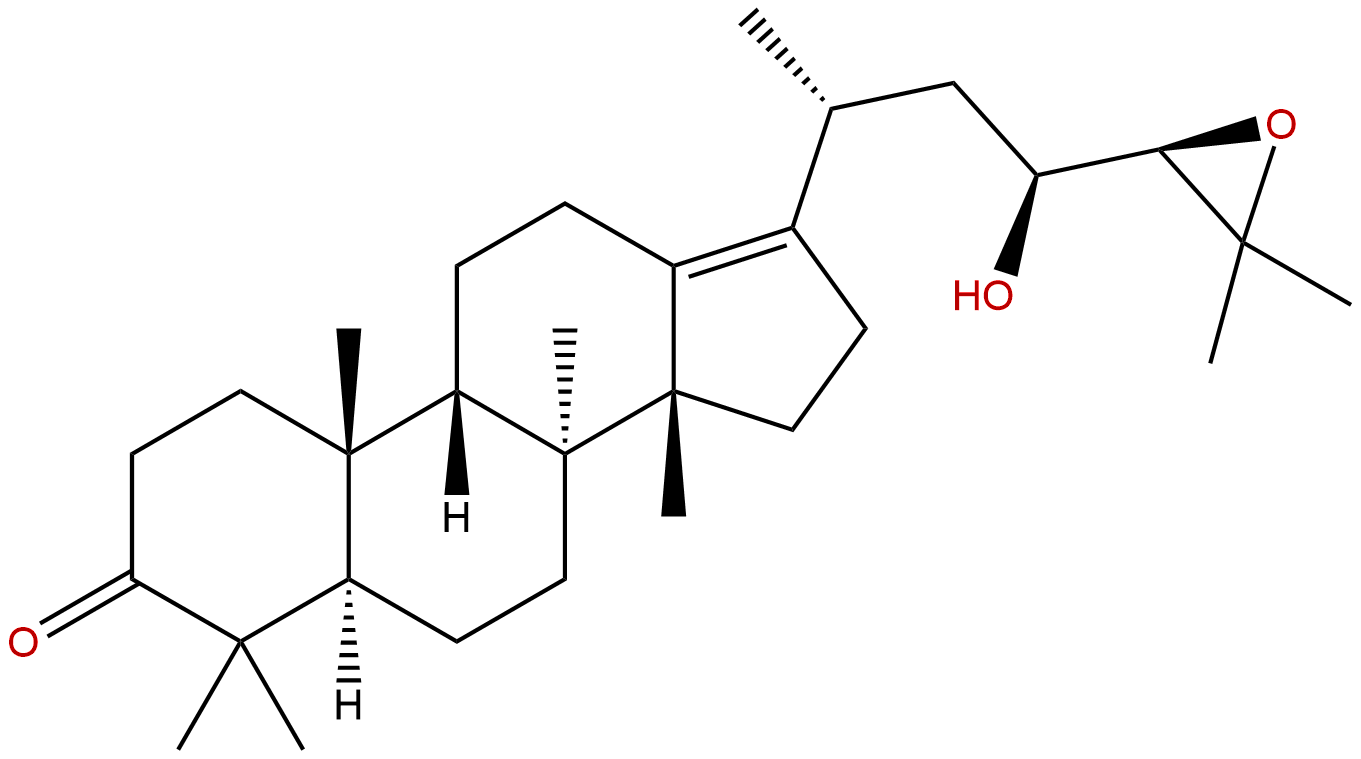
11 Deoxysenol B belongs to the triterpenoid class of terpenoids, and its chemical structure exhibits typical characteristics of this class of compounds. The core skeleton of a triterpenoid is a thirty carbon skeleton consisting of six isoprene units, typically containing one five membered ring (C ring) and two six membered rings (A, B rings), with multiple side chains and functional groups. The naming of 11 deoxy Alismatal B implies its structural association with Alismatal B, which lacks a hydroxyl (- OH) substituent at its C-11 position, whereas Alismatal B typically contains a hydroxyl group at its C-11 position. This subtle difference in structure often leads to significant changes in biological activity and physicochemical properties.
From the structural formula, the molecular formula of 11 deoxy Alismatal B is C ∝₀ H ₄₈ O3, with a molecular weight of 456.7110 g/mol. Its structure contains a typical terpene tetracyclic skeleton and may contain multiple chiral centers. Specifically, its structural features may include: 3-hydroxy (3-OH) or 3-keto (3=O) substitution on the A ring; Double bonds or epoxidized structures on the B and C rings; And functional groups such as hydroxyl, ketone, or carboxyl on the side chain. Due to the lack of hydroxyl groups at the C-11 position, its molecular polarity may be reduced compared to Alismatal B, which directly affects its solubility and lipophilicity.
In terms of physical and chemical properties, 11 deoxy diarrheal alcohol B exhibits typical lipophilic small molecule characteristics. Its lipophilic water partition coefficient (LogP) is as high as 6.6755, indicating that the compound has strong lipophilicity and is easily soluble in organic solvents such as methanol, ethanol, chloroform, ethyl acetate, etc., while its solubility in water is extremely low (water solubility: 0.0009 mg/mL). This high lipophilicity is beneficial for its penetration through biological membranes, but also poses challenges for its drug delivery and bioavailability in aqueous environments. Its topological polar surface area (TPSA) is 49.83 Å ², which is relatively low and usually indicates that the compound has good cell membrane permeability and may have high blood-brain barrier penetration ability. In fact, its pharmacological parameters clearly state "blood-brain barrier: high", indicating that the compound may act on central nervous system targets, but may also bring central related side effects. In addition, its hERG inhibition assessment is' no ', indicating that in the preliminary assessment, the compound has a low risk of inhibiting the cardiac potassium channel hERG, which is a favorable safety signal. The Ames test result is 0.0, indicating that it did not exhibit mutagenicity in the bacterial recovery mutation test, and the preliminary genetic toxicity risk is low.
Overall, the chemical structure of 11 deoxynivalenol B determines its high lipophilicity, low water solubility, high membrane permeability, and potential exposure to the central nervous system. These physical and chemical properties are important foundations for the evaluation of drug properties and the formulation of subsequent development strategies.
11 Deoxysenol B is mainly derived from the plant Alisma in the Alismataceae family(Alisma orientale)Dry tubers. Alisma is widely distributed in China, Japan, South Korea, and Southeast Asia, and is a commonly used traditional Chinese medicine that promotes diuresis and diuresis. Except for Alisma orientale Plants of the same genus, such as Alisma plantago-aquatica L. It may also contain the compound, but the content and proportion may vary depending on the species, place of origin, harvesting time, and processing method.
The extraction of 11 deoxy alisol B from Alisma usually follows the classic process of natural product chemistry, which mainly includes the following steps:
Raw material pretreatment and extraction After crushing the dried Alisma roots, organic solvents are used for extraction. Due to the high lipophilicity of 11 deoxy zeolitic alcohol B, commonly used extraction solvents are organic solvents with lower polarity, such as petroleum ether, n-hexane, chloroform, ethyl acetate, or methanol chloroform mixed solvents. Among them, methanol or ethanol is often used as a crude extraction solvent due to its good permeability and solubility for multiple components, followed by initial enrichment through liquid-liquid extraction (such as petroleum ether/water, ethyl acetate/water). Reflux extraction, ultrasound assisted extraction, or cold soaking extraction are commonly used methods. To improve extraction efficiency and selectivity, modern extraction techniques such as supercritical fluid extraction (especially using CO ₂ as a solvent) have also shown potential for application, as they can avoid residual organic solvents and have high extraction efficiency for lipophilic components.
Separation and Purification The crude extract contains a large amount of lipophilic impurities (such as fatty acids, sterols, pigments, etc.) as well as other triterpenoid compounds (such as Alismatal A, B, C, etc.), thus requiring multi-step chromatographic separation to obtain high-purity 11 deoxy Alismatal B. The classic separation process usually includes:
Structural Identification The isolated compounds require structural confirmation through modern spectroscopic techniques. Common methods include:
It is worth noting that due to the relatively low content of 11 deoxy Alisma alcohol B in Alisma, and its coexistence with structurally similar compounds such as Alisma alcohol B, its separation and purification process requires precise chromatographic techniques and patience. In recent years, chemical fingerprinting technology based on high-performance liquid chromatography-mass spectrometry (HPLC-MS) has been widely used for quality control of Alisma officinalis medicinal materials, which can simultaneously qualitatively and quantitatively analyze multiple active ingredients including 11 deoxy Alisma alcohol B.
At present, research on the pharmacological activity of 11 deoxy laxative alcohol B mainly focuses on the anti-inflammatory field, especially its inhibitory effect on NO production. In addition, based on its parent compound, Alismatal B, and the traditional efficacy of Alisma, its potential diuretic, anti-tumor, and hepatoprotective activities are also worth paying attention to.
This is the most essential pharmacological activity of 11 deoxy Alismatal B. Research has shown that in LPS stimulated macrophage models (such as RAW 264.7 cells), 11 deoxynivalenol B can significantly inhibit NO production in a dose-dependent manner. NO is a free radical gas molecule generated by iNOS catalyzing the production of L-arginine. In inflammatory reactions, stimuli such as LPS can activate transcription factors such as NF - κ B, upregulate iNOS expression, and lead to the massive release of NO. Excessive NO has cytotoxicity and participates in the amplification of vascular dilation, tissue damage, and inflammatory cascade reactions. 11 Deoxysaikosapol B can effectively alleviate inflammatory reactions by inhibiting the production of NO.
Its anti-inflammatory mechanism may involve multiple levels:
- Inhibition of iNOS expression The most direct mechanism is to downregulate the mRNA and protein levels of iNOS. By blocking upstream signaling pathways such as NF - κ B or MAPK, the transcription of iNOS gene is reduced.
- Inhibition of NF - κ B activation NF - κ B is a key transcription factor that regulates the expression of inflammatory genes. 11 Deoxysaikosapol B may inhibit the phosphorylation and degradation of I κ B α, prevent the translocation of NF - κ B p65 subunit to the nucleus, and thus suppress its transcriptional activity.
- Inhibition of MAPK pathway The mitogen activated protein kinase (MAPK) pathway (including ERK, JNK, p38) plays an important role in inflammatory signaling. This compound may affect the production of downstream inflammatory mediators by inhibiting the phosphorylation of these kinases.
In addition to inhibiting NO, whether this compound can also inhibit the production of other inflammatory mediators such as prostaglandin E2, tumor necrosis factor - α, interleukin-6, and its anti-inflammatory effect in animal models in vivo, is an important direction for future research.
As a classic diuretic, the diuretic effect of Alisma has been widely confirmed. Alismatal B and its derivatives are considered the main contributors to the diuretic activity of Alisma. 11 Deoxysenol B, as an analog of senol B, is highly likely to also have diuretic activity. Its diuretic mechanism may be related to the regulation of renal water salt transport proteins. As mentioned earlier, the relevant targets include:
- aquaporin AQP1, AQP2, and AQP3 play a crucial role in renal water reabsorption. AQP2 is regulated by AVPR2 and is a key target of antidiuretic hormone (ADH). 11 Deoxysaikosapol B may produce diuretic effects by downregulating AQP2 expression or inhibiting AVPR2 signaling, reducing water reabsorption.
- Ion transporter protein SLC12A3 (thiazide diuretic target) and SLC12A1 (loop diuretic target) are responsible for Na ⁺ - Cl ⁻ or Na ⁺ - K ⁺ -2Cl ⁻ co transport in the distal tubules and the ascending branch of the medullary loop, respectively. KCNJ1 (ROMK potassium channel) participates in the potassium ion cycle. NR3C2 (mineralocorticoid receptor) regulates sodium reabsorption. 11 Deoxysenol B may produce a diuretic effect by inhibiting the activity or expression of these transporters, reducing sodium reabsorption.
However, there is currently insufficient in vitro and in vivo experimental research directly targeting the diuretic activity of 11 deoxy laxative alcohol B, and its specific targets and efficacy need further clarification.
Based on the study of Alisma alcohol compounds, 11 deoxy Alisma alcohol B may also have the following activities:
- Antitumor activity Alismatol B and its derivatives have been reported to be cytotoxic to a variety of cancer cells (such as liver cancer, lung cancer, breast cancer, colon cancer). The mechanism involves inducing apoptosis, inhibiting proliferation, and blocking cell cycle. 11 Deoxysenol B may have similar activity, but its efficacy and selectivity need to be evaluated.
- Hepatoprotective activity Alisma extract is commonly used to treat fatty liver and hyperlipidemia. Alisma alcohol compounds can exert hepatoprotective effects by regulating lipid metabolism, antioxidant stress, and inhibiting inflammatory reactions. 11 Deoxysaikosapol B may protect the liver by improving lipid accumulation and reducing inflammatory damage.
- Metabolic regulatory activity Alismatal B has been proven to be an agonist of the farnesol X receptor (FXR), a key nuclear receptor that regulates bile acid, lipid, and glucose metabolism. 11 Deoxyalisol B may also act on FXR, thus playing a regulatory role in metabolic diseases (such as non-alcoholic fatty liver disease, diabetes).
The pharmacological mechanism of 11 deoxynivalenol B is multifaceted, and its core lies in regulating the cellular signal transduction network through interactions with specific molecular targets. At present, the understanding of its mechanism is mainly based on the study of anti-inflammatory activity, combined with the common mechanism of Alisma alcohol compounds.
As mentioned earlier, 11 deoxy laxative alcohol B inhibits LPS induced NO production, and its key molecular mechanism lies in inhibiting the activation of NF - κ B and MAPK signaling pathways.
- NF - κ B pathway At rest, NF - κ B dimers (such as p50/p65) bind to the inhibitory protein I κ B α and exist in an inactive form in the cytoplasm. After LPS stimulation, downstream kinases (such as IKK complex) are activated by Toll like receptor 4 (TLR4), leading to phosphorylation and ubiquitination degradation of I κ B α. The released NF - κ B is then translocated into the nucleus and binds to the κ B site in the promoter region of target genes (including iNOS, COX-2, TNF - α, etc.), initiating transcription. 11 deoxynivalenol B may inhibit the activity of IKK or directly interfere with the phosphorylation of I κ B α, preventing the nuclear translocation of NF - κ B and downregulating the expression of iNOS.
- MAPK pathway LPS stimulation can also activate the ERK, JNK, and p38 MAPK pathways. The phosphorylation cascade of these kinases ultimately activates transcription factors (such as AP-1), synergistically regulating inflammatory gene expression with NF - κ B. 11 Deoxysenol B may inhibit the activity of upstream kinases (such as MKKs), block the signal transduction of MAPK pathway, and thus suppress inflammatory response.
The diuretic effect of Alisma is its traditional core function. As one of the active ingredients, 11 deoxy Alismatal B may involve intervention in the renal water salt balance regulation system in its diuretic mechanism.
- Antagonistic AVPR2 AVPR2 is a G protein coupled receptor located on the basal membrane of the renal collecting duct, and its endogenous ligand is antidiuretic hormone (ADH). After binding with AVPR2, ADH promotes the fusion and insertion of AQP2 vesicles into the apical membrane through the cAMP PKA signaling pathway, increasing water permeability and promoting water reabsorption. 11 Deoxysaikosapol B may act as an antagonist of AVPR2, blocking the action of ADH and reducing the membrane localization of AQP2, resulting in a diuretic effect. This is similar to the mechanism of action of vasopressin V2 receptor antagonists used clinically, such as tolvaptan.
- Inhibition of ion transporters 11 Deoxysenol B may directly inhibit the activity of SLC12A3 (Na ⁺ - Cl ⁻ co transporter) or SLC12A1 (Na ⁺ - K ⁺ -2Cl ⁻ co transporter), reducing the reabsorption of sodium ions by renal tubules. The reduction of sodium ion reabsorption will lead to a decrease in the excretion of chloride ions and water, thereby producing a diuretic effect. This is similar to the mechanism of action of thiazide diuretics and loop diuretics.
- Regulating mineralocorticoid receptors After activation by aldosterone, NR3C2 (mineralocorticoid receptor) can upregulate the expression of sodium channels (ENaC) and Na ⁺/K ⁺ - ATPase, promoting sodium reabsorption and potassium excretion. 11 Deoxysaikosapol B may act as an antagonist of NR3C2, inhibiting the action of aldosterone and producing a diuretic effect of sodium excretion and potassium retention, similar to aldosterone receptor antagonists such as spironolactone.
The farnesol X receptor (FXR) is a nuclear receptor primarily expressed in the liver and intestine, serving as a core hub for regulating bile acid, lipid, and glucose metabolism. Alismatal B has been proven to be an agonist of FXR. As a structurally similar compound, 11 deoxy alisol B is likely to also exhibit FXR agonist activity. Activating FXR can:
- Regulating bile acid homeostasis Inhibit the rate limiting enzyme CYP7A1 for bile acid synthesis, promote bile acid transport and excretion.
- Improve lipid metabolism Reduce triglyceride and low-density lipoprotein cholesterol levels.
- Improve sugar metabolism Increase insulin sensitivity and lower blood sugar.
- Anti inflammatory and anti fibrotic Plays anti-inflammatory and anti fibrotic effects in the liver.
Therefore, 11 deoxysalisol B may play a therapeutic potential in non-alcoholic fatty liver disease, cholestatic liver disease, type 2 diabetes and other metabolic diseases by activating FXR.
The evaluation of drug properties is a crucial step in determining whether natural products can be transported from the laboratory to clinical applications. Based on the provided parameters and existing knowledge, conduct a preliminary evaluation of the pharmacological properties of 11 deoxy laxative alcohol B.
Conclusion The physical and chemical properties of 11 deoxy laxative alcohol B exhibit typical characteristics of "high lipophilicity and low water solubility", and its LogP seriously exceeds the standard, which is the main obstacle to its medicinal properties. Although it has good membrane permeability, its extremely poor water solubility will result in extremely low oral bioavailability.
Overall evaluation of drug properties 11 Deoxysenol B has clear pharmacological activity (anti-inflammatory, potential diuretic) and preliminary good safety signals (no hERG inhibition, no Ames mutagenicity). However, its extremely poor solubility and high lipophilicity are fatal weaknesses in its drug development, resulting in extremely low oral bioavailability. Therefore, this compound is not suitable for direct development as an oral medication. Future research directions should focus on:
1. Structural modification By means of medicinal chemistry, polar groups (such as hydroxyl, carboxyl, phosphate, sugar, etc.) are introduced into its parent nucleus to reduce LogP and improve water solubility while maintaining or enhancing activity. For example, synthesizing its prodrug or water-soluble salt.
2. New formulations Develop non oral administration routes (such as injections, transdermal patches) or adopt advanced formulation technologies (such as liposomes, nanoemulsions, polymer micelles) to improve their delivery efficiency.
3. As a lead compound Using it as a lead compound, through structure-activity relationship studies, search for derivatives with better activity and drug like properties.
Despite facing significant challenges in drug development, the unique pharmacological activity of 11 deoxy laxative B still demonstrates promising application prospects in specific therapeutic fields, particularly in the treatment of anti-inflammatory and diuretic related diseases.
Given its strong ability to inhibit the production of NO, 11 deoxy laxative alcohol B or its derivatives have potential in the treatment of acute or chronic inflammatory diseases. For example:
- sepsis Sepsis is a systemic inflammatory response syndrome caused by infection, and LPS is a key pathogenic factor in Gram negative bacterial sepsis. Inhibiting LPS induced excessive production of NO is one of the strategies for treating sepsis. 11 Deoxysaikosapol B may alleviate organ damage caused by sepsis through this mechanism.
- Autoimmune diseases Diseases such as rheumatoid arthritis, inflammatory bowel disease, and multiple sclerosis all involve chronic inflammation and excessive production of NO. Compounds targeting NO production may have therapeutic value.
- neuroinflammation Due to its high blood-brain barrier penetrability, 11 deoxy laxative B may be used to treat neurodegenerative diseases such as Alzheimer's disease and Parkinson's disease, in which neuroinflammation is an important pathological feature. Inhibiting the expression of iNOS and the production of NO in microglia and astrocytes may have neuroprotective effects.
Based on its potential diuretic activity, 11 deoxy laxative alcohol B or its derivatives can be used to treat edema caused by various reasons (such as cardiogenic edema, renal edema, hepatic edema) and mild to moderate hypertension. Its diuretic effect may be achieved through a multi-target mechanism, such as antagonizing AVPR2, inhibiting SLC12A3 or NR3C2, which may make it a novel diuretic. Compared with existing diuretics, its multi-target effect may bring a more balanced water electrolyte regulation effect and reduce side effects.
If its FXR activation activity is confirmed, 11 deoxysalisol B will have great potential in the treatment of nonalcoholic fatty liver disease (NAFLD), nonalcoholic steatohepatitis (NASH), cholestatic liver disease and type 2 diabetes. FXR agonists (such as obeticolic acid) have been shown to be effective against NASH, but there are side effects such as itching and dyslipidemia. The development of novel FXR agonists with fewer side effects is currently a research hotspot. The natural product skeleton of 11 deoxy alisol B may provide clues for the development of novel FXR modulators.
In the future, research on 11 deoxynivalenol B should focus on the following aspects:
As a natural triterpene derived from the traditional Chinese medicine Alisma, 11 Deoxyzhitong B has attracted attention in the field of natural product pharmacology due to its unique chemical structure and significant anti-inflammatory activity in inhibiting NO production. This article systematically reviews its chemical structure and physicochemical properties, plant sources and extraction methods, pharmacological activity, mechanism of action, evaluation of drug properties, and clinical application prospects. Research has shown that 11 deoxynivalenol B exerts anti-inflammatory effects by targeting the NF - κ B and MAPK signaling pathways, and may participate in diuresis and metabolic regulation by regulating renal water salt transporters (such as AVPR2, SLC12A3) and nuclear receptors (such as FXR). However, its extremely poor solubility and high lipophilicity are the main obstacles to its drug development, limiting its direct use as an oral medication.
However, as a natural lead compound with clear pharmacological activity, the research value of 11 deoxy laxative B cannot be ignored. In the future, through in-depth structure-activity relationship research, rational structural modification, and advanced drug delivery technology, it is expected to overcome its drug defects and develop new anti-inflammatory, diuretic, or metabolic regulating drugs with independent intellectual property rights. The continuous research on 11 deoxy laxatives B not only helps to reveal the modern scientific connotation of the traditional efficacy of laxatives, but also provides a useful example for discovering innovative drugs from the treasure trove of traditional Chinese medicine. With further research, this natural product is expected to play its unique role in future clinical treatments.
Batch can search by a CAS number,one per line
