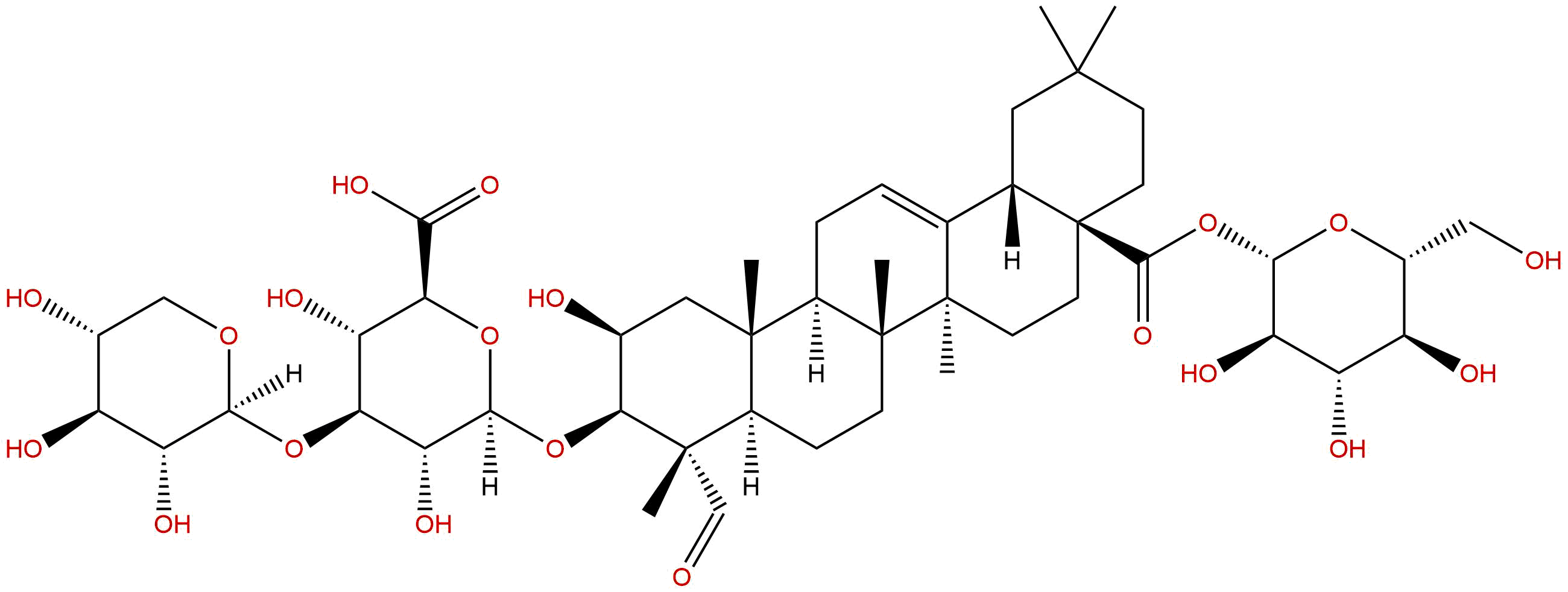


Product name: Celosin H
Synonym name:
Catalogue No.: BP4761
Cas No.: 1623405-28-6
Formula: C47H72O20
Mol Weight: 957.073
Botanical Source:
Type of Compound:
Purity: 95%~99%
Analysis Method: HPLC-DAD or/and HPLC-ELSD
Identification Method: Mass, NMR
Packing: Brown vial or HDPE plastic bottle
Storage: Store in a well closed container, protected from air and light. Put into refrigerate or freeze for long term storage.
Whenever possible, you should prepare and use solutions on the same day. However, if you need to make up stock solutions in advance, we recommend that you store the solution as aliquots in tightly sealed vials at -20℃. Generally, these will be useable for up to two weeks.
The product could be supplied from milligrams to grams
Inquire for bulk scale.
For Reference Standard and R&D, Not for Human Use Directly.
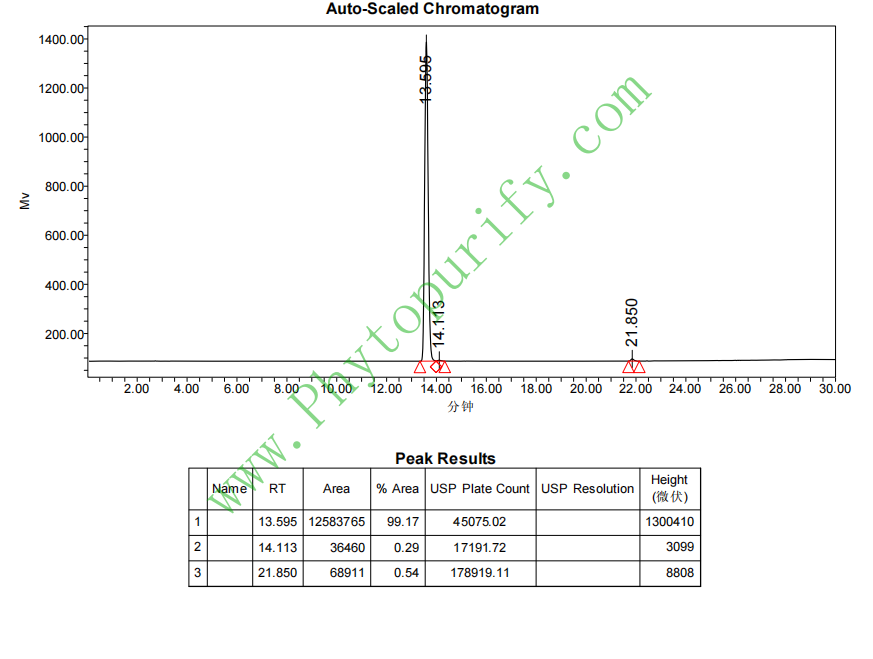
HPLC of Celosin H
Storage conditions:Short-term storage at 2~8℃, long-term storage at -20 ~ -80℃
329.1200
1.1911
-1.3228
.3070
.5437
.1259
Low
79.9748
6.5318
Yes
No
No
No
Yes
No
0.0
Yes
No
No
No
Liver disease is one of the leading causes of morbidity and mortality worldwide, with complex and diverse etiologies including viral hepatitis, alcoholic liver disease, non-alcoholic fatty liver disease (NAFLD), drug-induced liver injury, as well as end-stage lesions such as liver fibrosis and cirrhosis. At present, although first-line clinical treatment drugs such as nucleoside analogues and glucocorticoids have certain therapeutic effects, they often come with problems such as drug resistance, significant side effects, or high prices. Therefore, searching for highly efficient and low toxicity liver protectants from natural products has always been an important direction in the field of drug development. Traditional Chinese medicine, with its long history of application and abundant resources, provides a valuable treasure trove for discovering new liver protective active molecules. Celosiae Semen, as a traditional Chinese medicine, has the effects of clearing the liver, improving vision, and lowering blood pressure. Modern research has also shown that its extract has significant activities in liver protection, anti-inflammatory, and other aspects. In recent years, a series of triterpenoid saponins isolated and identified from Celosia seeds have attracted widespread attention from researchers. Among them, Celosin H, as a newly discovered active ingredient, has shown outstanding liver protective potential. The purpose of this article is to systematically review the chemical structure, plant origin, pharmacological activity, mechanism of action, and pharmacological characteristics of Celosidine H, in order to provide comprehensive scientific references for the in-depth research and development of this compound.
Celosin H is an oleane type pentacyclic triterpenoid saponin with a CAS number of 1623405-28-6. The molecular formula of this compound is C ₄₈ H ₇₄ O ₁₉, with a molecular weight of 957.0730 Da. Its core structure is a glycoside derived from oleanolic acid, with sugar chains usually connected at C-3 and C-28 positions to form a disaccharide chain saponin structure, which is the key pharmacophore for its biological activity. The specific sugar group composition, connection position, and configuration need to be further accurately analyzed through spectroscopic techniques such as nuclear magnetic resonance (NMR) and mass spectrometry (MS), but these structural features usually determine their hydrophilicity and ability to interact with biological targets.
From the perspective of physicochemical parameters related to drug properties, the calculated lipid water partition coefficient (LogP) of Celosidine H is 1.1911, indicating that it has a certain degree of lipophilicity, but overall it still leans towards amphiphilic molecules. Its topological polar surface area (TPSA) is as high as 329.1200 Å ², which is mainly attributed to the abundant hydroxyl and sugar structures in the molecule, leading to its high polarity. The water solubility value is 0.3070 (usually measured in mg/mL or log mol/L, depending on the context, usually indicating moderate to low water solubility). These parameters collectively determine the absorption and distribution characteristics of Celosidine H in living organisms. High TPSA and moderate LogP values suggest that its oral bioavailability may face challenges and need to be improved through pharmaceutical methods. In addition, its blood-brain barrier permeability is predicted to be "low", which means it may not easily enter the central nervous system, which may help reduce central nervous system side effects for drugs that mainly act on peripheral organs such as the liver. The key early safety indicators show that the hERG inhibition risk is "no", and the Ames test result is 0.0 (usually indicating no mutagenicity), which provides a preliminary safety basis for its further development.
Celosia argentea H mainly comes from the dried and mature seeds of the amaranth plant Celosia argentea L., also known as the traditional Chinese medicine "Celosia argentea seeds". Celosia seeds are widely distributed and have abundant resources in China, with a long history of medicinal use. In modern plant chemistry research, in order to systematically elucidate the pharmacological substance basis of Celosia seed, the saponin components in it have been thoroughly isolated and purified.
The extraction of Celosidine H usually follows the conventional process of natural product chemistry. Firstly, the medicinal material of Celosia seed is crushed and subjected to heating reflux or ultrasound assisted extraction using a medium polarity solvent (such as methanol, ethanol, or aqueous ethanol) to fully extract various components including saponins. The crude extract obtained was concentrated under reduced pressure and subjected to gradient extraction using solvents such as petroleum ether, ethyl acetate, and n-butanol. Due to its strong polarity and sugar structure, Celosidine H was mainly enriched in the n-butanol extraction site. Subsequently, various modern chromatographic techniques were comprehensively applied to finely separate the n-butanol fraction. Macroporous adsorption resin column chromatography (such as D101 and AB-8) is often used for preliminary impurity removal and enrichment, and then reversed phase silica gel column chromatography (such as ODS), normal phase silica gel column chromatography, and dextran gel column chromatography (such as Sephadex LH-20) are used for repeated separation and purification. High performance liquid chromatography (HPLC), especially preparative HPLC, is a key technical means to obtain high-purity Celosidine H monomer. It usually uses a C18 chromatographic column with methanol water or acetonitrile water system as the mobile phase for elution. During the separation process, thin layer chromatography (TLC) and HPLC were used for tracking and detection, followed by structural identification using mass spectrometry and nuclear magnetic resonance spectroscopy. Optimizing extraction solvents, extraction methods, and establishing efficient chromatographic separation methods are key to improving the yield of Celosidine H.
The pharmacological activity research of Celosidine H mainly focuses on liver protection and anti-inflammatory aspects, and there is a close pathophysiological relationship between the two.
1. Liver protective effect
This is the core activity of Celosidine H that has received the most attention. In various experimental liver injury models, Celosidine H has shown significant hepatoprotective effects. For example, in the acute liver injury model induced by acetaminophen (APAP), pre-treatment with osidine H can dose dependently reduce the activity of alanine aminotransferase (ALT) and aspartate aminotransferase (AST) in serum, which are sensitive markers of liver cell injury. Meanwhile, it can alleviate pathological changes in liver tissue, such as hepatocyte necrosis, inflammatory cell infiltration, and vacuolar degeneration. In liver injury models induced by carbon tetrachloride (CCl ₄) or D-galactosamine, osidine H also showed efficacy in reducing liver enzymes and improving liver histological damage. Its hepatoprotective mechanism may involve multiple links such as anti-inflammatory, antioxidant, and inhibition of liver cell apoptosis. Research has shown that Celosidine H can enhance the activity of antioxidant enzymes such as superoxide dismutase (SOD) and glutathione peroxidase (GSH Px) in the liver, reduce the content of malondialdehyde (MDA), and alleviate oxidative stress damage. In addition, it has also shown a certain improvement effect on liver fibrosis models, suggesting its potential to intervene in the progression of chronic liver disease.
2. Anti inflammatory effect
Inflammation is a common pathological basis for various liver diseases, as well as diseases such as arthritis and colitis. Celosidine H exhibits broad-spectrum anti-inflammatory activity in both in vitro and in vivo models. In the lipopolysaccharide (LPS) - stimulated macrophage model (such as RAW264.7 cells), celastrol H can significantly inhibit the excessive production of nitric oxide (NO) and prostaglandin E2 (PGE2), which are key effector molecules of inflammatory response. Meanwhile, it can downregulate the mRNA and protein expression levels of various pro-inflammatory cytokines (such as TNF - α, IL-6, IL-1 β). In acute inflammation models such as ear swelling and paw swelling in mice, local or systemic administration of Celosidine H can effectively reduce tissue edema and inflammatory cell infiltration. Its anti-inflammatory effect is closely related to regulating multiple key inflammatory signaling pathways.
The pharmacological effects of Celosidine H, especially its anti-inflammatory and hepatoprotective effects, are achieved by acting on multiple molecular targets and regulating complex signaling networks. Current research suggests that its mechanism of action mainly revolves around inhibiting core inflammatory pathways such as nuclear factor kappa B (NF - κ B) and signal transduction and transcription activator 3 (STAT3), and involves other related targets.
1. Inhibit the NF - κ B signaling pathway
NF - κ B is a core transcription factor that regulates inflammation, immunity, and cell survival. In the resting state, NF - κ B (usually p65/RELA and p50 dimer) binds to the inhibitory protein I κ B and exists in the cytoplasm. When stimulated by LPS, TNF - α, etc., the I κ B kinase complex (IKK, where IKK β/IKBKB is a key catalytic subunit) is activated, phosphorylating I κ B, leading to its ubiquitination degradation, releasing NF - κ B and allowing it to enter the nucleus, initiating the transcription of downstream target genes such as TNF, IL6, NOS2, PTGS1/COX-1, etc. Research has shown that Celosidine H can inhibit the activation of IKK β, reduce the phosphorylation and degradation of I κ B α, and thus prevent the nuclear translocation of NF - κ B p65 subunit. This directly leads to the inhibition of the expression of downstream pro-inflammatory mediators (TNF - α, IL-6, iNOS/NOS2, COX-1/PTGS1). RELA (p65), as a key functional subunit of NF - κ B, is an important node in the action of Celosidine H.
2. Regulating the STAT3 signaling pathway
STAT3 is a key molecule in another important inflammatory and carcinogenic signaling pathway. Cytokines such as interleukin-6 (IL-6) bind to their receptors, activating JAK kinase and subsequently phosphorylating STAT3. Phosphorylated STAT3 forms dimers and enters the nucleus, regulating gene expression related to cell proliferation, survival, and inflammation. Celosidine H has been shown to inhibit IL-6-induced STAT3 phosphorylation, block its signaling pathway, and form a negative feedback regulation with its downregulation of IL-6 self expression, jointly weakening the inflammatory response.
3. Intervention of inflammasomes and cell pyroptosis
The activation of inflammasomes such as NLRP3 can lead to the shear activation of Caspase-1 (CASP1), thereby promoting the maturation and secretion of IL-1 β and IL-18, and inducing a programmed cell death called pyroptosis, which plays an important role in diseases such as hepatitis and sepsis. Preliminary research suggests that Celosidine H may intervene in the inflammasome pathway by inhibiting the activity of CASP1, thereby reducing tissue damage.
4. Affects pain and targets related to neurogenic inflammation
The targets of action of Celosidine H also involve transient receptor potential vanillic acid subtype 1 (TRPV1) and transient receptor potential anchor protein subtype 1 (TRPA1). These two ion channels are important pain sensors and are also associated with neurogenic inflammation. Inhibiting the activity of TRPV1 and TRPA1 may help alleviate pain symptoms associated with inflammation and indirectly affect the inflammatory process.
In summary, Celosidine H forms a synergistic anti-inflammatory network through multi-target action: upstream inhibits the two main inflammatory signaling axes of IKK β/NF - κ B and IL-6/STAT3, while downstream reduces the production of effector molecules such as TNF - α, IL-6, IL-1 β, NO, PGE2, and may also intervene in small body activation and pain perception in inflammation, thereby exerting a comprehensive liver protective and anti-inflammatory effect.
Although Celosidine H has shown good activity in preclinical studies, its drugability and pharmacokinetic (PK) properties are key factors determining its successful conversion into a drug. Based on its physicochemical parameters and existing research on similar compounds, a preliminary evaluation of its pharmacological properties can be conducted.
1. Absorption, distribution, metabolism, and excretion (ADME) prediction
* absorb Celosidine H has a high molecular weight (>500 Da) and high TPSA (>140 Å ²), which is in line with the warning of poor oral absorption in the "Rule of Five". The water solubility and LogP value suggest that it may belong to Class IV (low solubility, low permeability) in the Biopharmaceutical Classification System (BCS). Therefore, its oral bioavailability may be low. Exploring new drug delivery routes (such as injection) or utilizing formulation technologies (such as nanocrystals, liposomes, phospholipid complexes, prodrug modifications) to improve their solubility and membrane permeability is the focus of future research.
* distribution The predicted blood-brain barrier permeability is low, indicating that it is mainly distributed in peripheral tissues and organs. For liver disease treatment, this may be beneficial for drug enrichment in target organs and reduce central side effects. But its specific distribution, accumulation, and protein binding rate in the liver need to be confirmed by in vivo experiments.
* Metabolism and excretion As a saponin compound, Celosidine H may be easily hydrolyzed and metabolized by enzymes in the digestive tract and liver (such as glycosidases and cytochrome P450 enzymes) in vivo. Its aglycone (oleanolic acid) and glycosyl portion may undergo different metabolic pathways. The excretion pathways of prototype drugs and metabolites (bile excretion or renal excretion) are not yet clear, and further pharmacokinetic studies are needed to clarify them.
2. Early safety
Among the provided pharmacological parameters, two key safety indicators are relatively positive: no risk of hERG potassium channel inhibition ("No"), indicating a low risk of inducing QT interval prolongation and apical torsion type ventricular tachycardia; The Ames test result is 0.0 (usually interpreted as negative), indicating no mutagenicity in preliminary testing. This lays an important security foundation for its subsequent development. However, a comprehensive safety evaluation still requires in vitro liver cell toxicity, genotoxicity testing, and long-term animal toxicology studies.
3. Pharmacokinetic research needs
At present, there may be a lack of pharmacokinetic research data on the Qingci glycoside H system. In the future, it is necessary to establish sensitive and specific biological analysis methods (such as LC-MS/MS) to study their drug time curves, absolute bioavailability, tissue distribution, plasma protein binding rate, major metabolites, and excretion kinetics under different administration routes in animal models (rats, mice). These data are essential basis for designing clinical trial dosing regimens.
As a natural triterpenoid saponin with clear liver protection and multi-target anti-inflammatory activity, the clinical application prospects of Celosidine H are promising, but it also faces many challenges.
1. Potential indications
* Acute liver injury Such as excessive acetaminophen, alcoholic acute hepatitis, drug-induced liver injury, etc. Its antioxidant and anti-inflammatory properties are suitable for adjuvant or preventive treatment of such diseases.
* chronic liver disease Inflammation is the core driving factor in non-alcoholic steatohepatitis (NASH), chronic viral hepatitis, and early liver fibrosis. Celosidine H may delay disease progression and prevent its progression towards cirrhosis and liver cancer by inhibiting pathways such as NF - κ B and STAT3.
* Inflammatory related diseases Based on its wide range of anti-inflammatory targets, its indications can be extended to autoimmune or inflammatory diseases such as rheumatoid arthritis, inflammatory bowel disease, dermatitis, especially those patients at risk of liver damage or requiring liver protection adjuvant therapy.
2. Development Strategy and Challenges
* structural optimization Reasonable structural modifications can be made to address its potential drawbacks such as poor oral absorption and unstable metabolism. For example, acylation or alkylation of sugar groups to regulate lipid solubility, or preparation into prodrugs to improve bioavailability.
* Formulation innovation Developing a new drug delivery system is crucial. It can be developed into injectable liposomes, microemulsions, nanoparticles, etc. to improve its stability, target the liver, and achieve sustained release. For oral preparations, technologies such as solid dispersions and self microemulsions can be considered.
* combination therapy Exploring the combination application of Celosidine H with existing standard therapeutic drugs (such as antiviral drugs, silymarin, etc.) may produce synergistic effects and reduce side effects.
* In depth mechanism research It is necessary to use technologies such as gene knockout animals, molecular docking, and chemical biology probes to more accurately elucidate their direct targets (possibly IKK β, STAT3, etc.) and detailed signaling networks.
* Preclinical and clinical research After completing the pharmacological, pharmacokinetic, and toxicological evaluations of the system, gradually advance clinical trials to verify its safety, efficacy, and optimal medication regimen in humans.
Celosidine H is an oleanane triterpenoid saponin with significant liver protective activity isolated from the traditional Chinese medicine Celosia seed. The core of its pharmacological action lies in its strong anti-inflammatory effect, which is achieved through multi-target intervention, including inhibition of the key signaling pathways of IKK β/NF - κ B and IL-6/STAT3, downregulation of the expression of pro-inflammatory mediators such as TNF - α, IL-6, iNOS, COX-1, and may involve modulation of targets such as CASP1 and TRPV1/TRPA1, thus exerting a protective effect in various liver injury models. The preliminary pharmacological parameters indicate that it has good early safety prospects. However, the potential oral absorption challenges caused by its large molecular weight and high polarity are the main challenges facing future development. Through modern medicinal chemistry, pharmacy, and pharmacology methods, structural optimization, formulation innovation, and in-depth mechanism of action research of Celosidine H are expected to develop it into a new candidate drug for the treatment of acute liver injury, chronic inflammatory liver disease, and other inflammatory diseases. The study of Celosidine H not only provides a new potential option for the treatment of liver disease, but also once again demonstrates the enormous value and scientific connotation of excavating modern drugs from the treasure trove of traditional Chinese medicine.
