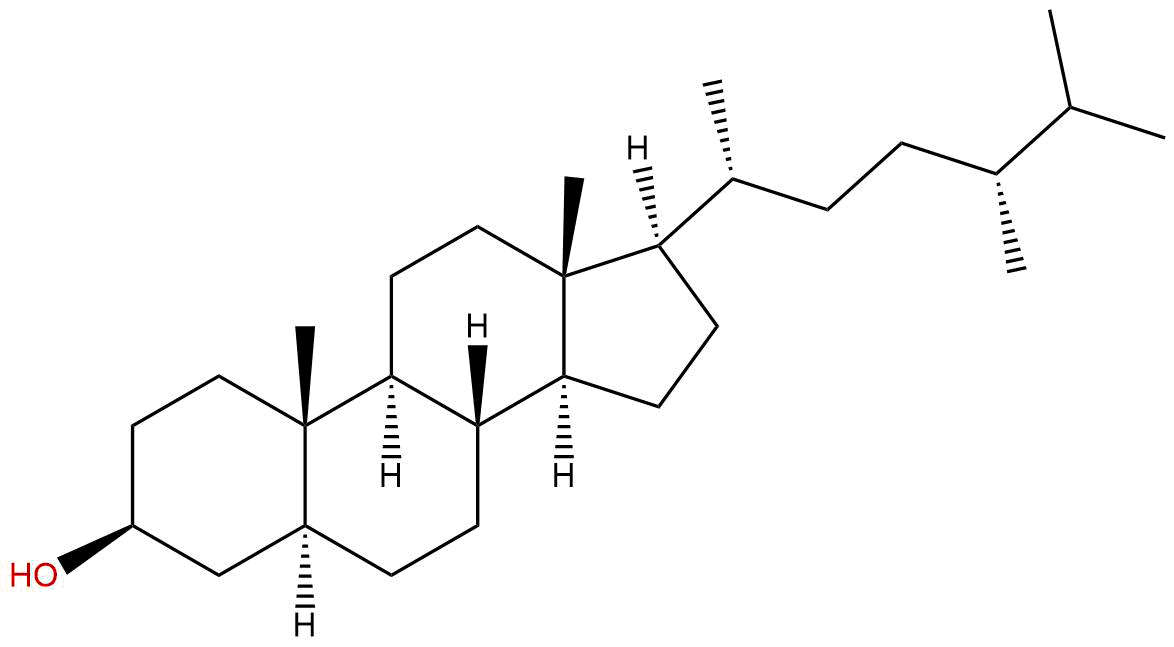


Product name: Campestanol
Synonym name: (3β,5α,24R)-Ergostan-3-ol; Ergostan-3-ol, (3.beta.,5.alpha.,24R)
Catalogue No.: BPF3818
Cas No.: 474-60-2
Formula: C28H50O
Mol Weight: 402.707
Botanical Source:
Physical Description:
Type of Compound: Steroids
Purity: 95%~99%
Analysis Method: HPLC-DAD or/and HPLC-ELSD
Identification Method: Mass, NMR
Packing: Brown vial or HDPE plastic bottle
Storage: Store in a well closed container, protected from air and light. Put into refrigerate or freeze for long term storage.
Whenever possible, you should prepare and use solutions on the same day. However, if you need to make up stock solutions in advance, we recommend that you store the solution as aliquots in tightly sealed vials at -20℃. Generally, these will be useable for up to two weeks.
The product could be supplied from milligrams to grams, up to kilograms
Inquire for bulk scale.
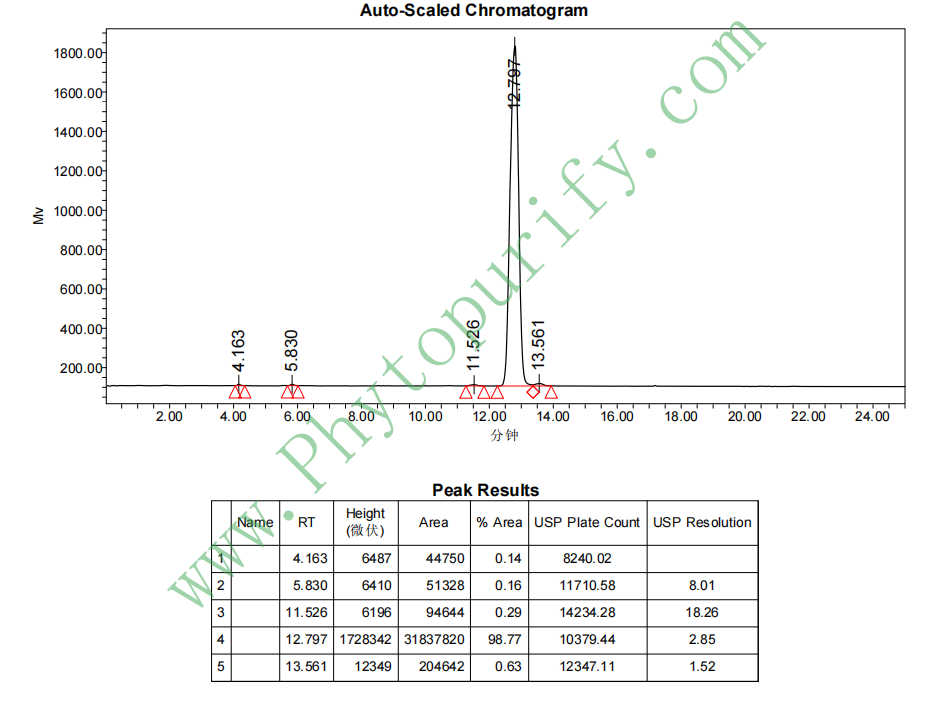
HPLC of Campestanol
Storage conditions:Short-term storage at 2~8℃, long-term storage at -20 ~ -80℃
20.2300
8.0813
8.0813
.0000
8.8791
7.4196
High
93.4237
4.3303
No
No
No
No
No
No
0.0
No
No
No
No
In the long and arduous struggle between humans and cardiovascular disease (CVD), dyslipidemia, especially hypercholesterolemia, has always been the core pathogenic factor and therapeutic target. Statins, as HMG CoA reductase (HMGCR) inhibitors, have achieved milestone success in reducing low-density lipoprotein cholesterol (LDL-C), significantly reducing the risk of cardiovascular events. However, statins have dose-dependent side effects such as muscle toxicity and elevated liver enzymes, as well as limitations such as intolerance or poor efficacy in some patients. This has prompted researchers to continue exploring natural products with complementary or alternative effects. Phytosterols and their saturated derivatives, phytosterols, are an important class of functional lipids that have emerged in this context.
Campestanol, also known as 24 α - methyl-5 α - cholestan-3 β - ol, is one of the plant sterols with relatively low content but significant biological activity in nature. As a 5 α - saturated derivative of campesterol, it is widely present in plant-based foods such as grains, vegetable oils, nuts, and seeds. Compared with unsaturated plant sterols, plant sterols (including brassinosteroids and sitosterols) have attracted much attention due to their higher chemical stability and stronger cholesterol lowering efficacy. Since the mid-20th century, a large number of epidemiological studies and clinical trials have confirmed that daily intake of sufficient amounts of plant sterols/stanols (usually 2-3 grams) can reduce serum LDL-C levels by 8-15%. This effect has been recognized by authoritative agencies such as the US Food and Drug Administration (FDA) and the European Food Safety Authority (EFSA), and relevant health claims have been approved.
The cholesterol lowering mechanism of rapeseed oil stanol is mainly attributed to its competition with dietary cholesterol in the intestine for the incorporation of mixed micelles, thereby inhibiting cholesterol absorption. However, recent studies have revealed that its pharmacological effects go far beyond competitive inhibition at the intestinal level. Rapeseed sterols and their metabolites can play a systematic regulatory role in cholesterol synthesis, uptake, transport, and excretion by regulating the expression of multiple key genes and proteins, such as HMGCR, low-density lipoprotein receptor (LDLR), proprotein convertase subtilisin 9 (PCSK9), cholesterol ester transfer protein (CETP), and cholesterol 7 α - hydroxylase (CYP7A1). In addition, its potential anti-inflammatory, antioxidant and anti atherosclerotic activities have also been gradually recognized, upgrading it from a simple "intestinal cholesterol absorption inhibitor" to a metabolic regulator with multi-target regulatory potential.
Although rapeseed oil sterols have been widely used in functional foods and dietary supplements, there are still many unsolved mysteries and untapped potential regarding their in-depth molecular pharmacology mechanisms, systematic pharmacological evaluation, and clinical application translation for specific metabolic disorders. This article aims to systematically review the chemical and physicochemical properties, natural sources, extraction processes, pharmacological activities, molecular mechanisms of action, pharmacological characteristics, and clinical application prospects of rapeseed oil sterols, in order to provide comprehensive academic references for the in-depth research and development of this natural product.
Campestanol is a derivative of 5 α - cholestanol, with a core skeleton of fully saturated cyclopentane dihydrophenanthrene (steroid nucleus) and a methyl (- CH3) branch at position C-24. Its system is named (3 β, 5 α, 24R) -24-methylcholestan-3-ol, with a molecular formula of C ₂₈ H ₅₀ O and a molecular weight of 402.7070 g/mol. Compared with unsaturated brassinosteroids, brassinosteroids have a cis (5 α - H) steroid nucleus A/B ring and a single bond between C-5 and C-6, without double bonds. This makes their chemical properties more stable and less prone to oxidation.
From the structural characteristics, the structure of rapeseed oil sterols is highly similar to cholesterol, except for an additional methyl group at position C-24. This structural similarity is the molecular basis for its competition with cholesterol for absorption sites in the intestine. Its 3 β - hydroxyl (- OH) group is a polar group that gives the molecule a certain hydrophilicity, while the large steroid nucleus and alkyl side chain give it extremely strong hydrophobicity. This amphiphilic structure allows it to embed into cell membranes or lipoprotein particles, affecting membrane fluidity and function.
In terms of physicochemical properties, rapeseed oil sterols exhibit typical lipid solubility characteristics. Its oil-water partition coefficient (LogP) is as high as 8.0813, indicating that its solubility in aqueous phase is extremely low (water solubility is 0.0000 mg/mL), while it has good solubility in organic solvents such as chloroform, ether, and n-hexane. This high lipophilicity determines its absorption, distribution, metabolism, and excretion (ADME) processes in the body: absorption mainly relies on the encapsulation of chylomicrons and lymphatic system transport, while distribution tends to accumulate in lipoproteins and cell membranes. Its topological polar surface area (TPSA) is 20.23 Å ², much lower than the typical threshold of less than 140 Å ² for oral drugs, indicating its excellent cell membrane permeability. In fact, ADME prediction shows that it has high blood-brain barrier (BBB) penetration ability, which may pose a risk of central nervous system exposure but also provide clues for its potential neuropharmaceutical activity research. It is worth noting that although it has extremely strong lipophilicity, the absorption rate of brassinosteroids in the intestine is much lower than that of cholesterol (usually<5%), mainly because the NPC1L1 transporter protein on the top membrane of intestinal epithelial cells has low affinity for it, and the efficiency of its incorporation into chylomicrons after esterification is also low. This "low absorption, high excretion" characteristic is the pharmacological basis for its inhibitory effect on intestinal cholesterol competition.
The distribution of brassinosteroids in nature is far less widespread than their precursors brassinosteroids or sitosterols, and they are usually present in trace amounts in various plant-based foods. Its main sources include:
Extracting vegetable oil sterols typically involves separating them from plant sterol mixtures or obtaining them through chemical transformations. The main methods include:
This is the most core and extensively studied pharmacological activity of rapeseed oil sterols. Numerous clinical studies have confirmed that daily intake of 2-3 grams of plant sterols (with rapeseed sterols being an important component) can reduce LDL-C levels by 8-15%, and the effect is positively correlated with baseline LDL-C levels. Its lipid-lowering effect can be manifested within 2-3 weeks and can be sustained. It is worth noting that the cholesterol lowering effect of plant sterols (saturated form) is usually superior to their unsaturated plant sterols (such as brassinosteroids), due to their stronger micelle competition ability and lower absorption rate. In addition, the combination of rapeseed oil sterols and statins has a synergistic effect, which can further reduce LDL-C levels, thereby reducing the dosage of statins and lowering the risk of side effects.
In addition to reducing LDL-C, rapeseed sterols also showed direct anti atherosclerosis potential. Animal experiments showed that in atherosclerosis models such as ApoE knockout mice or LDLR knockout mice, supplementation of rapeseed stanol could significantly reduce the area of atherosclerotic plaque in the aortic sinus and the whole aorta. The mechanism may involve: inhibiting the expression of vascular endothelial cell adhesion molecules (such as VCAM-1, ICAM-1), reducing the infiltration of monocytes into the endothelium; Inhibit the formation of foam cells; And stabilize the plaque, reduce the content of macrophages and lipid cores within the plaque.
More and more evidence suggests that brassinosteroids have anti-inflammatory properties. In vitro experiments have shown that it can inhibit the production of pro-inflammatory cytokines (such as TNF - α, IL-6, IL-1 β) in macrophages induced by lipopolysaccharide (LPS), and downregulate the expression of cyclooxygenase-2 (COX-2) and inducible nitric oxide synthase (iNOS). In the body, supplementing with plant sterols can reduce the levels of systemic inflammatory markers such as C-reactive protein (CRP). In addition, studies suggest that brassinosteroids may exert immunomodulatory effects by affecting T cell differentiation and Th1/Th2 balance.
The molecular structure of rapeseed oil sterol lacks conjugated double bonds, and its direct free radical scavenging ability (such as DPPH and ABTS free radical scavenging experiments) is weak. However, it can exert antioxidant effects through indirect pathways, such as upregulating the activity of antioxidant enzymes (such as superoxide dismutase (SOD) and glutathione peroxidase (GPx)); Inhibit NADPH oxidase mediated generation of reactive oxygen species (ROS); And by regulating the lipid composition of the cell membrane, the sensitivity of the membrane to oxidative stress can be reduced.
The pharmacological effects of rapeseed oil sterols are not a single mechanism, but involve a complex network of multiple targets and pathways. Its core mechanism of action can be summarized as follows:
This is the classic mechanism by which vegetable oil sterols lower cholesterol. In the intestinal lumen, dietary cholesterol and bile cholesterol need to be mixed with bile salts, phospholipids, etc. to form mixed micelles before they can be transported into the intestinal epithelial cells by the Nieman Pick C1 like protein 1 (NPC1L1). Due to its highly similar structure to cholesterol, campesterol can competitively replace cholesterol and be incorporated into mixed micelles, thereby reducing the amount of cholesterol that can be absorbed. Unabsorbed cholesterol is excreted from the body through feces. In addition, rapeseed oil sterols may also activate LXR α in intestinal epithelial cells, upregulate the expression of ATP binding cassette transporter G5/G8 (ABCG5/G8), promote the absorption of plant sterols and some cholesterol pumps into the ileal lumen, and further reduce net absorption.
Vegetable oil sterols not only act on the intestine, but also enter the liver through blood circulation (although with low absorption rate), exerting a systemic regulatory effect.
In summary, rapeseed oil sterols achieve precise regulation of cholesterol metabolism through a multi link, multi-target synergistic network of "intestinal competitive absorption liver synthesis inhibition receptor uptake enhancement bile acid excretion acceleration".
Based on the classic "Lipinski Five Rules" and subsequent extended rules, evaluate the pharmacological properties of rapeseed oil sterols:
Although rapeseed oil sterols comply with regulations in terms of molecular weight and hydrogen bonding, their extremely high LogP value (8.08) is a significant warning signal. High lipophilicity often leads to poor water solubility (0.0000 mg/mL), which poses significant challenges for the development of oral formulations, such as low bioavailability and complex formulation processes (requiring special delivery systems such as oil-based solutions, nanoemulsions, or solid dispersions). In addition, high LogP also implies that it may have high tissue accumulation and potential off target toxicity. However, the Ames test result was 0.0, indicating no significant genetic toxicity risk. HERG inhibition prediction is' no ', indicating a low risk of cardiac toxicity.
Overall, the medicinal properties of rapeseed oil sterols are below average, and their natural product properties make them more suitable for development as dietary supplements or functional food ingredients, rather than traditional high bioavailability oral drugs.
The most mature clinical application scenario of campesterol is as a functional food ingredient for primary prevention in patients with mild to moderate hypercholesterolemia, or as an adjuvant therapy for statins. It has high safety and good tolerability, especially suitable for statin intolerant patients, children, and the elderly population. In the future, developing new dosage forms with higher bioavailability and better taste, such as microcapsules and nanoliposomes, will be the key to enhancing their application value.
In view of the potential of rapeseed stanol in improving insulin resistance, reducing triglycerides and anti inflammation, its application in the management of metabolic syndrome and type 2 diabetes deserves further exploration. Clinical research should focus on its comprehensive impact on blood glucose control, insulin sensitivity, and cardiovascular event risk.
NAFLD is closely related to liver cholesterol metabolism disorders. Rapeseed sterols have the potential to become therapeutic or adjuvant drugs for NAFLD by inhibiting cholesterol absorption, promoting bile acid synthesis, and exhibiting anti-inflammatory and antioxidant effects. Animal experiments have shown positive signals and there is an urgent need for high-quality human clinical trials to validate them.
The high BBB penetration of campesterol has opened up imaginative space for its application in central nervous system diseases. The onset of Alzheimer's disease (AD) is closely related to cholesterol metabolism disorders, neuroinflammation, and oxidative stress. Whether campesterol can delay the progression of Alzheimer's disease by regulating cholesterol homeostasis, inhibiting A β deposition, or alleviating neuroinflammation is a promising but yet to be explored research direction.
Vegetable oil stanol, a natural stanol originating from the plant kingdom, has evolved a sophisticated multi-target regulatory mechanism based on its structural similarity with cholesterol, demonstrating unique value in maintaining lipid metabolism homeostasis. From the "competitive game" with cholesterol in the gut to the "system command" in the liver to regulate key molecules such as HMGCR, LDLR, PCSK9 and CYP7A1, the network of action has far exceeded the single absorption inhibition mode initially recognized. Although its extremely low bioavailability and high lipophilicity pose challenges to traditional drug development, this has not obscured its brilliant brilliance in the fields of functional foods, dietary supplements, and adjuvant therapy for metabolic diseases. With the deepening of research on gut microbiota, precision nutrition, and novel drug delivery systems, we have reason to believe that brassinosteroids and their derivatives will play a more important and diverse role in the future battle against cardiovascular disease, metabolic syndrome, and even neurodegenerative diseases in humans. The continuous exploration of this' natural lipid-lowering pearl 'is not only an inheritance of traditional wisdom, but also a vivid practice of the deep integration of modern precision medicine and natural product chemistry.
