| Catalog No | Package | Original Price | Price | Inventory | Quantity | Operating |
|---|---|---|---|---|---|---|
| BP3095-20mg | 20mg | $20.00 | Sign in |
|


Storage conditions:Short-term storage at 2~8℃, long-term storage at -20 ~ -80℃
Citric acid anhydrous (CAS number: 77-92-9), as a widely used natural organic acid, occupies an important position in the food industry, medicine, cosmetics, and chemical industry due to its good acidity and multifunctionality. It is not only widely used as a preservative, acidifier, emulsifier, chelating agent, and buffering agent, but also has attracted high attention from researchers due to its unique role in cell biology and pharmacology research. In recent years, with the in-depth study of the biological activity and potential pharmacological mechanisms of anhydrous citric acid, especially its role in inducing cell apoptosis, regulating the cell cycle, and oxidative stress-related diseases, the pharmacological value of anhydrous citric acid has gradually emerged. This article aims to systematically review the latest progress in the chemical structure and physicochemical properties, plant sources and extraction methods, pharmacological activity and mechanism of action, pharmacological evaluation, and clinical application prospects of anhydrous citric acid, providing a theoretical basis and reference for its research and application in the field of natural product pharmacology.
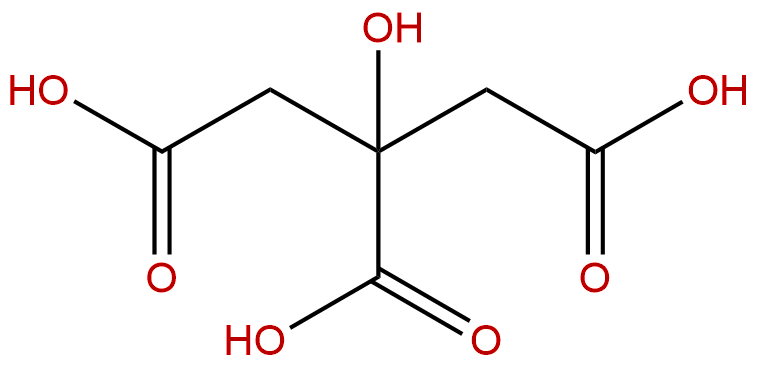
Anhydrous citric acid is a tricarboxylic acid with the chemical formula C ₆ H ₈ O ₇ and a molecular weight of 192.1230. Its molecular structure contains three carboxyl groups (- COOH) and one hydroxyl group (- OH), giving it strong acidity and good water solubility. The LogP value of anhydrous citric acid is -0.9049, indicating its strong hydrophilicity and high water solubility of 83.2979 mg/mL. The TPSA (topological polar surface area) is 132.13 Å ², indicating its high polarity and difficulty in penetrating the blood-brain barrier (BBB permeability is low). In addition, anhydrous citric acid does not inhibit hERG channels, and the Ames mutagenicity test result is 0, indicating its high safety and low toxicity risk.
Structurally, the tricarboxylic acid structure of anhydrous citric acid gives it excellent chelating ability and the ability to form stable complexes with various metal ions, which is also an important physicochemical basis for its use as a food additive and industrial acidifier. Its acidic characteristics make it play a crucial role in regulating pH values and buffering systems.
Citric acid was originally isolated from the fruit of lemon (Citrus limon) and is naturally present in various citrus fruits and other plant tissues. Its content is higher in fruits such as lemon, orange, grapefruit, etc., mainly existing in free form in fruit juice. In industry, the production of citric acid mainly relies on fermentation methods, using microorganisms such as Aspergillus niger to synthesize citric acid by fermenting sugar substrates (such as glucose and sucrose), and then obtaining anhydrous citric acid through crystallization, drying and other processes.
The method of directly extracting citric acid from plants is limited by its content and extraction efficiency, usually using juice pressing, centrifugal separation, solvent extraction, and membrane separation techniques. In recent years, the application of ultrasound assisted extraction and enzymatic hydrolysis technology has improved the extraction efficiency and purity of citric acid, providing a more convenient source of raw materials for natural product research.
The research on anhydrous citric acid in the field of pharmacology mainly focuses on its regulatory effect on cellular physiological functions, especially its performance in cell apoptosis, cell cycle regulation, and oxidative stress.
Inducing cell apoptosis
In the human keratinocyte line HaCaT, anhydrous citric acid can induce apoptosis, manifested as morphological changes, upregulation of apoptosis related protein expression, and increased DNA fragmentation. This effect suggests that anhydrous citric acid has potential pharmacological value in regulating cell fate, especially in the application of skin pathology.
cell cycle arrest
Research has shown that anhydrous citric acid can block the cell cycle of HaCaT cells in the G2/M and S phases, hindering cell proliferation. This cell cycle regulatory effect may be achieved by affecting the expression of cell cycle proteins and related kinases, suggesting its potential role in tumor biology and cell proliferation regulation.
Oxidative damage induction
Anhydrous citric acid induces liver oxidative damage by reducing antioxidant enzyme activity (such as superoxide dismutase, glutathione peroxidase, etc.), leading to increased levels of reactive oxygen species (ROS) and enhanced cellular oxidative stress. This discovery reveals the dual role of anhydrous citric acid in liver metabolism and oxidative stress-related diseases, which may serve as an inducer of oxidative stress models and also indicate its importance in liver toxicology.
Other biological functions
Anhydrous citric acid plays an auxiliary role in regulating microenvironment pH, metal ion homeostasis, and cellular metabolism due to its acidification and chelation properties. Relevant research is gradually underway.
The biological effects of anhydrous citric acid are closely related to its molecular structure and metabolic pathways. The mechanism by which it induces cell apoptosis and cell cycle arrest has not been fully elucidated, but existing studies suggest that it may involve the following molecular targets and signaling pathways:
Metabolic acidosis related targets
There are potential links between anhydrous citric acid and multiple key targets associated with metabolic acidosis, including lactate dehydrogenase A (LDHA), carbonic anhydrase 2 (CA2), sodium citrate cotransporter (SLC13A3), anion exchange protein (SLC26A6), proton pump ATPase subunit (ATP6V1A), glutamate dehydrogenase 1 (GLUD1), carbamoyl phosphate synthase 1 (CPS1), 3-hydroxy-3-methylglutaryl-CoA lyase (HMGCL), hydroxymethylglutaryl-CoA synthase 2 (HMGCS2), and mitochondrial glutamate transporter (SLC25A13). These targets are involved in intracellular acid-base balance, energy metabolism, and amino acid metabolism, and may be key nodes in the regulation of cellular metabolism and acid-base homeostasis by anhydrous citric acid.
Oxidative stress signaling pathway
Anhydrous citric acid induces cell damage and apoptosis by reducing antioxidant enzyme activity, promoting ROS accumulation, activating oxidative stress-related signaling pathways such as NF - κ B, MAPK, and Nrf2. The activation or inhibition of these pathways plays a decisive role in the cytotoxicity mediated by anhydrous citric acid.
Cell cycle regulatory molecules
Anhydrous citric acid may inhibit cell cycle progression and suppress cell proliferation by regulating the expression of cyclins, cell cycle dependent kinases (CDKs), and their inhibitors such as p21 and p27.
Metal ion chelation and enzyme activity regulation
Due to its strong chelating ability, anhydrous citric acid can affect the activity of various metal dependent enzymes, such as metalloenzymes and antioxidant enzymes, indirectly regulating cellular metabolism and redox status.
The pharmacological parameters of anhydrous citric acid show that it has good water solubility and low fat solubility, moderate molecular weight, high polarity, and is difficult to penetrate the blood-brain barrier, indicating that it mainly acts on peripheral tissues. It does not inhibit hERG channels and the Ames test is negative, indicating low risk of cardiac toxicity and mutagenicity, and high safety.
In terms of pharmacokinetics, citric acid, as an important intermediate in the tricarboxylic acid cycle (TCA cycle) in vivo, has good bioavailability and metabolic stability. Oral absorption is rapid, excreted through the kidneys, has a short half-life, and is widely distributed in the body, but mainly limited to metabolically active organs such as the blood and liver. Its low fat solubility limits the penetration of the central nervous system and is suitable for the treatment of peripheral tissue related diseases.
However, the high polarity and rapid metabolism of citric acid also limit its duration and targeting as a drug, and its pharmacokinetic properties need to be improved through structural modifications or carrier systems.
Anhydrous citric acid, as a natural organic acid with high safety and wide sources, has broad application prospects in both clinical and industrial fields.
Adjuvant therapy for metabolic acidosis
Due to the involvement of anhydrous citric acid in regulating acid-base balance and metabolic pathways in the body, its potential application in metabolic acidosis deserves further exploration. By regulating relevant targets such as LDHA, CA2, etc., it is possible to improve acidosis status and assist clinical treatment.
Potential therapeutic agents for tumors and skin diseases
The induction of cell apoptosis and cell cycle arrest by anhydrous citric acid suggests its potential value in inhibiting tumor cell proliferation and regulating skin pathological status. In the future, drug combination or nanocarrier technology can be used to enhance its targeting and efficacy.
Oxidative stress-related disease models and treatments
Its role in inducing liver oxidative damage provides a tool for establishing disease models, and also suggests its dual role in oxidative stress-related diseases such as hepatitis, fatty liver, and neurodegenerative diseases. In the future, protective or therapeutic effects can be achieved through dose regulation.
Safety assurance of food and drug additives
As a commonly used food additive and preservative, the pharmacological activity of anhydrous citric acid can help evaluate its long-term safety and guide its rational use.
Future research should focus on the molecular mechanism analysis, structural optimization, and carrier development of anhydrous citric acid to enhance its bioavailability and targeted therapeutic capabilities. At the same time, systematic preclinical and clinical studies should be conducted to promote its translation into clinical applications.
Anhydrous citric acid, as a natural product with a long history and wide applications, not only plays an important role in the food industry, but also gradually deepens its research in the field of pharmacology. Its multiple biological activities of inducing cell apoptosis, regulating cell cycle, and oxidative stress reveal its potential application value in metabolic diseases, tumors, and oxidative damage related diseases. Although its direct application as a drug still faces challenges such as pharmacokinetics and targeting, with the continuous revelation of molecular mechanisms and the development of drug delivery technology, anhydrous citric acid is expected to become an emerging hotspot in natural product pharmacology research and clinical treatment. Future interdisciplinary research will provide a solid foundation for the clinical translation of anhydrous citric acid, promoting its wider application in the field of natural product pharmacology.
