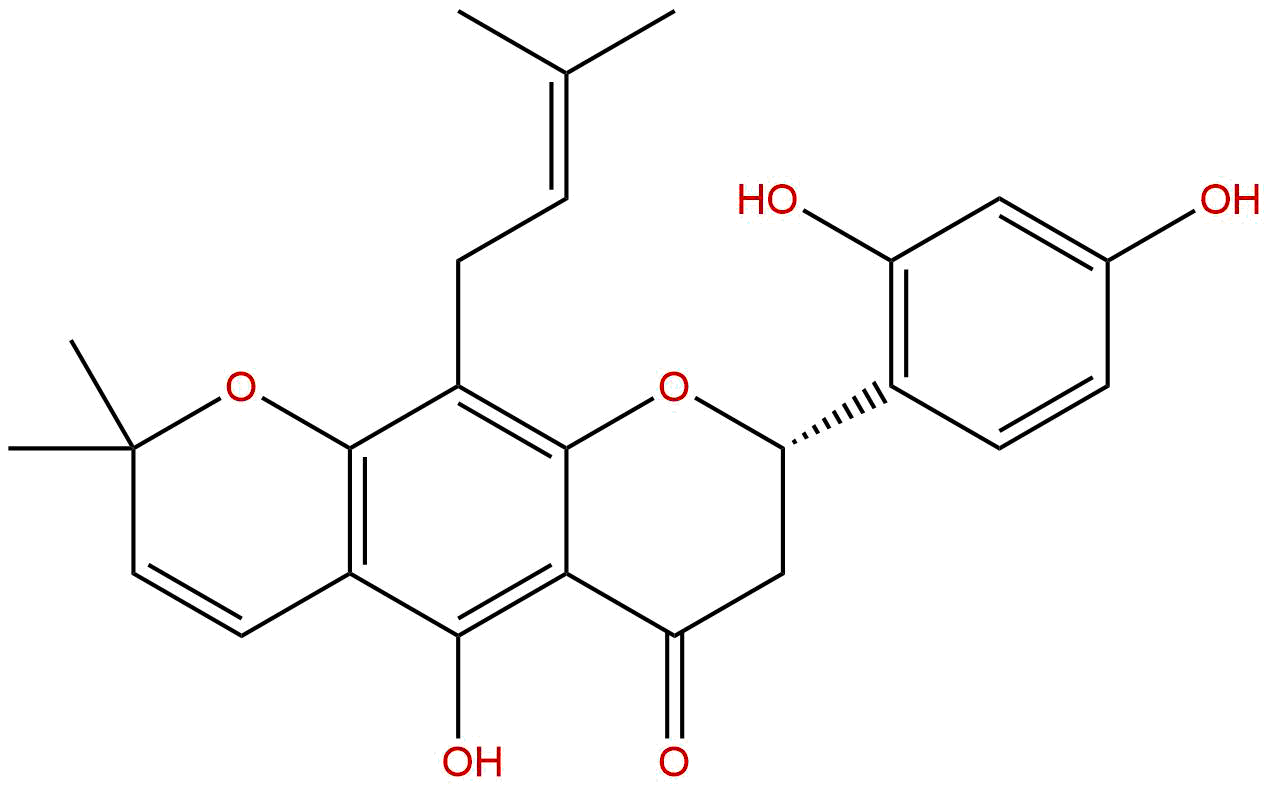


Product name: Flemichin D
Synonym name:
Catalogue No.: BP2367
Cas No.: 57096-07-8
Formula: C25H26O6
Mol Weight: 422.477
Botanical Source: Flemingia philippinensis Merr.et Rolfe
Type of Compound: Xanthones
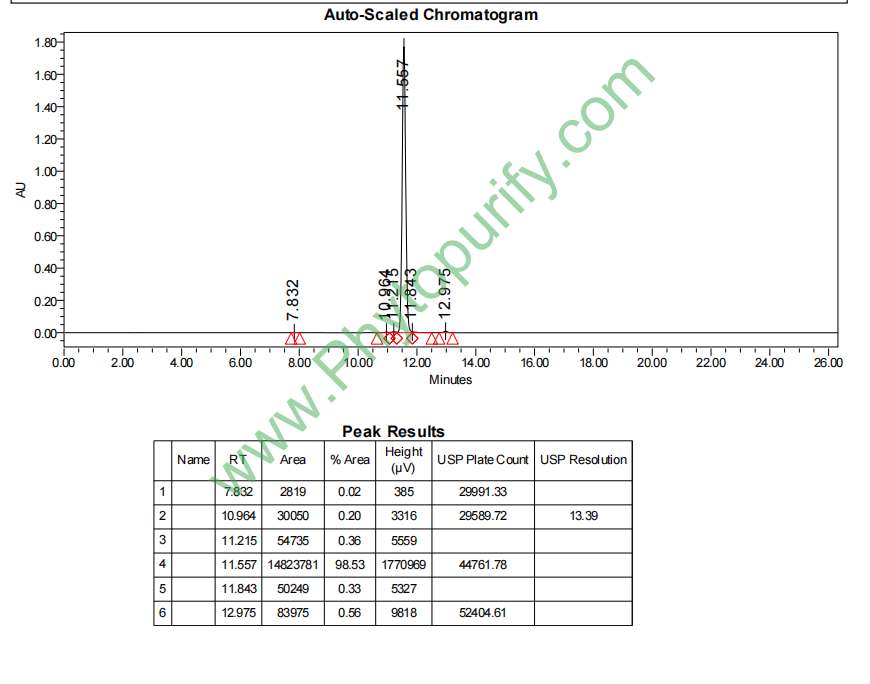
Purity: 95%~99%
Analysis Method: HPLC-DAD or/and HPLC-ELSD
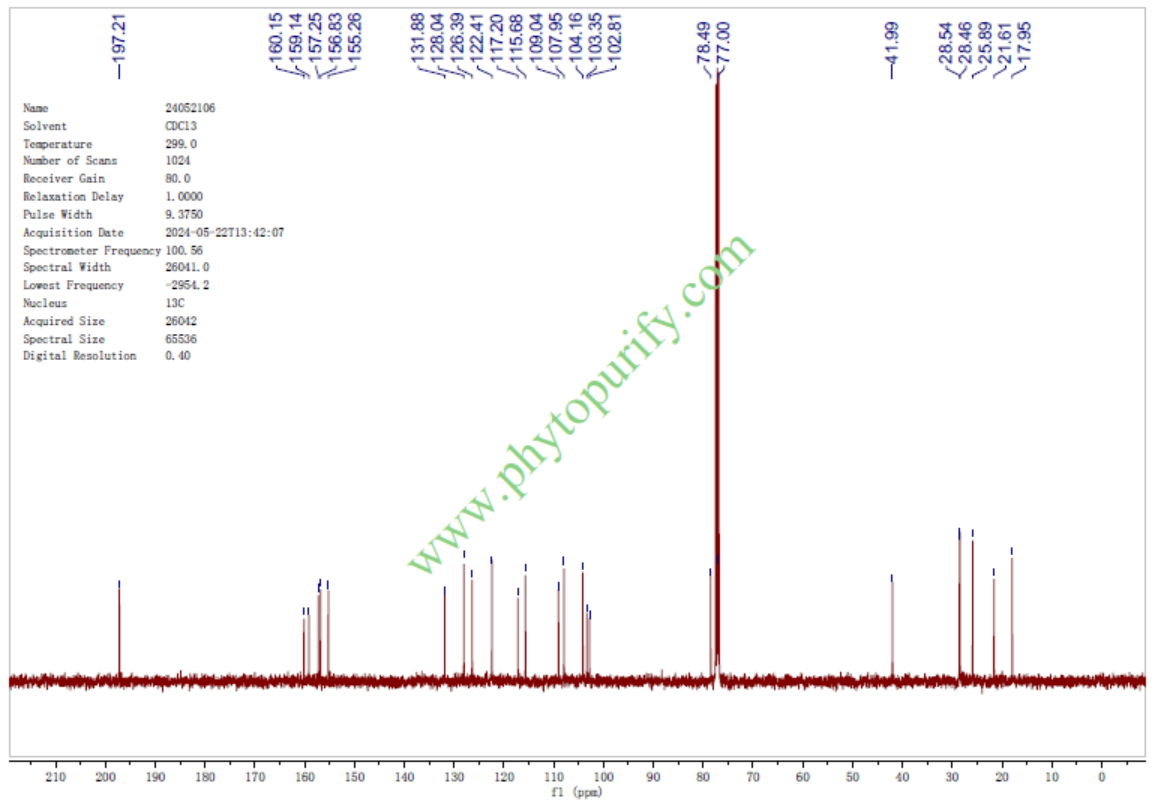
Identification Method: Mass, NMR
Packing: Brown vial or HDPE plastic bottle
Storage: Store in a well closed container, protected from air and light. Put into refrigerate or freeze for long term storage.
Whenever possible, you should prepare and use solutions on the same day. However, if you need to make up stock solutions in advance, we recommend that you store the solution as aliquots in tightly sealed vials at -20℃. Generally, these will be useable for up to two weeks.
The product could be supplied from milligrams to grams
Inquire for bulk scale.
For Reference Standard and R&D, Not for Human Use Directly.
HPLC of Flemichin D
NMR of Flemichin D
Storage conditions:Short-term storage at 2~8℃, long-term storage at -20 ~ -80℃
96.2200
5.1466
4.9929
.0417
4.5470
9.8026
Low
90.6113
3.7322
No
No
Yes
No
No
Yes
0.0
Yes
Yes
Yes
Yes
Natural products, as an important source of drug discovery, have played an irreplaceable role in the long history of human struggle against diseases. Flavonoids, as one of the most widely distributed and structurally diverse secondary metabolites in nature, have always been a hot topic in medicinal chemistry and pharmacology research due to their extensive biological activities, such as antioxidant, anti-inflammatory, anti-tumor, cardiovascular protection, and neuroprotection. Among the numerous flavonoids, it originates from the legume plant Euphorbia(Flemingia)Flemichin D, due to its unique chemical structure and significant pharmacological potential, has gradually attracted the attention of researchers.
Flemichin D, CAS number 57096-07-8, is a typical isopentenyl flavonoid compound. Its structural feature lies in the presence of isopentenyl or similar modifying groups attached to the flavonoid core, which can significantly enhance the lipophilicity of the compound, thereby affecting its interaction with biofilms, binding ability to molecular targets, and overall pharmacokinetic properties. This compound was originally extracted from a thousand pounds in the Philippines(Flemingia philippinensis)It was isolated and identified in the middle, and subsequently found in other plants of the genus Apocynaceae. In traditional medicine, plants of the genus Tripterygium are often used to treat rheumatism, rheumatism, traumatic injury, chronic nephritis, and gynecological diseases. Their rich pharmacological activities, including anti-inflammatory, analgesic, anti osteoporosis, and antibacterial effects, can be partially attributed to the isopentenyl flavonoids they contain.
Although the discovery of quercetin D has a history of several decades, its systematic pharmacological research started relatively late compared to some classic flavonoids such as quercetin and apigenin, and the results are relatively scattered. In recent years, with the advancement of separation technology and the diversification of activity screening models, the potential of quercetin D in anti-tumor, anti-inflammatory, antioxidant, and bone metabolism regulation has gradually been revealed. Especially its role in inducing tumor cell apoptosis, inhibiting inflammatory signaling pathways, and promoting osteoblast differentiation demonstrates its development value as a lead compound or candidate drug. However, from laboratory discovery to clinical application, Qianjin Ba Su D still faces many challenges, such as poor water solubility, potential metabolic stability issues, and the specific molecular mechanism of action still needs to be elucidated.
This article aims to provide a comprehensive and systematic review of the current research status of quercetin D. The article will first elaborate on its chemical structure and physicochemical properties, then sort out its plant sources and extraction methods, focus on summarizing its pharmacological activity research progress in anti-tumor, anti-inflammatory, bone protection and other aspects, and deeply explore its potential mechanisms of action and molecular targets. On this basis, combined with its pharmacological parameters, the pharmacokinetic characteristics and development prospects of Qianjin extract D are evaluated, and its future research directions and clinical application potential are finally discussed, in order to provide valuable references for the in-depth research and development of Qianjin extract D.
Flemichin D belongs to the class of isopentenyl flavonoids. Its chemical structure is based on the flavonoid (2-phenylchromenone) parent nucleus, and its typical feature is the presence of isopentenyl (3,3-dimethylallyl) or cyclopentenyl derivatives modified by cyclization or oxidation on the A or B ring. According to existing literature reports, the specific structure of quercetin D is usually identified as 5,7,2 ', 4' - tetrahydroxy-6,8-diisopentenyl isoflavone or similar skeleton. However, it should be noted that there may be slight differences in the precise structural description of quercetin D in different literature, which is usually related to the separation source and the analytical accuracy of structural identification methods (such as NMR, mass spectrometry). Its core skeleton is isoflavones, with the B ring connected to the 3rd position of the C ring instead of the 2nd position. This structural difference distinguishes it from common flavonoids such as apigenin in terms of spatial conformation and biological activity. The presence of multiple phenolic hydroxyl groups in the molecule endows it with potential antioxidant activity and the ability to chelate with metal ions, while the isopentenyl side chain significantly enhances its lipophilicity.
From the perspective of physical and chemical properties, the molecular weight of quercetin D is 422.4770 Da, which belongs to a medium-sized natural product. The LogP of the compound is 5.1466, which is a relatively high value indicating significant lipophilicity. A high LogP value means that quercetin D is easy to penetrate the cell membrane, which is beneficial for binding to intracellular targets, but it may also lead to lower solubility in aqueous environments such as blood and intercellular matrix. Its water solubility parameter is 0.0417 mg/mL, confirming its extremely poor water solubility, which constitutes the main obstacle to its oral absorption and intravenous administration. The Topological Polar Surface Area (TPSA) is 96.22 Å ², which reflects the total surface area of polar atoms (such as oxygen and nitrogen atoms) in the molecule. TPSA is closely related to the oral absorption and blood-brain barrier penetration ability of drugs. Generally, molecules with TPSA less than 140 Å ² have better oral absorption potential, while molecules with TPSA less than 60-70 Å ² are more likely to penetrate the blood-brain barrier. The TPSA of Qianjin BaSu D is 96.22 Å ², indicating that it may have a certain oral absorption capacity, but its ability to penetrate the blood-brain barrier is relatively low, which is consistent with the conclusion of "blood-brain barrier: low" in subsequent pharmacological evaluations.
In terms of stability, flavonoids are generally sensitive to light, heat, and oxidative conditions. The phenolic hydroxyl group in the molecule of quercetin D is easily oxidized, and the isopentenyl double bond is also prone to addition or epoxidation reactions. Therefore, measures such as avoiding light, low temperature, and nitrogen protection need to be taken during the extraction, separation, storage, and processing of biological samples to prevent their degradation. In addition, multiple phenolic hydroxyl groups in its structure may undergo ionization or hydrolysis under acidic or alkaline conditions, affecting its chemical stability. Overall, the chemical structure of Qianjin Ba Su D determines its high lipophilicity, low water solubility, and potential chemical instability. These properties are not only the basis for its pharmacological activity, but also the obstacles that need to be overcome in the drug development process.
The main plant source of Gibberellins D is Fabaceae, a genus in the legume family(Flemingia)Plants, among which the Philippine 1000 catties are used(Flemingia philippinensis)The most famous. This plant is mainly distributed in Southeast Asia, including the Philippines, southern China (such as Guangdong, Guangxi, Yunnan), Vietnam, Laos, and other places. In China, the dried root of Philippine Qianjin Ba is a traditional Chinese medicinal herb, commonly known as "Qianjin Ba" or "Manxing Qianjin Ba", which has the effects of dispelling wind and dampness, strengthening muscles and bones, promoting blood circulation and detoxification. In addition, plants of the same genus, such as the large leafed cattail, are also included(Flemingia macrophylla)Pulling a thousand pounds with a ball ear(Flemingia strobilifera)It has also been reported to contain quercetin D or its structural analogues, but the content may vary significantly depending on species, origin, harvest season, and plant parts (roots, stems, leaves). Usually, the content of quercetin D is higher in the roots of plants, which is consistent with traditional medicinal habits.
The extraction method of Qianjin extract D mainly relies on the classical natural product chemical separation process, which is centered on utilizing the differences in polarity and solubility between the target compound and impurities. Due to its high lipophilicity, Qianjin extract D is usually extracted using organic solvents with moderate to non-polar polarity. The most commonly used extraction solvents include ethanol, methanol, or their aqueous solutions. For example, dry and crushed 1000 kilograms of root extract can be soaked in 95% ethanol or methanol at room temperature or heated to reflux for extraction. Repeat this process several times, combine the extracts, and concentrate under reduced pressure to obtain the total extract. In order to improve the extraction efficiency, modern technologies such as ultrasound assisted extraction, microwave-assisted extraction, or pressurized solvent extraction have also been applied to this process, which can shorten the extraction time and improve the yield of the target compound.
After obtaining the total extract, systematic separation and purification are required. The typical process is as follows:
1. Preliminary separation The total extract is usually suspended in water and then subjected to liquid-liquid extraction using solvents of different polarities such as petroleum ether, ethyl acetate, n-butanol, etc. Due to the lipophilicity of quercetin D, it is mainly enriched in the extraction layer of petroleum ether or ethyl acetate.
2. Column chromatography separation Separate the target extraction layer (such as ethyl acetate layer) by silica gel column chromatography. Usually, mixed solvents such as petroleum ether ethyl acetate or chloroform methanol are used as the mobile phase for gradient elution. Combine the fractions containing the target compound through thin-layer chromatography (TLC) detection.
3. Further purification: A variety of chromatographic techniques can be used to refine the flow fractions rich in phoxim D, such as Sephadex LH-20 gel column chromatography (using molecular sieve and adsorption), reverse silica gel (such as ODS) column chromatography (using hydrophobic interaction) and preparative high performance liquid chromatography (Pre HPLC). Pre HPLC is currently the most effective method for obtaining high-purity monomeric compounds. By optimizing the mobile phase (such as acetonitrile water or methanol water system) and detection wavelength (usually at 254 nm or 280 nm), it is possible to efficiently separate quercetin D from structurally similar homologs.
During the extraction and separation process, special attention should be paid to protecting the chemical stability of quercetin D. Due to its sensitivity to light and heat, operations should be carried out in a dark and low-temperature environment as much as possible. In addition, during the concentration and drying process, prolonged high-temperature heating should be avoided. It is recommended to use a rotary evaporator to reduce pressure and concentrate below 40-50 ° C, or to use freeze-drying technology. The final pure product of Qianjin extract D requires comprehensive identification of its structure through nuclear magnetic resonance spectroscopy (¹ H-NMR, ¹ ³ C-NMR, 2D-NMR), high-resolution mass spectrometry (HR-ESI-MS), as well as ultraviolet spectroscopy (UV) and infrared spectroscopy (IR), and confirmation through comparison with literature data.
In recent years, there has been an increasing amount of research on the pharmacological activity of quercetin D, mainly focusing on anti-tumor, anti-inflammatory, bone metabolism regulation, and antioxidant aspects, demonstrating its potential as a multi-target natural active molecule.
1. Antitumor activity
The anti-tumor activity of Qianjin Ba Su D is the most concentrated area of research. In vitro cell experiments showed that zingiberene D had a proliferation inhibitory effect on a variety of human cancer cell lines, including breast cancer (such as MCF-7, MDA MB-231), liver cancer (such as HepG2), lung cancer (such as A549), colon cancer (such as HCT-116) and prostate cancer. Its mechanism of action mainly involves inducing cell apoptosis and cell cycle arrest. Research has found that quercetin D can induce apoptosis through the mitochondrial pathway (endogenous pathway), manifested as loss of mitochondrial membrane potential, release of cytochrome c, and activation of Caspase-9 and Caspase-3. At the same time, it can also upregulate the expression of pro apoptotic protein Bax and downregulate the expression of anti apoptotic protein Bcl-2, thereby breaking the balance between Bcl-2/Bax and promoting apoptosis. In addition, it has been reported that quercetin D can block the cell cycle in G0/G1 or G2/M phases, which is related to regulating the expression of cyclins and cyclin dependent kinases (CDKs). It is worth noting that Qianjin Ba Su D has relatively low toxicity to certain normal cells (such as normal liver cells LO2), demonstrating a certain degree of selectivity, which provides an important basis for its use as an anti-tumor candidate drug.
2. Anti inflammatory activity
Inflammation is a common pathological basis for various diseases, including cancer, cardiovascular disease, and autoimmune diseases. Qianjin Ba Su D also exhibits good anti-inflammatory activity. In the lipopolysaccharide (LPS) - stimulated macrophage model (such as RAW264.7 cells), Qianjin extract D can significantly inhibit the production of pro-inflammatory factors such as nitric oxide (NO), prostaglandin E2 (PGE2), tumor necrosis factor - α (TNF - α), interleukin-6 (IL-6), and interleukin-1 β (IL-1 β). The mechanism is closely related to the inhibition of the activation of the nuclear factor kappa B (NF - κ B) signaling pathway. NF - κ B is the core transcription factor of inflammatory response, and Qianjin Ba Su D can inhibit the phosphorylation and degradation of I κ B α, thereby preventing the translocation of NF - κ B p65 subunit to the nucleus and downregulating the expression of downstream inflammation related genes. In addition, it may also exert anti-inflammatory effects by inhibiting the mitogen activated protein kinase (MAPK) pathway, such as phosphorylation of p38, JNK, and ERK.
3. Bone metabolism regulation activity
Given that plants of the genus Trichosanthes are traditionally used in traditional medicine to treat bone related diseases such as wind dampness and fractures, the impact of Trichosanthin D on bone metabolism has also received attention. Research has shown that quercetin D can promote the proliferation, differentiation, and mineralization of osteoblasts (such as MC3T3-E1 cells). It can upregulate the expression of osteogenic differentiation marker genes such as alkaline phosphatase (ALP), osteocalcin (OCN), and Runx2. Runx2 is a key transcription factor for osteoblast differentiation, and quercetin D may upregulate the expression of Runx2 by activating the BMP/Smad or Wnt/β - catenin signaling pathways. On the other hand, quercetin D has also been reported to inhibit the formation of osteoclasts and bone resorption function. In the osteoclast differentiation model induced by receptor activator of nuclear factor kappa B ligand (RANKL), it can inhibit the expression of osteoclast specific marker genes (such as TRAP, Cathepsin K, MMP-9) and suppress the NF - κ B and MAPK signaling pathways. This dual effect of promoting osteogenesis and inhibiting osteoclastogenesis suggests that Qianjin Ba Su D may have the potential to treat osteoporosis.
4. Antioxidant activity
As a polyphenolic compound, quercetin D has a certain antioxidant capacity. The multiple phenolic hydroxyl groups in its molecule can act as hydrogen atom donors, scavenging free radicals (such as DPPH free radicals, ABTS cationic free radicals), thereby blocking the oxidation chain reaction. In addition, it can chelate transition metal ions (such as Fe ² ⁺, Cu ² ⁺) and reduce the hydroxyl radicals generated by the Fenton reaction. In cell models, quercetin D can reduce the levels of reactive oxygen species (ROS) induced by hydrogen peroxide (H ₂ O ₂) or other oxidants, and increase the activity of endogenous antioxidant enzymes such as superoxide dismutase (SOD) and glutathione peroxidase (GPx) in cells. This antioxidant activity may be one of the foundations for its anti-inflammatory, anti-tumor, and bone protective effects.
The pharmacological activity of Qianjin Ba Su D is the result of the combined action of multiple targets and pathways. Although its exact molecular targets have not been fully elucidated, based on existing research, the main signaling network regulatory mechanisms can be outlined.
1. Regulation of core signaling pathways
- NF - κ B pathway This is one of the core targets of Qianjin Ba Su D in exerting anti-inflammatory and anti-tumor effects. In the resting state, NF - κ B binds to the inhibitory protein I κ B and exists in an inactive form in the cytoplasm. When stimulated by LPS, TNF - α, etc., I κ B kinase (IKK) is activated, phosphorylating I κ B, leading to its ubiquitination degradation, releasing NF - κ B into the nucleus, and initiating target gene transcription. Qianjin Ba Su D inhibits the activity of IKK or directly interferes with the phosphorylation of I κ B, blocking the nuclear translocation of NF - κ B, thereby downregulating the expression of downstream pro-inflammatory factors (TNF - α, IL-6), anti apoptotic proteins (Bcl xL, survin), and cell cycle regulatory protein (Cyclin D1).
- MAPK pathway The MAPK family includes ERK, JNK, and p38, which play critical roles in cell proliferation, differentiation, apoptosis, and inflammatory response. Chitin D has been found to inhibit the phosphorylation levels of these kinases. For example, in tumor cells, inhibiting the ERK pathway can lead to inhibited cell proliferation; In macrophages, inhibition of the p38 and JNK pathways is associated with anti-inflammatory effects. However, in some cases, quercetin D may also activate specific MAPK pathways (such as JNK) to induce apoptosis, demonstrating the complexity of its regulation.
- PI3K/Akt/mTOR pathway This pathway is a key regulator of cell survival and metabolism. Chitin D has been reported to inhibit Akt phosphorylation in various cancer cells, thereby reducing the activity of downstream effector molecules such as mTOR and S6K. Inhibiting Akt signaling can release the inhibition of the pro apoptotic protein Bad and reduce the expression of anti apoptotic proteins, thereby promoting cell apoptosis. Meanwhile, inhibiting mTOR signaling can also suppress tumor growth by inducing autophagy.
- Wnt/β - catenin pathway This pathway plays an important role in osteoblast differentiation and various cancers. Qianjin Ba Su D may activate Wnt signaling, promote the accumulation of β - catenin in the nucleus, and then bind to TCF/LEF transcription factors, upregulating the expression of osteogenic related genes such as Runx2. In some tumors, it may also inhibit tumor stem cell characteristics by suppressing abnormal Wnt signaling.
2. Potential direct molecular targets
In addition to regulating signaling pathways, quercetin D may also directly bind to certain specific proteins, thereby exerting its biological effects. These potential targets include:
- ATP binding cassette transporter protein Such as P-glycoprotein (P-gp/ABCB1). Some isopentenyl flavonoids have been reported as inhibitors or substrates of P-gp. The high lipophilicity of Qianjin Ba Su D makes it possible for it to interact with the substrate binding site of P-gp, thereby affecting multidrug resistance.
- kinase Given its regulation of multiple kinase pathways (such as IKK, Akt, MAPK), quercetin D may directly bind to the ATP binding pockets or conformational sites of certain kinases, inhibiting their kinase activity. For example, it may be a potential IKK β or PI3K inhibitor.
- Estrogen receptor (ER)Isoflavones, such as daidzein, are well-known plant estrogens. Although quercetin D is an isoflavone, its isopentenyl modification may alter its binding affinity and selectivity with ER. Preliminary studies suggest that it may have selective estrogen receptor modulator (SERM) activity, which may explain its bone protective effect.
- Epigenetic regulatory enzymes Such as histone deacetylases (HDACs) or DNA methyltransferases (DNMTs). Some flavonoids have been found to regulate epigenetic modifications, and it is worth further exploring whether quercetin D has similar activity.
3. Network pharmacology perspective on the mechanism of action
Due to the pleiotropy of Qianjin Ba Su D, studying a single target or pathway alone is difficult to fully explain its pharmacological effects. The methods of network pharmacology and systems biology provide new perspectives for understanding their mechanisms of action. By constructing a "compound target disease" network, it can be predicted that Qianjin extract D may act on multiple proteins related to inflammation, cancer, and bone metabolism, such as PTGS2 (COX-2), ESR1, AKT1, MAPK1, RELA (NF - κ B p65), etc. These targets are interrelated and form a complex regulatory network. Qianjin Ba Su D exerts its overall pharmacological activity by acting on multiple key nodes in the network, producing a synergistic effect. Future research needs to combine chemical biology (such as activity-based proteomic analysis, ABPP) and structural biology (such as X-ray crystallography, molecular docking) techniques to identify and validate the direct protein targets of quercetin D, which will be a crucial step in elucidating its exact mechanism of action.
To convert Qianjin Ba Su D from an active natural product into a clinical drug, it is necessary to rigorously evaluate its drug like and pharmacokinetic (ADME) properties. Based on the provided pharmacological parameters, we can conduct a preliminary analysis of its development potential and challenges.
1. Analysis of pharmacological parameters
- molecular weight:422.48 Da, Meeting the requirement of molecular weight less than 500 in the Lipinski Five Rules indicates that it has the basic prerequisite to become an oral medication.
- LogP 5.15, exceeding the recommended value of LogP less than 5 in Lipinski's rule. A high LogP value indicates that the compound has excessive lipophilicity, which may lead to poor water solubility, incomplete oral absorption, rapid metabolic clearance, and potential off target toxicity and tissue accumulation risks.
- Water solubility:0.0417 mg/mL, Belonging to the category of extremely insoluble in water. This is one of the biggest challenges facing the pharmacological development of Qianjin BaSu D. Low water solubility can seriously affect its oral bioavailability and pose significant challenges to the development of injectable formulations.
- TPSA 96.22 Å ², less than 140 Å ², indicates that it has a certain potential for oral absorption. Meanwhile, a value higher than 60 Å ² indicates that it is not easily able to penetrate the blood-brain barrier, which can reduce the risk of central nervous system side effects for the development of non central nervous system targeted drugs such as anti-inflammatory, anti-tumor, and bone protection.
- HERG inhibition: No. This is a positive signal. HERG (human Ether - à - go Related Gene) potassium channel inhibition is the main cause of drug-induced cardiac toxicity (QT interval prolongation). Qianjin Ba Su D does not inhibit hERG, greatly reducing its risk of cardiac toxicity.
- Ames test: 0.0. The Ames test is used to detect the mutagenicity of compounds. The result is 0.0, indicating that Qianjin extract D did not show genetic toxicity in the standard bacterial recovery mutation test, which is an important safety indicator.
2. Prediction and Challenges of Pharmacokinetic Characteristics
Based on its physicochemical properties, the pharmacokinetic characteristics of Qianjin Ba Su D can be predicted:
- absorb Oral absorption will be its main bottleneck. Low water solubility and high lipophilicity may result in extremely low solubility in the gastrointestinal tract, thereby limiting its absorption. Even if absorbed, high LogP may make it easier to bind with lipid components in food or intestines, further reducing absorption rates. Its bioavailability may be very low.
- distribution Once it enters the bloodstream, due to its high lipophilicity, quercetin D may be widely distributed in tissues, especially adipose tissue, liver, and lungs. Its apparent distribution volume (Vd) may be large. The plasma protein binding rate is expected to be high, which will affect its free drug concentration and efficacy.
- Metabolism Chitin D is a potential substrate for cytochrome P450 enzyme (CYP450). The isopentenyl side chain and phenolic hydroxyl group in its molecule are the main sites for phase I metabolism (oxidation, reduction, hydrolysis) and phase II metabolism (glucuronidation, sulfation, methylation). Especially the isopentenyl double bond is easily epoxidized by CYP enzymes, while the phenolic hydroxyl group is prone to binding reactions. Rapid metabolic clearance is another possible reason for its short half-life in the body.
- excretion Metabolites are mainly excreted through bile and urine. Due to its large molecular weight and strong lipophilicity, bile excretion may dominate.
3. Optimization strategy for drug properties
In response to the above challenges, structural modification or formulation optimization of Qianjin Ba Su D is the key to enhancing its pharmacological properties.
- Prodrug design Esterification or phosphorylation modification of phenolic hydroxyl groups in molecules to prepare prodrugs can significantly improve water solubility and release the original drug after enzymatic hydrolysis in vivo.
- Formulation technology Modern formulation technologies such as solid dispersions, liposomes, nanoparticles, and cyclodextrin inclusion complexes can effectively improve the solubility and oral bioavailability of poorly soluble drugs.
- Simplification and optimization of structure Simplify or replace the isopentenyl side chain while retaining the core pharmacophore group to reduce LogP value while maintaining or enhancing activity. For example, saturating the isopentenyl double bond or introducing polar groups such as hydroxyl and carboxyl.
- route of administration For candidates with extremely low oral bioavailability, consideration may be given to developing non oral routes of administration, such as transdermal administration, pulmonary inhalation, or injection (water solubility needs to be addressed).
In summary, Qianjin Ba Su D has a certain pharmacological basis (such as no hERG inhibition and no Ames toxicity), but its poor water solubility and high lipophilicity are the main obstacles to its drug development. The future research focus should be on improving its ADME properties through structural modification or formulation methods, in order to obtain candidate drugs with good pharmacokinetic behavior and safety.
Although there is still a considerable distance to clinical application of Qianjin Ba Su D, its unique pharmacological activity and preliminary safety evaluation results have drawn a hopeful blueprint for its application prospects in multiple disease fields.
1. Anti tumor field
Given its proliferation inhibitory and apoptosis inducing activities in various cancer cell lines, as well as its relative low toxicity to normal cells, Qianjin BaSu D or its derivatives have the potential to be developed as novel anti-tumor drugs. Especially for certain tumors that are resistant to existing chemotherapy drugs, Qianjintuin D may reverse resistance by acting on different signaling pathways such as NF - κ B and PI3K/Akt. In the future, it is necessary to conduct in vivo anti-tumor pharmacological research, establish mouse xenograft tumor models (CDX or PDX models), and verify their in vivo efficacy and safety. In addition, exploring its combination with chemotherapy drugs (such as cisplatin, paclitaxel) or targeted drugs (such as sorafenib) in order to achieve synergistic effects and reduce toxicity is a highly promising research direction.
2. In the field of bone metabolism diseases
Qianjin Ba Su D has a dual effect of promoting osteogenesis and inhibiting osteoclastogenesis, making it a potential candidate molecule for treating bone metabolism diseases such as osteoporosis, osteoarthritis, and nonunion of fractures. Compared with commonly used anti bone resorption drugs (such as bisphosphonates) or bone formation promoting drugs (such as teriparatide) in clinical practice, Qianjintuin D may provide a more balanced treatment strategy. Future research should focus on evaluating its bone protective effect in osteoporotic animal models such as ovariectomy (OVX) rats, and comprehensively evaluate its improvement effect on bone mass, bone microstructure, and bone strength through Micro CT, bone tissue morphometry, and biomechanical testing. At the same time, it is necessary to conduct in-depth research on the safety of its long-term use, especially its potential impact on exoskeleton tissues such as the kidneys and cardiovascular system.
3. Inflammatory related diseases field
Its strong anti-inflammatory activity, especially its inhibition of the NF - κ B pathway, suggests that Qianjin Ba Su D may have therapeutic potential for various chronic inflammatory diseases, such as rheumatoid arthritis, inflammatory bowel disease (IBD), dermatitis, etc. Local administration (such as topical cream for dermatitis and enema for IBD) may be an effective strategy to avoid the problem of low oral bioavailability. Establishing corresponding animal disease models (such as collagen induced arthritis mouse models and DSS induced colitis mouse models) is a necessary step to verify their in vivo anti-inflammatory effects.
4. Future research directions
In order to promote the clinical translation of Qianjin Ba Su D, future research should focus on the following aspects:
- In depth study on the mechanism of action Using chemical biology methods such as drug affinity reaction target stability DARTS and thermal stability migration assay CETSA to identify the protein targets it directly acts on. Combining structural biology and computational chemistry to analyze its binding mode with target proteins, providing a basis for structure based drug design.
- Structure Activity Relationship (SAR) Study Systematically synthesize a series of structurally similar compounds of quercetin D, investigate the effects of the position, quantity, saturation of isopentenyl groups, and modification of phenolic hydroxyl groups on activity and drug properties, and search for candidate compounds with stronger activity and better pharmacokinetic properties.
- Pharmacokinetic optimization Focus on addressing its water solubility issue. By designing prodrugs, nano formulations, or structural modifications, the oral bioavailability of the compound can be significantly improved, and the in vivo pharmacokinetic characteristics of the optimized compound can be evaluated.
- Comprehensive toxicological evaluation Conduct acute and long-term toxicity tests in rodents and non rodents to evaluate their potential toxicity to major organs (liver, kidney, heart) and determine the safe dose range.
- Research on Resource Sustainability Establish a chemical total synthesis or semi synthesis route for Qianjin extract D, as well as a method for large-scale production using biotechnology such as genetic engineering bacteria and plant cell culture, to ensure the supply of raw materials for future clinical research and applications.
Qianjin Ba Su D, as an isopentenyl flavonoid compound derived from the traditional Chinese medicine Qianjin Ba, has become a new star in the field of natural product drug research due to its unique chemical structure and multifaceted pharmacological activities. This article provides a systematic review of its research progress in chemistry, botany, pharmacology, mechanisms of action, and drug properties. Existing evidence suggests that Qianjin Ba Su D exhibits significant potential in anti-tumor, anti-inflammatory, and bone metabolism regulation. Its mechanism of action involves fine regulation of key signaling pathways such as NF - κ B, MAPK, PI3K/Akt, and may act on multiple direct molecular targets that have not yet been fully elucidated.
However, from laboratory discovery to clinical application, Qianjin Tuosu D still faces severe challenges, especially its extremely poor water solubility and resulting low oral bioavailability, which are the main obstacles on its drug development path. In addition, there is still a lack of in vivo pharmacological, pharmacokinetic, and toxicological data, and the exact molecular targets are yet to be identified. Therefore, future research should not only focus on in vitro activity validation, but should also shift towards translational studies centered on addressing drug development bottlenecks and elucidating mechanisms of action. Through structural optimization, formulation innovation, and in-depth in vitro and in vivo pharmacological and toxicological evaluations, it is expected to gradually transform the treasure trove of natural product D into drug leads or candidate drugs that can benefit human health. The continuous exploration of Qianjin Ba Su D not only helps to reveal the scientific connotation of traditional Chinese medicine, but also provides valuable molecular templates and ideological inspiration for the discovery of innovative drugs.
