Introduction/Overview
Natural products, as an important source of drug discovery, have long played an irreplaceable role in human health maintenance and disease treatment. Among numerous natural compounds with biological activity, they are derived from the traditional medicinal plant Rheum genus(Rheum L. ) and acid mold genus(Rumex L. The stilbeneids, a type of compound, have attracted much attention due to their structural diversity and significant pharmacological activity. Rhaponticin, also known as 3,3 ', 5-trihydroxy-4' - methoxyqin-3-O - β - D-glucoside, is one of the representative members of this class of compounds. It is widely present in various medicinal plants and has various biological activities such as antioxidant, anti-inflammatory, anti-tumor, and cardiovascular protection.
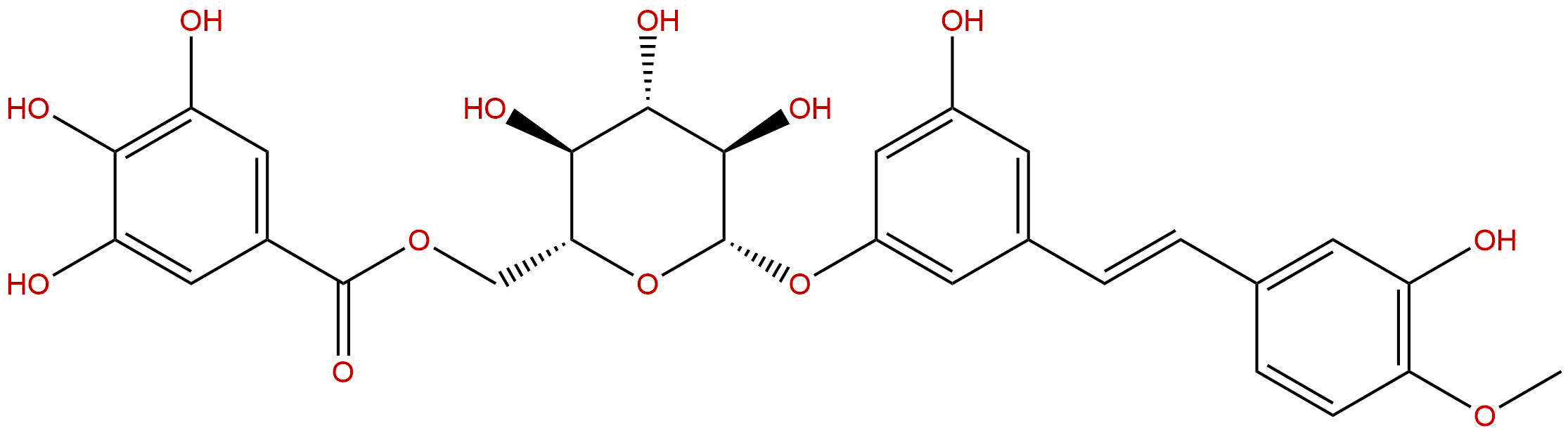
However, structural modifications and derivatization of natural products often endow the parent molecule with new or stronger biological activity. Rhaponticin 6 '' - O-gallate (R6G), as a galloylated derivative of rhein, is characterized by its ester bond between the 6 '' hydroxyl group of the glucose group of rhein and gallic acid. This unique hybrid structure of "qi sugar gallic acid" not only combines the advantages of two active molecules, qi compounds and gallic acid, but also may exhibit pharmacological properties beyond a single parent nucleus through synergistic or additive effects. In recent years, research on R6G has gradually deepened, especially in regulating intestinal inflammation and related diseases, showing great potential for application value. This review aims to systematically sort out the chemical structure, plant origin, pharmacological activity, mechanism of action, and medicinal characteristics of R6G, in order to provide comprehensive scientific basis for the in-depth research and future development of this natural product.
Chemical structure and physicochemical properties
The chemical structure of 6 '' - O-gallate is the basis of its biological activity. Its core skeleton is Stilbene, specifically 3,3 ', 5-trihydroxy-4' - methoxy stilbene. The mother nucleus is connected to a β - D-glucopyranose group through a 3-hydroxy group, forming emodin. The uniqueness of R6G lies in the esterification reaction between the 6 '' hydroxyl group of the glucose group and the carboxyl group of gallic acid (3,4,5-trihydroxybenzoic acid), forming a complete molecular structure. Therefore, R6G can be regarded as a complex natural product composed of three parts: quercetin, glucose, and gallic acid, connected by glycosidic and ester bonds.
From the perspective of physical and chemical properties, the molecular weight of R6G is 572.5190 Da, which belongs to the category of medium-sized natural product molecules. Its lipophilic water partition coefficient (LogP) is 1.7325, indicating that the compound has a certain degree of lipophilicity, but overall tends to be hydrophilic. The topologically polar surface area (TPSA) is as high as 215.8300 Å ², mainly attributed to the large number of phenolic hydroxyl groups and hydroxyl groups on sugar groups, as well as ester bonds in the molecule. A high TPSA value usually indicates that the compound has good water solubility, and its predicted water solubility value is 0.6972 mg/mL, supporting this inference. Meanwhile, high TPSA values also indicate that the compound is not easily able to penetrate the blood-brain barrier (predicted to be low), which limits its application in central nervous system diseases, but may be beneficial for its local effects in peripheral tissues such as the intestine. In addition, the predictive model showed no inhibitory risk of R6G on hERG potassium channels (hERG inhibition: No), and the Ames test result was 0.0, indicating a low risk of genetic toxicity. These physicochemical property parameters provide important references for the preliminary pharmacological evaluation of R6G.
Plant sources and extraction methods
Rhubarb glycoside 6 '' - O-gallate is not a widely distributed natural product, and its source is relatively specific. At present, it is known that it mainly exists in plants of the Polygonaceae family, especially in certain specific species or varieties. For example, in the palm leaf rhubarb(Rheum palmatum L. ) and Medicinal Rhubarb(Rheum officinale R6G is often present as a trace or trace component in Baill. In addition, some plants of the acid mold genus, such as wrinkled leaf acid mold(Rumex crispus L. ) and Batian acid mold(Rumex patientia L.), It has also been reported to contain this compound. It is worth noting that the content of R6G is usually much lower than its parent compound, emodin, which poses certain challenges for its separation and purification.
The extraction method for R6G usually follows the classic process of natural product chemistry. Firstly, the dried plant material (usually roots or rhizomes) is crushed and subjected to cold soaking or hot reflux extraction using organic solvents such as methanol, ethanol, or aqueous ethanol. In order to improve extraction efficiency and selectivity, ultrasound assisted extraction or microwave-assisted extraction techniques are sometimes used. After concentration, the crude extract usually needs to undergo liquid-liquid extraction (using different polar solvents such as petroleum ether, ethyl acetate, n-butanol, etc.) for preliminary separation. The parts rich in R6G (usually n-butanol or ethyl acetate extraction layer) are then separated and purified using various chromatographic techniques. Common methods include silica gel column chromatography, Sephadex LH-20 column chromatography, reverse phase (such as ODS) column chromatography and preparative high-performance liquid chromatography (Pre HPLC). Due to the similar polarity of R6G and other structurally similar stilbene compounds, the separation process often requires repeated purification using multiple chromatographic techniques, and finally confirmed by spectroscopic methods such as nuclear magnetic resonance (NMR) and mass spectrometry (MS). In recent years, new separation technologies such as high-speed countercurrent chromatography (HSCCC) have also been attempted for the efficient separation of such compounds, demonstrating promising application prospects.
Pharmacological activity research
Although research on the 6 '' - O-gallic acid ester of rhubarb is still in its infancy, existing pharmacological activity studies have preliminarily revealed its potential in anti-inflammatory, antioxidant, and regulating intestinal function, especially closely related to intestinal inflammation.
1. Anti inflammatory activity
Inflammation is a defensive response of the body to injury and infection, but excessive or persistent inflammation can lead to tissue damage and various diseases. R6G has shown significant anti-inflammatory activity in both in vitro and in vivo models. In a macrophage model stimulated by lipopolysaccharide (LPS), R6G can dose dependently inhibit the production of pro-inflammatory cytokines such as tumor necrosis factor - α (TNF - α), interleukin-6 (IL-6), and interleukin-8 (IL-8). These cytokines are key mediators of inflammatory responses and play a central role in the pathogenesis of intestinal inflammations such as ulcerative colitis and Crohn's disease. The inhibitory effect of R6G on them suggests its potential for development as an anti intestinal inflammatory drug.
2. Antioxidant activity
Oxidative stress is closely related to inflammation, and excessive reactive oxygen species (ROS) can exacerbate inflammatory reactions and tissue damage. R6G molecules contain multiple phenolic hydroxyl groups, which endow them with strong free radical scavenging ability. Research has shown that R6G can effectively scavenge DPPH radicals and ABTS cationic radicals, and has significant reducing power. Its antioxidant activity may be partially attributed to the gallic acid moiety, which is a well-known natural antioxidant. R6G may indirectly exert anti-inflammatory and protective effects on intestinal mucosa by reducing oxidative stress.
3. Protective effect on intestinal barrier function
The integrity of the intestinal barrier is crucial for maintaining intestinal homeostasis. Tight junction proteins (such as Occludin, OCLN) and mucins (such as Mucin-2, MUC2) are key molecules that maintain the structure and function of the intestinal barrier. In intestinal inflammation models, the expression of these proteins is often downregulated, leading to an increase in intestinal permeability, known as the "intestinal leakage" phenomenon. Preliminary studies have shown that R6G can upregulate the expression of MUC2 and OCTN in intestinal epithelial cells under inflammatory conditions, thereby enhancing intestinal barrier function and reducing bacterial and endotoxin translocation. This discovery provides new evidence for the treatment of inflammatory bowel disease (IBD) with R6G.
4. Other potential activities
In addition to the activities directly related to intestinal inflammation mentioned above, some studies also suggest that R6G may have other pharmacological effects, such as inhibiting the proliferation of certain tumor cell lines and exerting prebiotic effects by regulating intestinal microbiota. However, research in these areas is still insufficient and requires further in-depth exploration.
Mechanism of action and molecular targets
The pharmacological activity of Dahuang glycoside 6 '' - O-gallate, especially its anti intestinal inflammatory effect, is achieved through multi-target and multi pathway synergistic regulation. Based on existing research, its mechanism of action mainly involves the following aspects:
1. Regulating key inflammatory signaling pathways
One of the core mechanisms of R6G's anti-inflammatory effect is the inhibition of the nuclear factor kappa B (NF - κ B) signaling pathway. NF - κ B is the core transcription factor of inflammatory response, regulating the gene expression of various pro-inflammatory cytokines such as TNF - α, IL-6, IL-8, etc. Research has shown that R6G can inhibit the phosphorylation and degradation of I κ B α, thereby preventing the nuclear translocation of NF - κ B p65 subunit and ultimately downregulating its transcriptional activity. In addition, R6G may also synergistically inhibit inflammatory responses by inhibiting the mitogen activated protein kinase (MAPK) pathway, such as phosphorylation of p38 MAPK and JNK. The inhibition of these pathways directly leads to the downregulation of inflammatory target genes such as TNF, IL6, and IL8.
2. Regulate the expression of intestinal barrier related proteins
The protective effect of R6G on the intestinal barrier is closely related to its regulation of targets such as MUC2 and OCTN. MUC2 is the main mucin secreted by intestinal goblet cells, which constitutes the main component of the intestinal mucus layer and serves as the first line of defense against pathogenic microorganisms. OCLN is a key transmembrane protein that forms tight junctions and is crucial for maintaining cell paracellular permeability. R6G may upregulate the gene and protein expression of MUC2 and OCTN by activating certain protective signaling pathways, such as the phosphatidylinositol 3-kinase/protein kinase B (PI3K/Akt) pathway or the Wnt/β - catenin pathway. This upregulation helps repair damaged intestinal barriers, restore intestinal permeability, and thereby alleviate inflammation.
3. Antioxidant and anti apoptotic mechanisms
The strong antioxidant capacity of R6G is the basis for its protective effect. It can directly eliminate ROS and reduce oxidative stress damage to intestinal epithelial cells. In addition, R6G may also induce a series of antioxidant enzymes (such as heme oxygenase-1, HO-1) by activating the nuclear factor E2 related factor 2 (Nrf2) signaling pathway; The expression of quinone oxidoreductase 1 (NQO1) enhances the intracellular antioxidant defense ability. Meanwhile, by inhibiting oxidative stress and inflammation, R6G may indirectly suppress apoptosis of intestinal epithelial cells induced by TNF - α and other factors, maintaining the integrity of intestinal epithelium.
4. Potential regulatory role of gut microbiota
Although there is not much direct evidence, considering the oral administration route of R6G and its complex structure (containing glycosyl and gallic acid ester bonds), it is likely to interact with gut microbiota in the intestine. On the one hand, the esterases and glycosidases produced by gut microbiota may metabolize R6G, releasing active metabolites such as gallic acid and emodin, which may synergistically exert anti-inflammatory effects. On the other hand, R6G or its metabolites may act as prebiotics, regulating the composition of gut microbiota, increasing the abundance of beneficial bacteria (such as lactobacilli and bifidobacteria), inhibiting the growth of harmful bacteria, and indirectly improving the inflammatory state of the intestine and even the whole body through pathways such as the "gut liver axis" or "gut brain axis".
Evaluation of drug properties and pharmacokinetics
The evaluation of drug properties is a crucial step in determining whether natural products can be transported from the laboratory to clinical applications. Based on the provided parameters and existing knowledge, conduct a preliminary analysis of the pharmacological properties of R6G.
1. Analysis of drug properties
According to the Lipinski Five Rules, the molecular weight of R6G (572.52 Da) is slightly higher than 500 Da, and LogP (1.73) meets the requirement of less than 5. However, the number of hydrogen bond donors (phenolic and sugar hydroxyl groups) and acceptors is numerous, far exceeding the upper limit of the rules. In addition, its TPSA (215.83 Å ²) is much higher than the conventional threshold of 140 Å ². These characteristics indicate that R6G does not conform to the classical drug like rules and belongs to the category of compounds that exceed the rules. However, this does not mean that it has no potential as a drug. Many successful natural medicines, such as some glycoside antibiotics and anticancer drugs, also have relatively high molecular weights. High polarity and high TPSA typically indicate lower oral bioavailability, but may be suitable for development as topical medications (such as enemas for treating intestinal inflammation) or injections.
2. Pharmacokinetic characteristics
At present, research on the pharmacokinetics of R6G in vivo is very limited. Based on its physical and chemical properties, it can be inferred that:
- absorb High polarity, low LogP, and high TPSA indicate poor ability to passively diffuse through intestinal epithelial cells, and oral absorption may be poor. Its absorption may depend on the active transport of intestinal transporters (such as glucose transporters) or through cellular bypass pathways.
- distribution Due to its good water solubility and difficulty in penetrating the blood-brain barrier, R6G is mainly distributed in the blood and extracellular fluid, with extremely low distribution in brain tissue. Its high polarity may also lead to a lower binding rate with plasma proteins.
- Metabolism R6G may undergo extensive metabolism in the body. In the intestine, it may be hydrolyzed by esterases from the gut microbiota into gallic acid and emodin, with the latter further hydrolyzed by glycosidases into aglycones. In the liver, these metabolites may undergo phase II metabolism (such as glucuronidation, sulfation, methylation). Therefore, its active form in the body may be a mixture of the prototype drug and multiple metabolites.
- excretion Metabolites and small amounts of prototype drugs may be mainly excreted through bile and urine.
3. Safety evaluation
Preliminary computer predictions indicate that R6G has no inhibitory risk on hERG potassium channels (hERG inhibition: No), and the Ames test result is negative (0.0), suggesting a low risk of cardiac and genetic toxicity. This provides preliminary positive evidence for its safety. However, this is only a computer simulation result and requires systematic in vitro and in vivo toxicological studies, including acute toxicity, long-term toxicity, reproductive toxicity, etc., to comprehensively evaluate its safety.
Clinical application prospects and prospects
Based on existing research, the 6 '' - O-gallic acid ester of rhubarb has shown promising clinical application prospects in the treatment of intestinal inflammatory diseases.
1. Treatment of inflammatory bowel disease (IBD)
IBD, Including ulcerative colitis and Crohn's disease, it is a chronic and recurrent intestinal inflammatory disease that currently lacks curative drugs. R6G forms a multi-target and multi mechanism therapeutic strategy by inhibiting key inflammatory factors such as TNF - α, IL-6, IL-8, upregulating MUC2 and OCTN to protect the intestinal barrier, as well as its antioxidant activity. This comprehensive mode of action may have advantages over single target drugs such as anti TNF - α monoclonal antibodies, and can more comprehensively control the pathological process of IBD. Given its potential poor oral absorption, developing rectal administration formulations (such as enemas or suppositories) for the treatment of ulcerative colitis may be a highly promising direction that can directly act on the lesion site, increase local drug concentration, and reduce systemic side effects.
2. Potential applications of other intestinal related diseases
In addition to IBD, R6G may also be beneficial for other diseases associated with intestinal inflammation and barrier dysfunction, such as:
- Irritable bowel syndrome (IBS)Some IBS patients have low-grade intestinal inflammation and impaired intestinal barrier function. The anti-inflammatory and barrier protective effects of R6G may help alleviate symptoms of IBS.
- Chemotherapy associated diarrhea Chemotherapy drugs often cause damage and inflammation to the intestinal mucosa, leading to severe diarrhea. The protective effect of R6G may alleviate the intestinal side effects caused by chemotherapy.
- Metabolic diseases Intestinal barrier dysfunction and chronic low-grade inflammation are considered to be important inducements of metabolic diseases such as obesity and type 2 diabetes. R6G may have indirect benefits for these diseases by improving gut health.
3. Future research directions
Although the prospects are bright, the research on R6G is still in a very early stage, and the following work needs to be focused on in the future:
- In depth pharmacokinetic research Elucidate the absorption, distribution, metabolism, and excretion processes of R6G in the body, particularly its local metabolism and disposal in the intestine, as well as the identification of active metabolites.
- Pharmacodynamic study of the system in vivo Validate the therapeutic effect of R6G and determine the optimal administration route and dosage in various IBD animal models, such as DSS induced colitis and TNBS induced colitis.
- In depth analysis of the mechanism of action Using techniques such as gene knockout and RNA interference, further clarify the specific molecular targets of R6G in regulating signaling pathways such as NF - κ B, Nrf2, and PI3K/Akt.
- Pharmaceutical research: Develop preparations suitable for local intestinal administration, such as pH sensitive hydrogels, nanoparticles or liposomes, to improve the stability and local bioavailability of R6G.
- safety evaluation Conduct comprehensive preclinical toxicology studies in accordance with the requirements of new drug development.
Conclusion
As a structurally unique natural derivative of Astragalus membranaceus, Rhubarb 6 '' - O-gallic acid ester combines the dual structural features of Astragaloside and Gallic acid, exhibiting significant anti-inflammatory, antioxidant, and intestinal barrier protective activities. It has shown great potential in the treatment of intestinal inflammatory diseases through a synergistic regulatory mechanism involving multiple targets (TNF, IL6, IL8, MUC2, OCLN) and multiple pathways (NF - κ B, MAPK, Nrf2). Although its physical and chemical properties, such as high polarity and high TPSA, pose challenges to traditional oral administration, they also provide possibilities for the development of local targeted therapies for the intestine. At present, research on R6G is still in its infancy, and there is still a long way to go from basic pharmacology to clinical translation. However, with its unique mode of action and preliminary safety data, R6G is undoubtedly a lead compound worth further research and development, which is expected to bring new hope for the treatment of intestinal inflammation and related diseases. Future research should focus on its pharmacokinetic properties, in vivo pharmacological validation, and innovative formulation development to drive this natural product from the laboratory to clinical applications.