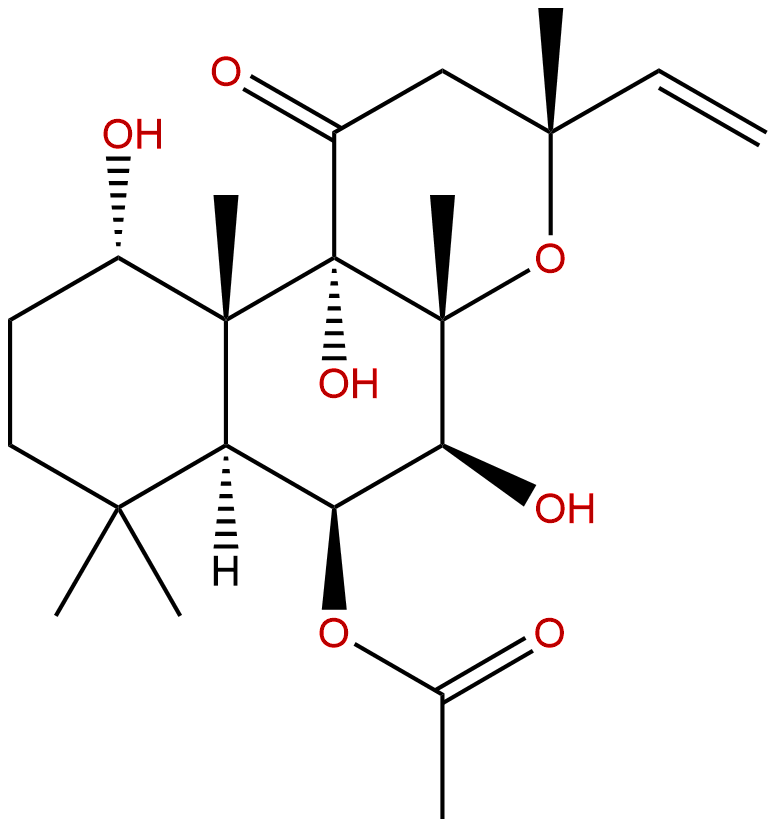


Product name: Isoforskolin
Synonym name: Isoforskolin; Excolabdone C
Catalogue No.: BP1546
Cas No.: 64657-21-2
Formula: C22H34O7
Mol Weight: 410.507
Botanical Source: Constit. of Coleus forskohlii and Excoecaria cochinchinensis
Physical Description: Powder
Type of Compound: Diterpenoids
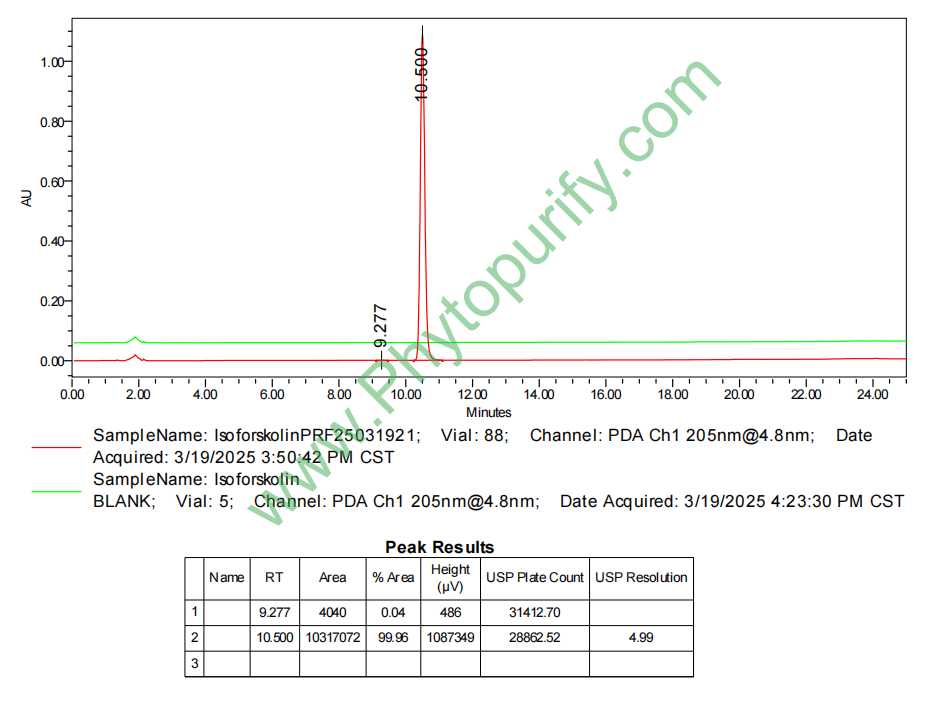
Purity: 95%~99%
Analysis Method: HPLC-DAD or/and HPLC-ELSD
Identification Method: Mass, NMR
Packing: Brown vial or HDPE plastic bottle
The product could be supplied from milligrams to grams. Inquire for bulk scale.
We provide solution to improve the water-solubility of compounds, thereby facilitating the variety of activity tests and clinic uses.
For Reference Standard and R&D, Not for Human Use Directly.
HPLC of Isoforskolin
Storage conditions:Short-term storage at 2~8℃, long-term storage at -20 ~ -80℃
113.2900
1.4720
1.4720
.2865
1.3859
5.9778
High
44.5467
4.9042
No
No
No
No
No
No
0.0
Yes
No
Yes
Yes
Natural products, as an important source of drug discovery, play an irreplaceable role in the history of human disease treatment. Among them, diterpenes have attracted much attention due to their structural diversity and significant biological activity. Isoforskolin (CAS number: 64657-21-2) is one of them, which is a semi diurnal diterpene isolated from the traditional Chinese medicinal plant Coleus forskohlii. Although its isomer Forskolin is well-known as a classic activator of adenylate cyclase (AC), isoforskolin has gradually emerged from the halo of Forskolin in recent years as a new focus of natural product pharmacology research due to its unique pharmacological activity that does not rely on the cAMP signaling pathway, especially its outstanding performance in anti-inflammatory and anti-tumor fields. Early studies have revealed that isoflavones can effectively inhibit the secretion of various pro-inflammatory cytokines (such as TNF - α, IL-1 β, IL-6, IL-8) induced by lipopolysaccharides (LPS) in human monocytes, demonstrating their potential as anti-inflammatory agents for the treatment of inflammatory diseases such as Lyme arthritis. More notably, its anti-tumor activity involves regulating multiple key targets such as MCL1, BCL2, STAT3, MMP2, indicating its ability to intervene in tumor occurrence and development through multiple targets and pathways. This article aims to provide a systematic review of the chemical properties, plant sources, pharmacological activities, mechanisms of action, medicinal properties, and clinical application prospects of Yifosikelin, in order to provide comprehensive scientific references for the in-depth research and development of this compound.
Yifosikelin is a semi diurnal diterpenoid compound with a molecular formula of C22H34O7 and a molecular weight of 410.5070. Its core structure is similar to that of Fossilin, both possessing a unique [4.3.0] nonane skeleton and connected to an acetoxy group at the C-7 position and a β - oriented hydroxyl group at the C-6 position. However, there are key differences in the substituent configuration at the C-9 position between the two: the C-9 position of Fossilin is a hydroxyl group in the alpha configuration, while Fossilin is in the beta configuration. This subtle difference in stereochemistry leads to significant differences in their three-dimensional spatial conformation and biological activity.
From the perspective of physical and chemical properties, Yifosikelin exhibits typical lipophilic characteristics. The calculated lipid water partition coefficient (LogP) is 1.4720, indicating that it has a certain degree of lipid solubility and is conducive to transmembrane transport. The topologically polar surface area (TPSA) is 113.29 Å ², reflecting the presence of polar functional groups (such as multiple hydroxyl and carbonyl groups) in the molecule. Its water solubility prediction value is relatively low, about 0.2865 mg/mL, indicating that solubilization strategies may need to be considered in formulation development to improve its bioavailability. It is worth noting that its blood-brain barrier (BBB) permeability is predicted to be "high", indicating that the compound may have the potential to treat central nervous system related diseases such as neuroinflammation and brain tumors. In addition, preliminary pharmacological risk assessment showed that isoflavones have no inhibitory activity on hERG potassium channels (hERG inhibition: no), and the Ames test result was 0.0, indicating its potential arrhythmogenic risk and genetic toxicity are low, laying a good foundation for further safety evaluation.
Yifosikelin is mainly derived from Coleus forskohlii, a plant of the genus Coleus in the family Lamiaceae. This plant is native to subtropical mountainous areas in China, India, Nepal, and other regions. Its roots are rich in various bioactive diterpenoid compounds, among which Fossilin has the highest content. Fossilin and 1,9-dideoxyFossilin are its main associated components. Forsythia suspensa has long been used in traditional medicine to treat various diseases such as heart disease, asthma, and abdominal pain. Modern research attributes its activity mainly to the diterpenoid compounds contained in its roots.
Organic solvent extraction combined with chromatographic separation technology is commonly used to extract and separate isofossilin from plant materials. The conventional process is as follows: first, the dried hairy throat sheath stamen roots are crushed, and polar organic solvents such as methanol, ethanol, or ethyl acetate are used for Soxhlet extraction or cold soaking extraction to obtain the crude extract. Subsequently, preliminary separation was performed using silica gel column chromatography, commonly using gradient elution systems such as petroleum ether ethyl acetate or chloroform methanol. Due to the very similar polarity of structures such as isofossilin and fossilin, separation and purification are a major challenge. Therefore, it is often necessary to further use high-performance liquid chromatography (HPLC), especially preparative or semi preparative HPLC, using a reverse phase C18 chromatographic column and methanol water or acetonitrile water as the mobile phase for fine separation, in order to obtain high-purity isofluconazole monomer. In recent years, liquid-liquid distribution chromatography techniques such as high-speed countercurrent chromatography (HSCCC) have also been applied to the efficient preparation and separation of structurally similar diterpenes. The optimization of extraction processes, such as ultrasound assisted extraction and microwave-assisted extraction, aims to improve the yield and purity of target compounds, which is an important aspect of related research.
The pharmacological activity research of Yifosikelin has expanded from the initial anti-inflammatory field to multiple aspects such as anti-tumor, demonstrating a wide spectrum of biological activities.
1. Anti inflammatory activity:
One of the most clear pharmacological effects of Yifosikelin is anti-inflammatory. Research has shown that in LPS stimulated human monocytes (such as THP-1 cells) or peripheral blood monocytes (PBMCs), isoflavones can dose dependently inhibit the gene expression and protein secretion of key pro-inflammatory cytokines TNF - α, IL-1 β, IL-6, and IL-8. This inhibitory effect is independent of its ability to activate adenylate cyclase, as its efficacy is different from that of fossilin and cannot be blocked by protein kinase A (PKA) inhibitors. Based on its strong anti-inflammatory properties, isoflavones have shown therapeutic potential in vitro and animal models of Lyme arthritis (an inflammatory joint disease caused by infection with Borrelia burgdorferi), reducing inflammation and tissue damage in the joint area.
2. Antitumor activity:
Antitumor is one of the most promising research directions for isoflavones. A large number of in vitro studies have shown that iforskirin can inhibit proliferation and induce apoptosis in a variety of human tumor cell lines, including breast cancer, lung cancer, liver cancer, colon cancer, prostate cancer and leukemia cells. Its anti-tumor effect has the characteristics of multi-target and multi pathway:
* Inducing cell apoptosis: Yifosikelin can downregulate the expression of anti apoptotic proteins Bcl-2 and Mcl-1, while possibly upregulating the levels of pro apoptotic proteins such as Bax, thereby disrupting mitochondrial membrane potential, activating the Caspase cascade reaction, and ultimately leading to programmed cell death of tumor cells.
* Inhibition of cell invasion and metastasis: This compound can significantly inhibit the activity and expression of matrix metalloproteinase-2 (MMP-2) and MMP-9, which are key enzymes for degrading extracellular matrix, promoting tumor invasion and metastasis. In addition, it can also inhibit the epithelial mesenchymal transition (EMT) process.
* Inhibition of cell proliferation and signaling pathways: Yifosikelin can interfere with the cell cycle progression, blocking cells in the G0/G1 or G2/M phase. It can also inhibit various survival and proliferation signaling pathways, such as STAT3, MAPK/ERK, etc.
* Impact on tumor microenvironment: By inhibiting the expression of hypoxia inducible factor-1 alpha (HIF-1 alpha), isoflavones may interfere with tumor hypoxia adaptation and angiogenesis.
3. Other potential activities:
In addition to the core activities mentioned above, research also suggests that isoflavones may have cardiovascular protective effects (such as mild blood pressure reduction), neuroprotective effects, etc. However, research in these areas is still in its early stages and requires more evidence to support it.
The mechanism of action of Yifosikelin is complex, involving the regulation of multiple key signaling pathways and molecular targets, which forms the basis of its pleiotropic pharmacological activity.
1. Anti inflammatory mechanism:
The core of its anti-inflammatory effect lies in inhibiting the nuclear factor kappa B (NF - κ B) signaling pathway. NF - κ B is a pivotal transcription factor that regulates the expression of inflammatory cytokine genes. Yifosikelin can prevent LPS induced degradation and phosphorylation of I κ B α protein, thereby inhibiting the nuclear translocation of NF - κ B p65 subunit and its binding activity to DNA, ultimately downregulating the transcription of downstream inflammatory mediators such as TNF - α and IL-6. In addition, it may also synergistically exert anti-inflammatory effects by inhibiting the activation of MAPK pathways such as p38 and JNK.
2. Mechanism of anti-tumor action and target network:
The anti-tumor mechanism of Yifosikelin is a multi-target synergistic network:
* Apoptosis regulatory targets: MCL1 and BCL2 It is an important anti apoptotic protein. Yifosikelin can downregulate their expression and lower the apoptosis threshold of tumor cells.
* Transcription factors and signaling hubs: STAT3 It is a core transcription factor for tumor cell survival, proliferation, and immune escape. Yifosikelin can inhibit the tyrosine phosphorylation activation of STAT3 and suppress the expression of downstream target genes such as Cyclin D1 and Survivors.HIF1A It is a key regulatory factor for tumors to adapt to hypoxic environments, and the inhibition of isoflavones on it helps to resist angiogenesis and overcome chemotherapy resistance.
* Invasion and metastasis related enzymes: MMP2 It is a key enzyme that degrades type IV collagen and promotes invasion, and the direct or indirect inhibition of its activity by isoflavones is an important mechanism for anti metastasis.
* Intranuclear targets: There are studies suggesting that isoflavones may interfere with TOP1 and TOP2A The function of topoisomerases I and II α affects DNA replication and repair, but further evidence is needed in this regard.
* Kinases and receptors: inhibit MAPK1 The activity of ERK2 can block growth factor driven proliferation signals. Correct ESR1 Potential antagonistic effects of estrogen receptor alpha and its impact on CYP19A1 The possible inhibition of aromatase provides a theoretical basis for its application in the treatment of hormone dependent breast cancer (such as ER positive and HER2 positive).
It is worth noting that the activation effect of isofluconazole on the classical target adenylate cyclase is much weaker than that of fluconazole, which means that its above activity is largely independent of the cAMP/PKA pathway, providing an advantage in avoiding the strong cardiovascular side effects (such as tachycardia and blood pressure drop) that fluconazole may cause.
Based on its physicochemical parameters and preliminary biological data, isoflavones have shown certain potential as a drug, but its comprehensive pharmacokinetic (PK) and pharmacodynamic (PD) characteristics still need to be systematically studied.
Drug Evaluation:
* Advantage: The molecular weight is moderate (~410), and the LogP value shows that it has balanced lipid water distribution, which is beneficial for oral absorption and cell permeation. High blood-brain barrier permeability is its unique advantage, which broadens the scope of indications. No hERG inhibition or Ames mutagenicity alert, preliminary safety is good.
* Challenge: Poor water solubility is its main bottleneck, which may affect its oral bioavailability. It is necessary to develop suitable dosage forms, such as nanocrystals, liposomes, cyclodextrin inclusion complexes, or prodrug strategies, to improve solubility and absorption. Its multi-target characteristics are both advantageous (synergistic efficacy) and may also bring risks of complex off target effects, which need to be carefully evaluated.
Pharmacodynamics (current understanding and prospects):
At present, there are relatively limited research reports on the pharmacokinetics of the isofipronil system, and most of the information is based on its analog fipronil or in vitro models.
* Absorption: It is expected to be absorbed in the gastrointestinal tract after oral administration, but its low water solubility may limit the absorption rate and degree. Lipid preparations may enhance their bioavailability.
* Distribution: Its lipophilicity and high BBB permeability indicate that it has good tissue distribution ability and can enter multiple tissues and organs, including the brain. The binding rate with plasma proteins is not yet clear.
* Metabolism: As a diterpenoid compound, it is expected to be mainly metabolized in the liver through the cytochrome P450 (CYP) enzyme system, and may undergo reactions such as hydroxylation and deacetylation. It is crucial to identify the main metabolic enzyme subtypes (such as CYP3A4) for evaluating drug interactions.
* Excretion: Metabolites may be mainly excreted through bile and kidneys.
In the future, systematic preclinical pharmacokinetic studies are needed, including the ADME (absorption, distribution, metabolism, excretion) processes in different animal models, to clarify their absolute bioavailability, half-life, tissue distribution characteristics, and main metabolic pathways, providing a basis for the design of clinical dosing regimens.
The unique pharmacological profile of Yifosikelin has brought broad clinical application prospects in multiple therapeutic fields, but it also faces challenges.
Potential application directions:
1. Inflammatory disease treatment: As a novel anti-inflammatory agent, it is particularly suitable for patients who have poor response or intolerance to traditional nonsteroidal anti-inflammatory drugs (NSAIDs) or glucocorticoids. Lyme arthritis is its clear potential indication. In addition, it is also worth exploring in chronic inflammatory diseases driven by excessive activation of the NF - κ B pathway, such as rheumatoid arthritis, inflammatory bowel disease, and chronic obstructive pulmonary disease (COPD).
2. Tumor treatment: Its multi-target anti-tumor properties make it a promising component of comprehensive cancer treatment. Especially suitable for:
* Adjuvant therapy and sensitization: Combined with chemotherapy, targeted drugs, or immune checkpoint inhibitors, it reverses drug resistance and enhances efficacy by inhibiting targets such as STAT3 and MCL1.
* Transfer inhibition: Develop anti metastatic drugs targeting tumors with high risk of metastasis by utilizing their inhibitory effects on MMP2 and EMT.
* Specific subtypes of tumors: For ER positive/HER2 positive breast cancer (through ESR1, CYP19A1), or STAT3 continuously activated tumors (such as some lymphoma, multiple myeloma).
3. Central nervous system diseases: With its high BBB permeability, it can be used to treat neuroinflammatory related diseases such as Alzheimer's disease, Parkinson's disease, multiple sclerosis, as well as primary or metastatic brain tumors.
Challenges and Future Prospects:
1. Deepening basic research: More precise elucidation of its direct interaction modes (binding sites, affinity) with various targets (such as STAT3, MCL1) is needed to distinguish its direct effects from downstream effects.
2. Systematic evaluation of drug efficacy and safety: It is necessary to comprehensively validate its efficacy in various preclinical disease models, especially humanized tumor models and chronic inflammation models, and conduct systematic toxicological studies to clarify its treatment window.
3. Formulation and pharmacokinetic optimization: Solving its water solubility problem is the key to promoting its clinical translation. We need to innovate formulation technology and complete a complete preclinical PK/PD study.
4. Structural modification and optimization: Using it as the parent nucleus for structural modification aims to improve activity, selectivity, solubility, and metabolic stability, and develop more drug like derivatives, which is an important pathway for the development of natural product drugs.
5. Explore combination therapy: Thoroughly studying its synergistic mechanism and optimal combination regimen with existing standard therapies may enable it to integrate into the clinical treatment system more quickly.
Yifosikelin, a natural diterpenoid derived from traditional medicinal plants, is attracting increasing attention from pharmacology and medicinal chemistry researchers due to its unique anti-inflammatory activity and multi-target anti-tumor mechanism that does not rely on cAMP activation. From inhibiting the NF - κ B pathway to alleviate inflammation, to regulating multiple key targets such as STAT3, MCL1, MMP2 to combat tumors, its demonstrated multifunctional biological functions are remarkable. Despite facing challenges such as water solubility in drug development, its excellent blood-brain barrier permeability and preliminary safety characteristics have laid a positive foundation for its clinical translation. In the future, by deepening research on the mechanism of action, optimizing pharmacokinetic properties, developing new formulations, and exploring reasonable combination therapy strategies, isoflavones are expected to develop from a promising lead compound into an innovative drug for treating inflammatory diseases and malignant tumors, continuing the glorious chapter of natural products in human health.
