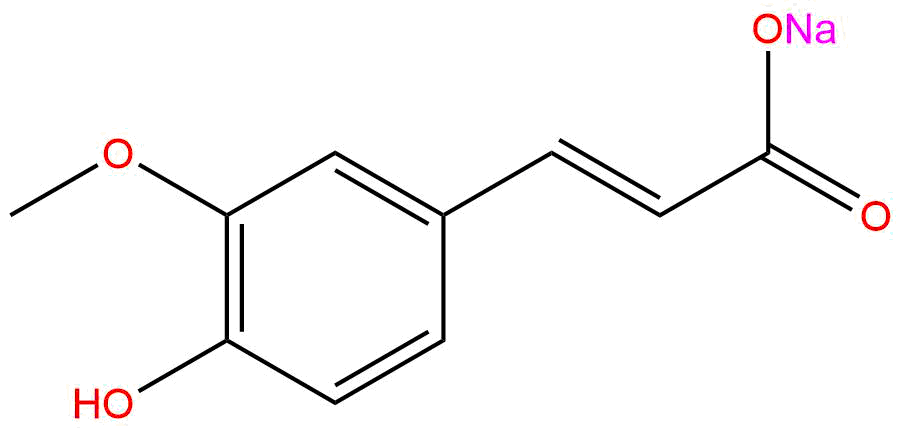


Synonym name:
Catalogue No.: BP1318
Cas No.: 24276-84-4
Formula: C10H9NaO4
Mol Weight: 216.168
Botanical Source:
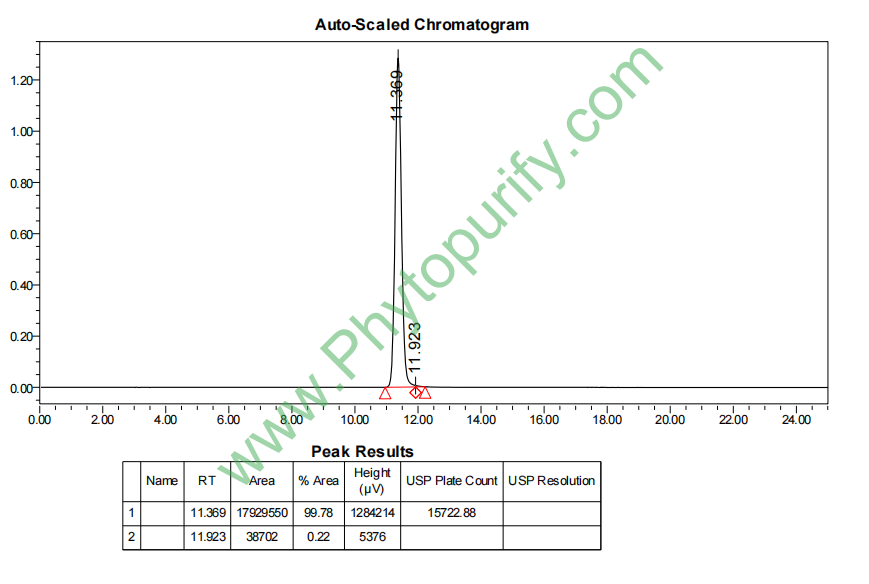
Purity: 95%~99%
Analysis Method: HPLC-DAD or/and HPLC-ELSD
Identification Method: Mass, NMR
Packing: Brown vial or HDPE plastic bottle
Can be supplied from milligrams to grams.
For Reference Standard and R&D, Not for Human Use Directly.
Inquire for bulk scale.
HPLC of Sodium Ferulate
Storage conditions:Short-term storage at 2~8℃, long-term storage at -20 ~ -80℃
66.7600
1.8400
-.7651
1.6511
5.1758
11.5871
Low
85.9328
2.7658
Yes
No
No
No
Yes
No
0.0
Yes
Yes
Yes
Yes
Cardiovascular disease is one of the leading causes of death and disability worldwide, with thrombosis being a common pathological basis for major cardiovascular and cerebrovascular events such as myocardial infarction and ischemic stroke. Antiplatelet therapy is the cornerstone of preventing and treating arterial thrombotic diseases. However, traditional antiplatelet drugs represented by aspirin and clopidogrel have problems such as gastrointestinal injury, increased risk of bleeding, and resistance in some patients. Therefore, searching for efficient and low toxicity new antiplatelet drugs from natural products has always been an important direction in drug development. Sodium ferulate, as the sodium salt form of ferulic acid, the main active ingredient in traditional Chinese medicines such as Chuanxiong and Danggui for promoting blood circulation and removing blood stasis, has become a highly regarded natural source candidate drug due to its good water solubility and stability. This article aims to systematically review the chemical properties and pharmacological activities of sodium ferulate, especially its molecular mechanism of antiplatelet aggregation, drug evaluation, and clinical application prospects, in order to provide comprehensive academic references for the in-depth research and development of this compound.
Sodium Ferulate, also known as 4-hydroxy-3-methoxycinnamate sodium, has a CAS number of 24276-84-4. Its molecular formula is C10H9NaO4 and its molecular weight is 194.1860. Structurally, sodium ferulate is an organic sodium salt formed by replacing the proton on the 3-hydroxy (phenolic hydroxyl) group of Ferulic acid with a sodium ion. Its parent nucleus structure is a derivative of cinnamic acid (cinnamic acid), containing a benzene ring (ring A) with two substituents, methoxy (- OCH3) and hydroxyl (- OH), and an acrylic side chain. This structure gives it the characteristics of both phenolic compounds and cinnamic acid derivatives.
The key physicochemical property parameters are as follows: the calculated lipid water partition coefficient (LogP) is about 1.84, indicating that the compound has a certain degree of lipophilicity, but overall tends to be hydrophilic. The topological polar surface area (TPSA) is 66.76 Å ², reflecting the proportion of polar groups (sodium carboxylate, phenolic hydroxyl, methoxy) in the molecule. Its water solubility is significantly better than its parent ferulic acid, reaching about 1.65 mg/mL, mainly due to the increased ionization degree of carboxylic acid groups after salt formation, greatly improving its formulation and in vivo absorption characteristics. Preliminary evaluation of its drug properties shows that its blood-brain barrier permeability is low, suggesting that its pivotal role may be limited; HERG inhibition is negative, indicating a lower risk of causing QT interval prolongation in the heart; The Ames test result is 0.0, indicating that it has no significant genetic toxicity. These physicochemical and pharmacological parameters together outline a molecular profile with great potential for development.
Ferulic acid is widely present in the plant kingdom and is a constituent unit of important biomolecules such as lignin and ferulic acid polysaccharides in the cell wall. It often exists in free or esterified form. In traditional Chinese medicine, herbs rich in ferulic acid often have the effects of promoting blood circulation, removing blood stasis, and relieving pain. Its main plant sources include:
1. Umbelliferae plants The rhizomes of Ligusticum chuanxiong Hort. and Angelica sinensis (Oliv.) Diels are the traditional and main sources of ferulic acid. The ferulic acid in Chuanxiong often synergizes with components such as ligustrazine to exert cardiovascular protective effects.
2. Poaceae plants Grain by-products such as rice bran, wheat bran, and corn bran, among which ferulic acid is often combined with hemicellulose such as arabinoxylan through ester bonds, are abundant and important raw materials for industrial extraction.
3. Other plants Ferula assa foetida L. resin, coffee beans, and various fruits and vegetables are also distributed.
The preparation of sodium ferulate usually involves two steps: first, extracting ferulic acid from plant materials, and then conducting a salt formation reaction.
1. Ferulic acid extraction:
* Alkali extraction and acid precipitation method The most classic method. By utilizing the characteristic of salt formation and dissolution of ferulic acid under alkaline conditions, the raw materials are leached with alkaline solutions such as sodium hydroxide, and then acidified to release ferulic acid. This method is simple, but it may cause partial degradation of ferulic acid due to strong alkaline and acidic conditions.
* Enzymatic hydrolysis Targeting esterified ferulic acid in grains, cellulase and xylanase are used to cleave the ester bond between ferulic acid and polysaccharides, resulting in mild release of ferulic acid under mild conditions and high product purity. This is the development direction of green extraction.
* Ultrasonic/Microwave Assisted Extraction Utilizing physical fields to enhance mass transfer, significantly shorten extraction time, and improve extraction efficiency.
* Supercritical CO2 extraction Suitable for fat soluble components, it has a certain effect on free ferulic acid, but often requires the addition of entrainers, resulting in higher costs.
2. Salting process Dissolve the purified ferulic acid in an appropriate amount of ethanol or water, add a calculated amount of sodium hydroxide or sodium carbonate solution dropwise while stirring, control the pH, and after complete reaction, concentrate, crystallize, and dry to obtain sodium ferulic acid. Modern technology emphasizes the control of crystallization conditions to obtain high-purity and suitable crystalline products.
Sodium ferulate has a wide range of pharmacological activities, with its core functions revolving around antioxidant and anti-inflammatory effects, and extending to multi system protective effects.
Antiplatelet aggregation effect This is the most widely studied and extensively researched core pharmacological activity of sodium ferulate. Numerous in vitro and in vivo experiments have confirmed that sodium ferulate can significantly inhibit platelet aggregation induced by various inducers such as adenosine diphosphate (ADP), arachidonic acid (AA), collagen, and thromboxane A2 analog (U46619). Its strength of action may be weaker than some potent chemical drugs, but it has the characteristics of multi-target and mild action. While preventing thrombosis, it may be accompanied by a lower risk of bleeding, which has important clinical significance.
Antioxidant and free radical scavenging activity The phenolic hydroxyl group in sodium ferulate molecules is a natural antioxidant group that can effectively remove reactive oxygen species/nitrogen species such as superoxide anions (O2 · -), hydroxyl radicals (· OH), and peroxynitrite (ONOO -), inhibit lipid peroxidation, and protect biological membranes, proteins, and DNA from oxidative damage. This function is the basis for its protective effects in multiple systems such as cardiovascular, cerebrovascular, neurological, and hepatic systems.
anti-inflammatory effect Sodium ferulate can inhibit the production of nitric oxide (NO), prostaglandin E2 (PGE2), as well as pro-inflammatory cytokines such as tumor necrosis factor - α (TNF - α), interleukin-1 β (IL-1 β), and IL-6 by macrophages stimulated by lipopolysaccharides (LPS). Its anti-inflammatory mechanism is closely related to the inhibition of the activation of inflammatory signaling pathways such as nuclear factor kappa B (NF - κ B) and mitogen activated protein kinase (MAPK).
Cardiovascular system protection:
Protection of the nervous system Although its blood-brain barrier permeability is not high, studies have shown that it still exhibits neuroprotective effects in animal models such as cerebral ischemia, Alzheimer's disease, and Parkinson's disease, which may be achieved through peripheral and partial central mechanisms such as reducing oxidative stress, inhibiting neuroinflammation, and cell apoptosis.
Other activities This also includes activities such as anti liver fibrosis, anti kidney injury, anti-tumor (inducing apoptosis, inhibiting metastasis), etc., most of which are associated with their core antioxidant and anti-inflammatory properties.
The anti platelet aggregation effect of sodium ferulate is the key to its use as a candidate drug for the treatment of cardiovascular and cerebrovascular diseases. Its mechanism involves intervention in multiple pathways of platelet activation, with diverse targets of action
Inhibition of arachidonic acid (AA) metabolic pathway:
Interference with platelet membrane receptor signals:
Affects intracellular signal transduction and second messenger:
Upstream regulation based on antioxidant and anti-inflammatory properties Oxidative stress and inflammation are important promoting factors for platelet overactivation and thrombus formation. The strong antioxidant capacity of sodium ferulate can clear reactive oxygen species that activate platelets, protect endothelial cells, and reduce the production of platelet adhesion promoting factors such as von Willebrand factor (vWF) release. Its anti-inflammatory effect is achieved by inhibiting pathways such as NF - κ B, downregulating the expression of pro thrombotic mediators such as tissue factor (TF) and P-selectin, and creating an anti thrombotic environment at the vascular wall level.
In summary, sodium ferulate exerts its antiplatelet effect through a synergistic mode of "multi-target, multi pathway" action, which is different from most single target chemical drugs. This may be the molecular basis for its relatively mild and well-balanced action.
Based on its physical and chemical properties, sodium ferulate exhibits good medicinal potential. Its good water solubility is beneficial for making injections or oral solid preparations. The LogP value is moderate, indicating that it has a certain degree of membrane permeability. No hERG inhibition and genotoxicity warning, with a high safety threshold.
Pharmacokinetic studies (mainly based on animal experiments and some human studies) revealed the characteristics of its in vivo processes:
* absorb After oral administration, it is absorbed in the upper part of the small intestine at a faster rate. Its sodium salt form increases solubility and may improve absorption. But the first pass effect may be more pronounced.
* distribution After absorption, it quickly distributes to various tissues throughout the body, with higher concentrations in organs with abundant blood flow such as the liver, kidneys, and lungs. Due to its high polarity and low blood-brain barrier permeability, its distribution in the central nervous system is limited, which is consistent with the predicted physical and chemical properties.
* Metabolism Sodium ferulate undergoes extensive metabolism in the body. The main metabolic pathways include: 1)Combination reaction Combining with glucuronic acid or sulfuric acid to generate corresponding complexes is its main elimination method; 2) Degradation reaction The hydrogenation reduction of side chain double bonds and demethylation of benzene rings produce various metabolites, such as dihydroferulic acid and vanillic acid. Some of these metabolites still have biological activity.
* excretion Mainly excreted in the form of metabolites through the kidneys from urine, the excretion amount can reach the vast majority of the administered dose within 24 hours. A small amount is excreted from feces through bile.
* Pharmacokinetic characteristics It usually exhibits characteristics of a two compartment model, with a relatively short elimination half-life, suggesting that multiple daily doses may be necessary to maintain effective blood drug concentrations. Its pharmacokinetic behavior may be influenced by factors such as liver function and concomitant medication (affecting metabolic enzymes).
At present, sodium ferulate has been approved for clinical use as a chemical drug (raw material and formulation) in China, mainly for the adjuvant treatment of ischemic cardiovascular and cerebrovascular diseases, which provides a clinical data basis for further pharmacokinetic and drug interaction research.
Sodium ferulate is currently used in clinical practice as an adjuvant therapy for thrombotic diseases such as coronary heart disease and cerebral infarction, often in combination with drugs such as aspirin. The clinical application prospects and future research directions mainly focus on the following aspects:
The challenge also exists: as a derivative of natural products, its strength of action is usually weaker than that of synthetic drugs; The multi-target characteristic is both an advantage and makes the precise analysis and quality control of its mechanism of action complex; More large-scale, randomized controlled clinical studies are needed to confirm its long-term efficacy and safety, especially in comparison to standard therapies.
Sodium ferulate, a natural derivative derived from traditional Chinese medicine for promoting blood circulation and removing blood stasis, has become a distinctive molecule in the development of modern cardiovascular and cerebrovascular drugs due to its clear chemical structure, good physical and chemical properties, and multiple pharmacological activities centered on antiplatelet aggregation. It acts on multiple targets such as COX, P2Y12, TXA2 receptor, integrin α IIb β 3, and synergizes its strong antioxidant and anti-inflammatory abilities to construct a multi pathway synergistic anti thrombotic network. Although further exploration is needed in terms of the strength of action and depth of mechanism, its "multi-target, relatively mild" characteristics provide new solutions for the bleeding risk and drug resistance issues faced by current antiplatelet therapy. In the future, through in-depth mechanism research, dosage form innovation, clinical validation, and rational drug design based on structure, sodium ferulate and its derivatives are expected to play a more important clinical value in the prevention and treatment of thrombotic diseases, especially in complex pathological states that require both antithrombotic and anti-inflammatory effects. They will become one of the bridges connecting the wisdom of traditional Chinese medicine with modern precision medicine.
