


Product name: Agnuside
Synonym name: Agnoside; Buddlejoside A
Catalogue No.: BP0125
Cas No.: 11027-63-7
Formula: C22H26O11
Mol Weight: 466.439
Botanical Source: Yitex negundo fructus
Physical Description:
Type of Compound: Iridoids
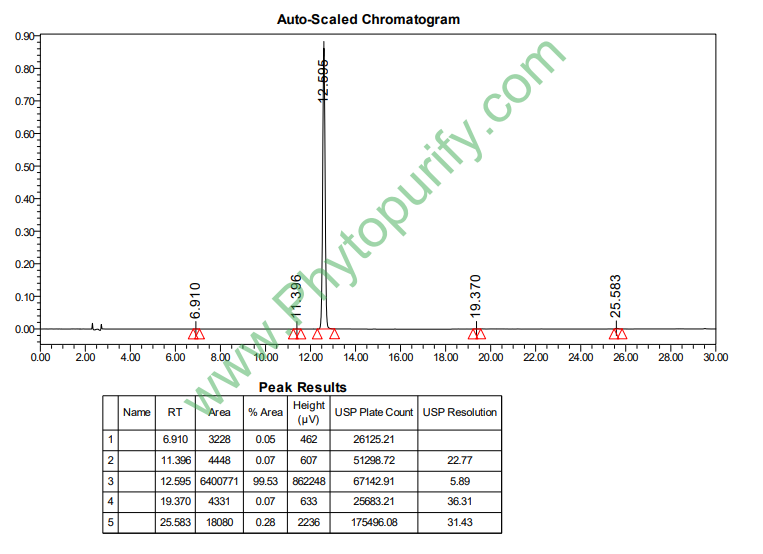
Purity: 95%~99%
Analysis Method: HPLC-DAD or/and HPLC-ELSD
Identification Method: Mass, NMR
Packing: Brown vial or HDPE plastic bottle
Storage: Store in a well closed container, protected from air and light. Put into refrigerate or freeze for long term storage.
Whenever possible, you should prepare and use solutions on the same day. However, if you need to make up stock solutions in advance, we recommend that you store the solution as aliquots in tightly sealed vials at -20℃. Generally, these will be useable for up to two weeks.
The product could be supplied from milligrams to grams
Inquire for bulk scale.
Description:
Agnuside has anti-arthritic activity, it also shows inhibition of vascular permeability and leukocyte migration in vivo.It inhibited an array of pro-inflammatory mediators (PGE(2) and LTB(4)) and T-cell-mediated cytokines (IL-2, TNF-α, IFN-γ, IL-4, IL-10, IL-17).
References:
Inflamm Res. 2012 Apr;61(4):293-304.
Anti-arthritic activity of agnuside mediated through the down-regulation of inflammatory mediators and cytokines.
The purpose of this study was to elucidate the probable mechanism for the anti-arthritic activity of Agnuside (AGN), a compound isolated from the leaf extract of Vitex negundo.
METHODS AND RESULTS:
The anti-inflammatory activity of AGN within a dose range of 1.56-12.50 mg/kg in normal and adrenalectomized rats was evaluated against different inflammagens. An array of pro-inflammatory mediators (PGE(2) and LTB(4)) and T-cell-mediated cytokines (IL-2, TNF-α, IFN-γ, IL-4, IL-10, IL-17) was assayed using flow cytometry, in arthritic paw tissue homogenate and splenocytes of treated animals. Significant anti-arthritic activity was observed in the polyarthritis test in rats and this was associated with significant suppression of inflammatory mediators and T-cell-mediated cytokines (Th1/Th2). The anti-inflammatory activity in adrenalectomized rats confirmed that the effect of AGN is not mediated by the pituitary-adrenal axis. AGN also showed inhibition of vascular permeability and leukocyte migration in vivo.
CONCLUSIONS:
The study suggests the possible development of AGN as a therapeutic agent in the treatment of arthritis by the modulation of the host immune response.
HPLC of Agnuside
Storage conditions:Short-term storage at 2~8℃, long-term storage at -20 ~ -80℃
175.3700
-.3958
-.4015
5.5078
.5146
.3859
Low
55.1165
4.6436
Yes
No
No
No
No
No
0.0
Yes
Yes
Yes
Yes
Natural products, as an important treasure trove for drug discovery, play an irreplaceable role in the history of human disease treatment. Cycloterpenoid glycosides are a class of secondary metabolites widely present in the plant kingdom with significant biological activity. Their structural diversity and rich pharmacological activities have attracted sustained attention from pharmacologists. Agnuside (CAS number: 11027-63-7) is one of them, which is a benzoate compound formed by the ester bond between cyclohexene ether terpenoid glycoside aucubin and 4-hydroxybenzoic acid. This compound is mainly found in various Vitex plants, especially the traditional medicinal plant Vitex agnus catus L., from which its name comes.
Modern pharmacological studies have shown that aucubin exhibits various biological activities, with its significant anti-inflammatory and immunomodulatory effects being the core. It has been identified as a cyclooxygenase-2 (COX-2) inhibitor, which can effectively inhibit the production of classic pro-inflammatory mediators such as prostaglandin E2 (PGE2) and leukotriene B4 (LTB4). More importantly, research has revealed its broad regulatory ability on T cell-mediated immune responses, which can affect the expression profiles of various key cytokines including IL-2, TNF - β, IFN - γ, IL-4, IL-10, and IL-17. Based on these characteristics, aucubin has shown clear therapeutic potential in inflammatory disease models such as arthritis and asthma. In addition, its pro angiogenic activity also provides new ideas for the treatment research of ischemic diseases. In recent years, with the in-depth understanding of the mechanism of chronic inflammatory diseases such as atherosclerosis, vitexin has attracted much attention because it may act on LOX-1, AMPK, ABCA1 and other related targets. This article aims to systematically review the chemical properties, plant sources, pharmacological activities, mechanisms of action, medicinal properties, and clinical application prospects of aucubin, in order to provide comprehensive scientific references for the in-depth research and development of this natural product.
The chemical structure of aucubin clearly characterizes its essence as a cyclic terpenoid glycoside. Its molecular formula is C22H26O11 and its molecular weight is 466.4390. Structurally, it is composed of a core iridoid glycoside unit - aucubin - and a benzoic acid derivative unit -4-hydroxybenzoic acid - connected through esterification reaction. Specifically, the carboxyl group of 4-hydroxybenzoic acid condenses with the primary hydroxyl group (C6 '- OH) on the glucose group of aucubin to form an ester bond, thus forming this unique benzoate ester type cyclohexene ether terpenoid glycoside.
This structure determines its specific physicochemical properties. According to the provided pharmacological parameters, the lipid water partition coefficient (LogP) of paeoniflorin is -0.3958, indicating that the compound has hydrophilicity and tends to be distributed in the aqueous phase. Its topological polar surface area (TPSA) is as high as 175.37 Å ², which is mainly attributed to the numerous oxygen atoms in the molecule (from sugar groups, ester bonds, cyclic ethers, and hydroxyl groups), further confirming its strong polarity characteristics. The theoretically calculated water solubility value is 5.5078 (usually measured in mg/mL or log mol/L, indicating good water solubility), which is consistent with the multiple hydrophilic groups (hydroxyl and sugar units) in its structure. Higher polarity and water solubility mean that its solubility may be limited in conventional organic solvents, but it has better solubility in polar solvents such as water, methanol, and ethanol.
In terms of pharmacokinetic properties, preliminary predictions indicate that the ability of aucubin to penetrate the blood-brain barrier is relatively low, mainly due to its high polarity and molecular weight. This suggests that the risk of central nervous system related side effects may be relatively low, but it also limits its direct effects on central targets. In addition, the predicted risk of hERG inhibition is' no ', indicating a low risk of potential cardiac toxicity (such as inducing long QT syndrome). The Ames test predicted a value of 0.0, indicating that it may not be mutagenic and has good genetic toxicity safety prospects. These preliminary pharmacological parameters provide useful references for subsequent development.
Suihua vitexin is mainly distributed in plants of the Vitex genus in the Lamiaceae family. Its name comes from the plant Vitex agnus catus L., also known as the chaste tree, which is one of the most famous sources. This plant has a long medicinal history in the Mediterranean region and Central Asia, traditionally used to treat gynecological diseases, neurological disorders, and inflammation. In addition to Hedyotis diffusa, this compound has also been detected in other plants of the same genus, such as Vitex negundo and Vitex trifolia, which are widely used in traditional Asian medicine systems.
Extracting arbutin from plant materials usually follows the conventional process of natural product chemistry. Firstly, it is necessary to collect the medicinal parts of plants, commonly fruits, leaves, or whole plants, and pre treat them by drying and crushing. The extraction method often uses solvent extraction:
1. Solvent selection Due to the polarity and hydrophilicity of aucubin, methanol, ethanol, or their aqueous solutions (such as 70% -80% ethanol) are often used as extraction solvents, which can effectively dissolve glycoside compounds.
2. Extraction technology Traditional methods include immersion, reflux extraction, and Soxhlet extraction. Modern technologies such as ultrasound assisted extraction (UAE) and microwave-assisted extraction (MAE) are widely used due to their high extraction efficiency, short time, and low solvent usage. These auxiliary technologies disrupt plant cell walls through physical action, promoting the dissolution of target components.
3. Separation and purification After filtering and concentrating the crude extract, a paste rich in aucubin was obtained. Further purification requires the use of chromatographic techniques. Large pore adsorption resins (such as D101, AB-8) are often used for initial enrichment to remove a large amount of impurities such as sugars and pigments. Subsequently, fine separation was performed using silica gel column chromatography, reverse phase silica gel column chromatography (such as C18 packing), and preparative high-performance liquid chromatography (HPLC). High performance liquid chromatography-mass spectrometry (HPLC-MS) or thin layer chromatography (TLC) is commonly used for tracking and identifying target components.
4. Identification and Standardization The isolated monomer compounds need to be structurally confirmed by spectroscopic methods such as nuclear magnetic resonance (NMR, including 1H-NMR and 13C-NMR) and mass spectrometry (MS). For extracts or preparations, HPLC or UPLC methods can be used to establish a standard for the determination of the content of aucubin to ensure its quality control.
A large number of pharmacological studies both in vitro and in vivo have confirmed that aucubin has multiple biological activities, among which its anti-inflammatory and immunomodulatory effects are the most prominent.
1. Anti inflammatory and anti arthritis activity
This is the most in-depth field of research on arbutin in flowers. It has shown significant effects in various acute and chronic inflammation models. Research has shown that aucubin can effectively inhibit carrageenan or acetic acid-induced paw swelling in mice, reduce capillary permeability, and inhibit the migration and infiltration of white blood cells (especially neutrophils) in inflammatory sites. In the rat arthritis model induced by Freund's complete adjuvant (CFA), oral administration of paeoniflorin can significantly reduce joint swelling and improve joint pathological damage, and its effect is comparable or better than the classic anti-inflammatory drug indomethacin. Its anti-inflammatory effect is closely related to inhibiting the synthesis of inflammatory mediators, and it can dose dependently reduce the levels of prostaglandin E2 (PGE2) and leukotriene B4 (LTB4) in inflammatory exudate.
2. Immune regulatory activity
The immunomodulatory effect of aucubin goes beyond simple inhibition of inflammatory mediators. Research has found that it can regulate the function of T lymphocytes and cytokine secretion. In T cells stimulated by ConA or anti-CD3/CD28 antibodies, paeoniflorin can inhibit the production of Th1 cytokines (such as IL-2, IFN - γ, TNF - β) and Th17 characteristic cytokine IL-17. Interestingly, it also exhibits regulatory effects on certain Th2 cytokines (such as IL-4) and anti-inflammatory factor IL-10, but this regulation may be bidirectional or environment dependent, reflecting its potential for immune balance regulation. This broad regulation of T cell response makes it promising for application in T cell-mediated autoimmune diseases such as rheumatoid arthritis and multiple sclerosis.
3. Impact on respiratory system diseases (anti asthma potential)
Asthma is a disease characterized by chronic inflammation, hyperresponsiveness, and remodeling of the airway, involving multiple inflammatory cells and cytokines. Based on its strong anti-inflammatory and immune regulatory abilities, aucubin was evaluated in an asthma model. Research has shown that in a mouse asthma model induced by ovalbumin (OVA), pre-treatment with paeoniflorin can alleviate airway inflammation, reduce eosinophil and lymphocyte counts in bronchoalveolar lavage fluid (BALF), decrease mucus secretion, and lower levels of Th2 cytokines (IL-4, IL-5, IL-13) in lung tissue. These effects suggest that it exerts anti asthma effects by inhibiting the Th2 dominant immune response.
4. Promote angiogenesis activity
Contrary to typical anti-inflammatory effects, some studies have reported the pro angiogenic effects of paeoniflorin under specific conditions. In the chicken embryo chorioallantoic membrane (CAM) model and in vitro experiments with endothelial cells, it can stimulate the formation of new blood vessels. This activity may be attributed to its ability to regulate endothelial cell function, promote migration, and form tubular structures. This characteristic makes it potentially valuable in the treatment of ischemic diseases such as myocardial infarction and lower limb ischemia, but it also suggests that its application should be carefully evaluated in pathological conditions such as tumors.
5. Other activities
In addition, studies have reported that aucubin has antioxidant and neuroprotective activities, which may complement its anti-inflammatory effects and form the basis for its multi-target therapeutic effects.
The multiple pharmacological activities of aucubin stem from its interactions with multiple molecular targets, which form a complex regulatory network.
1. Inhibit the synthesis pathway of pro-inflammatory mediators
Suihua vitexin has been identified as a cyclooxygenase-2 (COX-2) inhibitor. COX-2 is a key inducible enzyme involved in the metabolism of arachidonic acid to produce prostaglandins (such as PGE2), and is highly expressed during inflammation. By inhibiting COX-2 activity, aucubin directly blocks the production of PGE2. Meanwhile, evidence suggests that it may also affect the 5-lipoxygenase (5-LOX) pathway, reducing the production of leukotriene B4 (LTB4). The inhibition of these two pathways is the core mechanism of its rapid anti-inflammatory effect.
2. Regulating signal transduction pathways
The anti-inflammatory and immunomodulatory effects of aucubin involve the regulation of key intracellular signaling pathways:
* NF - κ B pathway Nuclear factor kappa B (NF - κ B) is a core transcription factor that regulates the expression of numerous pro-inflammatory genes, including COX-2, TNF - α, IL-6, etc. Research has shown that aucubin can inhibit the degradation of I κ B α and the nuclear translocation of NF - κ B p65 subunit, thereby blocking the activation of NF - κ B, which is a universal mechanism for its downregulation of the expression of various inflammatory factors.
* MAPK pathway The mitogen activated protein kinase (MAPK) family (such as p38, JNK, ERK) is involved in inflammation and stress responses. Suihua vitexin has been shown to inhibit LPS or inflammatory cytokine induced phosphorylation of p38 and JNK, thereby affecting the activity of downstream transcription factors.
* AMPK pathway Adenylate activated protein kinase (AMPK) is the core regulator of cell energy metabolism, which has been found to play an important role in inflammation and atherosclerosis in recent years. Activation of AMPK (PRKAA1) can inhibit inflammation and promote cholesterol reverse transport. Vitexin may act as an activator of AMPK, which provides a mechanism explanation for its role in metabolic inflammatory diseases (such as atherosclerosis).
3. Multi target effect against atherosclerosis
Based on the target information provided, vitexin may have unique multi target advantages in the prevention and treatment of atherosclerosis:
* LOX-1(OLR1)Lectin like oxidized low-density lipoprotein receptor-1 is the main oxidized low-density lipoprotein (ox LDL) receptor on endothelial cells. It mediates the endocytosis, proinflammatory and pro apoptotic effects of ox LDL, and is a key starting link of atherosclerosis. Inhibition of LOX-1 can alleviate endothelial dysfunction and inflammation.
* ABCA1 ATP binding cassette transporter A1 is responsible for transporting intracellular cholesterol to apolipoprotein A-I, forming new high-density lipoprotein (HDL), which is the rate limiting step in cholesterol reverse transport. Upregulation of ABCA1 expression can promote cholesterol efflux and has anti atherosclerosis effect.
* EHMT2(G9a)Histone methyltransferase, involved in epigenetic regulation. Inhibition of EHMT2 may exert anti-inflammatory effects by altering the histone modification status of inflammation related genes.
* MCL1、BCL2 Belonging to the Bcl-2 family of anti apoptotic proteins. In atherosclerotic plaque, apoptosis of endothelial cells and macrophages promotes plaque instability and rupture. Suihua vitexin may protect cells from apoptosis induced by inflammatory environment and stabilize plaques by regulating these proteins.
* RECQ1 A DNA helicase that participates in DNA repair. Its specific association with atherosclerosis is still under exploration, which may involve genomic stability and cell aging.
4. Regulation of immune cells and cytokine networks
As mentioned earlier, aucubin can deeply intervene in T cell differentiation and function. The mechanism may include: influencing the co stimulatory signals of APCs (antigen-presenting cells); Interference with downstream signal transduction of T cell receptors (TCR), such as the calcineurin NFAT pathway; Directly regulate the expression or activity of key transcription factors (such as T-bet, GATA-3, ROR γ t, Foxp3) in Th1, Th2, Th17, and Treg cells, thereby reshaping the cytokine profile and transitioning from an excessive inflammatory state to an immune balance state.
Although paeoniflorin has shown good pharmacological activity in preclinical studies, its successful conversion into a drug depends on systematic drug efficacy evaluation and pharmacokinetic properties.
1. Preliminary evaluation of drug properties
Based on computational chemistry and preliminary experimental data:
* drug-likeness The molecular weight (466.44) is slightly higher than the ideal range (<500), but still within an acceptable range. The LogP value (-0.4) and TPSA (175.37) are consistent with the characteristics of polar/hydrophilic compounds, which is beneficial for solubility, but may affect their oral bioavailability due to poor passive transmembrane absorption.
* Security Warning The negative prediction of hERG inhibition reduces concerns about cardiac toxicity, while the negative prediction of Ames test suggests no genetic toxicity risk, which is a favorable starting point for drug development. The blood-brain barrier has low permeability, limiting its scope of action mainly to the surrounding system.
* Solubility and stability Good water solubility is beneficial for formulation development. As an ester glycoside, it may undergo hydrolysis under the action of acid, alkali, or esterase to produce aucubin and 4-hydroxybenzoic acid. Therefore, its chemical stability and metabolite activity need to be considered in the gastrointestinal environment and in vivo metabolism.
2. Current status of pharmacokinetic research
At present, there are relatively limited reports on the pharmacokinetic studies of the vitexin system in Suihua. However, based on its structural characteristics and sporadic research, it can be inferred that:
* absorb After oral administration, passive absorption in the upper gastrointestinal tract may be limited due to its hydrophilicity. But the glycoside structure may be absorbed through glucose transporters in intestinal epithelial cells or through metabolism by intestinal microbiota. Its absolute oral bioavailability needs to be experimentally determined.
* distribution Predict that its distribution volume is not large, mainly distributed in hydrophilic chambers such as blood and extracellular fluid, and not easily enriched in adipose tissue. The blood-brain barrier has poor permeability and very little central distribution.
* Metabolism Suihua vitexin is an ester glycoside that is easily hydrolyzed by esterases in plasma and tissues, which is its main metabolic pathway. In addition, the glucosyl group may undergo hydrolysis (deglycosylation), and the hydroxyl group on the benzene ring may undergo glucuronidation or sulfation binding reactions. The gut microbiota may also metabolize its glycosidic bonds.
* excretion The prototype drug and its water-soluble metabolites (such as conjugates) are expected to be primarily excreted through the kidneys in urine. Some may also be excreted through bile.
* Formulation considerations To improve oral bioavailability, it may be necessary to adopt formulation strategies such as making phospholipid complexes, cyclodextrin inclusion complexes, nanoemulsions, or solid dispersions to increase their lipid solubility and membrane permeability, or to protect them from premature degradation by gastric acid and intestinal esterases.
A comprehensive pharmacokinetic study, including ADME processes in different animal models, is a key step in advancing its preclinical development.
As a natural active ingredient with multiple targets and functions, Suihua vitexin has shown broad clinical application potential in various disease fields, but also faces challenges.
1. Potential therapeutic areas
* Chronic inflammatory and autoimmune diseases This is its most direct application direction. Diseases such as rheumatoid arthritis, psoriatic arthritis, and inflammatory bowel disease (IBD) all involve persistent inflammation and abnormal T cell responses. Suihua vitexin, by inhibiting the COX-2/PGE2 pathway and regulating Th1/Th17/Th2/Treg balance, may provide a novel therapeutic option distinct from traditional nonsteroidal anti-inflammatory drugs (NSAIDs) and biologics, particularly suitable for patients who are intolerant or unresponsive to existing drugs.
* Respiratory system diseases In addition to asthma, it may also be beneficial for chronic airway inflammatory diseases such as chronic obstructive pulmonary disease (COPD). Its inhibitory effect on neutrophil migration and various inflammatory mediators is related to the pathological mechanism of COPD.
* cardiovascular disease: For atherosclerosis, the multi target characteristics of vitexin (LOX-1 inhibition, AMPK activation, ABCA1 up regulation, anti-inflammatory and anti apoptosis) are very attractive. It may not only slow down plaque progression, but also reduce the risk of acute cardiovascular events by stabilizing plaques. Its angiogenic activity is also worth exploring in the treatment of ischemia caused by myocardial infarction or peripheral artery disease, but its angiogenic safety in the context of atherosclerosis needs to be strictly evaluated.
* gynecological diseases Originating from the traditional use of its plant source, Hedyotis diffusa, Hedyotis diffusa glycoside may be an effective ingredient in treating premenstrual syndrome (PMS), breast pain, and other hormone related discomforts. Its effects may be related to regulating the hypothalamic pituitary gonadal axis and local anti-inflammatory effects, and are worthy of further research.
2. Development Strategy and Challenges
* structural optimization Reasonable structural modifications can be made to address its potential low oral bioavailability. For example, esterification, etherification, or prodrug preparation of sugar or benzoic acid moieties can improve lipid solubility and metabolic stability, but attention should be paid to maintaining or enhancing their activity.
* Development of compound preparations Combining it with other natural products or drugs that have synergistic effects may produce synergistic and detoxifying effects. For example, it can be used in combination with antioxidant ingredients to enhance its anti atherosclerosis effect.
* Targeted delivery system: Using nanotechnology (such as liposomes and polymer nanoparticles) to develop targeted delivery systems can increase the drug concentration at the focus (such as inflammatory joints and atherosclerotic plaques) and reduce systemic exposure and potential side effects.
* In depth mechanism research At present, the effects of many targets (such as EHMT2, RECQ1) are still predicted or preliminarily associated, and more direct biochemical, cellular, and genetic evidence is needed to verify them. Further clarification is needed on the precise spectrum of its immune regulatory effects (specific effects on different T cell subsets).
* Preclinical and clinical research Urgent need for systematic toxicological evaluation (acute, subchronic, chronic toxicity, reproductive toxicity, etc.) and standardized pharmacokinetic studies. Ultimately, rigorous clinical trials are needed to validate its safety, efficacy, and optimal medication regimen in humans.
Suihua vitexin is a cyclohexene ether terpenoid glycoside with a unique benzoate structure isolated from the traditional medicinal plant Vitex. A large number of pharmacological studies have established its core position as a highly effective anti-inflammatory and immune modulator. Its mechanism of action covers from inhibiting classic inflammatory enzymes such as COX-2 to regulating key signaling pathways such as NF - κ B, MAPK, and AMPK, to deeply interfering with T cell differentiation and cytokine networks, and even possibly interfering with atherosclerosis through multiple targets such as LOX-1, ABCA1, etc. This multi target and multi-level synergistic mode has shown significant advantages in the treatment of chronic inflammation, autoimmune diseases, asthma, atherosclerosis and other complex diseases.
Although its good safety warning (no hERG inhibition, no mutagenicity) and oral efficacy have laid the foundation for drug development, its strong hydrophilicity and potential oral absorption and metabolic stability challenges are key issues that need to be addressed in future translational research. Through structural optimization, novel formulation technologies, and targeted delivery strategies, it is expected to improve its pharmacokinetic properties. Meanwhile, a more detailed analysis of its mechanism of action, as well as systematic preclinical safety evaluation and clinical trials, are key steps in pushing this promising natural molecule into clinical applications.
In summary, aucubin is not only an important natural product pharmacological research tool molecule, but also a candidate drug lead compound with great potential for development. With the continuous advancement of modern pharmacology, pharmacy, and medicinal chemistry technologies, it is expected to provide new treatment options for various refractory inflammatory and immune related diseases in the future, continuing and expanding the contribution of natural products to human health.
