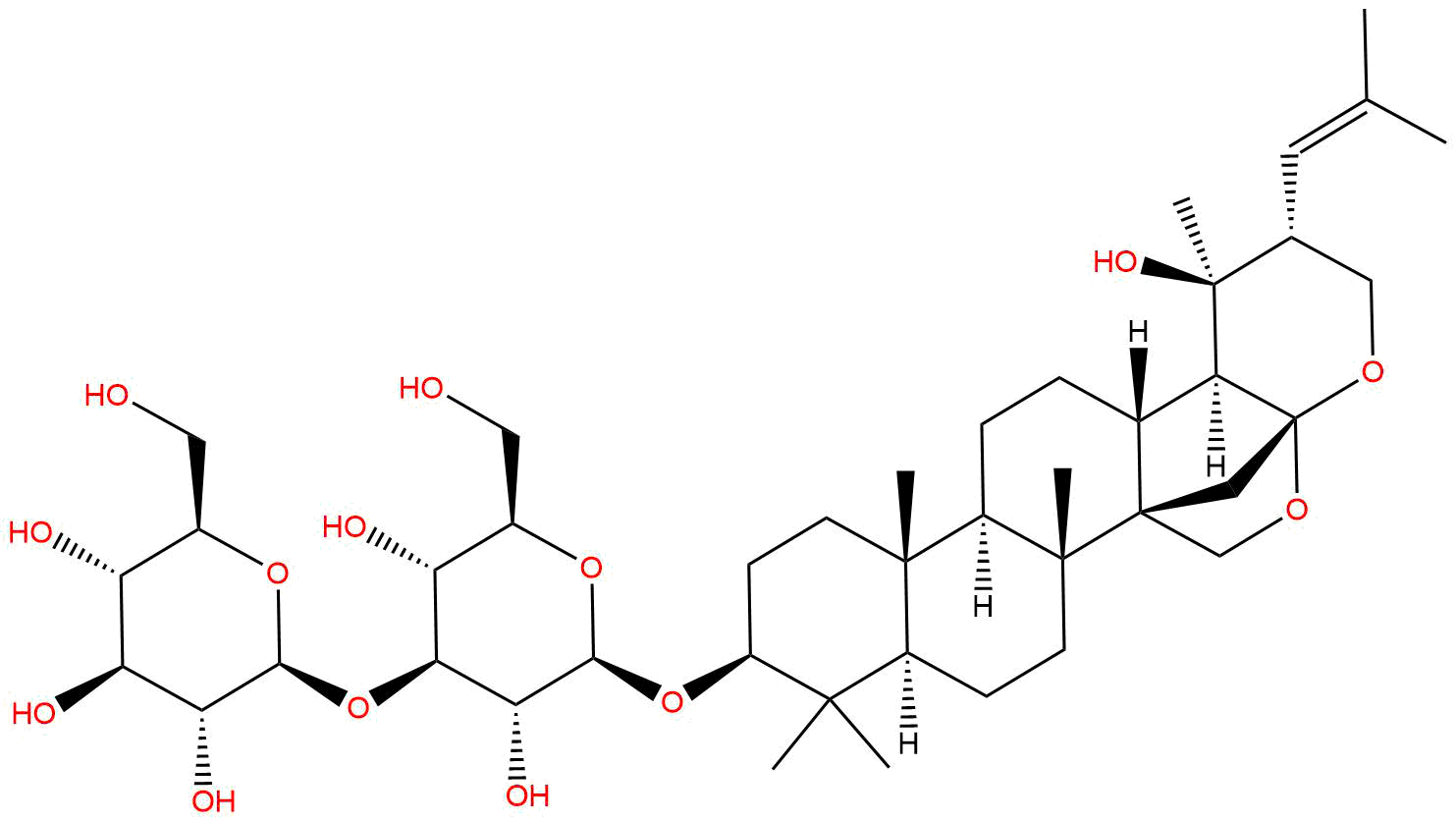


Product name: Bacopaside N2
Synonym name:
Catalogue No.: BP4924
Cas No.: 871706-75-1
Formula: C42H68O14
Mol Weight: 796.992
Botanical Source:
Type of Compound: Triterenoids)
Purity: 95%~99%
Analysis Method: HPLC-DAD or/and HPLC-ELSD
Identification Method: Mass, NMR
Packing: Brown vial or HDPE plastic bottle
Storage: Store in a well closed container, protected from air and light. Put into refrigerate or freeze for long term storage.
Whenever possible, you should prepare and use solutions on the same day. However, if you need to make up stock solutions in advance, we recommend that you store the solution as aliquots in tightly sealed vials at -20℃. Generally, these will be useable for up to two weeks.
The product could be supplied from milligrams to grams
Inquire for bulk scale.
For Reference Standard and R&D, Not for Human Use Directly.
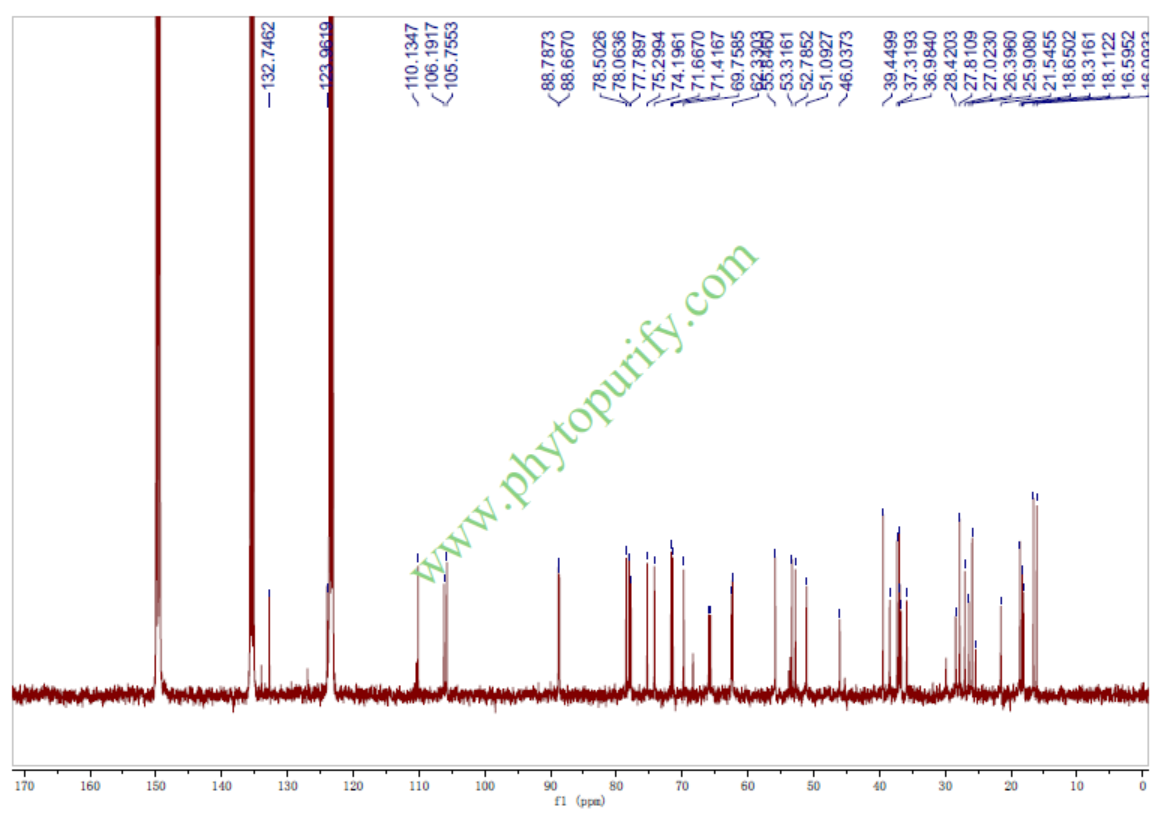
NMR of Bacopaside N2
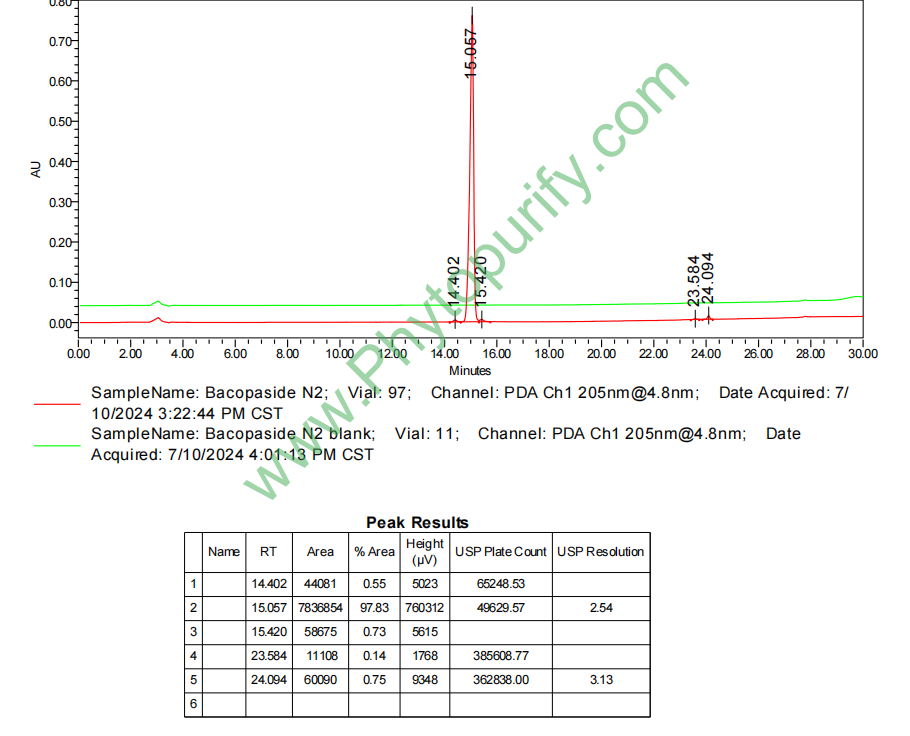
HPLC of Bacopaside N2
Storage conditions:Short-term storage at 2~8℃, long-term storage at -20 ~ -80℃
217.2200
2.5473
2.5475
.0249
.5720
.5932
Low
68.2454
7.5437
No
No
No
No
No
No
0.0
Yes
No
No
No
Cognitive impairment is one of the major health challenges facing modern society, involving various neurological diseases such as Alzheimer's disease, vascular dementia, and mild cognitive impairment. With the acceleration of global population aging, the search for safe and effective cognitive enhancement drugs has become a research hotspot in the field of neuropharmacology. Natural products play an important role in the development of cognitive enhancement drugs due to their structural diversity, multi-target action characteristics, and relatively low toxicity.
Fake purslane(Bacopa monnieri (L.) Wettst. is a medicinal plant used in traditional Ayurvedic medicine to enhance memory and cognitive function, with a history of thousands of years of application. Modern pharmacological research has confirmed that extracts from Portulaca oleracea have significant neuroprotective, cognitive enhancing, and anti anxiety effects. The main active ingredients are saponin compounds, among which the Bacopaside series from Portulaca oleracea is the most extensively studied. Bacopaside N2 (CAS number: 871706-75-1) is a double glycosidic saponin isolated and identified from Bacopa oleracea in recent years. It has a unique chemical structure and significant biological activity.
As a double glycosidic saponin, the molecular structure of Pseudopurslane Saponin N2 contains two sugar units, which endow it with unique physicochemical properties and biological activity. Research has shown that this compound can exert cognitive enhancement effects by regulating multiple signaling pathways, particularly involving key targets such as CREB1, BDNF, GRIN2B, SYP, and SNAP25. These targets play a central role in synaptic plasticity, neurotransmitter release, and memory formation processes. This article will provide a systematic review of the research progress on the compound N2 from the aspects of chemical structure, plant origin, pharmacological activity, mechanism of action, pharmacological evaluation, and clinical application prospects, in order to provide reference for the further development and application of this compound.
Pseudopurslane saponin N2 belongs to the Damane type triterpenoid saponin, and its glycoside is Bacogenin. The sugar chain is composed of two sugar groups. According to existing literature reports, its structural characteristics are: the C-3 position of the glycoside is connected to a β - D-glucopyranosyl group, and the C-20 position is connected to an α - L-arabinopyranosyl group, forming a dual glycosidic structure. This glycosylation pattern significantly affects the water solubility, bioavailability, and pharmacological activity of compounds.
From the perspective of physical and chemical properties, the molecular weight of saponin N2 in Portulaca oleracea is 796.9920 Da, which belongs to the category of natural products with medium molecular weight. Its lipid water partition coefficient (LogP) is 2.5473, indicating that the compound has moderate lipophilicity and is favorable for permeation through biofilm structures. The topological polar surface area (TPSA) is 217.2200 Å ², which is a relatively high value mainly attributed to the presence of multiple hydroxyl and glycosidic bonds in the molecule. High TPSA values are typically associated with poor blood-brain barrier penetration, which is consistent with the assessment of the compound as having "low" blood-brain barrier penetration ability.
Water solubility is one of the key parameters affecting the oral absorption of drugs. The water solubility of pseudo purslane saponin N2 is 0.0249 mg/mL, which belongs to insoluble compounds. This low water solubility may limit its oral bioavailability, but it also suggests that the compound may be absorbed in vivo through active transport or carrier mediated pathways. It is worth noting that saponin compounds usually have surfactant properties and can form micelles in water, which can improve their solubility and absorption characteristics to some extent.
From the perspective of chemical stability analysis, the glycosidic bond of N2 saponins in Portulaca oleracea may undergo hydrolysis under acidic conditions, which poses a challenge to its stability in the gastrointestinal tract. However, saponins from Portulaca oleracea are usually used orally in traditional medicine and exhibit good biological activity, suggesting the possibility of special absorption mechanisms or metabolic pathways. In addition, the hERG inhibition assessment of the compound was negative, indicating a low risk of cardiac toxicity; The Ames test result is 0.0, indicating no significant mutagenicity. These safety features provide favorable conditions for its further development.
The main source of pseudo purslane saponin N2 is from the Scrophulariaceae plant pseudo purslane(Bacopa monnieri (L.) Wettst.), This plant is widely distributed in wetlands, swamps, and rice fields in India, Sri Lanka, southern China, and Southeast Asia. In China, purslane is mainly distributed in provinces such as Guangdong, Guangxi, Fujian, and Yunnan, and often grows as a weed near water. The whole plant can be used as medicine, but the above ground parts (stems and leaves) have the highest content of active ingredients.
The content of saponin compounds in Portulaca oleracea is influenced by various factors, including growth environment, harvest season, plant age, and genetic variation. Research has shown that the total saponin content of wild purslane is usually higher than that of cultivated varieties, while the saponin content is higher in samples harvested in summer. In addition, there are significant differences in saponin composition and content among different geographical sources of Portulaca oleracea, which may be related to soil conditions, climatic factors, and microbial communities.
The extraction methods of saponin N2 from Portulaca oleracea mainly include traditional solvent extraction and modern assisted extraction techniques. Traditional methods usually use ethanol or methanol as extraction solvents, and extract through soaking, reflux, or percolation. The specific operation process is as follows: after crushing the dried whole plant of Portulaca oleracea, extract 2-3 times with 70% -80% ethanol at 60-80 ℃ under reflux, each time for 2-4 hours. Combine the extracts and concentrate under reduced pressure to obtain the crude extract. After defatting with petroleum ether, the crude extract was extracted with n-butanol to obtain a component enriched in saponins.
Modern extraction techniques have significantly improved the efficiency and purity of extracting N2 saponins from Portulaca oleracea. Ultrasonic assisted extraction (UAE) utilizes the cavitation effect to destroy cell walls and promote the dissolution of active ingredients. Extraction can be completed within 30-60 minutes, with an efficiency 2-3 times higher than traditional methods. Microwave assisted extraction (MAE) uses microwave radiation to rapidly vibrate polar molecules, accelerating the mass transfer process and shortening the extraction time to 10-20 minutes. In addition, Enzyme Assisted Extraction (EAE) utilizes cellulases, pectinases, and other enzymes to degrade cell wall polysaccharides, which can increase the release rate of saponins and is particularly suitable for industrial production.
The purification of pseudo purslane saponin N2 is usually achieved by macroporous adsorption resin column chromatography, such as D101, AB-8 or HPD-100 resin, and the initial separation of saponin components is achieved by gradient ethanol elution. Further purification can be achieved using silica gel column chromatography, ODS reverse phase column chromatography, or preparative high-performance liquid chromatography (pre HPLC). In recent years, high-speed countercurrent chromatography (HSCCC) and molecular imprinting techniques have also been applied to the efficient separation of saponins from Portulaca oleracea, which can obtain single compounds with a purity of over 98%.
The most noteworthy pharmacological activity of the saponin N2 from Portulaca oleracea is its cognitive enhancement effect. Multiple in vitro and in vivo studies have confirmed that this compound can significantly improve learning and memory functions. In rodent models, pseudo purslane saponin N2 (5-20 mg/kg, orally administered) can reverse memory impairment induced by scopolamine, diazepam, or ethanol, improve spatial learning ability in Morris water maze tests, and prolong latency in passive avoidance experiments. It is worth noting that its cognitive enhancement effect is dose-dependent, and significant effects can be observed at low doses (5 mg/kg).
In an elderly rat model, long-term administration of pseudo purslane saponin N2 (10 mg/kg/day, for 28 consecutive days) can improve age-related cognitive decline, manifested by a significant increase in new object recognition index and Y maze spontaneous alternation rate. These findings suggest that the saponin N2 from Portulaca oleracea can not only improve acute memory impairment, but may also delay age-related cognitive decline.
Pseudopurslane saponin N2 exhibits significant neuroprotective activity. In the HT-22 hippocampal neuron injury model induced by glutamate, pretreatment with this compound (1-10 μ M) significantly increased cell survival rate, reduced lactate dehydrogenase (LDH) release, and reactive oxygen species (ROS) levels. Its protective mechanism involves inhibiting glutamate induced calcium influx, reducing mitochondrial membrane potential loss, and inhibiting caspase-3 activation.
In the neurotoxic model induced by β - amyloid protein (A β), pseudopurslane saponin N2 (5-20 μ M) can reduce A β aggregation, decrease tau protein hyperphosphorylation, and protect synaptic structural integrity. These findings suggest that the compound may have potential therapeutic value for Alzheimer's disease. In addition, in the ischemia-reperfusion injury model, saponins N2 from Portulaca oleracea can reduce the volume of cerebral infarction and improve neurological function scores. Its protective effect is closely related to antioxidant and anti apoptotic mechanisms.
Pseudopurslane saponin N2 has clear anti-inflammatory and antioxidant activities. In BV-2 microglia stimulated by lipopolysaccharide (LPS), the compound (5-20 μ M) can inhibit the production of tumor necrosis factor - α (TNF - α), interleukin-1 β (IL-1 β), and nitric oxide (NO), while reducing the expression of inducible nitric oxide synthase (iNOS) and cyclooxygenase-2 (COX-2). Its anti-inflammatory mechanism involves inhibiting the activation of nuclear factor kappa B (NF - κ B) and mitogen activated protein kinase (MAPK) signaling pathways.
In terms of antioxidant properties, pseudo purslane saponin N2 can directly scavenge 1,1-diphenyl-2-trinitrophenylhydrazine (DPPH) free radicals, 2,2 '- diazobis (3-ethylbenzothiazole-6-sulfonic acid) (ABTS) free radicals, and superoxide anions, and its antioxidant capacity is comparable to vitamin C. In addition, the compound can upregulate the expression of nuclear factor E2 related factor 2 (Nrf2) and its downstream antioxidant enzymes such as heme oxygenase-1 (HO-1) and quinone oxidoreductase 1 (NQO1), enhancing the intracellular antioxidant defense system.
In addition to its cognitive enhancement effect, the saponin N2 from Portulaca oleracea also exhibits antidepressant and anti anxiety activities. In a chronic unpredictable mild stress (CUMS) - induced depression mouse model, the compound (10-20 mg/kg, orally administered) significantly shortened immobility time in forced swimming and tail suspension experiments, increased sucrose preference, and improved depression like behavior. Its antidepressant mechanism may be related to regulating the hypothalamic pituitary adrenal (HPA) axis function, increasing the expression of hippocampal brain-derived neurotrophic factor (BDNF), and promoting hippocampal neurogenesis.
In the anti anxiety experiment, pseudo purslane saponin N2 (5-10 mg/kg) can increase the number and time of open arm entry in the elevated cross maze experiment, reduce the latency period in the light dark box experiment, and exhibit similar anti anxiety effects as diazepam, but without significant sedative and muscle relaxation side effects.
The cognitive enhancement effect of saponins N2 from Portulaca oleracea involves the synergistic regulation of multiple molecular targets and signaling pathways. According to existing research, its core mechanism of action can be summarized as follows:
Cyclic adenosine response element binding protein 1 (CREB1) is a key transcription factor for learning and memory formation. Pseudopurslane saponin N2 can promote the phosphorylation and activation of CREB1 by activating multiple upstream kinases. Research has shown that this compound can increase cAMP levels in hippocampal neurons, activate protein kinase A (PKA), and subsequently phosphorylate the Ser133 site of CREB1. In addition, the compound can further enhance the transcriptional activity of CREB1 by activating the calcium/calmodulin dependent protein kinase II (CaMKII) and extracellular signal regulated kinase (ERK) pathways.
Activated CREB1 binds to the cAMP response element (CRE) in the promoter region of the target gene, initiating downstream gene transcription including BDNF, c-Fos, and premature aging hormone 1 (PSEN1). These gene products play important roles in synaptic plasticity, neurogenesis, and memory consolidation processes. It is worth noting that the activation effect of pseudo purslane saponin N2 on CREB1 is particularly significant in the hippocampal CA1 region and dentate gyrus, which is closely related to the formation of spatial memory.
Brain derived neurotrophic factor (BDNF) is the core mediator of the cognitive enhancement effect of saponins N2 from Portulaca oleracea. This compound can significantly upregulate the mRNA and protein expression levels of BDNF in the hippocampus and prefrontal cortex. After binding to its receptor TrkB, BDNF activates downstream phosphatidylinositol 3-kinase/protein kinase B (PI3K/Akt) and Ras/ERK signaling pathways, promoting synaptic protein synthesis, dendritic spine formation, and synaptic transmission efficiency.
Research has shown that the induction of BDNF by saponins N2 from Portulaca oleracea depends on the activation of CREB1. The use of CREB1 inhibitors or BDNF neutralizing antibodies can significantly weaken the cognitive enhancement effect of this compound, confirming that BDNF is a key downstream effector molecule. In addition, the compound can increase the ratio of mature form (mBDNF) to precursor form (proBDNF) of BDNF, promoting the processing and secretion of BDNF.
GRIN2B (N-methyl-D-aspartate receptor 2B subunit) is a key regulatory factor for glutamatergic synaptic transmission and synaptic plasticity. Pseudopurslane saponin N2 can upregulate the expression of GRIN2B in hippocampal neurons, enhance NMDA receptor function, and promote the induction and maintenance of long-term potentiation (LTP). LTP is the cellular foundation of learning and memory, and its enhancement is closely related to the improvement of cognitive function.
The regulatory effect of this compound on GRIN2B may be achieved through two mechanisms: one is to directly increase the transcription of GRIN2B gene, and the other is to enhance its transcriptional activity by promoting the binding of CREB1 to the GRIN2B promoter region. In addition, the saponin N2 from Portulaca oleracea can regulate the synaptic localization of AMPA receptors, increase the phosphorylation level of GluA1 subunit, and further enhance synaptic transmission efficiency.
Synaptic vesicle protein (SYP) and synaptosome associated protein 25 (SNAP25) are key regulatory proteins for the release of neurotransmitters from presynaptic terminals. Pseudopurslane saponin N2 can upregulate the expression of SYP and SNAP25 in the hippocampus, enhance synaptic vesicle anchoring, fusion, and neurotransmitter release processes. Research has shown that the release of glutamate and acetylcholine is significantly increased in rat hippocampal slices treated with this compound, which is closely related to its cognitive enhancement effect.
SYP, as a calcium binding protein of synaptic vesicles, participates in the exocytosis process of vesicles; SNAP25 is the core component of the SNARE complex, mediating the fusion of vesicles and presynaptic membranes. The regulatory effect of pseudo purslane saponin N2 on these two proteins may be achieved by activating the PKA/CREB and CaMKII signaling pathways, ultimately enhancing synaptic transmission efficiency and neural plasticity.
The cognitive enhancement effect of saponin N2 from Portulaca oleracea is not mediated by a single target, but is achieved through the synergistic regulation of multiple targets such as CREB1, BDNF, GRIN2B, SYP, and SNAP25. This multi-target mode of action has the following advantages: firstly, by simultaneously regulating presynaptic (SYP, SNAP25) and postsynaptic (GRIN2B) mechanisms, it comprehensively enhances synaptic transmission efficiency; Secondly, by activating the CREB1-BDNF signaling axis, it promotes long-term synaptic plasticity and neuroprotection; Finally, multi-target action can reduce the risk of side effects caused by excessive activation of a single target.
It is worth noting that the regulatory effect of pseudo purslane saponin N2 on the above targets is brain region specific, particularly significant in cognitive related brain regions such as the hippocampus, prefrontal cortex, and amygdala. This selective distribution may be related to the specificity of its cognitive enhancement and anti anxiety effects.
The pharmacological parameters of pseudo purslane saponin N2 show its potential as a candidate drug, but there are also some challenges. The molecular weight (796.9920 Da) is slightly higher than the threshold of traditional small molecule drugs (500 Da), but it conforms to the characteristics of natural product drugs. The LogP value (2.5473) is within the ideal range (1-3), indicating that it has moderate lipophilicity, which is beneficial for oral absorption and membrane permeability. The high TPSA value (217.2200 Å ²) suggests that it may pass through the biofilm through an active transport mechanism.
The water solubility (0.0249 mg/mL) is the main limiting factor for the pharmacological properties of this compound. According to the Biopharmaceutical Classification System (BCS), Pseudopurslane Saponin N2 may belong to Class II (low solubility, high permeability) or Class IV (low solubility, low permeability) drugs. To improve its water solubility, techniques such as solid dispersion, liposomes, cyclodextrin inclusion complexes, or nanocrystals can be considered for formulation improvement.
In terms of safety evaluation, the hERG inhibition assessment was negative, indicating a low risk of the compound causing QT interval prolongation in the heart; The Ames test result is 0.0, indicating no significant genotoxicity. These security features provide favorable conditions for its further development.
The pharmacokinetic studies on the saponin N2 in Portulaca oleracea are relatively limited, but research based on similar saponin compounds can provide reference. After oral administration, the absorption of saponin compounds in the gastrointestinal tract is usually poor, and their bioavailability is low (usually less than 5%). This is mainly attributed to its high molecular weight, poor water solubility, and the efflux of P-glycoprotein (P-gp). However, the oral efficacy of extracts from Portulaca oleracea in traditional medicine suggests that there may be a specific absorption mechanism.
Research has shown that saponin compounds can be absorbed through the intestinal lymphatic system, bypassing the first pass effect of the liver and improving bioavailability. In addition, gut microbiota can produce more active metabolites in the metabolism of saponins. Pseudopurslane saponin N2 may be hydrolyzed into secondary glycosides or aglycones in the intestine, and these metabolites may have higher biological activity and bioavailability.
In terms of distribution, pseudo purslane saponin N2 has been evaluated as having "low" blood-brain barrier penetration ability, which is related to high TPSA values and high molecular weight. However, the compound can still be detected in the brain, suggesting the possibility of carrier mediated transport mechanisms or entry into the central nervous system through damaged blood-brain barriers (such as in neuroinflammatory states). In addition, its metabolites may have better central nervous system distribution characteristics.
In terms of metabolic pathways, saponin compounds mainly undergo deglycosylation, oxidation, and glucuronic acid binding reactions. The liver and gut microbiota are its main metabolic sites. The metabolites of saponin N2 in Portulaca oleracea may include deglycosylated products (such as sapogenin) and oxidized products, which may have different pharmacological activity profiles.
The following formulation strategies can be adopted to address the challenges of the pharmacological properties of pseudo purslane saponin N2: firstly, using self microemulsifying drug delivery systems (SMEDS) or lipid based formulations to improve its solubility and oral absorption; Secondly, prepare phospholipid complexes or liposomes to improve their membrane permeability and bioavailability; Thirdly, using nanotechnology (such as nanocrystals and nanoemulsions) to increase their solubility and dissolution rate; Fourth, develop prodrug strategies by introducing cleavable hydrophilic groups to improve water solubility and convert them into active forms in vivo.
In addition, the combination therapy strategy can also improve the therapeutic effect of saponin N2 in Portulaca oleracea. For example, combination with P-gp inhibitors (such as verapamil) can increase their brain concentration; Combined use with antioxidants (such as vitamin E) can enhance their neuroprotective effects; Combined use with acetylcholinesterase inhibitors (such as donepezil) may produce a synergistic cognitive enhancement effect.
Pseudopurslane saponin N2 has broad application prospects in the treatment of cognitive impairment diseases. Based on its multi-target mechanism of action, this compound may be applicable to various types of cognitive disorders, including Alzheimer's disease, vascular dementia, Parkinson's disease dementia, and mild cognitive impairment. Compared with traditional acetylcholinesterase inhibitors such as donepezil and Kabardine, the saponin N2 from Portulaca oleracea has the following advantages: firstly, it promotes neuroplasticity by regulating the CREB1-BDNF signaling axis, which may have a disease modifying effect; Secondly, the multi-target action mode can simultaneously improve cognitive function, emotional and behavioral symptoms; Thirdly, its good safety features make it suitable for long-term use.
However, the low blood-brain barrier penetration of this compound is the main obstacle to its clinical application. Future research should focus on developing delivery systems that can increase drug concentration in the brain, such as nasal delivery, brain targeted nanocarriers, or prodrug design. In addition, combination therapy strategies (such as combining with blood-brain barrier openers or transporter inducers) may also improve the distribution of the central nervous system.
The neuroprotective, anti-inflammatory, and antioxidant activities of saponin N2 from Portulaca oleracea make it a candidate drug for the prevention of neurodegenerative diseases. Epidemiological studies have shown that long-term use of purslane extract is associated with a reduced risk of cognitive decline. As its main active ingredient, the saponin N2 from Portulaca oleracea may delay the pathological process of Alzheimer's disease by inhibiting A β aggregation, reducing tau protein phosphorylation, and protecting synaptic integrity.
In prevention strategies, pseudo purslane saponin N2 can be used as a dietary supplement or functional food ingredient. Its safety features and traditional usage history support its feasibility for long-term use. However, large-scale and long-term human clinical trials are needed to verify its preventive effect and optimal dosage.
In addition to disease treatment, the cognitive enhancement effect of pseudo purslane saponin N2 in healthy populations is also worth paying attention to. Research has shown that this compound can improve memory, attention, and executive function in healthy adults. In the context of healthy aging, the saponin N2 from Portulaca oleracea may help maintain cognitive function and delay age-related cognitive decline.
However, the use of cognitive enhancers by healthy individuals involves ethical and safety issues. Future research needs to clarify the safety, optimal dosage, and applicable population for its long-term use. In addition, it should be avoided from being abused as a "smart drug" and instead positioned as a nutritional supplement that promotes healthy aging.
Future research on the saponin N2 in Portulaca oleracea should focus on the following directions: firstly, conducting systematic pharmacokinetic studies to clarify its absorption, distribution, metabolism, and excretion characteristics, especially its distribution and metabolic pathways in the brain; Secondly, by utilizing structural biology and computer-aided drug design techniques, the interaction mode between it and target proteins can be elucidated, providing a basis for structural optimization; Thirdly, develop new formulation technologies to improve their oral bioavailability and brain targeting; Fourthly, conduct multicenter, randomized, double-blind, placebo-controlled clinical trials to verify their clinical efficacy and safety; Fifth, explore its synergistic effect with other cognitive enhancers and develop compound formulations.
In addition, the chemical modification and structural optimization of saponins N2 from Portulaca oleracea are also important research directions. Derivatives with higher activity, better pharmacokinetic properties, and lower toxicity may be obtained through glycosylation modification, glycoside modification, or introduction of new functional groups. These studies will provide an important foundation for the development of new cognitive enhancement drugs.
As a natural disaccharide saponin, the saponin N2 from Portulaca oleracea has shown significant pharmacological activity and potential for development in the fields of cognitive enhancement and neuroprotection. It plays a role in improving synaptic plasticity, promoting neurotransmitter release, and enhancing memory formation by regulating multi-target signaling networks such as CREB1, BDNF, GRIN2B, SYP, and SNAP25. This compound has moderate lipophilicity, good safety characteristics, and clear pharmacological mechanisms, which meet the basic requirements of modern drug development.
However, the pharmacological properties of pseudo purslane saponin N2 still face challenges, mainly including low water solubility, low oral bioavailability, and low blood-brain barrier penetration. Future research should focus on formulation optimization, structural modification, and delivery system development to overcome these limitations. With the continuous development of neuropharmacology and medicinal chemistry, pseudo purslane saponin N2 is expected to become a new candidate drug for treating cognitive impairment and promoting healthy aging.
From a broader perspective, the study of saponin N2 in Portulaca oleracea reflects the organic combination of traditional medical wisdom and modern drug development. The thousands of years of experience in using purslane in Ayurvedic medicine provide valuable clues for modern research, while modern scientific technology reveals the mechanism of action and pharmacological basis of its active ingredients. This fusion of tradition and modernity provides a successful example for discovering new cognitive enhancing drugs from natural products, and also provides important references for the modernization research of other traditional medicinal plants.
In summary, the saponin N2 from Portulaca oleracea is a natural product with significant research value and development prospects, and its potential for application in cognitive enhancement deserves further exploration. With the continuous deepening of related research and technological progress, the saponin N2 from Portulaca oleracea is expected to bring new treatment options for patients with cognitive impairment and healthy aging populations.
