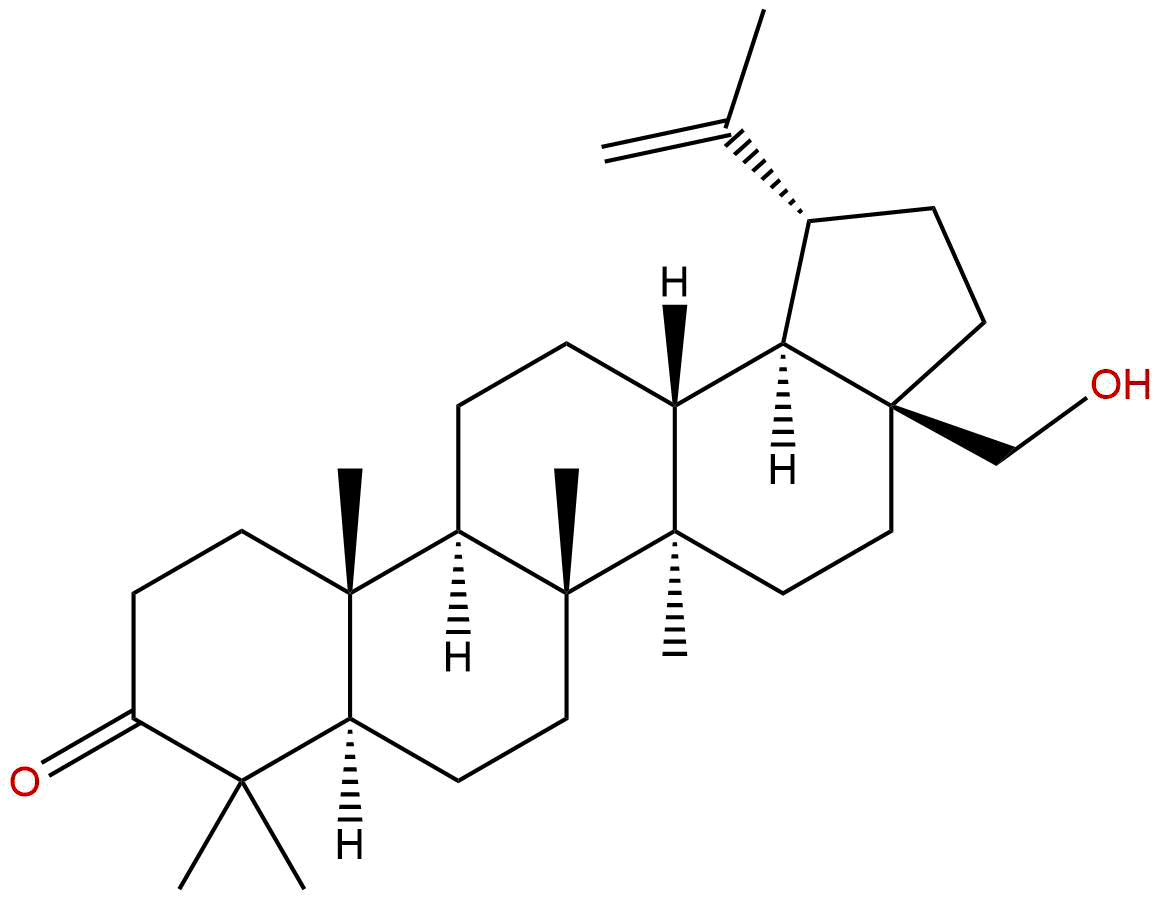
Introduction/Overview
With the continuous development of modern pharmaceutical science, natural products have shown unique advantages as an important source of new drug discovery, especially in the field of metabolic diseases. Triterpenoids have become a hot topic in pharmacological research due to their structural diversity and wide range of biological activities. Betulone, as a typical triterpenoid metabolite, has attracted widespread attention in recent years in the research of cholesterol lowering and related metabolic diseases. Its unique chemical structure and multi-target regulatory ability make it show significant potential in regulating cholesterol metabolism, lipid homeostasis, and related signaling pathways. This article provides a systematic review of the chemical properties, sources, pharmacological activities, mechanisms of action, and pharmacological evaluation of Betulone, aiming to provide a theoretical basis and research direction for its clinical translation and new drug development.
Chemical structure and physicochemical properties
Betulone (CAS number: 7020-34-0) belongs to the triterpenoid class with a molecular weight of 440.7120. Its molecular structure is based on a typical five ring skeleton, with high hydrophobicity and a LogP value of up to 6.6739, indicating its extremely strong lipid solubility. The extremely low water solubility (0.0005 mg/mL) limits its solubility in aqueous phase, but it is beneficial for penetrating lipid membranes, especially the blood-brain barrier (BBB), which has high penetration ability. The extremely low polar surface area (TPSA of 37.3 Å ²) further supports its excellent membrane permeability. The structural features of Betulone include multiple methyl substituents and carbonyl functional groups, which provide potential binding sites for its interaction with biological targets. It is worth noting that Betulone has no hERG channel inhibitory activity and the Ames mutagenicity test result is negative, indicating its high safety and good potential for drug development.
Plant sources and extraction methods
Betulone was initially isolated from Betuline plants, and current research indicates that it mainly originates from hydride derivatives of lupinus spp. As a leguminous plant, lupine contains abundant triterpenoids and their derivatives. The biosynthetic pathway of Betulone involves the cyclization reaction catalyzed by triterpenoid synthase and subsequent oxidative modification. During the extraction process, organic solvents such as ethanol, methanol, or ethyl acetate are usually used to leach the dried plant powder, followed by separation and purification through silica gel column chromatography or high-performance liquid chromatography (HPLC). In recent years, supercritical CO ₂ extraction technology has gradually been applied to the extraction of Betulone due to its environmentally friendly and efficient characteristics, significantly improving the extraction efficiency and purity. Purified Betulone usually exists in the form of white or light yellow crystals, which facilitates subsequent structural identification and pharmacological research.
Pharmacological activity research
The pharmacological activity of Betulone mainly focuses on the therapeutic potential of regulating cholesterol metabolism and related lipid metabolism disorders. Numerous in vitro and in vivo experiments have shown that Betulone has significant cholesterol lowering effects, regulating the expression and activity of multiple key targets, thereby promoting cholesterol metabolism and clearance.
-
Cholesterol lowering effect
Betulone promotes cholesterol transport between high-density lipoprotein (HDL) and low-density lipoprotein (LDL) by regulating the activity of cholesterol transporter protein CETP (cholesterol ester transfer protein), improving plasma lipid profile. Experiments have shown that Betulone can inhibit the activity of HMGCR (3-hydroxy-3-methylglutaryl-CoA reductase) and reduce endogenous synthesis of cholesterol. At the same time, Betulone upregulates LDLR (low-density lipoprotein receptor) expression, promotes liver uptake and clearance of LDL, and reduces plasma LDL levels. In addition, Betulone has a regulatory effect on the expression of APOB (apolipoprotein B), affecting the assembly and secretion of lipoproteins.
-
Lipid metabolism regulation
Betulone activates PPARA (peroxisome proliferator activated receptor alpha), promotes fatty acid beta oxidation, and improves lipid metabolism disorders. By regulating CYP7A1 (cholesterol 7 α - hydroxylase), Betulone promotes bile acid synthesis and enhances cholesterol metabolism and excretion.
-
Anti inflammatory and antioxidant effects
Although Betulone's main research focuses on metabolic regulation, its potential role in inflammatory response and oxidative stress is gradually being discovered. Partial studies have shown that Betulone can inhibit the expression of pro-inflammatory cytokines, alleviate inflammation mediated tissue damage, and indirectly promote the recovery of metabolic homeostasis.
Mechanism of action and molecular targets
Betulone achieves its pharmacological effects through multi-target and multi pathway synergistic effects, with the main targets including:
-
CETP
CETP mediates the transport of cholesterol esters between different lipoproteins, and Betulone improves blood lipid abnormalities by inhibiting CETP activity, increasing HDL cholesterol levels.
-
HMGCR
As the rate limiting enzyme in cholesterol biosynthesis, HMGCR is a classic target for cholesterol lowering drugs such as statins. Betulone reduces cholesterol synthesis by directly or indirectly inhibiting HMGCR.
-
LDLR
LDLR mediates hepatic uptake of plasma LDL, while Betulone upregulates LDLR expression and promotes cholesterol clearance.
-
APOB
APOB is the main protein component of VLDL and LDL, and Betulone regulates APOB expression, affecting the metabolism and transport of lipoproteins.
-
PCSK9
PCSK9 regulates cholesterol metabolism by promoting LDLR degradation, while Betulone inhibits PCSK9 expression or function, indirectly increasing LDLR levels.
-
CYP7A1
As a key enzyme for converting cholesterol into bile acids, the activation of CYP7A1 contributes to the metabolism and excretion of cholesterol, while Betulone promotes CYP7A1 expression and enhances bile acid synthesis.
-
PPARA
PPARA regulates fatty acid metabolism and inflammatory response, while Betulone activates PPARA, promoting fatty acid oxidation and energy metabolism.
Through the above multi-target coordinated regulation, Betulone can effectively improve cholesterol metabolism disorder, reduce blood lipid level, and reduce the risk of metabolic diseases such as atherosclerosis.
Evaluation of drug properties and pharmacokinetics
The pharmacological evaluation of Betulone shows that it has certain advantages and challenges:
-
Fat solubility and membrane permeability
High LogP value (6.6739) and low TPSA (37.3 Å ²) make Betulone easy to penetrate cell membranes and blood-brain barriers, indicating its potential application value in central nervous system related diseases.
-
Water solubility limitation
The extremely low water solubility (0.0005 mg/mL) limits its oral bioavailability and requires formulation improvements (such as nanocarriers, liposomes, etc.) to enhance solubility and absorption efficiency.
-
safety
Lack of hERG channel inhibitory activity reduces the risk of cardiac toxicity; The Ames test is negative, indicating no significant mutagenicity and good safety.
-
Pharmacokinetic characteristics
At present, there is limited systematic pharmacokinetic data on Betulone. Preliminary in vivo studies have shown that it is widely distributed, especially at high concentrations in liver and brain tissues. Metabolic pathways may involve liver oxidation and binding reactions. Further pharmacokinetic and toxicological studies are needed in the future to clarify its metabolic stability and excretion pathways.
Clinical application prospects and prospects
Betulone, as a natural triterpenoid compound that regulates cholesterol metabolism with multiple targets, exhibits excellent pharmacological activity and safety, and has broad clinical application prospects. Its potential in lowering cholesterol, preventing and treating atherosclerosis, nonalcoholic fatty liver disease (NAFLD), metabolic syndrome and other diseases deserves further exploration.
Future research directions include:
-
Formulation optimization
Addressing the issue of poor water solubility, improving oral bioavailability and in vivo stability, and developing efficient delivery systems.
-
Pharmacokinetic and Toxicological Studies
Systematically evaluate the absorption, distribution, metabolism, excretion (ADME) characteristics and long-term safety of Betulone.
-
In depth analysis of multi-target mechanism
Using modern molecular biology and omics techniques, elucidate the detailed mechanism by which Betulone regulates cholesterol metabolism and related signaling pathways.
-
Preclinical and clinical trials
Evaluate its efficacy and safety in animal models, gradually advance to the clinical trial stage, and verify its lipid-lowering and metabolic disease treatment effects.
-
Combination therapy strategy
Explore the synergistic effect of Betulone with existing lipid-lowering drugs such as statins and PCSK9 inhibitors, and optimize treatment plans.
Conclusion
Betulone, as a natural triterpenoid metabolite derived from lupine beans, exhibits significant potential for cholesterol reduction and lipid metabolism regulation through its unique multi-target mechanism of regulating cholesterol metabolism. Its good safety and blood-brain barrier penetration ability provide strong support for the development of new metabolic disease treatment drugs. Despite challenges such as poor water solubility in drug development, with the advancement of formulation technology and pharmacokinetic research, Betulone is expected to become an important candidate drug for future lipid-lowering and metabolic disease treatment. The pharmacological mechanism research and clinical validation of future systems will be the key to promoting their clinical applications. The multi-target properties of natural products provide new ideas for the treatment of complex metabolic diseases, and the in-depth development of Betulone will enrich the theory and practice of natural product pharmacology, contributing new strength to human health.