Introduction/Overview
Natural products, as an important source of drug discovery, play an irreplaceable role in the long history of human fight against diseases. From the classic analgesic morphine to the anti-cancer drug paclitaxel, the complex chemical structures in nature provide endless inspiration for drug development. In the field of antiviral drugs, especially for the treatment of hepatitis C virus (HCV), natural products also show great potential. HCV infection is a global public health issue that can lead to chronic hepatitis, cirrhosis, and hepatocellular carcinoma. Although the emergence of Direct Acting Antivirals (DAAs) has greatly revolutionized the treatment landscape of HCV, achieving extremely high cure rates, the emergence of viral resistance, high treatment costs, and some patients' intolerance to existing therapies still prompt scientists to continue exploring anti HCV candidate molecules with new mechanisms of action.
In this context, a phenanthrene compound called dehydrojuncusol has attracted widespread attention from researchers. Dehydroalkanol is a natural product isolated from Juncaceae plants, and its chemical structure belongs to 9,10-dihydrophenanthrene derivatives. Preliminary pharmacological studies have shown that dehydrocoumarin is an effective HCV virus inhibitor, unique in that it directly targets the non structural protein 5A (NS5A) of the hepatitis C virus. NS5A is a key component of the HCV replication complex, playing a central role in viral RNA replication and assembly. Of particular importance is that dehydroartemisinin is not only effective against wild-type HCV, but also inhibits RNA replication of virus replicons carrying resistance mutations against existing NS5A inhibitors (such as dacatavir, letipivir, etc.). This characteristic makes it a potential lead compound for overcoming DAAs resistance, with important research value and development prospects.
In addition, preliminary studies suggest that dehydroquercetin may have antibacterial activity, with potential targets covering multiple key pathways such as bacterial DNA replication (GYRA, GYPB), cell division (FTSZ), fatty acid synthesis (FABI), folate metabolism (DHFR), and fungal resistance related proteins (MECA, PENA, ERG11, CYP51A1, CDR1). This multi-target characteristic, although still in the preliminary exploration stage, provides imaginative space for its application in the field of anti infection. This article will provide a systematic review of the natural product dehydroxylenol from multiple dimensions, including chemical structure, plant origin, pharmacological activity, mechanism of action, medicinal properties, and clinical application prospects. The aim is to provide comprehensive scientific references for the in-depth research and development of this compound.
Chemical structure and physicochemical properties
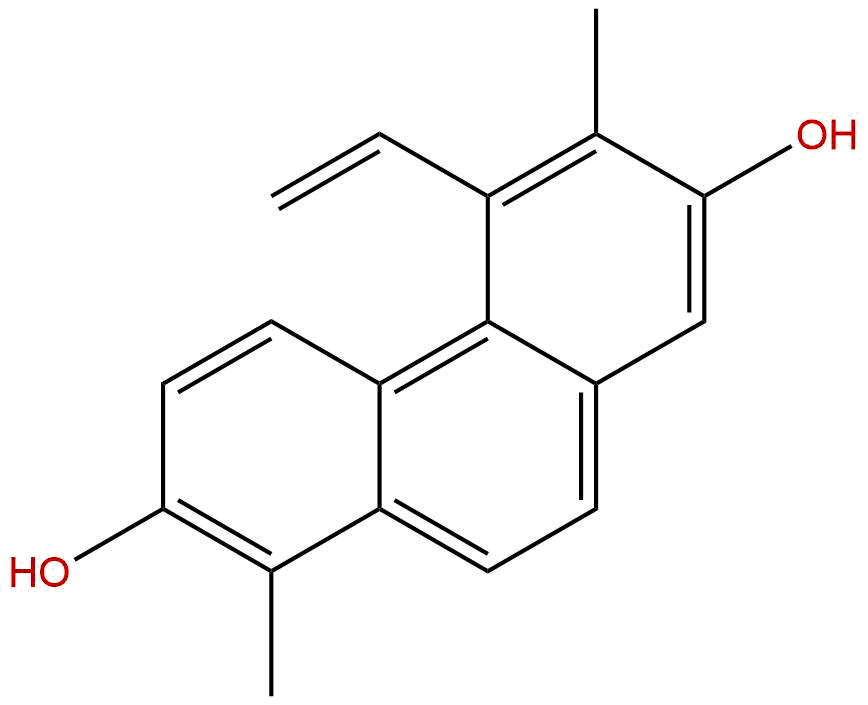
The chemical structure of dehydrojuncusol belongs to the class of phenanthrene compounds, specifically, it is a 9,10-dihydrophenanthrene derivative. Its core skeleton is composed of three benzene rings (A, B, C rings) fused together, with the 9th and 10th positions of the B ring being saturated bonds (i.e. in a hydrogenated state), hence the name "dehydrogenated lampweed phenol". The name may be derived from its structural association with Juncusol, a more common dimeric phenanthrene compound in the genus Juncusol. The molecular formula of dehydroxylenol is C18H16O2, with a molecular weight of 264.3240 g/mol. Its structure usually contains one or more phenolic hydroxyl (- OH) and methyl (- CH3) substituents, which are crucial for its biological activity and physicochemical properties. Accurate structural analysis typically relies on modern analytical techniques such as nuclear magnetic resonance spectroscopy (NMR), high-resolution mass spectrometry (HRMS), and X-ray single crystal diffraction.
From the perspective of physical and chemical properties, dehydrogenated vanillin exhibits typical hydrophobic small molecule characteristics. Its oil-water partition coefficient (LogP) is 4.4554, indicating that the compound has high lipid solubility and is easy to penetrate biofilms. This characteristic is consistent with its "high" penetration ability demonstrated in blood-brain barrier (BBB) permeability assessment, suggesting that the compound may have exposure potential to the central nervous system (CNS), which is both an opportunity and a challenge in antiviral drug development. The opportunity lies in the fact that if HCV infection is accompanied by central nervous system complications, high BBB penetration may bring therapeutic advantages; The challenge lies in the fact that high BBB penetration may increase the risk of central neurotoxicity.
The topological polar surface area (TPSA) is 40.4600 Å ², which is relatively low and consistent with the typical characteristics of good oral absorption and cell membrane penetration (generally considered TPSA<140 Å ²). However, its water solubility is extremely poor, only 0.0069 mg/mL, which constitutes a significant bottleneck in its drug development. Low water solubility can seriously affect the oral bioavailability, in vivo distribution, and formulation development of drugs. Therefore, future drug chemical modification or formulation technologies (such as nanocrystals, liposomes, cyclodextrin inclusion complexes, etc.) must focus on addressing their water solubility issues.
In terms of safety related parameters, the predicted result of hERG inhibition is' no ', which is a positive signal indicating a lower potential risk of cardiac toxicity (especially QT interval prolongation risk) associated with dehydroquercetin. The Ames test result is 1.2, and it is generally believed that when the Ames test value is less than 2.0, the risk of mutagenicity is low. This suggests that the compound may have good safety in terms of genotoxicity. Overall, dehydroquercetin has some favorable physicochemical properties for oral administration, such as suitable lipid solubility and low hERG risk, but its extremely low water solubility is a key issue that urgently needs to be addressed.
Plant sources and extraction methods
The main source of dehydrogenated cordycepin is Juncaceae, a genus of cordycepin in the family Juncaceae(Juncus)Plants. There are over 300 species of plants in the genus Lampweed worldwide, widely distributed in temperate and cold regions, and commonly found in humid environments such as wetlands and swamps. In China, common types include lampshade(Juncus effusus L.)、 Wild lantern heart grass(Juncus setchuensis Buchen et al., among which the dried stem marrow of Lampherb is a traditional Chinese medicine called "Lampherb", which has the effects of clearing heart fire and promoting urination. It is commonly used to treat symptoms such as restlessness, insomnia, mouth and tongue sores, and difficulty urinating. Modern plant chemistry research has shown that plants of the Lampherb genus are rich in various chemical components such as phenanthrene, dihydrophenanthrene, triterpenes, flavonoids, phenolic acids, etc. Among them, phenanthrene and dihydrophenanthrene compounds are their most characteristic active ingredients and the main material basis for pharmacological activities such as antiviral, antibacterial, and anti-tumor.
The content of dehydroxylenol in plants is usually low, and its extraction, separation, and purification require the use of modern chromatographic techniques. The typical extraction process is as follows:
- Ingredient Preparation Collect the whole plant or specific parts (such as stem marrow) of the Lampplant genus, dry and crush them for later use.
- Rough extraction Using organic solvents (such as methanol, ethanol, or their aqueous solutions) for cold soaking, percolation, or reflux extraction of plant powders. Due to the strong lipophilicity of dehydrogenated cordyceps, the extraction efficiency of high concentration ethanol (such as 95% ethanol) is usually higher. The extract was concentrated under reduced pressure to obtain the total extract.
- Liquid-liquid extraction Disperse the total extract in water and extract it sequentially with solvents of different polarities such as petroleum ether, ethyl acetate, n-butanol, etc. Due to its equipolarity, dehydrogenated cordycepin is usually enriched in the ethyl acetate extraction layer or n-butanol extraction layer.
- Column chromatography separation Systematic column chromatography separation of active extraction sites. Common stationary phases include silica gel, reverse phase silica gel (C18), Sephadex LH-20, etc. Usually, gradient elution is used, such as using petroleum ether ethyl acetate or methanol water systems. Monitor the fractions by thin layer chromatography (TLC) or high performance liquid chromatography (HPLC), and combine similar components.
- purification Further purification of the fraction containing the target compound can be achieved using preparative HPLC, recrystallization, and other methods to ultimately obtain high-purity dehydrogenated vanillin monomer.
It is worth noting that due to the limited content and complex structure of dehydrocoumarin in plants, total synthesis is also a potential pathway to obtain this compound. However, currently the separation methods reported in literature still rely mainly on natural extraction. In order to meet the needs of further pharmacological research and potential industrialization, developing efficient and environmentally friendly extraction processes, or exploring biosynthetic and chemical synthesis routes, will be an important direction for the future.
Pharmacological activity research
Anti hepatitis C virus (HCV) activity
The most notable pharmacological activity of dehydroxylenol is its inhibitory effect on hepatitis C virus. Research has confirmed that the compound can effectively inhibit HCV infection. In experiments at the cellular level (such as the Huh-7.5 cell line), the half effective concentration (EC50) of dehydroxylenol for HCV genotype 2a (such as JFH-1 strain) is 1.35 μ M. This activity level is moderate to strong in natural products and has the potential for further optimization.
More importantly, the target of dehydroartemisinin has been identified as the non structural protein 5A (NS5A) of HCV. NS5A is a multifunctional protein with no known enzymatic activity, but plays a central regulatory role in viral RNA replication and viral particle assembly by interacting with host factors and other viral proteins. The existing NS5A inhibitors (such as dacatavir, letipivir, vipatavir, etc.) are the cornerstone of DAAs combination therapy, but amino acid mutations in specific regions of the viral NS5A protein (such as N-terminal domain I) (such as L31V, Y93H, etc.) can lead to high resistance to these drugs. The unique value of dehydroartemisinin is that it not only inhibits wild-type HCV replicons, but also effectively suppresses RNA replication of replicons carrying these common NS5A resistant mutations. This suggests that its binding mode or site of action with NS5A protein may be different from existing DAAs, providing a new chemical entity and strategy for overcoming clinical drug resistance.
Antibacterial activity
In addition to antiviral activity, preliminary studies also suggest that dehydroquercetin may have broad-spectrum antibacterial potential. Its potential targets cover multiple key life processes of bacteria and fungi:
The potential inhibitory effect of dehydroxylenol on these targets suggests that it may exert antibacterial effects by interfering with bacterial DNA replication, cell division, fatty acid synthesis, folate metabolism, as well as fungal cell membrane synthesis and drug resistance mechanisms. However, it should be emphasized that currently these target information mostly come from computer simulations (such as molecular docking) or preliminary enzyme activity tests, and there is still a lack of systematic and direct antibacterial activity validation data (such as minimum inhibitory concentration MIC determination). Therefore, the exact spectrum and intensity of its antibacterial activity still need to be experimentally confirmed.
Mechanism of action and molecular targets
The research on the mechanism of action of dehydroxylenol mainly focuses on the field of anti HCV, and its core molecular target is NS5A protein. However, the precise molecular mechanism of its interaction with NS5A has not been fully elucidated, but based on existing research, the following hypotheses can be proposed:
-
Direct binding and conformational interference Dehydroquercetin is likely to directly bind to specific structural domains of NS5A protein. The NS5A protein contains an N-terminal amphiphilic alpha helix (domain I) that binds to the cell membrane and participates in dimer formation and RNA binding. Existing DAAs (such as dacatavir) mainly bind to the N-terminus of domain I, forming a hydrophobic pocket. As a structurally novel phenanthrene compound, dehydrogenated cordycepin may have binding sites different from DAAs, or although it binds in similar regions, it can stably bind through different interaction forces (such as π - π stacking, hydrogen bonding, etc.), thereby inhibiting NS5A variants that lose sensitivity to DAAs due to key amino acid mutations (such as Y93H). This binding may interfere with the dimerization of NS5A, its binding to viral RNA, or disrupt its interaction with host factors such as cyclophilin A, PI4KIII α, etc., thereby blocking the formation and function of replication complexes.
-
Inhibition of RNA replication By interfering with the normal function of NS5A, dehydroquercetin ultimately blocked the replication of HCV RNA. In the replicon model, this compound can significantly reduce the level of intracellular HCV RNA. Its effectiveness against drug-resistant mutant replicons is its core advantage over existing NS5A inhibitors.
-
The possibility of multi-target action As mentioned earlier, computer predictions indicate that dehydroquercetin may bind to various bacterial and fungal proteins such as GYRA, FTSZ, ERG11, etc. If these predictions are experimentally confirmed, then the compound may be a "polypharmacology" molecule that exerts its biological effects by acting on multiple targets. This multi-target characteristic may bring advantages in the field of anti infection, such as reducing the probability of drug resistance or achieving broad-spectrum anti infection effects. However, this also increases the complexity of studying the mechanism of action, requiring clarification of its main targets and secondary contributing targets in different pathogens.
In summary, the core mechanism of action of dehydroquercetin is to target HCV NS5A protein, inhibit viral RNA replication, and possess a unique ability to overcome resistance to existing NS5A inhibitors. Its potential antibacterial mechanism may involve inhibition of key proteins in multiple bacteria and fungi, but further experimental verification is needed.
Evaluation of drug properties and pharmacokinetics
Drug efficacy evaluation is a key bridge connecting lead compounds with clinical candidate drugs. Based on existing data, conduct a preliminary evaluation of the pharmacological properties of dehydroquercetin.
Advantage aspects:
- Target novelty and effectiveness As an anti HCV drug, its ability to target NS5A and overcome drug resistance is a huge advantage.
- Preliminary safety The low risk of hERG inhibition and low risk of Ames mutagenesis indicate a lower risk of cardiac toxicity and genotoxicity.
- Physicochemical properties The LogP value is moderate (4.46) and the TPSA is low (40.46), which meets the basic requirements of oral medication and theoretically has good membrane permeability.
Disadvantages and Challenges:
- Very poor water solubility This is the most prominent issue. The water solubility of 0.0069 mg/mL is much lower than the requirements for drug formation (usually requiring>0.1 mg/mL). Low water solubility can lead to poor oral absorption, low bioavailability, and insufficient in vivo exposure, seriously affecting drug efficacy. This is the biggest obstacle to its further development.
- High blood-brain barrier penetrability Although it may be advantageous in certain situations, high BBB penetration is often accompanied by the risk of central nervous system side effects such as dizziness, drowsiness, etc. For HCV drugs primarily used to treat liver diseases, this is a potential safety issue that requires careful evaluation.
- Lack of pharmacokinetic data At present, there is no experimental data on the absorption, distribution, metabolism, and excretion (ADME) of dehydroquercetin in animals or humans. The key parameters such as metabolic stability, plasma protein binding rate, half-life, and clearance pathway are unknown. For example, it is urgent to study whether its phenanthrene ring structure is easily metabolized by cytochrome P450 enzymes, and whether the metabolites are active or toxic.
Future optimization direction:
1. Prodrug design Esterification or phosphorylation modification of phenolic hydroxyl groups to produce prodrugs for improved water solubility and oral absorption. Release the original drug through enzymatic interpretation in the body.
2. Salt formation or eutectic formation Attempt to form salts with appropriate acids or bases, or eutectic with ligands to improve solubility and dissolution rate.
3. Formulation technology Modern formulation technologies such as nanocrystals, liposomes, solid dispersions, and cyclodextrin inclusion complexes are used to improve their apparent solubility and bioavailability.
4. Structural modification On the premise of maintaining antiviral activity, modify the molecular structure by introducing hydrophilic groups (such as amino, carboxyl, polyethylene glycol chains, etc.) to balance lipid solubility and water solubility, while reducing BBB penetration.
Clinical application prospects and prospects
As a natural product with a novel structure and unique mechanism of action, dehydroquercetin has a clinical application prospect mainly focused on the field of anti HCV, but there is also the possibility of expanding to other anti infection fields.
Application prospects in anti HCV therapy:
Although DAAs have been able to effectively cure most HCV patients, the issue of drug resistance, especially resistance to NS5A inhibitors, remains a clinical challenge. Dihydroquercetin can inhibit virus strains carrying common NS5A resistant mutations, making it an ideal lead compound for developing next-generation anti HCV drugs. Its potential clinical application scenarios include:
1. Treatment of drug-resistant HCV infection For patients who have failed DAAs treatment and developed NS5A resistance mutations, dehydroquercetin or its derivatives may provide an effective salvage treatment option.
2. New components of combination therapy Combined with DAAs with different mechanisms of action, such as NS3/4A protease inhibitors and NS5B polymerase inhibitors, a novel cocktail therapy with high efficiency and low drug resistance can be formed.
3. Simplified treatment plan If its pharmacokinetic properties are optimized, a once daily oral formulation may be developed to improve patient compliance.
The potential to expand into other fields of anti infection:
Its predicted broad-spectrum antibacterial targets, especially its potential activity against drug-resistant bacteria (such as MRSA) and drug-resistant fungi (such as azole resistant Candida albicans), make it an interesting antibacterial lead compound. If subsequent experiments confirm that it has clear bactericidal or bacteriostatic activity against clinically isolated drug-resistant strains, then the dehydrocatechol skeleton will provide a new chemical space to address the increasingly severe antibiotic resistance crisis.
Challenges faced and future research directions:
1. Optimization of drug properties The primary task is to address poor water solubility and high BBB penetration. Systematic structure-activity relationship (SAR) studies are needed to synthesize a series of analogues and screen for candidate molecules with better activity and physicochemical properties.
2. In depth pharmacological research Comprehensive in vivo pharmacological studies are needed to establish a mouse model of HCV infection (such as the uPA SCID chimeric mouse model) and verify its antiviral effect in vivo. At the same time, a systematic screening of antibacterial activity must be conducted to clarify its antibacterial spectrum and efficacy.
3. Toxicological assessment Conduct comprehensive acute and chronic toxicity tests to evaluate its potential toxicity to important organs such as the liver, kidneys, and central nervous system. Especially, attention should be paid to the potential neurotoxicity caused by its high BBB penetration.
4. Mechanism clarification Using structural biology methods such as X-ray eutectic structure and NMR to analyze the precise binding mode between dehydroquercetin and NS5A protein, and elucidate the molecular basis for overcoming drug resistance. Meanwhile, verify its direct interaction with the predicted antibacterial targets.
5. Biological synthesis and synthetic biology Explore the biosynthetic pathway of dehydroxylenol in Lampweed plants, and attempt to use synthetic biology techniques such as engineering yeast or Escherichia coli to achieve efficient heterologous production, in order to solve the problem of limited natural sources.
Conclusion
Dehydroxincao phenol, as a natural phenanthrene compound derived from traditional Chinese medicine Lampherb, has emerged in the field of natural product drug discovery due to its unique anti HCV activity, especially its effective inhibitory effect on NS5A resistant mutant strains. Its clear target and novel mechanism provide valuable chemical tools and lead structures for addressing drug resistance challenges in HCV treatment. Despite its extremely low water solubility and high BBB penetration, which are drug defects that urgently need to be overcome, these problems are expected to be solved through the intervention of modern pharmaceutical chemical modification and formulation technology. Meanwhile, its potential broad-spectrum antibacterial activity also endows it with development value in multiple fields. In the future, the in-depth research around dehydrocarcinol is not only expected to lead to a new generation of anti HCV drugs, but also will deepen our understanding of how natural products fight against infectious diseases through a multi-target mechanism. From an inconspicuous wetland plant to a potential clinical candidate drug, the exploration journey of dehydroxylenol vividly illustrates the inexhaustible creativity and value of natural products in human health.