

Product name: Pinosylvin
Synonym name: Pinosylvin
Catalogue No.: SBP00336
Cas No.: 22139-77-1
Formula: C14H12O2
Mol Weight: 212.248
Botanical Source:
Physical Description:
Type of Compound: Phenols
Purity: 95%~99%
Analysis Method: HPLC-DAD or/and HPLC-ELSD
Identification Method: Mass, NMR
Packing: Brown vial or HDPE plastic bottle
The product could be supplied from milligrams to grams
Inquire for bulk scale.
For Reference Standard and R&D, Not for Human Use Directly.
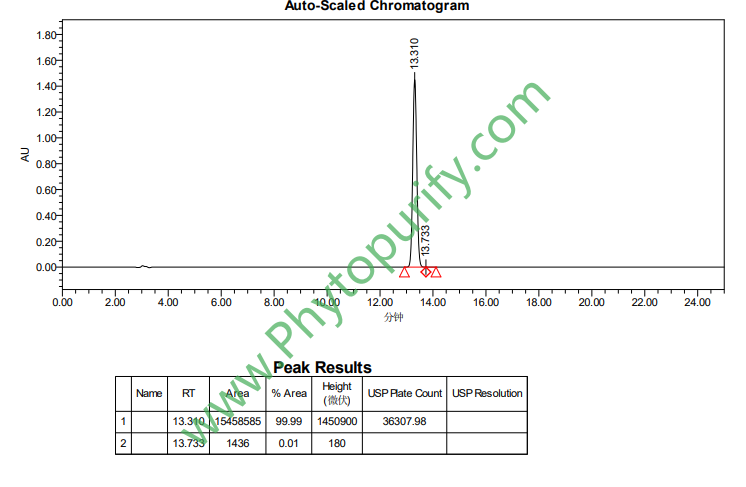
HPLC of Pinosylvin
Storage conditions:Short-term storage at 2~8℃, long-term storage at -20 ~ -80℃
40.4600
3.3826
3.3787
.1227
4.8137
32.0904
High
91.1178
1.9439
Yes
Yes
Yes
No
Yes
No
0.6
Yes
Yes
Yes
Yes
Natural products, as an important source of drug discovery, play an indispensable role in the long history of human struggle against diseases. From ancient plant therapies to the development of modern targeted drugs, the rich chemical structures found in nature provide endless inspiration for the development of innovative drugs. Among the numerous naturally occurring polyphenolic compounds with biological activity, resveratrol (chemical name: 3,5-dihydroxytrans stilbene) has attracted much attention due to its unique chemical structure and extensive pharmacological activities. As a pre infection stilbeneid present in the heartwood of Pinaceae plants, resveratrol is a defensive secondary metabolite synthesized and accumulated by plants during normal growth, aimed at resisting the invasion of pathogenic microorganisms such as fungi and bacteria.
Lycopene is regarded structurally as a famous "star molecule" - an analog of resveratrol. The two share a styrene skeleton, but the hydroxyl substitution mode (meta substitution) of resveratrol on the aromatic ring is different from that of resveratrol (4 '- hydroxyl substitution). This subtle structural difference endows gibberellin with a unique spectrum of biological activity. Early research mainly focused on its antibacterial properties as a plant antitoxin, especially its inhibitory effect on wood decay fungi. However, with the deepening of research, the pharmacological activity of resveratrol has far exceeded the initial antibacterial category. Numerous in vitro and in vivo studies have shown that resveratrol exhibits significant biological activities such as antioxidant, anti-inflammatory, anti-tumor, neuroprotective, and cardiovascular protection. Of particular note is that resveratrol can induce apoptosis and autophagy in various tumor cells, especially leukemia cells, demonstrating enormous potential in the field of cancer treatment.
In recent years, with the improvement of the evaluation system for the pharmacological properties of natural products, the physicochemical properties, pharmacokinetic characteristics, and potential safety of resveratrol have also become research hotspots. Although its poor water solubility and rapid metabolism pose challenges for drug development, its high blood-brain barrier permeability and good initial safety (such as no risk of hERG inhibition) provide unique advantages for its application in the treatment of neurological diseases and tumors. This article aims to provide a systematic review of the research progress of resveratrol, covering its chemical structure and physicochemical properties, plant sources and extraction methods, pharmacological activity, mechanism of action, drug evaluation, and clinical application prospects, in order to provide comprehensive references for the in-depth research and development of this natural product.
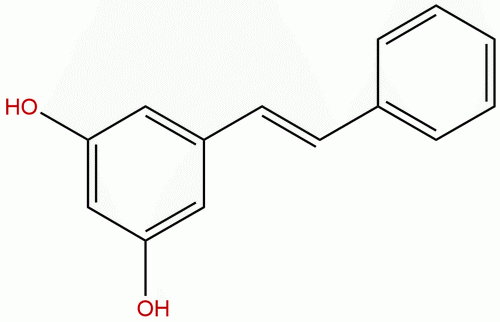
The chemical structure of Pinosylvin belongs to the stilbene class, and its core skeleton is composed of two benzene rings connected by an vinyl bridge. Its system is named 3,5-dihydroxy-trans-stilbene. Compared with resveratrol (3,5,4 '- trihydroxy trans stilbene), resveratrol lacks one hydroxyl group on the B ring, meaning it only has two phenolic hydroxyl groups at positions 3,5 on the A ring and no substituents on the B ring. This structural feature gives it unique chemical properties and biological activity.
In terms of physical and chemical properties, the molecular formula of resveratrol is C ₁₄ H ₁₂ O ₂, with a molecular weight of 212.2480 g/mol. Its lipid water partition coefficient (LogP) is 3.3826, indicating strong lipophilicity, which is consistent with its aromatic skeleton structure of styrene. Higher lipophilicity facilitates its penetration through biological membranes, including the blood-brain barrier, but also results in lower solubility in water. Its water solubility parameter is 0.1227 mg/mL, which belongs to insoluble compounds, which to some extent limits the development of its oral bioavailability and administration routes. The topological polar surface area (TPSA) is 40.4600 Å ², which is a relatively low value, further supporting its excellent ability to penetrate cell membranes and blood-brain barriers.
In terms of spectroscopic characteristics, resveratrol exhibits characteristic absorption in the ultraviolet region. The trans configuration has a strong absorption peak at approximately 300-330 nm, while the absorption peak of the cis configuration shifts blue and weakens in intensity. In the infrared spectrum, the stretching vibration peak of phenolic hydroxyl group appears in the 3200-3500 cm ⁻¹ region, and the vibration peak of benzene ring skeleton appears near 1600 and 1500 cm ⁻¹. In nuclear magnetic resonance hydrogen spectrum (¹ H NMR), the characteristic trans double bond proton usually appears as a double peak with a coupling constant of about 16 Hz and a chemical shift between 6.8-7.5 ppm, which is the key basis for determining its trans configuration. In mass spectrometry analysis, the molecular ion peak [M] ⁺ is m/z 212, and characteristic fragment ions often appear with the loss of one hydroxyl radical (-17) or one molecule of water (-18).
Red pine extract was initially isolated and identified from the heartwood of pine plants in the pine family, belonging to the pine genus(Pinus)A typical stilbene compound in plants. It is widely found in various pine trees, such as the European red pine(Pinus sylvestris)Coastal Pine(Pinus pinaster)North American short leaved pine(Pinus banksiana)Wait. In addition, it has also been found in other plant families and genera, such as Betulaceae, Fabaceae, and certain ferns. Lycopene is mainly used as a defense substance in plants before infection, and can be detected in healthy wood. Its content significantly increases when trees are mechanically damaged or infected by fungi, thus exerting antimicrobial effects. Its content varies depending on the tree species, age, growth site (heartwood content is usually higher than sapwood), and environmental factors (such as climate and soil).
Given the significant biological activity of resveratrol, efficient and environmentally friendly extraction methods are crucial for its research and application. The traditional extraction method is mainly based on solvent extraction, utilizing the principle of "similar solubility". Due to its moderate polarity, commonly used extraction solvents include methanol, ethanol, ethyl acetate, and their mixed solvents. Usually, dried plant materials such as pine sawdust and bark are crushed and then extracted, percolated, or refluxed using the aforementioned solvents at room temperature or under heating conditions. The crude extract is obtained by filtering and concentrating the extract under reduced pressure. Subsequently, liquid-liquid extraction (such as petroleum ether degreasing and ethyl acetate extraction) was used for preliminary purification to enrich the stilbene components.
To further obtain high-purity resveratrol, it is necessary to combine modern chromatographic separation techniques. Silica gel column chromatography is the most commonly used method, which uses solvent systems such as n-hexane ethyl acetate or chloroform methanol for gradient elution. In addition, Sephadex gel (LH-20) column chromatography is also commonly used to remove pigments and separate phenolic compounds with different polarities. Preparative HPLC can achieve high purity and high recovery separation, making it an ideal choice for obtaining standards and conducting in-depth research. In recent years, green extraction techniques such as supercritical fluid extraction (SFE) and microwave-assisted extraction (MAE) have also been applied to the extraction of resveratrol. These methods have the advantages of high extraction efficiency, low solvent consumption, and environmental friendliness, demonstrating good application prospects.
The pharmacological activity spectrum of resveratrol is very broad, covering multiple aspects such as antibacterial, antioxidant, anti-tumor, neuroprotective, etc., reflecting the pleiotropy of natural polyphenolic compounds.
1. Antibacterial activity
As a plant antitoxin, antibacterial is the most classic and fundamental function of resveratrol. Research has shown that resveratrol exhibits inhibitory effects on various Gram positive bacteria (such as Staphylococcus aureus and Bacillus subtilis) and Gram negative bacteria (such as Escherichia coli and Pseudomonas aeruginosa). The mechanism may involve disrupting the integrity of bacterial cell membranes, inhibiting the formation of bacterial biofilms, and interfering with bacterial metabolic processes. In addition, resveratrol has significant inhibitory activity against various pathogenic fungi, especially wood decay fungi, which is also the core mechanism of its defensive role in pine wood.
2. Antioxidant activity
The two phenolic hydroxyl groups in the molecular structure of Pinus densiflora are key functional groups for its antioxidant activity. They can effectively scavenge free radicals (such as DPPH free radicals, ABTS cationic free radicals, hydroxyl free radicals, and superoxide anions), chelate transition metal ions (such as Fe ² ⁺, Cu ² ⁺), thereby blocking free radical chain reactions and inhibiting lipid peroxidation. Multiple in vitro experiments have confirmed that the antioxidant capacity of resveratrol is comparable to or even stronger than that of resveratrol. In cell models, resveratrol can upregulate the expression and activity of various antioxidant enzymes, such as superoxide dismutase (SOD1, SOD2), catalase (CAT), glutathione peroxidase (GPX1), and heme oxygenase-1 (HMOX1), thereby enhancing the endogenous antioxidant defense system of cells. This antioxidant activity is an important foundation for its anti-inflammatory, anti-aging, and neuroprotective effects.
3. Anti inflammatory activity
Inflammation is a common pathological basis for various diseases, such as cardiovascular disease, neurodegenerative diseases, and cancer. Red pine resin exhibits significant anti-inflammatory activity. In a macrophage model stimulated by lipopolysaccharide (LPS), resveratrol can significantly inhibit the production of pro-inflammatory factors such as tumor necrosis factor - α (TNF - α), interleukin-6 (IL-6), and interleukin-1 β (IL-1 β), while reducing the synthesis of nitric oxide (NO) and prostaglandin E2 (PGE2). The mechanism is mainly related to the inhibition of key inflammatory signaling pathways such as nuclear factor kappa B (NF - κ B) and mitogen activated protein kinase (MAPK) activation.
4. Antitumor activity
The anti-tumor activity of resveratrol is currently a hot research topic. A large number of studies have shown that GA can inhibit proliferation and induce cell death in a variety of cancer cell lines, including leukemia, breast cancer, colon cancer, lung cancer, melanoma and prostate cancer cells. Its mechanism of action is complex and diverse, mainly including:
* Inducing apoptosis Akamatsu can induce cancer cell apoptosis by activating endogenous (mitochondrial) and exogenous (death receptor) apoptotic pathways. For example, in leukemia cells, resveratrol can upregulate the pro apoptotic protein Bax and downregulate the anti apoptotic protein Bcl-2, leading to loss of mitochondrial membrane potential, release of cytochrome c, and activation of the caspase cascade reaction.
* Induce autophagy Lycopene can induce autophagic cell death in cancer cells. Autophagy is a process in which cells self degrade and recycle organelles, playing a dual role in the occurrence and development of tumors. The autophagy induced by resveratrol may serve as a cellular protective mechanism or ultimately lead to cell death, depending on the cell type and stimulation intensity. Research has shown that resveratrol can activate autophagy by inhibiting the PI3K/Akt/mTOR signaling pathway.
* cell cycle arrest Red pine extract can block the cancer cell cycle in the G0/G1 or G2/M phase, thereby inhibiting cell proliferation.
5. Neuroprotective activity
Given its excellent blood-brain barrier permeability, the potential of resveratrol in neuroprotection is highly anticipated. Research has shown that resveratrol can protect neurons from oxidative stress and excitotoxic damage. In the Alzheimer's disease model, resveratrol can reduce the aggregation and toxicity of β - amyloid protein (A β), and inhibit the excessive phosphorylation of Tau protein. In Parkinson's disease models, resveratrol can protect dopaminergic neurons from damage caused by 6-hydroxydopamine (6-OHDA) or MPP ⁺. Its neuroprotective effects are closely related to antioxidant, anti-inflammatory, and activation of protective signaling pathways such as NRF2/ARE.
The various pharmacological activities of resveratrol do not exist in isolation, but are achieved by regulating a series of complex signaling pathways and molecular targets. The core of its mechanism of action lies in its polyphenol structure, which can interact with various proteins, enzymes, and receptors to regulate cell fate.
1. Antioxidant and NRF2/ARE signaling pathway
One of the core molecular mechanisms of resveratrol is the activation of the nuclear factor erythroid 2-related factor 2 (NFE2L2/NRF2) signaling pathway. NRF2 is the main transcription factor for cells to cope with oxidative stress and electrophilic substances. Under normal conditions, NRF2 binds to Kelch like ECH related protein 1 (KEAP1) and is degraded by ubiquitination. When electrophilic compounds such as resveratrol are present, they can modify key cysteine residues on KEAP1, leading to the release and translocation of NRF2 into the nucleus. In the nucleus, NRF2 forms heterodimers with small Maf proteins and binds to antioxidant response elements (ARE), initiating transcription of a series of downstream protective genes, including:
* antioxidant enzyme:SOD1, SOD2, CAT, GPX1
* Phase II detoxifying enzyme HMOX1, NAD (P) H: Quinone oxidoreductase 1 (NQO1)
* Glutathione synthesis related enzymes Glutamate cysteine ligase catalytic subunit (GCLC)
By activating the NRF2/ARE pathway, resveratrol can significantly enhance the antioxidant and detoxifying abilities of cells, thereby protecting them from oxidative damage.
2. Anti inflammatory and NF - κ B/MAPK signaling pathway
The anti-inflammatory effect of resveratrol is mainly achieved by inhibiting the NF - κ B and MAPK signaling pathways. NF - κ B is the core regulatory factor of inflammatory response. In the resting state, NF - κ B binds to the inhibitory protein I κ B in the cytoplasm. When stimulated by inflammation such as LPS and TNF - α, I κ B kinase (IKK) is activated, phosphorylates and degrades I κ B, releases NF - κ B into the nucleus, and initiates the transcription of various pro-inflammatory genes (such as TNF - α, IL-6, iNOS, COX-2). Red pine extract can inhibit the activity of IKK, thereby preventing the degradation of I κ B and nuclear translocation of NF - κ B. Meanwhile, resveratrol can also inhibit the phosphorylation of the MAPK pathway (including ERK, JNK, p38), further weakening the transmission of inflammatory signals.
3. Anti tumor and apoptosis/autophagy signaling pathways
Red pine extract exerts anti-tumor effects through multi-target and multi pathway pathways.
* Inducing apoptosis Lycopene can activate p53 tumor suppressor protein, upregulate the expression of pro apoptotic proteins such as Bax, and downregulate anti apoptotic proteins such as Bcl-2, leading to increased mitochondrial outer membrane permeability (MOMP) and the release of apoptotic factors such as cytochrome c and Smac/DIABLO. Cytochrome c forms apoptotic bodies with Apaf-1 and procaspase-9, activating caspase-9 and subsequently activating downstream effector caspases (such as caspase-3, -7), ultimately leading to cell apoptosis. In addition, resveratrol can also activate exogenous apoptotic pathways by upregulating the expression of death receptors such as Fas and DR5.
* Induce autophagy The autophagy induced by resveratrol is usually associated with the inhibition of the PI3K/Akt/mTOR signaling pathway. PI3K/Akt/mTOR is a key regulatory pathway for cell growth, proliferation, and metabolism, as well as a negative regulatory pathway for autophagy. Akamatsu can inhibit the phosphorylation of Akt, thereby relieving the inhibition of mTOR and activating autophagy. The expression of autophagy markers such as Beclin-1 and LC3-II is upregulated, while the level of p62 protein decreases. In some cases, autophagy induced by resveratrol is a protective response of cells, and inhibiting autophagy actually enhances its pro apoptotic effect; In other cases, excessive autophagy directly leads to autophagic cell death.
4. Other targets
Red pine resin has also been found to inhibit the activity of tyrosinase (TYR), which is related to its potential skin whitening effect. Meanwhile, it can also regulate the expression of matrix metalloproteinases (such as MMP1, MMP3), which may be related to its anti-aging and anti-tumor metastasis activity.
To convert natural products with good activity into clinical drugs, a systematic evaluation of their drug like and pharmacokinetic (ADME) properties is necessary. Lycopene has shown certain advantages in this regard, but also faces significant challenges.
1. Physical and chemical properties and medicinal properties
According to the Lipinski Five Rules, the molecular weight (212.25<500), LogP (3.38<5), and number of hydrogen bond donors/acceptors (2 phenolic hydroxyl groups) of resveratrol meet the requirements, indicating its good oral drug potential. However, its poor water solubility (0.1227 mg/mL) is the main bottleneck limiting its oral bioavailability. The low TPSA (40.46 Å ²) indicates its good membrane permeability, especially its ability to efficiently penetrate the blood-brain barrier (BBB), which provides unique advantages for its application in the treatment of central nervous system diseases. In addition, preliminary safety evaluations have shown that resveratrol has no inhibitory risk on hERG potassium channels (hERG inhibition: no), which means its risk of inducing QT interval prolongation and fatal arrhythmias in the heart is low. The Ames test result is 0.6, indicating that it may have a certain genetic toxicity risk and needs further evaluation.
2. Pharmacokinetic characteristics
The pharmacokinetic research on resveratrol is relatively limited, but some key characteristics have been revealed in previous studies.
* absorb Due to its poor water solubility, the oral absorption of resveratrol may be incomplete and irregular. Its high lipophilicity facilitates passive diffusion through intestinal epithelial cells, but may be pumped by efflux transporters such as P-glycoprotein (P-gp) into the ileal lumen.
* distribution Lycopene is widely distributed in the body, especially due to its high BBB permeability, which allows it to effectively enter brain tissue, making it a significant advantage over many other polyphenolic compounds. The plasma protein binding rate may be high.
* Metabolism Red pine undergoes extensive phase II metabolism in the body, mainly glucuronidation and sulfation. These metabolic reactions mainly occur in the liver and intestines, generating corresponding glucuronic acid complexes and sulfate ester complexes, thereby increasing their water solubility and promoting excretion. These complexes are typically considered inactive, but may act as "prodrugs" to hydrolyze and release the parent drug in specific tissues.
* excretion Lycopene and its metabolites are mainly excreted through bile and urine. Its half-life may be short and requires frequent administration or development of sustained-release formulations.
3. Optimization strategy for drug properties
Given the poor water solubility and rapid metabolism of Pinus densiflora, strategies to enhance its medicinal properties mainly include:
* Structural modification By chemical synthesis or biotransformation, hydrophilic groups (such as phosphate groups, amino acids, and sugar groups) are introduced into the lignin skeleton, or they are made into prodrugs (such as phosphate prodrugs) to improve water solubility and bioavailability.
* Formulation technology Modern formulation technologies such as liposomes, nanoparticles, cyclodextrin inclusion complexes, and solid dispersions can significantly improve the solubility and oral absorption of resveratrol.
* Optimization of administration route For diseases that require rapid onset or avoidance of first pass effects (such as acute inflammation, tumors), the development of injectable or transdermal formulations can be considered.
Red pine extract, with its unique biological activity and good safety, has shown broad application prospects in the treatment of multiple diseases.
1. Tumor treatment
The ability of resveratrol to induce apoptosis and autophagy in leukemia cells makes it a potential candidate drug for the treatment of hematological malignancies. The multi-target mechanism of action may help overcome the resistance problem of traditional chemotherapy drugs. In the future, it is possible to explore the use of resveratrol as a monotherapy or in combination with existing chemotherapy drugs such as cytarabine and doxorubicin, in order to achieve synergistic effects and reduce toxic side effects. In addition, the inhibitory effect of GA on solid tumors (such as breast cancer and colon cancer) is also worth further study.
2. Neurodegenerative diseases
Akamatsu can efficiently penetrate the blood-brain barrier, which is a huge advantage for its use in the treatment of neurodegenerative diseases such as Alzheimer's disease and Parkinson's disease. Its multiple effects of antioxidant, anti-inflammatory, and anti A β aggregation make it a promising neuroprotective agent for improving cognitive function and delaying disease progression. The development of stable and effective therapeutic concentrations of resveratrol preparations that can penetrate the blood-brain barrier is a future research focus.
3. Metabolic diseases and cardiovascular protection
The antioxidant and anti-inflammatory activities of GA also make it have potential in preventing atherosclerosis, diabetes and its complications. It may exert cardiovascular protective effects by improving endothelial function, inhibiting low-density lipoprotein (LDL) oxidation, regulating lipid metabolism, and other pathways.
4. Antibacterial and anti-inflammatory applications
Although the antibacterial activity of resveratrol is not as strong as some antibiotics, it has practical value as a natural antibacterial agent in the development of new antibacterial dressings, food preservatives, or oral care products. Its anti-inflammatory activity also suggests that it can be used to treat inflammatory skin diseases (such as acne, eczema) or rheumatoid arthritis.
Outlook and Challenges
Despite its promising prospects, the clinical translation of resveratrol still faces many challenges. The primary issue is its low water solubility and rapid metabolism leading to low bioavailability. How to solve this bottleneck through structural modification or advanced formulation technology is the key to determining whether it can become a drug. Secondly, although the Ames test suggests risks, its long-term genotoxicity and other potential toxicity (such as hepatotoxicity) still need to be evaluated through more comprehensive toxicological studies. Finally, although its mechanism of action is broad, the specific key targets still need to be further clarified for more precise drug design and development.
Akamatsu, an ancient defense molecule originating from pine plants, is showing new vitality on the stage of modern drug development with its unique chemical structure and rich pharmacological activity. From its initial antibacterial activity to its highly anticipated anti-tumor and neuroprotective effects, the research history of resveratrol vividly demonstrates the important value of natural products as lead compounds. Its ability to efficiently penetrate the blood-brain barrier gives it a unique advantage in conquering central nervous system diseases. However, its inherent physicochemical properties such as poor water solubility and metabolic instability are the main obstacles to its clinical application.
Future research should focus on the following aspects: firstly, to further elucidate the key molecular targets and signaling networks involved in its anti-tumor (especially inducing autophagy) and neuroprotective effects; The second is to use medicinal chemistry and pharmaceutical methods to develop derivatives or new dosage forms of resveratrol with higher bioavailability and targeting; The third is to carry out systematic and long-term in vivo pharmacological and toxicological research, laying a solid foundation for its clinical translation. We have reason to believe that with the continuous deepening of research and technological progress, resveratrol and its derivatives are expected to provide new powerful weapons for humanity to overcome major chronic diseases such as cancer and neurodegenerative diseases in the near future.
