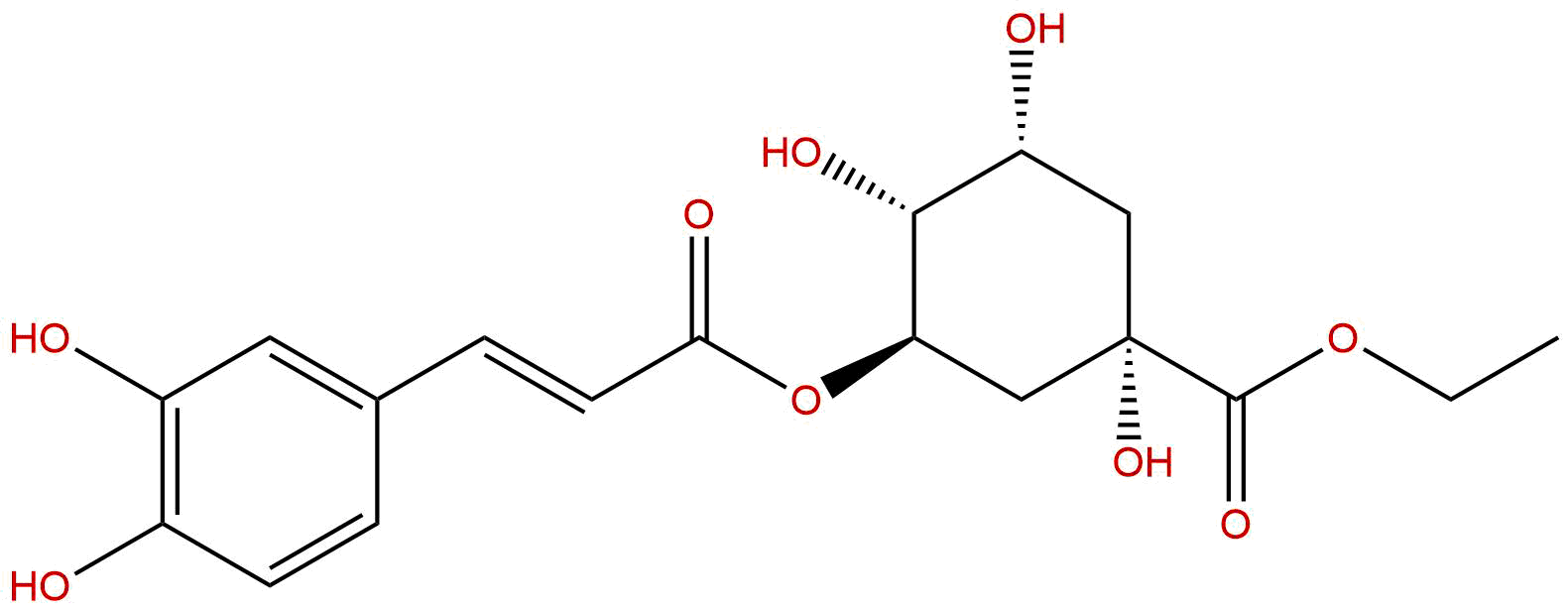


Product name: Ethyl chlorogenate
Synonym name: Chlorogenic acid ethyl ester
Catalogue No.: BP2414
Cas No.: 425408-42-0
Formula: C18H22O9
Mol Weight: 382.365
Botanical Source:
Type of Compound: "CQAs,Phenylpropanoids"
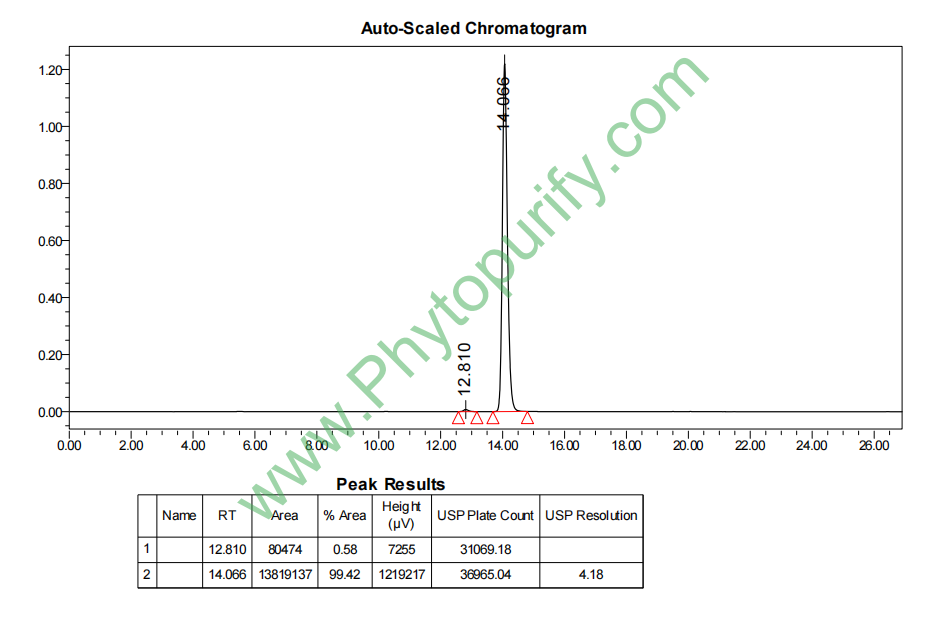
Purity: 95%~99%
Analysis Method: HPLC-DAD or/and HPLC-ELSD
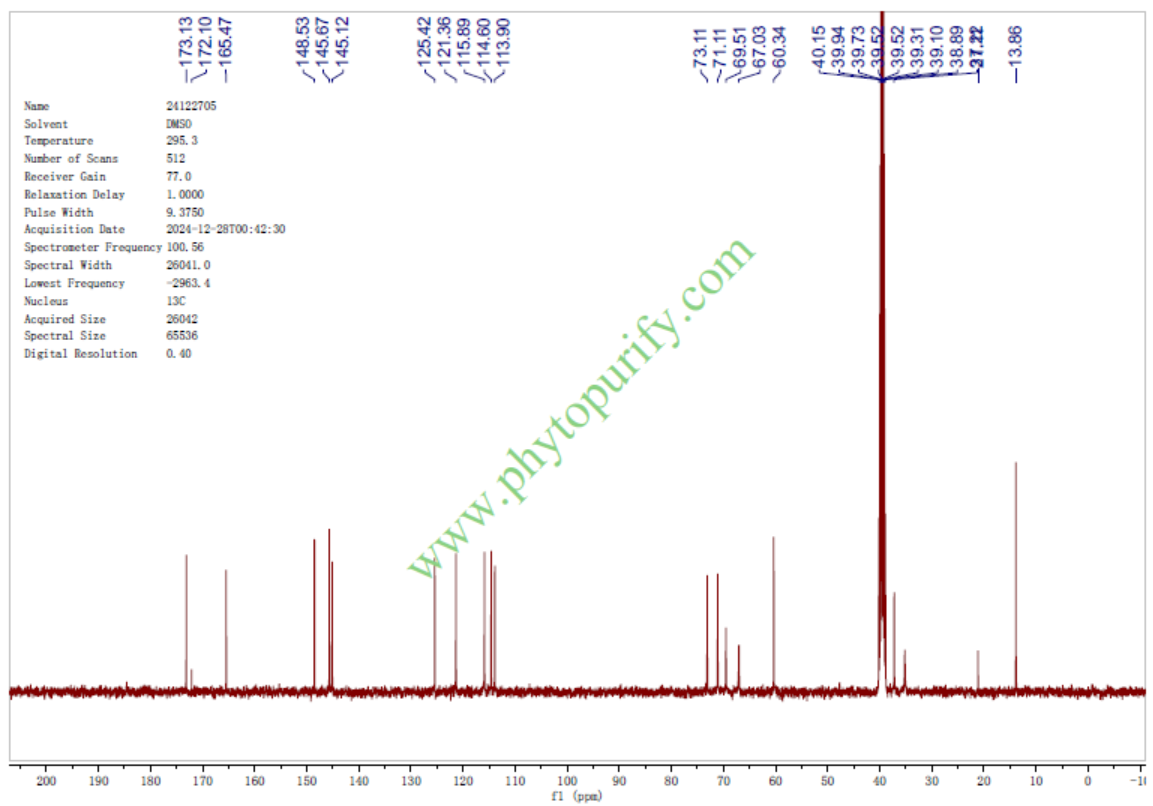
Identification Method: Mass, NMR
Packing: Brown vial or HDPE plastic bottle
Storage: Store in a well closed container, protected from air and light. Put into refrigerate or freeze for long term storage.
Whenever possible, you should prepare and use solutions on the same day. However, if you need to make up stock solutions in advance, we recommend that you store the solution as aliquots in tightly sealed vials at -20℃. Generally, these will be useable for up to two weeks.
The product could be supplied from milligrams to grams
Inquire for bulk scale.
For Reference Standard and R&D, Not for Human Use Directly.
HPLC of Ethyl chlorogenate
HNMR of Ethyl chlorogenate
Storage conditions:Short-term storage at 2~8℃, long-term storage at -20 ~ -80℃
153.7500
.5047
.4984
3.5192
.6537
.3051
Low
65.9029
3.8781
Yes
No
No
No
Yes
No
0.0
Yes
Yes
Yes
Yes
Natural products, as an important source of drug discovery, play an irreplaceable role in the long history of human fight against diseases. In recent years, with the prevalence of metabolic diseases around the world, especially the incidence rate of type 2 diabetes and its complications continues to rise. Finding safe and effective anti diabetes active ingredients from natural products has become a hot area of pharmaceutical chemistry and pharmacology research. Chlorogenic acid (CGA), as a typical representative of caffeoylquinic acid compounds, is widely present in various plants such as coffee, honeysuckle, and Eucommia ulmoides. It has attracted much attention due to its significant antioxidant, anti-inflammatory, hypoglycemic, and lipid-lowering biological activities. However, chlorogenic acid itself has pharmacokinetic defects such as high water solubility, low lipid solubility, and poor oral bioavailability, which limit its further clinical application.
Ethyl chlorogenate (3-O-Caffeoylquinic acid ethyl ester, CAS number: 425408-42-0) is an ethylated derivative of chlorogenic acid, belonging to the phenylpropanoid class of compounds. This compound was originally derived from the Moraceae plant Morus(Morus alba L. It is isolated from the mature fruit of mulberries. Mulberry, as a traditional Chinese medicinal herb with the same origin of medicine and food, has been recorded in ancient Chinese herbal books such as the Compendium of Materia Medica. It has the effects of nourishing yin and blood, generating fluids and moistening dryness. Modern pharmacological studies have confirmed that mulberry extract has a variety of biological activities such as hypoglycemic, hypolipidemic, antioxidant, etc., and ethyl chlorogenic acid is considered to be one of the key active ingredients of its anti diabetes effect.
Compared with the parent compound chlorogenic acid, ethyl chlorogenic acid undergoes esterification modification to alter the molecular lipid water partition coefficient, which theoretically may improve its membrane permeability and oral absorption characteristics. More importantly, recent studies on the pharmacological activity of ethyl chlorogenic acid have revealed its great potential in the field of anti diabetes, involving multiple key molecular targets such as AMPK signaling pathway, glucose transporter, insulin signal transduction, etc. This article will provide a systematic review of the research progress of ethyl chlorogenic acid from the aspects of chemical structure, plant origin, pharmacological activity, mechanism of action, medicinal evaluation, and clinical application prospects, in order to provide reference for the in-depth development and utilization of this natural product.
The chemical name of ethyl chlorogenic acid is 3-O-Caffeoylquinic acid ethyl ester, with a molecular formula of C ₁ H ₂ O ₉ and a molecular weight of 382.3650. Structurally, the compound consists of three parts: the Quinic acid core, the Caffeoyl side chain, and the ethyl ester group. Specifically, quinic acid is a six membered cyclic polyol acid, with its 3-hydroxyl group connected to the caffeoyl group through ester bonds, while the carboxyl group of quinic acid forms an ethyl ester with ethanol. This structural feature endows ethyl chlorogenic acid with unique chemical properties.
From the perspective of structure-activity relationship analysis, ethyl chlorogenic acid retains the core pharmacophore group of chlorogenic acid - catechol hydroxyl, which is the key structural basis for the compound to exert antioxidant activity. Phthalate hydroxyl groups can effectively scavenge free radicals, chelate transition metal ions, and interact with various protein targets through hydrogen bonding. Unlike chlorogenic acid, ethylation modification blocks the carboxyl group of quinic acid, reducing the acidity of the molecule while increasing its lipophilicity. This structural modification has had a profound impact on the biological activity of the compound: on the one hand, the ethyl ester group may alter the interaction mode between the compound and the biofilm, affecting its transmembrane transport and subcellular distribution; On the other hand, the presence of ester bonds allows ethyl chlorogenic acid to be hydrolyzed by esterases in the body, releasing chlorogenic acid and ethanol, thereby forming a "prodrug" mechanism.
In terms of physicochemical properties, the LogP value of ethyl chlorogenic acid is 0.5047, indicating that it has a certain degree of lipophilicity, but overall it still belongs to a compound with strong hydrophilicity. Its polar surface area (TPSA) is 153.7500 Å ², which is higher than the recommended upper limit of 140 Å ² for oral medications, indicating that the compound may have some oral absorption barriers. The water solubility parameter is 3.5192, indicating that its solubility in water is moderate. It is worth noting that compared with chlorogenic acid (LogP about -0.5), the lipophilicity of ethyl chlorogenic acid is significantly improved, which facilitates its passive diffusion through the cell membrane. In addition, the predicted results showed that the blood-brain barrier permeability of ethyl chlorogenic acid was low, indicating a lower risk of side effects in the central nervous system; HERG inhibition prediction is negative, indicating a low risk of cardiac toxicity; The Ames test result is 0.0, indicating a low risk of genetic toxicity. These pharmacological parameters provide positive pharmacological basis for the further development of ethyl chlorogenic acid.
Chlorogenic acid ethyl ester was originally derived from mulberry trees in the Moraceae family(Morus alba L. Isolation and identification of the fruit from mulberries. Mulberry trees are native to central and northern China and are now widely distributed in temperate and subtropical regions of Asia, Europe, and the Americas. Mulberry, as a mature fruit of mulberry trees, is rich in various nutrients and bioactive substances, including anthocyanins, flavonoids, phenolic acids, polysaccharides, and alkaloids. Among them, phenolic acid compounds are important material basis for mulberry to exert antioxidant and hypoglycemic activities, and ethyl chlorogenic acid is one of the unique phenolic acid components in mulberry.
Besides mulberries, ethyl chlorogenic acid has also been reported to be distributed in other plants. Research has found that Asteraceae plants such as sunflowers(Helianthus annuus)The flower plate and coffee plants of the genus(Coffea The leaves of spp. and certain medicinal plants such as Eucommia ulmoides(Eucommia ulmoides)The bark of the tree contains trace amounts of ethyl chlorogenic acid. However, mulberries are still the most abundant natural source of chlorogenic acid ethyl ester currently known. There are significant differences in the content of ethyl chlorogenic acid in mulberries of different varieties and maturity levels, with higher levels generally found in purple black mature mulberries.
The extraction method of ethyl chlorogenic acid is mainly based on its chemical properties, usually using a technical route of organic solvent extraction combined with chromatographic separation. The classic extraction process includes soaking dried mulberry powder in ethanol or methanol water mixed solvents (such as 70% ethanol) at room temperature or heating conditions for extraction. The extraction solution is then concentrated under reduced pressure and subjected to liquid-liquid extraction fractionation using solvents such as petroleum ether, ethyl acetate, and n-butanol. Chlorogenic acid ethyl ester is mainly enriched in the ethyl acetate extraction site. Subsequently, modern separation technologies such as silica gel column chromatography, ODS reverse phase column chromatography, Sephadex LH-20 gel column chromatography and preparative high performance liquid chromatography (prep HPLC) were used for purification, and finally ethyl chlorogenic acid monomer with purity of more than 95% was obtained.
In recent years, in order to improve extraction efficiency and reduce costs, some new extraction techniques have also been applied to the preparation of ethyl chlorogenic acid. For example, ultrasound assisted extraction (UAE) and microwave-assisted extraction (MAE) can significantly shorten extraction time and improve the yield of target compounds. In addition, high-speed countercurrent chromatography (HSCCC), as a liquid-liquid distribution chromatography technique, has demonstrated unique advantages in the large-scale preparation of ethyl chlorogenic acid, with characteristics such as large sample loading, low solvent consumption, and high recovery rate. It is worth noting that ethyl chlorogenic acid is sensitive to heat and light. During extraction and storage, high temperatures and prolonged exposure to light should be avoided to prevent degradation or isomerization.
Ethyl chlorogenic acid inherits the strong antioxidant capacity shared by chlorogenic acid compounds. The hydroxyl group structure in its molecule can effectively scavenge 1,1-diphenyl-2-trinitrophenylhydrazine (DPPH) free radicals, 2,2 '- diazo-bis-3-ethylbenzothiazoline-6-sulfonic acid (ABTS) cationic free radicals, and hydroxyl free radicals. Research has shown that the DPPH radical scavenging ability of ethyl chlorogenic acid is comparable to that of the parent compound chlorogenic acid, and even slightly better in some systems, which may be related to its enhanced lipophilicity making it easier to enter the hydrophobic environment of cell membranes. In addition, ethyl chlorogenic acid can significantly increase the activity of endogenous antioxidant enzymes such as superoxide dismutase (SOD) and glutathione peroxidase (GSH Px), reduce the level of malondialdehyde (MDA), and protect cells from oxidative stress damage.
Anti diabetes is the most prominent pharmacological activity of ethyl chlorogenic acid. Multiple in vitro and in vivo studies have confirmed that ethyl chlorogenic acid can exert hypoglycemic effects through various pathways. At the cellular level, ethyl chlorogenic acid can promote the proliferation and insulin secretion of pancreatic beta cells (such as INS-1 cells), while protecting beta cells from high glucose and high-fat induced apoptosis. In HepG2 liver cells and 3T3-L1 adipocyte models with insulin resistance, ethyl chlorogenic acid can significantly improve insulin sensitivity, promote glucose uptake and utilization. In animal experiments, after oral or intraperitoneal injection of ethyl chlorogenic acid in streptozotocin (STZ) induced diabetes mice or db/db hereditary diabetes mice, fasting blood glucose levels were significantly reduced, oral glucose tolerance (OGTT) was improved, and serum insulin levels were increased, and glycosylated hemoglobin (HbA1c) content was decreased.
It is worth noting that the anti diabetic effect of ethyl chlorogenic acid is not only reflected in the hypoglycemic effect, but also in the improvement of diabetes complications. In the model of diabetes nephropathy, ethyl chlorogenic acid can reduce glomerular hypertrophy, mesangial matrix expansion and podocyte damage, and reduce urinary protein excretion rate; In the model of diabetes cardiomyopathy, the compound can inhibit myocardial fibrosis and oxidative stress, and improve cardiac function; In the model of diabetes retinopathy, ethyl chlorogenic acid can inhibit retinal neovascularization and inflammatory reaction. These pleiotropic protective effects suggest that ethyl chlorogenic acid may become a candidate drug for the treatment of diabetes and its complications.
Chronic low-grade inflammation is an important pathological feature of insulin resistance and type 2 diabetes. Chlorogenic acid ethyl ester exhibits significant anti-inflammatory activity, which can inhibit the production of pro-inflammatory factors such as tumor necrosis factor - α (TNF - α), interleukin-6 (IL-6), and interleukin-1 β (IL-1 β) in macrophages induced by lipopolysaccharide (LPS), while promoting the secretion of anti-inflammatory factor interleukin-10 (IL-10). Its anti-inflammatory mechanism is closely related to the inhibition of the activation of nuclear factor kappa B (NF - κ B) signaling pathway and mitogen activated protein kinase (MAPK) signaling pathway. In addition, ethyl chlorogenic acid can inhibit the expression of cyclooxygenase-2 (COX-2) and inducible nitric oxide synthase (iNOS), reduce the production of prostaglandin E ₂ (PGE ₂) and nitric oxide (NO).
In addition to the aforementioned activities, ethyl chlorogenic acid also exhibits certain anti obesity, hepatoprotective, and neuroprotective effects. In a high-fat diet induced obese mouse model, ethyl chlorogenic acid can reduce body weight, decrease fat accumulation, and improve lipid profile. In the acute liver injury model induced by carbon tetrachloride (CCl ₄), this compound can reduce serum transaminase levels, alleviate liver cell necrosis and inflammatory infiltration. In neurodegenerative disease models, ethyl chlorogenic acid can inhibit the aggregation of β - amyloid protein (A β), alleviate oxidative stress and neuroinflammation, and protect neurons from damage.
The molecular mechanism of the anti diabetes effect of ethyl chlorogenic acid involves multiple signal pathways and targets, showing the characteristics of multi target and multi-channel network regulation. The following will focus on the interaction relationship between it and known targets.
AMP activated protein kinase (AMPK) is a core regulatory factor of cellular energy metabolism, known as the "energy receptor". Chlorogenic acid ethyl ester can directly or indirectly activate AMPK and promote the phosphorylation of its Thr172 site. Activated AMPK inhibits the synthesis of fatty acids and cholesterol by phosphorylating downstream target proteins such as acetyl CoA carboxylase (ACC) and hydroxymethylglutaryl-CoA reductase (HMGCR), while promoting fatty acid oxidation and glucose uptake. In the liver, AMPK activation can inhibit the expression of key gluconeogenesis enzymes, phosphoenolpyruvate carboxykinase (PEPCK) and glucose-6-phosphatase (G6Pase), reducing liver glucose output. In skeletal muscle and adipose tissue, AMPK activation promotes the translocation of glucose transporter 4 (GLUT4, encoded by the SLC2A4 gene) to the cell membrane, increasing glucose uptake. Research has shown that ethyl chlorogenic acid may indirectly activate AMPK by acting on AMPK upstream kinases such as LKB1 or CaMKK β, or by altering the intracellular AMP/ATP ratio.
Insulin signal transduction disorder is the core link of insulin resistance. Chlorogenic acid ethyl ester can enhance the activity of the insulin signaling pathway, specifically by promoting tyrosine phosphorylation of insulin receptor substrate 1 (IRS1) and inhibiting its serine phosphorylation (serine phosphorylation usually leads to signal attenuation); Activate downstream phosphatidylinositol 3-kinase (PI3K, a p85 regulated subunit encoded by the PIK3R1 gene) and protein kinase B (AKT1); Promote phosphorylation of Ser473 and Thr308 sites in AKT1. Activated AKT1 further phosphorylates downstream effector molecules such as AS160, promoting GLUT4 translocation and glucose uptake. In addition, AKT1 can inhibit glycogen synthase kinase-3 β (GSK-3 β), activate glycogen synthase, and promote glycogen synthesis. These effects collectively improved insulin sensitivity and restored the normal response of cells to insulin.
The regulation of glucose metabolism by ethyl chlorogenic acid also involves multiple direct targets. Glucokinase (GCK) is a key enzyme involved in glucose phosphorylation in liver and pancreatic beta cells, playing an important role in maintaining blood glucose homeostasis. Research has shown that ethyl chlorogenic acid can upregulate the expression and activity of GCK, promote glucose phosphorylation, and accelerate liver glucose utilization. Sodium glucose cotransporter 2 (SGLT2) is the main transporter responsible for glucose reabsorption in the proximal convoluted tubule of the kidney. SGLT2 inhibitors have become an important category of new anti diabetes drugs. Preliminary research suggests that ethyl chlorogenic acid may lower blood sugar levels by inhibiting SGLT2 activity, reducing renal reabsorption of glucose, promoting urinary glucose excretion. Peroxisome proliferator activated receptor gamma (PPARG) is a key transcription factor that regulates adipocyte differentiation and insulin sensitivity. Chlorogenic acid ethyl ester can partially activate PPARG, promote the secretion of insulin sensitizing factors such as adiponectin in adipocytes, and improve systemic insulin sensitivity.
Dipeptidyl peptidase-4 (DPP4) is a degradation enzyme of glucagon like peptide-1 (GLP-1) and glucose dependent insulinotropic polypeptide (GIP). DPP4 inhibitors promote insulin secretion and inhibit glucagon release by prolonging the action time of enteropancreatin. Molecular docking and enzyme activity assays showed that ethyl chlorogenic acid can bind to the active site of DPP4 and competitively inhibit its enzymatic activity. This discovery provides a new explanation for the anti diabetes effect of ethyl chlorogenic acid, which may have dual characteristics of insulin sensitizer and DPP4 inhibitor.
In conclusion, the anti diabetes effect of ethyl chlorogenic acid does not depend on a single target, but forms a synergistic network regulation effect by activating AMPK, enhancing insulin signal, regulating glucose metabolic enzymes, inhibiting SGLT2 and DPP4 and other targets. This multi target mode of action is in line with the characteristics of "multi-component, multi target" of natural products, and also provides a theoretical basis for its application in the comprehensive treatment of diabetes.
Based on computational predictions and experimental measurements, the pharmacological characteristics of ethyl chlorogenic acid can be summarized as follows: molecular weight 382.3650, which meets the Lipinski five rule requirement of molecular weight less than 500; The LogP is 0.5047, which is within the ideal range (-0.4~5.6), indicating a good balance between lipid and water distribution; The number of hydrogen bond donors (HBD) is 5 and the number of hydrogen bond acceptors (HBA) is 9, slightly higher than the threshold of HBD ≤ 5 and HBA ≤ 10 in Lipinski's rule, which may affect its oral absorption; The TPSA is 153.75 Å ², which is higher than the recommended upper limit of 140 Å ² for oral medications, indicating a possible challenge in intestinal permeability. However, considering that many successful drugs in natural products (such as paclitaxel, camptothecin, etc.) also have high TPSA, this parameter should not be the absolute standard for denying their development value.
At present, there is insufficient systematic research on the pharmacokinetics of ethyl chlorogenic acid in vivo. However, based on the pharmacokinetic characteristics of its structurally similar compound chlorogenic acid, it can be inferred that after oral administration, some of ethyl chlorogenic acid may be absorbed in the intestine in its original form, while others may be hydrolyzed by esterases into chlorogenic acid and ethanol in the intestine and liver. Compared with chlorogenic acid, the ethyl ester group of chlorogenic acid ethyl ester may make it easier to passively diffuse through the intestinal epithelial cell membrane, thereby improving oral bioavailability. However, the presence of ester bonds also means that their metabolism in the body may be more complex, with metabolites including chlorogenic acid, caffeic acid, quinic acid, and corresponding conjugates (such as glucuronic acid conjugates and sulfuric acid conjugates).
Research has shown that chlorogenic acid and its ester derivatives have a high plasma protein binding rate and a large distribution volume in the body, mainly distributed in liver, kidney, and intestinal tissues. The main elimination pathways include renal excretion and bile excretion, and some metabolites can be reabsorbed through the enterohepatic circulation. It is worth noting that the metabolism of chlorogenic acid ethyl ester in the gut microbiota is also an important link that cannot be ignored - esterases and phenolic acid reductases in gut microbiota may convert it into various active metabolites, which may work together with its prototype to exert pharmacological effects.
The drug prediction results showed that the hERG inhibition risk of chlorogenic acid ethyl ester was low, and the Ames test was negative, indicating a low risk of cardiac toxicity and genetic toxicity. Acute toxicity experiments have shown that the oral LDX value of ethyl chlorogenic acid is high and the safety window is wide. In the subchronic toxicity study, rats were continuously given chlorogenic acid ethyl ester by gavage for 28 days, and no significant weight changes, organ coefficient abnormalities, or histopathological damage were observed. However, at high doses, it may cause mild gastrointestinal discomfort, which is consistent with the common side effects of phenolic compounds. Overall, ethyl chlorogenic acid exhibits good safety characteristics, laying the foundation for further preclinical and clinical research.
Based on the existing pharmacological and pharmaceutical research data, ethyl chlorogenic acid has good conditions to become a new candidate drug for anti diabetes. Its multi-target mode of action - simultaneously activating AMPK, enhancing insulin signaling, inhibiting DPP4 and SGLT2- theoretically enables it to simultaneously improve insulin resistance, promote insulin secretion, inhibit gluconeogenesis, and promote urinary glucose excretion, achieving the goal of comprehensive regulation of blood glucose. This multi mechanism synergistic effect may bring better therapeutic effects than single target drugs, while reducing the risk of side effects caused by excessive inhibition of a single target.
Compared with clinically commonly used anti diabetes drugs, ethyl chlorogenic acid has the following potential advantages: first, as a natural product derivative, its safety is expected to be better, and its long-term drug tolerance may be better than some synthetic drugs; Secondly, its antioxidant and anti-inflammatory activities may provide additional benefits for the prevention and treatment of diabetes complications; Thirdly, its multi-target action characteristics may help delay or avoid the common issues of efficacy decline and drug resistance in monotherapy. Of course, these advantages still need to be validated through rigorous clinical trials.
The clinical translation of ethyl chlorogenic acid still faces several challenges. The primary issue is the optimization of oral bioavailability. Although ethylation modification improves lipid solubility, its higher TPSA and hydrogen bond donor/acceptor numbers may still limit intestinal absorption. The solution strategy includes developing new drug delivery systems, such as liposomes, nanoparticles, phospholipid complexes, etc., to improve their oral absorption and bioavailability; Design prodrug strategies, such as introducing carrier groups that can promote intestinal transport; Or develop non oral routes of administration, such as transdermal administration, inhalation administration, etc.
Secondly, the in vivo metabolic network of ethyl chlorogenic acid is complex, and the pharmacological contributions of its active metabolites are not yet clear. In the future, it is necessary to conduct systematic metabolomics and pharmacokinetic studies to clarify their metabolic pathways, active metabolites, and pharmacological contributions in vivo, providing a basis for rational drug administration design.
Thirdly, the large-scale preparation process of ethyl chlorogenic acid needs to be optimized. At present, it mainly relies on natural extraction, with limited production and high costs. Developing chemical synthesis or biosynthetic methods to achieve efficient and low-cost preparation of ethyl chlorogenic acid is the key to promoting its industrialization.
Looking ahead to the future, research on ethyl chlorogenic acid should focus on the following directions: firstly, to deeply elucidate its binding modes and structure-activity relationships with various molecular targets, providing guidance for structural optimization; Secondly, conduct systematic preclinical pharmacokinetic and toxicological studies to improve the evaluation of drug properties; The third is to explore the combined medication strategy with other anti diabetes drugs (such as metformin, DPP4 inhibitor, SGLT2 inhibitor, etc.), and evaluate the synergistic effect and toxicity reduction; Fourth, expand its application potential in diabetes complications, metabolic syndrome, non-alcoholic fatty liver disease and other related diseases.
Ethyl chlorogenic acid, as a natural phenylpropanoid compound isolated from the traditional food and medicine homologous plant Mulberry, has shown remarkable potential in the field of anti diabetes research with its unique chemical structure and multi-target pharmacological activity. From a chemical perspective, ethylation modification endows it with lipid solubility and potential bioavailability advantages over the parent compound chlorogenic acid; From a pharmacological perspective, it achieves comprehensive regulation of glucose metabolism through multiple mechanisms such as activating AMPK, enhancing insulin signaling, inhibiting DPP4 and SGLT2; From the perspective of drug development, its good safety and acceptable physicochemical parameters have laid the foundation for its further development.
However, there is still a long conversion gap between natural products and clinical drugs. The research on ethyl chlorogenic acid is still in its early stages, and the optimization of its oral bioavailability, elucidation of its metabolic fate in vivo, establishment of large-scale preparation processes, and validation of clinical efficacy are all key scientific issues that urgently need to be addressed. We have reason to believe that with the continuous progress of modern pharmaceutical chemistry, pharmacokinetics and clinical pharmacology technology, ethyl chlorogenic acid, a natural molecule derived from traditional Chinese medicine, is expected to provide new options for the prevention and treatment of diabetes and its complications in the near future, and make contributions to human health.
