A Review of Pharmacological Research on Natural Products of Isooxypeucedanin
Introduction/Overview
Natural products, as an important source of drug discovery, play an irreplaceable role in the long history of human fight against diseases. Among them, furan coumarin compounds have attracted much attention due to their structural diversity and wide range of biological activities. Isooxypeucedanin (CAS number: 5058-15-1) is a typical linear furan coumarin natural product, mainly found in the roots, stems, and fruits of Apiaceae plants. Since its first isolation and identification from medicinal plants in the mid-20th century, this compound has gradually become one of the hotspots in natural product chemistry and pharmacology research due to its unique chemical structure and significant pharmacological activity, especially antiviral potential.
The molecular skeleton of isoxazolene is composed of a coumarin core fused with a furan ring, and its structural characteristics determine its potential for interaction with various biomolecules. In recent years, with the continuous threat of viral diseases, especially the increasingly prominent problem of drug resistance in pathogens such as human immunodeficiency virus (HIV) and herpes simplex virus (HSV), the search for new, efficient, and low toxicity antiviral lead compounds has become an urgent need for drug development. Isopropyl tetrahydropalmatine exhibits multi-target and multi pathway effects in the field of antiviral therapy, involving MPO、UL42、UL54、ICP27、TK、gD、CCR5、CXCR4、HIV1-PR、INT Multiple key targets have been identified, demonstrating its enormous potential as a broad-spectrum antiviral candidate drug. This article will provide a systematic review of the research progress of isoxazolene from the aspects of chemical structure, plant origin, pharmacological activity, mechanism of action, medicinal properties, and clinical application prospects, in order to provide reference for the further development and utilization of this compound.
Chemical structure and physicochemical properties
Chemical structural characteristics
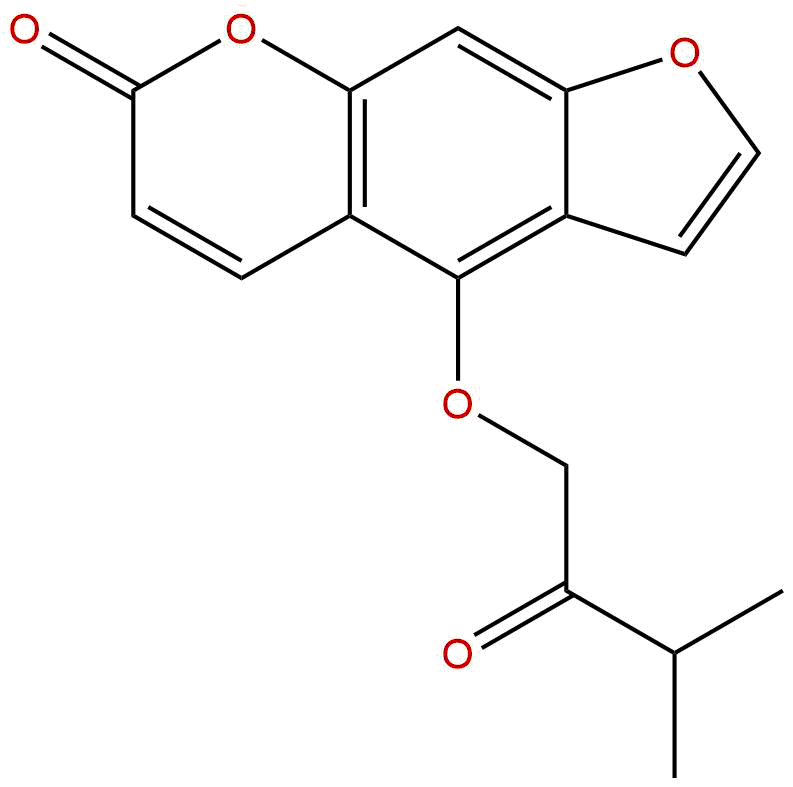
Isoperoxide belongs to the linear furanocoumarin family, and its chemical name is 4- [(2,3-dihydroxy-3-methylbutoxy) methyl] furano [3,2-g] chroman-7-one. The molecular formula of this compound is C ₁₆ H ₁₄ O ₅, with a molecular weight of 286.2830 g/mol. Its core structure is composed of a coumarin (benzo [a] - pyranone) skeleton fused with a furan ring at positions 5 and 6, forming a conjugated aromatic ring system. At the 4th position of the furan ring, an isopentenyl side chain containing two hydroxyl groups is connected via a methoxy group, namely a 2,3-dihydroxy-3-methylbutoxy substituent. The presence of this side chain endows isoxazolene with a certain degree of water solubility, while retaining the hydrophobic characteristics of the coumarin parent nucleus.
From the perspective of stereochemistry, the two chiral centers (C-2 'and C-3') on the side chain may produce various stereoisomers. At present, the isolated isoproterenol from natural sources usually exists in specific enantiomeric or diastereomeric mixtures, and the influence of its absolute configuration on biological activity needs further research. The planar structure of furan coumarin compounds allows them to be embedded between DNA base pairs, which is the structural basis for their antiviral and phototoxic effects.
Physical and chemical property parameters
The physicochemical properties of isoxazolene have a significant impact on its pharmacokinetic behavior and drug properties. According to the calculated prediction data, the lipid water partition coefficient (LogP) of the compound is 2.3029, indicating that it has moderate lipophilicity, which is conducive to transmembrane transport and interaction with lipid membranes. The topological polar surface area (TPSA) is 69.6500 Å ², which is below the threshold of 100 Å ², indicating that the compound has good oral absorption potential. However, its water solubility is only 0.0078 mg/mL, which is a poorly soluble compound, which may limit its bioavailability and needs to be improved through formulation techniques such as cyclodextrin inclusion, nanoemulsion, etc.
It is worth noting that the blood-brain barrier (BBB) penetration prediction of isoproterenol is "high", which means that the compound can effectively enter the central nervous system. This characteristic is of great significance for treating diseases such as viral encephalitis or HIV related neurocognitive disorders, but it may also increase the risk of central nervous system toxicity. The prediction of hERG inhibition is' no ', indicating a low risk of cardiac toxicity. The Ames test predicted a value of 0.9, indicating that the compound may have slight genetic toxicity and requires attention in practical applications. In addition, the compound may exhibit phototoxicity under ultraviolet light irradiation, which is a common characteristic of furan coumarin compounds. Light avoidance measures should be considered in clinical applications.
Plant sources and extraction methods
Main plant sources
Iso oxidized Peucedanum praeruptorum is mainly distributed in plants of the Apiaceae family, which includes many famous medicinal plants such as Angelica sinensis, Angelica dahurica, Peucedanum praeruptorum, Saposhnikovia divaricata, etc. Specifically, isoxazolene has been identified and isolated in the following plants:
-
Peucedanum plants Such as Peucedanum praeruptorum (white flowered Peucedanum praeruptorum), Peucedanum decorsivum (purple flowered Peucedanum decorsivum), whose rhizomes are the main source of traditional Chinese medicine "Peucedanum praeruptorum" and are commonly used to treat respiratory diseases such as cough and phlegm.
-
When Belonging to Angelica Plants Plants such as Angelica dahurica and Angelica archangelica are rich in furanocoumarin compounds in their roots and fruits.
-
Saposhnikovia plants The root of Saposhnikovia divaricata (windproof) is a commonly used antipyretic, which also contains isoxazolene.
-
Other plant species This includes Heraclium (Angelica genus), Pastinaca (Eucommia genus), etc., which have also been reported in the fruits or roots of these plants.
The content of isoproterenol in different plant sources varies greatly and is usually influenced by factors such as growth environment, harvest season, and plant location. Generally speaking, the content in roots and rhizomes is higher than that in aboveground parts, and there is also a certain accumulation in fruits.
Extraction and Separation Purification Methods
extraction method
The traditional extraction method mainly uses organic solvent extraction. Due to its moderate lipophilicity, commonly used extraction solvents include methanol, ethanol, ethyl acetate, dichloromethane, etc. In the specific operation, the dried plant material is crushed and soaked in 70% -95% ethanol or methanol at room temperature or heating conditions for extraction. The extract is concentrated under reduced pressure to obtain the crude extract. To improve extraction efficiency, ultrasound assisted extraction (UAE) or microwave-assisted extraction (MAE) techniques can be used, which can disrupt cell wall structure, accelerate the dissolution of target compounds, shorten extraction time, and reduce solvent dosage.
Supercritical fluid extraction (SFE) technology, especially supercritical CO ₂ extraction, has also been applied to the extraction of furan coumarin compounds due to its advantages of green environmental protection and high selectivity. By adjusting pressure and temperature, the selective extraction of isoxazolene can be optimized to avoid degradation of thermosensitive components.
Separation and purification methods
The crude extract usually contains a large amount of impurities and requires multiple chromatographic separations to obtain high-purity isoxazolene. Common separation methods include:
-
Silica gel column chromatography Gradient elution using solvent systems such as n-hexane ethyl acetate or chloroform methanol is a classic method for separating furan coumarin compounds. Isoperoxide is usually eluted in moderately polar components.
-
Reverse phase column chromatography Using C18 or C8 bonded silica gel for separation in methanol water or acetonitrile water systems can effectively remove polar impurities.
-
Preparation type high performance liquid chromatography (Prep HPLC)For structurally similar furan coumarin isomers, preparative HPLC is a key means of achieving high-purity separation. Usually, a C18 chromatographic column is used, with acetonitrile water or methanol water as the mobile phase, combined with a UV detector (usually monitored at 254 nm or 320 nm) for separation.
-
High Speed Counter Current Chromatography (HSCCC)This is a liquid-liquid distribution chromatography technique that does not require a solid stationary phase and avoids irreversible adsorption problems, making it suitable for large-scale separation of furan coumarin compounds.
The isolated compounds can be structurally identified by methods such as nuclear magnetic resonance (NMR), mass spectrometry (MS), ultraviolet spectroscopy (UV), and infrared spectroscopy (IR), and confirmed by comparison with literature data.
Pharmacological activity research
Antiviral activity
The most noteworthy pharmacological activity of isoxazolene is its broad-spectrum antiviral effect. Existing studies have shown that the compound has inhibitory activity against various viruses, including HIV, HSV, human cytomegalovirus (HCMV), and others.
Anti HIV activity
Isoprotein has a significant inhibitory effect on HIV-1 replication. Its mechanism of action involves multiple steps: on the one hand, it can inhibit the activity of HIV-1 reverse transcriptase (HIV1-PR) and integrase (INT), thereby blocking the reverse transcription and integration process of the viral genome; On the other hand, it can also interfere with virus entry into target cells by downregulating the expression of CCR5 and CXCR4 co receptors. CCR5 and CXCR4 are chemokine receptors necessary for HIV-1 to enter CD4+T cells, and their downregulation can effectively block the infection of R5 and X4 HIV-1. This multi-target mode of action helps to reduce the development of viral drug resistance.
Antiherpesvirus activity
In anti HSV research, isoxazolene has shown inhibitory activity against both HSV-1 and HSV-2. Its targets include virus DNA polymerase helper protein UL42, DNA polymerase catalytic subunit UL54, and immediate early protein ICP27. UL42 is an essential polymerase cofactor for HSV DNA replication, UL54 is a DNA polymerase catalytic subunit, and ICP27 is involved in viral gene transcription regulation. By inhibiting the function of these key proteins, isoproterenol can effectively block the replication cycle of HSV. In addition, the compound can also inhibit the activity of thymidine kinase (TK), which is an enzyme necessary for the activation of HSV nucleoside analogue drugs (such as acyclovir). Therefore, isoproterenol may have a synergistic effect with existing anti HSV drugs.
Other antiviral activities
Preliminary studies also suggest that isoxazolene may have inhibitory activity against HCMV, EB virus, etc., but the relevant mechanisms are not yet clear. In addition, the regulatory effect of this compound on MPO (myeloperoxidase) may indirectly affect the inflammatory response during viral infection, and MPO plays an important role in oxidative stress and inflammation caused by viral infection.
Other pharmacological activities
In addition to antiviral effects, isoxazolene also exhibits various other biological activities:
-
anti-inflammatory activity By inhibiting the NF - κ B signaling pathway and reducing the expression of pro-inflammatory cytokines such as TNF - α and IL-6, it exerts anti-inflammatory effects.
-
antioxidant activity The furan coumarin skeleton has the ability to scavenge free radicals and alleviate oxidative stress damage.
-
Antitumor activity Some studies have reported that this compound has cytotoxicity towards certain cancer cell lines, such as liver cancer and lung cancer cells, and may exert its effects by inducing apoptosis and cell cycle arrest.
-
Photosensitive activity As a furan coumarin compound, isoxazolene can form adducts with DNA under ultraviolet light irradiation, which has potential application value in phototherapy (PUVA), but attention should also be paid to its phototoxicity risk.
Mechanism of action and molecular targets
Molecular mechanism of antiviral effect
The antiviral effect of isoproterenol involves multiple molecular targets and signaling pathways, reflecting the characteristic of natural products with multiple targets and pathways.
Inhibition of key enzymes in the lifecycle of viruses
-
HIV-1 protease (HIV1-PR) inhibition HIV-1 protease is an essential enzyme during viral maturation, responsible for cleaving viral polyprotein precursors. Iso oxidized resveratrol may competitively inhibit the catalytic activity of proteases by interacting with aspartic acid residues at their active sites through its coumarin skeleton, resulting in immature, non infectious viral particles.
-
Inhibition of integrase (INT)HIV-1 integrase catalyzes the integration of viral DNA into the host genome. Isoprotein can bind to the active center of integrase, interfere with its chain transfer reaction, and block the integration process of viral genome. Molecular docking studies suggest that the side chain hydroxyl group of the compound may coordinate with the Mg ²+ion at the active site of the integrase, forming a stable complex.
-
HSV DNA polymerase associated protein inhibition UL42 is an auxiliary protein of HSV DNA polymerase, which can enhance the sustained synthesis ability of polymerase. Iso oxidized preaHu lactone may inhibit the extension stage of viral DNA replication by disrupting the interaction between UL42 and UL54 (catalytic subunits). In addition, direct inhibition of UL54 may also occur, but the affinity may be lower than that of UL42.
Intervention in the regulation of viral gene expression
ICP27 is an immediate early protein of HSV, playing a crucial role in transcriptional regulation of viral genes. Isoprotein can downregulate the expression level of ICP27, thereby inhibiting the transcription of early and late viral genes. This effect may be achieved by interfering with the nuclear localization of ICP27 or its interaction with mRNA binding proteins.
Blocking the process of virus entry
Isoprotein can downregulate the expression levels of CCR5 and CXCR4 on the cell surface. CCR5 and CXCR4 are co receptors required for HIV-1 to enter target cells, and downregulation of their expression can effectively reduce the efficiency of virus entry. This effect may be achieved by affecting the transcription of co receptors or promoting their internalization and degradation. In addition, the compound may directly interact with the virus envelope glycoprotein gD (the receptor binding protein of HSV), interfering with the adsorption process between the virus and host cells.
Interactions with other targets
MPO (myeloperoxidase) is a heme peroxidase expressed in neutrophils and monocytes, involved in host defense and inflammatory responses. Viral infection is often accompanied by an increase in MPO activity, leading to oxidative stress and tissue damage. Isoprotein may alleviate viral induced inflammatory damage by regulating MPO activity. In addition, the inhibition of TK by this compound may affect viral nucleotide metabolism and have a synergistic effect with nucleoside analogue antiviral drugs.
Evaluation of drug properties and pharmacokinetics
Analysis of drug properties parameters
Based on computational predictions and preliminary experimental data, the pharmacological characteristics of isoproterenol can be summarized as follows:
-
Drug Evaluation The molecular weight of the compound (286.28 Da) conforms to Lipinski's "Five Rules" (MW<500), and LogP (2.30) is within the ideal range (-0.4~5.6). The number of hydrogen bond donors (3 hydroxyl groups) and acceptors (5 oxygen atoms) also conforms to the rules. Therefore, from a chemical spatial perspective, isoxazolene has good drug like properties.
-
Water solubility limitation The water solubility of 0.0078 mg/mL is the main bottleneck for the medicinal properties of this compound. Low water solubility may lead to issues such as low oral bioavailability and incomplete absorption in vivo. Through formulation techniques such as salt formation, cyclodextrin inclusion, solid dispersion, or lipid nanoparticles, it is expected to improve its solubility and dissolution rate.
-
Blood-brain barrier penetrability High BBB penetration provides the possibility for treating central nervous system viral infections, but also increases the risk of neurotoxicity. Further evaluation is needed to assess the distribution of the compound in brain tissue and its potential impact on nerve cells.
-
Security prediction A negative hERG inhibition indicates a low risk of cardiac toxicity, but a positive Ames test suggests a genetic toxicity risk, requiring a more comprehensive genetic toxicity assessment (such as in vivo micronucleus test, chromosome aberration test, etc.). In addition, phototoxicity is a common issue among furan coumarin compounds and should be emphasized in preclinical studies.
Pharmacokinetic characteristics
At present, there is insufficient systematic research on the pharmacokinetics of isoxazolene in vivo, but based on its physicochemical properties and studies of similar compounds, it can be preliminarily speculated that:
-
absorb After oral administration, due to poor water solubility, absorption may be incomplete and bioavailability may be low. However, a moderate LogP value suggests good membrane permeability, and the absorption rate may be limited by the dissolution rate. Intravenous administration can bypass absorption barriers, but it requires addressing the issue of water-soluble formulations.
-
distribution High BBB penetration indicates that the compound can be widely distributed, including in the central nervous system. Its apparent distribution volume may be large, indicating a high tissue binding rate. The plasma protein binding rate still needs to be experimentally determined.
-
Metabolism Furancoumarin compounds are mainly metabolized by the cytochrome P450 enzyme system (especially CYP3A4, CYP2C9, etc.) in the liver, and the main metabolic pathways include side chain hydroxylation, O-demethylation, furan epoxidation, etc. The side chain hydroxyl groups of isoxazolene may undergo glucuronic acid or sulfuric acid binding reactions, promoting excretion.
-
excretion Metabolites are mainly excreted through bile and urine. The renal excretion of the prototype drug may be lower due to its high lipid solubility.
-
half-life Based on data from similar compounds, the elimination half-life of isoxazolene may be in the range of several hours, but the specific value needs to be determined through animal experiments.
Clinical application prospects and prospects
Potential for antiviral therapy
The multi-target antiviral activity of isoxazolene endows it with potential application value in the following fields:
-
HIV infection treatment As a CCR5/CXCR4 antagonist and reverse transcriptase/integrase inhibitor, this compound may serve as a complementary drug for combination antiretroviral therapy (cART), particularly against drug-resistant viral strains. Its multi-target nature helps to reduce resistance caused by single target drugs.
-
Treatment of herpes virus infection The inhibitory effect on HSV-1/2, especially its potential activity against acyclovir resistant strains, makes it a candidate drug for treating diseases such as genital herpes and herpes simplex keratitis. The synergistic effect with nucleoside analogues deserves further exploration.
-
Central nervous system viral infection High BBB penetration gives it unique advantages in the treatment of viral encephalitis, HIV related neurocognitive disorders (HAND), and other related conditions.
Challenges faced in drug development
Despite its broad prospects, the development of isoxazolene still faces the following challenges:
-
Improvement of water solubility It is necessary to improve water solubility through prodrug design, nano formulations, or structural modifications to meet clinical drug delivery needs.
-
Phototoxicity management In clinical applications, light avoidance measures or structural modifications should be taken to reduce phototoxicity while retaining antiviral activity.
-
Genetic toxicity assessment Systematic genetic toxicity and carcinogenicity studies need to be conducted to clarify the safety window.
-
Selective optimization Improving the selectivity towards viral targets and reducing toxicity to host cells are key directions for optimizing drug chemistry.
Future research directions
-
Research on Structure Modification and Structure Activity Relationship By synthesizing a series of derivatives and systematically examining the effects of side chain structure and substituent position on activity and toxicity, we aim to find lead compounds with higher activity and lower toxicity.
-
Combination therapy research Research on synergistic effects with existing antiviral drugs such as acyclovir and zidovudine, providing a basis for clinical combination therapy.
-
Formulation development Develop novel drug delivery systems such as liposomes, nanoparticles, and cyclodextrin inclusion complexes to improve bioavailability and achieve targeted delivery.
-
In vivo pharmacodynamic and toxicological studies Establish appropriate animal models (such as HIV transgenic mice and HSV infected mouse models), and systematically evaluate their in vivo efficacy, pharmacokinetics, and safety.
-
In depth analysis of the mechanism of action Using structural biology, molecular dynamics simulations, and other methods, elucidate the precise binding modes of the compound with various target proteins, providing guidance for rational drug design.
Conclusion
As a typical natural furan coumarin compound, isoxazolene has shown significant value in the field of natural product drug development due to its unique chemical structure and multi-target antiviral activity. This compound exerts broad-spectrum antiviral effects by inhibiting multiple targets such as HIV-1 protease, integrase, HSV DNA polymerase co protein, and co receptors, while also possessing auxiliary activities such as anti-inflammatory and antioxidant effects. Its moderate lipophilicity and high blood-brain barrier penetration provide the possibility for treating central nervous system viral infections, but low water solubility and potential genetic toxicity are the main challenges facing its drug development.
In the future, through structural modification, formulation optimization, and in-depth mechanism research, isoxazolene is expected to develop into a candidate drug for the treatment of viral diseases such as HIV and HSV. Meanwhile, the study of this compound also provides an example for the discovery of multi-target antiviral lead compounds from natural products, highlighting the unique value of natural products in addressing virus resistance issues. With the deepening of research, isoxazolene and its derivatives are expected to play a more important role in the field of antiviral drugs and contribute to human health.