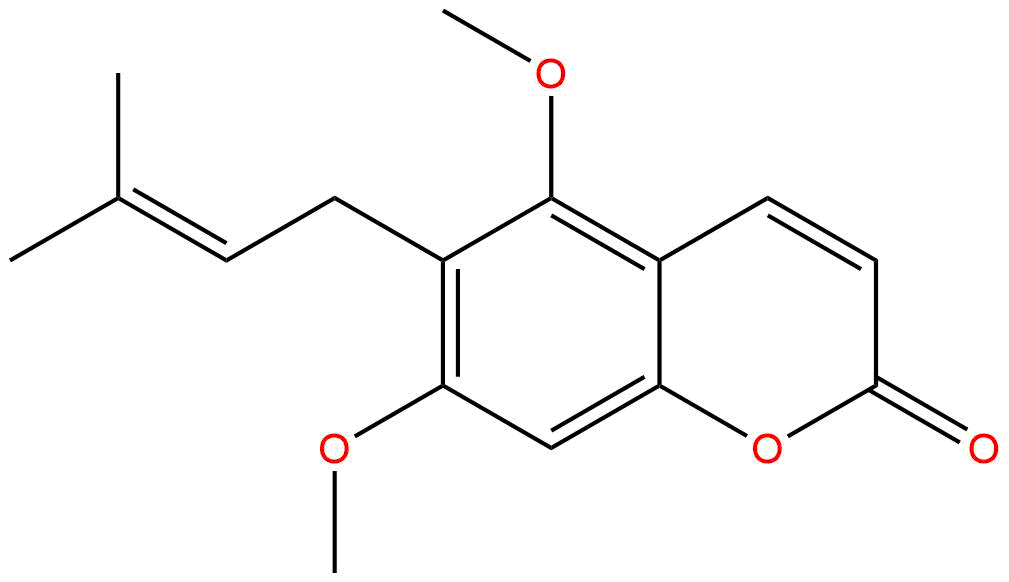
Pharmacological research progress and pharmacological evaluation of Toddaculine: from natural product to antithrombotic candidate drug
Introduction/Overview
Natural products, as an important source of drug discovery, play an irreplaceable role in the history of human fight against diseases. The chemical diversity found in nature, from aspirin to paclitaxel, from artemisinin to metformin, provides endless inspiration for modern drug development. Among numerous natural products with biological activity, Toddaculine is derived from the Rutaceae plant Toddaculine(Toddalia asiatica)The furan quinoline alkaloids have received widespread attention in recent years due to their significant activity in the field of thrombosis.
Flying Dragon Palm Blood(Toddalia asiatica (L.) Lam. is a woody vine widely distributed in tropical and subtropical regions of Asia and Africa, with a long history of application in traditional Chinese folk medicine. Its roots, stems, and leaves are used to treat diseases such as rheumatism, rheumatism, bruises, swelling and pain, menstrual disorders, etc. These traditional uses are closely related to blood circulation disorders and inflammatory reactions. Fei Long Zhang Xue Su, as one of the main active ingredients of this plant, was first isolated and identified in the 1970s. Its chemical structure was determined to be 5,6,7-trimethoxyfuran [2,3-b] quinoline.
Thrombotic diseases, including myocardial infarction, ischemic stroke, deep vein thrombosis, and pulmonary embolism, are one of the leading causes of death and disability worldwide. According to the World Health Organization, cardiovascular disease claims approximately 17.9 million lives annually, with thrombosis being the core pathological process of most cardiovascular events. Although existing antithrombotic drugs such as aspirin, clopidogrel, heparin, warfarin, etc. have achieved significant results in clinical practice, they all have varying degrees of limitations, including increased bleeding risk, narrow treatment window, drug interactions, large individual differences, and resistance issues. Therefore, the development of new, efficient, and low bleeding risk antithrombotic drugs remains an urgent need in the current field of drug research and development.
Feilong Zhangxue Su, with its unique chemical structure and multi-target action characteristics, has shown great potential as a candidate drug for antithrombotic therapy. This article will provide a systematic review of the research progress of Feilongzhang Hematoxylin from the aspects of chemical structure and physicochemical properties, plant sources and extraction methods, pharmacological activity, mechanism of action, drug evaluation, and clinical application prospects, in order to provide scientific basis for the further development and utilization of this natural product.
Chemical structure and physicochemical properties
The chemical name of Fei Long Zhang Xue Su is 5,6,7-trimethoxyfuro [2,3-b] quinoline, which belongs to the family of furan quinoline alkaloids. Its molecular formula is C ₁₅ H ₁₄ NO ₄, and its molecular weight is 274.3160 g/mol. The core skeleton of this compound is composed of a fused quinoline ring and a furan ring, with three methoxy (- OCH ∝) substituents attached to the C-5, C-6, and C-7 positions of the quinoline ring, respectively. This unique furan quinoline structure endows Feilong Zhangxue with rich chemical properties and biological activity.
From the perspective of structure-activity relationships, the furan quinoline skeleton is a common structural feature of various biologically active natural products, such as dictamnine, γ - furanine, and skimminine. The position and quantity of methoxy substituents have a significant impact on the pharmacological activity of compounds. The trimethoxy substitution mode at positions C-5, C-6, and C-7 of Feilong Zhangxue Su exhibits unique lipophilicity and target binding properties among similar compounds.
In terms of physical and chemical properties, Feilong Palm Hematoxylin exhibits typical lipophilic characteristics. The calculated LogP value is 3.5275, indicating that the compound has strong lipid solubility, which is beneficial for penetrating biological membranes and reaching intracellular targets. The topological polar surface area (TPSA) is 48.6700 Å ², which meets the requirement of Lipinski's "Five Rules" that TPSA is less than 140 Å ², indicating its good oral absorption potential. However, the water solubility of Feilongzhang Hematoxylin is poor, with a calculated water solubility value of 0.0148 mg/mL, which to some extent limits its formulation development and bioavailability. It is worth noting that the blood-brain barrier penetration of this compound has been evaluated as "high", which may have advantages for treating central nervous system related diseases, but may also increase the risk of central nervous system adverse reactions.
In terms of stability, furan quinoline alkaloids are usually sensitive to light and heat, relatively stable under acidic conditions, but may undergo ring opening degradation in strongly alkaline environments. The chemical stability of Feilong Palm Hematoxylin has not been fully studied, but based on the properties of similar compounds, it is speculated that it should have good stability under physiological pH conditions.
Plant sources and extraction methods
The main source of dragon's palm blood extract is from the Rutaceae family, which belongs to the genus of dragon's palm blood(Toddalia asiatica). This plant is an evergreen woody vine with a stem with barbed spines, leaves with three compound leaves, small yellow green flowers, and fruit that is drupe and orange red when mature. Flying dragon palm blood is widely distributed in southern China (such as Yunnan, Guangxi, Guangdong, Fujian, Taiwan, etc.), India, Sri Lanka, Malaysia, Indonesia, as well as eastern and southern Africa.
In the traditional medical system, different parts of the dragon's palm blood are used to treat different diseases. Roots and rhizomes are the most commonly used medicinal parts, and are commonly used in folk medicine to treat rheumatism, rheumatism, bruises, stomach pain, toothache, menstrual disorders, etc. Modern plant chemistry research has shown that the blood of Feilong Palm contains various chemical components, including alkaloids, coumarins, flavonoids, terpenes, volatile oils, etc. Among them, alkaloids are its main active ingredients, and representative furan quinoline alkaloids include berberine, baicalin, γ - piperidine, and linaloone.
The extraction method of Feilong Palm Hematoxylin mainly relies on classical phytochemical extraction techniques. The traditional extraction process usually includes the following steps: first, the dried dragon's paw blood roots or rhizomes are crushed and soaked or refluxed with organic solvents (such as ethanol, methanol, or chloroform) for extraction; Then, the extract is concentrated and treated with acidic water (such as 2% hydrochloric acid) to convert the alkaloids into salts and dissolve them in the aqueous phase; Next, neutral impurities are removed by extraction with organic solvents (such as ether and chloroform), and the pH is adjusted to alkaline with alkaline solution (such as ammonia water) to free the alkaloids. Finally, the crude extract of total alkaloids is obtained by extraction with organic solvents.
Further separation and purification are usually carried out using column chromatography technology. Silica gel column chromatography is the most commonly used method, which uses solvent systems such as chloroform methanol or petroleum ether acetone for gradient elution. In addition, preparative high-performance liquid chromatography (prep HPLC) has also been used for the preparation of high-purity Feilongzhang hemoglobin. In recent years, some new extraction techniques such as supercritical fluid extraction (SFE), microwave-assisted extraction (MAE), and ultrasound assisted extraction (UAE) have also been attempted to be applied to the extraction of hemoglobin from Feilongzhang. These methods have the advantages of high extraction efficiency, low solvent dosage, and short time, but the cost is relatively high.
It is worth noting that there are significant differences in the content of hemosiderin in plant materials from different regions, harvest seasons, and different parts of the plant. Research has shown that the content of berberine in the root bark is usually higher than that in the xylem, while the alkaloid content in plant materials harvested in autumn is relatively high. Therefore, establishing a standardized quality control system for medicinal materials is crucial to ensure the stable supply of Feilongzhang Hematoxylin and the reliability of research results.
Pharmacological activity research
The pharmacological activity research of Feilong Zhangxue Su mainly focuses on antithrombotic, antiplatelet aggregation, anti-inflammatory, analgesic, and anti-tumor aspects, among which antithrombotic activity is the most concerned research direction.
Antithrombotic and antiplatelet aggregation activity
Multiple in vitro and in vivo experiments have confirmed that Fei Long Zhang Xue Su has significant anti thrombotic effects. In vitro experiments have shown that Fei Long Zhang Xue Su can concentration dependently inhibit human platelet aggregation induced by adenosine diphosphate (ADP), collagen, arachidonic acid (AA), and thrombin. Its half maximal inhibitory concentration (IC ₅₀) is at the micromolar level, demonstrating strong antiplatelet activity. In animal models, oral or intravenous administration of Fei Long Zhang Xue Su can significantly prolong the tail bleeding time in mice, inhibit the formation of arteriovenous bypass thrombosis in rats, and reduce FeCl ∝ - induced carotid artery thrombosis. It is worth noting that compared to aspirin, the prolongation of bleeding time caused by Fei Long Zhang Xue Su at equivalent antithrombotic doses is milder, suggesting that it may have better safety.
anti-inflammatory activity
Inflammatory response is closely related to thrombus formation, and endothelial cell inflammation is an important initiating factor for thrombus formation. Feilongzhang Hematoxylin exhibits anti-inflammatory activity in various inflammatory models. In a macrophage model stimulated by lipopolysaccharide (LPS), berberine can inhibit the production of pro-inflammatory cytokines such as tumor necrosis factor - α (TNF - α), interleukin-1 β (IL-1 β), and interleukin-6 (IL-6), while reducing the release of nitric oxide (NO) and prostate-specific hormone E ₂ (PGE ₂). In the rat paw swelling model induced by carrageenan, berberine can significantly reduce inflammatory response, and its effect is comparable to the positive control drug indomethacin.
Vascular protective activity
Feilongzhang Hematoxylin has a protective effect on vascular endothelial cells. Under oxidative stress conditions, Fei Long Zhang Xue Su can reduce endothelial cell apoptosis and maintain the integrity of the endothelial barrier. In addition, the compound can also inhibit the abnormal proliferation and migration of vascular smooth muscle cells, which is of great significance for preventing vascular restenosis and atherosclerosis. In the angiotensin II (Ang II) - induced vasoconstriction experiment, Fei Long Zhang Xue Su exhibited vasodilatory effects, which may be related to the inhibition of calcium influx and activation of nitric oxide synthase (eNOS).
Other pharmacological activities
In addition to the aforementioned activities, Feilongzhang Hematoxylin also exhibits certain anti-tumor activity. Studies have shown that scutellarin can inhibit the proliferation of many tumor cell lines (such as HepG2, breast cancer MCF-7, lung cancer A549, etc.), and induce cell cycle arrest and apoptosis. In addition, the compound also has activities such as pain relief, antibacterial, and antioxidant, which provide possibilities for its application in complex diseases due to its pleiotropy.
Mechanism of action and molecular targets
The antithrombotic effect of Feilong Zhangxue involves multiple molecular targets and signaling pathways, reflecting the characteristic of multi-target action of natural products. Based on existing research, its mechanism of action can be summarized as follows:
Inhibit platelet activation and aggregation
Feilong Zhangxue Su inhibits platelet function through multiple pathways. Firstly, this compound can inhibit the increase of calcium ion concentration in platelets, which is an important second messenger for platelet activation. Secondly, Fei Long Zhang Xue Su can reduce the degradation of cyclic adenosine monophosphate (cAMP) and cyclic guanosine monophosphate (cGMP) in platelets, thereby maintaining platelets in a resting state. In addition, Fei Long Zhang Xue Su can also inhibit the activation of platelet surface glycoprotein IIb/IIIa (GPIIb/IIIa) receptors, which are the ultimate common pathway for platelet aggregation.
Regulating the coagulation fibrinolysis system
Feilong Zhangxue Su has a bidirectional regulatory effect on the coagulation system and fibrinolysis system. On the one hand, the compound can inhibit the activity or expression of coagulation factors F2 (thrombin) and F3 (tissue factor), thereby reducing the initiation and amplification of coagulation cascade reactions. On the other hand, Fei Long Zhang Xue Su can upregulate the expression of plasminogen activator inhibitor-1 (SERPINE1, PAI-1), which may seem contradictory, but in reality reflects the body's fine regulation of coagulation fibrinolysis balance. In pathological conditions, excessive levels of PAI-1 are an important risk factor for thrombosis, and the regulation of PAI-1 by Fei Long Zhang Xue Su may be bidirectional, maintaining the balance of the fibrinolytic system under normal conditions and inhibiting excessive fibrinolytic inhibition under pathological conditions.
Regulating vascular function
Feilong Zhangxue Su exerts vascular protective effects by affecting the functions of endothelial cells and smooth muscle cells. This compound can activate endothelial nitric oxide synthase (eNOS) and promote the production of nitric oxide (NO), which is an important vasodilator and platelet aggregation inhibitor. In addition, Fei Long Zhang Xue Su can inhibit the activity of angiotensin-converting enzyme (ACE), reduce the production of angiotensin II, and thus lower the levels of vasoconstriction and oxidative stress.
Target Network Analysis
Based on known pharmacological activity, the molecular target network of Feilong Zhangxue involves multiple key proteins. SERPINE1 (PAI-1) is a key regulatory factor in the fibrinolytic system, and the regulation of its expression by Fei Long Zhang Xue Su affects the process of thrombus dissolution. PRKCA (protein kinase C α) is involved in the signal transduction of platelet activation and vascular smooth muscle contraction, and Feilongzhangxue may exert antiplatelet effects by inhibiting the activity of PRKCA. SELP (P-selectin) is an important molecule that mediates the adhesion of platelets to white blood cells and endothelial cells. Feilong Zhangxue may inhibit thrombotic inflammation by downregulating the expression of SELP. PTGS1 (cyclooxygenase-1, COX-1) is a key enzyme involved in the metabolism of arachidonic acid into thromboxane A ₂ (TXA ₂). The inhibitory effect of berberine on PTGS1 is similar to aspirin, but may have different binding modes. F3 (tissue factor) is the initiating factor of the exogenous coagulation pathway, and inhibition of it by Fei Long Zhang Xue Su can reduce the activation of the coagulation cascade reaction. PIK3CA (phosphatidylinositol 3-kinase alpha) and AKT1 (protein kinase B) are important signaling pathways for cell survival and proliferation, and the regulation of these targets by Fei Long Zhang Xue Su may be related to its anti vascular smooth muscle proliferation and anti-tumor activity. ACE (angiotensin-converting enzyme) and F2 (thrombin) are classic targets for hypertension and anticoagulation.
This multi-target mode of action may lead to a synergistic effect and lower risk of drug resistance of Feilong Zhangxue Su in antithrombotic therapy, but it also increases the complexity of mechanism research. The application of systems pharmacology and network pharmacology methods will contribute to a comprehensive understanding of the mechanism of action of Fei Long Zhang Xue Su.
Evaluation of drug properties and pharmacokinetics
The evaluation of drug properties is a crucial step in the transition of natural products from laboratory research to clinical applications. The pharmacological parameters of Feilong Zhangxue Su indicate its potential to become an oral medication, but it also faces some challenges.
Physical and chemical properties and drug like properties
According to Lipinski's "Five Rules", the molecular weight of Fei Long Zhang Xue Su (274.3160 Da) is less than 500 Da, the LogP (3.5275) is less than 5, the number of hydrogen bond donors (0) is less than 5, and the number of hydrogen bond acceptors (5) is less than 10, fully meeting the basic requirements for oral medication. Its TPSA is 48.6700 Å ², indicating good intestinal permeability. However, poor water solubility (0.0148 mg/mL) is a concern that may affect oral bioavailability and formulation development.
Blood-brain barrier penetrability
Feilongzhang Hematoxylin is predicted to have high blood-brain barrier penetration, which may be advantageous for treating central nervous system diseases such as stroke, as drugs need to cross the blood-brain barrier to reach ischemic brain tissue and exert protective effects. But at the same time, this also increases the risk of adverse reactions to the central nervous system, such as dizziness, drowsiness, etc. Therefore, in subsequent development, it is necessary to weigh the pros and cons or adjust its brain distribution through formulation technology.
safety evaluation
The preliminary safety evaluation results are encouraging. The hERG inhibition test showed that Fei Long Zhang Xue Su does not have hERG potassium channel inhibitory activity, which means that its risk of causing QT interval prolongation and apical torsion type ventricular tachycardia is low. The Ames test result is 0.9 (close to but below the positive threshold), indicating that the compound may not have significant genetic toxicity. However, these data are mainly based on computer predictions and preliminary experiments, and systematic toxicological studies are still needed, including acute toxicity, chronic toxicity, reproductive toxicity, and carcinogenicity tests.
Pharmacokinetic characteristics
At present, there is insufficient systematic research on the pharmacokinetics of Feilong Zhangxue Su. Based on its physicochemical properties, it is speculated that the compound should be well absorbed after oral administration, but its first pass metabolism may be significant. Its high lipid solubility may lead to widespread tissue distribution and longer elimination half-life. The metabolic pathway may involve cytochrome P450 enzyme mediated oxidative metabolism and glucuronic acid binding reaction. Due to the lack of pharmacokinetic data in vivo, these speculations still require experimental verification.
Formulation development strategy
To address the issue of poor water solubility of Feilong Palm Hematoxylin, various formulation techniques can be considered to improve its bioavailability. Solid dispersions, liposomes, nanoemulsions, cyclodextrin inclusion complexes, etc. all have the potential to improve their solubility and dissolution rate. In addition, prodrug design is also a feasible strategy, which improves water solubility by introducing hydrophilic groups into the molecule and releases the active drug through enzymatic or chemical hydrolysis in vivo.
Clinical application prospects and prospects
As a natural product with multi-target antithrombotic activity, Fei Long Zhang Xue Su has shown broad application prospects in the field of drug development, but also faces many challenges.
Potential indications
Based on its pharmacological activity characteristics, Fei Long Zhang Xue Su may be suitable for the treatment and prevention of various thrombotic diseases. In terms of arterial thrombotic diseases, this compound can be used for the treatment of acute coronary syndrome, ischemic stroke, and peripheral arterial disease. In terms of venous thrombotic diseases, it can be used for the prevention and treatment of deep vein thrombosis and pulmonary embolism. In addition, its anti-inflammatory and vascular protective effects have potential in the long-term management of atherosclerosis. Considering its blood-brain barrier penetrability, Fei Long Zhang Xue Su may have unique advantages in neuroprotection against stroke.
Combination therapy strategy
The multi-target action characteristics of Feilong Zhangxue Su make it suitable for combination with other antithrombotic drugs to achieve synergistic enhancement and reduce adverse reactions. For example, combined use with aspirin may simultaneously inhibit COX-1 and other pathways of platelet activation, enhancing antiplatelet effects; The combination of clopidogrel and clopidogrel may inhibit platelet P2Y12 receptors through different mechanisms; Combined use with new oral anticoagulants such as rivaroxaban and apixaban may simultaneously inhibit thrombin production and platelet function. However, the bleeding risk of combination therapy needs to be carefully evaluated.
Structural optimization and development of lead compounds
The natural structure of Fei Long Zhang Xue Su can serve as a lead compound, which can be optimized through medicinal chemical methods to enhance activity, improve pharmacokinetic properties, and reduce toxicity. Research on structure-activity relationships has shown that the furan quinoline skeleton is an essential functional group for activity, and the position and quantity of methoxy substituents have a significant impact on activity. Possible modification strategies include: introducing substituents at the C-4 position to regulate lipophilicity and target selectivity; Replace methoxy with other substituents (such as hydroxyl, halogen, amino, etc.) to improve water solubility and metabolic stability; Modify the furan ring to alter electron distribution and reactivity.
Challenges and Countermeasures
The main challenges faced in the development of Feilong Palm Hematoxylin include: low oral bioavailability due to poor water solubility; The off target effects that may arise from multi-target interactions; Lack of systematic pharmacokinetic and toxicological data; The limited production from natural sources makes it difficult to meet the demand for large-scale production.
To address these challenges, the following measures can be taken: improving bioavailability through formulation technology; Using systems pharmacology and toxicology methods to predict and evaluate potential adverse reactions; Conduct comprehensive preclinical studies, including pharmacokinetics, toxicokinetics, and safety evaluation; Develop chemical synthesis or biosynthetic methods to achieve artificial synthesis or semi synthesis of dragon's paw hemoglobin, freeing it from dependence on natural resources.
Future research directions
Future research should focus on the following aspects: in-depth elucidation of the molecular mechanism of action of Fei Long Zhang Xue Su, especially its interaction mode with key target proteins; Establish reliable animal models to evaluate their efficacy and safety in thrombotic diseases; Conduct research on drug metabolism and pharmacokinetics to provide a basis for clinical dosing regimen design; Explore structural optimization strategies and develop derivatives with better drug properties; Evaluate its interactions with other drugs and provide scientific basis for combination therapy.
Conclusion
As a natural furan quinoline alkaloid derived from traditional medicinal plants, Fei Long Zhang Xue Su has shown significant research value and application potential in the field of antithrombotic drug development due to its unique chemical structure and multi-target action characteristics. From a chemical structure perspective, its molecular weight is moderate, its lipophilicity is good, and it conforms to the rules of drug likeness; From the pharmacological activity perspective, it has multiple effects such as antiplatelet aggregation, anticoagulant, anti-inflammatory, and vascular protection; From a safety perspective, preliminary evaluations indicate that the risk of cardiac toxicity and genetic toxicity is relatively low.
However, the development of Feilong Palm Hematoxylin is still in its early stages and there is still a long way to go before it can be clinically applied. The problems of poor water solubility, lack of pharmacokinetic data, and incomplete understanding of the mechanism of action urgently need to be addressed. Future research needs to clarify its mechanism of action in depth, overcome its drug defects through drug chemical modification and formulation technology optimization, and ultimately develop it into a safe and effective antithrombotic drug.
The research process of Feilong Palm Hematoxylin once again proves that natural products are an important source of drug discovery. In the context of the increasing development of precision medicine and drug design today, how to organically combine traditional medical experience with modern drug development technology, and explore lead compounds with clinical application value from natural products, remains a major issue for medicinal chemists and pharmacologists. The successful development of Feilong Zhangxue Su will provide valuable experience and examples for the research of naturally derived antithrombotic drugs, and also bring new treatment hope to the vast number of thrombotic disease patients.