Introduction/Overview
Thevetia flavone (CAS number 29376-68-9) is a natural flavonoid compound isolated from Thevetia peruviana. As a natural product with significant biological activity, flavonoids from oleander have attracted widespread attention in pharmacology and natural product research in recent years due to their regulatory effects in various disease models, especially in regulating the expression of apoptosis related proteins. It can upregulate the expression of anti apoptotic protein Bcl-2, while downregulating the expression of pro apoptotic protein Bax and key executive enzyme caspase-3, suggesting its potential protective role in regulating cell survival and apoptosis balance.
This review systematically summarized the chemical structure, physical and chemical properties, plant origin and extraction process of oleander flavonoids, and focused on their pharmacological activities and molecular mechanism of action in cardiovascular diseases, neurodegenerative diseases, tumors, liver fibrosis, diabetes and other pathological states, discussed their pharmaceutical parameters and pharmacokinetic characteristics, and looked forward to their future clinical application potential. Intended to provide theoretical basis and research direction for pharmacological research and new drug development of this natural product.
Chemical structure and physicochemical properties
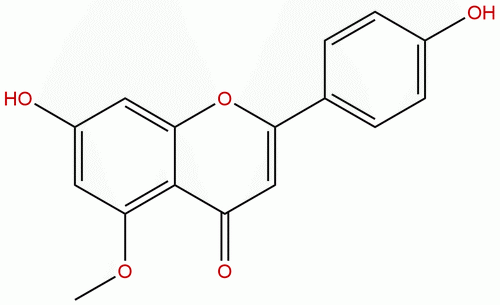
Huanghua oleander flavonoids belong to the flavonoid natural products, with a molecular formula of C16H12O6 and a molecular weight of 284.26. Its structural features include a typical flavonoid skeleton, containing multiple hydroxyl and methoxy substituents, endowing it with good biological activity and suitable physicochemical properties. The specific physical and chemical parameters are as follows:
- Molecular Weight: 284.2600
- LogP:2.5, Indicating that it has moderate lipid solubility, which is beneficial for cell membrane penetration
- Total Polar Surface Area (TPSA): 83.83 Å ², indicating moderate polarity that facilitates binding to protein targets
- Number of hydrogen bond acceptors: 6, reflecting its potential hydrogen bond formation ability
- Blood brain barrier permeability: low, indicating limited penetration ability in the central nervous system
- Hepatotoxicity, cardiotoxicity, and hERG inhibition did not show significant risks, indicating its high safety
The structure of flavonoids in oleander is stable and easily soluble in polar organic solvents, making it suitable for various extraction and purification techniques. Its chemical structure provides a basis for studying its interaction with targets and pharmacological mechanisms.
Plant sources and extraction methods
Huanghua oleander flavonoids mainly come from the oleander family plant Thevetia peruviana, which is widely distributed in tropical and subtropical regions. Huanghua oleander has been widely studied for its ornamental and medicinal value, among which flavonoids are one of its main active substances.
The extraction methods mainly include:
- Solvent extraction The most commonly used and efficient extraction method is to use polar solvents such as ethanol, methanol, or ethyl acetate to extract dried leaves, branches, or seeds of oleander.
- Ultrasound assisted extraction Using ultrasound to enhance solvent penetration and cell lysis, improving the extraction rate of flavonoids.
- Column chromatography separation and purification Through techniques such as silica gel column chromatography and reverse phase high-performance liquid chromatography (RP-HPLC), the separation and purification of flavonoids from oleander were achieved.
- Crystallization purification Crystallize the purified flavonoids to obtain high-purity compounds.
In recent years, green extraction techniques such as supercritical CO2 extraction and microwave-assisted extraction have also been attempted to be applied to the extraction of flavonoids from oleander to improve efficiency and environmental friendliness.
Pharmacological activity research
The oleander flavonoids have shown significant pharmacological activities in a variety of disease models, covering cardiovascular diseases, neurodegenerative diseases, tumors, liver fibrosis, diabetes and other fields.
1. Cardiovascular diseases
Cardiovascular disease is one of the leading causes of death worldwide, and flavonoids from oleander can regulate multiple related targets, such as BACE1、PTPN1、APEX1、AKR1B1、SELP、NFE2L2、SHBG、TOP1、HIF1A、HSD11B1) Play a protective role. Its ability to resist oxidation, inflammation and regulate apoptosis is helpful to reduce myocardial injury, improve cardiac function and inhibit the progression of atherosclerosis.
2. Neurodegenerative diseases
Huanghua oleander flavonoids exhibit potential neuroprotective effects against neurological diseases. It inhibits neuronal apoptosis and slows down neurodegenerative diseases by upregulating Bcl-2, downregulating Bax and caspase-3. In addition, its regulation of Tau protein (MAPT) and beta amyloid precursor (APP) suggests that it may intervene in the pathological processes of diseases such as Alzheimer's disease.
3. Tumors
In tumor research, flavonoids from oleander have shown dual effects in regulating cell apoptosis and proliferation. By regulating the Bcl-2, Bax, caspase-3, p53, NF - κ B, and PI3K signaling pathways, flavonoids can induce tumor cell apoptosis, inhibit tumor growth and metastasis, and have potential anti-cancer activity.
4. Liver fibrosis
Liver fibrosis is a common pathological basis for the progression of various liver diseases. Huanghua oleander flavonoids regulate Bcl-2, Bax, caspase-3 and key inflammatory factors TGFB1 and TNF, inhibit hepatic stellate cell activation and collagen deposition, and alleviate the degree of liver fibrosis.
5. diabetes and its complications
Diabetes and its complications are closely related to apoptosis and inflammation. By regulating Bcl-2, Bax, caspase-3, improving insulin signaling pathway (INSR) and inhibiting NF - κ B mediated inflammatory response, oleander flavone is helpful to protect the function of pancreatic islet β cells, and delay the progress of diabetes and the occurrence of its complications.
Mechanism of action and molecular targets
The pharmacological effects of flavonoids from oleander are mainly attributed to their regulation of cell apoptosis and inflammatory signaling pathways. Its mechanism of action involves multiple signaling pathways and key molecular targets:
- Regulating cell apoptosis By upregulating the anti apoptotic protein Bcl-2, cell survival signaling is enhanced; Downregulate the pro apoptotic protein Bax and the executing enzyme caspase-3, inhibit the process of cell apoptosis, and maintain cellular homeostasis.
- anti-oxidative stress Activate the NFE2L2 (Nrf2) signaling pathway, enhance cellular antioxidant capacity, and alleviate oxidative damage.
- anti-inflammatory effect Inhibiting the NF - κ B signaling pathway, reducing the expression of inflammatory factors, and alleviating inflammatory responses.
- Regulating metabolic related targets Such as insulin receptor (INSR), AKR1B1, etc., improve metabolic disorders.
- Affects tumor related signaling pathways Including p53, PI3K/Akt, etc., regulating cell cycle and apoptosis.
The multi-target and multi pathway mechanisms of action provide a theoretical basis for the widespread application of flavonoids from Apocynaceae grandiflorum in various diseases.
Evaluation of drug properties and pharmacokinetics
The pharmacological parameters of Huanghua oleander flavonoids show that they have good potential for drug development:
- Moderate molecular weight(284.26), compliant with Lipinski's rule
- Moderate fat solubility(LogP=2.5), Beneficial for cell membrane penetration
- Moderate polarity(TPSA=83.83), Helps with target binding and bioavailability
- Number of hydrogen bond acceptors 6 Support stable binding with protein targets
- Low permeability of blood-brain barrier It suggests that its direct effect in the central nervous system is limited, but it may exert neuroprotective effects through peripheral mechanisms
- Good safety No significant liver toxicity, cardiac toxicity, or hERG inhibition risk, reducing the possibility of cardiovascular side effects
- Ames mutagenicity experiment data is still lacking Further toxicology research is needed
In terms of pharmacokinetics, there are currently few reports on it. It is speculated that it is well absorbed orally and widely distributed in the body. The metabolic pathway may involve the liver enzyme system, and excretion is mainly through the kidneys. In the future, systematic pharmacokinetic and toxicological studies need to be conducted to clarify its in vivo behavior and safety.
Clinical application prospects and prospects
Huanghua oleander flavonoids have shown broad clinical application prospects due to their multi-target regulatory ability and good safety
- Prevention and treatment of cardiovascular diseases It may become a new natural drug for myocardial protection and atherosclerosis prevention and treatment through antioxidant, anti-inflammatory and regulating apoptosis.
- Intervention for neurodegenerative diseases Its regulation of apoptosis related proteins and its impact on Tau and APP provide new ideas for the treatment of neurodegenerative diseases such as Alzheimer's disease.
- neoadjuvant therapy Huanghua oleander flavonoids can be used as adjuvant drugs in tumor treatment by inducing apoptosis and inhibiting proliferation of tumor cells, improving efficacy and reducing side effects.
- Reversal of liver fibrosis Inhibiting hepatic stellate cell activation and inflammatory response has potential value in the development of anti fibrotic drugs.
- Diabetes and metabolic disease management: Improve insulin signaling and inhibit inflammation, and provide natural drug candidates for the prevention and treatment of diabetes and its complications.
Future research should focus on:
- Pharmacokinetic and safety evaluation of the system
- Structural optimization and derivative design to enhance bioavailability and targeting
- Multi center clinical trials to validate its efficacy and safety
- Combination therapy strategy to enhance synergistic effects
Conclusion
As a kind of natural flavonoids with multi target regulation ability, oleander flavonoids have shown significant pharmacological activities in cardiovascular diseases, neurodegenerative diseases, tumors, liver fibrosis, diabetes and other diseases. It exerts cell protection and anti apoptotic effects by regulating key apoptotic proteins such as Bcl-2, Bax, caspase-3, and combined with good pharmacological parameters, demonstrating great potential for drug development. Although the research on its pharmacokinetics and clinical application is still in its infancy, with the deepening of research, Huanghua oleander flavonoids are expected to become important natural drug candidates for the treatment of various diseases in the future. The foundation and clinical research of the system will lay a solid foundation for its translational application, promoting its further development in the field of natural product pharmacology.