| Catalog No | Package | Original Price | Price | Inventory | Quantity | Operating |
|---|---|---|---|---|---|---|
| SBP03452-5mg | 5mg | $260.00 | Sign in |
|


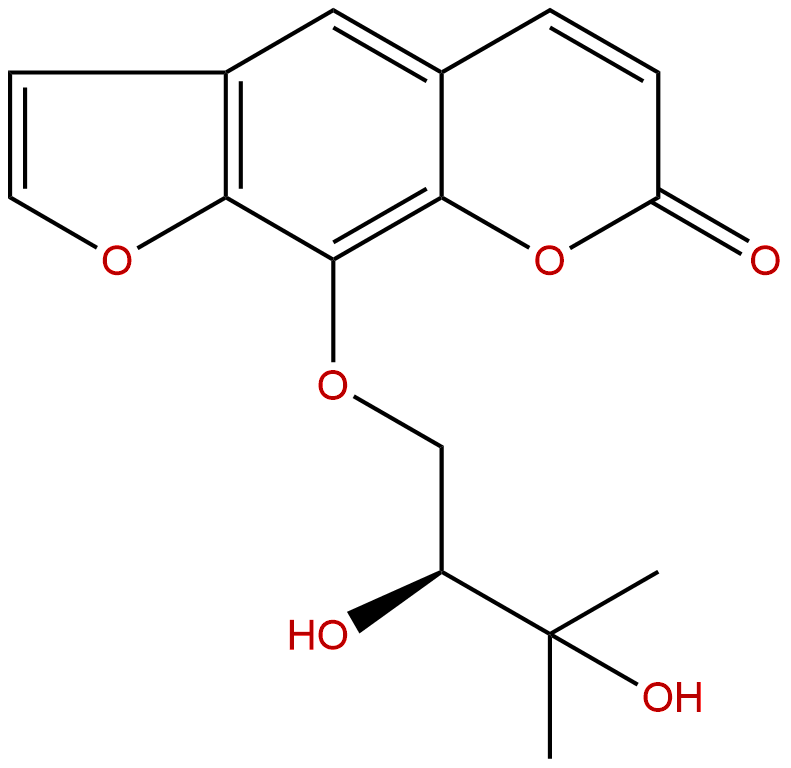
Product name: (-)-Heraclenol
Synonym name:
Catalogue No.: SBP03452
Cas No.: 139079-42-8
Formula: C16H16O6
Mol Weight: 304.298
Botanical Source:
Physical Description:
Type of Compound: Coumarins
Purity: 95%~99%
Analysis Method: HPLC-DAD or/and HPLC-ELSD
Identification Method: Mass, NMR
Packing: Brown vial or HDPE plastic bottle
The product could be supplied from milligrams to grams. Inquire for bulk scale.
We provide solution to improve the water-solubility of compounds, thereby facilitating the variety of activity tests and clinic uses.
For Reference Standard and R&D, Not for Human Use Directly.
Storage conditions:Short-term storage at 2~8℃, long-term storage at -20 ~ -80℃
93.0400
1.6290
1.6290
.0979
1.4837
10.7671
High
71.9606
3.3352
Yes
No
No
No
Yes
Yes
0.9
Yes
No
Yes
Yes
Natural products, as an important source of drug discovery, play an irreplaceable role in the long history of human fight against diseases. Among numerous natural products with biological activity, furan coumarin compounds have attracted much attention due to their unique chemical structure and extensive pharmacological activities. (-) - Heraclenol (CAS number: 139079-42-8) is a species of alcohol belonging to the genus Angelica in the family Apiaceae(Heracleum)The chemical structure of linear furan coumarin compounds isolated from plants is characterized by a furan ring attached to the coumarin parent nucleus and hydroxyl and isopentenyl units on the side chain.
Plants of the Duhuo genus have a long history of application in traditional medical systems, especially in folk medicine in East Asia, Europe, and North America. They are often used to treat rheumatism, inflammatory diseases, skin disorders, and digestive system disorders. Modern pharmacological research has confirmed that extracts from plants of the genus Angelica have various biological effects such as anti-inflammatory, analgesic, antibacterial, anti-tumor, and photosensitive activities. As one of the characteristic components of this genus of plants, (-) - Heraclenol has gradually become a research hotspot in the field of natural product pharmacology in recent years.
It is worth noting that (-) - Heraclenol exhibits particularly outstanding anti-inflammatory activity, and its mechanism of action involves multiple key inflammatory signaling pathways and targets, including IL-6/STAT3, NF - κ B, CASP1, TRPV1/TRPA1, etc. This multi-target action characteristic gives it unique advantages in treating complex inflammatory diseases. In addition, its pharmacological parameters show that the compound has good lipid solubility (LogP=1.629) and high blood-brain barrier permeability, which provides the possibility for its application in central nervous system inflammation related diseases.
This article will provide a systematic review of the research progress of (-) - Heraclenol from the aspects of chemical structure and physicochemical properties, plant sources and extraction methods, pharmacological activity, mechanism of action and molecular targets, drug evaluation and pharmacokinetics, clinical application prospects, etc., in order to provide reference for the in-depth research and development of this natural product.
The chemical name of (-) - Heraclenol is (9R) -9-hydroxy-8,9-dihydrofurano [2,3-h] chromen-7-one, which belongs to the derivatives of linear furanocoumarin (psoralen type). Its molecular formula is C ₁₆ H ₁₆ O ₆, and its molecular weight is 304.2980 g/mol. Structurally, the compound consists of three ring systems: a coumarin core (benzo [a] - pyranone), a furan ring, and a hydroxyl containing isopentenyl side chain. The furan ring is fused with the benzene ring of coumarin to form a furano [2,3-h] chromene skeleton, which is a typical structural feature of furan coumarin compounds.
The stereochemical characteristics of (-) - Heraclenol are the presence of a chiral center at the C-9 position, the naturally occurring configuration being the R configuration, and the optical rotation being left-handed ((-)). The presence of this chiral center has a significant impact on the biological activity of compounds, and enantiomers of different configurations may exhibit different pharmacological activities and metabolic characteristics. The hydroxyl group on the side chain is a primary alcohol hydroxyl group, which has certain reactivity and can participate in II phase metabolic reactions such as glycosylation and sulfation.
In terms of physical and chemical properties, (-) - Heraclenol exhibits moderate lipid solubility, with a calculated LogP value of 1.629, indicating that the compound has good distribution equilibrium in the lipid water two-phase system. This characteristic is advantageous for it to pass through biofilms through passive diffusion. The topological polar surface area (TPSA) is 93.040 Å ², which meets the general requirements for oral medication (it is generally believed that TPSA<140 Å ² is beneficial for oral absorption). The water solubility parameter is 0.0979 mg/mL, which belongs to the category of slight solubility, which to some extent limits its formulation development, but can be improved through prodrug design or formulation technology.
It is worth noting that the blood-brain barrier permeability of (-) - Heraclenol has been evaluated as "high", which is particularly prominent among furan coumarin compounds. High blood-brain barrier permeability means that the compound has the potential to enter the central nervous system, providing a structural basis for its applications in neuroinflammation, neurodegenerative diseases, and other fields. In addition, the hERG inhibition risk assessment was negative, indicating a low risk of cardiac toxicity; The Ames test result is 0.9, indicating that its genetic toxicity risk needs further evaluation.
(-) - Heraclenol is mainly distributed in the Apiaceae genus of the family Apiaceae(Heracleum)In plants, it is one of the characteristic secondary metabolites of this genus of plants. In addition, in the genus Angelica(Angelica)Former Hu genus(Peucedanum)It has also been found in closely related plants. The main sources of plants include:
In terms of distribution within the plant body, (-) - Heracelol mainly accumulates in roots, rhizomes, and fruits, with relatively low levels in stems and leaves. Its biosynthetic pathway belongs to the branch of phenylpropane metabolism pathway, which is generated by multi-step enzymatic reaction of coumaroyl CoA. Environmental factors such as light, temperature, moisture, and soil nutrients have a significant impact on the accumulation of (-) - Heraclenol in plants, among which ultraviolet radiation can induce its biosynthesis.
In terms of extraction methods, traditional solvent extraction is still the most commonly used approach. Due to its moderate polarity, (-) - Heraclenol can be extracted using ethanol, methanol, or ethanol water mixed solvents. Usually, dried plant materials are crushed and soaked or percolated in 70% -95% ethanol at room temperature or heating conditions for extraction. The extract is concentrated to obtain a crude extract. In order to improve extraction efficiency and selectivity, various modern extraction techniques have been developed in recent years:
In terms of separation and purification, crude extracts usually require multiple chromatographic steps to obtain high-purity (-) - Heraclenol. Common separation methods include silica gel column chromatography (using petroleum ether ethyl acetate or chloroform methanol as elution systems), preparative high-performance liquid chromatography (reverse phase C18 column, acetonitrile water or methanol water as mobile phase), high-speed countercurrent chromatography, etc. Due to the characteristic UV absorption of furan coumarin compounds (around 245 nm and 300 nm), they can be monitored online through UV detectors.
The anti-inflammatory activity of (-) - Heracelol is one of its most prominent pharmacological effects. Multiple in vitro and in vivo studies have confirmed that this compound can significantly inhibit key components of the inflammatory response. In a macrophage model stimulated by lipopolysaccharide (LPS), (-) - Heracelol can dose dependently inhibit the production of pro-inflammatory cytokines such as tumor necrosis factor - α (TNF - α), interleukin-6 (IL-6), and interleukin-1 β (IL-1 β). In addition, it can also reduce the production of nitric oxide (NO) and prostaglandin E ₂ (PGE ₂), which is related to the inhibition of inducible nitric oxide synthase (NOS2) and cyclooxygenase-2 (PTGS2) expression.
In animal models, (-) - Heracelol exhibits inhibitory effects on acute and chronic inflammation. In the rat paw swelling model induced by carrageenan, oral or local administration of (-) - Heracilenol can significantly reduce the degree of swelling, and its effect is comparable to the positive control drug indomethacin. In a fully Freund's adjuvant induced arthritis model, (-) - Heracelol can reduce joint swelling, lower inflammation scores, and inhibit inflammatory cell infiltration and cartilage destruction in joint tissues.
Associated with anti-inflammatory effects, (-) - Heracelol also exhibits certain analgesic activity. In the acetic acid writhing test and formalin test, (-) - Heracelol can reduce pain response, and its mechanism of action may involve inhibiting the production of inflammatory mediators and regulating the activity of transient receptor potential (TRP) channels. Especially its regulatory effect on TRPV1 and TRPA1 channels may be closely related to its analgesic effect.
The furanocoumarin skeleton of (-) - Heraclenol endows it with certain free radical scavenging ability. Research has shown that this compound can scavenge DPPH free radicals and ABTS cationic free radicals, and inhibit lipid peroxidation reactions. In cell models, (-) - Heraclenol can reduce reactive oxygen species (ROS) levels and upregulate the activity of antioxidant enzymes such as superoxide dismutase (SOD) and glutathione peroxidase (GPx), thereby protecting cells from oxidative stress damage.
In addition to the main activities mentioned above, (-) - Heracelol also exhibits other potential pharmacological effects. In terms of antibacterial activity, it has a certain inhibitory effect on certain Gram positive bacteria such as Staphylococcus aureus and Staphylococcus epidermidis. In terms of anti-tumor activity, preliminary studies have shown that (-) - Heracilenol can inhibit the proliferation of certain tumor cells, but its cytotoxicity is relatively weak and selectivity needs to be improved. In addition, as a furan coumarin compound, (-) - Heracelol has photosensitivity and can undergo cross-linking reaction with DNA under long wave ultraviolet (UVA) irradiation, which has potential application value in phototherapy.
The anti-inflammatory effect of (-) - Heraclenol involves the regulation of multiple molecular targets and signaling pathways, exhibiting characteristics of multi-target and multi pathway action. The following provides a detailed explanation of its main mechanism of action.
IL-6 is a multifunctional cytokine that plays a central role in inflammatory responses. After binding to the receptor, IL-6 activates JAK kinase, which then phosphorylates STAT3 transcription factor. Activated STAT3 enters the nucleus to regulate target gene expression. (-) Heracenol can inhibit the production of IL-6 and directly or indirectly suppress the phosphorylation level of STAT3. Research has shown that (-) - Herclenol can reduce the phosphorylation of the Tyr705 site of STAT3 in LPS stimulated macrophages, thereby inhibiting the transcriptional activity of STAT3 and reducing the expression of downstream pro-inflammatory genes.
Nuclear factor kappa B (NF - κ B) is a key transcription factor in inflammatory response, regulating the expression of various pro-inflammatory genes such as TNF - α, IL-1 β, IL-6, NOS2, and PTGS2. In the resting state, NF - κ B binds to the inhibitory protein I κ B and remains in the cytoplasm. Inflammatory stimuli activate I κ B kinase (IKBKB), phosphorylate and degrade I κ B, and release NF - κ B into the nucleus. (-) - Heraclenol can inhibit the activity of IKBKB, prevent the phosphorylation and degradation of I κ B, and thus inhibit the nuclear translocation and transcriptional activity of NF - κ B. In addition, (-) - Heracylenol can directly interact with RELA (NF - κ B p65 subunit), affecting its binding ability to DNA.
The NLRP3 inflammasome is an important component of the innate immune system, and its activation leads to the activation of CASP1 (caspase-1), which in turn promotes the maturation and secretion of IL-1 β and IL-18. (-) - Heracylenol can inhibit the assembly and activation of NLRP3 inflammasomes, reduce the activation of CASP1, and thus decrease the production of IL-1 β. This mechanism of action is of great significance for the treatment of NLRP3 related inflammatory diseases.
Transient receptor potential channels TRPV1 and TRPA1 are important ion channels on nociceptors, involved in the transmission of pain and inflammatory signals. TRPV1 can be activated by capsaicin, heat, and acid, while TRPA1 is sensitive to various chemical stimuli. (-) Heracenol can regulate the activity of these channels, possibly by directly binding or indirectly adjusting the phosphorylation state of the channels. Research has shown that (-) - Heraclenol can inhibit TRPV1 and TRPA1 mediated calcium influx, thereby reducing pain and neurogenic inflammation.
(-) - Heracelol has inhibitory effects on PTGS1 (cyclooxygenase-1) and NOS2 (inducible nitric oxide synthase). PTGS1 is a key enzyme in prostaglandin synthesis, involved in inflammation and pain responses; NOS2 catalyzes the production of a large amount of NO, which plays a pro-inflammatory role in the inflammatory process. (-) - Heracelol exerts anti-inflammatory and analgesic effects by inhibiting the expression and activity of these enzymes, reducing the production of prostaglandins and NO.
The multi-target action characteristic of (-) - Heraclenol is its advantage over single target drugs. By simultaneously regulating multiple inflammation related pathways such as IL-6/STAT3, NF - κ B, NLRP3/CASP1, TRPV1/TRPA1, etc., (-) - Heracilol can inhibit inflammatory responses at multiple levels and produce synergistic anti-inflammatory effects. This multi-target mode of action not only improves therapeutic efficacy, but may also reduce the risk of drug resistance and side effects caused by single target inhibition.
Based on computational medicinal chemistry methods, the pharmacological properties of (-) - Heraclenol were evaluated, and the results showed that it conforms to most drug class rules. The molecular weight is 304.2980 Da, which meets the requirement of Lipinski's five rules for molecular weight<500. The LogP value is 1.629, which is within the ideal range of lipid solubility (0-3) and is beneficial for oral absorption and membrane permeability. The TPSA is 93.040 Å ², which is lower than 140 Å ², indicating its good oral bioavailability potential. The water solubility is 0.0979 mg/mL, which is low but still within an acceptable range.
Of particular note is that the blood-brain barrier permeability of (-) - Heraclenol has been evaluated as "high", which has important value in the treatment of central nervous system diseases. The hERG inhibition risk assessment was negative, reducing the risk of cardiac toxicity. The Ames test result is 0.9, indicating a possible genetic toxicity risk that needs further experimental verification.
At present, experimental research on the pharmacokinetics of (-) - Heraclenol is relatively limited, but preliminary inferences can be made based on its physicochemical properties and studies of similar compounds. In terms of absorption, the LogP and TPSA values of (-) - Heraclenol indicate that it may be effectively absorbed in the gastrointestinal tract through passive diffusion. However, its low water solubility may limit the dissolution rate, thereby affecting the absorption rate and degree.
In terms of distribution, high blood-brain barrier permeability suggests that (-) - Heraclenol can be widely distributed in various tissues in the body, including the central nervous system. The binding rate with plasma proteins still needs to be experimentally determined, but furan coumarin compounds usually have a moderate degree of protein binding.
In terms of metabolism, the furan coumarin skeleton and side chain hydroxyl groups of (-) - Heraclenol are the main metabolic sites. Possible metabolic pathways include: glucuronidation and sulfation of side chain hydroxyl groups, oxidative ring opening of furan rings, hydrolysis of coumarin lactone rings, etc. The cytochrome P450 enzyme system may be involved in its oxidative metabolism. It is worth noting that furan coumarin compounds are known inhibitors of CYP3A4, and (-) - Heracilenol may have similar drug interaction potential.
In terms of excretion, (-) - Heracylenol and its metabolites may be mainly excreted through bile and urine. Due to its moderate molecular weight, bile excretion may be one of the main pathways.
Given the inhibitory effect of furan coumarin compounds on CYP3A4, (-) - Heracilenol may interact with other drugs metabolized by CYP3A4, leading to an increase in their blood drug concentration. In addition, the photosensitivity of (-) - Heraclenol needs to be taken into account in clinical applications, especially when the skin is exposed to ultraviolet radiation.
In terms of safety, preliminary toxicity assessment shows that (-) - Heracelol has low acute toxicity, but long-term toxicity, reproductive toxicity, and carcinogenicity data are still lacking. The positive result of Ames test suggests the need for further evaluation of its genetic toxicity risk. During the development process, comprehensive toxicology research is required to ensure safety.
The multi-target anti-inflammatory effect of (-) - Heracelol makes it potentially valuable for the treatment of various inflammatory diseases. Especially in chronic inflammatory diseases such as rheumatoid arthritis, inflammatory bowel disease, psoriasis, etc., its multi-target action characteristics may provide better therapeutic effects than single target drugs. In addition, its regulatory effect on TRPV1 and TRPA1 channels gives it unique advantages in the treatment of neuropathic pain and inflammatory pain.
The high blood-brain barrier permeability of (-) - Heraclenol has opened the door for its application in central nervous system diseases. Neuroinflammation is a common pathological feature of various neurodegenerative diseases such as Alzheimer's disease, Parkinson's disease, and multiple sclerosis. (-) Heracelol may have a delaying effect on the progression of neurodegenerative diseases by inhibiting the excessive activation of microglia and astrocytes, reducing the production of pro-inflammatory factors. In addition, its protective role in acute neurological injuries such as cerebral ischemia-reperfusion injury and traumatic brain injury is also worth exploring.
As a furan coumarin compound, the photosensitivity of (-) - Heraclenol has potential applications in phototherapy. Similar to psoralen, (-) - Heraclenol can crosslink with DNA under UVA irradiation, inhibiting cell proliferation. This characteristic can be used to treat proliferative skin diseases such as psoriasis, vitiligo, and cutaneous T-cell lymphoma. However, its phototoxicity and long-term safety need to be carefully evaluated.
The following strategies can be considered for the drug development of (-) - Heraclenol:
structural optimization By using medicinal chemical methods to modify the structure of (-) - Heracelol, its water solubility, metabolic stability, and selectivity are improved. For example, introducing phosphate groups or amino acid residues on the side chain hydroxyl groups can improve water solubility and achieve prodrug design.
Formulation development Modern formulation technologies such as nano formulations, liposomes, and cyclodextrin inclusion complexes are used to improve the solubility and bioavailability of (-) - Heracelol.
combination therapy Based on its multi-target action characteristics, explore the combination application with other anti-inflammatory drugs or targeted drugs to achieve synergistic enhancement and toxicity reduction.
Indication selection Prioritize the clinical development of disease areas that are highly compatible with the mechanism of action of (-) - Herculanol, such as neuroinflammatory diseases and chronic pain.
Although (-) - Heracylenol has demonstrated good pharmacological activity and potential as a drug, its development still faces many challenges. Firstly, the production of natural sources is limited, and efficient chemical synthesis or biosynthetic methods need to be developed to meet the needs of research and large-scale production. Secondly, pharmacokinetic and toxicological data are not yet complete and require systematic preclinical studies. In addition, the positive results of Ames test need to be further confirmed and evaluated to ensure the safety of clinical use.
Looking ahead to the future, with a deeper understanding of the mechanism of action of (-) - Herculanol and advances in drug development technology, this natural furan coumarin compound is expected to become a novel lead compound for the treatment of inflammatory diseases and central nervous system disorders. Especially its multi-target action characteristics and good blood-brain barrier permeability give it unique advantages in the treatment of complex diseases. Through interdisciplinary collaboration, it is expected to transform this natural product into clinically usable drugs.
Heterocoumarin, a natural furan coumarin compound, has attracted widespread attention from researchers due to its unique chemical structure and multi-target pharmacological activity. This article systematically reviews the chemical structure and physicochemical properties, plant sources and extraction methods, pharmacological activity, mechanism of action and molecular targets, pharmacological evaluation and pharmacokinetics, as well as clinical application prospects of the compound.
The most notable feature of (-) - Heraclenol is its multi-target anti-inflammatory mechanism, involving multiple inflammation related signaling pathways and targets such as IL-6/STAT3, NF - κ B, NLRP3/CASP1, TRPV1/TRPA1, etc. This multi-target mode of action gives it unique advantages in treating complex inflammatory diseases. In addition, its excellent blood-brain barrier permeability provides the possibility for its application in central nervous system diseases.
From the perspective of drug development, (-) - Heraclenol conforms to most drug like rules, has moderate lipid solubility and acceptable water solubility, and has low risk of hERG inhibition. However, its genetic toxicity risk needs further evaluation, and pharmacokinetic and toxicological data also need to be improved.
In summary, (-) - Heracylenol is a promising natural product lead compound, and its potential application value in anti-inflammatory and neuroprotective fields is worth further exploration. Future research should focus on structural optimization, formulation development, pharmacokinetic studies, and safety evaluation to promote the clinical application of this natural product from the laboratory. With the deepening of research, (-) - Heracylenol is expected to provide new options for the treatment of inflammatory diseases and central nervous system diseases.
Batch can search by a CAS number,one per line
