Introduction/Overview
Natural products have long been an important treasure trove for innovative drug discovery, among which coumarin compounds have attracted much attention due to their extensive and significant biological activities. 6,7-dihydroxy-4-phenylcoumarin, also known as Nordalbergin (CAS number: 482-82-6), is a structurally unique and pharmacologically active member. This compound was originally derived from the Indian rosewood of the genus Dalbergia in the legume family(Dalbergia sissoo)Separated from the bark. Early studies have found that it can effectively induce human promyelocytic leukemia cells (HL-60) to differentiate into mature granulocytes, indicating its potential value in the field of anti-tumor. In recent years, with the deepening of research, its anticoagulant activity has gradually become a new research hotspot, demonstrating its complex regulatory ability to act on multiple coagulation related targets. This article aims to systematically review the chemical properties, plant sources, pharmacological activities, mechanisms of action, pharmacological evaluation, and clinical application prospects of Nordalbergin, in order to provide comprehensive scientific references for the deep development and utilization of this natural product.
Chemical structure and physicochemical properties
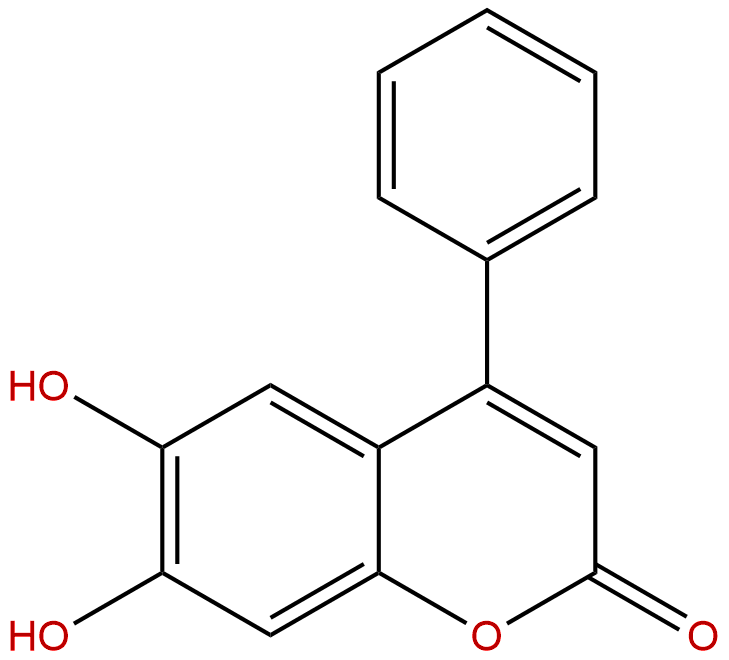
The chemical name of Nordalbergin is 6,7-dihydroxy-4-phenylcoumarin, with a molecular formula of C15H10O4 and a molecular weight of 254.2410. Its core structure is the coumarin (benzo [a] - pyranone) parent nucleus, which is substituted by a phenyl group at position 4 and connected to a hydroxyl group at positions 6 and 7. This structural feature makes it an important representative of the 4-phenylcoumarin family.
Its physical and chemical properties profoundly affect its biological activity and potential as a drug. The calculated lipid water partition coefficient (LogP) is 2.8269, indicating that the compound has moderate lipophilicity, which is beneficial for transmembrane transport, but excessive lipid solubility may also affect its water solubility. Its topological polar surface area (TPSA) is 70.6700 Å ², reflecting the polarity brought by the two phenolic hydroxyl groups in the molecule. The water solubility data (0.0048 mg/mL) confirms its low solubility in water, which may be one of the key challenges to overcome in its oral absorption and formulation development. Preliminary drug risk assessment shows that its ability to cross the blood-brain barrier is low, suggesting that its effects may mainly be concentrated in the peripheral system; The hERG channel inhibition test was negative, reducing the risk of inducing cardiac QT interval prolongation related arrhythmias; The Ames test result is 0.9, indicating that there is no significant mutagenicity, but further genetic toxicity studies are needed to confirm.
Plant sources and extraction methods
Nordalbergin mainly comes from Fabaceae, a genus of yellow sandalwood in the legume family(Dalbergia)Plants, including Indian rosewood(Dalbergia sissoo)It is the earliest and most important source of reporting. Indian rosewood is a tree species with significant economic value. Its wood is hard and resistant to decay, and its different parts (such as heartwood and bark) are also used in traditional medicine to treat various diseases. Nordalbergin is mainly isolated from its bark.
The extraction and separation of Nordalbergin from plant materials typically follow the conventional process of natural product chemistry. Firstly, extract the dried and crushed plant materials (such as bark) using organic solvents. Common solvents include methanol, ethanol, or acetone, which are polar solvents that can effectively extract coumarin compounds. After decompression and concentration, the crude extract is separated and purified by various chromatographic techniques, such as silica gel column chromatography, Sephadex LH-20 column chromatography and high performance liquid chromatography (HPLC). Its structure has been identified and confirmed through modern spectroscopic techniques such as nuclear magnetic resonance hydrogen spectroscopy, carbon spectroscopy, and mass spectrometry. With the increasing demand for activity, research is also dedicated to optimizing extraction processes (such as ultrasound assisted extraction, microwave-assisted extraction) to improve yield. In addition, the exploration of fully synthetic chemical routes also provides the possibility of obtaining sufficient compounds for in-depth pharmacological research.
Pharmacological activity research
Nordalbergin exhibits diverse pharmacological activities, with the most prominent being its anticoagulant activity and induction of cell differentiation/potential anti-tumor activity.
-
anticoagulant activity This is the most widely studied area in Nordalbergin research in recent years. Research has shown that it can exert significant anticoagulant effects by affecting multiple key factors in both endogenous and exogenous coagulation pathways. In vitro experiments, it can prolong plasma clotting time (such as PT and APTT), inhibit platelet aggregation, and downregulate the expression of various procoagulant and fibrinolytic inhibitory factors. Its target network is extensive, involving multiple links in the coagulation cascade reaction.
-
Induced differentiation and anti-tumor activity Its initial biological activity report was to induce differentiation of HL-60 cells. HL-60 cells are a human promyelocytic leukemia cell line, and Nordalbergin can inhibit their proliferation and promote their differentiation towards cells with phagocytic function and expression of mature granulocyte surface markers. Cell differentiation induction is an important strategy for anti leukemia therapy, therefore this activity suggests that Nordalbergin may have the potential to be developed as a lead compound for anti leukemia treatment. In addition, its inhibitory activity on the proliferation of other tumor cell lines also needs further exploration.
-
Other activities Based on its coumarin core and phenolic hydroxyl structure, Nordalbergin may also have antioxidant, anti-inflammatory, and other activities, which may have synergistic effects with its core pharmacological effects. However, there are relatively few related research reports, and more experimental data is needed to support this.
Mechanism of action and molecular targets
The pharmacological effects of Nordalbergin, particularly its anticoagulant properties, stem from its interactions with multiple molecular targets. Existing research (mainly based on computational prediction and partial experimental verification) points to a complex multi-target regulatory network, mainly focusing on the coagulation and fibrinolysis systems:
- Regulation of coagulation factor synthesis Nordalbergin may inhibit the gamma carboxylation activation of vitamin K-dependent coagulation factors (F2, F7, F9, F10) and anticoagulant proteins (PROC, PROS1) by interfering with the function of vitamin K epoxide reductase complex subunit 1 (VKORC1), affecting the recycling of vitamin K. This will lead to a decrease in functional coagulation factors, resulting in anticoagulant effects.
- The impact on coagulation factor activity It may directly or indirectly inhibit the expression or activity of tissue factor (F3), which is crucial for initiating the exogenous coagulation pathway. At the same time, inhibition of thrombin (F2) and coagulation factor X (F10) is also an important link in its anticoagulant effect.
- Regulation of fibrinolytic system By downregulating the expression of plasminogen activator inhibitor-1 (SERPINE1), Nordalbergin may alleviate its inhibition of tissue type plasminogen activator, thereby enhancing fibrinolysis and promoting thrombolysis.
- Inhibition of platelet function Von Willebrand factor (VWF) plays a crucial role in platelet adhesion and aggregation. Nordalbergin may indirectly inhibit platelet activation and aggregation by affecting the function of VWF.
- Mechanism of inducing differentiation In HL-60 cells, the mechanism of inducing differentiation may be related to regulating cell cycle related proteins (such as cyclin D1), activating differentiation related signaling pathways (such as MAPK and PKC pathways), and affecting transcription factors (such as the C/EBP family). The specific target of action still needs to be further elucidated.
In summary, Nordalbergin intervenes in coagulation fibrinolysis balance through a "multi-target, multi pathway" approach, providing unique mechanistic advantages for its development as a novel antithrombotic drug, which may lead to more balanced efficacy and better safety.
Evaluation of drug properties and pharmacokinetics
Although Nordalbergin has significant in vitro pharmacological activity, its drug like and pharmacokinetic (PK) properties are key factors determining its successful development as a drug.
According to the preliminary analysis of its physical and chemical parameters, there are both opportunities and challenges for its medicinal properties. The advantage lies in its moderate molecular weight and LogP value around the ideal range (1-3), which conforms to multiple of Lipinski's "Five Rules" and has the basic structure to become an orally active small molecule. HERG inhibition negative and Ames test negative are important early safety signals.
However, the challenges it faces are also very obvious:
1. Poor water solubility Extremely low water solubility (0.0048 mg/mL) can seriously affect its oral bioavailability. Dissolution in the gastrointestinal tract is a prerequisite for absorption, and insufficient solubility may lead to irregular absorption, low blood drug concentration, and large fluctuations.
2. Low blood-brain barrier permeability This may not be a problem for treating peripheral system diseases such as thrombosis, and may even reduce central side effects, but it limits its potential for treating central nervous system related diseases.
3. Metabolism and stability Coumarin compounds are usually easily metabolized by the liver, especially through cytochrome P450 enzyme systems and II binding reactions (such as glucuronidation and sulfation). The phenolic hydroxyl group in the Nordalbergin structure is a sensitive metabolic site, which may result in a shorter half-life in vivo.
4. Lack of systematic pharmacokinetic data Currently, there is a significant lack of research in the public literature on the absorption, distribution, metabolism, and excretion (ADME) of Nordalbergin in animals. The key PK parameters such as oral absorption degree, plasma protein binding rate, major metabolites, and elimination half-life are still unknown.
Therefore, future research urgently requires systematic preclinical pharmacokinetic evaluation. At the same time, in order to improve its drug properties, it may be necessary to adopt prodrug strategies (such as esterifying phenolic hydroxyl groups to increase lipid solubility and membrane permeability, and hydrolyzing them into active active active ingredients in vivo), develop new formulations (such as nanocrystals, solid dispersions, liposomes to increase solubility and bioavailability), or carry out reasonable structural modifications to optimize its PK properties while maintaining activity.
Clinical application prospects and prospects
Nordalbergin, as a multi-target anticoagulant/fibrinolytic natural lead compound, has shown unique application prospects in the prevention and treatment of cardiovascular diseases, especially thrombotic diseases. Compared with traditional single target anticoagulants (such as warfarin inhibiting VKORC1, direct Xa factor inhibitors, etc.), its multi-target properties may bring more comprehensive antithrombotic effects, while reducing bleeding risk through balanced regulation, but this requires rigorous in vivo experimental verification.
Its main potential clinical application directions include:
1. Prevention and treatment of arteriovenous thrombosis Such as deep vein thrombosis, pulmonary embolism, atrial fibrillation related stroke, and thrombotic events after acute coronary syndrome.
2. As an alternative or supplement to warfarin Its mechanism of action partially overlaps with warfarin (both may affect VKORC1), but its multi-target nature may make it have different efficacy/safety profiles, or it can be used for patients who are intolerant or resistant to warfarin.
3. Antitumor adjuvant therapy The activity of inducing leukemia cell differentiation is worthy of further exploration, and it may be combined with other chemotherapy drugs to provide new ideas for leukemia treatment. In addition, cancer patients often have a hypercoagulable state, and their anticoagulant activity may also be beneficial in this context.
Looking ahead, research and development around Nordalbergin should focus on the following directions:
* In depth study on the mechanism of action Using chemical biology methods such as affinity fishing and molecular probes to confirm its direct target and elucidate the precise molecular network of its multi-target effects.
* Preclinical development of the system Complete a comprehensive pharmacological evaluation (using different thrombus animal models), pharmacokinetic studies, and toxicological assessments to clarify the treatment window.
* Optimization of drug properties By using medicinal chemistry and pharmaceutical methods, bottleneck issues such as water solubility and metabolic stability can be resolved.
* Exploring the potential of combination therapy Study its synergistic effect with existing antiplatelet and anticoagulant drugs to find a better treatment plan.
Conclusion
6,7-dihydroxy-4-phenylcoumarin (Nordalbergin) is a natural coumarin compound derived from plants of the Dalbergia genus. With its unique chemical structure and multi-target pharmacological effects, it exhibits remarkable activity, especially in anticoagulation and inducing cell differentiation. It regulates coagulation fibrinolysis balance by intervening in multiple targets such as SERPINE1, VKORC1, and coagulation factors, providing valuable lead structures for the development of novel multi-target antithrombotic drugs. Although it currently faces challenges such as poor water solubility and missing pharmacokinetic data in drug development, these challenges are precisely the areas that modern medicinal chemistry and pharmacy can focus on addressing. With a deeper analysis of its mechanism of action and rational optimization based on structure, Nordalbergin is expected to gradually move from a potential natural active molecule to preclinical and clinical research, ultimately providing new weapons for the treatment of major health problems such as thrombotic diseases. The continuous research on Nordalbergin will not only help to explore its medicinal value, but also provide useful references for the development of other natural products.