| Catalog No | Package | Original Price | Price | Inventory | Quantity | Operating |
|---|---|---|---|---|---|---|
| BP1677-100mg | 100mg | $30.00 | Sign in |
|


Product name: Phloretic acid
Synonym name: Phloretinic acid
Catalogue No.: BP1677
Cas No.: 501-97-3
Formula: C9H10O3
Mol Weight: 166.176
Botanical Source: "Constit. of urine. Isol. from sulfite liquors, prod. by Clostridium butyricum. Isol. from heartwood of Haplormosia monophylla (Leguminosae). A prod. of tyrosine metab.; conc. in urine increases in patients with gastrointestinal diseases"
Physical Description:
Type of Compound: Phenols
Purity: 95%~99%
Analysis Method: HPLC-DAD or/and HPLC-ELSD
Identification Method: Mass, NMR
Packing: Brown vial or HDPE plastic bottle
The product could be supplied from milligrams to grams. Inquire for bulk scale.
We provide solution to improve the water-solubility of compounds, thereby facilitating the variety of activity tests and clinic uses.
For Reference Standard and R&D, Not for Human Use Directly.
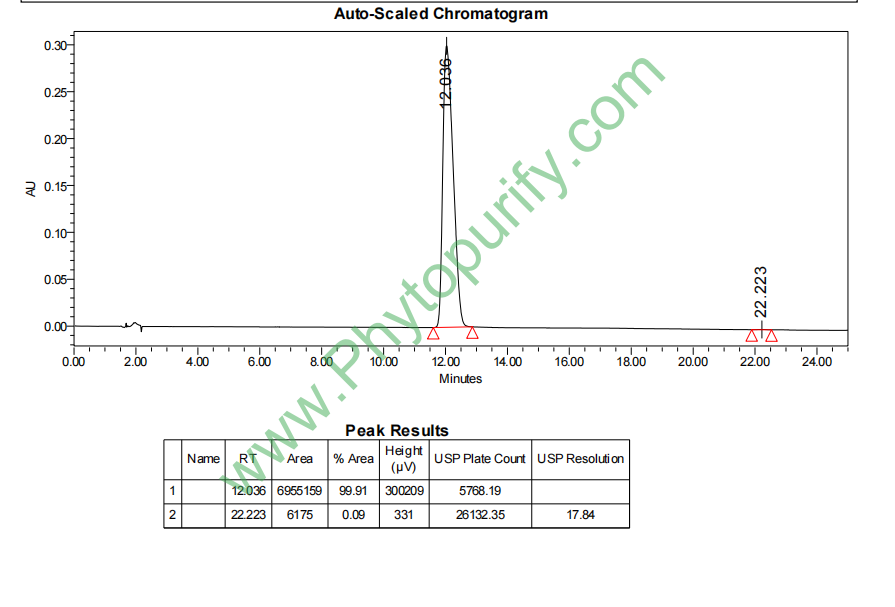
HPLC of Phloretic acid
Storage conditions:Short-term storage at 2~8℃, long-term storage at -20 ~ -80℃
57.5300
1.3872
-.9011
2.3665
1.9826
9.7258
Low
81.8409
1.5207
Yes
No
No
No
No
No
0.0
Yes
Yes
Yes
Yes
Natural products, as an important source of drug discovery and development, have played an irreplaceable role in the long history of human fight against diseases. Among them, phenylpropanoid compounds have always been a hot topic in medicinal chemistry and pharmacology research due to their wide range of biological activities and diverse chemical structures. Hydroxyphenylpropionic acid, also known as root bark acid, as a relatively simple secondary metabolite of hydroxyphenylpropionic acid in plants, has not received widespread attention like star molecules such as resveratrol and caffeic acid for a long time. However, with the advancement of modern analytical techniques and the deepening of interdisciplinary research, more and more evidence shows that p-hydroxyphenylpropionic acid is not only a precursor for the biosynthesis of various complex polyphenolic compounds (such as lignin and flavonoids), but also exhibits significant pharmacological activities involving antibacterial, antioxidant, anti-inflammatory, and other aspects that cannot be ignored. Of particular note is that recent studies have revealed its potential inhibitory effect on pathogenic microorganisms such as Escherichia coli, and have identified multiple key targets, providing new ideas for the development of novel antibacterial agents, especially in addressing the increasingly severe problem of bacterial resistance. This article aims to systematically review the chemical properties, plant sources, pharmacological activities, mechanisms of action, medicinal properties, and application prospects of hydroxyphenylpropionic acid, in order to provide comprehensive academic references for the in-depth research and development of this compound.
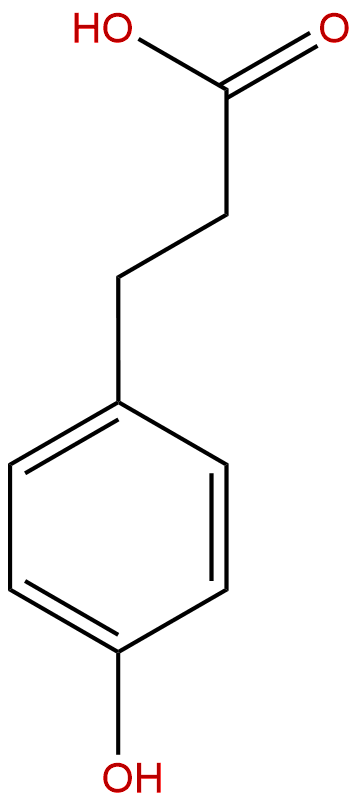
The chemical name for p-hydroxyphenylpropionic acid is 3- (4-hydroxyphenyl) propionic acid, with the molecular formula C9H10O3 and CAS number 501-97-3. Structurally, the molecule consists of a benzene ring, a three carbon fatty chain (propionic acid chain), and a hydroxyl group, making it a simple derivative of phenylpropanoic acid. The hydroxyl group on its benzene ring is in the para position, and the propionic acid chain is connected to the benzene ring in the form of a propyl group, with a carboxyl group at the end. This structure combines hydrophilic carboxyl and phenolic hydroxyl groups with hydrophobic benzene and methylene chains, determining its unique physicochemical properties.
Its molecular weight is 166.1760 g/mol. The logarithm of the calculated lipid water partition coefficient (LogP) is approximately 1.39, indicating that the compound has a certain degree of lipophilicity, but still tends to be hydrophilic overall, which is consistent with the presence of strong polar carboxyl and phenolic hydroxyl groups in its structure. The topological polar surface area (TPSA) is 57.53 Å ², further confirming its good polarity characteristics. In terms of water solubility, the predicted value is about 2.37 mg/mL, which belongs to the range of slightly soluble to soluble, which is beneficial for its dissolution and distribution in organisms. These basic physicochemical parameters (LogP<3, TPSA<60 Å ², molecular weight<200) preliminarily meet the requirements for oral absorption in the five rules of drug class, indicating that they have a structural basis as lead compounds.
Hydroxyphenylpropionic acid is a conjugated acid form of formate, and its phenolic hydroxyl and carboxyl groups may cause dissociation under physiological pH conditions, thereby affecting its charge state and biofilm permeability. Its structure is simple and easy to chemically modify, providing convenience for subsequent structural optimization to improve its pharmacological activity and pharmacokinetic properties.
Hydroxyphenylpropionic acid is widely distributed in nature and is an important intermediate in the phenylpropane metabolic pathway of plants. It mainly exists in the roots, bark, leaves, and fruits of various plants, often in the form of free acids or bound forms (such as glycosides and esters).
Plant-based:
1. Rosaceae plants Apples, pears, peaches, plums and other fruits have abundant contents in their skin and flesh, especially in the apple peel, which often coexists with other phenolic acids.
2. Pinus Lambertiana It can be detected in the bark and needles of some pine and spruce trees.
3. medicinal plants It has also been reported in various traditional medicinal plants such as licorice, danshen, honeysuckle, etc., which may be one of the material bases for their pharmacological effects.
4. Food sources Honey (especially honey from certain specific flower sources), red wine, and some whole grain foods also contain p-hydroxyphenylpropionic acid or its derivatives.
extraction method:
The extraction of hydroxyphenylpropionic acid usually follows the general extraction principles of plant phenolic acid compounds.
1. Solvent extraction method The most commonly used method. According to the principle of "similar solubility", solvents of different polarities are often used for extraction. Methanol, ethanol, acetone, and their mixed solvents with water (such as 70-80% methanol/ethanol aqueous solution) can effectively extract free and partially bound p-hydroxyphenylpropionic acid. This method is easy to operate, cost-effective, and suitable for laboratory and preliminary industrial extraction.
2. Acid/alkali hydrolysis extraction method In order to obtain the total amount of p-hydroxyphenylpropionic acid in its bound state (such as ester bonds and glycosidic bonds), it is often necessary to first hydrolyze the plant material. Acid hydrolysis (such as refluxing with 2M HCl) or alkaline hydrolysis (such as treating with 2M NaOH at room temperature or heating under nitrogen protection) can break these chemical bonds, releasing free p-hydroxyphenylpropionic acid, which can then be extracted and purified with organic solvents (such as ethyl acetate, ether).
3. Ultrasound assisted extraction/Microwave assisted extraction The use of ultrasound or microwave energy to accelerate solvent penetration into plant cell walls, improve extraction efficiency and rate, and shorten extraction time is currently a commonly used green extraction technique.
4. Purification technology After filtration and concentration, the crude extract can be further separated and purified using column chromatography (such as silica gel column, macroporous adsorption resin column), preparative high-performance liquid chromatography, and other techniques to obtain high-purity p-hydroxyphenylpropionic acid.
Despite its simple structure, p-hydroxyphenylpropionic acid has been proven to have various biological activities, and its pharmacological research mainly focuses on antibacterial, antioxidant, anti-inflammatory and other fields.
1. Antibacterial activity:
This is the active direction of hydroxyphenylpropionic acid that has received much attention in recent years. Research has shown that it has inhibitory effects on various bacteria, especially on Escherichia coli Showing significant inhibitory effects. Its antibacterial effect may not be achieved through a single potent sterilization, but by interfering with multiple physiological processes of bacteria, including DNA replication, folate metabolism, cell wall synthesis, etc. (see next chapter for details). In addition to Escherichia coli, it also has a certain inhibitory ability against Gram positive bacteria such as Staphylococcus aureus and Bacillus subtilis. This multi-target characteristic may help delay the development of bacterial resistance.
2. Antioxidant activity:
The phenolic hydroxyl group in the molecule of p-hydroxyphenylpropionic acid is the key functional group for its antioxidant effect. It can scavenge free radicals (such as DPPH radicals, ABTS ⁺ radicals, hydroxyl radicals) through hydrogen atom transfer or single electron transfer mechanism, and has certain metal ion chelating ability. Although its single phenolic hydroxyl group has weaker antioxidant capacity than compounds with adjacent phenolic hydroxyl groups (such as caffeic acid), its structure is stable and exhibits synergistic antioxidant effects in some systems.
3. Anti inflammatory activity:
Preliminary cellular and animal experiments have shown that hydroxyphenylpropionic acid can inhibit the excessive production of inflammatory factors induced by lipopolysaccharides, such as tumor necrosis factor - α, interleukin-6, and nitric oxide. Its anti-inflammatory mechanism may be related to the inhibition of the activation of inflammatory signaling pathways such as nuclear factor kappa B.
4. Other activities:
There are research reports that hydroxyphenylpropionic acid has certain tyrosinase inhibitory activity, suggesting its potential application in skin whitening or treatment of pigmentation diseases. In addition, as a precursor of plant estrogen like compounds, there have been sporadic studies on its regulatory effects on hormone related diseases.
The antibacterial mechanism of hydroxyphenylpropionic acid, especially against Escherichia coli, is currently a relatively in-depth field of research. Based on bioinformatics analysis and preliminary experimental verification, it may exert synergistic antibacterial effects by acting on multiple key targets:
DNA gyrase A subunit DNA gyrase is a type II topoisomerase essential for bacterial DNA replication, transcription, and recombination, composed of GyrA and GyrB subunits. Hydroxyphenylpropionic acid may act similarly to quinolone drugs, acting on GYRA Yaki interferes with the regulation of DNA supercoiled structure, leading to hindered DNA replication and thus inhibiting bacterial growth. This is one of its possible core antibacterial mechanisms.
Dihydrofolate reductase DHFR is a key enzyme in the folate metabolism pathway, catalyzing the reduction of dihydrofolate to tetrahydrofolate, which is an essential cofactor for the synthesis of nucleic acid precursors such as purine and thymine. inhibit DHFR It will block the nucleic acid synthesis of bacteria. Hydroxyphenylpropionic acid may bind to DHFR through competitive or non competitive means, affecting its catalytic function.
Dihydrobutterfly acid synthase FOLA is another key enzyme in the bacterial folate synthesis pathway, catalyzing the condensation of para aminobenzoic acid with dihydropteridine pyrophosphate. It is the target of sulfonamide drugs. Hydroxyphenylpropionic acid may mimic substrates or interfere with enzyme activity, resulting in a synergistic effect with DHFR inhibition and dual blockade of folate metabolism.
Penicillin binding protein 2 PBP2 is a transpeptidase involved in the synthesis of peptidoglycan in bacterial cell walls, responsible for cross-linking peptidoglycan chains and playing a crucial role in maintaining cell wall integrity and morphology. β - lactam antibiotics mainly act on PBP. Hydroxyphenylpropionic acid may interact with β - lactam in a different way than β - lactam PBP2 Interacting and interfering with cell wall synthesis.
Sterol biosynthesis related enzymes Although mainly targeting eukaryotes such as fungi, the target ERG The suggestion of ERG11, lanosterol 14 α - demethylase, may indicate that hydroxyphenylpropionic acid or its derivatives also have potential effects on certain sterol containing microorganisms (such as yeast), or their structure may be related to non-specific membrane interference.
In summary, hydroxyphenylpropionic acid may affect multiple basic life processes of bacteria, such as DNA replication, folate metabolism, and cell wall synthesis, through a "multi-target, weak action" mode. This multi-channel interference strategy makes it difficult for bacteria to rapidly develop high-level drug resistance through mutations in a single target, providing a unique advantage for its development as a new type of antibacterial agent. Of course, these target predictions require further biochemical experiments (such as enzyme activity inhibition experiments, surface plasmon resonance, co crystallization, etc.) for confirmation.
Based on the provided pharmacological parameters and existing knowledge, a preliminary evaluation of the characteristics of p-hydroxyphenylpropionic acid as a potential drug can be conducted:
Analysis of drug properties parameters:
- Molecular weight (166.18)Far less than 500, it meets the molecular weight requirements for drug like properties and is beneficial for oral absorption and transmembrane transport.
- LogP(1.39)Moderate lipid solubility theoretically facilitates its penetration into the lipid bilayer of cells, without causing excessive distribution volume or rapid metabolism due to strong lipid solubility.
- TPSA(57.53 Ų)A smaller polar surface area suggests that it may have better membrane permeability.
- Water solubility (2.37 mg/mL)Has a certain degree of water solubility, which is beneficial for formulation development and in vivo dissolution and absorption.
- Blood brain barrier permeability (low)Predict its difficulty in crossing the blood-brain barrier. This is unfavorable for treating central nervous system infections, but it also means that it may have a lower risk of central nervous system side effects. For the treatment of systemic or intestinal diseases (such as Escherichia coli infection), this characteristic is acceptable.
- HERG inhibition (No)The prediction does not inhibit hERG potassium channels, which is a very positive signal indicating a low risk of potential cardiac toxicity (such as causing QT interval prolongation) and good safety.
- Ames test (0.0)The predicted result is negative, indicating that it may not have mutagenicity and has a low risk of genetic toxicity.
Overall, hydroxyphenylpropionic acid exhibits good drug like properties in terms of molecular size, lipid solubility, polarity, and preliminary toxicity prediction results are optimistic. The main pharmaceutical challenge may lie in Metabolic stability and In vivo activity intensity The simple structure of phenylpropanoic acid may make it easily metabolized and converted in the body, such as through glucuronic acid binding, sulfation, or β - oxidation pathways, leading to short half-life and low bioavailability.
Prospects of pharmacokinetics:
At present, there are few reports on pharmacokinetic studies of the hydroxyphenylpropionic acid system. Based on its structure, it can be inferred that:
- absorb In the small intestine, it may be absorbed through monocarboxylic acid transporters or passive diffusion.
- distribution Due to its small size and moderate LogP, it may be widely distributed throughout the body, but the blood-brain barrier permeability is low.
- Metabolism The liver may be its main metabolic site, and the II binding reaction of phenolic hydroxyl groups (glucuronidation, sulfation) is the main metabolic pathway. Propionic acid side chains may also undergo beta oxidation similar to fatty acids.
- excretion Metabolites are mainly excreted through the kidneys and urine.
Future research needs to clarify its absolute bioavailability, half-life, tissue distribution, and major metabolites through animal experiments, and improve its pharmacokinetic properties through structural modifications (such as preparing prodrugs, modifying phenolic hydroxyl or carboxyl groups).
As a natural antibacterial lead compound with multi-target effects, the clinical application prospects of p-hydroxyphenylpropionic acid are mainly reflected in the following aspects:
Development of new antibacterial agents The multi-target mechanism of action of hydroxyphenylpropionic acid provides a new solution to the increasingly serious problem of bacterial resistance, especially in multidrug-resistant Escherichia coli infections. It can serve as a lead compound, through Pharmaceutical chemical modification Optimize its structure, enhance its affinity and selectivity for targets such as GYRA and DHFR, increase its antibacterial potency, and improve its pharmacokinetic properties. It is possible to explore its combination therapy with existing antibiotics to restore the sensitivity of drug-resistant bacteria to traditional drugs or produce synergistic antibacterial effects.
Intestinal health regulator Given its inhibitory effect on Escherichia coli and its natural presence in many fruits, hydroxyphenylpropionic acid or plant extracts rich in this ingredient have the potential to be developed as a regulator of gut microbiota, prevention, or adjuvant therapy for intestinal infections caused by pathogenic Escherichia coli Functional foods or dietary supplements。
Cosmetics and skin topical preparations By utilizing its antioxidant, anti-inflammatory, and potential tyrosinase inhibitory activities, p-hydroxyphenylpropionic acid can be used to develop cosmetics or topical skin preparations with anti-aging, soothing, and even skin tone effects.
Application of Agriculture and Food Preservation Its natural origin and antibacterial properties make it suitable as a plant-based antibacterial agent for crop disease control in agriculture, and as a natural preservative to extend food shelf life in the food industry.
However, there are still challenges and future research directions for clinical application:
- Mechanism deep validation It is necessary to confirm its direct interaction and downstream effects with the predicted targets at the molecular and cellular levels through techniques such as gene knockout, proteomics, and metabolomics.
- structural optimization The system conducts structure-activity relationship research, synthesizes a series of derivatives, and screens candidate drugs with stronger activity, lower toxicity, and more stable metabolism.
- Systematic Pharmacological and Toxicological Evaluation On the basis of confirming in vitro activity, it is necessary to establish a suitable animal model of infection, evaluate its in vivo efficacy, and conduct a comprehensive preclinical safety evaluation.
- Formulation research: Develop appropriate drug delivery systems (such as oral tablets, capsules, or topical gel and creams) according to their physical and chemical properties and therapeutic objectives.
Hydroxyphenylpropionic acid, a natural product long regarded as a simple metabolic intermediate, is gradually demonstrating its unique value as a multi-target pharmacological active molecule. Especially in the field of antibacterial, its potential mechanism of action against multiple key targets such as Escherichia coli provides new ideas and leading structures for addressing the global health threat of bacterial resistance. Its good drug like basis and low predicted toxicity further enhance its development potential. Although current research is still in its early stages, the mechanism of action needs to be further validated, and the activity strength needs to be improved through structural optimization, there is no doubt that p-hydroxyphenylpropionic acid has transformed from an ordinary plant chemical component to a promising node connecting natural product chemistry, microbial pharmacology, and innovative drug development. Future research should focus on mechanism elucidation, structural optimization, and systematic evaluation, fully exploring the complex biological significance and application prospects behind this simple molecule. It is expected to contribute important forces to the discovery of new antibacterial drugs and other therapeutic drugs.
