| Catalog No | Package | Original Price | Price | Inventory | Quantity | Operating |
|---|---|---|---|---|---|---|
| BP4702-5mg | 5mg | $490.00 | Sign in |
|


Storage conditions:Short-term storage at 2~8℃, long-term storage at -20 ~ -80℃
Natural products, as important resources for drug discovery, have long held a central position in new drug development due to their structural diversity and rich biological activity. As an important class of natural products, sesquiterpenes are widely used in the treatment research of various diseases such as anti-inflammatory, anti-tumor, and antibacterial due to their unique chemical structure and significant biological activity. Linderanine C, a sesquiterpene compound isolated from the root tubers of traditional Chinese medicine Lindera spp., has gradually become a hot topic in natural product pharmacology research in recent years due to its significant anti-inflammatory activity and good pharmacokinetic properties.
This review aims to systematically summarize the chemical structure and physicochemical properties, plant sources and extraction methods, pharmacological activity and mechanism of action, pharmacological evaluation and pharmacokinetic characteristics of oxidized wuyao ether lactone. Combined with its potential clinical application prospects, it comprehensively reviews the research progress of this compound in the field of natural product pharmacology, providing theoretical basis and research direction for subsequent development and application.
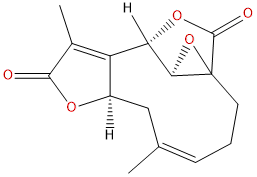
Linderanine C (CAS number: 139681-96-2) is a typical sesquiterpene compound with a molecular formula of C15H20O5 and a molecular weight of 276.2880. Its structural features include a lactone ring and multiple oxidative functional groups, endowing it with strong biological activity. The structure of this compound contains multiple chiral centers and exhibits a specific stereoconfiguration, typically existing as (-) - isomers.
In terms of physical and chemical properties, the LogP value of oxidized wuyao ether lactone is 1.4240, indicating its moderate lipid solubility, which is beneficial for cell membrane penetration and in vivo distribution. Its polar surface area (TPSA) is 65.1300, indicating that the molecule has a certain polarity, which helps to form stable interactions with biomolecule targets. The water solubility index is 0.8921, indicating good water solubility and facilitating in vivo absorption. The high penetration ability of the blood-brain barrier suggests its potential therapeutic effect on central nervous system diseases. In addition, the hERG channel inhibition experiment results were negative, indicating that the compound has a low risk of cardiac toxicity. The Ames test value is 1.5, indicating a low risk of genotoxicity and a good safety foundation.
Oxidized wuyao ether lactone mainly comes from the root tubers of wuyao plants. Wuyao (Lindera aggregata, Lindera struychnifolia, etc.) is a traditional Chinese medicinal herb widely distributed in China, Japan, and the Korean Peninsula. Wuyao root has always been used to regulate qi and blood, relieve pain, and treat inflammation. Modern pharmacological research has confirmed that it contains abundant sesquiterpenes.
The extraction process usually uses dried black medicine root tubers as raw materials, first refluxing with organic solvents (such as ethanol or methanol) for extraction, and then separating and purifying through liquid-liquid distribution and column chromatography techniques. The specific steps include:
This extraction method has the characteristics of high efficiency and environmental friendliness, and can obtain high-purity oxidized wuyao ether lactone, which meets the needs of pharmacological research and subsequent development.
The pharmacological activity research of oxidized wuyao ether lactone mainly focuses on its anti-inflammatory effect. Inflammation is the common pathological basis of various diseases, and key molecules regulating inflammatory responses have become important targets for drug development. Both in vitro and in vivo studies have shown that oxidized wuyao ether lactone has significant anti-inflammatory activity, mainly manifested by inhibiting the expression of pro-inflammatory factors and regulating inflammatory signaling pathways.
In macrophage cell lines such as RAW264.7 cells, oxytetracycline can significantly inhibit the expression of inflammatory factors such as IL-6, TNF - α, NOS2, and PTGS2 induced by lipopolysaccharide (LPS), reducing the release of inflammatory mediators. Its anti-inflammatory effect is positively correlated with dosage and has no significant toxicity to cells.
In acute inflammation models in mice (such as carrageenan induced plantar edema model), oxytetracycline significantly reduces inflammatory response, inhibits inflammatory cell infiltration and tissue edema. Its anti-inflammatory effect is superior to some traditional anti-inflammatory drugs, and its side effects are relatively small.
In addition, oxidized wuyao ether lactone has a regulatory effect on TRPV1 and TRPA1 channels related to neuroinflammation, indicating its potential application value in neuropathic pain and chronic inflammatory diseases.
The anti-inflammatory effect of oxidized wuyao ether lactone involves multiple signaling pathways and molecular targets, mainly including:
The synergistic mechanism of these multi-target and multi pathway mechanisms enables oxidized wuyao ether lactone to exhibit strong efficacy and wide applicability in anti-inflammatory therapy.
The development of medicinal properties is a crucial step in the development of natural product drugs. Oxidized wuyao ether lactone has good pharmacological parameters:
Pharmacokinetic studies have shown that oxytetracycline is rapidly absorbed after oral administration, with a moderate plasma half-life and widespread distribution in the body, especially at high concentrations in liver and brain tissues. Its metabolism is mainly through the oxidation and hydroxylation pathways of the liver, and the metabolites have no significant toxicity. Excretion is mainly completed through the renal and biliary pathways, with high bioavailability.
In summary, oxidized wuyao ether lactone has good pharmacokinetic characteristics and safety, and has high clinical development potential.
As the incidence rate of chronic inflammatory diseases continues to rise, the development of safe and effective anti-inflammatory drugs has become the focus of medical research. Oxidized wuyao ether lactone has shown broad clinical application prospects due to its multi-target anti-inflammatory mechanism, good pharmacokinetic properties, and low toxicity and side effects.
Future research directions include:
Through interdisciplinary collaboration, oxidized wuyao ether lactone is expected to become an important candidate for the new generation of natural anti-inflammatory drugs.
Oxidized wuyao ether lactone, as a sesquiterpene natural product derived from wuyao, has attracted widespread attention in the field of natural product pharmacology in recent years due to its unique chemical structure and significant anti-inflammatory activity. Its multi-target anti-inflammatory mechanism, good pharmacological parameters, and safety provide a solid foundation for its clinical development. In the future, through in-depth mechanism research and clinical validation, oxidized wuyao ether lactone is expected to become an effective drug for treating various inflammatory diseases, opening up new directions for natural product pharmacology research and new drug development.
In summary, oxidized wuyao ether lactone not only enriches the research scope of sesquiterpene natural products, but also provides valuable molecular templates and theoretical basis for the innovation of anti-inflammatory drugs, which deserves continuous investment and attention in the field of drug development.
