| Catalog No | Package | Original Price | Price | Inventory | Quantity | Operating |
|---|---|---|---|---|---|---|
| BP0735-20mg | 20mg | $30.00 | Sign in |
|


Synonym name: Vanilacetic acid; Vanillacetic acid
Catalogue No.: BP0735
Cas No.: 306-08-1
Formula: C9H10O4
Mol Weight: 182.175
Botanical Source:
Purity: 95%~99%
Analysis Method: HPLC-DAD or/and HPLC-ELSD
Identification Method: Mass, NMR
Packing: Brown vial or HDPE plastic bottle
Can be supplied from milligrams to grams.
For Reference Standard and R&D, Not for Human Use Directly.
Inquire for bulk scale.
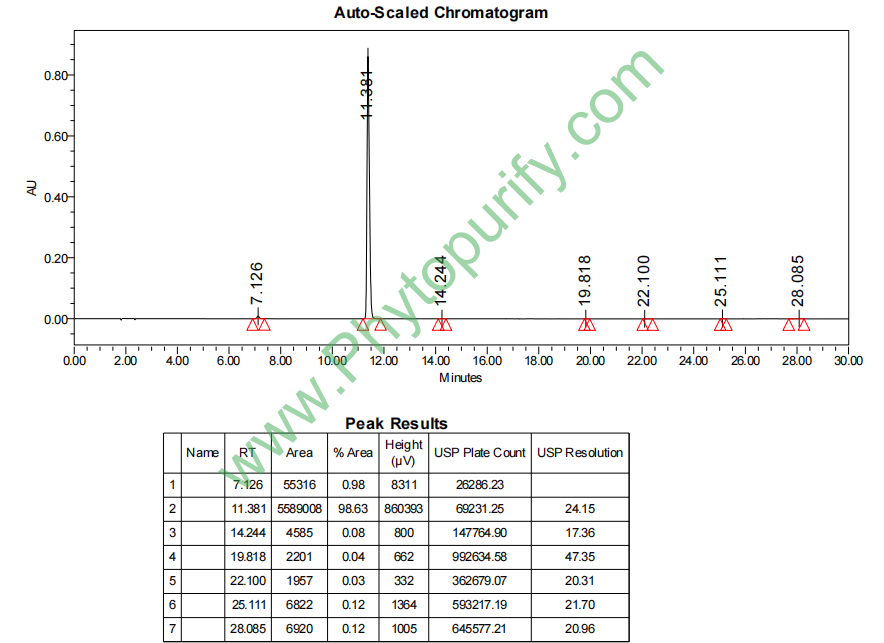
HPLC of Homovanillic acid
Storage conditions:Short-term storage at 2~8℃, long-term storage at -20 ~ -80℃
66.7600
1.1191
-1.4343
5.4966
5.0885
4.7305
Low
77.7422
1.6763
Yes
No
No
No
Yes
No
0.0
Yes
No
Yes
No
Homovanillic acid (HVA), CAS number 306-08-1, also known as vanillic acid, is an important dopamine metabolite widely present in the human body and various organisms. As the terminal metabolite of dopamine, HVA plays a crucial role in neurotransmitter metabolism and regulation of nervous system function. In recent years, with the deepening of research on neurodegenerative diseases and neuroprotection, homovanillic acid has gradually become a research hotspot in the field of natural product pharmacology due to its potential connection with various neuroprotective targets. In addition, the biomarker value of HVA in various diseases such as aromatic amino acid decarboxylase deficiency, celiac disease, growth hormone deficiency, and adiponectin reductase deficiency is gradually being recognized.
This article aims to systematically review the chemical structure and physicochemical properties, plant sources and extraction methods, pharmacological activity and mechanism of action, pharmacological evaluation and pharmacokinetic characteristics of high aromatic oxalic acid. Combined with its potential applications in neuroprotection and related diseases, it explores the prospects and challenges of its development as a natural product drug, providing theoretical basis and reference for future related research.
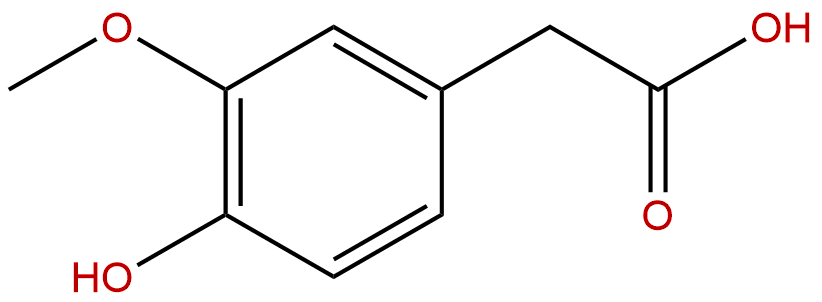
The chemical name of homovanillic acid is 4-hydroxy-3-methoxyphenylacetic acid, with the molecular formula C9H10O4 and a molecular weight of 182.1750. Its structure consists of a benzene ring with two substituents, hydroxyl (- OH) and methoxy (- OCH3), and the side chain is an acetic acid group (- CH2COOH). This structure endows it with a certain degree of polarity and hydrophilicity, with a LogP value of 1.1191, indicating moderate lipid solubility that facilitates membrane penetration but is not easily accumulated in the lipid environment.
The topological polar surface area (TPSA) of homovanillic acid is 66.7600, reflecting its high molecular polarity, which is conducive to binding with polar receptors or enzymes. The water solubility is 5.4966 (usually measured in mg/mL or mol/L, depending on experimental conditions), indicating its good solubility in water for easy absorption and distribution in vivo. The low permeability of the blood-brain barrier suggests that its ability to directly pass through the blood-brain barrier is limited, but this does not rule out its impact on central nervous system function through other mechanisms.
In terms of safety, homovanillic acid does not exhibit hERG channel inhibition, reducing its risk of cardiac toxicity; The Ames test result is 0.0, indicating that it has no significant mutagenicity and has a good safety basis.
As a metabolite of dopamine, homovanillic acid mainly exists in animal tissues and body fluids, with relatively low levels in plants, and mostly exists in free or bound forms. Trace amounts of homovanillic acid have been detected in some aromatic plants and their rhizomes, especially in plants containing phenolic and coumarin compounds, such as Vanilla spp. and certain medicinal herbs.
The extraction of highly aromatic oxalic acid usually relies on liquid-phase separation techniques for biological samples. Common methods include:
Due to the strong polarity of oxalic acid, acidic conditions are often used during the extraction process to stabilize its structure and avoid degradation. After purification, high-purity products can be further obtained through crystallization or column chromatography.
As an end product of dopamine metabolism, the pharmacological activity of homovanillic acid mainly involves the regulation and protection of the nervous system. Multiple in vitro and in vivo studies have shown that homovanillic acid has potential activities in neuroprotection, antioxidant, anti-inflammatory, and regulation of neurotransmitter metabolism.
High vanillic acid is closely related to various neuroprotective targets, including BCL2 (anti apoptotic protein), APP (amyloid precursor protein), BACE1 (β - secretase 1), MAPT (microtubule associated protein Tau), SIRT1 (deacetylase), MAPK1 (mitogen activated protein kinase 1), ACHE (acetylcholinesterase), CASP3 (caspase 3), SNCA (alpha synuclein), and NRF2 (nuclear factor E2 related factor 2). These targets play a key role in the pathogenesis of neurodegenerative diseases such as Alzheimer's disease and Parkinson's disease.
Research has shown that homovanillic acid regulates the expression of BCL2 family proteins, inhibits CASP3 activity, and reduces neuronal apoptosis; By affecting the expression of APP and BACE1, reducing the production of β - amyloid protein, and slowing down the progression of neuropathology; Activate the SIRT1 and NRF2 signaling pathways, enhance cellular antioxidant capacity, and alleviate oxidative stress damage. In addition, its regulatory effect on MAPK1 and ACHE helps maintain neuronal signaling and neurotransmitter balance.
Oxidative stress and inflammatory response are important pathological factors in various neurological diseases. Kaoxiang oxalic acid can activate the NRF2 mediated antioxidant defense mechanism, enhance the expression of antioxidant enzymes such as glutathione peroxidase and superoxide dismutase, and alleviate ROS (reactive oxygen species) - induced cell damage. Meanwhile, its inhibitory effect on inflammatory factors such as TNF - α and IL-1 β helps alleviate neuroinflammatory responses.
In metabolic disorders such as aromatic amino acid decarboxylase deficiency, celiac disease, growth hormone deficiency, and adiponectin reductase deficiency, homovanillic acid serves as a metabolic marker, reflecting the disorder of related metabolic pathways. Some studies suggest that it may be involved in regulating lipid metabolism and endocrine function, but the specific mechanism still needs to be further explored.
The pharmacological effects of oxalic acid are mainly achieved through multi-target and multi pathway synergistic regulation, and the specific mechanisms include:
Anti apoptotic mechanism
Kaoxiang oxalic acid protects nerve cells from apoptotic damage by upregulating the anti apoptotic protein BCL2 and inhibiting the activity of the pro apoptotic protein CASP3. In addition, regulating the MAPK1 signaling pathway promotes cell survival signal transduction.
Inhibition of neuropathological protein aggregation
Regulating the expression of APP and BACE1, reducing the production of β - amyloid protein, and blocking the pathological process of Alzheimer's disease. Meanwhile, by affecting the phosphorylation status of MAPT protein, abnormal aggregation of Tau protein is inhibited.
Regulating neurotransmitter metabolism
By inhibiting ACHE activity and prolonging the action time of acetylcholine in synaptic cleft, cognitive dysfunction can be improved. As a metabolite of dopamine, homovanillic acid may also feedback regulate the balance of dopamine metabolism.
Antioxidant and anti-inflammatory mechanisms
Activate the NRF2 signaling pathway, induce the expression of antioxidant enzymes, eliminate free radicals, and alleviate oxidative stress. Inhibit the expression of inflammatory factors, slow down neuroinflammatory reactions, and protect neural tissue.
Regulating deacetylase SIRT1
By activating SIRT1, regulating cellular metabolism and stress response, promoting cell survival and repair.
In summary, homovanillic acid exhibits excellent neuroprotective potential by regulating neuronal function through multiple targets and levels.
The pharmacological evaluation of homovanillic acid shows that it has certain potential for drug development:
In terms of pharmacokinetics, homovanillic acid is mainly excreted through the kidneys in the body, with a short half-life and limited bioavailability. Its low blood-brain barrier penetration limits its direct action in the central nervous system, but it can indirectly affect neurological function by regulating the peripheral nervous system and metabolic pathways.
To enhance its pharmacological properties, future research can focus on optimizing molecular structure, developing drug carriers, and improving administration pathways to increase its brain concentration and bioavailability.
As a dopamine metabolite and neuroprotective molecule, homovanillic acid has broad clinical application potential, especially in the following fields:
Auxiliary diagnosis and treatment of neurodegenerative diseases
As a biomarker of dopamine metabolism, HVA has important value in the diagnosis and efficacy monitoring of diseases such as Parkinson's disease and Alzheimer's disease. Its ability to regulate neuroprotective targets provides a theoretical basis for the development of novel neuroprotective agents.
Biomarkers of metabolic diseases
In aromatic amino acid decarboxylase deficiency, celiac disease, growth hormone deficiency, and adiponectin reductase deficiency, changes in HVA levels reflect the metabolic status of the disease and can be used for disease monitoring and efficacy evaluation.
Development of neuroprotective drugs
Combining its antioxidant, anti-inflammatory, and anti apoptotic activities, homovanillic acid and its derivatives are expected to become candidate drugs for the development of drugs targeting nerve damage, cerebral ischemia, and neurodegenerative diseases.
Future research should strengthen the pharmacological mechanism analysis of homovanillic acid, optimize its pharmacokinetic properties, conduct more preclinical and clinical studies, and verify its safety and efficacy. In addition, based on its structural characteristics, designing new derivatives or combining nanocarrier technology to enhance its brain targeting and therapeutic effects will be an important development direction.
As a dopamine metabolite, homovanillic acid has shown significant research value in the field of natural product pharmacology due to its unique chemical structure and multi-target neuroprotective mechanism. Its potential application in neurodegenerative diseases and various metabolic disorders provides new ideas for the diagnosis and treatment of related diseases. Although its low blood-brain barrier permeability currently limits its direct central nervous system function, innovation in structural optimization and drug delivery technology is expected to overcome this bottleneck and promote its clinical application.
In the future, in-depth research on homovanillic acid will not only help reveal the intrinsic relationship between dopamine metabolism and neuroprotection, but also promote new progress in the development of natural product drugs, contributing new strategies and drug resources for the prevention and treatment of neurological diseases.
