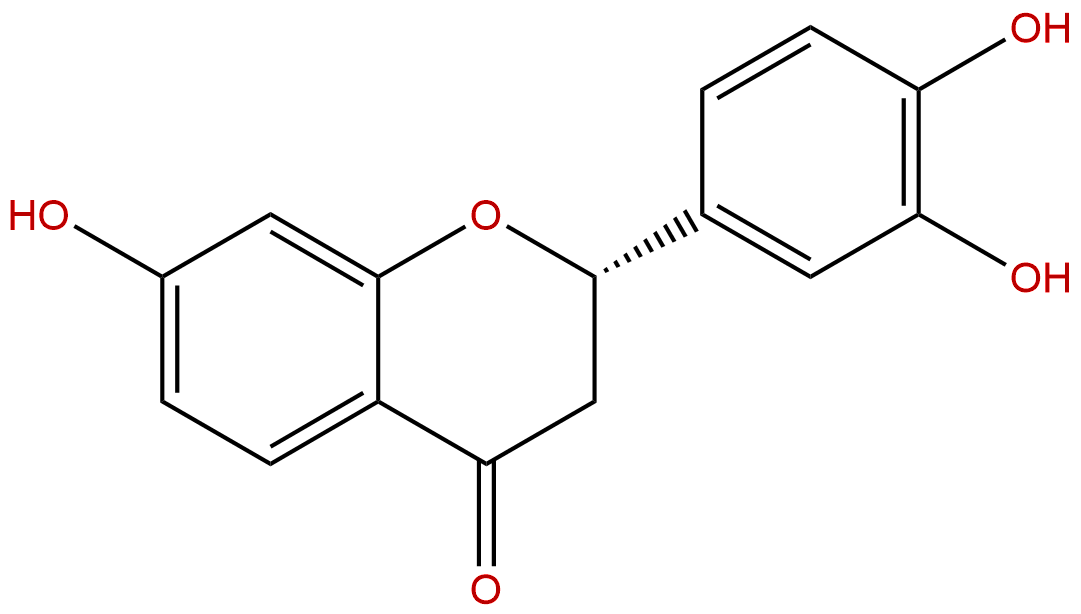


Product name: Butin
Synonym name: 7, 3′, 4′-trihydroxydihydroflavone
Catalogue No.: BP0295
Cas No.: 492-14-8
Formula: C15H12O5
Mol Weight: 272.256
Botanical Source:
Physical Description:
Type of Compound: Flavonoids
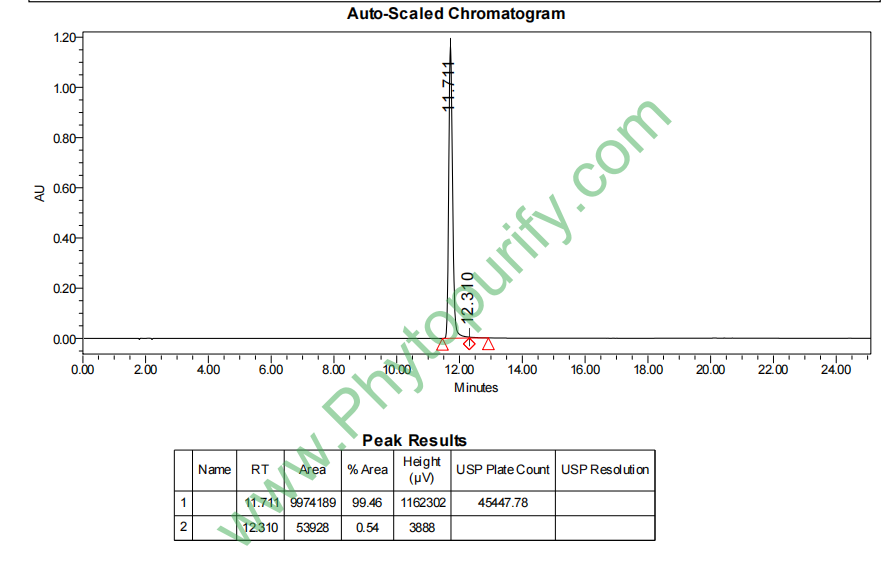
Purity: 95%~99%
Analysis Method: HPLC-DAD or/and HPLC-ELSD
Identification Method: Mass, NMR
Packing: Brown vial or HDPE plastic bottle
Storage: Store in a well closed container, protected from air and light. Put into refrigerate or freeze for long term storage.
Whenever possible, you should prepare and use solutions on the same day. However, if you need to make up stock solutions in advance, we recommend that you store the solution as aliquots in tightly sealed vials at -20℃. Generally, these will be useable for up to two weeks.
The product could be supplied from milligrams to grams
Inquire for bulk scale.
Chengdu Biopurify Phytochemicals Ltd. is a leading company in the research, development, manufacture and marketing of High Quality Phytochemicals and Extracts(especially Active Ingredients from Traditional Chinese Medicine,TCM), Natural Active Pharmaceutical Ingredients worldwide.
The main services:
A. Supply active ingredients and reference standards of TCM, from mgs to kgs scale
B. Custom extraction and purification, target Herb Active Ingredients
C. Custom synthesis and semi-synthesis for Natural Active Ingredients
D. CR(contract research), CM(contract manufacture) and PD(process development) services from lab scale, pilot scale to commercial scale(GMP is also available)
E. TCM compounds library for drug screen,more than 3000 compounds available, many of them are rare and unique.
HPLC of Butin
Storage conditions:Short-term storage at 2~8℃, long-term storage at -20 ~ -80℃
Butin (CAS number: 492-14-8) is a natural flavonoid compound originally isolated from the heartwood of Dalbergia spp. As an important member of flavonoids, Ziliuting has received widespread attention in recent years due to its significant biological activities, especially antioxidant, antiplatelet aggregation, and anti-inflammatory effects. It demonstrates potential therapeutic value for various diseases, especially pathological processes related to inflammation and tumors. This article aims to systematically review the chemical structure, origin, pharmacological activity, mechanism of action, and drug evaluation of Ziliuting, explore its potential applications in diseases such as prostate cancer, and look forward to its future research directions and clinical development prospects.
Ziliuting is a flavonoid compound with a molecular formula of C15H12O5 and a molecular weight of 272.25. Its structural features include a typical flavonoid skeleton containing multiple hydroxyl groups, endowing it with excellent antioxidant properties. The LogP value of Ziliuting is 1.5, indicating that it has moderate lipid solubility, which is beneficial for absorption and distribution in the body. Its topological polar surface area (TPSA) is 94.83 Å ², and the number of hydrogen bond acceptors is 5. These physicochemical parameters suggest that Ziliuting has good bioavailability and cell membrane penetration ability.
There are two enantiomers of Ziliuting, among which (-) - Ziliuting is the main active form, exhibiting stronger biological activity. This compound has good chemical stability and exhibits low blood-brain barrier penetration in vivo, reducing the risk of central nervous system toxicity. Toxicological evaluation shows that Ziliuting has no hepatotoxicity, cardiotoxicity, or hERG channel inhibition effect, and the Ames mutagenicity test is negative, indicating its high safety.
Purple rivet pavilion is mainly isolated from the heartwood of plants in the Dalbergia genus. Dalbergia plants are widely distributed in tropical and subtropical regions and are widely used as traditional Chinese medicinal materials. Huangtan heartwood contains abundant flavonoids, among which Zizhuting has a higher content and is one of the important active ingredients of this genus of plants.
The common methods for extracting purple rivet pavilion include solvent extraction, column chromatography separation, and high-performance liquid chromatography (HPLC) purification. Generally, ethanol or methanol is used as the extraction solvent, and separation and purification are carried out by reflux extraction or ultrasound assisted extraction, combined with silica gel column chromatography or C18 reverse phase column. In recent years, the application of supercritical CO2 extraction and membrane separation technology has improved extraction efficiency and purity, providing technical support for the large-scale preparation of Ziliuting.
Purple rivet pavilion, as a type of polyhydroxyflavonoid, exhibits strong free radical scavenging ability. In vitro experiments have shown that it can effectively scavenge DPPH and ABTS free radicals, inhibit lipid peroxidation, and protect cells from oxidative damage. Its antioxidant mechanism is mainly achieved by directly capturing free radicals and regulating the intracellular antioxidant enzyme system (such as SOD, CAT, GPx).
Platelet aggregation is an important pathological basis for various cardiovascular diseases. Ziliuting can significantly inhibit platelet activation and aggregation, block the flow of calcium ions and related signaling pathways within platelets, and reduce the risk of thrombosis. Both in vitro and animal model experiments have confirmed its excellent anti thrombotic effect, indicating its potential in the prevention and treatment of thrombotic diseases.
Inflammation is the common pathological basis of various chronic diseases. Purple rivet pavilion reduces inflammation by inhibiting the expression of pro-inflammatory factors such as TNF - α, IL-6, IL-1 β. Its mechanism of action involves the regulation of NF - κ B and MAPK signaling pathways, reducing the infiltration of inflammatory cells and the release of inflammatory mediators. In addition, Ziliuting can also inhibit the activity of inflammation related enzymes such as COX-2 and iNOS, exerting multi-target anti-inflammatory effects.
Ziliuting exhibits inhibitory effects on proliferation, induction of apoptosis, and inhibition of migration in various tumor cell lines. Especially in prostate cancer models, Ziliuting inhibits tumor cell growth and invasion by regulating multiple signaling pathways. Its anti-tumor activity is closely related to its regulatory molecular targets, demonstrating its potential as a candidate anti-cancer drug.
The pharmacological effects of Ziliuting involve multiple signaling pathways and key molecular targets, which have been extensively elucidated in the study of prostate cancer. The main targets include:
Purple rivet pavilion achieves its comprehensive anti-tumor and anti-inflammatory effects through multi-target and multi pathway synergistic effects. In addition, its regulation of oxidative stress-related signals further consolidates its potential in disease treatment.
The physical and chemical properties of Ziliuting demonstrate its excellent potential for medicinal use. Moderate molecular weight and LogP value are beneficial for drug absorption and distribution. The higher number of TPSA and hydrogen bond receptors ensures the binding ability to the target, while limiting non-specific penetration and reducing the risk of toxic side effects.
Toxicological evaluation shows that Ziliuting has no significant hepatotoxicity, cardiotoxicity, or genotoxicity, and has good safety. Its blood-brain barrier penetration ability is relatively low, reducing the possibility of adverse reactions in the central nervous system.
Pharmacokinetic studies have shown that Ziliuting has good oral absorption, wide distribution in the body, stable metabolism, and is mainly metabolized and excreted through the liver. Moderate half-life, suitable for daily administration. Further in vivo pharmacokinetic and pharmacodynamic studies are needed in the future to optimize dosing regimens and dosage form design.
As a multifunctional flavonoid natural product, Ziliuting exhibits a wide range of pharmacological activities and good safety. Its multi-target regulatory role in prostate cancer, especially its synergistic effects in anti-tumor, anti-inflammatory, and antioxidant aspects, endows it with the potential to become a novel anti-cancer drug.
Future research should focus on:
In summary, as a natural flavonoid compound with multiple biological activities, Ziliuting has good development prospects and is expected to become an important candidate molecule for future natural medicine development.
As the main active flavonoid in the heartwood of Dalbergia rosea, Ziliuting occupies an important position in the field of natural product pharmacology due to its excellent antioxidant, antiplatelet aggregation, and anti-inflammatory activities. Its multi-target mechanism of action and good pharmacological properties provide a solid foundation for the development of new anti-tumor and anti-inflammatory drugs. In the future, through systematic pharmacological mechanism research and clinical translation, Ziliuting is expected to become an effective drug for treating prostate cancer and related diseases, injecting new vitality into the development of natural product drugs.
