

Synonym name:
Catalogue No.: BP0053
Cas No.: 2239-88-5
Formula: C16H10O8
Mol Weight: 330.248
Botanical Source: Anogeissus sp., Euphorbia spp., Polygonum spp., and other plant spp.
Purity: 95%~99%
Analysis Method: HPLC-DAD or/and HPLC-ELSD
Identification Method: Mass, NMR
Packing: Brown vial or HDPE plastic bottle
Can be supplied from milligrams to grams.
For Reference Standard and R&D, Not for Human Use Directly.
Inquire for bulk scale.
?
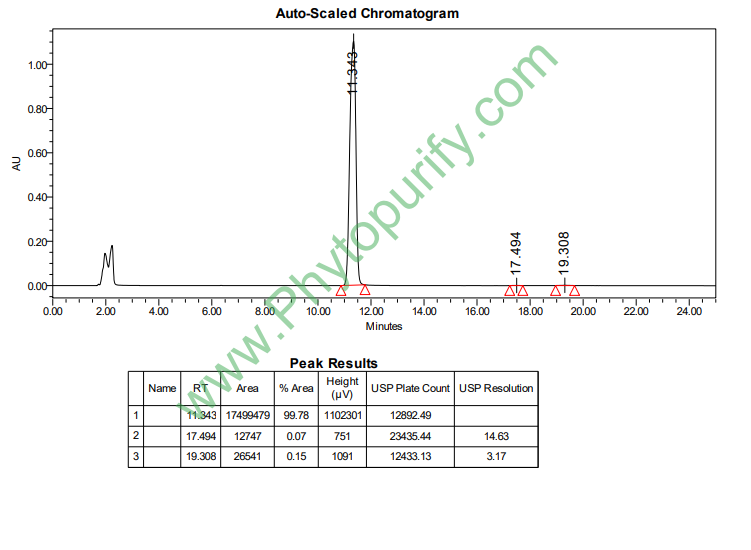
HPLC of 3,3'-Di-O-methylellagic acid
Storage conditions:Short-term storage at 2~8℃, long-term storage at -20 ~ -80℃
138.8600
1.2000
.9000
Low
null
No
No
No
No
No
No
No
3,3 '- O-dimethylellagic acid (3,3' - Di-O-methylellagic acid, hereinafter referred to as 3,3 '- O-DME) is a polyphenolic compound derived from natural plants and belongs to ellagic acid derivatives. As a structurally unique natural product, 3,3 '- O-DME has attracted widespread attention in the fields of pharmacology and drug development due to its potential pharmacological activity and good safety. In recent years, with the rising incidence rate of heart failure and other cardiovascular diseases, the multi-target treatment strategy for its complex pathological mechanism has become a research hotspot. The regulatory role of 3,3 '- O-DME on heart failure related targets provides a theoretical basis for its potential as a candidate molecule for cardiovascular drugs.
This article provides a systematic review of the chemical structure and physicochemical properties, plant sources, and extraction methods of 3,3 '- O-DME. Combined with the latest pharmacological activity research, it focuses on analyzing its mechanism of action and molecular targets, evaluating its pharmacological properties and pharmacokinetic characteristics, and finally looking forward to its clinical application prospects, aiming to provide reference for natural product pharmacology research and new drug development.
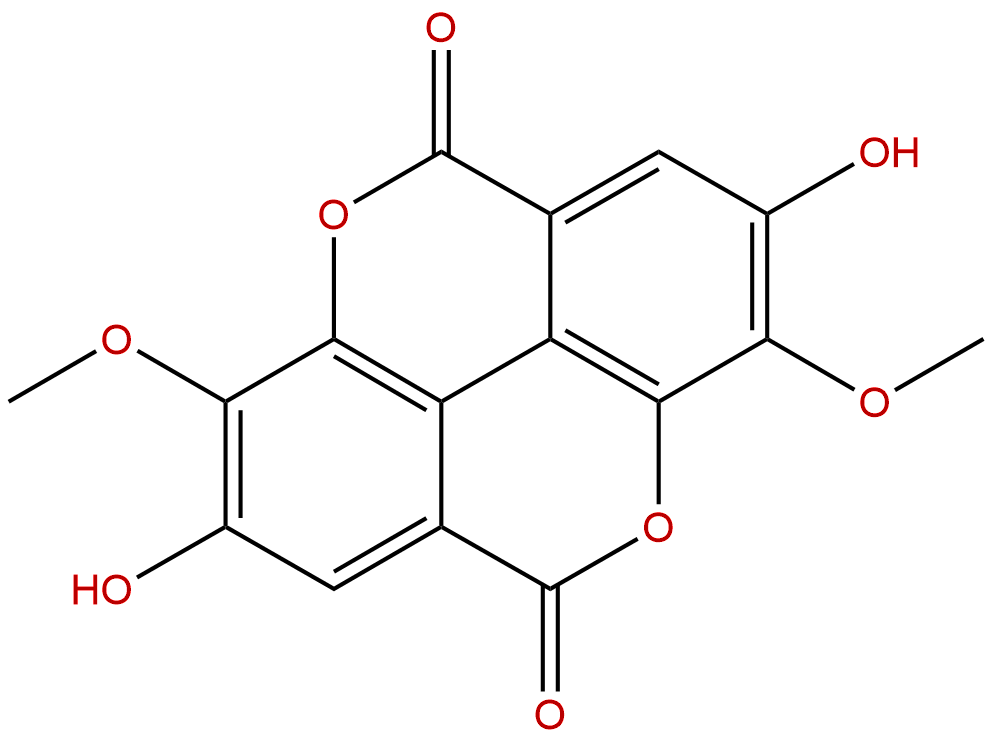
The molecular formula of 3,3 '- O-dimethyltannic acid is C18H14O8, with a molecular weight of 330.24. Its structure is based on the tannic acid skeleton, formed by hydroxymethylation at positions 3 and 3 'to form dimethyl ether. The structural formula shows that two benzene rings are connected by a bicyclic diketone structure, exhibiting typical polyphenolic compound characteristics. This structure endows it with strong antioxidant capacity and the potential to bind to multiple biological targets.
In terms of physical and chemical properties, the LogP value of 3,3 '- O-DME is about 1.2, indicating its moderate lipid solubility, which is beneficial for cell membrane permeability but not excessively hydrophobic. The topological polar surface area (TPSA) is 138.86 Å ², indicating its high polarity and 8 hydrogen bond acceptors, suggesting its strong ability to form hydrogen bonds with protein targets. The low permeability of the blood-brain barrier reduces the risk of central nervous system side effects. The toxicity assessment showed no hepatotoxicity, cardiac toxicity, or hERG channel inhibition. The Ames mutagenicity test was negative, and the overall safety was good, meeting the requirements of synthetic drugs.
3,3 '- O-dimethyltannic acid is mainly found in various plants rich in tannic acid, especially in the fruits and leaves of pomegranate (Punica granatum), raspberry (Rubus idaeus), and certain red berry plants with high content. These plants have been widely studied as traditional herbs and functional foods due to their rich polyphenolic components.
The common methods for extracting 3,3 '- O-DME include solvent extraction and chromatographic separation. Usually, ethanol or methanol aqueous solution is used for reflux extraction, followed by liquid-liquid distribution, silica gel column chromatography, or high-performance liquid chromatography (HPLC) purification. In recent years, the application of ultrasound assisted extraction and supercritical CO2 extraction technology has improved extraction efficiency and purity. The purified 3,3 '- O-DME is usually structurally confirmed by mass spectrometry and nuclear magnetic resonance (NMR) techniques.
The pharmacological activity research of 3,3 '- O-DME mainly focuses on its antioxidant, anti-inflammatory, and cardiovascular protective effects. In vitro experiments have shown that 3,3 '- O-DME has significant free radical scavenging ability and can inhibit lipid peroxidation and cellular oxidative stress response. Its anti-inflammatory effect is manifested by downregulating the expression of pro-inflammatory factors such as TNF - α and IL-6, and reducing inflammation mediated cell damage.
In the field of cardiovascular disease, 3,3 '- O-DME exhibits a protective effect on heart failure models by regulating multiple signaling pathways, improving myocardial cell function, inhibiting myocardial fibrosis and apoptosis. In animal experiments, 3,3 '- O-DME can significantly improve cardiac contractile function, reduce myocardial injury markers, and alleviate cardiac remodeling. In addition, its protective effect on endothelial function helps maintain vascular homeostasis and reduce the risk of cardiovascular events.
The mechanism of action of 3,3 '- O-DME in heart failure involves multiple key targets, demonstrating its advantages in multi-target regulation. The main targets include:
AMPK(PRKAA1)As a core regulatory factor of energy metabolism, the activation of AMPK promotes the balance of myocardial energy metabolism. 3,3 '- O-DME can improve myocardial cell energy supply and alleviate the pathological state of heart failure by activating the AMPK signaling pathway.
EHMT2 Histone methyltransferase EHMT2 is involved in myocardial fibrosis and gene expression regulation. 3,3 '- O-DME may slow down the progression of myocardial fibrosis by inhibiting EHMT2 activity.
APP The amyloid precursor protein APP is associated with myocardial cell apoptosis and inflammatory response, and the regulation of APP expression by 3,3 '- O-DME helps to reduce myocardial cell damage.
PTPN1 Protein tyrosine phosphatase PTPN1 regulates insulin signaling and oxidative stress, while 3,3 '- O-DME enhances cellular antioxidant capacity by inhibiting PTPN1 activity.
MAOA Monoamine oxidase A is involved in neurotransmitter metabolism and oxidative stress response, and its inhibition helps alleviate myocardial injury. 3,3 '- O-DME exhibits regulatory potential on MAOA.
ESR2 Estrogen receptor beta (ESR2) plays an important role in cardiovascular protection, and 3,3 '- O-DME may improve myocardial function by regulating ESR2 signaling.
ABCB1、ABCG2 These two transporters are involved in drug efflux and myocardial protection, and the regulation of their expression by 3,3 '- O-DME helps improve pharmacokinetics and cardiac cell homeostasis.
ALOX15 Lipoxygenase ALOX15 mediates lipid metabolism and inflammatory response. 3,3 '- O-DME reduces inflammation and oxidative stress by inhibiting ALOX15 activity.
FEN1 The nuclease FEN1 is involved in DNA repair, and 3,3 '- O-DME may enhance the gene stability of cardiomyocytes by regulating FEN1.
In summary, 3,3 '- O-DME exerts its heart failure protective effect by synergistically regulating cardiomyocyte metabolism, antioxidant, anti-inflammatory, and gene expression through multiple targets and pathways.
The pharmacological evaluation of 3,3 '- O-DME shows that it has good potential for drug development. Its moderate molecular weight (330.24 Da) and LogP (1.2) comply with Lipinski's rule, indicating its good bioavailability. Although the high number of TPSA and hydrogen bond receptors may limit oral absorption, they are beneficial for the selectivity and affinity of target binding.
The low permeability of the blood-brain barrier reduces the risk of central nervous system side effects and is suitable for targeted therapy of the cardiovascular system. In vitro and in vivo toxicological data indicate that 3,3 '- O-DME has no significant hepatotoxicity, cardiotoxicity, or hERG channel inhibition, and the Ames test is negative, indicating high safety.
In terms of pharmacokinetics, although current research is relatively limited, based on its physicochemical properties, it is speculated that 3,3 '- O-DME may have a moderate oral absorption rate and a longer half-life. Its metabolic pathway may mainly be cleared through phase II metabolism of the liver enzyme system, such as methylation and glucuronic acid binding. Further in vivo pharmacokinetic and metabolic studies are needed in the future to clarify their biotransformation and excretion characteristics.
Heart failure, as a highly prevalent cardiovascular disease worldwide, has a complex pathological mechanism and a single target drug is difficult to meet clinical needs. 3,3 '- O-DME has shown potential as an adjuvant therapy for heart failure due to its multi-target regulatory properties and good safety.
In the future, 3,3 '- O-DME can be used as a lead compound to further optimize its structure to enhance oral bioavailability and targeting. Combining modern drug delivery technologies such as nanocarriers is expected to improve its pharmacokinetic performance. Preclinical studies should focus on evaluating its efficacy and safety in different heart failure models, and clarifying the dose-response relationship.
In addition, the multiple effects of 3,3 '- O-DME in antioxidant, anti-inflammatory, and anti fibrotic aspects also provide possibilities for its application in other chronic cardiovascular diseases such as coronary heart disease, hypertension, and metabolic syndrome. Combining precision medicine strategies and exploring their combined effects with existing drugs will help improve treatment efficacy.
3,3 '- O-dimethyltannic acid, as a natural polyphenolic compound, has shown broad application prospects in the treatment of cardiovascular diseases such as heart failure due to its unique chemical structure and multi-target regulatory ability. Its good drug efficacy and safety lay the foundation for the development of new drugs. In the future, it is necessary to strengthen the in-depth analysis of its mechanism of action and pharmacokinetic research, and promote its transition from laboratory to clinical application. The continuous development of pharmacology of natural products will provide more possibilities for the pharmacological treatment of 3,3 '- O-DME and similar compounds, helping to achieve precise treatment and management of cardiovascular diseases.
