Introduction/Overview
Natural products have long been an important source of innovative drug discovery, and their unique chemical structures provide valuable molecular frameworks for addressing various diseases. Asebogenin (CAS number: 520-42-3), as a plant derived dihydrochalcone compound, has received close attention in the field of pharmacology research in recent years due to its extensive biological activity. Early research revealed its in vitro anti malaria activity, providing potential clues for the development of anti infective drugs. Further research has found that magnolol exhibits significant activity in inflammation related disease models. It effectively regulates platelet activation and neutrophil extracellular trap (NETs) formation by inhibiting spleen tyrosine kinase (Syk) phosphorylation. This mechanism is closely related to various pathological processes such as thrombosis, autoimmune diseases, and chronic inflammation. In addition, research has preliminarily associated multiple key inflammatory targets, such as IL-6, STAT3, TNF, etc., suggesting their potential for multi-target anti-inflammatory effects. This article aims to provide a systematic review of the chemical properties, plant sources, pharmacological activities, molecular mechanisms of action, medicinal characteristics, and clinical application prospects of Moringa oleifera glycoside, in order to provide comprehensive academic references for the in-depth development and transformation research of this natural product.
Chemical structure and physicochemical properties
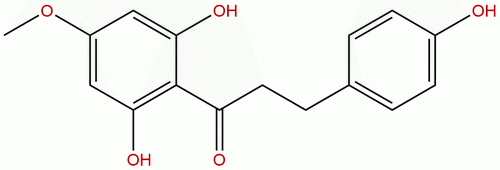
Ma Zui Mu Yuan is a dihydrochalcone compound, with the chemical name 2 ', 4,4' - trihydroxydihydrochalcone. Its molecular formula is C15H14O5 and its molecular weight is 288.2990 g/mol. Structurally, its basic skeleton is composed of A and B rings connected by a three carbon chain (α, β - unsaturated ketone saturated by hydrogenation). The A ring is usually a resorcinol type structure, while the B ring is a p-hydroxyphenyl group. This specific hydroxyl substitution pattern is crucial for its biological activity.
In terms of physical and chemical properties, the calculated value of the lipophilic water partition coefficient (LogP) of Malpighian glycoside is about 2.6567, indicating its moderate lipophilicity, which is beneficial for its penetration of cell membranes but may also affect its water solubility. Its topological polar surface area (TPSA) is 86.99 Å ², reflecting the polarity brought by multiple hydroxyl groups in the molecule. The predicted value of water solubility is relatively low, about 0.3118 mg/mL, indicating that solubilization strategies may need to be considered in formulation development. Preliminary drug risk assessment shows that its ability to cross the blood-brain barrier is low and mainly acts on the peripheral system; The lack of significant inhibition on hERG potassium channels suggests a lower potential risk of cardiac toxicity; The Ames test predicted a value of 0.0, indicating that it may not be mutagenic and the preliminary safety assessment is good. These physicochemical and preliminary ADMET (absorption, distribution, metabolism, excretion, and toxicity) properties lay the foundation for their subsequent modification and development.
Plant sources and extraction methods
Maginogen is mainly found in plants of the Ericaceae family, particularly in the Pieris genus, with abundant content found in the leaves of Pieris japonica. In addition, it has also been detected in the fruit peels of certain Rhododendron plants and Malus plants in the Rosaceae family, indicating that although it is not widely distributed in the plant kingdom, it exists in multiple families and genera.
The extraction and separation methods mainly rely on the strategy of combining solvent extraction with chromatographic separation technology. The standard procedure is as follows:
1. Raw material pretreatment and extraction Usually, after drying and crushing plant leaves, polar organic solvents such as methanol, ethanol, or acetone are used for impregnation extraction, reflux extraction, or ultrasound assisted extraction. In recent years, green extraction techniques such as supercritical CO2 fluid extraction have also been explored to improve extraction efficiency and selectivity.
2. Coarse separation The extract was concentrated under reduced pressure to obtain a paste, which was then subjected to gradient extraction using solvents such as petroleum ether, ethyl acetate, and n-butanol. The lignin in the extract was mostly enriched in the ethyl acetate fraction.
3. Refining and Purification The ethyl acetate fraction is further separated by column chromatography, commonly using silica gel column chromatography with gradient elution using mixed solvent systems such as chloroform methanol or petroleum ether ethyl acetate. Combined with thin-layer chromatography (TLC) or high-performance liquid chromatography (HPLC) for tracking and detection. The final high-purity monomer acquisition usually requires repeated column chromatography or preparative high-performance liquid chromatography (pre HPLC) purification.
4. appraisal The purified compound was structurally confirmed by nuclear magnetic resonance (NMR, including 1H-NMR and 13C-NMR), mass spectrometry (MS), infrared spectroscopy (IR), and comparison with standard samples.
Optimizing the extraction process, improving yield and purity, is the key to achieving large-scale acquisition of Moringa glycosides for further research.
Pharmacological activity research
Ma Zui Mu glycoside exhibits diverse pharmacological activities, and its research has expanded from the initial field of anti infection to inflammation, immune regulation, and cardiovascular related fields.
- anti-inflammatory activity This is currently the most extensively studied and highly anticipated activity of the glycoside of Malvaceae. In various animal models of acute and chronic inflammation, such as carrageenan induced paw swelling in rats, acetic acid induced increased intra-abdominal capillary permeability in mice, and cotton ball induced granuloma models, magnolol has shown significant inhibitory effects. It can effectively reduce the levels of pro-inflammatory cytokines (such as TNF - α, IL-6, IL-1 β) in the inflamed area or serum.
- Anti malaria activity Early studies have confirmed that magnolol has inhibitory activity against Plasmodium falciparum in vitro, but its mechanism of action is not fully understood and may be related to interference with the parasite's metabolism or membrane structure. This provides a basis for its use as an anti malaria lead compound.
- Antiplatelet activation and antithrombotic formation Research has found that magnolol can effectively inhibit platelet aggregation and activation induced by agonists such as collagen and thrombin. The key mechanism is to inhibit the phosphorylation of Syk kinase, thereby downregulating downstream signaling pathways, inhibiting platelet morphological changes, granule release, and thrombus formation.
- Inhibit the formation of neutrophil extracellular traps (NETs)NETs are a network structure released by neutrophils with DNA as the backbone, embedded with histones and granule proteins, playing a dual role in anti infection and inflammatory diseases. Ma Zui Mu Yuan can significantly reduce the formation of NETs induced by phorbol ester (PMA) or immune complexes by inhibiting the Syk signaling pathway. This effect is of great significance in alleviating diseases related to excessive production of NETs, such as sepsis, systemic lupus erythematosus, and thrombosis.
- Other potential activities Based on its antioxidant properties (providing hydrogen atoms with phenolic hydroxyl groups) and multi-target potential, there have been preliminary exploratory research reports on the neuroprotective and anti-tumor effects (especially those related to chronic inflammation) of Malvaceae glycoside, but more evidence is needed to support it.
Mechanism of action and molecular targets
The pharmacological effects of Ma Zui Mu glycoside, especially its core anti-inflammatory, antiplatelet, and NET inhibition activities, are closely related to its regulation of multiple key signaling molecules and pathways.
-
Core target: Spleen tyrosine kinase (Syk)Syk is a non receptor tyrosine kinase that plays a pivotal role in the activation signal transduction of immune cells (such as B cells, mast cells, macrophages, neutrophils) and platelets. Ma Zui Mu Glycoside has been shown to directly or indirectly inhibit the phosphorylation (activated form) of Syk. In platelets, Syk is a key kinase in the glycoprotein VI (GPVI) signaling pathway. Inhibiting Syk phosphorylation can block the activation of PLC γ 2, calcium ion mobilization, and platelet activation. In neutrophils, Syk also participates in Fc receptor and integrin signaling, driving reactive oxygen species production, enzyme release, and NETosis (NETosis formation process). Therefore,Inhibition of Syk phosphorylation is the core molecular event for the antiplatelet activity and inhibition of NETs formation of magnolol。
-
Regulation of inflammatory signaling pathways Through the regulation of upstream signaling (possibly including Syk), Ma Zui Mu glycoside affects multiple classic inflammatory signaling pathways and key factors
- NF - κ B pathway This pathway is the core regulator of inflammatory response. Ma Zui Mu Yuan can inhibit the activation of IKK complexes (such as IKBKB), prevent the degradation of I κ B α, thereby inhibiting the nuclear translocation of NF - κ B (such as RELA/p65 subunit) and downregulating the gene expression of inflammatory mediators such as TNF - α, IL-6, and NOS2 (inducible nitric oxide synthase).
- JAK/STAT pathway Especially STAT3 signaling is crucial in chronic inflammation and tumor development. Ma Zui Mu Yuan can inhibit the phosphorylation and activation of STAT3, thereby affecting the transcription of downstream genes related to cell proliferation, survival, and inflammation.
- Inflammasome There are studies suggesting that magnolol may inhibit the activation of NLRP3 inflammasome, reduce the activation of CASP1 (caspase-1), and thus decrease the maturation and secretion of IL-1 β and IL-18.
- Enzymes and ion channels Ma Zui Mu Yuan has a certain inhibitory effect on PTGS1 (cyclooxygenase-1) and affects the synthesis of prostaglandin inflammatory mediators. In addition, it may also have a regulatory effect on TRPV1 and TRPA1 ion channels on sensory neurons, which may be related to its potential analgesic effect.
In summary, the mechanism of action of Ma Zui Mu glycoside is presented Multi targeted and networked The characteristics. It takes Syk as a key regulatory node and radiates downstream to affect multiple important inflammatory and immune signaling axes such as NF - κ B and STAT3, jointly coordinating its anti-inflammatory, immune regulatory, and cardiovascular protective effects.
Evaluation of drug properties and pharmacokinetics
Although magnolol has shown good biological activity in vitro and animal models, its drug like and pharmacokinetic (PK) properties still need to be systematically evaluated in order to become a candidate drug.
-
Preliminary evaluation of drug properties Based on its physicochemical parameters, the salidroside of Malvaceae basically conforms to Lipinski's "Five Rules" (Ro5), with a molecular weight of<500, LogP<5, The number of hydrogen bond donors (3 phenolic hydroxyl groups) and acceptors (5) is also within an acceptable range, indicating that it has good oral absorption potential. However, moderate to low TPSA and moderate LogP suggest that its membrane permeability is still acceptable, but its low water solubility (0.3118 mg/mL) may become the main bottleneck limiting its oral bioavailability. The low permeability of the blood-brain barrier indicates that its effects are mainly concentrated in the periphery. The absence of hERG inhibition and Ames mutagenicity alert provides preliminary positive signals for its safety.
-
Current status of pharmacokinetic research At present, there are relatively limited reports on the pharmacokinetic studies of the Ma Zui Mu glycoside system, which are mostly based on computer simulations or preliminary animal experiments.
- absorb Its moderate lipophilicity is beneficial for passive absorption in the intestine, but water solubility and first pass effect (metabolism in the intestine and liver) are key unknown factors affecting its oral bioavailability.
- distribution Predict that its plasma protein binding rate may be high (due to phenolic hydroxyl characteristics), and its distribution volume may be moderate, mainly distributed in tissues and organs with abundant blood flow.
- Metabolism As a polyphenolic compound, magnolol is highly prone to undergo phase II metabolic binding reactions, such as glucuronidation and sulfation. These reactions may occur in the intestine and liver, leading to a rapid decrease in the concentration of the prototype drug in the systemic circulation, and the half-life may be short. The cytochrome P450 enzyme system (CYP450) may also be involved in its phase I metabolism.
- excretion Metabolites are mainly excreted through the kidneys (urine) and bile (feces).
-
Challenges and optimization strategies faced The main challenge at present is Improve water solubility and metabolic stability Common strategies include:
- Structural modification Under the premise of retaining pharmacophores (such as key phenolic hydroxyl groups), esterification, etherification, or introduction of polar groups can be carried out to balance lipid solubility and water solubility, or to block easily metabolized sites.
- Formulation technology Advanced formulation technologies such as nanocrystals, liposomes, cyclodextrin inclusion, and solid dispersions are used to improve their solubility and dissolution rate, thereby enhancing oral absorption.
- Prodrug design To prepare a prodrug that releases the prototype drug only at specific sites or under specific conditions in the body, in order to improve its bioavailability or targeting.
Comprehensive in vitro metabolic stability research, in vivo pharmacokinetic profile determination, and metabolite identification are essential steps in promoting the development of Moringa oleifera glycosides.
Clinical application prospects and prospects
The unique multi-target anti-inflammatory and immune regulatory mechanism of Ma Zui Mu Glycoside provides broad prospects for its application in various disease fields, but also faces challenges from laboratory to clinical translation.
-
Potential therapeutic areas:
- Inflammatory and autoimmune diseases Due to its inhibition of multiple pathways such as NF - κ B, STAT3, and inflammasomes, magnolol may be used for the treatment or adjuvant therapy of diseases such as rheumatoid arthritis, inflammatory bowel disease, psoriasis, etc.
- Thrombotic diseases and NETs related diseases: It plays a dual role of antiplatelet activity and inhibiting the formation of NETs by inhibiting Syk, so that it has unique advantages in atherosclerosis, deep vein thrombosis, and diseases driven by excessive production of NETs (such as sepsis, antiphospholipid antibody syndrome, and some vasculitis).
- pain management The potential regulatory effect of TRPV1/TRPA1 channel, combined with its anti-inflammatory properties, may be developed for the treatment of neuropathic pain or inflammatory pain.
- Anti infective adjuvant therapy Its anti malarial activity and ability to regulate immune responses (such as inhibiting excessive inflammation) may serve as a complementary strategy for anti infective treatment.
-
Development Strategy and Prospects:
- In depth mechanism research It is necessary to more accurately elucidate its direct interaction mode with targets such as Syk (such as binding sites, affinity), and comprehensively reveal its action network using omics techniques (proteomics, metabolomics).
- Structure based optimization By utilizing computer-aided drug design (CADD) and structural biology techniques, we aim to rationalize the modification of Malpighian glycosides, while enhancing their potency and selectivity, with a focus on optimizing their pharmacokinetic properties.
- Explore combination therapy Consider combining Ma Zui Mu Yuan with existing anti-inflammatory or antiplatelet drugs, which may produce a synergistic effect and reduce their respective dosages and side effects.
- Pay attention to natural product combinations Studying its compatibility with other active ingredients in the source plant may reveal synergistic pharmacological effects that are more in line with traditional medication experience.
- Advance preclinical research After completing the pharmacodynamics, pharmacokinetics, and safety evaluation (GLP toxicology) of the system, actively prepare for clinical trial applications (IND) to explore its safety and efficacy in humans.
Conclusion
As a natural product of dihydrochalcones derived from plants, Ma Zui Mu glycoside exhibits remarkable multidimensional pharmacological activities in anti-inflammatory, immune regulation, antiplatelet activation, and inhibition of NETs formation through its core mechanism of inhibiting Syk phosphorylation. Its function involves networked regulation of multiple key signaling nodes such as NF - κ B, STAT3, inflammasomes, etc., reflecting the typical characteristics of multi-target action of natural products. Despite facing challenges such as water solubility and metabolic stability in drug development, these obstacles are expected to be overcome through modern pharmaceutical chemical modifications and formulation strategies. In the future, with the in-depth analysis of its molecular mechanism of action, systematic elucidation of its pharmacokinetic properties, and continuous promotion of structural optimization work, salidroside is expected to develop from a potential pharmacological active molecule into a new candidate drug or lead compound for the treatment of major diseases such as inflammation, autoimmunity, and thrombosis, providing another successful example for the modern research and development of natural products.