| Catalog No | Package | Original Price | Price | Inventory | Quantity | Operating |
|---|---|---|---|---|---|---|
| BP5039-5mg | 5mg | $260.00 | Sign in |
|


Storage conditions:Short-term storage at 2~8℃, long-term storage at -20 ~ -80℃
142.7300
-.0008
-.0008
2.1365
.6052
.2719
Low
51.7443
3.9336
Yes
No
No
No
Yes
Yes
1.5
Yes
Yes
Yes
Yes
Natural products, as an important source of drug discovery, play an indispensable role in the long history of human struggle against diseases. From the classic analgesic morphine to the antimalarial artemisinin, countless active molecules derived from plants, microorganisms, and marine organisms not only directly constitute the main body of clinical medication, but also provide valuable lead compound frameworks for modern drug design. In the field of mental and neurological disorders, especially in the treatment of anxiety disorders, although existing drugs such as benzodiazepines and selective serotonin reuptake inhibitors (SSRIs) have achieved significant therapeutic effects, there are still limitations such as dependence, tolerance, wide spectrum of side effects, and delayed onset. Therefore, searching for anti anxiety candidate molecules with novel mechanisms of action, higher safety, and better efficacy from traditional medicinal plants has become one of the hotspots in current natural product pharmacology research.
Furancoumarin compounds are a class of secondary metabolites widely present in plants such as Rutaceae and Umbelliferae, with various biological activities including photosensitivity, anti-inflammatory, antioxidant, and anti-tumor properties. Bergaptol O - β - D-glucopyranoside, as an important glycoside derivative of furan coumarins, has attracted attention in recent years due to its potential neuropsychiatric activity. This compound is composed of the aglycone Bergaptol and a molecule of glucose connected by a β - glycosidic bond, with a CAS number of 131623-13-7. Early research mainly focused on the phototoxicity and anti-tumor activity of bergamot itself, while the pharmacological function of its glycosylated product, bergamot glucoside, is relatively limited. However, with a deeper understanding of the metabolic processes and biotransformation laws of natural products, researchers have found that glycosylation modification can not only significantly improve the water solubility and bioavailability of glycosides, but may also endow them with new pharmacological activities or alter their targeting. In recent years, integrated studies based on network pharmacology, molecular docking, and various behavioral models have revealed that bergamot glucoside has shown remarkable potential in anti anxiety, involving multiple key targets such as the monoamine neurotransmitter system, gamma aminobutyric acid (GABA) system, and neurotrophic factor signaling pathway. This article aims to systematically review the chemical structure, plant sources, extraction methods, pharmacological activities, mechanisms of action, pharmacological characteristics, and clinical application prospects of bergamot glucoside, in order to provide comprehensive scientific basis for the in-depth development and transformation research of this natural product.
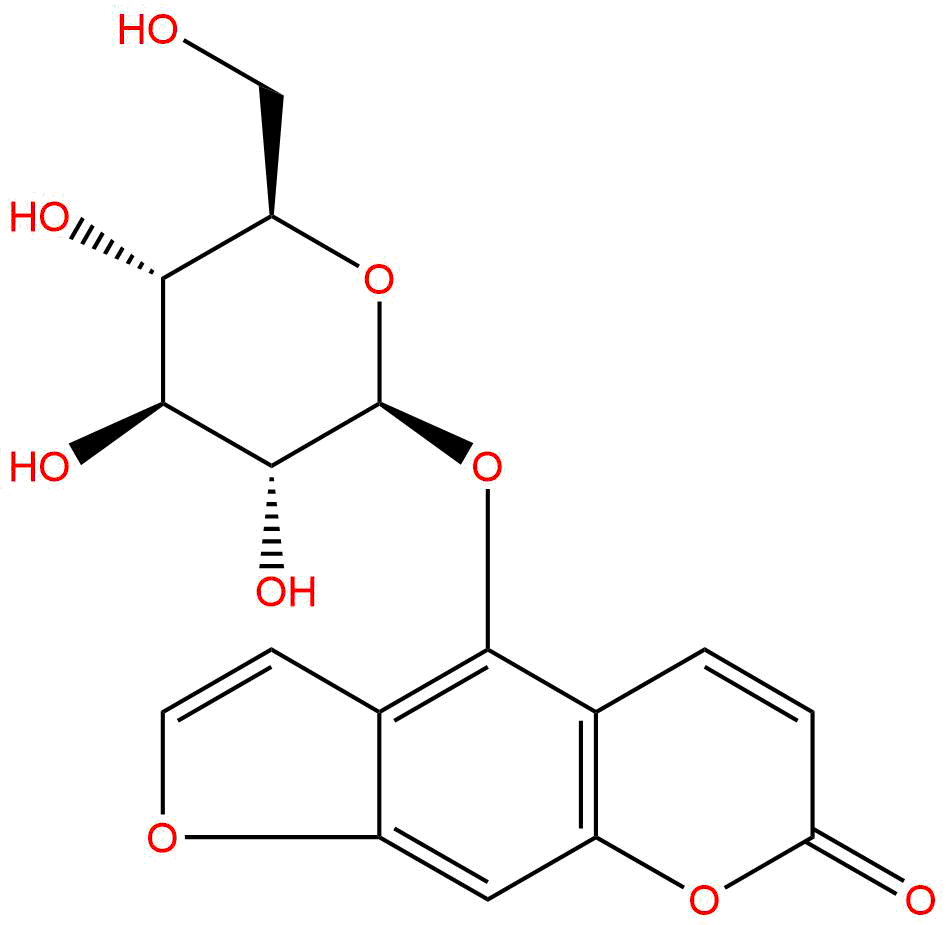
The chemical name of bergaptol O - β - D-glucopyranoside is Bergaptol O - β - D-glucopyranoside, and its structural core consists of two parts: the aglycone is bergaptol (5-hydroxypsoralen), which belongs to linear furan coumarin; The sugar moiety is β - D-glucopyranose. The two are connected by an O - β - glycosidic bond between the hydroxyl group at position 5 of the aglycone and the carbon atom at the glucose end group. The molecular formula of this compound is C ₁₇ H ₁₆ O ₉, with a molecular weight of 364.3060 g/mol. Structurally, the parent nucleus of bergamot is composed of a fused benzofuran ring and an α - pyranone ring, forming a highly conjugated planar aromatic system that endows the molecule with certain UV absorption properties and photochemical reactivity. The introduction of glucose groups adds multiple hydroxyl groups to the mother nucleus, greatly altering the overall polarity and spatial configuration of the molecule.
In terms of physicochemical properties, bergamot glucoside exhibits typical glycosidic compound characteristics. Its oil-water partition coefficient (LogP) is -0.0008, indicating that the molecule has an almost perfect hydrophilic lipophilic balance, neither strong hydrophilicity nor strong lipophilicity. This characteristic makes it potentially have good transmembrane transport potential in living organisms. The topological polar surface area (TPSA) is 142.7300 Å ², significantly higher than the recommended upper limit of 140 Å ² for oral medications, mainly due to the presence of multiple hydroxyl and glycosidic oxygen atoms in the molecule. Higher TPSA is usually associated with lower passive membrane permeability, but it also suggests that the molecule may be absorbed through active transport or paracellular pathways. The water solubility parameter is 2.1365 (usually measured in mg/mL or logS), indicating moderate to high solubility in water, thanks to the multiple hydrogen bond donor and acceptor sites provided by the sugar moiety. It is worth noting that the compound's blood-brain barrier (BBB) penetration ability was evaluated as "low". This characteristic has a dual significance for central nervous system (CNS) drugs: on the one hand, low BBB penetration may limit their direct action on brain targets, thereby reducing central side effects; On the other hand, if its anti anxiety effect is achieved through peripheral targets or by regulating the peripheral central signaling axis (such as the gut brain axis), then low BBB penetration may actually become advantageous. In addition, the risk assessment of hERG inhibition is' no ', indicating that the compound has a low potential risk in terms of cardiac safety. The Ames test result is 1.5, usually indicating no significant mutagenicity under standard testing conditions and a low initial risk of genetic toxicity. Overall, bergamot glucoside has a good pharmacological basis, especially its excellent water solubility and low risk of cardiac toxicity, providing favorable conditions for its subsequent development.
Phenol glucoside is mainly found in Rutaceae plants, especially in the citrus genus(Citrus)Hezhi genus(Poncirus)A variety of plants. Among them, Buddha's hand(Citrus medica L. var. sarcodactylis Swingle's fruit, skin, and leaves are traditionally abundant sources. In addition, in the field of Fructus Aurantii(Poncirus trifoliata (L.) Raf.)、 Lemon(Citrus limon)Sour Orange(Citrus aurantium)And some medicinal plants in the Rutaceae family, such as Rutaceae(Ruta graveolens)It has also been detected. It is worth noting that the content of bergamot glucoside varies significantly among different plant parts, harvest seasons, and varieties, with higher levels usually found in young fruits or skin. As a furan coumarin compound, its biosynthetic pathway is closely related to the defense response of plants to environmental stress such as ultraviolet radiation and pathogen infection.
For the extraction of bergamot glucoside, the classic solvent extraction method combined with modern separation and purification techniques is currently mainly used. Due to its moderate polarity and good solubility in both water and alcohol solvents, the commonly used extraction solvents are methanol, ethanol, or their aqueous solutions. A typical extraction process involves soaking or refluxing dried and crushed plant materials (such as bergamot peel powder) in a certain concentration of ethanol (such as 70% -95% ethanol) at room temperature or heating conditions, typically 2-3 times for 1-2 hours each time. Combine the extraction solutions, concentrate under reduced pressure to recover the solvent, and obtain the crude extract paste. In order to enrich the target compound, the crude extract can be subjected to liquid-liquid extraction using solvents of different polarities such as petroleum ether, ethyl acetate, n-butanol, etc. Due to its glycosidic structure, bergamot glucoside is usually enriched in the n-butanol extraction layer.
Further separation and purification rely on the combination of multiple chromatographic techniques. Silica gel column chromatography is the most commonly used preliminary separation method, often using solvent systems such as chloroform methanol water or ethyl acetate methanol water for gradient elution. Due to the UV absorption of bergamot glucoside, it can be tracked by thin-layer chromatography (TLC) combined with UV lamp (254 nm or 365 nm) color development. For structurally similar mixtures of furanocoumarin glycosides, reverse phase column chromatography (such as ODS-C18) exhibits higher separation efficiency, typically using methanol water or acetonitrile water systems for elution. In addition, preparative high-performance liquid chromatography (Prep HPLC) is a key step in achieving high-purity separation, especially suitable for obtaining pure products above milligrams from complex components. In recent years, high-speed countercurrent chromatography (HSCCC) has shown unique advantages in separating highly polar glycoside compounds as a solid-liquid distribution chromatography technique without solid phase carriers. It has the characteristics of high sample recovery rate and less irreversible adsorption. Finally, the structural identification of the purified product typically relies on nuclear magnetic resonance spectroscopy (NMR, including ¹ H-NMR, ¹ ³ C-NMR, HSQC, HMBC, etc.) and high-resolution mass spectrometry (HR-MS) techniques, which confirm its chemical structure through comparison with literature data or single crystal X-ray diffraction analysis.
The pharmacological activity research of bergamot glucoside is still in its infancy, but there is evidence to suggest that it has multiple biological effects, among which the anti anxiety effect is the most prominent. In addition, it has shown preliminary potential in anti-inflammatory, antioxidant, and neuroprotective aspects.
1. Anti anxiety activity
Anti anxiety is currently the most concentrated area of research on bergamot glucoside. Multiple studies based on animal behavioral models have confirmed its significant anti anxiety effect. In the elevated cross maze (EPM) experiment, intraperitoneal injection or oral administration of bergamot glucoside (usually at a dose range of 10-50 mg/kg) significantly increased the number of times mice entered the open arm and the percentage of time they stayed in the open arm, a classic indicator that directly reflects a decrease in anxiety levels. In the light dark box experiment (LDB), the mice in the treatment group had significantly prolonged residence time and increased shuttle frequency in the open box, further confirming its anti anxiety effect. In addition, in the open field test (OFT), bergamot glucoside increased the activity time of the central region without affecting the total movement distance, eliminating its non-specific interference with motor function and confirming the specificity of its anti anxiety effect. It is worth noting that these anti anxiety effects can be observed within 30-60 minutes after administration, with rapid onset and similar time characteristics to benzodiazepines. However, preliminary studies have shown that they do not exhibit significant sedative or muscle relaxation side effects.
2. Anti inflammatory and antioxidant activity
Inflammation and oxidative stress are common pathological foundations of various neurological and psychiatric disorders, including anxiety disorders. In vitro studies have shown that bergamot glucoside can inhibit the production of nitric oxide (NO) and prostaglandin E ₂ (PGE ₂) in macrophages (such as RAW264.7 cells) stimulated by lipopolysaccharide (LPS), and its mechanism is related to the downregulation of inducible nitric oxide synthase (iNOS) and cyclooxygenase-2 (COX-2) expression. Meanwhile, the compound can also reduce the levels of pro-inflammatory cytokines such as tumor necrosis factor - α (TNF - α), interleukin-6 (IL-6), and interleukin-1 β (IL-1 β). In terms of antioxidant activity, bergamot glucoside exhibits certain free radical scavenging ability, which can reduce intracellular reactive oxygen species (ROS) levels and upregulate the activity of antioxidant enzymes such as superoxide dismutase (SOD) and glutathione peroxidase (GSH Px). These anti-inflammatory and antioxidant properties may have a synergistic relationship with their anti anxiety effects, indirectly regulating emotions by improving the central and peripheral microenvironment.
3. Neuroprotective activity
Given its potential CNS activity, the neuroprotective effects of bergamot glucoside have also attracted attention. In vitro neuronal injury models (such as glutamate induced excitotoxicity or H ₂ O ₂ - induced oxidative damage), this compound can improve neuronal survival, reduce lactate dehydrogenase (LDH) release, and inhibit the activation of apoptosis related proteins (such as Caspase-3). Its protective mechanism may be related to the activation of the neurotrophic factor signaling pathway, especially the upregulation of brain-derived neurotrophic factor (BDNF) expression. BDNF plays a central role in neuronal survival, synaptic plasticity, and emotion regulation, and its decreased expression level is closely related to the occurrence of anxiety and depression. Therefore, the neuroprotective effect of bergamot glucoside by upregulating BDNF may be an important link in its anti anxiety effect.
The anti anxiety effect of bergamot glucoside is not driven by a single target, but involves network regulation of multiple neurotransmitter systems and signaling pathways, which is highly consistent with the "multi-target, multi pathway" mode of action revealed by modern network pharmacology. Based on existing research, its core mechanism of action can be summarized as follows:
1. Regulation of monoamine neurotransmitter system
Monoamine neurotransmitters, including serotonin (5-HT), dopamine (DA), and norepinephrine (NE), play a central role in emotion regulation. Network pharmacology prediction and molecular docking studies have shown that bergamot glucoside may interact with key proteins in multiple monoamine systems.
5-HT system This compound has potential binding activity towards 5-HT transporters (SERT, encoded by the SLC6A4 gene) and 5-HT receptors (such as HTR1A, HTR2A). Inhibition of SERT can increase the concentration of 5-HT in synaptic cleft, which is a classic mechanism of SSRIs anti anxiety drugs. At the same time, the activation of 5-HT-A self receptors on the presynaptic membrane can negatively feedback regulate 5-HT release, while the activation of 5-HT-A receptors on the postsynaptic membrane directly produces anti anxiety effects. The antagonistic effect on 5-HT ₂ A receptors may improve anxiety related cognitive and emotional symptoms. Buddha's hand phenol glucoside may finely regulate 5-HT neurotransmission by modulating the activity of these targets.
Dopamine system Dopamine D ₂ receptor (DRD2) is involved in reward, motivation, and emotion processing in the midbrain limbic system and midbrain cortex pathways. Research has shown that bergamot glucoside may interact with DRD2, and its regulatory effect may help improve common comorbid symptoms such as loss of pleasure and decreased motivation in anxiety disorders.
Monoamine oxidase A (MAOA)MAOA is a key enzyme for degrading 5-HT, NE, and DA. Inhibition of MAOA activity can increase levels of monoamine neurotransmitters and produce antidepressant/anti anxiety effects. The molecular docking results showed that bergamot glucoside may bind to MAOA in a reversible manner, exerting a mild inhibitory effect, thereby synergistically inhibiting SERT and jointly increasing the concentration of monoamine in the synaptic cleft.
2. Regulation of the GABAergic system
GABA is the most important inhibitory neurotransmitter in the central nervous system, and its dysfunction is closely related to the occurrence of anxiety disorders. Benzodiazepines exert rapid anti anxiety effects by enhancing the binding of GABA and GABAA receptors. Network pharmacology predicts that bergamot glucoside may act on multiple subunits of GABAA receptors, including GABRA1, GABRB2, and GABRG2. Although its affinity for the classical benzodiazepine binding site may differ, studies have shown that this compound can enhance GABA induced chloride ion influx, thereby generating inhibitory postsynaptic potentials and reducing neuronal excitability. This positive allosteric regulatory effect on the GABAergic system may be an important reason for its rapid onset without significant sedative side effects. In addition, its effect may not be limited to the classical benzodiazepine site, but rather achieved through binding to other conformational sites of the receptor, providing clues for the development of novel GABAergic modulators.
3. Neurotrophic factors and intracellular signaling pathways
BDNF CREB pathway Brain derived neurotrophic factor (BDNF) and its downstream transcription factor cAMP response element binding protein (CREB) are key signaling axes that regulate neuronal survival, synaptic plasticity, and emotion. Fossilyl glucoside has been shown to upregulate the expression of BDNF in the hippocampus and prefrontal cortex, and increase the phosphorylation level of CREB. The activation of the BDNF CREB pathway not only helps to protect stress-induced neuronal damage, but also promotes neurogenesis and synaptic remodeling, resulting in long-lasting and stable anti anxiety effects. This may be an important advantage that distinguishes it from drugs that simply regulate neurotransmitter levels.
Other signaling pathways Preliminary studies also suggest that bergamot glucoside may exert anti-inflammatory effects by inhibiting the NF - κ B pathway and enhancing antioxidant defense by activating the Nrf2/ARE pathway, which together form the molecular basis of its neuroprotective effects.
In summary, bergamot glucoside forms a multi-level network regulatory mechanism by simultaneously acting on MAOA, SERT, 5-HT ₁ A/₂ A receptors, DRD2, GABAA receptor subunits, and the BDNF CREB signaling pathway. This "multi-target synergy" model may have lower side effects and wider potential indications while exerting anti anxiety therapeutic effects.
Translating natural products from laboratory discovery to clinical application, drug efficacy evaluation and pharmacokinetic characteristics are key steps. The preliminary data of bergamot glucoside in this area provides important references for its subsequent development.
1. Analysis of pharmacological parameters
Based on the aforementioned physicochemical properties, the medicinal properties of bergamot glucoside exhibit a combination of advantages and challenges. Its molecular weight (364.3 Da) is within the ideal range for small molecule drugs (<500 Da). LogP is close to 0, indicating a good balance of hydrophilicity and lipophilicity, which is conducive to dissolution and distribution in body fluids. Moderate water solubility, meeting the preliminary requirements for oral formulations. The TPSA is relatively high (142.7 Å ²), which may limit passive diffusion, but suggests that it may become a substrate for efflux transporters such as P-glycoprotein (P-gp) or be absorbed through active transport mechanisms. The key toxicity risk assessment results are encouraging: hERG inhibition risk is "no", significantly reducing the risk of cardiac toxicity; Ames test negative, preliminarily ruling out genetic toxicity. These favorable safety features are important additives to its medicinal properties.
2. Pharmacokinetic characteristics
At present, there are few systematic studies on the pharmacokinetics of bergamot glucoside in vivo, but reasonable inferences can be made based on its structural characteristics and related compound research.
absorb After oral administration, the absorption of bergamot glucoside in the gastrointestinal tract may be complex. Its high water solubility and low LogP are beneficial for dissolution in the intestinal lumen, but higher TPSA and polarity may result in poor permeability through passive transcellular pathways. Therefore, its absorption may depend on glucose transporters (such as SGLT1) on small intestinal epithelial cells or paracellular pathways. In addition, β - glucosidase in the gut microbiota may hydrolyze it into the glycoside bergamot, which is then absorbed. Therefore, there may be both prototype drugs and aglycones present in the plasma after oral administration, and their pharmacological effects may be the result of their combined action.
distribution Due to the low BBB penetration, the concentration of bergamot glucoside prototype in brain tissue may be lower. This suggests that its anti anxiety effect may be partially mediated through peripheral mechanisms such as regulating gut microbiota and affecting peripheral immune inflammatory signals, or through its metabolite, bergamot (which may have higher BBB penetration), entering the central nervous system. Its higher TPSA also suggests that its plasma protein binding rate may be lower and the free drug concentration may be higher.
Metabolism The liver is its main metabolic organ. In addition to being hydrolyzed into aglycones, bergamot glucoside and its aglycones may also undergo phase I metabolism (such as cytochrome P450 enzyme mediated oxidation) and phase II metabolism (such as glucuronidation and sulfation). It is worth noting that furan coumarin compounds (such as bergamol) are known to have inhibitory effects on metabolic enzymes such as CYP3A4, which may lead to drug drug interactions and be a safety consideration that needs to be evaluated in subsequent development.
excretion Due to its high polarity, bergamot glucoside and its metabolites may be mainly excreted through bile and urine. The key parameters such as half-life and clearance rate are yet to be determined through systematic research.
3. Prospects for formulation strategies
Given its potential absorption limitations and low BBB penetration, future development may consider adopting advanced formulation technologies to improve its pharmacokinetic properties. For example, preparing phospholipid complexes or lipid nanoparticles can improve their lipid solubility, promote transmembrane absorption, and BBB penetration; Designing prodrug strategies, such as modifying its sugar moiety, can alter its metabolic pathways and targeting; Developing oral colon targeted preparations that can be enzymatically released by specific bacterial communities in the colon, thereby regulating the gut brain axis.
As a natural furan coumarin glycoside derived from traditional medicinal and edible plants such as bergamot, bergamot glucoside has shown unique advantages and broad application prospects in the development of anti anxiety drugs.
1. Potential as a novel candidate for anti anxiety drugs
Compared with existing first-line anti anxiety drugs, bergamot glucoside has the following potential advantages: firstly,Fast-acting Animal experiments have shown that its anti anxiety effect can be manifested in a short period of time after administration, which is superior to the characteristic of SSRIs drugs that usually take several weeks to take effect. This is particularly important for the treatment of acute anxiety attacks. Second,Security advantage Preliminary toxicity assessment (no hERG inhibition, no Ames mutagenicity) and animal behavioral observation (no significant sedative or muscle relaxant side effects) suggest that it may have a higher therapeutic index and lower dependency risk than benzodiazepines. Third,Multi target collaborative mechanism It simultaneously acts on the monoamine system, GABAergic system, and neurotrophic factor pathway, which may have a more comprehensive regulatory effect on the complex pathophysiological network of anxiety disorders, especially suitable for comorbid anxiety patients with depression, insomnia, or cognitive dysfunction.
2. Challenges and unresolved issues
Despite the bright prospects, the clinical translation of bergamot glucoside still faces many challenges. First,Pharmacokinetic characteristics need to be optimized Its low BBB penetration and potential absorption limitations are the main bottlenecks. More systematic pharmacokinetic studies are needed to clarify its oral bioavailability, tissue distribution, metabolic pathways, and main active forms (prototype or aglycone). Secondly,The mechanism of action needs to be further elucidated Although network pharmacology provides rich target prediction, most interactions still remain at the stage of molecular docking and in vitro binding experiments, lacking direct, high-resolution target binding experiments (such as surface plasmon resonance, radioligand binding experiments) and validation of in vivo gene knockout/knock in models. Third,Long term toxicity and dependency assessment As a potential CNS drug, strict long-term toxicity tests (including reproductive toxicity, carcinogenicity) and assessments of physical and psychological dependence must be conducted. Fourth,Drug drug interactions Given the potential impact of furan coumarin compounds on CYP450 enzymes, it is necessary to systematically evaluate their interaction risks with commonly used clinical drugs such as antidepressants, sedatives, and cardiovascular drugs.
3. Future research directions
Buddha's hand phenol glucoside, a natural furan coumarin glycoside derived from traditional Rutaceae plants, is gradually emerging from the vague background of ancient book records and folk applications on the modern pharmacology stage. Its chemical structure combines the aromaticity of coumarin parent nucleus with the water solubility of glucose group, endowing it with unique physicochemical properties and potential biological activity. The current research has clearly revealed its significant anti anxiety effect in various animal models, and this effect is not derived from a single mechanism, but is achieved through the precise regulation of the monoamine neurotransmitter system (MAOA, SERT, 5-HT/DA receptors), enhanced GABAergic inhibitory conduction, and activation of the BDNF CREB neurotrophin signaling pathway through multi-target and multi-level network synergy. The preliminary drug efficacy evaluation shows that it has a good safety basis, no hERG inhibition and genetic toxicity risks, but low BBB penetration and potential absorption limitations are the main challenges facing its clinical translation.
Looking ahead to the future, the development path of bergamot glucoside is full of both hope and thorns. It represents a new type of "multi-target natural product" that is different from traditional single target CNS drugs, and its unique pharmacological features may provide a safer, more comprehensive, and faster effective new option for the treatment of anxiety disorders. However, from laboratory discoveries to widespread clinical applications, multiple challenges still need to be overcome, including pharmacokinetic optimization, mechanism of action confirmation, long-term safety evaluation, and large-scale production process development. With the deep integration of systems biology, network pharmacology, medicinal chemistry, and advanced formulation technologies, we have reason to believe that bergamot glucoside and its derivatives have the potential to become a rising star in the development pipeline of anti anxiety drugs in the future, bringing new hope to billions of anxiety patients worldwide. The in-depth study of such natural products is not only a modern interpretation of traditional medical wisdom, but also a continuous effort by humanity to explore better solutions for mental health.
Batch can search by a CAS number,one per line
