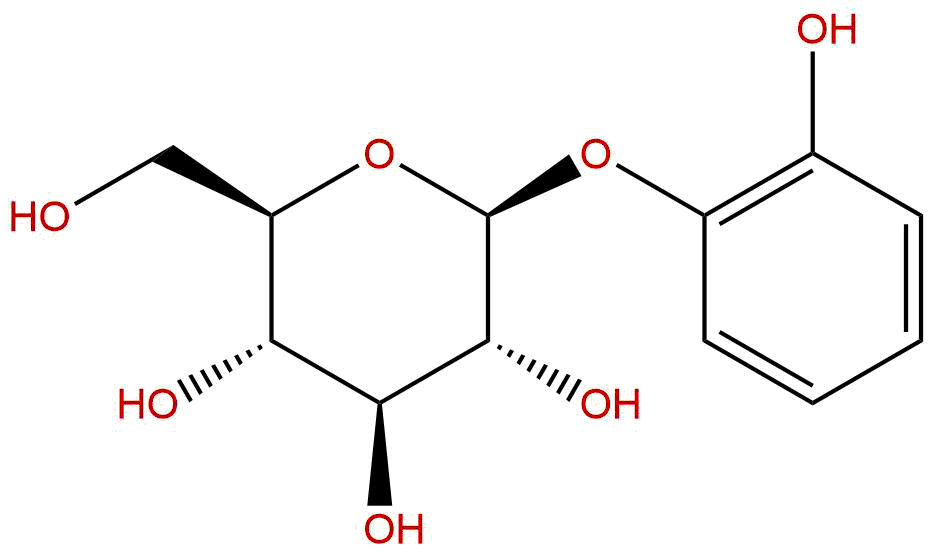


Product name: Pyrocatechol Monoglucoside
Synonym name: Pyrocatechol-O-β-D-glucopyranoside;2-Hydroxyphenyl β-D-glucopyranoside
Catalogue No.: BP2357
Cas No.: 2400-71-7
Formula: C12H16O7
Mol Weight: 272.253
Botanical Source:
Type of Compound: Phenols
Purity: 95%~99%
Analysis Method: HPLC-DAD or/and HPLC-ELSD
Identification Method: Mass, NMR
Packing: Brown vial or HDPE plastic bottle
Storage: Store in a well closed container, protected from air and light. Put into refrigerate or freeze for long term storage.
Whenever possible, you should prepare and use solutions on the same day. However, if you need to make up stock solutions in advance, we recommend that you store the solution as aliquots in tightly sealed vials at -20℃. Generally, these will be useable for up to two weeks.
The product could be supplied from milligrams to grams
Inquire for bulk scale.
For Reference Standard and R&D, Not for Human Use Directly.
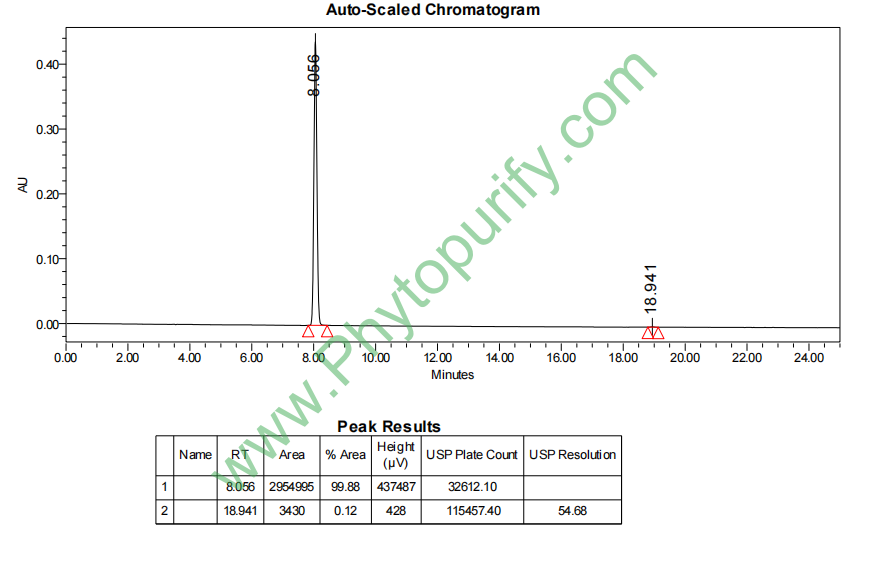
HPLC of Pyrocatechol Monoglucoside
Storage conditions:Short-term storage at 2~8℃, long-term storage at -20 ~ -80℃
119.6100
-.6579
-.6592
34.9943
1.5682
.1413
Low
24.9000
3.3709
Yes
No
No
No
Yes
No
0.0
Yes
Yes
Yes
Yes
Natural products have always been an important source of drug discovery and development, especially in the fields of anti infection, anti-tumor, and metabolic disease treatment, making remarkable contributions. Among the diverse natural phenolic compounds, glycosides have attracted much attention due to their unique physicochemical properties and biological activities. Pyrocatechol Monoglucoside, also known as catechol - β - D-glucopyranoside, is a typical phenolic glycoside compound. This compound was first derived from the Flacourtiaceae plant Yitong(Itoa orientalis Hemsl. has been isolated and identified, and has entered the field of researchers due to its potential antibacterial, anti-inflammatory, and anti urinary tract infection activities.
Urinary tract infection (UTI) is one of the most common bacterial infectious diseases in the world, especially in women, the elderly and those with low immune function. Pathogenic Escherichia coli(Escherichia coli)It is the main pathogen of UTI, which colonizes the epithelium of the urinary tract and causes infection through mechanisms such as pilar adhesion, flagellar movement, and urease activity. In recent years, due to the increasingly severe problem of antibiotic resistance, the search for natural anti UTI compounds with new mechanisms of action has become a research hotspot. As a natural glycoside with multi-target potential, catechol glucoside exhibits inhibitory effects on key targets such as bacterial DNA gyrase (GYRA/GYRB), dihydrofolate reductase (DHFR), dihydrofolate synthase (FOLA), bacterial cell wall synthase, flagellin (fliC), and urease (ureC), making it an important candidate for developing novel anti UTI lead compounds.
This article will systematically review the research progress of catechol glucoside from the aspects of chemical structure, plant origin, pharmacological activity, mechanism of action, medicinal properties, and clinical application prospects, aiming to provide theoretical basis for the in-depth development and utilization of this compound.
The chemical name of catechol glucoside is 2-hydroxyphenyl - β - D-glucopyranoside, which is composed of a catechol (catechol) nucleus connected to a molecule of D-glucose through a β - glycosidic bond. The molecular formula of this compound is C ₁₂ H ₁₆ O ₇, with a molecular weight of 272.2530 g/mol. The CAS registration number is 2400-71-7.
From a structural perspective, catechol glucoside belongs to the class of phenolic glycosides, with its sugar moiety endowing the molecule with good water solubility, while the phenolic hydroxyl group provides antioxidant and metal chelating abilities. Its LogP value is -0.6579, indicating that the compound has strong hydrophilicity and is not easily able to penetrate the lipid bilayer, which is consistent with its prediction of low blood-brain barrier permeability (BBB low). The topologically polar surface area (TPSA) is 119.6100 Å ², which is much higher than the recommended upper limit of 140 Å ² for oral drugs, indicating that the compound may be mainly absorbed through active transport or cellular bypass pathways.
In terms of water solubility, the predicted water solubility value of this compound is 34.9943 mg/mL, which belongs to a highly water-soluble compound and is beneficial for its dissolution and absorption in the gastrointestinal tract. However, high water solubility also means that its oral bioavailability may be limited by intestinal permeability. In addition, the negative prediction result of hERG inhibition indicates a low risk of cardiac toxicity. The Ames test predicted a value of 0.0, indicating that the compound has no significant mutagenicity and good safety.
It is worth noting that the phenolic hydroxyl structure of catechol glucoside makes it easy to undergo glucuronidation or sulfation binding reactions in vivo, which is not only the main pathway for its metabolic clearance, but also may affect the duration of its pharmacological activity. At the same time, glycosidic bonds may undergo hydrolysis under the action of gut microbiota, releasing free catechins, which may have stronger antioxidant and antibacterial activities, but may also bring certain cytotoxicity.
The catechol glucoside was originally derived from tung oil(Itoa orientalis)Separated from the middle. Yitong is a plant of the genus Yitong in the family Euphorbia, mainly distributed in southwestern China (Yunnan, Guangxi, Guizhou) and Southeast Asia. This plant is commonly used in folk medicine to treat rheumatoid arthritis, traumatic injuries, and urinary system infections. In addition to paulownia, catechol glucoside is also present in other plants, such as certain willow species(Salix In plants and Rosaceae, but the content is usually low.
The classic method for extracting catechol glucoside from paulownia tree includes the following steps: first, dry paulownia tree bark or leaves are crushed and extracted with methanol or ethanol water mixed solvent (such as 70% ethanol) at room temperature or heating conditions. After vacuum concentration, the extract was subjected to liquid-liquid extraction using petroleum ether, ethyl acetate, and n-butanol in sequence. Due to its equipolarity, catechol glucoside is mainly enriched in the n-butanol extraction site. Subsequently, the n-butanol extract was separated by silica gel column chromatography, ODS reverse phase column chromatography and Sephadex LH-20 gel column chromatography to obtain catechol glucoside monomer with high purity.
In recent years, high-speed countercurrent chromatography (HSCCC) and preparative high-performance liquid chromatography (pre HPLC) techniques have also been applied for the rapid separation and purification of this compound. These methods have the advantages of high separation efficiency, easy operation, and low solvent consumption, especially suitable for directional separation of target glycosides from complex natural product extracts.
It is worth noting that the content of catechol glucoside in plants is greatly influenced by the growth environment, harvest season, and plant parts. Research has shown that the glycoside content in the tender branches of Yitong is higher than that in the old branches, while the content in the bark is higher than that in the xylem. Therefore, establishing standardized harvesting and extraction processes is crucial to ensure a stable supply of this compound.
The most noteworthy pharmacological activity of catechol glucoside is its anti urinary tract infection effect. The occurrence of urinary tract infections involves multiple stages, including bacterial adhesion to the epithelium of the urinary tract, formation of biofilms, bacterial proliferation, and host inflammatory response. Research has shown that catechol glucoside can inhibit the growth and virulence expression of Escherichia coli, a key pathogenic bacterium in urinary tract infections, through a multi-target mechanism.
In vitro antibacterial experiments have shown that catechol glucoside exhibits certain antibacterial activity against standard Escherichia coli strains (such as ATCC 25922) and clinically isolated drug-resistant strains, with a minimum inhibitory concentration (MIC) typically ranging from 64-256 μ g/mL. Although its direct antibacterial activity is weaker than traditional antibiotics, its uniqueness lies in its ability to significantly inhibit the expression of bacterial virulence factors, rather than simply killing bacteria. This "anti virulence" strategy is considered a new approach to addressing antibiotic resistance.
In addition to its direct antibacterial effect, catechol glucoside also exhibits significant anti-inflammatory activity. During urinary tract infection, bacterial components such as lipopolysaccharides (LPS) can activate host immune cells and release large amounts of pro-inflammatory cytokines (such as IL-6, TNF - α, IL-1 β), leading to inflammatory damage to the urethral mucosa. Research has shown that catechol glucoside can inhibit the activation of the NF - κ B pathway in LPS induced macrophages, thereby downregulating the expression of pro-inflammatory cytokines. In addition, the compound can inhibit the expression of cyclooxygenase-2 (COX-2) and inducible nitric oxide synthase (iNOS), reduce the production of prostaglandin E ₂ and nitric oxide, and exert anti-inflammatory effects.
One of the common characteristics of phenolic compounds is their antioxidant activity. The catechol structure of catechol glucoside enables it to effectively scavenge free radicals (such as DPPH free radicals, ABTS cationic free radicals) and chelate transition metal ions (such as Fe ² ⁺, Cu ² ⁺), thereby inhibiting lipid peroxidation. In cell models, this compound can alleviate oxidative damage induced by hydrogen peroxide and protect the integrity of cell membranes. This antioxidant property may synergize with its anti-inflammatory activity, jointly reducing tissue damage caused by urinary tract infections.
Preliminary studies also suggest that catechol glucoside may have a mild diuretic effect, helping to flush out bacteria in the urethra. In addition, the compound also exhibits certain inhibitory activity against certain Gram positive bacteria (such as Staphylococcus aureus), but its antibacterial spectrum is relatively narrow, mainly targeting urinary tract infection related pathogens.
The pharmacological mechanism of catechol glucoside involves multiple molecular targets, which are closely related to the complex pathological process of urinary tract infections. The following will focus on the key targets and their modes of action related to urinary tract infections.
Bacterial DNA gyrase is a key enzyme in bacterial DNA replication, consisting of two subunits, GyrA and GyrB. This enzyme regulates the topological structure of DNA by introducing negative supercoils and is a classic target of quinolone antibiotics. Molecular docking studies have shown that catechol glucoside can bind to the active sites of E. coli GyrA and GyrB subunits, possibly inhibiting enzyme activity by interfering with ATP hydrolysis or DNA cleavage recombination processes. Unlike quinolone drugs, the action site of catechol glucoside may be more inclined towards the ATP binding pocket of the GyrB subunit, which provides a possibility for overcoming quinolone resistance.
Dihydrofolate reductase (DHFR) and dihydrofolate synthase (FOLA) are two key enzymes in the bacterial folate metabolism pathway, responsible for the synthesis of tetrahydrofolate, which is an essential coenzyme for nucleic acid synthesis. Sulfonamide drugs and trimethoprim exert their antibacterial effects by inhibiting these two enzymes. Research has found that catechol glucoside exhibits certain inhibitory activity against Escherichia coli DHFR and FOLA, with IC ₅₀ values at the micromolar level. This compound may competitively bind to enzyme active sites by mimicking the structure of folate substrates, thereby blocking folate synthesis. This dual inhibition mechanism helps to enhance antibacterial efficacy and reduce the probability of drug resistance.
Penicillin binding proteins (PBPs) are key enzymes involved in the synthesis of peptidoglycans in bacterial cell walls and are also targets of β - lactam antibiotics. Catechinol glucoside is predicted to bind to certain PBPs (such as PBP2, PBP3), which may inhibit peptidoglycan cross-linking by interfering with transpeptidase activity, leading to structural defects in bacterial cell walls. This mechanism of action is similar to beta lactam drugs, but due to their completely different chemical structures, they may still remain active against beta lactam resistant strains.
In urinary tract infections, bacterial flagella (composed of FliC proteins) and urease (catalyzed by the UreC subunit) are important virulence factors. Flagella endow bacteria with motility, enabling them to ascend against urine flow to the bladder and kidneys; Urease hydrolyzes urea to produce ammonia, alkalizes urine, and damages renal tubular epithelial cells. Research has shown that catechol glucoside can inhibit fliC and ureC The expression of genes reduces the motility and urease activity of bacteria. This "anti virulence" strategy does not directly kill bacteria, so the applied selection pressure is relatively small and it is not easy to induce drug resistance.
In addition to directly acting on bacteria, catechol glucoside can also regulate signaling pathways in host cells. This compound can inhibit the activation of the TLR4/MyD88/NF - κ B pathway, reduce the release of pro-inflammatory cytokines, and thus alleviate inflammatory damage caused by urinary tract infections. In addition, its antioxidant activity helps to eliminate reactive oxygen species produced at the site of infection and protect the integrity of urethral epithelial cells.
In summary, catechol glucoside exerts its anti urinary tract infection effect through a "multi-target, multi mechanism" approach, directly inhibiting bacterial growth and virulence while regulating host immune response, reflecting the characteristics of natural product "multi-directional pharmacology".
Based on Lipinski's Five Rules and Veber's Rules, the pharmacological parameters of catechol glucoside are as follows: molecular weight 272.25 (<500), LogP-0.66 (<5), number of hydrogen bond donors 5 (<5), number of hydrogen bond acceptors 7 (<10), TPSA 119.61 (<140). From these parameters, it can be seen that the compound basically meets the physical and chemical properties requirements of oral drugs, but its LogP value is low (strong hydrophilicity), which may lead to poor intestinal permeability and affect oral absorption.
In addition, the compound has high water solubility (34.99 mg/mL), which is beneficial for formulation development. The hERG inhibition risk is low, and the Ames test is negative, indicating a low risk of cardiac and genetic toxicity and good safety.
Pharmacokinetic predictions based on computer simulations (such as ADMET Predictor, SwissADME, etc.) show that the oral bioavailability of catechol glucoside may be low, mainly due to its high water solubility and low permeability. This compound belongs to BCS III class (high solubility low permeability) drugs and requires formulation techniques such as penetration enhancers, nanocarriers, etc. to enhance its oral absorption.
In terms of distribution, due to its strong hydrophilicity, this compound is mainly distributed in extracellular fluid and is not easily able to penetrate the blood-brain barrier, which is beneficial for reducing central nervous system side effects. In terms of metabolism, the phenolic hydroxyl groups of catechol glucoside are prone to phase II metabolism (glucuronidation, sulfation), and glycosidic bonds may also be hydrolyzed under the action of gut microbiota. Metabolites may retain some pharmacological activity, but overall activity may be lower than that of the parent compound.
In terms of excretion, the compound and its metabolites are mainly excreted through the kidneys and bile. Due to its diuretic effect, this compound may promote the excretion of itself and other metabolites.
Preliminary toxicity studies have shown that catechol glucoside has low toxicity to normal cells (such as human renal epithelial cell HK-2) in vitro, with a CC ₅₀ value much higher than the effective antibacterial concentration. In vivo acute toxicity experiments (in mice) showed that the safety window for oral administration is wide, with an LD ₅₀ value greater than 2000 mg/kg. Long term toxicity studies are still lacking, but based on its natural sources and traditional usage experience, this compound has good safety prospects.
Given the severe situation of antibiotic resistance, catechol glucoside, as a natural product with a multi-target mechanism of action, has unique advantages in the development of new anti urinary tract infection drugs. Its "anti virulence" strategy can reduce the risk of drug resistance, while multi-target action can help improve antibacterial efficacy and expand the antibacterial spectrum. In the future, structural modifications such as glycosylation, acylation, methylation, etc. can be used to optimize its pharmacokinetic properties and improve oral bioavailability.
The combination therapy of catechol glucoside and traditional antibiotics such as quinolones, sulfonamides, and beta lactams may produce synergistic effects. Due to its different target of action compared to existing antibiotics, combination therapy can cover more resistance mechanisms, reduce monotherapy doses, and minimize side effects. For example, when used in combination with trimethoprim, it can simultaneously inhibit DHFR and FOLA, enhancing the anti folate effect; Combined use with ciprofloxacin can simultaneously inhibit DNA gyrase and virulence factors, improving clinical efficacy.
Considering the high safety and antioxidant and anti-inflammatory activities of catechol glucoside, it can be used as an ingredient in functional foods or health products to prevent the recurrence of urinary tract infections. Especially suitable for adjuvant treatment of recurrent urinary tract infections in women. However, the problem of low oral bioavailability needs to be addressed through formulation technologies such as liposomes, cyclodextrin inclusion complexes, nanoemulsions, etc.
At present, the research on catechol glucoside is still in its early stages, and there are still the following key issues that need to be addressed: firstly, the in vivo pharmacological research is not sufficient, and it is necessary to establish an animal model of urinary tract infection to verify its in vivo efficacy; Secondly, pharmacokinetic characteristics require experimental data support, especially in terms of oral absorption, metabolic stability, and tissue distribution; Thirdly, research on long-term toxicity and reproductive toxicity is still blank; Fourthly, further research is needed on the structure-activity relationship to guide structural optimization; Fifth, large-scale extraction processes and synthesis methods need to be developed to meet the needs of subsequent research and development.
As a natural phenolic glycoside isolated from Eucommia ulmoides, catechol glucoside has shown significant research value in the field of anti urinary tract infections due to its unique chemical structure and multi-target pharmacological activity. This compound exerts a comprehensive effect of antibacterial, anti-inflammatory, and antiviral by inhibiting multiple targets such as bacterial DNA gyrase, dihydrofolate reductase, penicillin binding protein, and virulence factors (flagellin, urease). Its good safety, low cardiac toxicity, and non mutagenicity lay the foundation for its further development.
However, the low oral bioavailability and metabolic instability of this compound remain the main obstacles to its clinical application. In the future, through structural modification, formulation optimization, and combination therapy strategies, it is expected to overcome these shortcomings and develop it into a new type of anti urinary tract infection drug or functional product. With the deepening understanding of the multi-target and multi mechanism action characteristics of natural products, catechol glucoside is expected to become one of the important candidate compounds to address the challenge of antibiotic resistance, providing new solutions for the prevention and treatment of urinary tract infections.
