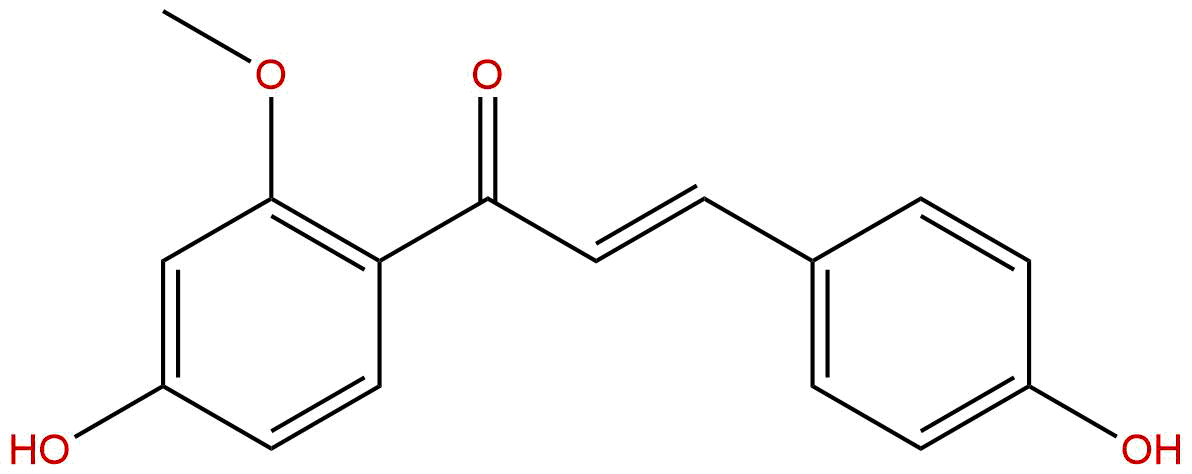


Product name: 3-Deoxysappanchalcone
Synonym name: 2'-Methoxyisoliquiritigenin
Catalogue No.: BP4782
Cas No.: 112408-67-0
Formula: C16H14O4
Mol Weight: 270.284
Botanical Source:
Type of Compound: Chalcones
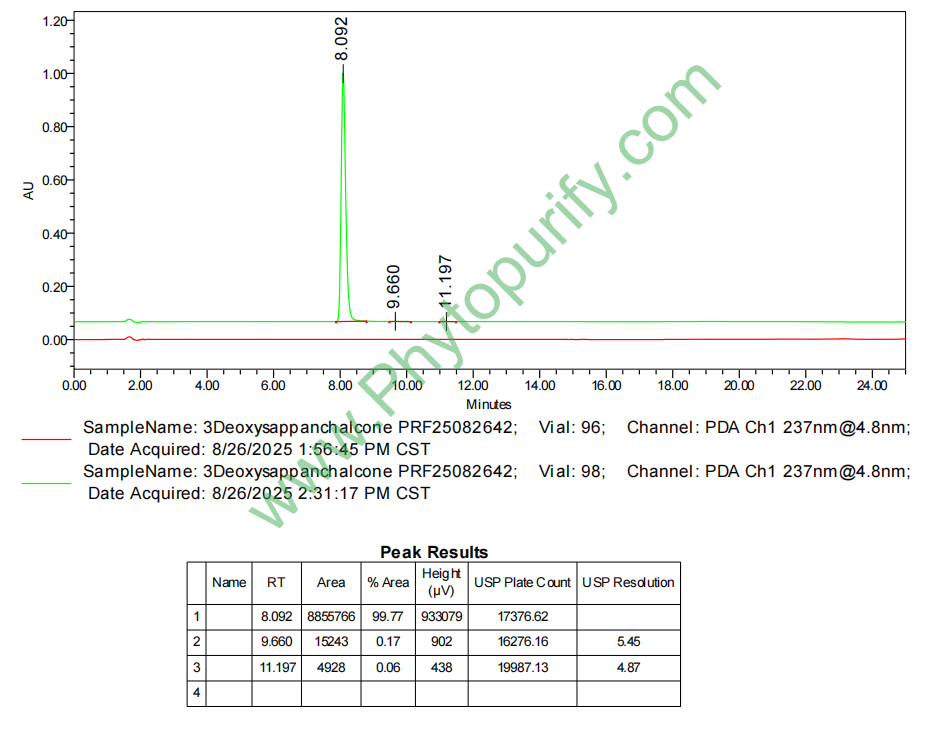
Purity: 95%~99%
Analysis Method: HPLC-DAD or/and HPLC-ELSD
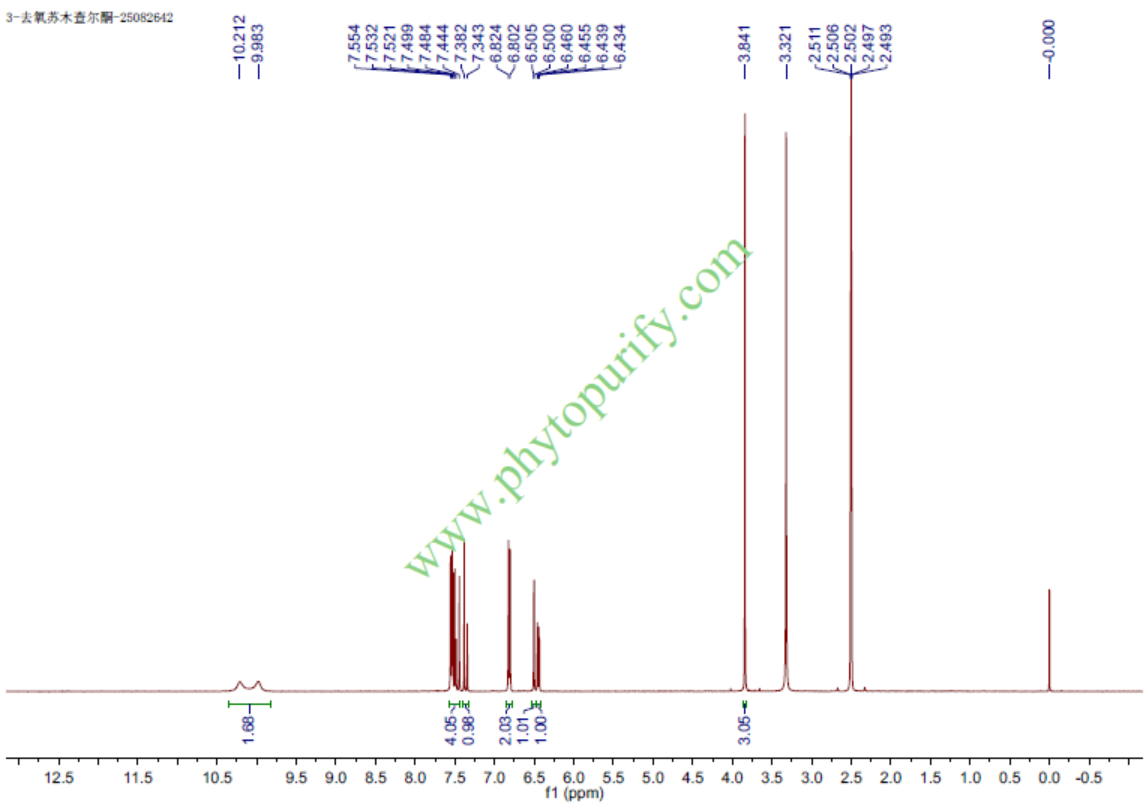
Identification Method: Mass, NMR
Packing: Brown vial or HDPE plastic bottle
Storage: Store in a well closed container, protected from air and light. Put into refrigerate or freeze for long term storage.
Whenever possible, you should prepare and use solutions on the same day. However, if you need to make up stock solutions in advance, we recommend that you store the solution as aliquots in tightly sealed vials at -20℃. Generally, these will be useable for up to two weeks.
The product could be supplied from milligrams to grams
Inquire for bulk scale.
For Reference Standard and R&D, Not for Human Use Directly.
HPLC of 3-Deoxysappanchalcone
HNMR of 3-Deoxysappanchalcone
Storage conditions:Short-term storage at 2~8℃, long-term storage at -20 ~ -80℃
66.7600
2.9717
2.9440
.0859
3.8325
20.9209
High
91.2910
2.0085
Yes
No
Yes
No
Yes
No
0.6
No
Yes
Yes
Yes
Natural products, as an important source of drug discovery, play an irreplaceable role in the long history of human struggle against diseases. Chalcone compounds are a class of flavonoid precursors widely present in the plant kingdom, characterized by two aromatic rings connected by alpha, beta unsaturated ketone bridges. This unique molecular skeleton endows this class of compounds with rich and diverse biological activities. Among numerous natural chalcones, 3-Deoxysappanchalcone has attracted widespread attention from researchers due to its significant anti-inflammatory, antiviral, and antioxidant activities.
3-Deoxychalcone was originally derived from the legume plant Sapium(Caesalpinia sappan L. The separation and identification of () is one of the important active ingredients in this plant. Sumu, as a traditional Chinese medicinal herb, has a long history of medicinal use in China and Southeast Asia. It is commonly used to treat injuries caused by falls, bruises, swelling and pain, rheumatism, and other conditions. Modern pharmacological research has confirmed that the extract of Sumu has various biological activities such as anti-inflammatory, antibacterial, anti-tumor, and antioxidant properties, and 3-deoxy Sumu chalcone is considered one of the key material bases for its pharmacological effects.
In recent years, with the continuous deepening of research on 3-deoxychalcone, its mechanisms of action in anti-inflammatory, antiviral, and anti allergic aspects have gradually been elucidated. In particular, this compound induces the anti-inflammatory mechanism of heme oxygenase-1 (HO-1) expression by regulating the AKT/mTOR signaling pathway, and exhibits significant inhibitory activity against influenza virus H3N2 subtype (IC50=1.06 μ M), making it a highly promising natural lead compound for development. This article will provide a systematic review of the research progress of 3-Deoxy-samchalcone from the aspects of chemical structure, plant origin, pharmacological activity, mechanism of action, pharmacological evaluation, and clinical application prospects.
The chemical name of 3-Deoxysappanchalcone is 3-Deoxysappanchalcone, with a CAS registration number of 112408-67-0. From the perspective of chemical structure classification, this compound belongs to chalcone flavonoids. The basic skeleton of chalcone is composed of two aromatic rings (A ring and B ring) connected by a three carbon α, β - unsaturated carbonyl bridge (- CO-CH=CH -). The molecular formula of 3-deoxychalcone is C16H14O4, with a molecular weight of 270.2840 g/mol.
Compared with other chalcone compounds, the structural feature of 3-deoxy-sauric chalcone lies in the substitution mode of the hydroxyl group on its A ring. Specifically, the compound has one hydroxyl substitution at each of the 2 'and 4' positions on the A ring, and one hydroxyl substitution at the 4 position on the B ring. This specific hydroxyl substitution pattern is considered an important structural basis for its biological activity. It is worth noting that the term "3-deoxy" in the name of this compound refers to the absence of a hydroxyl group at the 3rd carbon position of its C ring (i.e. the three carbon chain connecting two aromatic rings in the chalcone skeleton), which is structurally different from other chalcone compounds found in sumu (such as sumu chalcone).
From the perspective of physical and chemical properties, 3-deoxychalcone exhibits typical phenolic compound characteristics. Its lipid water partition coefficient (LogP) is 2.9717, indicating that the compound has moderate lipid solubility and can be well distributed in a lipid environment while maintaining a certain degree of water solubility. The topological polar surface area (TPSA) is 66.7600 Å ², which suggests that the compound may have good oral absorption potential, as compounds with TPSA less than 140 Å ² are generally considered to have good intestinal absorption characteristics.
In terms of water solubility, the water solubility parameter of 3-deoxychalcone is 0.0859 mg/mL, which belongs to low water solubility compounds. This characteristic may limit its solubility and bioavailability in aqueous environments, but it also suggests that it may tend to bind to lipid membranes or proteins in vivo. It is worth noting that the compound has a high blood-brain barrier penetration rating, indicating its potential to enter the central nervous system through the blood-brain barrier. This characteristic is of great significance for the development of drugs for the treatment of central nervous system diseases.
In terms of safety prediction, the hERG inhibition assessment result is' no ', indicating a low risk of the compound causing QT interval prolongation in the heart. The Ames test result is 0.6, indicating that its genetic toxicity risk is at a moderate level and further toxicological studies are needed to confirm its safety.
3-Deoxychalcone mainly comes from the plant Sapindaceae in the family Fabaceae(Caesalpinia sappan L.)。 Sumu is a deciduous small tree or shrub native to Southeast Asian countries such as India, Myanmar, Thailand, and Vietnam. It is also distributed in provinces and regions such as Yunnan, Guangxi, Guangdong, and Taiwan in China. The heartwood of Su Mu is reddish brown or yellow red in color, with a hard texture, and is the medicinal part of the traditional Chinese medicinal herb "Su Mu".
The application of Sumu in traditional medicine has a long history, first recorded in the "Tang Materia Medica", and later included in various works of traditional Chinese medicine. According to traditional Chinese medicine theory, Su Mu has a sweet and salty taste, a calm nature, and can regulate the heart, liver, and spleen meridians. It has the effects of promoting blood circulation, removing blood stasis, reducing swelling, and relieving pain. It is commonly used to treat injuries caused by falls, blood stasis, swelling and pain, menstrual cramps, rheumatism and rheumatism. Modern pharmacological research has confirmed that Su Mu contains various chemical components, including chalcones, isoflavones, dibenzocycloheptanes, terpenes, phenolic acids, etc. Among them, chalcone compounds are one of its main active ingredients.
In addition to Su Mu, 3-deoxy Su Mu chalcone may also exist in other plants of the same genus, but current research mainly focuses on this species of Su Mu. It is worth noting that the content and composition of chalcone compounds in Sumu are influenced by various factors such as plant growth environment, harvesting season, and tree age, which poses certain challenges for standardized extraction and quality control.
The extraction of 3-deoxychalcone is usually carried out using organic solvent extraction method, and commonly used extraction solvents include ethanol, methanol, ethyl acetate, etc. Considering the moderate lipophilicity of the compound, ethanol water mixed solvents (usually 70% -95% ethanol) are widely used for the extraction of chalcone compounds from Sapium wood. The extraction process usually includes the following steps: crushing the dried wood core to an appropriate particle size, adding extraction solvent, using heating reflux or ultrasound assisted extraction, and concentrating the extraction solution to obtain a crude extract.
The separation and purification of 3-deoxychalcone from crude extract usually requires the combination of multiple chromatographic techniques. Common separation methods include silica gel column chromatography, Sephadex LH-20 gel column chromatography, preparative high-performance liquid chromatography, etc. In silica gel column chromatography, solvent systems such as chloroform methanol or petroleum ether ethyl acetate are commonly used for gradient elution. Due to the characteristic absorption of chalcone compounds under ultraviolet light, they can be tracked and monitored by UV detectors or thin layer chromatography.
In recent years, some new extraction techniques have also been applied to the extraction of active ingredients from Sumu, such as supercritical fluid extraction, microwave-assisted extraction, enzyme assisted extraction, etc. These techniques have the advantages of high extraction efficiency, low solvent dosage, and environmental friendliness, but their application in the extraction of 3-deoxy-sulfuranone is not yet widely used. In addition, establishing efficient and stable quality control methods is crucial for ensuring the consistency of extract quality, and high-performance liquid chromatography-mass spectrometry has become the main means of qualitative and quantitative analysis of this compound.
Inflammation is the body's defense response to harmful stimuli, but excessive or sustained inflammation can lead to tissue damage and the occurrence of various diseases. The anti-inflammatory activity of 3-deoxychalcone has been confirmed by multiple studies. In cell models, this compound can significantly inhibit the production of pro-inflammatory cytokines in macrophages stimulated by lipopolysaccharide (LPS), including tumor necrosis factor - α (TNF - α), interleukin-6 (IL-6), and nitric oxide (NO). These pro-inflammatory mediators play a crucial role in the inflammatory response, and their excessive production is closely related to various inflammatory diseases.
Further research has shown that the anti-inflammatory effect of 3-deoxychalcone is closely related to its ability to induce the expression of heme oxygenase-1 (HO-1). HO-1 is an important antioxidant enzyme that can catalyze the degradation of heme into biliverdin, carbon monoxide, and free iron, all of which have anti-inflammatory and cell protective effects. In LPS stimulated mouse macrophages, 3-deoxychalcone can significantly upregulate the expression level of HO-1, thereby inhibiting inflammatory response. This discovery provides important clues for understanding the anti-inflammatory mechanism of the compound.
The antiviral activity of 3-deoxychalcone is also remarkable. Research has shown that the compound has a significant inhibitory effect on the H3N2 subtype of influenza A virus, with a half maximal inhibitory concentration (IC50) of 1.06 μ M. Influenza virus is the main pathogen causing seasonal influenza and global pandemics, and H3N2 subtype is one of the main influenza virus subtypes currently circulating. Considering the resistance issues faced by existing anti influenza drugs such as oseltamivir, it is of great practical significance to search for new anti influenza lead compounds from natural products.
In addition to its antiviral activity against influenza virus, 3-deoxychalcone may also have inhibitory effects on other viruses. Chalcone compounds, as a class of natural products with broad-spectrum antiviral activity, may involve multiple antiviral mechanisms such as inhibiting virus adsorption, entry, replication, or release. However, current research on the antiviral spectrum and specific mechanisms of 3-deoxy-sulfuranone is still limited and requires further in-depth exploration.
Oxidative stress is one of the important pathological mechanisms underlying the occurrence and development of various diseases. The antioxidant activity of 3-deoxychalcone has been validated in multiple experimental systems. This compound can scavenge various free radicals, including 1,1-diphenyl-2-trinitrophenylhydrazine (DPPH) free radical, 2,2 '- diazobis (3-ethylbenzothiazoline-6-sulfonic acid) (ABTS) cationic free radical, etc. Its antioxidant activity may be related to the phenolic hydroxyl groups in its molecular structure, which can provide hydrogen atoms or electrons to neutralize free radicals.
It is worth noting that the antioxidant effect of 3-deoxy-sulfuranone is not only reflected in its direct clearance of free radicals, but also indirectly exerts antioxidant effects by inducing the expression of intracellular antioxidant enzymes. As mentioned earlier, this compound can induce the expression of HO-1, and HO-1 and its metabolites play an important role in the antioxidant defense system. In addition, the compound may also enhance the antioxidant capacity of cells by activating the nuclear factor E2 related factor 2 (Nrf2) signaling pathway, upregulating the expression of a series of antioxidant enzymes.
Allergic reactions are abnormal immune responses of the body to allergens, involving multiple processes such as degranulation of mast cells, release of histamine, and production of inflammatory mediators. Preliminary studies have shown that 3-Deoxy-samchalcone has anti allergic activity and can inhibit the activation of mast cells and the release of allergic mediators. This discovery suggests that the compound may have potential therapeutic value for allergic diseases such as allergic rhinitis, asthma, and atopic dermatitis.
One of the core mechanisms of the anti-inflammatory effect of 3-Deoxy-samchalcone is to induce the expression of HO-1 by activating the AKT/mTOR signaling pathway. AKT (protein kinase B) is a serine/threonine protein kinase that plays a critical role in cell survival, proliferation, metabolism, and inflammation regulation. MTOR (mammalian target protein of rapamycin) is an important effector molecule downstream of AKT, involved in regulating protein synthesis, cell growth, and autophagy processes.
Research has shown that 3-Deoxy-samchalcone can promote the phosphorylation activation of AKT, thereby activating the downstream mTOR signaling pathway. Activated mTOR promotes transcription and translation of HO-1 by phosphorylating downstream substrates such as p70S6K and 4E-BP1. After upregulation of HO-1 expression, it catalyzes the degradation of heme to produce metabolites with anti-inflammatory activity, thereby exerting anti-inflammatory effects. This mechanism has been validated by the use of specific inhibitors, such as PI3K inhibitor LY294002 and mTOR inhibitor rapamycin, which can block HO-1 expression and anti-inflammatory effects induced by 3-deoxychalcone.
In addition to the AKT/mTOR pathway, 3-deoxychalcone may also exert anti-inflammatory effects by regulating other inflammation related signaling pathways. Nuclear factor kappa B (NF - κ B) is the core transcription factor in inflammatory response, regulating the expression of various pro-inflammatory factors. Research has shown that chalcone compounds can inhibit the activation of NF - κ B, thereby reducing the production of pro-inflammatory factors such as TNF - α, IL-6, and inducible nitric oxide synthase (NOS2). 3-Deoxychalcone may inhibit the nuclear translocation and transcriptional activity of NF - κ B by suppressing the activity of I κ B kinase (IKBKB), preventing its phosphorylation and degradation.
Signal transducer and activator of transcription factor 3 (STAT3) is another important inflammation related transcription factor. The excessive activation of STAT3 is closely related to the occurrence and development of various inflammatory diseases and tumors. 3-Deoxychalcone may regulate the expression of downstream inflammation related genes by inhibiting the phosphorylation activation of STAT3. In addition, the compound may also affect the activity of caspase-1 (CASP1), which is a key enzyme in inflammasome activation and participates in the maturation and secretion of IL-1 β and IL-18.
Transient receptor potential (TRP) channels are a type of non selective cation channel that play important roles in sensory conduction, inflammatory response, and pain perception. 3-Deoxychalcone may exert anti-inflammatory and analgesic effects by regulating the activity of TRP channels such as TRPV1 and TRPA1. TRPV1 (capsaicin receptor) and TRPA1 (mustard oil receptor) are two important nociceptors involved in the occurrence of inflammatory pain and neuropathic pain. Chalcone compounds have been reported to regulate the activity of these channels, but the specific regulatory mechanism of 3-deoxychalcone on TRP channels still needs further investigation.
From the perspective of molecular targets, 3-Deoxychalcone exhibits multi-target action characteristics. This compound not only induces HO-1 expression by activating the AKT/mTOR pathway, but may also regulate multiple inflammation related targets such as NF - κ B, STAT3, CASP1, TRPV1, TRPA1, IKBKB, NOS2, PTGS1 (cyclooxygenase-1), and TNF. This multi-target action characteristic is in line with the natural product's "multi-target, multi pathway" action characteristic, and is also the molecular basis for its comprehensive anti-inflammatory effect.
It is worth noting that the regulation of the above targets by 3-deoxy-sulfuranone may be dose-dependent and cell type specific. Under different cell types and pathological conditions, this compound may exert its effects through different molecular mechanisms. Therefore, a comprehensive elucidation of its mechanism of action network is of great significance for understanding its pharmacological effects and developing clinical applications.
Based on Lipinski's "Rule of Five", the pharmacological characteristics of 3-deoxy-sulfuranone are as follows: molecular weight 270.2840 (<500), LogP 2.9717 (<5), number of hydrogen bond donors (phenolic hydroxyl) 3 (<5), and number of hydrogen bond acceptors (hydroxyl and carbonyl) 4 (<10). These parameters all meet the requirements of the "Five Rules", indicating that the compound has good oral drug potential.
In addition, the topological polar surface area (TPSA) of the compound is 66.7600 Å ², which is below the threshold of 140 Å ², indicating its good intestinal absorption potential. The water solubility parameter is 0.0859 mg/mL. Although it belongs to low water solubility compounds, its solubility and bioavailability can be improved through appropriate formulation techniques such as solid dispersions, liposomes, nanoparticles, etc.
At present, there is still limited systematic research on the pharmacokinetics of 3-deoxychalcone, but its pharmacokinetic characteristics can be inferred based on its physicochemical properties and studies of similar compounds. This compound has high blood-brain barrier penetration, indicating that it may reach effective concentrations in the central nervous system, which is of great significance for the development of drugs for the treatment of central nervous system diseases.
In terms of metabolism, chalcone compounds typically undergo extensive phase I and phase II metabolism. Phase I metabolism mainly involves oxidation reactions catalyzed by cytochrome P450 enzymes, including hydroxylation, demethylation, etc; Phase II metabolism includes binding reactions such as glucuronidation and sulfation. The phenolic hydroxyl group in the molecule of 3-deoxy-sulfuranone is a potential site for phase II metabolism, and these metabolic reactions may affect its bioavailability and pharmacological activity.
In terms of safety, the hERG inhibition assessment result is' no ', indicating a low risk of cardiac toxicity caused by the compound. The Ames test result is 0.6, indicating a moderate level of genetic toxicity risk. It is worth noting that Ames test results are usually indicated as "positive" or "negative", and a value of 0.6 may indicate that the compound exhibits weak positivity or uncertain mutagenicity under specific conditions, requiring further toxicological studies to confirm its safety.
In addition, as a natural product, the safety of 3-deoxychalcone also needs to consider its dose-response relationship, long-term toxicity, reproductive toxicity, and other aspects. At present, the systematic toxicology research on this compound is not sufficient, which is a key issue that needs to be focused on in its clinical translation process.
Based on the significant anti-inflammatory activity and clear mechanism of action of 3-Deoxy-samchalcone, this compound has broad application prospects in the development of anti-inflammatory drugs. Especially its unique mechanism of inducing HO-1 expression to exert anti-inflammatory effects provides new ideas for the development of novel anti-inflammatory drugs. Compared with traditional nonsteroidal anti-inflammatory drugs (such as cyclooxygenase inhibitors), 3-deoxy-sulfuranone may have different targets of action and fewer side effects.
In terms of indications, this compound may have therapeutic potential for various inflammatory diseases, including rheumatoid arthritis, inflammatory bowel disease, dermatitis, asthma, etc. However, there are still many challenges from laboratory research to clinical application, including optimization of pharmacokinetic properties, formulation development, toxicological evaluation, clinical trials, etc.
The significant inhibitory activity (IC50=1.06 μ M) of 3-deoxychalcone against influenza virus H3N2 subtype makes it a candidate compound for the development of anti influenza drugs. Considering the high variability of influenza viruses and the resistance issues faced by existing anti influenza drugs, developing anti influenza drugs with novel mechanisms of action is of great clinical significance.
Future research should focus on the antiviral spectrum, mechanism of action, and potential for drug resistance of this compound. In addition, the synergistic effect of this compound with other anti influenza drugs is also worth exploring, which may provide a basis for developing combination therapy plans.
The antioxidant activity and high blood-brain barrier penetration of 3-deoxy-sulfuranone suggest its potential application value in neuroprotection. Oxidative stress and neuroinflammation are important pathological features of neurodegenerative diseases such as Alzheimer's disease and Parkinson's disease. This compound exerts antioxidant effects by inducing HO-1 expression and scavenging free radicals, which may have potential value in the prevention and treatment of neurodegenerative diseases.
In addition, the anti-inflammatory activity of this compound may also have a protective effect on acute central nervous system injuries such as cerebral ischemia-reperfusion injury and spinal cord injury. These research directions are worth further exploration.
As a natural lead compound, the optimization of the structure of 3-deoxychalcone is an important way to enhance pharmacological activity and improve pharmacokinetic properties. By reasonable structural modifications, such as introducing or removing specific functional groups, changing the hydroxyl substitution mode, designing prodrugs, etc., it is possible to obtain derivatives with stronger activity, higher selectivity, and better pharmacokinetic properties.
In recent years, the development of computer-aided drug design methods has provided powerful tools for structural optimization of natural products. Through methods such as molecular docking, virtual screening, and quantitative structure-activity relationship analysis, the impact of structural modifications on activity and pharmacokinetic properties can be predicted, thereby guiding experimental research.
As a natural chalcone compound discovered from the traditional Chinese medicine Su Mu, 3-deoxy Su Mu chalcone exhibits significant anti-inflammatory, antiviral, antioxidant, and anti allergic activities, as well as a unique mechanism of action that induces HO-1 expression by activating the AKT/mTOR pathway, demonstrating important potential for drug development. The excellent drug like properties and high blood-brain barrier penetration of this compound further enhance its value as a lead compound.
However, there are still many challenges from laboratory research to clinical application. At present, research on 3-Deoxy-samchalcone mainly focuses on in vitro experiments and preliminary animal experiments, and key information such as its pharmacokinetic characteristics, metabolic pathways, and long-term toxicity in vivo is still insufficient. In addition, although the multi-target action characteristics of this compound endow it with comprehensive pharmacological effects, it may also bring about off target effects and insufficient selectivity.
Future research should focus on the following aspects: firstly, to further elucidate the mechanism network of action of 3-deoxy-sucalone, especially its regulatory effects on multiple targets in vivo; The second is to systematically evaluate its pharmacokinetic characteristics and safety, providing a basis for clinical translation; The third is to improve its solubility and bioavailability through structural optimization and formulation technology; The fourth is to expand its indications and explore its potential applications in areas such as neuroprotection and anti-tumor therapy.
In summary, as a natural chalcone compound with unique pharmacological activity, the study of 3-deoxy-sulfuron not only helps to reveal the pharmacological substance basis of traditional Chinese medicine, but also provides valuable lead compounds for the development of new anti-inflammatory and antiviral drugs. With the continuous deepening of research, it is believed that this natural product will play a greater role in the field of drug development.
