Introduction/Overview
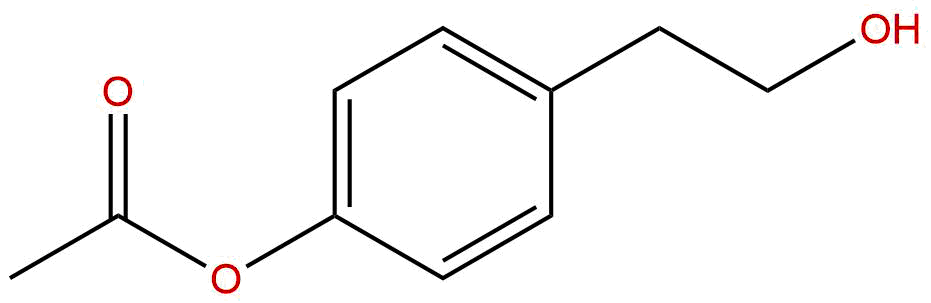
Natural products, as an important source of drug discovery, play an irreplaceable role in the long history of human struggle against diseases. From classic aspirin to complex paclitaxel, the chemical diversity inherent in nature provides endless inspiration for modern drug development. Among numerous naturally occurring small molecules with biological activity, 4- (Acetyloxy) benzeneethanol (CAS number: 60037-43-6), as a relatively simple yet functionally diverse phenolic compound, has gradually attracted attention from the pharmacological community in recent years. The molecular formula of this compound is C ₁₀ H ₁₂ O3, with a molecular weight of 180.2030. Its structural core is a phenylethanol skeleton, and acetyl modification is introduced on the para hydroxyl group. This structural feature endows it with unique lipophilicity and biological activity.
Acetacetoxyphenylethanol is mainly found in various medicinal plants and daily food ingredients in nature, such as honey, olive oil, and certain spice plants. It is often regarded as a derivative or metabolic intermediate of phenylethanol, and may participate in defense reactions or signal transduction in plants. From the perspective of pharmacological activity, this compound exhibits significant anti-inflammatory, antioxidant, and potential immune regulatory abilities, especially showing promising application prospects in the field of skin inflammation. Skin inflammation, including atopic dermatitis, contact dermatitis, etc., is a complex immune response induced by multiple factors such as allergens, irritants, and microbial infections. Its pathological process involves abnormal activation of multiple cytokines, chemokines, and signaling pathways. Although existing treatment methods such as glucocorticoids are effective, long-term use often accompanies side effects such as skin atrophy and capillary dilation. Therefore, the search for efficient and low toxicity natural anti-inflammatory active molecules has become a research hotspot.
Acetacetoxyphenethyl alcohol has shown potential as a novel anti-inflammatory lead compound or functional cosmetic additive due to its excellent physicochemical properties (such as moderate lipid solubility, good water solubility) and low toxicity risk (Ames test result negative, low hERG inhibition risk). This article aims to systematically review the chemical structure, natural sources, extraction processes, pharmacological activities, molecular mechanisms, pharmacological characteristics, and clinical application prospects of acetoxyphenylethanol, in order to provide comprehensive scientific basis for the in-depth development and transformation research of this compound.
Chemical structure and physicochemical properties
The chemical structure of acetoxyphenylethanol consists of a benzene ring, an ethoxy side chain, and a para acetoxy substituent. From the perspective of systematic nomenclature, its IUPAC name is 4- (2-hydroxyethyl) phenyl acetate. This structure can be regarded as the product of acetylation of the phenolic hydroxyl group of phenylethanol (2-phenylethanol). This acetylation modification significantly alters the polarity and metabolic stability of the parent molecule. Specifically, the introduction of acetyl groups reduces the overall polarity of the molecule, making it easier to penetrate biological membranes, which is consistent with its predicted higher blood-brain barrier penetration ability (BBB permeability is high).
In terms of physicochemical properties, the molecular weight of acetoxyphenylethanol (180.2030 Da) meets the requirement of Lipinski's Rule of Five for molecular weight less than 500. Its lipid water partition coefficient (LogP) is 1.5618, indicating that the compound has moderate lipophilicity. It can dissolve in the lipid environment to facilitate transmembrane transport and maintain a certain solubility in the aqueous phase, which is beneficial for local administration (such as topical application on the skin) or oral absorption. The topological polar surface area (TPSA) is 46.53 Å ², which is lower than the commonly recognized threshold for good oral absorption (approximately 140 Å ²), further supporting its excellent biofilm permeability. The predicted value of water solubility is 2.8044 mg/mL, which belongs to the moderate solubility range, indicating that it may require the use of solubilization techniques (such as cyclodextrin inclusion and liposome encapsulation) to optimize its solubility in formulation development.
It is worth noting that the compound's blood-brain barrier penetration ability is predicted to be "high". This characteristic may have potential value for treating inflammatory diseases related to the central nervous system, such as neuroinflammation, but it also suggests that attention should be paid to its possible central side effects when developing for peripheral inflammation, such as dermatitis. In addition, the prediction result of hERG inhibition is' no ', indicating that the compound has a low risk of causing QT interval prolongation in the heart, which is an important safety advantage as a candidate drug. The Ames test result was 0.0, further confirming its non genotoxicity and laying a solid foundation for subsequent preclinical safety evaluation.
Plant sources and extraction methods
Acetacetoxyphenethyl alcohol is not a rare natural product, it is widely present in the plant kingdom, especially in some plant tissues with aromatic properties. Its natural sources mainly include the following categories:
- Honey and bee products Honey is an important source of phenylethanol and its derivatives. Acetacetoxyphenylethanol is often present as a flavor compound in honey, and its content is closely related to the type of honey plant. For example, it has been detected in both locust honey and citrus honey.
- olive oil Extra virgin olive oil contains abundant phenolic compounds, among which acetaminophen is an important secondary metabolite. It is considered one of the contributors to the antioxidant activity of olive oil, and its content is influenced by olive variety, maturity, and processing technology.
- Spices and Medicinal Plants This compound can also be detected in plants of the Lamiaceae family such as rosemary, thyme, and sage, as well as in certain orchids such as vanilla. In addition, some traditional medicinal plants such as white clover and purple cone chrysanthemum have also been reported to contain trace amounts of ingredients.
- Fermentation products In certain microbial fermentation processes, such as yeast metabolism, phenylethanol can be acetylated to produce para acetoxyphenylethanol, and therefore it also exists in some fermented foods (such as bread and wine).
The extraction method for this compound is mainly designed based on its physicochemical properties (moderate polarity, thermal stability). Common extraction techniques include:
- Solvent extraction method This is the most classic method. Due to the good solubility of acetoxyphenylethanol in organic solvents such as ethanol, methanol, and ethyl acetate, ethanol water mixed solvents (such as 70% ethanol) are usually used for cold soaking or hot reflux extraction. After concentration, the extract can be preliminarily purified by liquid-liquid extraction (such as defatting with n-hexane and then extracting with ethyl acetate).
- Supercritical fluid extraction (SFE)Using CO ₂ as a solvent, moderate polarity phenolic compounds can be selectively extracted by adjusting pressure and temperature. This method has the advantages of no solvent residue, low extraction temperature, and difficult degradation of active ingredients, making it particularly suitable for preparing high-purity natural extracts.
- steam distillation Due to its volatility, acetoxyphenethyl alcohol can evaporate with water vapor. This method is commonly used to extract volatile components from plant essential oils, but the yield is relatively low, and high temperatures may cause partial hydrolysis of acetyl groups.
- Modern chromatographic technology For the preparation of high-purity samples, silica gel column chromatography, reverse phase C18 column chromatography, or preparative high-performance liquid chromatography (Prep HPLC) are commonly used. Using n-hexane ethyl acetate or methanol water as the mobile phase can effectively separate the compound from structurally similar impurities such as phenylethanol and phenylacetic acid.
During the extraction process, attention should be paid to controlling the pH value and temperature to avoid the hydrolysis of acetyl groups to produce phenylethanol under alkaline or high temperature conditions. In addition, due to the typically low levels of this compound in plants (ppm to ppb levels), large-scale production may require a combination of biosynthetic or chemical synthesis pathways.
Pharmacological activity research
In recent years, research on the pharmacological activity of acetoxyphenylethanol has become increasingly in-depth, especially in terms of anti-inflammatory, antioxidant, and skin protection, showing significant potential.
1. Anti inflammatory activity
Skin inflammation is the core pathological feature of various skin diseases, such as atopic dermatitis and psoriasis. Research has shown that acetoxyphenylethanol can effectively inhibit the production of various pro-inflammatory mediators. In vitro cell models, this compound can significantly reduce the mRNA expression and protein secretion of interleukin-6 (IL-6), interleukin-1 β (IL-1 β), and chemokine CXCL8 (IL-8) in keratinocytes or macrophages stimulated by lipopolysaccharide (LPS) or tumor necrosis factor - α (TNF - α). In addition, it can also inhibit the activity of cyclooxygenase-2 (PTGS2/COX-2), thereby reducing the synthesis of prostaglandin E2 (PGE2), which is closely related to its ability to alleviate inflammatory pain and redness.
In animal models, local application of acetoxyphenethyl alcohol can significantly alleviate ear swelling and skin inflammation induced by phorbol ester (TPA) or dinitrochlorobenzene (DNCB) in mice. Histopathological examination showed that the compound can effectively reduce the infiltration of inflammatory cells (such as neutrophils and lymphocytes), and inhibit epidermal proliferation and hyperkeratosis.
2. Antioxidant activity
Oxidative stress is an important trigger for skin inflammation and aging. The benzene ring structure of acetoxyphenylethanol endows it with certain free radical scavenging ability. In vitro DPPH and ABTS free radical scavenging experiments showed that the compound has moderate antioxidant activity, which is weaker than potent antioxidants such as vitamin C or quercetin, but better than its parent compound phenylethanol. In addition, it can activate the nuclear factor E2 related factor 2 (Nrf2) pathway, induce the expression of downstream antioxidant enzymes (such as heme oxygenase-1, HO-1), and enhance the intracellular antioxidant defense ability.
3. Anti allergic and anti itch activity
Acetoxyphenethyl alcohol exhibits potential antihistamine effects in response to common itching symptoms in skin inflammation. Its target of action may involve the histamine H1 receptor (HRH1). By antagonizing HRH1, this compound can inhibit histamine induced increase in vascular permeability and itch signaling. In addition, it can inhibit degranulation of mast cells, reduce the release of allergens such as histamine and trypsin, and thus play a protective role in the model of allergic contact dermatitis.
4. Other activities
Preliminary studies also suggest that acetoxyphenethyl alcohol may have mild antibacterial activity and have a certain inhibitory effect on Staphylococcus aureus and Propionibacterium acnes, which provides a possibility for its application in acne treatment. In addition, due to its excellent blood-brain barrier penetration, the compound also exhibits anti-inflammatory activity in neuroinflammatory models such as microglial activation, suggesting its potential for treating neurodegenerative diseases, but related research is still in the early stages.
Mechanism of action and molecular targets
The anti-inflammatory mechanism of acetoxyphenylethanol is the result of multi-target and multi pathway synergistic effects, mainly involving the regulation of key inflammatory signaling pathways. According to existing research, its core molecular mechanism can be summarized as follows:
1. Inhibit the NF - κ B signaling pathway
Nuclear factor kappa B (NF - κ B) is the core transcription factor in inflammatory response. In the resting state, NF - κ B binds to its inhibitory protein I κ B α and exists in the cytoplasm. When stimulated by TNF - α, LPS, etc., I κ B kinase (IKK) is activated, phosphorylating I κ B α, leading to its ubiquitination degradation and release of NF - κ B (p50/p65 heterodimer). Activated NF - κ B enters the nucleus and binds to the promoter of target genes, initiating the transcription of downstream pro-inflammatory factors (such as TNF - α, IL-6, IL-1 β), chemokines (such as CXCL8), and inflammatory enzymes (such as COX-2, iNOS).
Research has shown that acetoxyphenylethanol can inhibit the activity of IKK, reduce the phosphorylation and degradation of I κ B α, and thus block the nuclear translocation of NF - κ B. This effect directly leads to downregulation of the expression of TNF - α, IL-6, IL-1 β, CXCL8, and PTGS2 (COX-2). It is worth noting that TNF - α itself is also a target gene of NF - κ B, so this compound forms a negative feedback regulatory loop by inhibiting NF - κ B, effectively suppressing the inflammatory cascade amplification reaction.
2. Regulating the MAPK signaling pathway
The mitogen activated protein kinase (MAPK) pathway, including ERK, JNK, and p38, also plays a critical role in inflammatory responses. After activation, these kinases can phosphorylate multiple transcription factors (such as AP-1) and synergistically promote inflammatory gene expression with NF - κ B. Acetacetoxyphenethyl alcohol was found to inhibit the phosphorylation of p38 MAPK and JNK, with little effect on ERK. By inhibiting the p38/JNK pathway, this compound further weakens the transcriptional activity of AP-1, thereby synergizing with the NF - κ B pathway to exert anti-inflammatory effects.
3. Antagonistic histamine H1 receptor (HRH1)
In allergic inflammation, histamine is the main mediator that causes itching and vasodilation. The structure of acetoxyphenylethanol shares similarities with certain known H1 receptor antagonists. Molecular docking studies suggest that this compound may competitively inhibit histamine binding by binding to the active site of the HRH1 receptor through hydrophobic interactions and hydrogen bonding. This antagonistic effect directly explains its activity in relieving itching and anti allergy.
4. Adjust the redox balance
This compound induces the expression of antioxidant enzymes such as HO-1 and NQO1 by activating the Nrf2/ARE pathway. The products of HO-1, such as biliverdin and carbon monoxide, have anti-inflammatory and cell protective effects. By enhancing the antioxidant capacity of cells, acetoxyphenylethanol indirectly inhibits inflammatory signals mediated by reactive oxygen species (ROS), such as the activation of NF - κ B, forming a synergistic effect of anti-inflammatory and antioxidant effects.
In summary, acetoxyphenylethanol forms a multi-level anti-inflammatory network by simultaneously acting on multiple targets such as PRKCA (protein kinase C α, involved in signal transduction), TNF, PTGS2, NFKB1, HRH1, IL6, IL1B, CXCL8, etc. This multi-target mode of action may result in better therapeutic efficacy and lower risk of drug resistance in complex diseases such as dermatitis.
Evaluation of drug properties and pharmacokinetics
To promote the clinical application of acetoxyphenethyl alcohol from a natural product, a systematic evaluation of its pharmacological properties is required. Based on existing computational predictions and preliminary experimental data, its pharmacological characteristics are as follows:
1. Analysis of drug properties
The molecular weight (180.2 Da), LogP (1.56), number of hydrogen bond donors (1 hydroxyl group), and number of acceptors (3 oxygen atoms) of this compound all conform to the Lipinski Five Rules, indicating its good oral bioavailability potential. TPSA (46.53 Å ²) is moderate and beneficial for oral absorption. However, its water solubility (2.8 mg/mL) is at a moderate level, and for oral solid formulations, solid dispersion or nanocrystal technology may be needed to improve dissolution. For topical preparations (such as cream and gel), its moderate fat solubility is conducive to drug penetration and retention in the stratum corneum.
2. Safety evaluation
- Genotoxicity The Ames test result is 0.0, indicating that the compound has no mutagenicity and extremely low genetic toxicity risk.
- cardiotoxicity The prediction of hERG inhibition is' no ', indicating that its risk of prolonging QT interval and inducing apical torsion type ventricular tachycardia is low, which is its key safety advantage as a candidate drug.
- Skin irritation Given its natural origin and potential applications in cosmetics, preliminary skin irritation tests (such as human patch tests) have shown that it may cause mild irritation at high concentrations, but is generally safe when diluted. The specific irritancy needs to be evaluated based on the concentration of the formulation and individual differences.
3. Pharmacokinetic prediction
- absorb Due to the moderate LogP, this compound should be effectively absorbed through passive diffusion in the gastrointestinal tract. Its Caco-2 cell permeability is predicted to be moderate to high.
- distribution High blood-brain barrier penetration suggests that it can be widely distributed throughout the body, including the central nervous system. This is both an advantage (treating neuroinflammation) and a risk (possibly causing central side effects). Its apparent distribution volume (Vd) is expected to be moderate.
- Metabolism The main metabolic pathways of this compound may include ester hydrolysis (producing phenylethanol and acetic acid) and hydroxylation of the benzene ring (CYP450 enzyme system). Phenylethanol can be further oxidized to phenylacetic acid. Esterases (such as carboxylesterase CES1/CES2) are widely present in the liver and intestines, and therefore may undergo significant first pass metabolism after oral administration, leading to a decrease in bioavailability. Local administration can bypass the first pass effect.
- excretion Metabolites and small amounts of prototype drugs are mainly excreted through the kidneys (urine).
4. Formulation development strategy
Given its physical and chemical properties, the development strategy should focus on:
- Topical preparations for local use: Use its fat solubility to prepare O/W type cream or liposome gel to enhance the retention and transdermal absorption in the cuticle of the skin.
- Oral preparations Using self microemulsifying drug delivery systems (SMEDDS) or phospholipid complexes to enhance their water solubility and oral bioavailability.
- Prodrug design Considering the hydrolysis of ester bonds, more stable prodrugs (such as phosphate esters or amino acid esters) can be designed to prolong the half-life.
Clinical application prospects and prospects
Acetoxyphenylethanol has shown broad application prospects in multiple clinical fields due to its clear anti-inflammatory, antioxidant, and anti itch activities, as well as good safety characteristics.
1. Dermatological applications
This is the most direct and promising application field. This compound can be used as a novel nonsteroidal anti-inflammatory ingredient for inflammatory skin diseases such as atopic dermatitis, contact dermatitis, and eczema. Compared with glucocorticoids, its long-term use is safer and has no side effects such as skin atrophy or capillary dilation. Compared to calcineurin inhibitors such as tacrolimus, its cost may be lower and its stimulation may be less. In addition, its application in acne and seborrheic dermatitis is also worth exploring, as it has both anti-inflammatory and mild antibacterial activities.
2. Cosmetics and functional skincare products
As an antioxidant and anti-inflammatory active ingredient, acetaminophen can be developed into anti-aging, soothing, and repairing skincare products. It can inhibit UV induced inflammation and oxidative damage, reduce skin erythema and pigmentation. Meanwhile, its anti itch properties make it suitable for sensitive and itchy skin care products.
3. Oral and mucosal inflammation
In view of its anti-inflammatory activity, this compound can be developed as a mouthwash, oral spray or gel for the treatment of gingivitis, oral ulcer and other oral mucosal inflammation. Its low toxicity and good mucosal permeability make it an ideal candidate ingredient.
4. Neuroinflammation and pain management
Although current research is still limited, its high blood-brain barrier penetration suggests potential applications in central nervous system diseases. For example, in neurodegenerative diseases such as Alzheimer's disease and Parkinson's disease, neuroinflammation mediated by microglia is an important pathological feature. Acetoxyphenylethanol may exert neuroprotective effects by inhibiting microglial activation and inflammatory cytokine release. In addition, its anti-inflammatory properties may also be used to alleviate neuropathic pain.
5. Future research directions
- Study on Structure Activity Relationship Systematically study the effects of different substituents (such as methoxy and halogen) and side chain length on the activity of benzene rings, in order to discover derivatives with stronger activity.
- Pharmacodynamic validation in vivo Validate its efficacy and evaluate the safety of long-term medication in animal models that are closer to clinical practice, such as the NC/Nga mouse atopic dermatitis model.
- In depth analysis of the mechanism of action Using omics techniques such as transcriptomics and proteomics to comprehensively reveal its regulatory biological network and clarify its direct target proteins.
- Formulation development and clinical translation Develop optimized topical formulations and conduct preliminary human clinical trials (such as patch trials, randomized controlled trials) to evaluate their clinical efficacy and safety.
Conclusion
Acetacetoxyphenylethanol, as a naturally occurring phenolic compound, has gained a place in the field of natural product pharmacology due to its unique chemical structure, excellent physicochemical properties, and significant multi-target anti-inflammatory activity. From the discovery of plant sources to the validation of modern pharmacology, this compound demonstrates enormous potential for transitioning from laboratory to clinical applications. It forms a synergistic anti-inflammatory network by inhibiting the NF - κ B and MAPK pathways, antagonizing the HRH1 receptor, and activating the Nrf2 antioxidant system, providing new ideas for the treatment of various inflammatory diseases represented by skin inflammation.
More importantly, its low genetic toxicity, low cardiac toxicity, and moderate lipid water partition coefficient give it innate advantages in drug development. Although it is still in the early stages of research, existing data fully supports its further development as a lead compound or functional component. Future research should focus on optimizing structure-activity relationships, validating in vivo pharmacodynamics, and exploring clinical translation. It can be foreseen that with the continuous deepening of research, acetaminophen is expected to become a new generation of natural anti-inflammatory drugs or functional cosmetic raw materials, contributing to human health.