


Synonym name:
Catalogue No.: BP0842
Cas No.: 32854-75-4
Formula: C32H45N2O8
Mol Weight: 585.718
Botanical Source: Alkaloid from Aconitum septentrionale, Aconitum orientale, Aconitum excelsum, Aconitum sinomontanum, Aconitum finetianum, Aconitum ranunculaefolium, Aconitum barbatum var. puberulum and Delphinium cashmirianum (Ranunculaceae)
Purity: 95%~99%
Analysis Method: HPLC-DAD or/and HPLC-ELSD
Identification Method: Mass, NMR
Packing: Brown vial or HDPE plastic bottle
Can be supplied from milligrams to grams.
For Reference Standard and R&D, Not for Human Use Directly.
Inquire for bulk scale.
HPLC of Lappaconitine
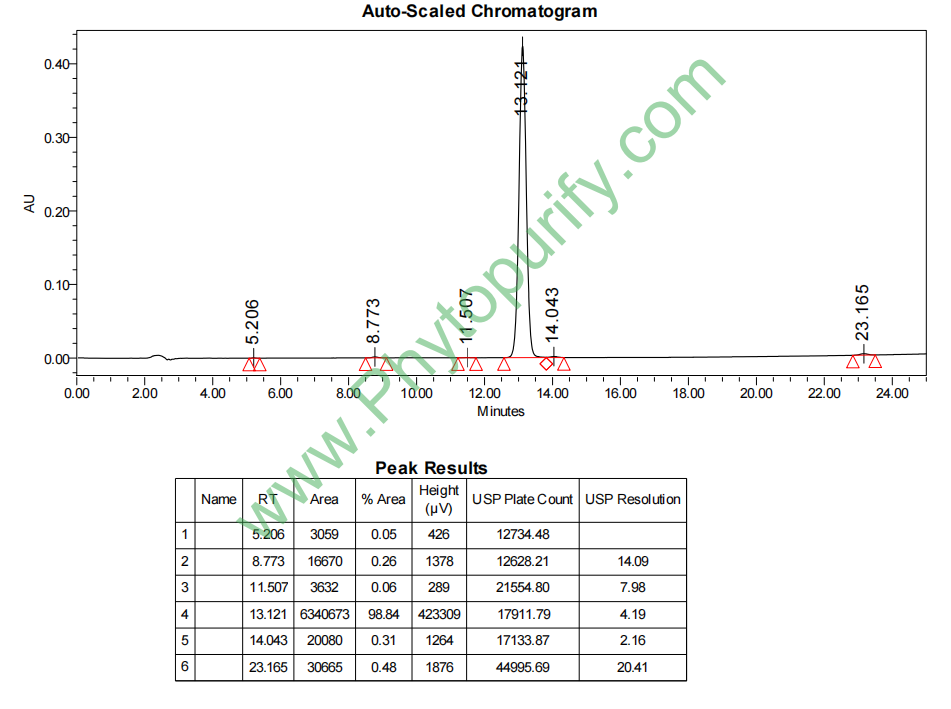
Storage conditions:Short-term storage at 2~8℃, long-term storage at -20 ~ -80℃
126.7900
2.4138
2.3520
.1068
1.7842
5.2915
Low
75.3297
7.0756
No
No
Yes
No
No
No
0.0
No
No
Yes
No
Pain is one of the most common clinical symptoms and an important factor affecting human quality of life. The prevalence of chronic pain is as high as 20% to 30% globally, and this proportion continues to rise with the acceleration of population aging. However, existing analgesics face many challenges: long-term use of nonsteroidal anti-inflammatory drugs (NSAIDs) can lead to gastrointestinal damage and cardiovascular risk; Although opioid drugs have significant analgesic effects, their addiction, respiratory depression, and tolerance have become global public health crises. In this context, the search for novel, low addictive, and high safety analgesic lead compounds from natural products has become an important direction in the field of drug development.
Lappaconitine (CAS number: 32854-75-4) is a diterpenoid alkaloid isolated from plants of the Aconitum genus in the Ranunculaceae family, belonging to the C19 type of aconitine compounds. This compound was first extracted from Aconitum carmichaelii by Soviet scientists in the 1960s(Aconitum septentrionale)After isolation and identification, it was subsequently found to have significant analgesic and anti-inflammatory activities in traditional medical practices in countries such as China and India. It is worth noting that lapis lazuli exhibits analgesic characteristics different from classical opioid drugs in clinical applications - its analgesic effect is long-lasting and not easily tolerated or dependent, making it an ideal candidate molecule for developing new non addictive analgesic drugs.
In recent years, with the advancement of molecular pharmacology and chemical biology techniques, the pharmacological mechanism of kaempferol has gradually been revealed. Research has shown that this compound exerts analgesic effects through multi-target synergistic effects, involving multiple key targets such as transient receptor potential vanillic acid subtype 1 (TRPV1), cannabinoid receptor 1 (CNR1), opioid receptor family (OPRM1, OPRD1, OPRK1), and cyclooxygenase (PTGS1/PTGS2). This multi-target mode of action not only explains its unique pharmacological characteristics, but also provides important insights for the development of multi-target analgesic strategies based on natural products.
This article will provide a systematic review of the research progress of kaempferol from the aspects of chemical structure and physicochemical properties, plant sources and extraction methods, pharmacological activity research, mechanism of action and molecular targets, drug evaluation and pharmacokinetics, clinical application prospects and prospects, in order to provide reference for the in-depth development and clinical translation of this compound.
Gaowujia belongs to the C19 type diterpenoid alkaloids, and its chemical structure is based on the aconitine skeleton, with a highly oxidized six ring system. Specifically, the molecule contains a six membered ring A, a seven membered ring B, two six membered rings C and D, and a five membered ring E, forming a unique cage like three-dimensional conformation. The key functional groups in the structure include: C1 hydroxyl group, C8 acetoxy group, C14 benzoyloxy group, C16 methoxy group, and C18 N-ethyl substituent. The stereochemical configuration of these functional groups is crucial for their biological activity, among which the C14 benzoyloxy group is considered a key pharmacophore for analgesic activity.
From the perspective of physical and chemical properties, the molecular weight of kaempferol is 584.7100 Da, which belongs to the category of medium-sized natural product molecules. Its lipid water partition coefficient (LogP) is 2.4138, indicating that the compound has moderate lipophilicity, which is beneficial for penetrating biological membranes and reaching target sites. The topological polar surface area (TPSA) is 126.7900 Å ², which is slightly higher than the threshold of classical oral drugs (usually considered to be favorable for oral absorption with TPSA<140 Å ²), indicating that there may be some oral bioavailability challenges. The water solubility parameter is 0.1068 mg/mL, which belongs to insoluble compounds, and this characteristic needs special attention in formulation development.
It is worth noting that the molecular structure of kaempferol contains multiple donor and acceptor sites (including hydroxyl, ester, and amino groups) that can form hydrogen bonds, providing a structural basis for its specific interactions with various protein targets. In addition, the molecule has multiple chiral centers, and the precision of its stereochemistry is crucial for maintaining biological activity. In the solution state, lapis lazuli exhibits certain conformational flexibility, especially in the orientation of side chain groups, which may help it adapt to the spatial requirements of different target binding pockets.
From the perspective of medicinal chemistry, the structural characteristics of kaempferol give it the potential to serve as a lead compound for structural optimization. For example, modification of the C14 benzoyl group may affect its binding ability to TRPV1 receptors; The hydrolytic stability of the C8 acetoxy group may be related to its in vivo metabolic behavior; The substitution of N-ethyl may alter its interaction mode with opioid receptors. The study of these structure-activity relationships (SAR) provides important guidance for subsequent derivative design.
Gaowujia is mainly found in the Aconitum genus of the Ranunculaceae family(Aconitum)Among plants, species with higher content include Aconitum carmichaelii(Aconitum septentrionale)North Aconitum(Aconitum kusnezoffii)Caowu(Aconitum carmichaelii)And the furry iron rod hammer(Aconitum flavum)Wait. It is worth noting that there are significant differences in the content of high lignin among different species and regions. The content in the rhizomes is usually higher than that in the aboveground parts, and the alkaloid content is more abundant in samples harvested in autumn. In China, the main source of Aconitum carmichaelii is Aconitum carmichaelii, which is widely distributed in Northeast, North, and Northwest regions. It is commonly used in folk medicine to treat rheumatoid arthritis and traumatic injuries.
The extraction of kaempferol usually adopts the classic alkaloid extraction strategy, which is based on its weakly alkaline chemical properties. The traditional extraction process includes: crushing the dried plant roots and rhizomes, soaking or percolating them with an acidic aqueous solution (such as 0.5% hydrochloric acid or sulfuric acid) to dissolve the alkaloids in salt form; Subsequently, adjust the pH to 9-10 using alkaline reagents such as ammonia or sodium hydroxide to precipitate free alkaloids; Finally, extract with organic solvents such as chloroform, ethyl acetate, or ether, and concentrate under reduced pressure to obtain the crude extract of total alkaloids.
The separation and purification of kaempferol from total alkaloids require the use of modern chromatographic techniques. Early research often used silica gel column chromatography, with chloroform methanol ammonia system as the mobile phase for gradient elution. In recent years, the application of high-speed countercurrent chromatography (HSCCC) and preparative high-performance liquid chromatography (pre HPLC) has significantly improved separation efficiency and purity. For example, using a two-phase solvent system of n-hexane ethyl acetate methanol water (5:5:5:5, v/v) for HSCCC separation can obtain high lignin monomer with a purity of over 98% within 2-3 hours. In addition, molecular imprinting technology (MIT) has been attempted as an emerging separation method for selective enrichment of kaempferol. Its principle is to use template molecules (kaempferol) to form specific recognition sites in polymer matrices, thereby achieving targeted separation in complex matrices.
It is worth noting that plants of the Aconitum genus contain a large number of structurally similar diterpenoid alkaloids, such as aconitine, mesaconitine, and hypaconitine, which have similar polarities to lappaconitine and pose certain challenges for isolation and purification. Therefore, it is necessary to strictly control the pH and temperature conditions during the extraction process to avoid hydrolysis or isomerization of the target compound. In addition, considering the toxicity of Aconitum plants, extraction operations should be carried out in professional laboratories and necessary safety precautions should be taken.
From the perspective of sustainable development, the large-scale production of kaempferol faces the problems of limited plant resources and low extraction efficiency. In recent years, plant cell culture and hairy root culture techniques have provided new pathways for the biosynthesis of kaempferol. Research has shown that by optimizing the composition of the culture medium (such as adding precursor substances phenylalanine and mevalonic acid) and inducers (such as methyl jasmonate), the accumulation of kaempferol in the hairy roots of Aconitum carmichaelii can be significantly increased. In addition, the exploration of synthetic biology methods is also underway, aiming to reconstruct the biosynthetic pathway of kaempferol into microbial hosts such as yeast or Escherichia coli, achieving its green and sustainable production.
The most noteworthy pharmacological activity of Gaowujia Su is its analgesic effect. As early as the 1970s, Soviet scholars confirmed the analgesic effect of kaempferol through mouse hot plate method and acetic acid writhing test. Subsequent studies further showed that the analgesic intensity of this compound is about 1/10 to 1/5 of morphine, but its duration of action is significantly prolonged (up to 6-8 hours), and its therapeutic index (LD50/ED50) is superior to traditional aconitine compounds.
In various pain models, lapis lazuli has shown good analgesic effects. In the formalin induced inflammatory pain model, berberine (intraperitoneal injection 5-20 mg/kg) can dose dependently inhibit pain response, and its inhibitory effect on the second phase (inflammatory phase) is better than that on the first phase (neurogenic phase), indicating that its anti-inflammatory mechanism plays an important role in analgesia. In the neuropathic pain model induced by chronic sciatic nerve compression injury (CCI), continuous administration of lappaconitine (10 mg/kg, once daily, for 7 consecutive days) significantly reversed the decrease in mechanical and thermal pain thresholds, and the analgesic effect continued for 2-3 days after discontinuation, indicating its possible disease modifying effect.
It is worth noting that the analgesic effect of kaempferol has unique pharmacological characteristics. Unlike morphine, lapis lazuli does not cause significant respiratory depression, decreased gastrointestinal motility, or addictive behavior at effective analgesic doses. In the mouse conditional place preference (CPP) experiment, high quercetin did not produce a significant reward effect, indicating its low addictive potential. In addition, after long-term administration, the analgesic effect of lapis lazuli did not show significant attenuation, indicating slow development of its tolerance. These characteristics give Gaowujia Su a unique advantage in the development of non addictive analgesic drugs.
The anti-inflammatory effect of kaempferol is an important supplement to its analgesic activity. In the rat foot swelling model induced by carrageenan, high quercetin (oral administration of 20-40 mg/kg) can significantly inhibit inflammatory response, and its effect is comparable to that of indomethacin. In the RAW264.7 macrophage model stimulated by lipopolysaccharide (LPS), berberine (1-10 μ M) can inhibit the release of nitric oxide (NO) and prostaglandin E2 (PGE2), and downregulate the expression of inducible nitric oxide synthase (iNOS) and cyclooxygenase-2 (COX-2). Further mechanistic studies have shown that resveratrol exerts anti-inflammatory effects by inhibiting the activation of the nuclear factor kappa B (NF - κ B) signaling pathway, reducing the production of pro-inflammatory cytokines such as TNF - α, IL-1 β, and IL-6.
In addition to its analgesic and anti-inflammatory effects, resveratrol also exhibits various other biological activities. In terms of cardiovascular system, quercetin has antiarrhythmic effects and can inhibit aconitine induced arrhythmia, which may be related to blocking sodium ion channels. In terms of the nervous system, resveratrol can improve cognitive function in Alzheimer's disease model mice, reduce the deposition of β - amyloid protein (A β), and inhibit the excessive phosphorylation of tau protein. In addition, preliminary studies have found that kaempferol has anti-tumor activity, which can inhibit the proliferation of various cancer cells and induce apoptosis. However, its concentration of action is relatively high (IC50>10 μ M), and its selectivity needs to be improved.
The pharmacological effects of Gaowujia involve multiple molecular targets, and this multi-target mode of action is an important characteristic that distinguishes it from classical analgesics. In recent years, researchers have gradually revealed the interaction mechanism between lapis lazuli and key targets through molecular docking, surface plasmon resonance (SPR), and functional experiments.
Transient receptor potential vanillic acid subtype 1 (TRPV1) is a non selective cation channel that can be activated by capsaicin, thermal stimuli (>43 ° C), and acidic environments, playing a central role in pain signaling. Research has shown that kaempferol can directly bind to TRPV1 channels and exert antagonistic effects. Molecular docking analysis showed that the C14 benzoyl group of kaempferol forms a π - π stacking interaction with the S4-S5 junction region of the TRPV1 channel, while the C8 acetoxy group forms hydrogen bonds with Tyr511 and Ser512. Functional experiments have confirmed that resveratrol (1-10 μ M) can inhibit capsaicin induced calcium influx and excitability of dorsal root ganglion (DRG) neurons, with an IC50 of approximately 3.2 μ M. It is worth noting that the inhibitory effect of kaempferol on TRPV1 is usage dependent, meaning that it binds more firmly in an open channel state, which helps reduce interference with normal physiological functions.
The interaction between resveratrol and opioid receptors is an important component of its analgesic mechanism. Radioligand binding experiments showed that lappaconitine has a certain affinity for μ - opioid receptor (OPRM1), δ - opioid receptor (OPRD1), and κ - opioid receptor (OPRK1), with the highest affinity for OPRM1 (Ki=1.8 μ M), followed by OPRD1 (Ki=4.5 μ M), and the weakest affinity for OPRK1 (Ki=12.3 μ M). Functional experiments have shown that resveratrol acts as a partial agonist on OPRM1, with a maximum effect of approximately 60% that of morphine, and does not induce recruitment of β - arrestin2. This characteristic may explain its lower tolerance and dependence. In addition, the binding mode of resveratrol to opioid receptors is different from that of classical opioid drugs, and its binding site may be located in the extracellular loop of the receptor rather than the classical transmembrane domain, providing a structural basis for the development of novel opioid ligands.
Cannabinoid receptor 1 (CNR1) is highly expressed in the central nervous system and is involved in regulating pain, emotions, and appetite. Research has found that kaempferol can bind to the CNR1 receptor (Ki=6.7 μ M) and exert a positive allosteric regulatory effect. In the presence of CNR1 receptors, berberine can enhance the signaling of endogenous cannabinoids (such as anandamide) without directly activating the receptors. This allosteric regulatory mode helps to avoid the psychological side effects (such as anxiety and hallucinations) that may be caused by direct activation of CNR1 receptors. In animal models, the CNR1 antagonist AM251 can partially reverse the analgesic effect of resveratrol, confirming the involvement of the CNR1 pathway in its analgesic mechanism.
The inhibitory effect of berberine on cyclooxygenase (COX) is the molecular basis of its anti-inflammatory activity. In vitro enzyme activity assays showed that kaempferol has inhibitory effects on COX-1 (PTGS1) and COX-2 (PTGS2), with IC50 values of 8.5 μ M and 4.2 μ M, respectively, demonstrating moderate selectivity towards COX-2. Unlike classical NSAIDs, the inhibition of COX by lapis lazuli is reversible and does not involve covalent modifications, which helps reduce the risk of gastrointestinal toxicity.
In addition, quercetin can also inhibit the 5-hydroxytryptamine transporter (SLC6A4), with an IC50 of approximately 15 μ M. This effect may enhance the analgesic effect by increasing the concentration of serotonin in the synaptic cleft, activating the descending inhibitory pathway. It is worth noting that kaempferol also exhibits a certain affinity for dopamine receptor D2 (DRD2) (Ki=9.8 μ M), but its functional significance remains to be elucidated.
Based on the above research, the analgesic effect of kaempferol can be attributed to the synergistic effect of multiple targets: inhibiting the generation and transmission of peripheral nociceptive signals by antagonizing the TRPV1 channel; Activation of endogenous analgesic pathway through partial activation of OPRM1 and conformational modulation of CNR1; Reduce the production of inflammatory mediators by inhibiting COX-2; Enhance the function of the downstream inhibitory pathway by inhibiting SLC6A4. This multi-target mode of action not only explains the pharmacological characteristics of high efficacy and low side effects of berberine, but also provides an example for developing analgesic strategies based on the concept of "multi-target drugs".
From the perspective of medicinal chemistry, the pharmacological parameters of lapis lazuli exhibit certain advantages and challenges. Its molecular weight (584.71 Da) is slightly higher than the threshold of 500 Da in Lipinski's five rules, but considering the specificity of natural products, this deviation is within an acceptable range. The LogP value is 2.4138, which is within the ideal range of lipophilicity (1-3) and is beneficial for membrane permeability and oral absorption. The TPSA is 126.79 Å ², slightly higher than the ideal upper limit for oral medication (120 Å ²), but still within an acceptable range. Water solubility (0.1068 mg/mL) is the main pharmaceutical challenge, and a value below the threshold of 0.1 mg/mL may result in limited oral bioavailability.
In terms of safety assessment, the hERG inhibition prediction result was negative, indicating a lower risk of cardiac QT interval prolongation caused by high quercetin. The Ames test result is 0.0, indicating that the compound does not have significant genetic toxicity. These safety data provide favorable support for the further development of kaempferol.
The pharmacokinetic study of Gaowujia Su is mainly based on rat and mouse models. After intravenous administration, the plasma concentration time curve of kaempferol conforms to a two compartment model, with a distribution half-life (t1/2 α) of approximately 0.5 hours and an elimination half-life (t1/2 β) of approximately 4-6 hours. After oral administration, the absolute bioavailability is relatively low (about 15-20%), mainly limited by poor water solubility and first pass metabolic effects. It is worth noting that the blood-brain barrier permeability of resveratrol is relatively low, which is related to its larger polar surface area and higher molecular weight. However, although the drug concentration in cerebrospinal fluid is only 5-10% of the plasma concentration, lapis lazuli can still produce significant central analgesic effects, suggesting that it may exert its effects by acting on peripheral targets (such as TRPV1) or through active metabolites.
Metabolic studies have shown that kaempferol is mainly metabolized in the liver through the cytochrome P450 enzyme system, particularly CYP3A4 and CYP2D6. The main metabolic pathways include hydrolysis of the C8 acetyl group, hydroxylation of the C14 benzoyl group, and N-deethylation. Among them, the deacetylated metabolite (8-deacetylkaempferol) still retains some analgesic activity, but its efficacy is about one-third of that of the parent compound. The main excretion pathway is bile excretion, with about 60% of the administered dose excreted in the form of metabolites through feces and about 20% excreted through urine.
Various formulation strategies have been explored to address the issues of poor water solubility and low oral bioavailability of kaempferol. Cyclodextrin inclusion complex technology can significantly increase the apparent solubility of lapis lazuli (by 5-10 times) and improve its oral absorption. Lipid nanoparticles (LNP) and solid lipid nanoparticles (SLN) formulations can increase the oral bioavailability of kaempferol to 35-40%. In addition, transdermal drug delivery systems (such as microneedle patches) and nasal delivery routes have also been studied for the delivery of lapis lazuli, aiming to bypass first pass metabolism and improve bioavailability.
In China, Gaowujia Su has been used as a non addictive analgesic in clinical practice, mainly in the form of injections and tablets. Clinical indications include postoperative pain, cancer pain, chronic arthritis pain, and neuropathic pain. Clinical studies have shown that the analgesic effect of Gaowujia injection (4-8 mg/time, intramuscular injection) on moderate pain is comparable to that of pethidine (50 mg), but the incidence of adverse reactions such as nausea, vomiting, and dizziness is significantly reduced. In the treatment of cancer pain, resveratrol can be used as an adjuvant medication for opioid drugs, reducing the dosage and related side effects of opioid drugs.
Based on the pharmacological mechanism and preclinical research data of kaempferol, its potential indications can be further expanded. In the field of neuropathic pain, the good effect of lappaconitine on CCI model and diabetes neuropathy model suggests that it can be used to treat post herpetic neuralgia and diabetes peripheral neuropathy. In terms of inflammatory diseases, the anti-inflammatory activity of resveratrol makes it possible for long-term management of rheumatoid arthritis and osteoarthritis. In addition, preliminary studies have shown that kaempferol has neuroprotective effects on Alzheimer's and Parkinson's disease models, but its clinical translation still requires more evidence to support.
Despite the significant development potential of lapis lazuli, its clinical translation still faces several challenges. Firstly, the low oral bioavailability is the main bottleneck limiting its clinical application, requiring the development of efficient delivery systems or prodrug strategies. Secondly, the cardiac toxicity of kaempferol (although lower than other aconitine compounds) still needs to be monitored during long-term use. Thirdly, although its multi-target mode of action brings therapeutic advantages, it also increases the risk of drug interactions and individual differences.
Future research directions should include: the design and synthesis of novel derivatives based on the structure of kaempferol, aimed at improving selectivity and oral bioavailability; Thoroughly elucidate its multi-target synergistic mechanism, providing a theoretical basis for precise analgesic treatment; Conduct high-quality clinical research to validate its efficacy and safety in specific types of pain; Explore the combination therapy of Gaowujia Su with other analgesic drugs to achieve synergistic efficacy and toxicity reduction.
Gaowujia, as an active ingredient in traditional Aconitum plants, has developed from a folk herb to a candidate analgesic molecule with clear pharmacological mechanisms and clinical application value after decades of research. Its unique chemical structure endows it with multi-target action ability, achieving a balance between efficient analgesia and low side effects by simultaneously regulating multiple targets such as TRPV1, opioid receptor, cannabinoid receptor, cyclooxygenase, and serotonin transporter. Although there are still challenges in oral bioavailability and formulation development, kaempferol and its derivatives show broad prospects in the field of non addictive analgesic drug development.
From the perspective of natural product drug discovery, the research process of Gaowujia provides a successful example for the "new use of old drugs" and "modernization of natural products". In the future, with the advancement of structural biology, chemical biology, and drug delivery technology, kaempferol is expected to become a new drug for treating chronic pain, bringing new treatment options to billions of pain patients worldwide. At the same time, the multi-target mode of action of kaempferol also provides important insights for the development of multi-target drugs based on natural products, promoting the shift of analgesic drug research and development from a "single target" to a "multi-target" strategy.
