


Synonym name: Allapinin; Allapinin
Catalogue No.: BP0843
Cas No.: 97792-45-5
Formula: C32H45BrN2O8
Mol Weight: 665.622
Botanical Source:
Purity: 95%~99%
Analysis Method: HPLC-DAD or/and HPLC-ELSD
Identification Method: Mass, NMR
Packing: Brown vial or HDPE plastic bottle
Can be supplied from milligrams to grams.
For Reference Standard and R&D, Not for Human Use Directly.
Inquire for bulk scale.
HPLC of Lappaconitine hydrobromide
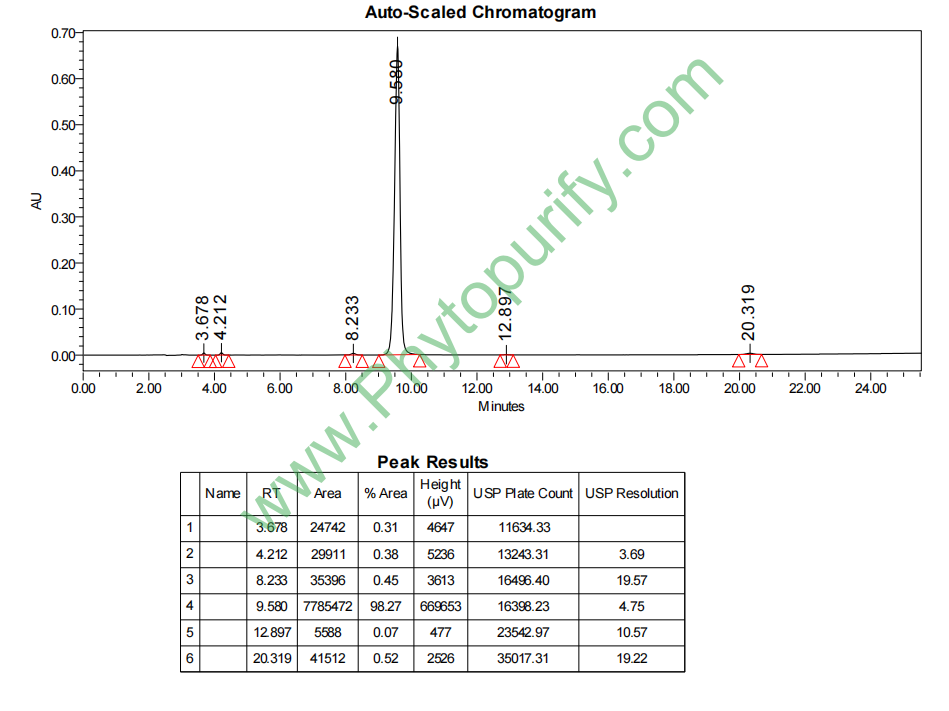
Storage conditions:Short-term storage at 2~8℃, long-term storage at -20 ~ -80℃
Lappaconitine hydrobromide (CAS number: 97792-45-5) is a natural alkaloid compound derived from Aconitum plants, which has significant analgesic activity. As an important alkaloid component in traditional Chinese medicine, kaempferol and its salt derivatives have attracted widespread attention in the field of natural product pharmacology in recent years due to their unique pharmacological effects and low toxicity. Hydrobromic acid lappaconitine not only exhibits effective inhibitory effects on various pain models, but also demonstrates the ability to regulate multiple targets at the molecular level, especially its interactions with various pain related receptors and enzymes, providing theoretical and experimental basis for its development as a novel analgesic drug.
This article aims to systematically review the chemical structure and physicochemical properties, plant sources and extraction methods, pharmacological activity and mechanism of action, pharmacological evaluation and pharmacokinetic characteristics of hydrobromic acid lapis lazuli, and explore its clinical application prospects and development trends, providing reference for the in-depth research and clinical translation of this natural product.
Hydrobromic acid lappaconitine is a complex bicyclic dihydroalkaloid with a molecular formula of C36H50N2O9 and a molecular weight of 584.7100. Its structural core is a typical aconite alkaloid skeleton, containing multiple chiral centers and functional groups, including ester groups, ether bonds, and amino groups, endowing it with unique chemical activity. The hydrobromide form enhances its water solubility, with a water solubility of approximately 0.1068 mg/mL, making it suitable for formulation development.
In terms of physical and chemical properties, the LogP value of hydrobromic acid lapis lazuli is 2.4138, indicating that it has moderate lipid solubility, which is beneficial for cell membrane penetration but not excessively hydrophobic. The polar surface area (TPSA) is 126.79 Å ², indicating a high molecular polarity that may affect its oral absorption and blood-brain barrier penetration ability. The permeability of the blood-brain barrier has been evaluated as low, indicating its limited distribution in the central nervous system, which helps to reduce central related side effects. The hERG ion channel inhibition experiment showed a negative result, indicating a low risk of cardiac toxicity. The Ames mutagenicity test result is 0.0, indicating a low risk of genetic toxicity and good safety.
Hydrobromic acid kaempferol mainly comes from Aconitum spp., especially from species rich in kaempferol such as Aconitum lappaceum and other related species. Aconitum plants are widely distributed in southwestern China and the Himalayan region, and are an important component of traditional Chinese medicine.
The extraction process usually uses acidic aqueous solutions or organic solvents to extract dried plant roots and stems, followed by separation and purification through liquid-liquid partitioning, column chromatography, and other methods. The specific steps include:
In recent years, the application of ultrasound assisted extraction and microwave-assisted extraction technologies has improved extraction efficiency and purity, reduced the use of organic solvents, and is in line with the concept of green chemistry.
The main pharmacological activity of hydrobromic acid lapis lazuli is focused on its analgesic effect, and it has shown good analgesic effects in various animal models, including inflammatory pain, neuropathic pain, and cancer pain models. Compared with traditional opioid analgesics, hydrobromic acid lappaconitine has lower addiction and resistance, demonstrating potential clinical advantages.
Animal experiments have shown that hydrobromic acid lapis lazuli can significantly prolong the reaction time in hot plate experiments and alleviate pain reactions caused by mechanical and chemical stimuli. Its analgesic effect involves both the central nervous system and peripheral nerve endings, exhibiting a multi-level analgesic mechanism.
Some studies have indicated that hydrobromic acid lappaconitine has an inhibitory effect on the release of inflammatory mediators, which can reduce the expression of inflammatory factors such as prostaglandins (PGE2) and cyclooxygenases (COX-1, COX-2), thereby alleviating pain and tissue swelling caused by inflammation.
In the neural injury model, hydrobromic acid lappaconitine shows a certain neuroprotective effect, which may alleviate neuronal damage and promote neural function recovery by regulating neurotransmitter release and inhibiting neuroinflammatory reactions.
The analgesic effect of hydrobromic acid lappaconitine involves multiple molecular targets, reflecting its pharmacological characteristics of multi-target regulation. The main targets include:
TRPV1 (Transient receptor potential vanillic acid receptor 1)As an important ion channel for pain perception, TRPV1 is involved in the transmission of thermal pain and inflammatory pain. Hydrobromic acid lappaconitine can regulate the activity of TRPV1, inhibit its excessive activation, and alleviate pain signal transmission.
CNR1 (cannabinoid receptor 1)CNR1 regulates pain and emotional responses in the central nervous system. Hydrobromic acid lappaconitine may exert analgesic and anti anxiety effects by activating or regulating CNR1.
OPRD1, OPRM1, OPRK1 (δ, μ, κ opioid receptors)These opioid receptors are the main targets of traditional analgesics. The interaction between hydrobromic acid lappaconitine and opioid receptors enhances the analgesic effect of the endogenous opioid system while avoiding the side effects of typical opioid drugs.
PTGS1, PTGS2 (cyclooxygenase 1 and 2)As key enzymes in prostaglandin synthesis, PTGS1 and PTGS2 play important roles in inflammation and pain processes. Hydrobromic acid lappaconitine inhibits the activity of these two enzymes and reduces the production of inflammatory mediators.
TRPA1 (Transient Receptor Potential A1)TRPA1 is involved in the perception of chemical and mechanical pain. The regulation of TRPA1 by hydrobromic acid lappaconitine can help alleviate various types of pain.
SLC6A4 (Serotonin Transporter)By regulating serotonin reuptake, hydrobromic acid lappaconitine may affect central nervous system analgesia and emotional regulation.
DRD2 (dopamine receptor D2)The dopamine system is involved in pain regulation and emotional states, and the effect of hydrobromic acid lappaconitine on DRD2 may enhance its analgesic and antidepressant effects.
Overall, hydrobromic acid lappaconitine regulates pain signal transduction and inflammatory response through multi-target and multi pathway synergistic effects, demonstrating its complex and effective analgesic mechanism.
The pharmacological evaluation of hydrobromic acid lappaconitine shows that it has good potential for drug development. Its molecular weight is 584.7, slightly higher than the Lipinski rule recommendation of 500, but moderate LogP and high TPSA suggest that its distribution in the body has certain limitations, especially with low blood-brain barrier permeability, which helps reduce central nervous system side effects.
In terms of safety, the hERG ion channel inhibition test was negative, indicating a low risk of cardiac toxicity; The Ames test result is 0, indicating a low risk of genetic toxicity and a good safety foundation.
Pharmacokinetic studies have shown that the oral absorption of hydrobromic acid lappaconitine is relatively slow and its bioavailability is limited, which may be related to its high polarity and low water solubility. The distribution in the body is mainly limited to peripheral tissues, with a high plasma protein binding rate. The metabolic pathway mainly involves oxidation and hydrolysis through the liver cytochrome P450 enzyme system, and the metabolites have good safety. Excretion is mainly through urine and bile.
To improve its pharmacokinetic performance, researchers have attempted to enhance its bioavailability and targeting through formulation modifications (such as nanocarriers, liposome encapsulation) and structural modifications.
Hydrobromic acid lappaconitine, as a natural multi-target analgesic, has broad clinical application prospects. Its low addiction, low drug resistance, and good safety make it potentially advantageous in chronic pain management, neuropathic pain, and inflammatory pain treatment.
At present, preclinical studies and early clinical trials have been conducted in some countries and regions, showing good analgesic effects and tolerability. Future research directions include:
In summary, hydrobromic acid lappaconitine, as a natural analgesic with unique advantages, is expected to become one of the important drugs in the field of pain management in the future.
Hydrobromic acid lappaconitine has become a research hotspot in the development of natural product analgesics due to its complex chemical structure, multi-target pharmacological effects, and good safety. Its multiple activities in pain relief, anti-inflammatory, and neuroprotection provide new ideas and strategies for pain treatment. Despite facing challenges such as pharmacokinetic performance and clinical validation, with the advancement of modern drug development technology, hydrobromic acid lapis lazuli is expected to achieve successful translation from laboratory to clinical use, benefiting a wide range of patients. Future research should focus on mechanism analysis, formulation optimization, and clinical applications to promote it as a safe and effective new analgesic drug.
