Introduction/Overview
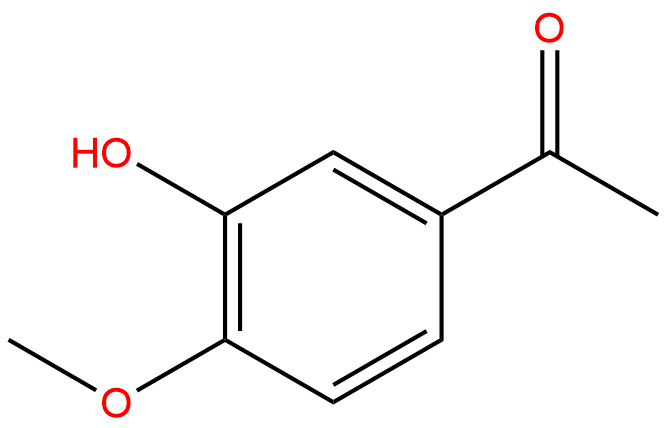
Natural products have long been an important source of innovative drug discovery, and their structural diversity and wide range of biological activities provide valuable lead compounds for the treatment of various diseases. Isoacetovanillone (IAV), chemical name 3 '- hydroxy-4' - methoxyacetophenone, CAS number 6100-74-9, is a relatively simple phenolic compound and a member of the methoxybenzene family. Initially, it was primarily recognized as a secondary metabolite in various medicinal plants. In recent years, with the deepening of pharmacological research, isocoumarin has shown potential for multi-target and multi pathway regulation, especially in the field of analgesia, transforming it from an ordinary plant chemical component into a candidate active molecule with important research value. Its analgesic effect involves the regulation of multiple key targets such as transient receptor potential vanillic acid subtype 1 (TRPV1), cannabinoid receptor 1 (CNR1), opioid receptors (OPRD1, OPRM1, OPRK1), cyclooxygenase (PTGS1/2), and dopamine D2 receptor (DRD2), suggesting that it may exert its effect through a unique mechanism different from traditional single target analgesics. This article aims to systematically review the chemical properties, plant sources, pharmacological activities, mechanisms of action, medicinal properties, and clinical application prospects of isocoumarin, in order to provide comprehensive scientific references for the in-depth research and potential development of this compound.
Chemical structure and physicochemical properties
The molecular formula of isocoumarin ketone is C9H10O3, with a molecular weight of 166.1760 g/mol. Its chemical structure consists of a benzophenone skeleton, with the 3rd position (meta position) of the benzene ring replaced by a hydroxyl group (- OH) and the 4th position (para position) replaced by a methoxy group (- OCH3). The structural characteristics of this ortho methoxyphenol are an important basis for its biological activity, which combines the antioxidant activity of phenolic compounds with specific electron distribution, making it easy to interact with biomolecules.
From the perspective of physical and chemical properties, the calculated lipid water partition coefficient (LogP) of isocoumarin is about 1.66, indicating its moderate lipophilicity, which is conducive to transmembrane transport and absorption. Its topological polar surface area (TPSA) is 46.53 Å ², which is relatively small and further supports its good membrane permeability. The predicted water solubility is about 2.59 mg/mL, which belongs to the range of slightly soluble to soluble, providing a certain basis for its formulation development. Of particular note is that the computational model predicts that it has a high blood-brain barrier (BBB) permeability, which provides a key physical and chemical prerequisite for its action on central nervous system targets such as opioid receptors, cannabinoid receptors, DRD2, etc. to achieve central analgesia. The preliminary pharmacological risk assessment shows that the hERG inhibition risk is negative, and the Ames test (prediction) result is 0.0, indicating a low potential risk of arrhythmia and genetic toxicity, and a good safety starting point.
Plant sources and extraction methods
Isocoumarin is relatively widely distributed in nature and mainly exists in various traditional medicinal plants. It often appears as a characteristic ingredient or active metabolite in the following families and genera of plants:
1. Thymelaeaceae For example, Rui Xiang Wolf Venom(Stellera chamaejasme)The component has been isolated from the root, which may be related to some pharmacological effects in its traditional use.
2. Asteraceae (Asteraceae)In some Artemisia species(Artemisia)It has also been detected in plants.
3. Other sources It can also be found in certain leguminous and umbelliferous plants. In addition, it is also a common metabolite of some precursor compounds containing similar structural units (such as vanillin, ferulic acid, etc.) in in in vitro and in vivo metabolism research.
Organic solvent extraction is commonly used to extract isocoumarin from plant materials. Common solvents include methanol, ethanol, ethyl acetate, etc., and their moderate polarity is utilized to effectively leach phenolic components. Laboratory scale purification often uses chromatographic techniques such as silica gel column chromatography, preparative thin layer chromatography (PTLC), and high-performance liquid chromatography (HPLC). Modern extraction techniques such as ultrasound assisted extraction (UAE) and microwave-assisted extraction (MAE) can be used to improve extraction efficiency. Due to its usually low content in plants, chemical synthesis is also an important way to obtain sufficient samples for further research. The common synthetic route is to use vanillin or isovanillin as starting materials and prepare them through Grignard reaction, Friedel Crafts acylation or oxidation steps.
Pharmacological activity research
The pharmacological activity research of isocoumarin mainly focuses on pain relief, and extends to related fields such as anti-inflammatory and neural regulation.
1. Analgesic activity
This is the pharmacological effect of isocoumarin that has received the most attention. Multiple in vivo pharmacological experiments have shown that it can significantly increase pain threshold and reduce pain behavioral responses in various pain models, such as acetic acid-induced writhing response in mice, formalin test, hot plate test, and neuropathic pain model. Its analgesic effect is dose-dependent, and in some models, its efficacy can be compared to some classic analgesics. It is worth noting that its analgesic effect may involve both peripheral and central mechanisms.
2. Anti inflammatory activity
Pain and inflammatory processes are closely intertwined. Research has shown that isocoumarin can inhibit the excessive production of nitric oxide (NO) and prostaglandin E2 (PGE2) in macrophages induced by stimuli such as lipopolysaccharide (LPS), while downregulating the expression of pro-inflammatory cytokines such as tumor necrosis factor - α (TNF - α) and interleukin-6 (IL-6). This anti-inflammatory effect provides important support for its synergistic analgesic effect.
3. Neuroprotection and regulatory activity
Based on its phenolic structure, isocoumarin exhibits certain antioxidant activity, can scavenge free radicals, and alleviate oxidative stress damage to neurons. In addition, its potential effects on neurotransmitter receptors such as dopamine D2 receptors suggest that it may have broader regulatory functions on the nervous and psychiatric systems, but further research is needed in this area.
Mechanism of action and molecular targets
The analgesic effect of isocoumarin is not achieved through a single pathway, but involves a complex multi-target network, which may be its advantage in reducing the side effects of single target potent agonists (such as traditional opioid drugs).
1. Transient receptor potential (TRP) channel regulation:
* TRPV1 antagonism/regulation TRPV1 is a key peripheral sensor mediating thermal pain and inflammatory pain. Isocoumarin may act as a regulator or weak antagonist on TRPV1, inhibiting capsaicin or proton activated currents, thereby reducing the transmission of nociceptive signals.
* TRPA1 interaction TRPA1 is involved in cold pain and mechanical hyperalgesia. Preliminary research suggests that isocoumarin may have a regulatory effect on it, which can help alleviate various types of pathological pain.
2. Modulation of endogenous analgesic system:
* Opioid receptor system Research has shown that the analgesic effect of isocoumarin can be partially blocked by opioid receptor antagonists (such as naloxone), suggesting that it may directly or indirectly excite μ - (OPRM1), δ - (OPRD1), and κ - (OPRK1) opioid receptors, activating the central descending inhibitory pathway.
* Endogenous cannabinoid system Its potential excitatory effect on the cannabinoid CB1 receptor (CNR1) may produce analgesic and anti-inflammatory effects by inhibiting the release of presynaptic neurotransmitters, and this pathway may be synergistic with the opioid system.
3. Inhibition of inflammatory mediator synthesis:
* Cyclooxygenase (COX) inhibition Isocoumarin has been predicted or confirmed to have a certain degree of inhibitory effect on COX-1 (PTGS1) and COX-2 (PTGS2), thereby reducing the production of pain mediator PGE2, which is one of the core mechanisms of its peripheral anti-inflammatory and analgesic effects.
4. Effects of neurotransmitter system:
* Dopamine D2 receptor (DRD2)DRD2 plays a complex role in central pain modulation, particularly in the emotional components of pain and analgesic reward effects. The interaction between isocoumarin and this receptor may regulate the midbrain limbic dopamine pathway, affecting the emotional experience of pain.
* 5-hydroxytryptamine transporter (SLC6A4)By affecting the reuptake of 5-hydroxytryptamine (5-HT), it may indirectly enhance the analgesic effect of the descending 5-HT pathway.
In summary, isocoumarin forms a multidimensional and synergistic analgesic network by simultaneously acting on the nociceptive signaling pathway (TRPV1/TRPA1), endogenous analgesic system (opioid and cannabinoid receptors), inflammatory pathway (COX), and monoamine neurotransmitter system, providing ideas for the development of novel multi-target analgesics.
Evaluation of drug properties and pharmacokinetics
Although isocoumarin has shown good pharmacological activity in vitro and animal models, its potential as a drug still requires systematic pharmacological evaluation.
Pharmacodynamics (Prediction and Preliminary Study):
* Absorption and distribution Good lipid solubility and small TPSA suggest that its oral bioavailability may be acceptable, and it can effectively cross the blood-brain barrier, which is crucial for the efficacy of central targets. Experimental data is needed to confirm its absolute bioavailability.
* Metabolism As a phenolic compound, it is likely to undergo extensive II binding reactions in the body, such as glucuronidation and sulfation. Its methoxy group may also undergo demethylation metabolism. The cytochrome P450 enzyme system may be involved in its phase I metabolism. It is important to clarify the main metabolic enzymes and metabolites for evaluating individual differences and drug interaction risks.
* excretion It is expected that its bound metabolites will mainly be excreted through the kidneys.
Advantages and challenges of pharmaceutical properties:
* Advantage Small molecular weight, simple structure, easy to synthesize and modify; Good blood-brain barrier permeability; Preliminary safety warnings (hERG, Ames) are good; Multi targeted effects may lead to a better therapeutic spectrum and lower tolerance risk.
* challenge:
1. Potency intensity Compared to highly selective and potent agonists (such as morphine acting on OPRM1), its activity against individual targets may be moderate or weak, and structural optimization is needed to improve potency.
2. Metabolic stability Phenolic hydroxyl groups may lead to significant first pass effects, short half lives, and require structural modifications (such as prodrugs) or appropriate delivery systems to improve.
3. Accurate definition of target selectivity spectrum It is necessary to accurately quantify its affinity (Ki value) and functional activity (excitation/antagonism, efficacy) for each target to clarify its core target combination and avoid off target side effects.
4. Comprehensive preclinical safety evaluation Systematic research on acute toxicity, long-term toxicity, reproductive toxicity, etc. is required.
Clinical application prospects and prospects
The research on isocoumarin has brought unique perspectives and opportunities for the development of new analgesic drugs.
Potential application directions:
1. Chronic pain management Multi targeted drugs may be more effective than single targeted drugs for complex chronic pain such as neuropathic pain and inflammatory arthritis pain. The ability of isocoumarin to simultaneously regulate nociceptive response, inflammation, and central sensitization makes it highly promising in this field.
2. Assisted analgesia or opioid reduction strategies Can be used as an adjuvant drug in combination with low-dose opioid drugs to enhance analgesic effects while reducing the dosage of opioid drugs and their serious side effects such as respiratory depression and addiction.
3. Migraine or fibromyalgia treatment These diseases involve multiple mechanisms, and their multi-target properties may provide comprehensive therapeutic benefits.
Future research focus and prospects:
1. Research on Structural Optimization and Structure Activity Relationship (SAR)Based on the core skeleton of isocoumarin, the relationship between its structure, target activity, metabolic stability, and oral bioavailability was systematically studied through chemical modifications such as hydroxyl protection, introduction of different substituents, and synthesis of heterocyclic analogues. The aim is to obtain lead compounds with stronger potency, better pharmacokinetic properties, and more reasonable target spectra.
2. In depth elucidation of the mechanism of action Using techniques such as gene knockout animals, selective antagonists, electrophysiology, and molecular docking, accurately analyze the weight of each target's contribution and the dialogue relationship between them in the overall animal model.
3. Complex formulation development To address the potential issues of rapid metabolism and limited water solubility, nano formulations, liposomes, and sustained-release formulations can be explored to improve their pharmacokinetic properties.
4. Expand pharmacological spectrum In addition to pain relief, its antioxidant, anti-inflammatory, and regulatory effects on the neurotransmitter system are worth exploring in the fields of neurodegenerative diseases (such as Parkinson's disease) and emotional disorders.
Conclusion
As a simple phenolic molecule derived from nature, isocoumarin is increasingly receiving attention from the pharmacological community due to its unique multi-target analgesic mechanism. It is not only a natural product with analgesic activity, but also a probe that reveals the complex regulatory network of pain and a valuable template for designing novel multi-target analgesic drugs. Although there are still many challenges on the road to clinical application, such as potency optimization, pharmacokinetic modification, and systematic safety evaluation, its potential for good blood-brain barrier penetration and multi-channel synergistic effects cannot be ignored. Future research should focus on in-depth exploration of structure-activity relationships, precise mechanism analysis, and rational drug design. The research on isocoumarin and its derivatives is expected to contribute a new and more comprehensive solution to the global pain treatment challenge, especially the urgent need for opioid alternatives.