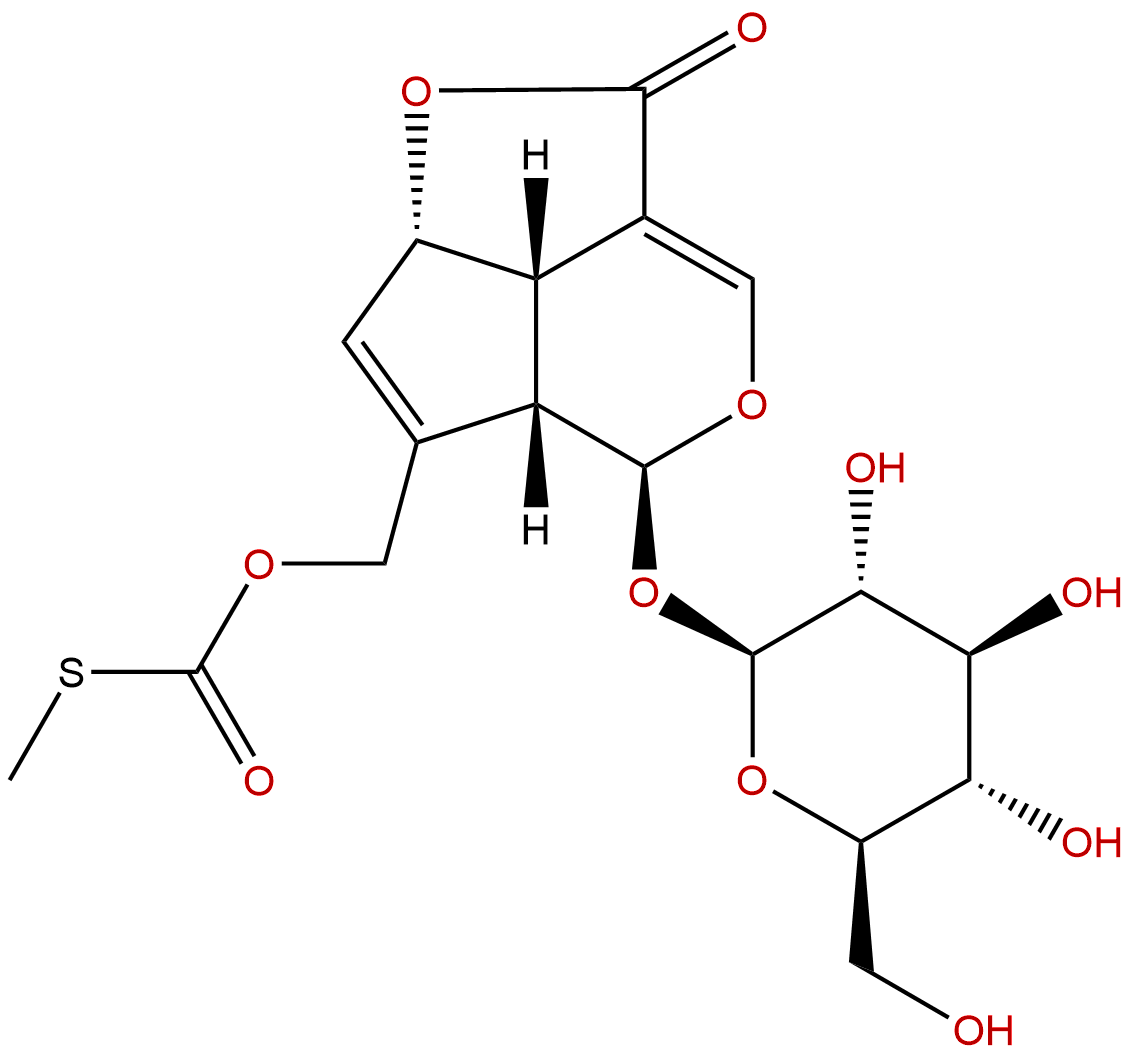


Product name: Paederoside
Synonym name:
Catalogue No.: BP3304
Cas No.: 20547-45-9
Formula: C18H22O11S
Mol Weight: 446.423
Botanical Source:
Physical Description: Powder
Type of Compound: Iridoids
Purity: 95%~99%
Analysis Method: HPLC-DAD or/and HPLC-ELSD
Identification Method: Mass, NMR
Packing: Brown vial or HDPE plastic bottle
The product could be supplied from milligrams to grams. Inquire for bulk scale.
We provide solution to improve the water-solubility of compounds, thereby facilitating the variety of activity tests and clinic uses.
For Reference Standard and R&D, Not for Human Use Directly.
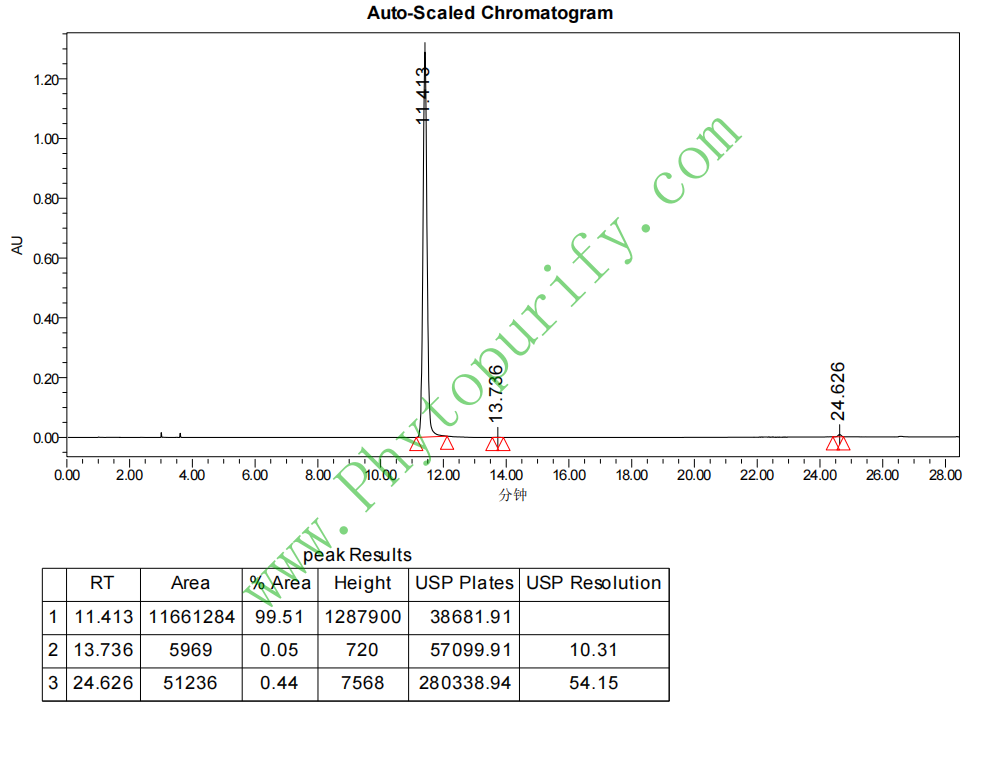
HPLC of Paederoside
Storage conditions:Short-term storage at 2~8℃, long-term storage at -20 ~ -80℃
161.2100
-.7106
-.7106
13.5466
.5599
.8032
Low
43.6403
5.1400
Yes
No
No
No
Yes
No
0.3
Yes
Yes
Yes
Yes
Natural products have long been an important source of innovative drug discovery, and their structural diversity and wide range of biological activities provide valuable lead compounds for the treatment of various diseases. Paederide, as a unique monoterpenoid S-methylthiocarbonate compound, has attracted much attention for its significant anti-tumor promoting activity since its isolation and identification from plants of the genus Paederide in the family Rubiaceae. Its CAS number is 20547-45-9, and early studies have revealed its potent inhibitory effect on the activation of Epstein Barr (EB) virus, suggesting its potential value in the fields of antiviral and cancer chemoprevention. In recent years, with the deepening of research, the anti-inflammatory activity and complex molecular mechanism of chicken droppings glycoside have gradually become a new research hotspot. Research has shown that its anti-inflammatory effects involve the regulation of key proteins in the interleukin-6 (IL-6), signal transduction and transcription activator 3 (STAT3), nuclear factor kappa B (NF - κ B) pathway (such as RELA, IKBKB), as well as various inflammatory mediators (such as TNF, NOS2) and pain related ion pathways (such as TRPV1, TRPA1), exhibiting multi-target and multi pathway characteristics. This article aims to systematically review the chemical structure, plant origin, pharmacological activity, molecular mechanism of action, medicinal characteristics, and clinical application prospects of chicken droppings vine glycosides, in order to provide comprehensive scientific references for the in-depth research and development of this natural product.
The chemical structure of chicken droppings vine glycosides has distinct characteristics. Its molecular formula is C17H26O11S and its molecular weight is 446.4300. From a skeletal perspective, it is an Iridoid monoterpene derivative with a core of a ten membered ring iridoid glycoside, connected to a glucose unit via glycosidic bonds. Its most prominent structural feature is the presence of a rare S-methylthiocarbonate group (- O-C (=O) - S-CH3) at the C-10 position (according to the iridoid numbering), which is considered one of the key pharmacophores for its biological activity and may affect its interaction with target proteins and metabolic stability in vivo.
In terms of physical and chemical properties, chicken droppings glycoside exhibits typical polar molecular characteristics. The calculated lipid water partition coefficient (LogP) is -0.7106, indicating that the compound has strong hydrophilicity. The topologically polar surface area (TPSA) is as high as 161.21 Å ², mainly attributed to the presence of multiple hydroxyl, ester, and sugar units in the molecule, which provide a large number of hydrogen bond acceptor and donor sites. The high TPSA and negative LogP values together determine its good water solubility, with a calculated value of approximately 13.55 mg/mL. These properties suggest that the distribution of chicken droppings glycosides in the body may be more inclined towards a hydrophilic environment, and their ability to penetrate the lipid bilayer of cells may be limited. In addition, its high polarity also leads to a predicted "low" blood-brain barrier permeability, indicating that it may not easily enter the central nervous system. In early safety screening, chicken droppings glycoside did not show significant hERG potassium channel inhibitory activity (hERG inhibition: no), which reduces its potential risk of inducing QT interval prolongation and apical torsion type ventricular tachycardia. However, its Ames test result was 0.3, indicating the possibility of slight mutagenic signals under specific experimental conditions. This finding needs to be confirmed and evaluated through more comprehensive genetic toxicity testing in subsequent development.
Chicken dung vine glycosides mainly come from the Paederia genus of plants in the Rubiaceae family. Initially, it was from Paederia pertomentosa(now mostly classified as variants or synonyms of Paederia foetida L.). In fact, those with a history of traditional medicinal use Chicken poop vine (Paederia foetida L.) And its closely related species are the main natural reservoirs of chicken droppings glycosides. Chicken dung vine is widely distributed in tropical and subtropical regions of Asia, and is common in southern China, India, Southeast Asia, and other places. Its whole plant or root is commonly used in folk medicine to treat rheumatism, rheumatism, traumatic injury, indigestion, and inflammatory diseases.
The extraction of chicken manure vine glycosides from plant materials is usually carried out using organic solvent extraction method. The common process includes crushing the dried aboveground part or roots of chicken manure vine, first degreasing it with petroleum ether or n-hexane to remove weak polar impurities such as chlorophyll and oil. Subsequently, medium polarity solvents such as methanol, ethanol, or aqueous ethanol (such as 70-95% ethanol) are used for primary extraction. The alcohol extract is concentrated under reduced pressure to obtain a paste. Further separation and purification often use chromatographic techniques. The crude extract is often subjected to preliminary separation by silica gel column chromatography, with different ratios of chloroform methanol or ethyl acetate methanol gradient elution. The fraction containing chicken droppings glycoside is further refined by reverse phase silica gel (such as C18) column chromatography, preparative high-performance liquid chromatography (HPLC), or recrystallization to obtain high-purity chicken droppings glycoside monomer. Modern extraction techniques such as ultrasound assisted extraction and microwave-assisted extraction have also been applied to improve extraction efficiency and save time. During the extraction process, attention should be paid to the stability of chicken manure vine glycosides, avoiding strong acids, strong bases, or prolonged high-temperature treatment to prevent hydrolysis of ester or glycosidic bonds in their structure.
Chicken droppings glycoside exhibits diverse pharmacological activities, among which anti-tumor promotion and anti-inflammatory effects are the two major research cores.
Antitumor promoting activity The earliest and most prominent activity of chicken droppings vine glycoside is to inhibit the activation of early antigen of EB virus (EBV-EA) induced by tumor promoters. EB virus is closely related to various human tumors, such as Burkitt lymphoma, nasopharyngeal carcinoma, gastric cancer, etc. Its activation is a key event in the carcinogenic process. Chicken droppings glycoside can significantly inhibit EBV-EA expression induced by cancer promoting agents such as TPA (phorbol ester) at nanomolar to micromolar concentrations, and its activity intensity is remarkable, suggesting that it may exert chemopreventive effects at the initial stage of cancer occurrence by interfering with the cancer promoting signaling pathway. In addition, some studies have reported that chicken droppings glycoside has a direct inhibitory effect on proliferation or induces apoptosis in certain tumor cell lines (such as human liver cancer cells and leukemia cells), but its anti-tumor spectrum and in vivo effectiveness still need further research to confirm.
anti-inflammatory activity This is the pharmacological effect of chicken droppings vine glycoside that has received much attention in recent years. In various animal models of acute and chronic inflammation, chicken droppings glycoside has shown significant anti-inflammatory effects. For example, in the mouse ear xylene induced inflammation model, carrageenan induced rat paw swelling model, and cotton ball induced granuloma model, administration of chicken droppings can effectively reduce tissue edema, inflammatory cell infiltration, and granulation tissue proliferation. In a lipopolysaccharide (LPS) - stimulated macrophage model (such as RAW264.7 cells), chicken droppings glycoside can dose dependently inhibit the production of nitric oxide (NO), prostaglandin E2 (PGE2), and various pro-inflammatory cytokines (such as TNF - α, IL-6). These in vitro and in vivo experiments fully demonstrate its strong anti-inflammatory potential.
Other activities In addition to the main activities mentioned above, sporadic studies also suggest that chicken droppings glycoside may have analgesic, antibacterial, and hepatoprotective effects. Its analgesic effect may be related to the regulation of pain sensing channels such as TRPV1 and TRPA1. However, the specific efficacy and mechanisms of these activities still require systematic and in-depth research.
The anti-inflammatory and other biological activities of chicken droppings stem from its regulation of multiple key signaling pathways and molecular targets, reflecting the characteristics of multi-target action.
Inhibition of NF - κ B signaling pathway The nuclear factor kappa B pathway is the core regulator of inflammatory response. Chicken droppings glycoside can inhibit the activation of I κ B kinase (IKK, the catalytic subunit of IKK β encoded by IKBKB) caused by LPS and other stimuli, thereby preventing the phosphorylation and degradation of I κ B α, causing NF - κ B dimers (such as p65/RELA) to be retained in the cytoplasm and unable to enter the nucleus to initiate the transcription of inflammatory genes such as TNF, IL-6, and NOS2 (inducible nitric oxide synthase). This is one of the fundamental mechanisms by which it downregulates the expression of various inflammatory mediators.
Regulating the STAT3 signaling pathway STAT3 is another important pro-inflammatory and pro cancer signaling pathway. After binding to cytokines such as IL-6 and their receptors, JAK kinase is activated, which in turn phosphorylates STAT3. Phosphorylated STAT3 forms dimers and enters the nucleus, regulating the expression of related genes. Research has shown that chicken droppings glycoside can inhibit IL-6-induced STAT3 phosphorylation and nuclear translocation, thereby blocking the transcription of downstream genes, which is closely related to its anti-inflammatory and potential anti-tumor effects.
Regulating inflammatory mediators and enzymes Chicken droppings glycoside can directly or indirectly inhibit the production of key inflammatory mediators.
Affects cell apoptosis and pyroptosis The regulation of cysteine protease-1 (CASP1) by chicken droppings vine glycoside may be linked to its anti-inflammatory and anti-tumor activities. CASP1 is a key effector protein for inflammasome activation, responsible for cleaving the precursors of IL-1 β and IL-18, and mediating cell pyroptosis. Inhibiting excessive activation of CASP1 may help control excessive inflammatory responses. Meanwhile, CASP1 also participates in certain apoptotic pathways.
Regulating sensory neuron channels The regulation of chicken droppings glycoside on transient receptor potential vanillic acid subtype 1 (TRPV1) and transient receptor potential anchor protein subtype 1 (TRPA1) may be another mechanism for its anti-inflammatory and analgesic effects. TRPV1 and TRPA1 are non selective cation channels expressed on sensory neurons, which can be activated by various inflammatory mediators and nociceptive stimuli, and participate in pain signal transmission and neurogenic inflammation. Chicken droppings vine glycosides may act as regulators to affect the function of these channels, thereby reducing inflammatory pain.
In summary, chicken droppings glycoside constructs a multi-level anti-inflammatory network by synergistically acting on transcription factors such as NF - κ B and STAT3, as well as downstream inflammatory mediators, enzymes, and ion channels.
Based on its physicochemical properties and preliminary biological data, a preliminary evaluation of the pharmacological properties of chicken droppings vine glycosides is conducted
Overall, chicken droppings vine glycosides have great potential in terms of activity, but their pharmacological properties, especially oral absorption and potential genetic toxicity risks, are the bottlenecks that need to be studied and overcome in the process of transforming them into drugs.
The clinical application prospects of chicken droppings glycoside mainly revolve around its two core activities:
Inflammatory related diseases This is the most promising development direction. Given its powerful multi-target anti-inflammatory mechanism, chicken droppings glycoside or its structurally optimized derivatives are expected to be used for the treatment of rheumatoid arthritis, inflammatory bowel disease, asthma, chronic obstructive pulmonary disease, neuroinflammation (such as Alzheimer's disease, multiple sclerosis, but with brain involvement issues), and skin inflammatory diseases (such as dermatitis, psoriasis). Its regulation of TRPV1/TRPA1 properties also makes it of exploratory value in the treatment of inflammatory pain and neuropathic pain.
Tumor chemoprevention and adjuvant therapy Based on its inhibitory activity against EB virus activation and anti-tumor promotion, chicken droppings glycoside can be used as a chemopreventive agent for the prevention of EB virus related tumors (such as nasopharyngeal carcinoma) in high-risk areas, or for the intervention of precancerous lesions. In addition, its anti-inflammatory effect itself also helps to suppress chronic inflammation in the tumor microenvironment, which may delay tumor progression. Combined with conventional chemotherapy or radiotherapy, it may enhance efficacy and reduce side effects.
Future research priorities and prospects include:
* In depth mechanism research Using chemical biology methods such as affinity fishing, molecular docking, and gene knockout/knockdown, accurately identify its direct target and elucidate the unique mode of action of its S-methylthiocarbonate group.
* Structural optimization and structure-activity relationship Systematic structural modifications should be carried out to address its pharmacological shortcomings, such as poor oral absorption and potential toxicity. For example, modifying or removing the sugar moiety, esterification or etherification of hydroxyl groups, and substitution of thiocarbonate groups in order to improve pharmacokinetic properties and reduce toxicity while maintaining activity.
* Systematic pharmacokinetic and toxicological evaluation Conduct comprehensive preclinical ADME (absorption, distribution, metabolism, excretion) studies and standardized GLP toxicology studies to clarify their in vivo fate and safety window, laying the foundation for clinical translation.
* Development of a new delivery system Explore nano targeted delivery systems to improve their bioavailability, tumor targeting, or inflammatory site accumulation ability.
Chicken dung vine glycoside, as a natural monoterpene thiocarbonate compound derived from traditional medicinal plants, has demonstrated unique value in the field of drug discovery due to its significant anti-tumor promotion and excellent multi-target anti-inflammatory activity. Its mechanism of action involves inhibition of key signaling pathways such as NF - κ B and STAT3, as well as regulation of various inflammatory mediators and sensory channels, forming a synergistic network. Although it faces challenges such as poor oral absorption and the need for careful assessment of genetic toxicity in drug development, these challenges are also areas that modern pharmaceutical chemistry and formulation can focus on addressing. Through in-depth analysis of its mechanism of action, rational structural optimization, and advanced delivery technology applications, chicken droppings glycoside is expected to be developed as a new candidate drug for the treatment of inflammatory diseases and for tumor chemoprevention, or as an important precursor compound template for the design of a new generation of multi-target anti-inflammatory agents. Continuous and in-depth research on it will not only help to explore the scientific connotations of traditional medicinal plants, but also inject new vitality into the development of innovative drugs.
