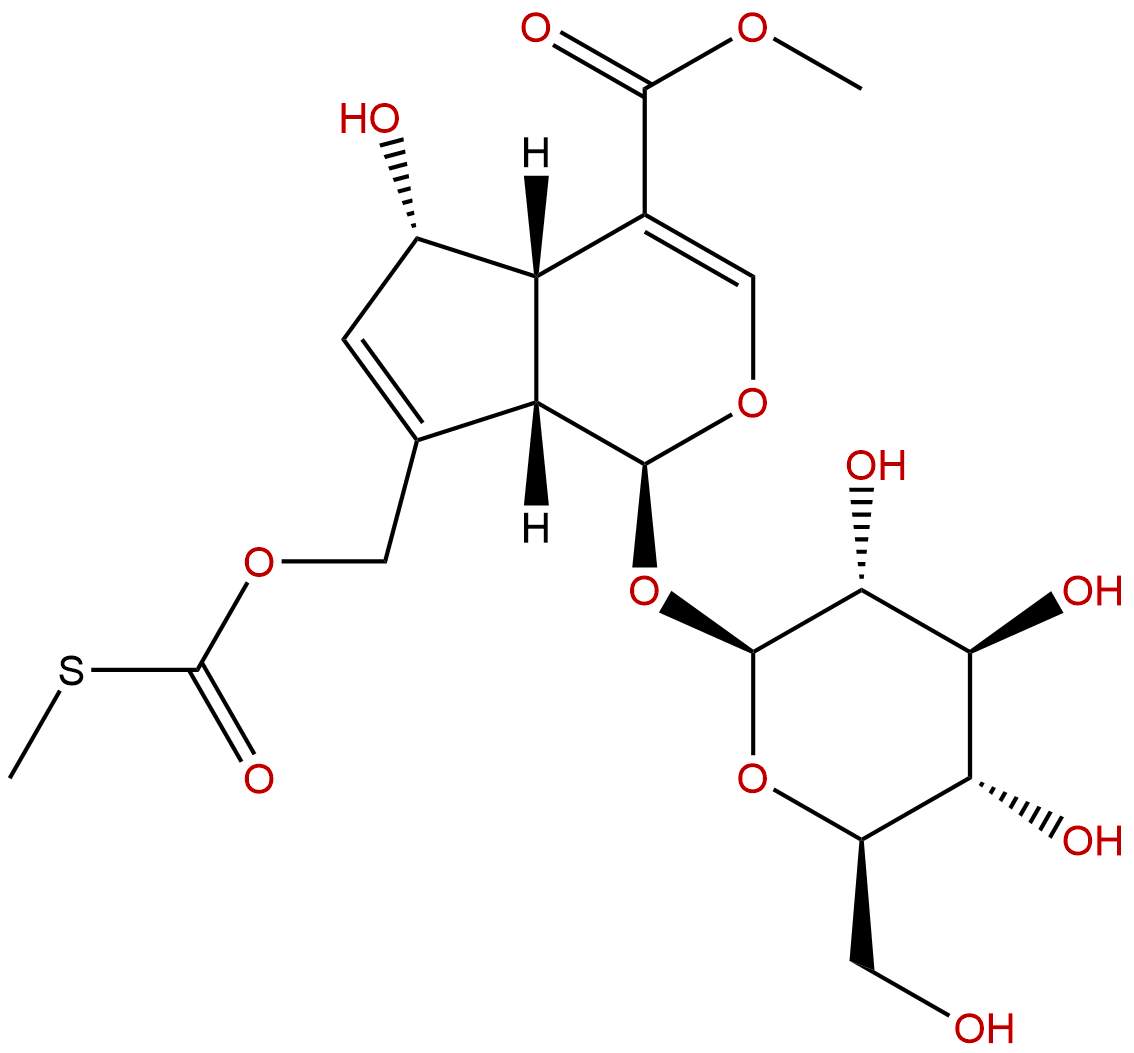


Product name: Paederosidic acid methyl ester
Synonym name:
Catalogue No.: BP3305
Cas No.: 122413-01-8
Formula: C19H26O12S
Mol Weight: 478.465
Botanical Source:
Physical Description: Powder
Type of Compound: Iridoids
Purity: 95%~99%
Analysis Method: HPLC-DAD or/and HPLC-ELSD
Identification Method: Mass, NMR
Packing: Brown vial or HDPE plastic bottle
The product could be supplied from milligrams to grams. Inquire for bulk scale.
We provide solution to improve the water-solubility of compounds, thereby facilitating the variety of activity tests and clinic uses.
For Reference Standard and R&D, Not for Human Use Directly.
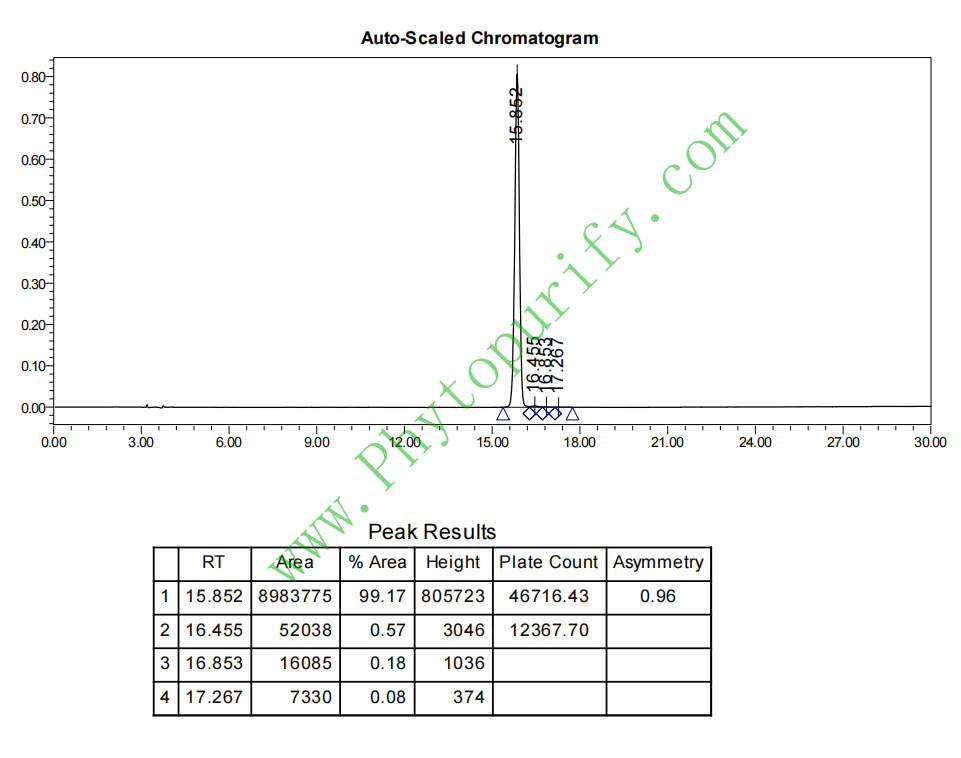
HPLC of Paederosidic acid methyl ester
Storage conditions:Short-term storage at 2~8℃, long-term storage at -20 ~ -80℃
181.4400
-.7786
-.7792
18.8683
.5219
.7240
Low
40.7347
4.9930
Yes
No
No
No
Yes
No
0.0
Yes
Yes
Yes
Yes
Pain, especially chronic pain, is a major health problem that troubles hundreds of millions of people worldwide, seriously affecting their quality of life and imposing a heavy socio-economic burden. At present, first-line analgesics in clinical practice, such as nonsteroidal anti-inflammatory drugs and opioid drugs, are effective but long-term use often accompanies serious adverse reactions such as gastrointestinal injury, addiction, and respiratory depression. Therefore, developing novel and safer analgesic drugs with novel mechanisms of action is an important direction in pharmacological research. In recent years, targeted ion channel analgesia strategies have received much attention. Among them, ATP sensitive potassium ion channels, as a key molecule that couples cellular metabolic status with membrane potential, play a central role in regulating neuronal excitability and pain signal transmission. The activation of KATP channels can lead to cellular hyperpolarization, inhibit action potential production and neurotransmitter release, thereby producing analgesic effects.
Natural products have always been an important source of innovative drug discovery due to their structural diversity and rich biological activity. Chicken shit vine glycoside methyl ester, as a cyclic terpenoid glycoside compound isolated from traditional medicinal plants, has unique KATP channel activation characteristics and significant central analgesic activity derived from it, making it a highlight in the research of novel analgesic lead compounds. In addition, preliminary studies have revealed its multi-target potential in the field of antiviral therapy, adding a dimension to the research of its medicinal value. This article aims to provide a systematic review of the chemical properties, plant sources, pharmacological activities, mechanisms of action, medicinal properties, and clinical application prospects of chicken manure vine glycoside methyl ester, in order to provide comprehensive academic references for the in-depth research and development of this compound.
Chicken dung vine glycoside methyl ester, commonly named systematically based on its parent nucleus structure, has a CAS registration number of 122413-01-8. This compound belongs to the iridoid glycoside class and is a methylated derivative of Paederidic acid.
From a chemical structure perspective, its molecular formula is C21H34O12 and its molecular weight is 478.4720 g/mol. The core structure is a decahydronaphthalene core (cyclopentane pyran ring), which is the characteristic skeleton of cyclohexene ether terpenes. The structure usually contains one vinyl bond, multiple chiral centers, one methyl carboxylate group, and glucose units connected by glycosidic bonds. These structural features determine its physicochemical properties. The calculated lipid water partition coefficient (LogP) is -0.7786, indicating that the compound has good hydrophilicity. The topologically polar surface area (TPSA) is as high as 181.44 Å ², mainly attributed to the presence of multiple hydroxyl, ester, and glycosidic oxygen atoms in the molecule, which are potential hydrogen bond donors and acceptors. The higher TPSA and negative LogP values are consistent with their good water solubility (calculated value of approximately 18.87 mg/L). These properties suggest that the distribution of chicken guanylate methyl ester in the body may be more inclined towards a hydrophilic environment, which has a significant impact on its pharmacokinetic behavior.
Chicken dung vine glycoside methyl ester is mainly isolated from plants of the Rubiaceae family and the genus Chicken dung vine, and its name is derived from this. The main plant sources reported in literature are Paederia scandens(Chicken dropper vine) and its related plants of the same genus. Chicken droppings vine has a long history in traditional medicine in Asia, especially in China, Japan, and Southeast Asian countries. It is commonly used to treat rheumatic pain, traumatic injuries, indigestion, and inflammatory diseases, providing ethnic pharmacological clues for modern research on its analgesic activity.
The extraction and separation of this compound usually follow the standard procedures of natural product chemistry. Firstly, collect the aboveground parts (stems, leaves) of chicken droppings vine, dry them, and crush them. Common extraction solvents include methanol, ethanol, or ethanol water mixed solutions, and immersion, reflux, or ultrasound assisted extraction methods are used to maximize extraction efficiency. After obtaining the crude extract, the system liquid-liquid extraction was performed using solvents such as petroleum ether, ethyl acetate, and n-butanol for segmentation. Due to its polarity, chicken droppings were mainly enriched in n-butanol or water-soluble fractions. Further purification relies on various chromatographic techniques, such as silica gel column chromatography, reverse phase C18 column chromatography (ODS), and high performance liquid chromatography (HPLC). Structural identification and confirmation were carried out through techniques such as nuclear magnetic resonance (NMR, including 1H-NMR and 13C-NMR), mass spectrometry (MS), and infrared spectroscopy (IR). Optimizing the extraction process, such as using macroporous adsorption resin enrichment and high-speed countercurrent chromatography, can improve separation efficiency and product purity, providing a material basis for subsequent pharmacological research.
The pharmacological activity research of chicken droppings vine glycoside methyl ester mainly focuses on two aspects: analgesia and antiviral, among which the analgesic activity is particularly prominent.
1. Central analgesic activity
This is the most significant characteristic activity of the compound. Multiple in vivo pharmacological experiments have confirmed that in various pain models (such as acetic acid-induced twisting reaction in mice, hot plate method, formalin test, etc.), intraperitoneal injection or oral administration of chicken guanylate methyl ester can significantly increase the pain threshold of animals and reduce pain reactions. Its analgesic characteristics are: significant intensity of action, and its effect can be antagonized by KATP channel specific blockers (such as glimepiride), which strongly suggests that its action depends on the activation of KATP channels. Further research indicates that its analgesic effect sites involve the central nervous system, including the brain and spinal cord levels. Unlike classic opioid drugs such as morphine, preliminary studies have not observed significant tolerance or physical dependence of chicken guanylate methyl ester, providing a key advantage for its development as a non addictive analgesic.
2. Potential antiviral activity
In addition to its analgesic effect, based on computational simulations and preliminary in vitro experiments, chicken guanosine methyl ester has shown broad potential for antiviral target interactions. These targets involve multiple viruses:
* Herpes virus (such as HSV, CMV): Potential targets include UL42 (DNA polymerase auxiliary subunit), UL54 (DNA polymerase catalytic subunit), ICP27 (post transcriptional regulatory protein), TK (thymidine kinase) and gD (glycoprotein D), which are critical to viral DNA replication, gene expression and cell invasion.
* Human Immunodeficiency Virus (HIV)Potential targets include HIV1-PR (protease), INT (integrase), as well as host co receptors CCR5 and CXCR4. Interfering with these targets can inhibit virus replication and entry into cells.
* Other Targeting myeloperoxidase (MPO) may indirectly affect the progression of viral infection by regulating inflammatory responses.
It should be emphasized that most of these antiviral activities are based on target prediction or preliminary screening, and their exact in vitro and in vivo antiviral potency, selectivity, and mechanism of action still require extensive experimental verification. But this undoubtedly opens up new ideas for the diversified development of chicken droppings vine glycoside methyl ester.
The core mechanism of action of chicken droppings vine glycoside methyl ester is as follows:An activator of ATP sensitive potassium ion channels。
The KATP channel is a heterooctamer composed of inward rectifying potassium channel (Kir6. x) subunits and sulfonylurea receptor (SUR) subunits. Its uniqueness lies in its activity being regulated by the intracellular ATP/ADP ratio: under physiological conditions, high concentrations of ATP inhibit the opening of channels; During metabolic stress (such as ischemia and hypoxia), ATP levels decrease while ADP levels increase, channels open, potassium ions flow out, leading to membrane hyperpolarization. Chicken shit vine glycoside methyl ester can simulate or promote this metabolic regulation, directly or indirectly stabilizing the open conformation of channels and activating KATP channels.
In the pain pathway, KATP channels are widely present on primary sensory neurons (dorsal root ganglion neurons), spinal dorsal horn neurons, and neurons in pain modulation centers such as the cerebral cortex and thalamus. Chicken shit vine glycoside methyl ester activates the KATP channels in these areas, causing neuronal hyperpolarization and reducing their excitability, thereby inhibiting the generation, transmission, and central integration of pain signals. Specifically, it is manifested as: reducing the frequency of action potential release caused by harmful stimuli; Inhibit the release of excitatory neurotransmitters such as glutamate and substance P at the spinal cord level; Enhance the functionality of the downlink suppression system. This multi-level inhibitory effect collectively constitutes its potent central analgesic basis.
The specific molecular sites of its interaction with KATP channels (whether it acts on Kir6 subunit or SUR subunit), as well as whether it has cross interactions with other ion channels or receptors, still need to be further elucidated using biophysical and molecular biology techniques such as patch clamp, molecular docking, and point mutation.
Based on computational predictions and preliminary experimental data, a preliminary evaluation of the pharmacological properties of chicken droppings glycoside methyl ester is conducted
Advantages:
1. High potential for safety Calculation predicts that there is no hERG potassium channel inhibitory activity (hERG inhibition: No), which reduces the risk of inducing QT interval prolongation and apical torsion ventricular tachycardia, and is an important positive indicator of drug cardiovascular safety. The Ames test predicted a result of 0.0, indicating that there may be no direct genetic toxicity risk.
2. Good solubility Good water solubility is beneficial for the development of formulations, especially injectable forms.
3. Clear structure and relatively reliable source As a single compound, its quality is controllable and it can be stably obtained from plants or prepared through chemical/biosynthetic pathways.
Challenges and unknowns:
1. Blood-brain barrier permeability Predict low blood-brain barrier permeability. This is a major obstacle to its central analgesic effect. However, it is worth noting that its exact in vivo analgesic effect suggests that there may be a small amount of prototype drugs that can enter the central nervous system, or its active metabolites have central activity, or it indirectly exerts its effect by affecting peripheral central linkage or activating neurons located in weak areas of the blood-brain barrier (such as the posterior region). This requires detailed in vivo pharmacokinetic and brain distribution studies to clarify. In the future, it may be necessary to improve its brain entry ability through structural modification (designing prodrugs) or the use of drug delivery systems (such as nanoparticles, liposomes).
2. Lack of pharmacokinetic parameters At present, there is almost no data available on the systematic pharmacokinetic studies of this compound, such as absorption, distribution, metabolism, and excretion. Key parameters such as oral bioavailability, plasma protein binding rate, major metabolic organs and pathways, and elimination half-life are unknown. These are the core information for evaluating whether it can become a drug.
3. Stability and Metabolism As glycoside compounds, it is necessary to conduct in-depth research on whether they are easily hydrolyzed or enzymatically hydrolyzed in the gastrointestinal tract and blood, and whether their metabolites are active or toxic.
The clinical application prospects of chicken droppings vine glycoside methyl ester mainly revolve around its unique analgesic mechanism and may be expanded to related fields.
1. As a lead compound for novel non opioid analgesics
This is its most attractive direction. Developing an efficient, non addictive, and non opioid receptor system dependent drug for intractable pain such as neuropathic pain, migraine, and cancer pain has enormous clinical demand and social value. The activation mechanism of KATP channel by chicken droppings vine glycoside methyl ester provides a possibility for this. The future research and development path may include:
* structural optimization By using medicinal chemical methods to modify its molecules, the aim is to improve its selectivity towards central nervous system KATP channel subtypes, enhance blood-brain barrier penetration ability, and improve pharmacokinetic properties (such as increasing oral bioavailability and prolonging half-life).
* Formulation development Develop nasal delivery, transdermal delivery, or targeted delivery systems based on nanotechnology to address the issue of poor BBB penetration.
* combination therapy Exploring the combination application with existing analgesics such as gabapentin and pregabalin may result in synergistic effects, reducing their respective dosages and side effects.
2. Exploration of antiviral applications
Although in its early stages, its multi-target antiviral potential deserves attention. Priority can be given to selecting 1-2 targets with strong predictive binding ability (such as HIV integrase or HSV TK enzyme) for in-depth in vitro enzyme activity inhibition experiments and cell level antiviral experiments verification. If the activity is confirmed, it may be developed as a topical anti herpesvirus preparation or as an adjuvant component in anti HIV combination therapy.
3. Application in pain related to metabolic diseases
KATP channels also have important functions in pancreatic beta cells and the cardiovascular system. The study of triptolide methyl ester may provide a new idea for the treatment of pain in diabetes peripheral neuropathy, but its potential effect on blood glucose (because it may affect insulin secretion) needs to be strictly evaluated.
Challenges and Prospects The road from natural active compounds to successful drugs is long. The next step of research urgently requires systematic preclinical pharmacodynamics (more pain models), safety evaluation (acute toxicity, long-term toxicity), and pharmacokinetic studies. Elucidating its precise molecular target binding mode, signaling pathway, and long-term efficacy and safety in chronic pain models is an indispensable task in promoting its clinical translation.
Chicken dung vine glycoside methyl ester is a cyclic terpenoid glycoside compound with important pharmacological activity discovered from the traditional medicinal plant chicken dung vine. Its most prominent feature is that it acts as an effective activator of KATP channels, producing potent and potentially non addictive analgesic effects through central mechanisms, providing a valuable lead molecule for the development of new generation analgesic drugs. Meanwhile, its potential multi-target antiviral activity has also broadened the scope of its application research. Although there are still challenges and unknowns in drug development, especially in terms of blood-brain barrier permeability and systemic pharmacokinetic characteristics, these are the focus of future research. With the deepening application of modern medicinal chemistry, pharmacology, and pharmacy technologies, through systematic structural optimization, mechanism of action elucidation, and formulation innovation of chicken droppings vine glycoside methyl ester, it is expected to transform it from a potential natural product into an innovative drug that can meet the unmet clinical needs, benefiting a large number of pain patients and other potential indications.
