Introduction/Overview
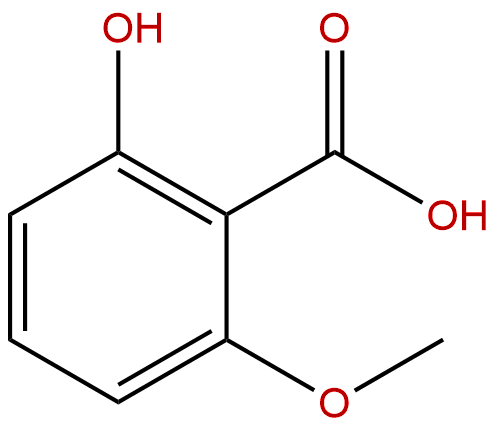
In the long river of natural product chemistry and pharmacology research, benzoic acid compounds have attracted much attention for their simple structure, wide distribution, and diverse biological activities. 2-Hydroxy-6-methoxybenzoic acid (also known as 6-methoxysalicylic acid, CAS number: 3147-64-6), as one of its members, has gradually emerged from numerous natural products in recent years and demonstrated unique pharmacological potential. This compound is a structural analogue of salicylic acid (ortho hydroxybenzoic acid), with a methoxy substituent introduced at position 6 of the benzene ring. This seemingly minor structural modification may significantly alter its physicochemical properties, biological activity spectrum, and mechanism of action.
With the increasingly severe problem of bacterial resistance worldwide, the development of new antibacterial drugs is urgent. The overuse of traditional antibiotics has led to the emergence of multidrug-resistant strains, posing a serious threat to public health safety. Therefore, searching for lead compounds with novel mechanisms of action from natural products has become one of the important strategies for new drug development. 2-Hydroxy-6-methoxybenzoic acid has aroused strong interest among researchers due to its broad-spectrum antibacterial activity demonstrated in preliminary studies, particularly its potential action on multiple targets closely related to bacterial survival and proliferation, such as DNA gyrase (GYRA/GYRB), cell division protein FtsZ, dihydrofolate reductase (DHFR), etc. This suggests that it may have the potential to overcome existing resistance mechanisms.
This article aims to systematically review the chemical properties, natural sources, extraction methods, pharmacological activities, mechanisms of action, pharmacological evaluation, and clinical application prospects of 2-hydroxy-6-methoxybenzoic acid, in order to provide comprehensive scientific references for the in-depth research and development of this compound.
Chemical structure and physicochemical properties
The molecular formula of 2-hydroxy-6-methoxybenzoic acid is C8H8O4, with a molecular weight of 168.1480. Its chemical structure belongs to benzoic acid derivatives, specifically on the benzene ring of benzoic acid, there is a hydroxyl group (- OH) at the ortho position (position 2) and a methoxy group (- OCH3) at the meta position (position 6). This structure combines the acidity of salicylic acid, the reducibility of phenolic hydroxyl groups, and the electron donating and steric hindrance effects of methoxy groups.
Its physicochemical properties directly affect its bioavailability and pharmacological activity. According to calculations and experimental data, the lipid water partition coefficient (LogP) of the compound is approximately 1.89, indicating that it has a certain lipophilicity, but not highly hydrophobic, which is beneficial for its penetration and distribution in biofilms. The topological polar surface area (TPSA) is 66.76 Å ², reflecting the proportion of polar moieties (carboxyl, hydroxyl, methoxy) in the molecule. This value is moderate and suggests that it may have good membrane permeability. The water solubility value is about 2.95 mg/mL, which belongs to the range of slightly soluble to soluble. This provides a certain basis for the development of its formulation, but it may also require salt formation or formulation techniques to improve its solubility performance.
The phenolic hydroxyl and carboxyl groups in the structure of this compound may dissociate under physiological pH conditions, forming an anionic form, which affects its binding mode with target proteins and its distribution in vivo. In addition, the introduction of methoxy groups may enhance the stability of the molecule and may affect its interaction with the enzyme active center through spatial effects. These basic physicochemical parameters are the basis for subsequent pharmacological and pharmacokinetic studies.
Plant sources and extraction methods
2-Hydroxy-6-methoxybenzoic acid is not widely present in nature, but has been found in various plants as a secondary metabolite that may participate in plant defense responses.
Plant-based:
1. Asteraceae plants: is one of the sources that has been extensively reported on this compound. For example, its presence has been detected in certain Artemisia plants.
2. Rhododendron family plants There have also been reports of isolating this compound from the leaves or root bark of some Rhododendron plants.
3. Other families and genera Occasional reports have also been found in certain mosses, lichens, and a few shrubs. Its distribution suggests that the compound may be a specific metabolite produced under specific environmental pressures or evolutionary pathways.
Extraction and Separation Methods:
Obtaining 2-hydroxy-6-methoxybenzoic acid from plant materials usually follows the conventional process of natural product chemistry:
1. Raw material pretreatment Collect specific parts of plants (such as leaves, stems, and roots), wash, dry, and crush them.
2. Solvent extraction Methanol, ethanol, acetone, or alcohol water mixed solvents with different ratios are commonly used for leaching or reflux extraction. By utilizing its characteristics of containing phenolic hydroxyl and carboxyl groups, alkaline aqueous solutions (such as 1% NaOH) are sometimes used for extraction, followed by acidification to precipitate the crude product.
3. Coarse separation The extract obtained by concentrating the extract is extracted sequentially with solvents with increasing polarity such as petroleum ether, ethyl acetate, n-butanol, etc. This compound is usually mainly distributed in the ethyl acetate extraction part.
4. Refining and Purification: The ethyl acetate part is further separated by column chromatography technology. Silica gel, reversed phase silica gel (such as C18) or Sephadex gel (Sephadex LH-20) are often used as the stationary phase, and chloroform methanol, petroleum ether ethyl acetate or methanol water in different proportions are used as the mobile phase for gradient elution. Monitor by thin layer chromatography (TLC) or high performance liquid chromatography (HPLC), and combine the fractions containing the target compound.
5. appraisal The final pure product was structurally confirmed by nuclear magnetic resonance (NMR, including 1H and 13C NMR), mass spectrometry (MS), infrared spectroscopy (IR), and chromatographic behavior (HPLC retention time) compared to standard samples.
With the development of green chemistry, new technologies such as ultrasound assisted extraction and microwave-assisted extraction can also be used to improve extraction efficiency. In addition, chemical synthesis routes are also important ways to obtain this compound, usually starting from 2,6-dihydroxybenzoic acid or salicylic acid derivatives for selective methylation reactions, providing sufficient material basis for its pharmacological research.
Pharmacological activity research
Existing research, especially based on computational predictions and preliminary experimental evidence, strongly suggests that 2-hydroxy-6-methoxybenzoic acid has significant antibacterial activity and is its most essential pharmacological activity.
Antibacterial activity:
This compound exhibits inhibitory activity against various Gram positive and Gram negative bacteria. Its antibacterial spectrum may include Staphylococcus aureus (including methicillin-resistant MRSA), Escherichia coli, Bacillus subtilis, Pseudomonas aeruginosa, and others. Research has shown that its minimum inhibitory concentration (MIC) values vary among different strains, but some studies have shown that its MIC values for certain tested strains are at the potential micromolar level. Its antibacterial activity may be stronger than its parent compound salicylic acid, thanks to the introduction of methoxy groups optimizing its interaction with bacterial targets.
In addition to its direct antibacterial effect, preliminary studies suggest that the compound may have the following potential activities:
* Anti biofilm activity May interfere with the formation of bacterial biofilm, which is a key factor in bacterial drug resistance and persistent infection.
* Synergistic antibacterial effect May have a synergistic effect with certain commonly used clinical antibiotics (such as beta lactams and quinolones), reducing the MIC value of antibiotics and providing the possibility for combination therapy.
It should be pointed out that currently, most of the activity data comes from in vitro experiments and computer simulation predictions, and in-depth in vivo pharmacological validation (such as infection animal model experiments) still needs to be systematically carried out. In addition, although there are theoretical speculations about its potential antifungal, anti-inflammatory, or antioxidant activities (based on its phenolic hydroxyl structure), there is a lack of sufficient experimental evidence to support them, which is a direction worth exploring in the future.
Mechanism of action and molecular targets
The remarkable feature of 2-hydroxy-6-methoxybenzoic acid lies in its potential multi-target mechanism of action, which provides new ideas for addressing bacterial resistance. According to bioinformatics analysis and preliminary molecular docking studies, this compound may act on multiple key life processes in bacteria, involving potential targets including:
- DNA replication and topological structure regulation Possible through inhibition DNA gyrase (GYRA, GYRB) and Topoisomerase IV (PARC) The activity can interfere with the replication, transcription, and repair of bacterial DNA. This is the target of quinolone antibiotics, but the compound may bind in different ways, making it potentially effective against quinolone resistant bacteria.
- cell division Possible targeting FtsZ protein FtsZ is a key protein for bacterial cell division, which assembles into a Z-ring at the division site and functions similarly to microtubule proteins in eukaryotic cells. Inhibiting FtsZ can prevent bacterial division, leading to cell elongation and ultimately death. Inhibitors targeting FtsZ are a hot topic in the development of new antibacterial drugs.
- folate metabolism Possible inhibition Dihydrofolate reductase (DHFR) Or interfere with other folate synthesis pathway enzymes (such as FOLA). Folic acid is essential for the synthesis of purines and pyrimidines, and inhibiting its synthesis can block bacterial nucleic acid synthesis. Trimethoprim (TMP) acts on DHFR, and this compound may provide a new binding mode.
- Cell wall synthesis May interfere with penicillin binding proteins (such as PBP2)The function or impact on other cell wall synthesis related enzymes (such as...)FKS1 Related to the synthesis of cell wall glucans, more commonly found in fungi, it disrupts the integrity of the cell wall.
- RNA synthesis: May have an effect on RNA polymerase (RPOB)It affects the gene transcription of bacteria.
- Sterol synthesis (for fungi)Predicting targets ERG(such as ERG11) is a key enzyme in the ergosterol synthesis pathway of fungal cell membranes, suggesting that this compound may also have antifungal potential, but experimental confirmation is needed.
This Multi target synergistic effect The hypothesis implies that it is difficult for bacteria to develop high-level drug resistance through a single gene mutation, as the probability of simultaneously mutating multiple unrelated targets is low and the cost of survival is high. However, the above target prediction is mainly based on computational simulation and homology model analysis. The exact and direct target and its binding mode, inhibition constant (Ki), etc. need to be rigorously verified through experimental methods such as surface plasmon resonance (SPR), isothermal titration calorimetry (ITC), X-ray crystallographic co crystallization, and target gene knockout/overexpression.
Evaluation of drug properties and pharmacokinetics
Based on its physicochemical parameters and preliminary in vitro ADMET (absorption, distribution, metabolism, excretion, toxicity) prediction, the pharmacological properties of 2-hydroxy-6-methoxybenzoic acid can be preliminarily evaluated.
Prediction of pharmacokinetic properties:
* absorb Moderate LogP and TPSA values suggest that it may have good oral absorption potential and can passively diffuse through the gastrointestinal mucosa. But its carboxyl group may ionize at intestinal pH, affecting its absorption efficiency.
* distribution: Predict it Low blood-brain barrier (BBB) penetration This is mainly due to its certain polarity and ionization tendency. This may be beneficial for treating infections outside the central nervous system (reducing the risk of neurotoxicity), but it also means that it is not suitable for treating central infections such as meningitis.
* Metabolism As a phenolic acid compound, it may be a substrate for phase II metabolic enzymes (such as glucuronosyltransferase and sulfotransferase) in the liver, which are prone to glucuronic acid binding or sulfation reactions, generating more water-soluble metabolites and accelerating excretion. Methoxy may also undergo demethylation metabolism.
* excretion The prototype drug and its bound metabolites are expected to be primarily excreted through the kidneys and urine.
Preliminary evaluation of safety:
* HERG inhibition The predicted result is' no ', which is a positive signal indicating that the compound may not inhibit the hERG potassium channel in the heart in vitro experiments, reducing the risk of cardiac toxicity induced by acquired long QT syndrome and apical torsion ventricular tachycardia. But experimental verification is still needed.
* Genotoxicity:Ames test The predicted value is 0.6 (usually interpreted as a high possibility of negative results, but attention should be paid to the differences in different models and thresholds), indicating that it may not have direct mutagenicity. But a complete genetic toxicity evaluation requires a set of standard experiments (Ames test, micronucleus test, chromosome aberration test) to confirm.
* Other Further evaluation is needed to assess its acute toxicity, subchronic toxicity, impact on liver and kidney function, and potential irritation.
Drug Challenge:
1. Water solubility Although soluble, optimization may be necessary for injectable formulations.
2. Metabolic stability Expected to metabolize rapidly, which may result in a short half-life in the body and require frequent administration. It may be necessary to improve its pharmacokinetic properties through structural modifications, such as preparing prodrugs or derivatives.
3. Plasma protein binding rate Unknown, high protein binding rate can affect the concentration and efficacy of free drugs.
4. In vivo efficacy verification All computational predictions and in vitro activities must undergo rigorous in vivo infection model validation, which is a crucial step in their conversion to drugs.
Clinical application prospects and prospects
2-Hydroxy-6-methoxybenzoic acid, as a natural lead compound with multi-target antibacterial potential, its clinical application prospects mainly depend on the results of subsequent in-depth research.
Potential application directions:
1. Lead compounds of novel antibacterial drugs Its greatest potential lies in developing it into a new drug for combating multidrug-resistant bacterial infections. Especially for infections caused by MRSA, vancomycin resistant enterococci (VRE), and resistant Gram negative bacteria. It can be used as the mother nucleus for systematic analysis Research on Structural Optimization and Structure Activity Relationship (SAR)Intended to enhance its antibacterial activity, broaden its antibacterial spectrum, improve pharmacokinetic properties, and reduce potential toxicity.
2. Antibacterial enhancer Study its synergistic effect with existing clinical antibiotics and develop it into an antibacterial enhancer for restoring the sensitivity of drug-resistant bacteria to existing drugs and prolonging the life cycle of old drugs. This strategy has a relatively low development cycle and risk.
3. Topical antibacterial agents for local use Given its natural origin and relatively simple structure, it may be considered to develop topical formulations for the skin and mucous membranes to treat acne (caused by Propionibacterium acnes), wound infections, oral ulcers, etc. Its poor BBB permeability is not a barrier in this scenario.
4. Exploration of antifungal drugs If its antifungal activity (through ERG targets) is experimentally confirmed, it can open up new application areas.
Future research prospects:
1. Mechanism verification The primary task is to use biochemical and biophysical methods to confirm its direct interaction with the predicted targets and elucidate its precise mechanism of action.
2. Research on the Structure Activity Relationship of the System Synthesize a series of derivatives modified on their benzene ring, carboxyl group, hydroxyl group, and methoxy group, systematically evaluate their antibacterial activity, selectivity, and drug properties, and search for the optimal structure.
3. In vivo pharmacological effects and PK/PD research Establish standard bacterial infection animal models (such as mouse sepsis models and thigh infection models), evaluate their in vivo protective effects, and conduct complete pharmacokinetic/pharmacodynamic (PK/PD) studies to determine key PK/PD indices (such as AUC/MIC).
4. Comprehensive security evaluation According to the guidelines for preclinical research of new drugs, complete a complete set of safety pharmacology and toxicology evaluations.
5. Formulation development: According to its physical and chemical properties, develop appropriate dosage forms, such as oral tablets/capsules, injections or topical gel/creams.
Conclusion
2-Hydroxy-6-methoxybenzoic acid, a natural phenolic acid compound with an uncomplicated structure, is attracting increasing attention in the fields of natural product pharmacology and medicinal chemistry due to its potential broad-spectrum antibacterial activity and unique multi-target mechanism of action hypothesis. In the current global crisis of bacterial resistance, it is of great strategic significance to discover lead compounds with novel modes of action, such as 2-hydroxy-6-methoxybenzoic acid, from natural reserves.
At present, research on this compound is still in its early stages, and a large amount of computational predictions and in vitro activity data need to be transformed into solid experimental evidence. From identifying molecular targets, optimizing chemical structures, to verifying in vivo drug efficacy and evaluating safety risks, there is still a long and rigorous scientific journey to be traversed. However, its initial potential demonstrated is encouraging. Through cross disciplinary collaborative efforts, it is expected that this compound will be used as a starting point in the future to develop new antibacterial drugs with independent intellectual property rights that can effectively fight drug resistant bacteria, and contribute new strength to human fight against infectious diseases. The exploration of natural products is endless, and the story of 2-hydroxy-6-methoxybenzoic acid may have just begun.