


Synonym name:
Catalogue No.: BP0502
Cas No.: 20086-06-0
Formula: C19H20O6
Mol Weight: 344.363
Botanical Source: Dioscorea bulbifera (air potato)
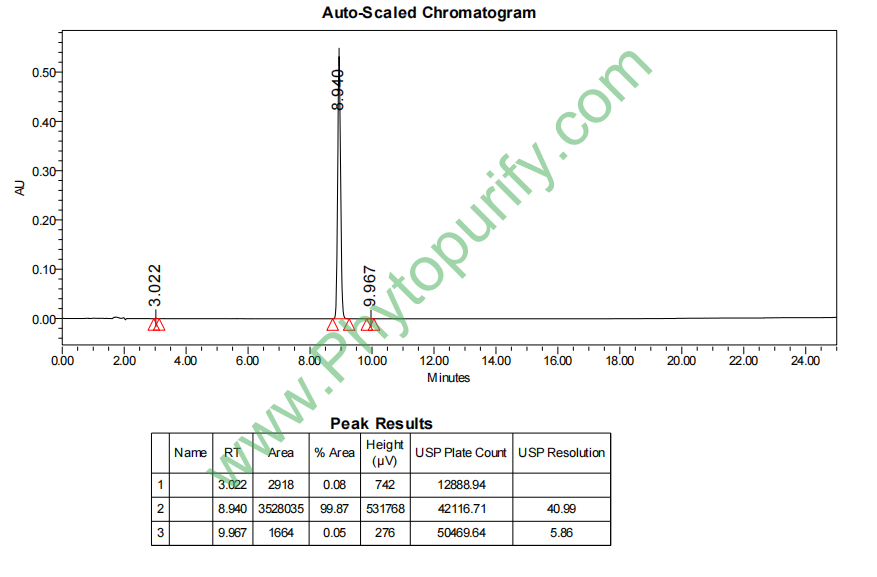
Purity: 95%~99%
Analysis Method: HPLC-DAD or/and HPLC-ELSD
Identification Method: Mass, NMR
Packing: Brown vial or HDPE plastic bottle
Can be supplied from milligrams to grams.
For Reference Standard and R&D, Not for Human Use Directly.
Inquire for bulk scale.
Description:
Diosbulbin B has potential anti-tumor effects which may be related to influencing the immune system for the first time, it also exhibits potential hepatotoxicity.
References:
J Zhejiang Univ Sci B. 2014 Jun;15(6):540-7.
Ferulic acid prevents liver injury and increases the anti-tumor effect of diosbulbin B in vivo.
METHODS AND RESULTS:
The present study is designed to investigate the protection by ferulic acid against the hepatotoxicity induced by Diosbulbin B and its possible mechanism, and further observe whether ferulic acid augments Diosbulbin B-induced anti-tumor activity. The results show that ferulic acid decreases Diosbulbin B-increased serum alanine transaminase/aspartate transaminase (ALT/AST) levels. Ferulic acid also decreases lipid peroxide (LPO) levels which are elevated in Diosbulbin B-treated mice. Histological evaluation of the liver demonstrates hydropic degeneration in Diosbulbin B-treated mice, while ferulic acid reverses this injury. Moreover, the activities of copper- and zinc-containing superoxide dismutase (CuZn-SOD) and catalase (CAT) are decreased in the livers of Diosbulbin B-treated mice, while ferulic acid reverses these decreases. Further results demonstrate that the mRNA expressions of CuZn-SOD and CAT in Diosbulbin B-treated mouse liver are significantly decreased, while ferulic acid prevents this decrease. In addition, ferulic acid also augments Diosbulbin B-induced tumor growth inhibition compared with Diosbulbin B alone.
CONCLUSIONS:
Taken together, the present study shows that ferulic acid prevents Diosbulbin B-induced liver injury via ameliorating Diosbulbin B-induced liver oxidative stress injury and augments Diosbulbin B-induced anti-tumor activity.
Hum Exp Toxicol. 2014 Jul;33(7):729-36.
Diosbulbin B-induced liver injury in mice and its mechanism.
Dioscorea bulbifera L., a commonly used medicinal plant in China, is reported to induce hepatotoxicity. The present study is undertaken to investigate the hepatotoxicity induced by Diosbulbin B(DB), a diterpene lactone isolated from D. bulbifera L., and to further explore its underlying mechanism.
METHODS AND RESULTS:
DB was administered to mice at the doses of 0, 16, 32, and 64 mg/kg once daily for 12 consecutive days. Liver injury induced by Diosbulbin B was evidenced by the increased activity of serum alanine aminotransferase (ALT), aspartate aminotransferase (AST), and alkaline phosphatase (ALP). Liver histological evaluation showed that the mice treated with Diosbulbin B exhibited liver damage with the swelling of hepatocytes. Further results showed that the amount of malondialdehyde (MDA) in the liver was increased in mice treated with Diosbulbin B, while the glutathione amount and the enzymatic activity of glutathione peroxidase (GPx), glutathione-S-transferase (GST), copper/zinc-superoxide dismutase (CuZn-SOD), manganese-SOD (Mn-SOD), and catalase (CAT) were all decreased. Diosbulbin B also decreased the gene expression of CuZn-SOD and CAT.
CONCLUSIONS:
Taken together, our results indicate that oral administration of Diosbulbin B for 12 consecutive days can lead to the oxidative stress liver injury in mice.
HPLC of Diosbulbin B
Storage conditions:Short-term storage at 2~8℃, long-term storage at -20 ~ -80℃
Diosbulbin B is a natural diterpenoid lactone derived from the Chinese medicinal herb Dioscorea bulbifera L., which has attracted widespread attention due to its unique biological activity. As the main hepatotoxic component in Huangdu, Huangdu Su B not only occupies an important position in traditional Chinese medicine toxicology research, but its anti-tumor potential has also been gradually confirmed by modern pharmacology. In recent years, Huangdu Su B has shown significant inhibitory effects on cell proliferation and pro apoptotic ability in the field of anti-cancer, especially in non-small cell lung cancer (NSCLC) research, becoming a hot topic in natural product pharmacology and tumor therapy research. This article provides a systematic review of the chemical structure and physicochemical properties, plant sources and extraction methods, pharmacological activity, mechanism of action and molecular targets, pharmacological evaluation and pharmacokinetic characteristics of Huangdu Su B. It also looks forward to its clinical application prospects, aiming to provide theoretical basis and reference for subsequent drug development and mechanism research.
Huangdu Su B is a diterpenoid lactone compound with a molecular formula of C20H24O6 and a molecular weight of 344.3630. Its structural features include a typical diterpene skeleton and lactone ring, endowing it with unique biological activity. The LogP value of Huangdu Su B is 1.8222, indicating that it has moderate lipid solubility and is conducive to cell membrane penetration. The polar surface area (TPSA) is 74.97 Å ², reflecting its polarity characteristics in drug absorption and distribution. Low water solubility (0.0394 mg/mL) suggests limited solubility in aqueous phase, which may affect its bioavailability. Huangdu Su B can pass through the blood-brain barrier, indicating its potential application value in the treatment of central nervous system diseases or brain tumors. The negative result of hERG channel inhibition experiment indicates a low risk of cardiac toxicity. The Ames mutagenicity test score is 0.9, indicating a low risk of genotoxicity and meeting drug safety requirements.
Huangdu Su B is mainly present in the tubers and tuberous nodules of Dioscorea bulbifera L. Huangdu is a plant of the Dioscoreaceae family, widely distributed in tropical and subtropical regions of Asia. It is commonly used in traditional Chinese medicine to treat digestive system diseases and tumors. Huangdu contains various diterpenoid lactones, among which Huangdu B, as the main active ingredient, has significant biological effects.
The common methods for extracting Huangdu Su B include organic solvent extraction, column chromatography separation, and high-performance liquid chromatography (HPLC) purification. The specific process usually involves drying and crushing Huangdu, reflux extraction with ethanol or methanol, concentration, and silica gel column chromatography. Different polar solvent systems are used to separate the target components, and high-purity Huangdu B is finally purified by HPLC. In recent years, the application of ultrasound assisted extraction and microwave-assisted extraction technologies has improved extraction efficiency and purity, reduced solvent usage, and complied with green chemistry principles.
The pharmacological activity of Huangdu Su B mainly focuses on two aspects: anti-tumor and hepatotoxicity. Numerous in vitro cell experiments and some in vivo animal model studies have shown that Huangdu Su B can significantly inhibit the proliferation of various cancer cell lines, especially non-small cell lung cancer (NSCLC) cells. Its anticancer activity is manifested through multiple mechanisms such as inducing cell cycle arrest, promoting cell apoptosis, and activating autophagy.
Cell proliferation inhibition
Huangdu Su B can effectively inhibit the proliferation of cancer cells, mainly by blocking the cell cycle process, especially inducing arrest in the G0/G1 phase, reducing the entry of cells into the S and M phases, and lowering the rate of cell division.
Inducing cell apoptosis
The mechanism by which Huangdu Su B induces apoptosis in cancer cells involves the mitochondrial pathway, manifested by a decrease in mitochondrial membrane potential, upregulation of pro apoptotic protein expression (such as Caspase-9 activation), downregulation of anti apoptotic protein BCL2 expression, ultimately triggering programmed cell death.
Autophagy activation
Huangdu Su B can induce cellular autophagy as part of cellular stress response, regulating intracellular metabolic balance and damage repair. The activation of autophagy is to some extent related to its anti-tumor effect, but the specific mechanism still needs to be further explored.
Hepatotoxicity manifestations
Huangdu Su B, as the main hepatotoxic component of Huangdu, can induce liver cell damage, manifested as abnormal liver function and histopathological changes. The mechanism of hepatotoxicity may be closely related to mitochondrial dysfunction, oxidative stress, and inflammatory response, which poses safety challenges for its clinical application.
The anti-tumor effect of Huangdu Su B involves multiple signaling pathways and key molecular targets, forming a complex regulatory network. Several important targets have been identified through molecular biology techniques and network pharmacology analysis:
Huangdu Su B achieves multiple strikes on tumor cells through the synergistic regulation of the above targets, inhibiting their proliferation, promoting apoptosis and autophagy, and blocking tumor progression.
The pharmacological evaluation of Huangdu Su B shows that it has certain potential for drug development. The molecular weight and LogP value both comply with Lipinski's rule, which is beneficial for oral absorption. The lower water solubility may limit its bioavailability, but it can be improved through modern formulation technologies such as nanocarriers and liposomes. The high blood-brain barrier penetration provides potential for its use in the treatment of brain tumors and neurological diseases.
In terms of safety, Huangdu Su B has no significant hERG channel inhibitory effect and reduces the risk of cardiac toxicity. The Ames test results indicate that its genotoxicity risk is low and meets drug safety requirements. However, the hepatotoxicity of Huangdu Su B still requires high attention, and further optimization of dosage and administration regimen or reduction of toxicity through structural modification is needed before clinical application.
Pharmacokinetic studies are still in the preliminary stage, and further systematic research is needed on the characteristics of in vivo absorption, distribution, metabolism, and excretion (ADME). Existing data suggests that it may be metabolized by the liver in vivo, and the activity and toxicity of metabolites need to be further evaluated.
Huangdu Su B, as a natural product with multi-target anticancer activity, has shown promising application prospects in the treatment of solid tumors such as non-small cell lung cancer. Its multiple mechanisms of action make it a promising adjuvant drug for combination chemotherapy or targeted therapy, enhancing treatment efficacy and reducing the risk of drug resistance.
Future research directions include:
Structural optimization and derivative development
By chemical modification, liver toxicity can be reduced, water solubility and bioavailability can be improved, and safer and more effective derivatives of berberine B can be developed.
Innovation in drug delivery systems
Using nanotechnology, liposomes, polymer carriers, and other methods to improve the pharmacokinetic properties of Huangdu Su B, achieving targeted release and sustained release.
In depth analysis of the mechanism
By utilizing multi omics techniques and high-throughput screening, we aim to further uncover the molecular network and signaling pathways involved in the action of Huangdu Su B, and discover new targets and biomarkers.
Preclinical and clinical research
Conduct systematic animal model experiments and safety evaluations, gradually advance clinical trials, and verify its efficacy and safety.
Mechanisms of hepatotoxicity and protective strategies
In depth study of the molecular mechanism of hepatotoxicity of Huangdu Su B, exploring combination therapy or adjuvant methods to reduce the risk of liver injury.
Huangdu Su B, as the main active ingredient in Huangdu, has significant anti-cancer activity and potential hepatotoxicity, reflecting the complexity and challenges of natural product pharmacology. Its multi-target and multi mechanism anti-tumor effects provide new ideas and candidate drugs for the treatment of malignant tumors such as non-small cell lung cancer. In the future, through structural optimization, formulation innovation, and in-depth mechanism research, it is expected to overcome its toxicity limitations, promote the clinical application of Huangdu Su B, and benefit patients. The continuous development of pharmacology of natural products will provide a solid foundation for the development of Huangdu Su B and similar compounds, promoting the modernization of traditional Chinese medicine and the progress of precision medicine.
