| Catalog No | Package | Original Price | Price | Inventory | Quantity | Operating |
|---|---|---|---|---|---|---|
| BP0280-100mg | 100mg | $20.00 | Sign in |
|


Synonym name: Borneyl acetate
Catalogue No.: BP0280
Cas No.: 76-49-3
Formula: C12H20O2
Mol Weight: 196.29
Botanical Source:
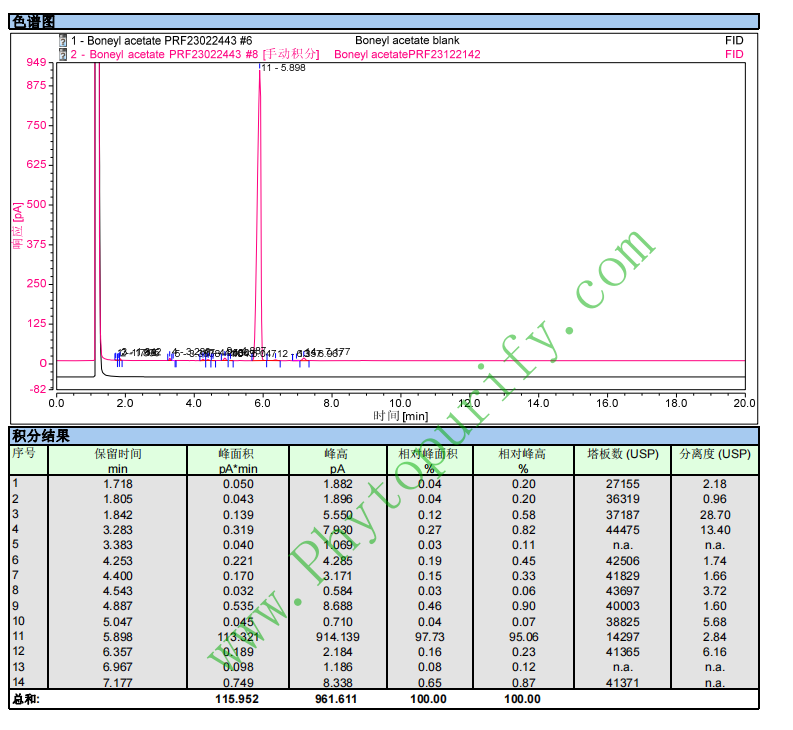
Purity: 95%~99%
Analysis Method: HPLC-DAD or/and HPLC-ELSD
Identification Method: Mass, NMR
Packing: Brown vial or HDPE plastic bottle
Can be supplied from milligrams to grams.
For Reference Standard and R&D, Not for Human Use Directly.
Inquire for bulk scale.
HPLC of Bornyl acetate
Storage conditions:Short-term storage at 2~8℃, long-term storage at -20 ~ -80℃
Bornyl acetate (CAS number: 76-49-3) is a natural monoterpene ester compound with significant aromatic properties, widely present in essential oils of various aromatic plants. As a potent aromatic agent, Longbrain Acetate is not only widely used in the fragrance and cosmetics industry due to its unique aroma, but also a hot topic in natural product pharmacology research due to its diverse biological activities. In recent years, the potential pharmacological effects of bornyl acetate in the fields of anti-tumor, anti-inflammatory, and respiratory diseases have gradually been revealed, especially the mechanism of action in respiratory diseases such as chronic bronchitis, which has attracted widespread attention from the academic community.
This article will provide a systematic review of the chemical structure and physicochemical properties, plant sources and extraction methods, pharmacological activity and mechanism of action, pharmacological evaluation and pharmacokinetic characteristics of bornyl acetate. It also looks forward to its potential and development direction in clinical applications, aiming to provide theoretical basis and reference for the in-depth research and drug development of this natural product.
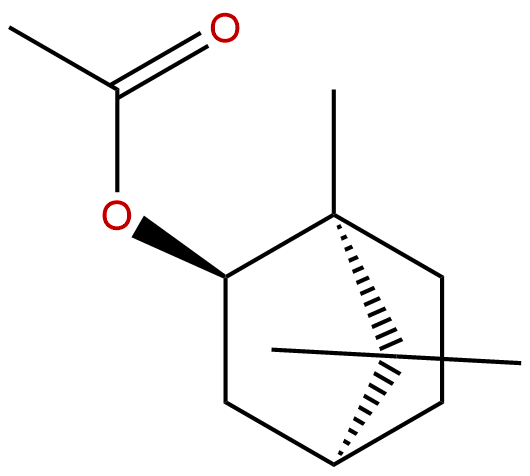
The chemical structure of bornyl acetate is an ester formed by bornol and acetic acid, with a molecular formula of C12H20O2 and a molecular weight of 196.29. Its structure contains a cyclic terpene skeleton with strong hydrophobicity, with a LogP value of 3.4, indicating good lipid solubility and easy penetration of cell membranes. The polar surface area (TPSA) of bornyl acetate is 26.3 Å ², with 2 hydrogen bond acceptors, indicating its low molecular polarity and facilitating its passage through biofilm barriers.
From the perspective of physical and chemical properties, bornyl acetate is a colorless to pale yellow transparent liquid with a typical aromatic odor. As a potent aromatic agent, it is one of the most effective compounds in flavor dilution factors. Its good lipid solubility and low polarity make it have good distribution characteristics in the body, especially able to pass through the blood-brain barrier (BBB), which provides the possibility for its potential central nervous system role.
In addition, the toxicological evaluation of bornyl acetate showed that its LD50 was as high as 4700 mg/kg, which is a low toxicity substance with no significant hepatotoxicity, cardiotoxicity, or hERG channel inhibition. Moreover, the Ames mutagenicity test was negative, demonstrating its good safety and potential as a drug.
Acetoacetate is widely present in the essential oils of various aromatic plants, especially in the pine family such as Pinus spp., Cinnamomum camphora, and certain Mentha spp. Its content and composition in plants vary depending on factors such as species, geographical environment, harvesting time, and extraction process.
Common extraction methods include steam distillation, solvent extraction, and supercritical CO2 extraction. The steam distillation method is widely used due to its simple operation and low cost, but it may lead to thermal degradation of some components under high temperature conditions. Supercritical CO2 extraction technology has gradually become the mainstream method for modern natural product extraction due to its advantages of low temperature and no solvent residue, which can effectively maintain the active ingredients of bornyl acetate and have high extraction efficiency.
The extracted bornyl acetate is usually qualitatively and quantitatively analyzed by gas chromatography-mass spectrometry (GC-MS) to ensure its purity and content meet pharmaceutical and industrial application standards.
The anti-tumor activity of bornyl acetate has been one of the focuses of research in recent years. In vitro cell experiments have shown that bornyl acetate can inhibit the proliferation of various tumor cell lines and induce cell apoptosis. Its anti-tumor mechanism involves regulating cell cycle related proteins, activating mitochondrial pathways, and inhibiting tumor related signaling pathways such as NF - κ B and MAPK pathways, thereby exerting cytotoxic effects. In addition, bornyl acetate also exhibits anti angiogenic activity, blocking the formation of new blood vessels in the tumor microenvironment, and inhibiting tumor growth and metastasis.
The pharmacological effects of bornyl acetate in respiratory diseases such as chronic bronchitis are gradually being confirmed. The pathological features of chronic bronchitis include chronic airway inflammation, excessive mucus secretion, and airway remodeling. Longnao acetate regulates the release of inflammatory mediators, inhibits inflammatory cell infiltration, and reduces airway inflammation response.
Specific studies have shown that bornyl acetate can downregulate the expression of elastase ELANE and matrix metalloproteinase MMP9, reducing damage to airway tissue; Simultaneously regulate the activity of the elastase AAT (α 1-antitrypsin) and its encoded gene SERPINA1 to restore airway elasticity balance. In addition, bornyl acetate also affects the transforming growth factor beta 1 (TGFB1) signaling pathway, inhibits airway fibrosis and remodeling processes, and slows down the progression of chronic bronchitis.
In addition to the aforementioned effects, bornyl acetate also exhibits various pharmacological activities such as antibacterial, analgesic, antioxidant, and neuroprotective effects. For example, it has inhibitory effects on various Gram positive and Gram negative bacteria, and may exert antibacterial effects by disrupting cell membrane structure. Its excellent blood-brain barrier penetration ability provides a theoretical basis for its application in neurological diseases.
The multi-target mechanism of action of bornyl acetate is the basis for its broad pharmacological activity. For chronic bronchitis, bornyl acetate mainly exerts its effects by regulating the following key molecules and signaling pathways:
ELANE (elastase)ELANE is a protease released by neutrophils, and excessive activation leads to the degradation of airway elastin, causing airway damage. Acetoacetate can inhibit the expression and activity of ELANE, protecting the integrity of airway structure.
MMP9 (Matrix Metalloproteinase 9)MMP9 is involved in extracellular matrix degradation, promoting the migration of inflammatory cells and airway remodeling. Acetoacetate reduces airway inflammation and fibrosis by inhibiting MMP9 expression.
AAT (α 1-antitrypsin) and SERPINA1 genes AAT is a natural inhibitor of ELANE, and Longbrain Acetate regulates the expression of AAT, restoring protease antiprotease balance and preventing airway tissue damage.
TGFB1 (Transforming Growth Factor β 1)TGFB1 is a key regulatory factor in airway fibrosis, and bornyl acetate slows down the process of airway fibrosis by inhibiting the TGFB1 signaling pathway.
In addition, bornyl acetate may also exert anti-inflammatory effects by regulating inflammatory signaling pathways such as NF - κ B and MAPK, inhibiting the release of pro-inflammatory factors. Its anti-tumor mechanism involves multiple pathways such as cell cycle regulation, apoptosis induction, and anti angiogenesis.
Longnao acetate has good pharmacological parameters. Its molecular weight (196.29) and LogP (3.4) comply with Lipinski's rule, indicating its good oral bioavailability potential. Low TPSA (26.3) and hydrogen bond receptor count (2) facilitate its penetration of cell membranes and blood-brain barriers, supporting its application in central nervous system diseases.
Toxicological evaluation shows that the LD50 of Longnao acetate is as high as 4700 mg/kg, which is a low toxicity substance with no significant liver or cardiac toxicity, no hERG channel inhibition, and a negative Ames test, indicating its high safety and suitability for further drug development.
In terms of pharmacokinetics, the lipophilicity and blood-brain barrier penetration ability of bornyl acetate are strong, suggesting its widespread distribution in the body, especially its accumulation in brain tissue. Its metabolic pathway has not been systematically elucidated, and it is speculated that it is mainly hydrolyzed by liver esterases into camphora and acetic acid, which are further metabolized and excreted. In the future, in vivo pharmacokinetic studies are needed to clarify its absorption, distribution, metabolism, and excretion (ADME) characteristics.
Longnao acetate has shown broad clinical application prospects due to its diverse pharmacological activities and good safety. Especially in the adjuvant treatment of respiratory diseases such as chronic bronchitis, bornyl acetate may become an effective natural drug candidate by regulating the protease antiprotease system, inhibiting inflammation and fibrosis. In addition, its anti-tumor potential provides the possibility for the development of novel tumor adjuvant therapy drugs.
Future research should focus on:
System Pharmacology and Mechanism Research Thoroughly analyze the molecular targets and signaling pathways of bornyl acetate, and clarify its multi-target synergistic mechanism.
Pharmacokinetic and Toxicological Evaluation Conduct comprehensive in vivo pharmacokinetic studies to evaluate the safety of long-term medication and the activity of metabolites.
Formulation development and clinical translation Optimize the administration method of bornyl acetate, improve its bioavailability, conduct preclinical animal models and early clinical trials to verify its efficacy and safety.
Combination therapy strategy Explore the combined application of Longnao Acetate and existing drugs to achieve synergistic effects, reduce drug tolerance and side effects.
In summary, as a natural product drug candidate, bornyl acetate has good pharmacological activity and potential as a drug, and is expected to play an important role in the treatment of respiratory diseases and tumors.
Acetoacetate, as a natural monoterpene ester compound, has become a hot topic in natural product pharmacology research due to its unique chemical structure and multiple biological activities. Its potential applications in anti-tumor, anti-inflammatory, and respiratory diseases, especially by regulating key targets such as ELANE, MMP9, AAT, SERPINA1, and TGFB1, have shown promising therapeutic prospects. Combined with its excellent pharmacological parameters and safety, bornyl acetate has high drug development value.
In the future, with the deepening of molecular mechanism research and the improvement of preclinical evaluation, bornyl acetate is expected to become a new generation of natural medicine, providing new strategies and choices for the treatment of chronic bronchitis and related diseases. The multi-target characteristics and low toxicity advantages of natural products make bornyl acetate play an irreplaceable and important role in modern drug development, which deserves continuous attention and in-depth exploration.
