Introduction/Overview
Coumarin compounds are a class of benzo [a] - pyranone derivatives widely found in nature. Due to their unique chemical structure and diverse biological activities, they have long been of great interest in pharmaceutical chemistry, fragrance industry, and agriculture. 6-Methylcoumarin (CAS: 92-48-8), as an important member of the coumarin family, exists in its natural form in various plants, but is more well-known for its widespread use as a synthetic flavoring in the cosmetics industry. It is often used as a fragrance fixative and enhancer, giving products a sweet scent of hay, coconut, or fragrant beans. However, in recent years, with the continuous exploration of pharmacological activities of natural products, 6-methylcoumarin has surpassed its fragrance properties in biomedical potential, especially its activity in the field of anticoagulation, which is gradually becoming an emerging hotspot in pharmacological research. Anticoagulant therapy is the cornerstone of preventing and treating thromboembolic diseases such as deep vein thrombosis, pulmonary embolism, and atrial fibrillation related stroke. Although existing drugs such as warfarin, heparin, and new oral anticoagulants are effective, they still have limitations such as bleeding risk, need for monitoring, large individual differences, or high costs. Therefore, it is of great scientific significance and clinical value to search for anticoagulant lead compounds with novel structures, unique mechanisms of action, and better safety from natural products and their derivatives. This article aims to provide a systematic review of the chemical properties, plant sources, and pharmacological activities of 6-methylcoumarin, with a focus on its potential molecular targets and mechanisms for anticoagulant effects. Combined with its pharmacological parameters, the article provides a scientific outlook on its development prospects as an anticoagulant candidate drug.
Chemical structure and physicochemical properties
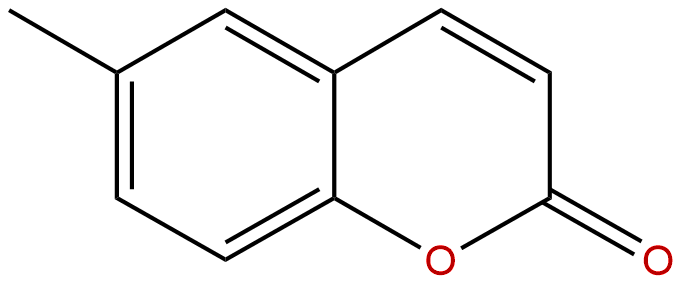
6-methylcoumarin, chemical name 6-methyl-2H-1-benzopyran-2-one, molecular formula C ₁₀ H ₈ O ₂, molecular weight 160.1720 g/mol. Its basic skeleton is a benzopyranone formed by the fusion of a benzene ring (A ring) and an alpha pyranone ring (B ring, also known as a lactone ring). Compared with coumarin, its structural feature is that a methyl (- CH3) substituent is attached to the 6th carbon atom of the benzene ring (A ring). This seemingly minor structural modification not only affects its physical and chemical properties, but also has a significant impact on its biological activity.
From the analysis of physical and chemical properties, 6-methylcoumarin appears as white to off white crystals or powders. Its lipid water partition coefficient (LogP) is 2.3565, indicating that the compound has moderate lipophilicity, which is beneficial for its penetration of cell membranes, but may also affect its distribution in aqueous media. Its topological polar surface area (TPSA) is 30.2100 Å ², which is a relatively small value, further confirming its low molecular polarity. The water solubility data shows 0.0694 (usually measured in mg/mL or mol/L, indicating poor water solubility), which is consistent with its high LogP value. These physicochemical parameters collectively determine the basic behavior of 6-methylcoumarin in organisms: it is easy to transport across membranes, but there may be certain challenges in dissolving and dispersing it in aqueous body fluids. It is worth noting that its blood-brain barrier permeability is predicted to be "high", indicating that the compound may have central nervous system permeability potential, which needs to be considered when developing neuroprotective agents targeting the central nervous system or evaluating their potential neural effects. In addition, preliminary pharmacological warning indicators indicate that it does not inhibit hERG potassium channels (hERG inhibition: no), suggesting a low risk of causing cardiac QT interval prolongation related arrhythmias; The Ames test value is 1.5 (usually expressed as a mutation rate ratio, less than 2 is usually considered negative or weakly positive), which suggests that its genetic toxicity risk may be low, but further genetic toxicity research is still needed to confirm.
Plant sources and extraction methods
Although 6-methylcoumarin currently used in industry is mainly obtained through chemical synthesis (such as Pechmann condensation, Perkin reaction, etc.), it has also been found in various plants as a natural product. It often coexists with other coumarin compounds in the roots, stems, leaves, flowers, and seeds of plants. According to reports, plants containing 6-methylcoumarin are mainly distributed in the families Apiaceae, Rutaceae, Asteraceae, etc. For example, its presence can be detected in the essential oil components of certain types of lavender (Lavandula spp.), Angelica dahurica, and citrus plants. In nature, it may be a product of plant secondary metabolism and may participate in plant defense mechanisms or signal transduction.
Extracting 6-methylcoumarin from plant materials often involves methods suitable for volatile or semi volatile coumarin compounds. Classic extraction techniques include:
1. steam distillation Utilizing the certain volatility of 6-methylcoumarin, it is evaporated together with water vapor, condensed and collected as an oil-water mixture, and then separated by organic solvent extraction. This method is suitable for fresh or dry plant materials and can obtain essential oil parts rich in volatile components.
2. Organic solvent extraction method Commonly used solvents such as methanol, ethanol, ethyl acetate, and petroleum ether are used for extraction, reflux, or Soxhlet extraction. Due to the moderate lipophilicity of 6-methylcoumarin, solvents with moderate polarity such as ethyl acetate or ethanol water mixtures often have higher extraction efficiency.
3. Supercritical fluid extraction method Using supercritical CO ₂ as the extractant, it has the advantages of high efficiency, no solvent residue, and minimal damage to thermosensitive components, making it particularly suitable for extracting coumarin compounds from plants.
The crude extract after extraction usually requires further separation and purification to obtain high-purity 6-methylcoumarin. Conventional purification methods include column chromatography (silica gel, gel, etc.), recrystallization and modern preparative HPLC. Given that the content of natural sources is usually low and the extraction process is complex, commercial synthetic products are often used for pharmacological activity research, especially large-scale screening and mechanism exploration, to ensure the purity and supply stability of compounds, which is also conducive to precise structure-activity relationship research.
Pharmacological activity research
Traditionally, 6-methylcoumarin has attracted attention due to its aroma characteristics. However, modern pharmacological research has revealed its multifaceted biological activities, transforming it from a simple spice molecule into a candidate compound with potential medicinal value.
-
Anticoagulant and Antithrombotic Activities This is the pharmacological activity of 6-methylcoumarin that has received the most attention in recent years. Multiple in vitro and in vivo studies have shown that 6-methylcoumarin can significantly prolong clotting time and inhibit thrombus formation. In animal models, it has shown inhibitory effects on arterial and venous thrombosis, and its anticoagulant effect may have a certain dose dependence. Compared with the classic anticoagulant warfarin, preliminary studies suggest that its bleeding risk may be relatively low, but this advantage requires more rigorous preclinical and clinical research to confirm.
-
Anti inflammatory and antioxidant activity Coumarin compounds generally have anti-inflammatory and antioxidant properties. 6-methylcoumarin can inhibit the production of pro-inflammatory factors such as TNF - α and IL-6, alleviate oxidative stress response, and scavenge free radicals. This provides a theoretical basis for its application in the treatment of inflammation and oxidative damage related diseases (such as atherosclerosis, metabolic syndrome), and its antithrombotic effect may also be partly due to its anti-inflammatory and antioxidant effects.
-
Antibacterial and antifungal activity Research has shown that 6-methylcoumarin has certain inhibitory activity against certain Gram positive bacteria, Gram negative bacteria, and fungi. This provides potential applications for developing new antibacterial agents or as preservatives in food and cosmetics.
-
Other activities In addition, studies have reported that 6-methylcoumarin has mild sedative, antispasmodic, and potential anti-tumor adjuvant activity. Its high blood-brain barrier permeability also suggests its potential value in the intervention of neurological diseases, but related research is still in its infancy.
Among all these activities,anticoagulant activity It stands out due to its clear clinical needs and relatively in-depth exploration of its mechanism of action, becoming the focus of current research.
Mechanism of action and molecular targets
The anticoagulant effect of 6-methylcoumarin is not achieved through a single pathway. Existing research suggests that it may act on multiple key targets of the coagulation cascade, including endogenous, exogenous, and common pathways, exhibiting the characteristics of multi-target intervention. Based on the provided target information, its potential mechanism of action can be summarized as follows:
-
Affects vitamin K circulation and coagulation factor synthesis (targeting VKORC1)Vitamin K epoxide reductase complex subunit 1 (VKORC1) is a classic target of coumarin anticoagulants such as warfarin, responsible for reducing oxidized vitamin K to its active form, which is necessary for the hepatic gamma carboxylation of coagulation factors II, VII, IX, X (corresponding to F2, F7, F9, F10, respectively) and anticoagulant proteins C and S (PROC, PROS1). As a coumarin derivative, 6-methylcoumarin is likely to competitively inhibit VKORC1 activity, interfere with the reuse of vitamin K, and lead to a decrease in the synthesis of physiologically active gamma carboxylated coagulation factors, resulting in anticoagulant effects. This is one of the core potential mechanisms for its long-lasting anticoagulant effect.
-
Directly or indirectly inhibit coagulation factor activity In addition to affecting coagulation factor synthesis through the vitamin K pathway, research suggests that 6-methylcoumarin or its metabolites may directly bind to the active centers of certain coagulation factors or interfere with their activation process. The targets involved include tissue factor (F3, initiating exogenous pathways), prothrombin (F2, a key enzyme in the common pathway), coagulation factors VII, IX, X (F7, F9, F10), etc. This multi factor inhibition may synergistically enhance its anticoagulant effect.
-
Regulating the fibrinolytic system and endothelial function Plasminogen activator inhibitor-1 (SERPINE1/PAI-1) is the main inhibitor of the fibrinolytic system, and high levels of PAI-1 can lead to decreased fibrinolytic function and promote thrombosis. Studies have shown that certain coumarin compounds can downregulate the expression or activity of PAI-1. 6-methylcoumarin may reduce thrombus stability and promote thrombolysis through this pathway. In addition, von Willebrand factor (VWF) is a key mediator for platelet adhesion to damaged blood vessel walls, and inhibiting the function or release of VWF can reduce the formation of platelet thrombus. Whether 6-methylcoumarin affects VWF is a direction worth exploring in its antithrombotic mechanism.
-
Enhance the effect of endogenous anticoagulant proteins Protein C (PROC) and protein S (PROS1) are important physiological anticoagulant systems that play a central role in inactivating activated coagulation factors Va and VIIIa. 6-methylcoumarin may enhance the body's own anticoagulant ability by affecting the synthesis (via the vitamin K pathway) or function of these anticoagulant proteins.
In summary, 6-methylcoumarin may exert anticoagulant and antithrombotic effects through multidimensional and multi-target network mechanisms such as "inhibition of procoagulant synthesis and function (VKORC1, F2, F3, F7, F9, F10)", "promotion of fibrinolysis (SERPINE1)", and "enhancement of physiological anticoagulation (PROC, PROS1)". This multi-target characteristic may lead to a more balanced anticoagulant effect and a wider treatment window, but it also makes the mechanism analysis and dose control more complex.
Evaluation of drug properties and pharmacokinetics
Based on the pharmacological parameters provided in the previous text and existing studies on coumarin compounds, a preliminary evaluation of the pharmacological properties of 6-methylcoumarin can be conducted.
Advantage aspects:
- Small molecular weight (160 Da)Meets the molecular weight requirements in the "Five Rules" for generic drugs, which is beneficial for oral absorption and optimization.
- Moderate lipophilicity (LogP~2.36)Beneficial for its passive diffusion across biofilms, predicting its oral bioavailability may still be acceptable.
- Better security warning There is no hERG inhibitory signal, and the Ames test is preliminarily negative, providing preliminary positive data for its cardiovascular safety and genetic toxicity risk.
- Strong structural modifiability The coumarin parent nucleus is easily chemically modified, providing a broad chemical space for optimizing its activity, selectivity, and pharmacokinetic properties.
Challenge aspect:
- Poor water solubility This may be one of the main obstacles in the development of its oral formulations, which could lead to unstable absorption and significant individual differences. Improvements need to be made through formulation techniques such as solid dispersions, cyclodextrin inclusion complexes, nanocrystals, or prodrug strategies.
- High blood-brain barrier permeability For anticoagulant therapy, drug entry into the central nervous system may not be necessary and may even increase the risk of intracranial hemorrhage. In drug design, it may be necessary to appropriately reduce its BBB permeability through structural modifications to enhance peripheral selectivity.
- Potential Metabolism and Interactions Coumarin compounds are typically substrates or inhibitors of cytochrome P450 enzymes, particularly CYP2A6 and CYP2C9. The metabolic pathways, major metabolites, and interactions with other drugs (especially drugs metabolized by CYP450) of 6-methylcoumarin in the body need to be systematically studied. Its anticoagulant mechanism may involve VKORC1, therefore, similar to warfarin, its efficacy may be influenced by dietary vitamin K intake and genetic polymorphisms such as VKORC1 and CYP2C9 genotypes.
- Treatment window and monitoring Although multi-target anticoagulant drugs may be more balanced, they may also complicate the dose-response relationship, requiring rigorous pharmacological and pharmacokinetic studies to determine their therapeutic window and explore the need for coagulation function monitoring like warfarin.
There is currently insufficient publicly available systematic research data specifically targeting 6-methylcoumarin as a drug regarding its specific pharmacokinetic parameters, such as absorption, distribution, metabolism, and excretion. It is speculated that after oral administration, it is absorbed in the small intestine, first metabolized by the liver, and mainly excreted through urine and feces. In the future, comprehensive preclinical ADME studies are needed to clarify key parameters such as absolute bioavailability, half-life, distribution volume, and protein binding rate.
Clinical application prospects and prospects
The transformation of 6-methylcoumarin from a cosmetic flavoring agent to an anticoagulant candidate molecule is a typical case of drug repositioning with "old molecule, new use". Its clinical application prospects mainly revolve around antithrombotic therapy, but it also faces many challenges and opportunities.
Potential application directions:
1. Development of new oral anticoagulant drugs As a close relative of warfarin, 6-methylcoumarin has the potential to be developed into a novel oral anticoagulant if optimized. Its multi-target effect may bring a smoother anticoagulant effect and may reduce monitoring frequency. Structural optimization targeting its water solubility and metabolic defects may result in derivatives with higher activity, better pharmacokinetic properties, and fewer interactions.
2. Components of Antithrombotic Compound Preparation: It has multiple activities of anticoagulation, anti-inflammatory and antioxidant, which makes it possible to become an ideal component of compound preparations for the treatment of atherothrombotic diseases (such as coronary heart disease, ischemic stroke), and may have synergistic effects with antiplatelet drugs.
3. Local anticoagulant/antithrombotic application It can be explored for the preparation of medical coating materials with anti thrombotic properties (such as vascular stents and catheters), or developed as a topical preparation for the prevention of superficial thrombophlebitis.
Challenges faced and future research directions:
1. Mechanism deep validation At present, the multi-target mechanism of action is mostly based on bioinformatics predictions and preliminary experiments, requiring the use of technologies such as gene knockout/knockdown cells, specific inhibitors, protein interaction studies, etc., to verify its direct interaction and functional impact with the above targets at the molecular and cellular levels.
2. Structural optimization and structure-activity relationship A systematic study was conducted to investigate the effects of introducing different substituents at different positions (positions 3, 4, 7, 8, etc.) on the anticoagulant activity, selectivity (such as coagulation vs. anticoagulant protein effects), pharmacokinetic properties, and toxicity of 6-methylcoumarin parent nucleus, with the aim of discovering candidate compounds with stronger activity and wider therapeutic window.
3. Comprehensive preclinical evaluation On the basis of optimizing lead compounds, standardized preclinical pharmacological (different thrombus models), pharmacokinetic, and toxicological evaluations must be conducted, especially for long-term toxicity, bleeding risk assessment, and reproductive toxicity.
4. Formulation development Developing advanced formulations suitable for oral or injection administration is a key step in promoting its clinical application, addressing the issue of poor water solubility.
5. Explore biomarkers Studying biomarkers related to their anticoagulant efficacy and bleeding risk may help achieve personalized medication and reduce adverse reactions.
Conclusion
6-methylcoumarin, a molecule that has long served the spice world, is attracting the attention of researchers in the fields of natural product pharmacology and medicinal chemistry due to its potential and multi-target anticoagulant pharmacological activity. It acts on the diverse mechanisms of VKORC1, multiple coagulation factors, and components of the fibrinolytic system, providing valuable lead structures for the development of novel antithrombotic drugs with novel modes of action. Although it still faces many challenges on the path towards clinical drug development, such as water solubility, metabolic characteristics, precise elucidation of mechanisms, and determination of treatment windows, these challenges are also opportunities for future research. Through interdisciplinary research in modern medicinal chemistry, pharmacology, and formulation, it is entirely possible to successfully transform 6-methylcoumarin from an "aromatic molecule" into a clinically valuable "antithrombotic molecule" through rational structural modification and systematic pharmacological optimization. This not only enriches the medicinal connotation of coumarin compounds, but also provides useful reference for discovering new drugs from natural products and their derivatives with known structures. Future research should strive to achieve a leap from active compounds to safe and effective drugs based on a deep understanding of their molecular mechanisms, ultimately providing new options for the prevention and treatment of thromboembolic diseases.